Bodhi Blocks · a living lore atlas

Purelands cosmology atlas

The sourced lore ledger, the Wheel layouts and the field note a pass builds from. Read in the loop’s Build pass. Machine-readable twin: purelands.json.

Progress

Sections with layouts
12122 of 22 Wheel sections have a layout contract; 1 a claim inventory; 1 a measured audit. Layouts
Sources inventoried
13531278 lore topics citing 47 sources; 967 beings and places named across 70 lore populations. Lore ledger
Homes mapped
66062 of 62 homes (22 sections, 40 hidden places) have districts in the world plan; 22 name a chosen lore account; 0 of 660 lore claims still wait for a place. Per-section progress

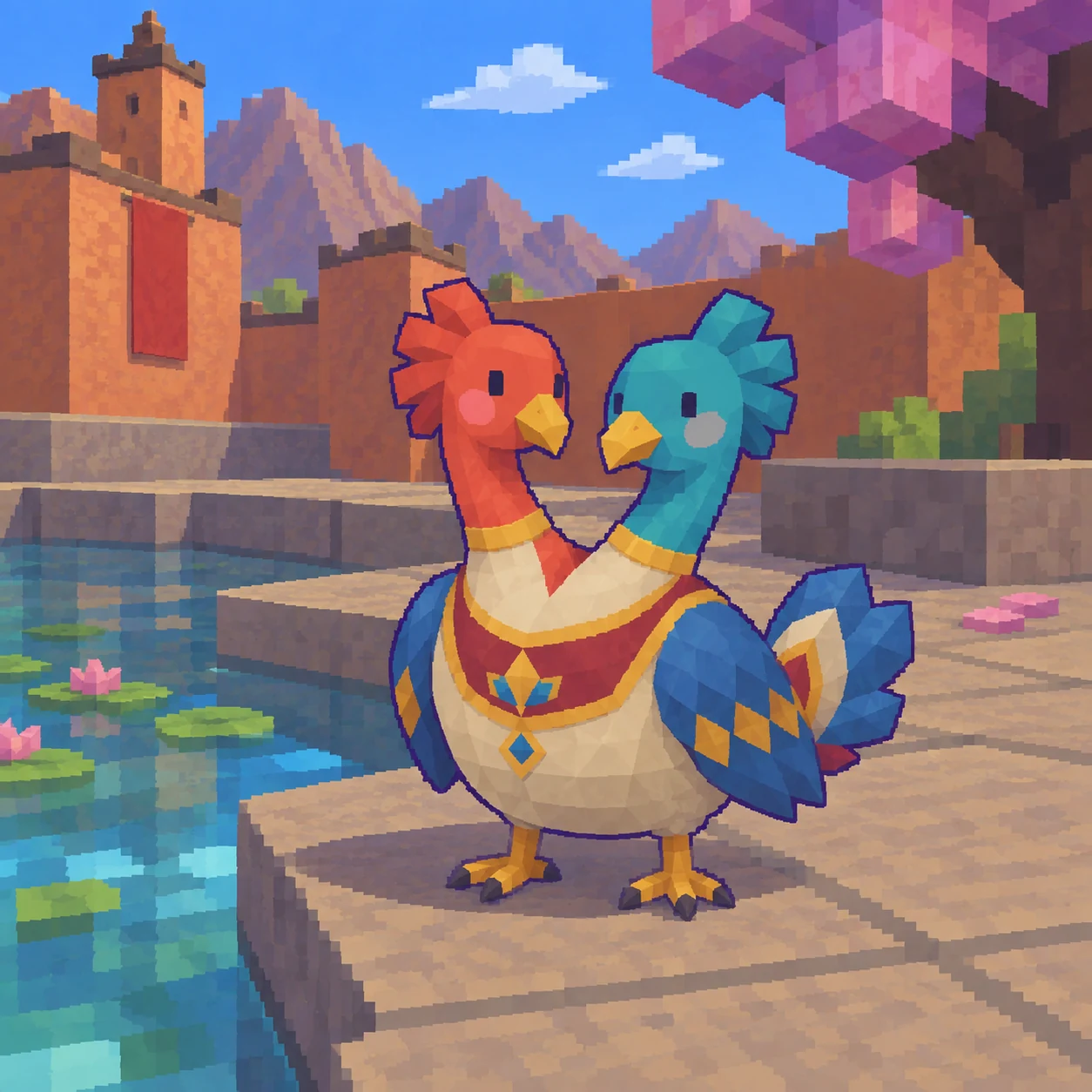
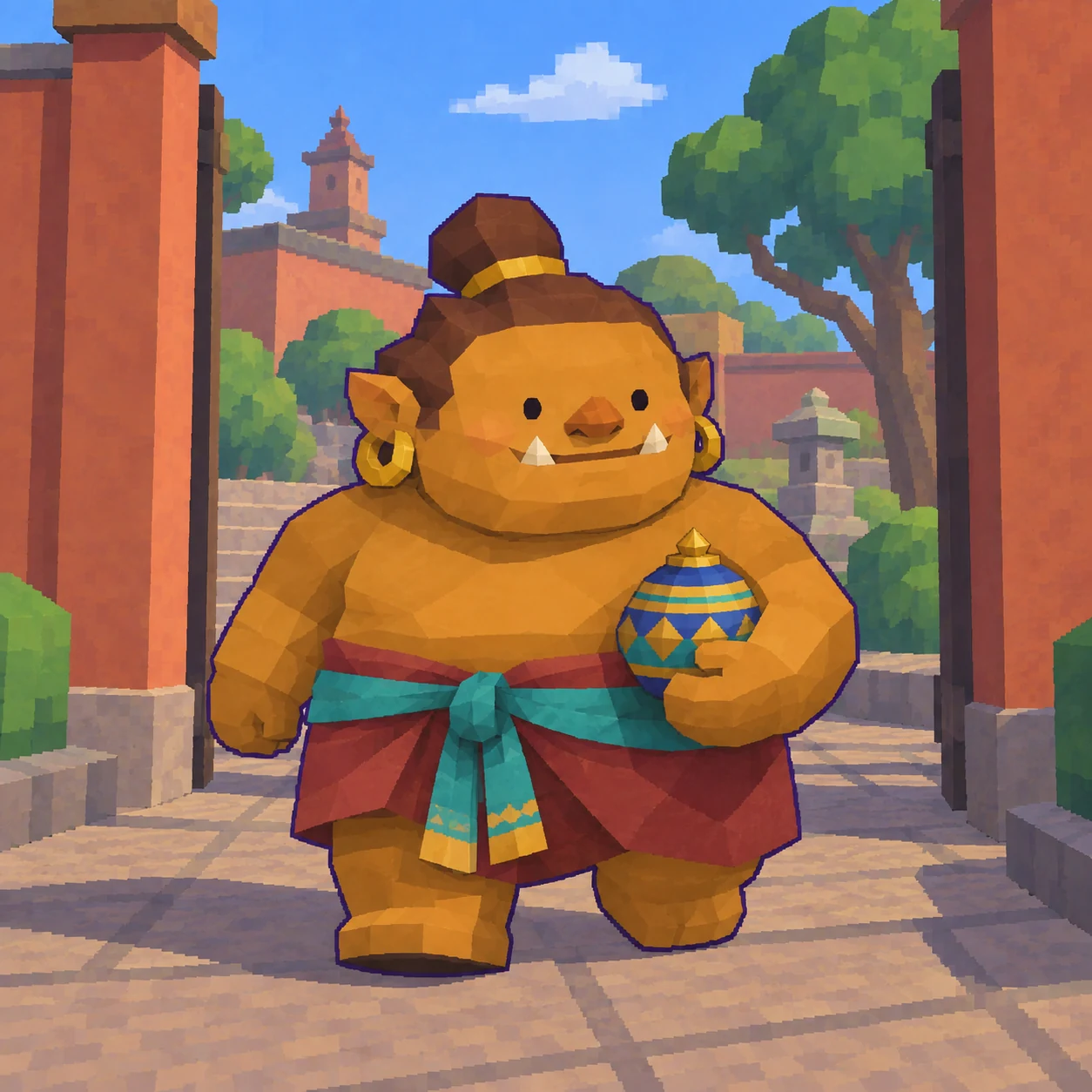
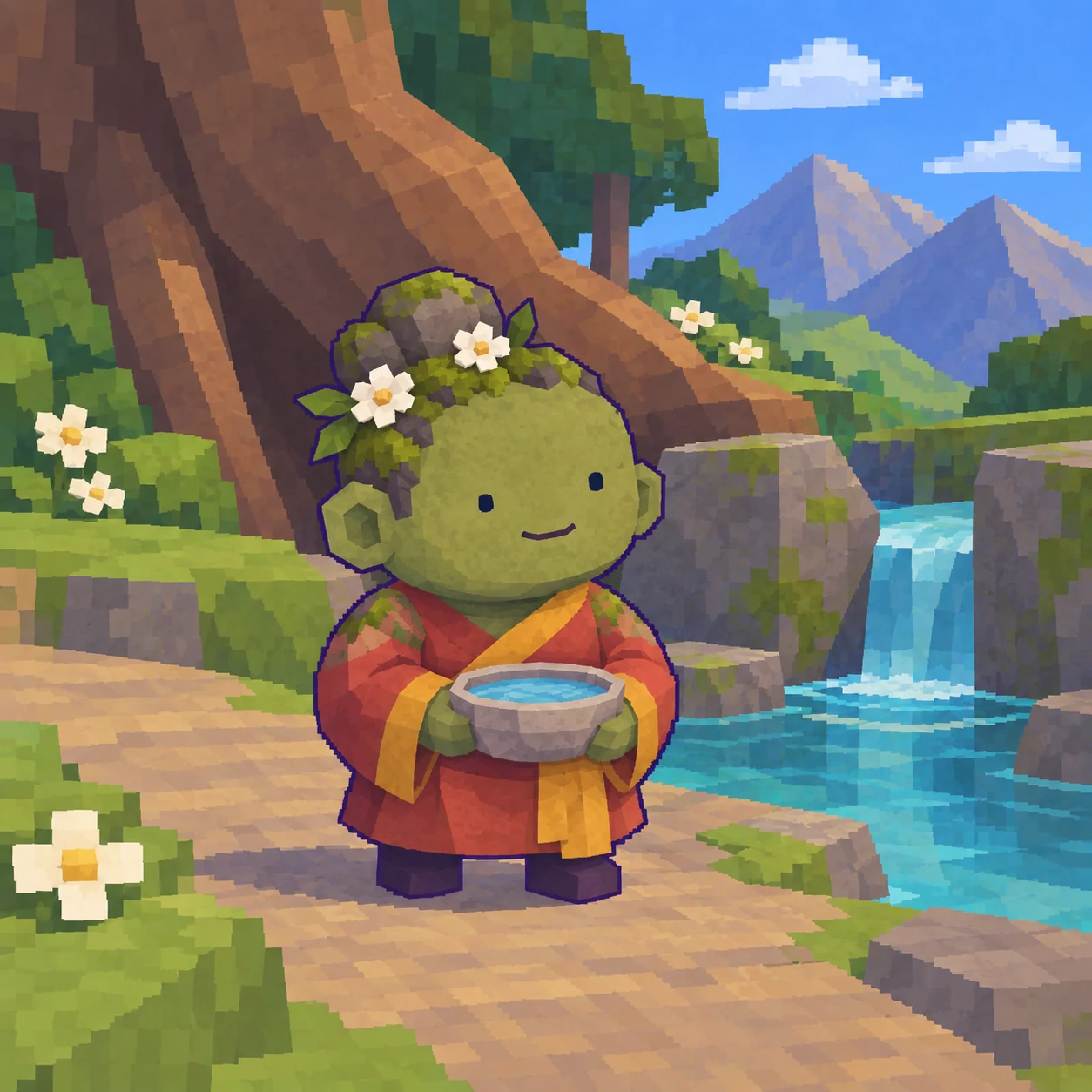
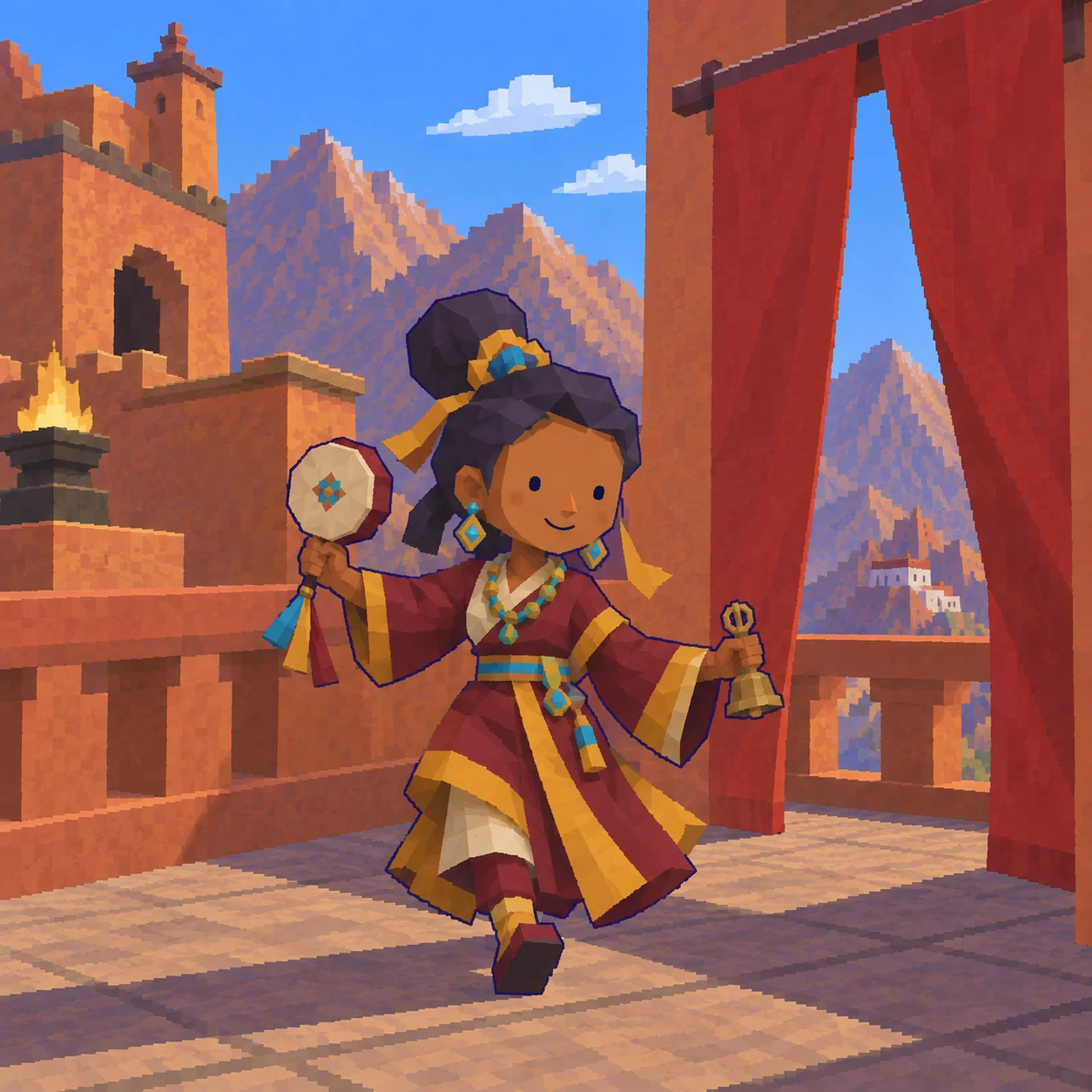
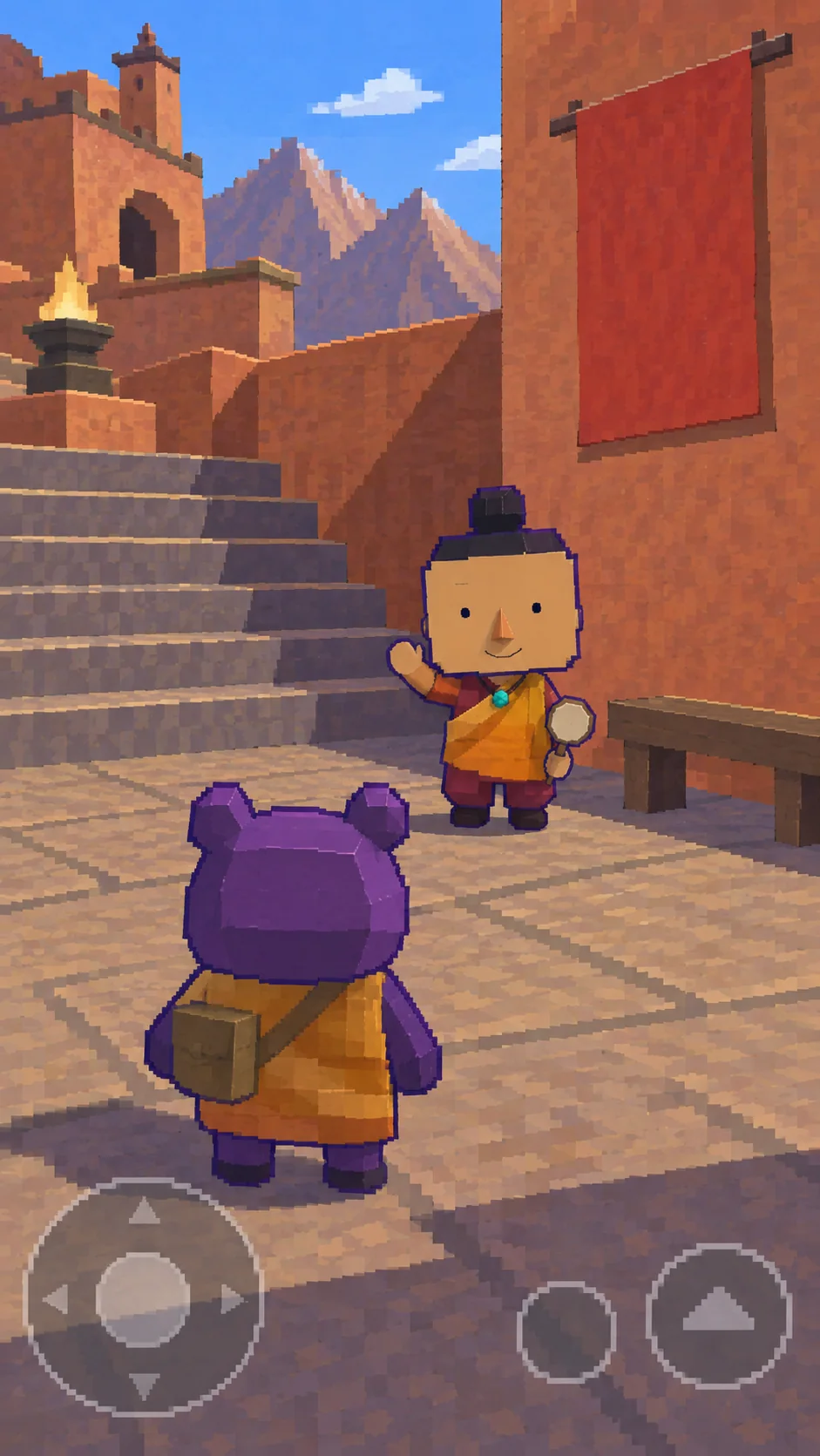
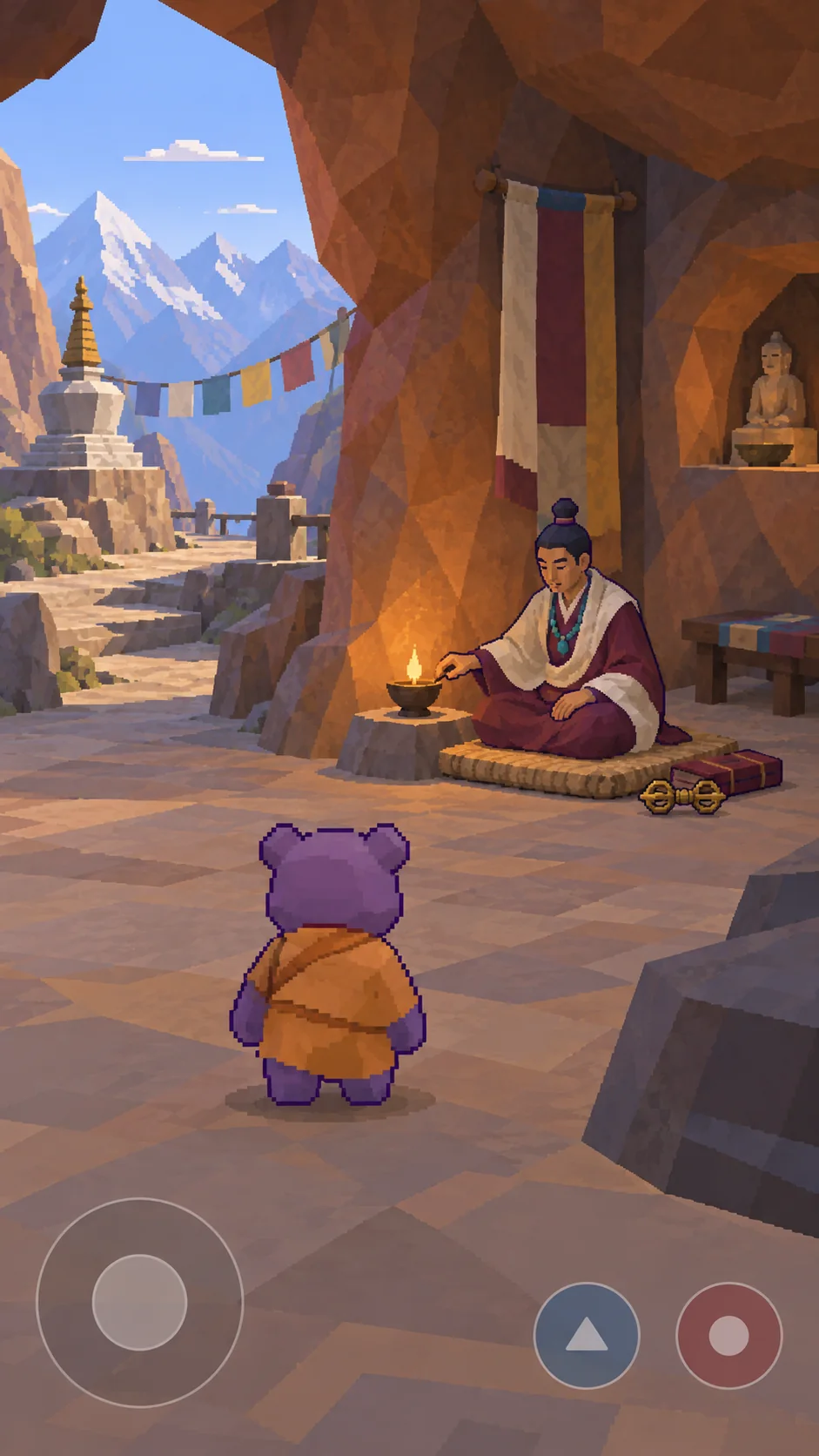
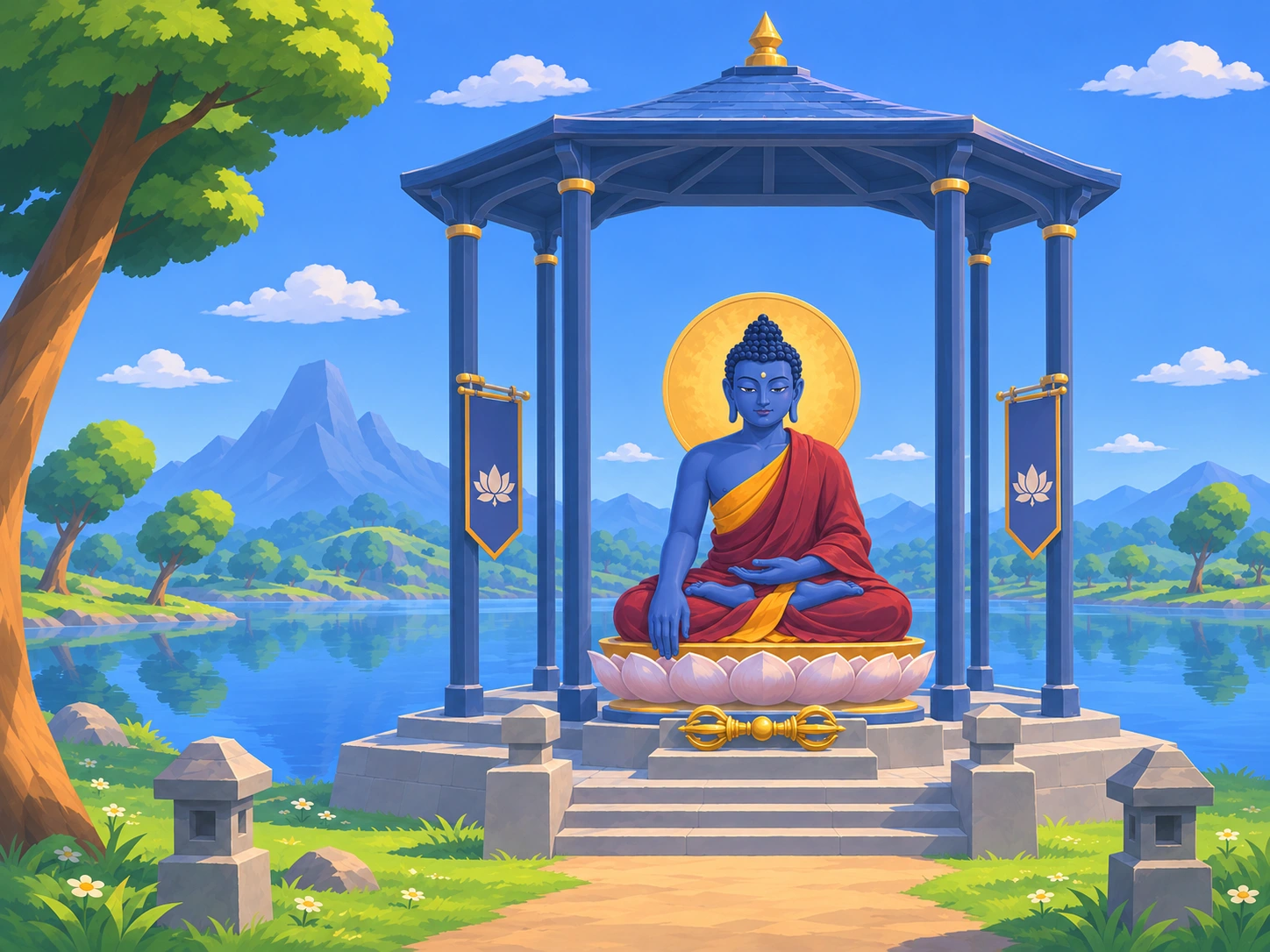
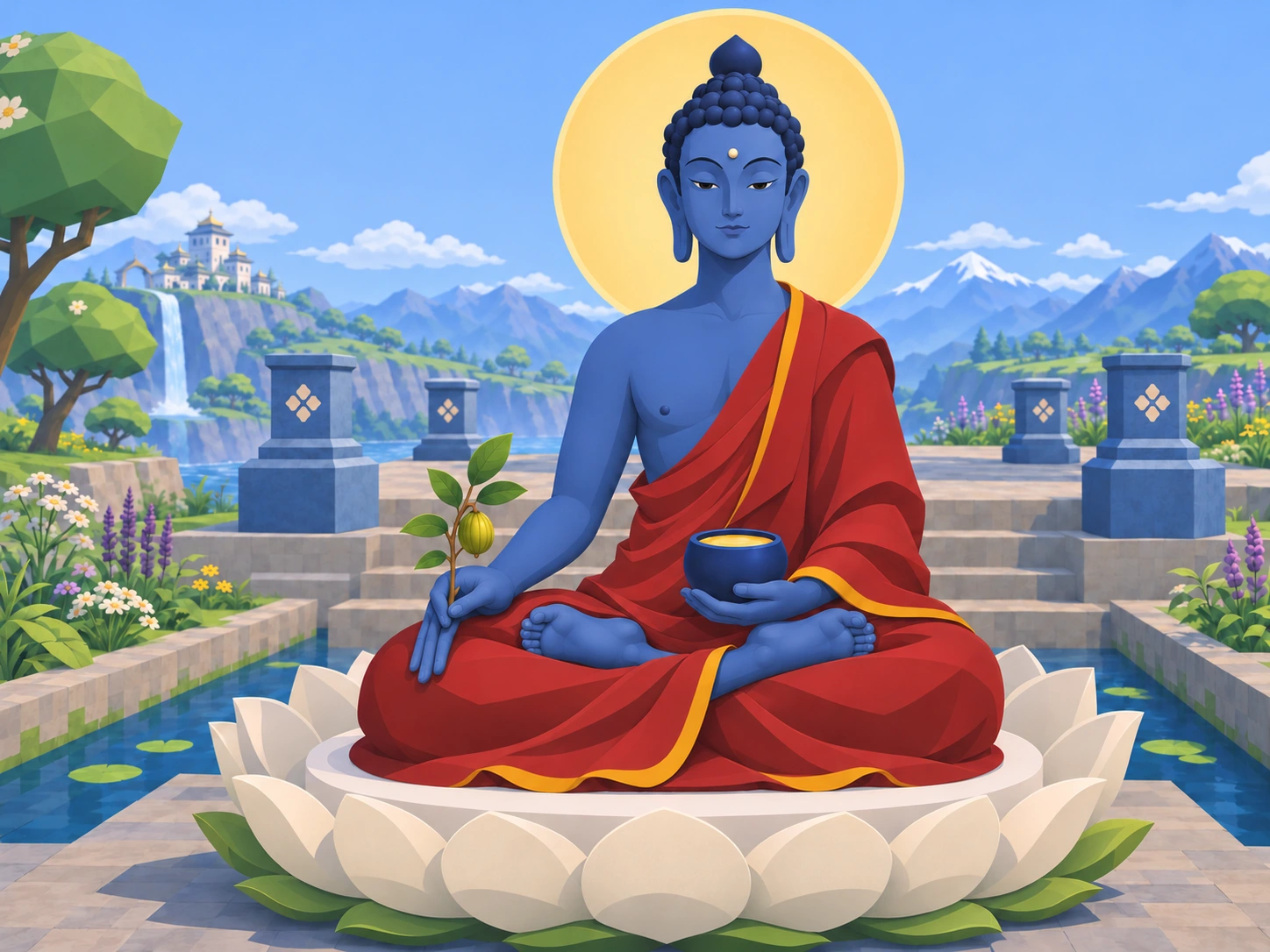
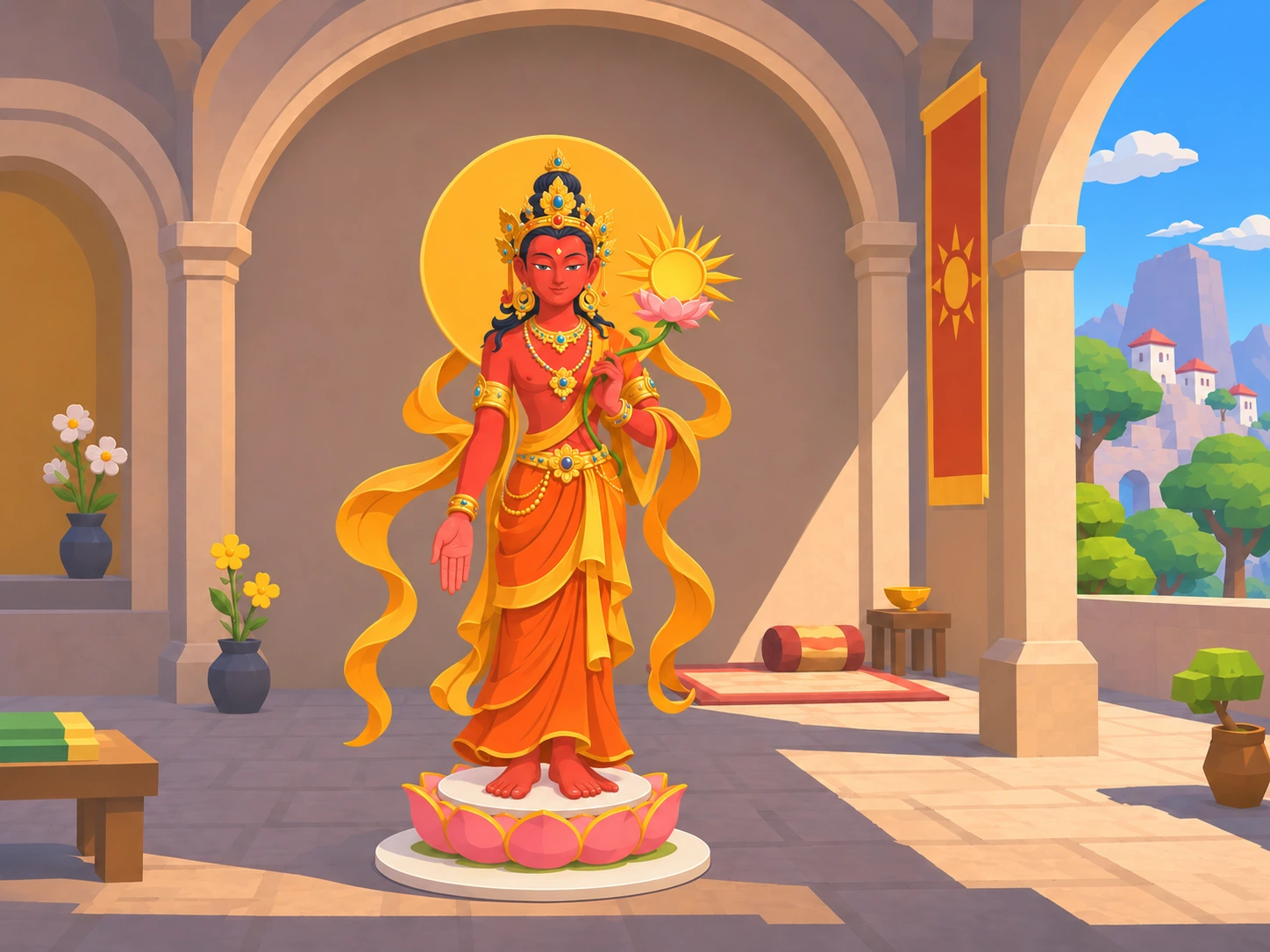
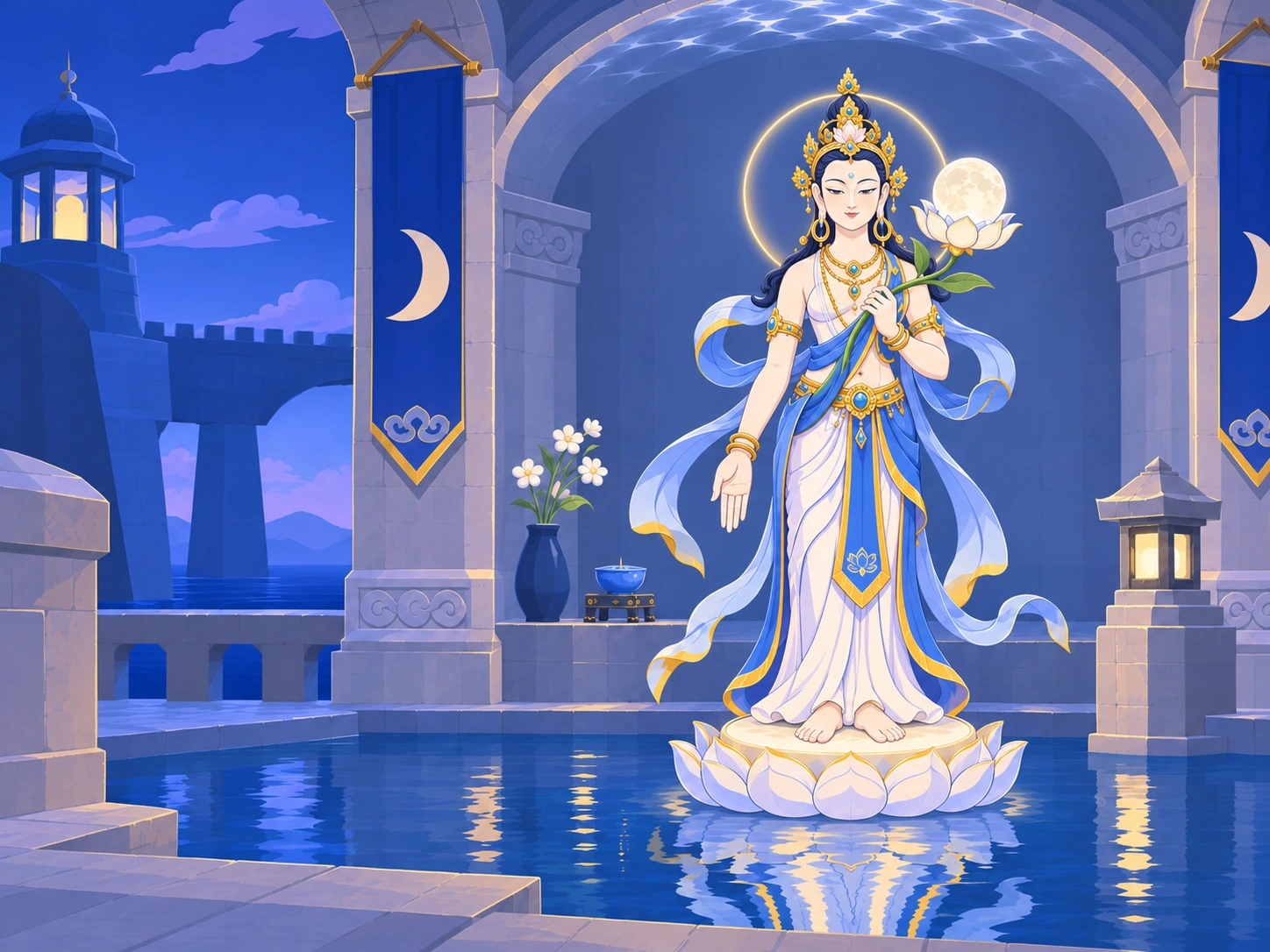
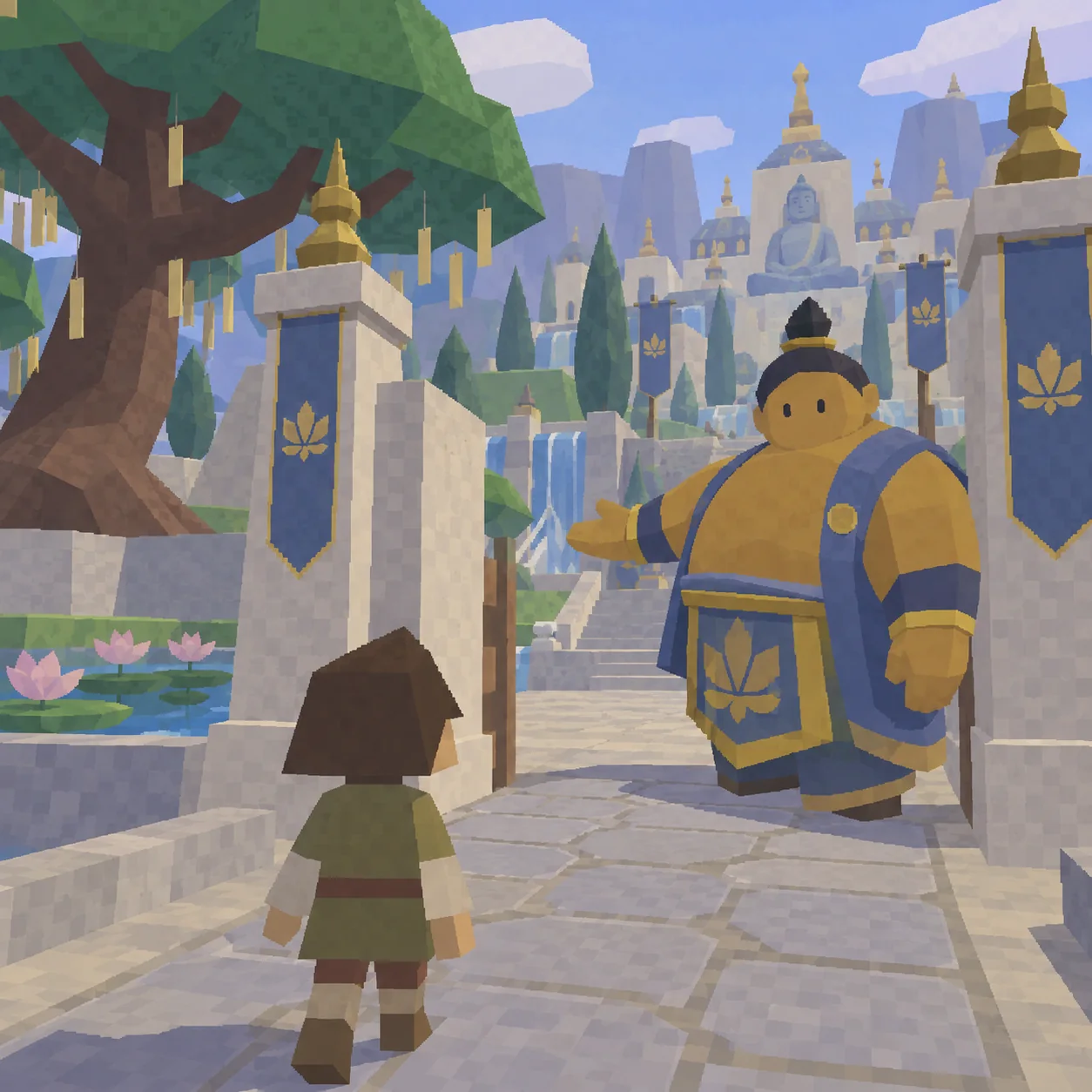
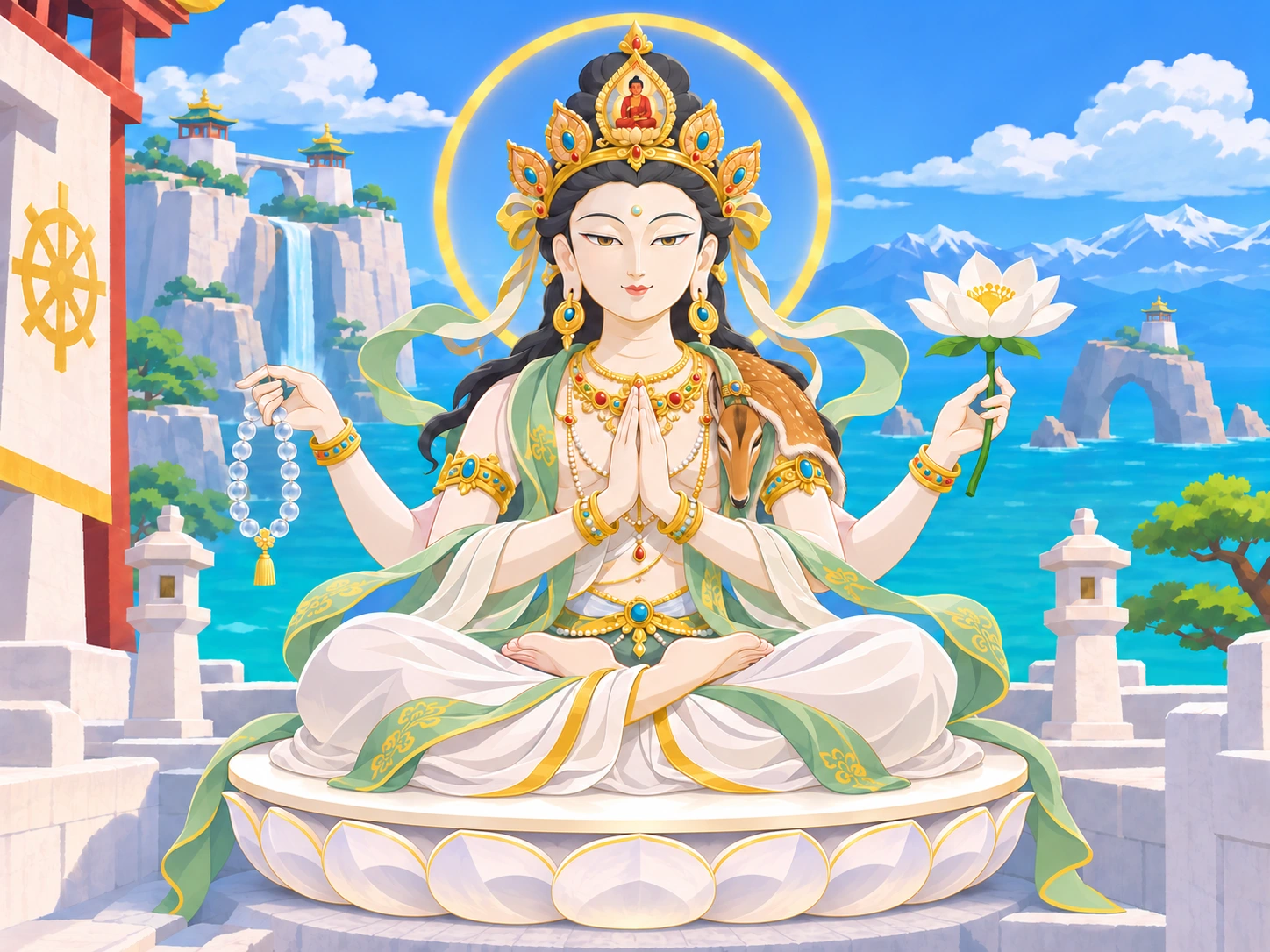
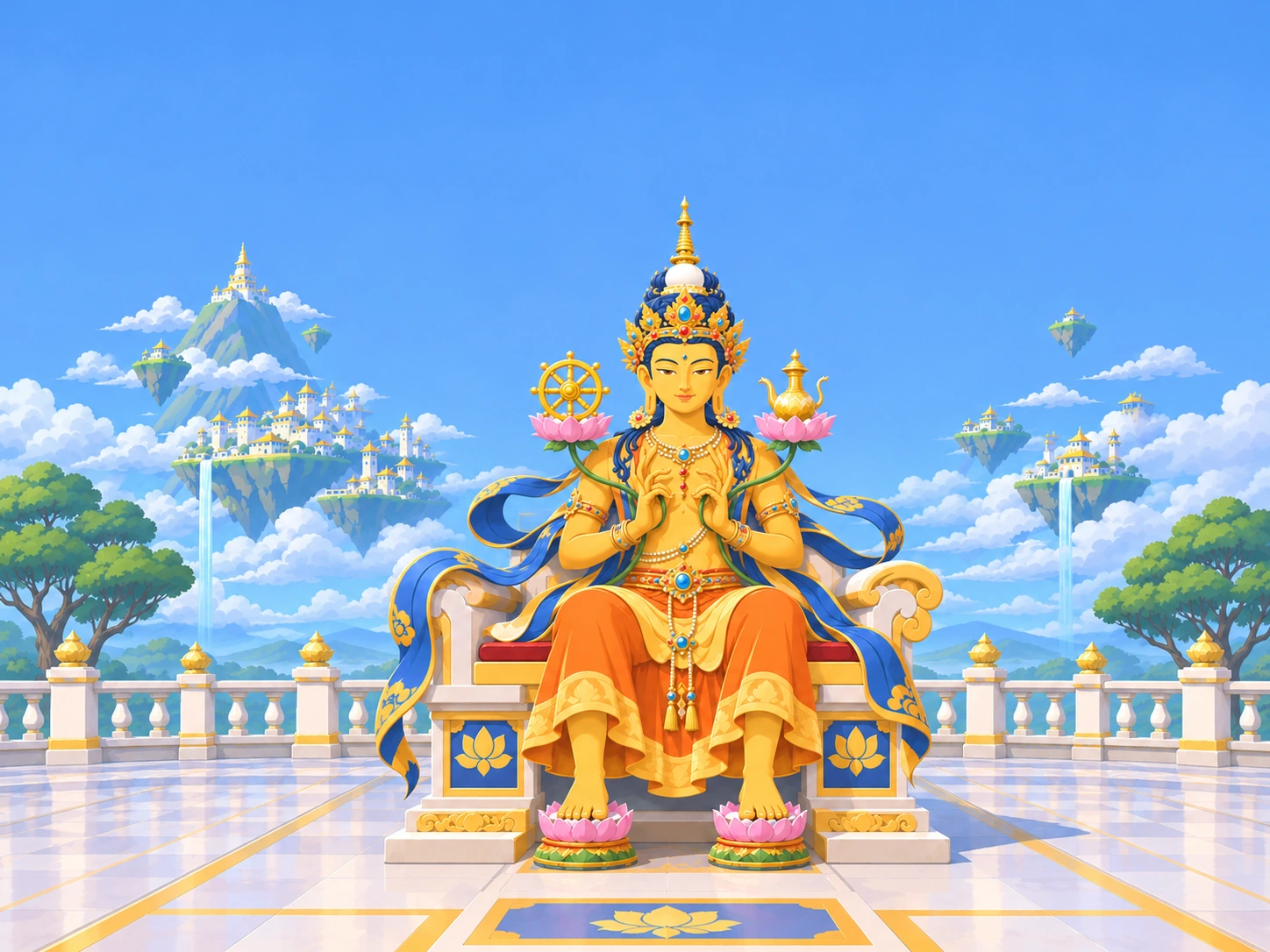
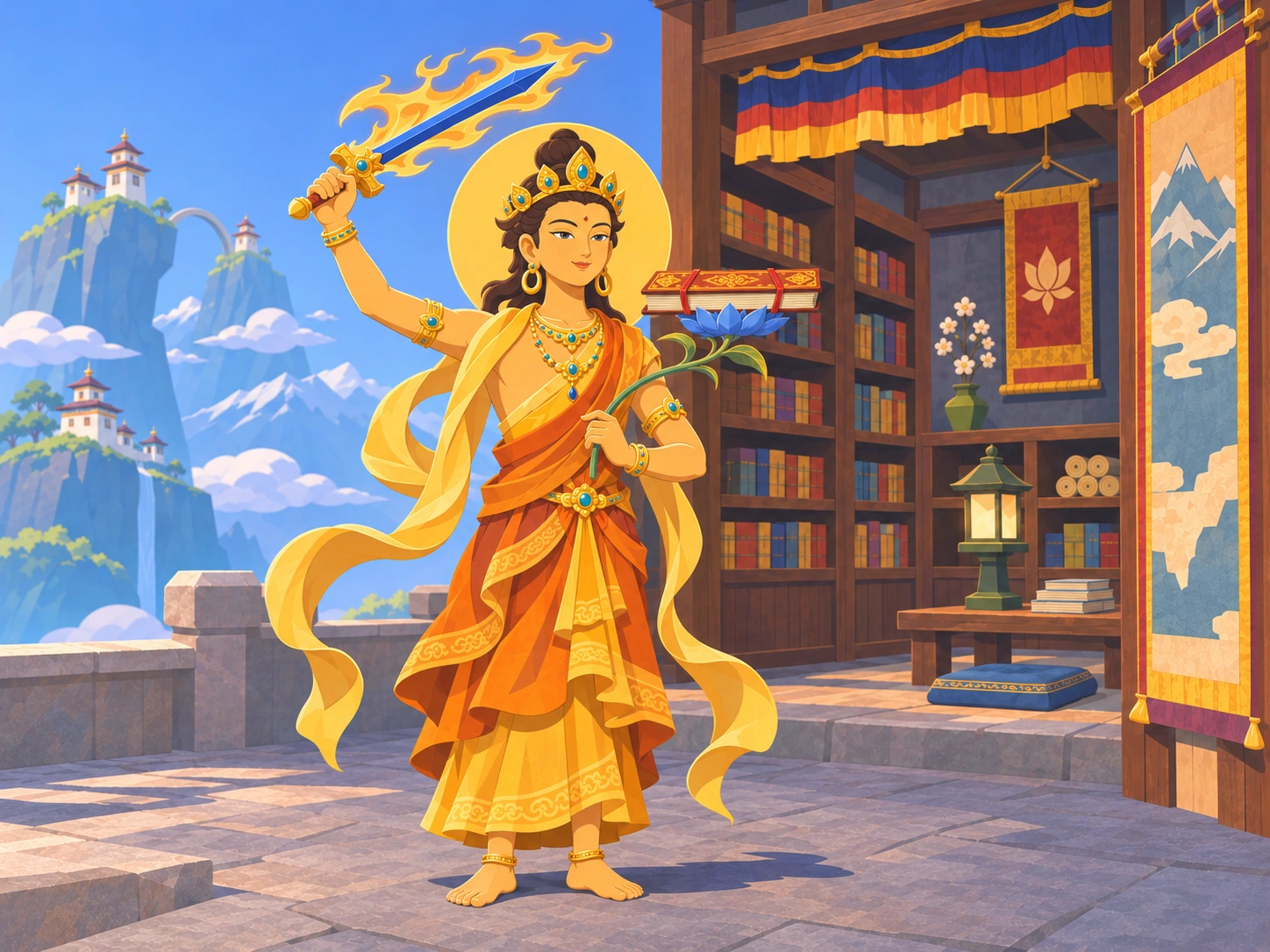
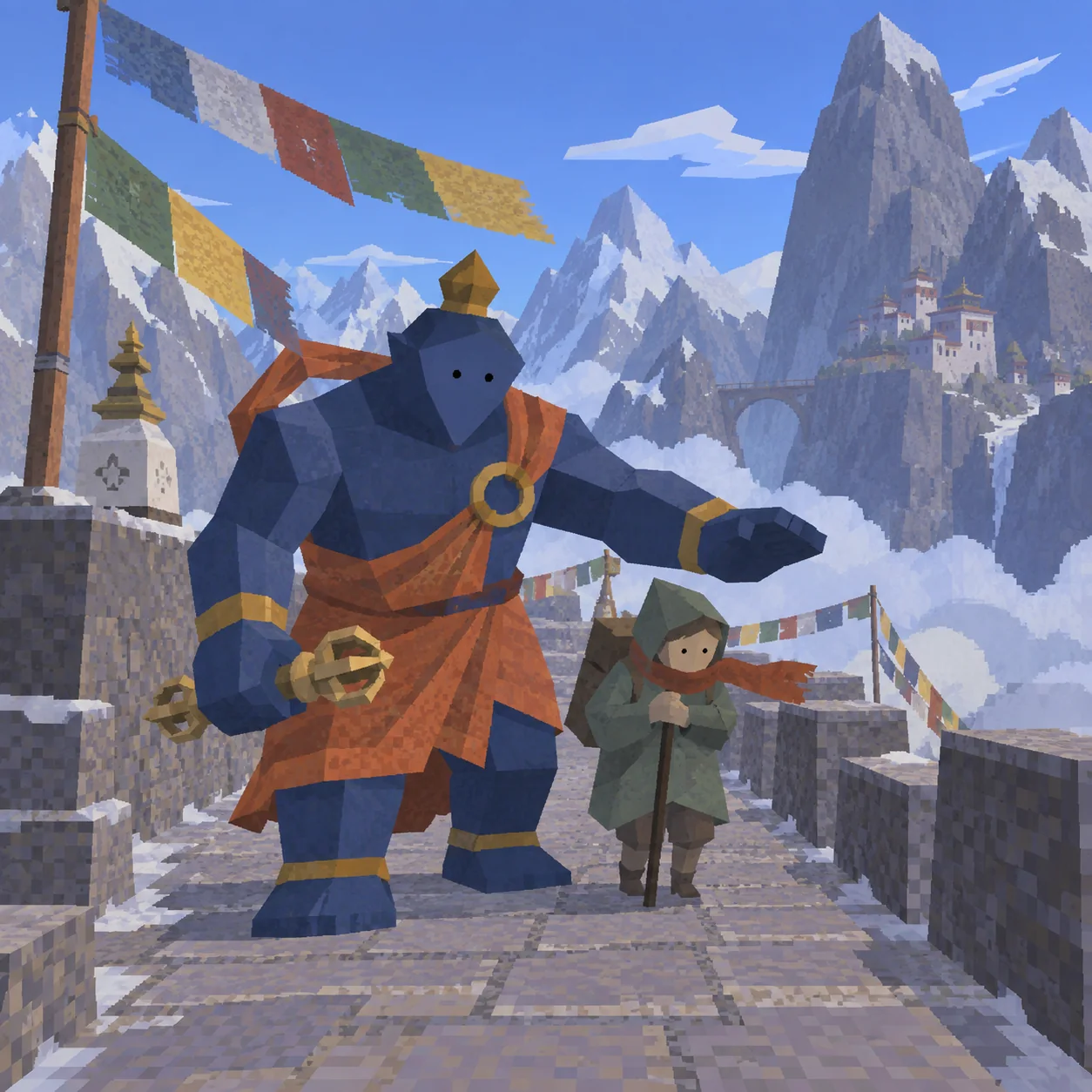
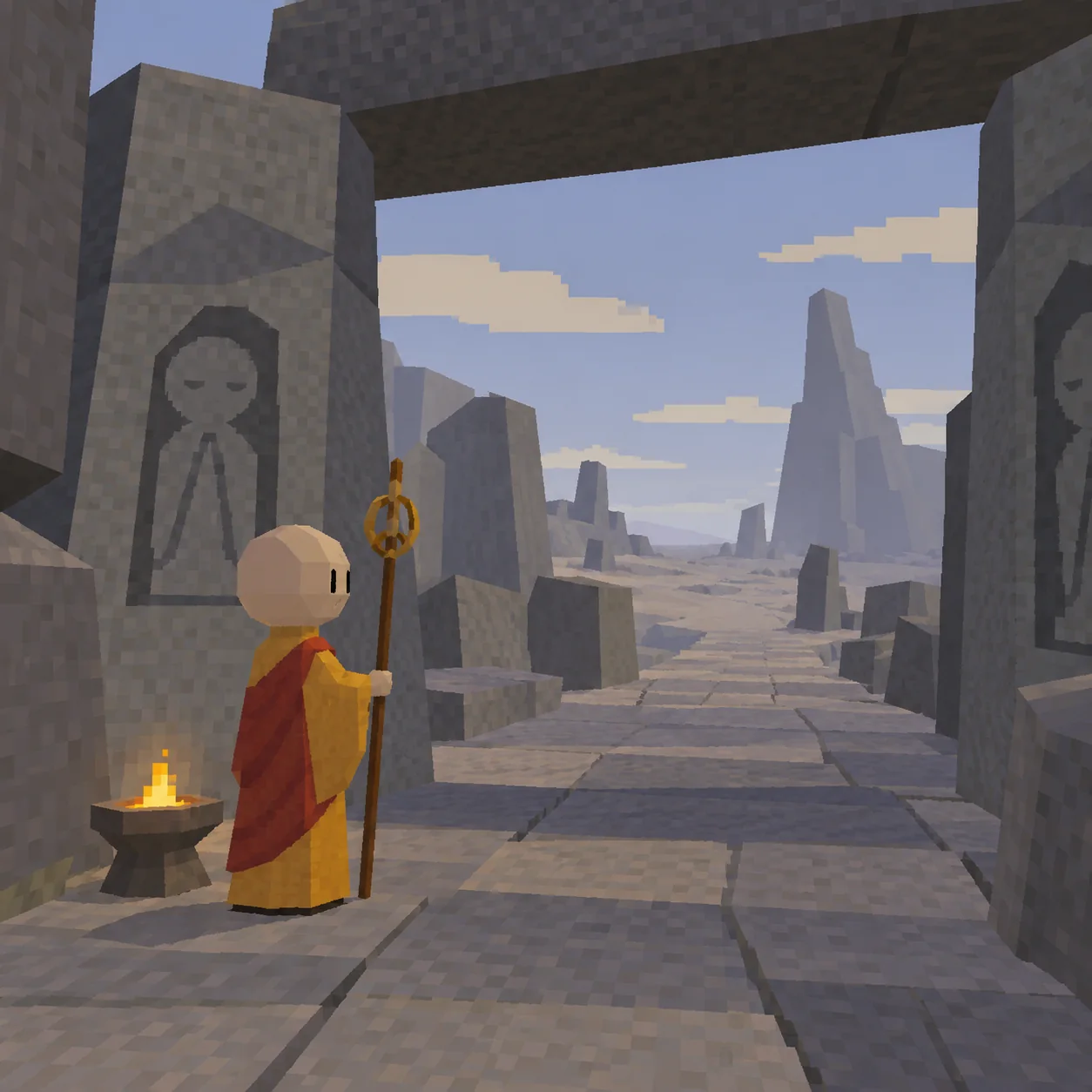
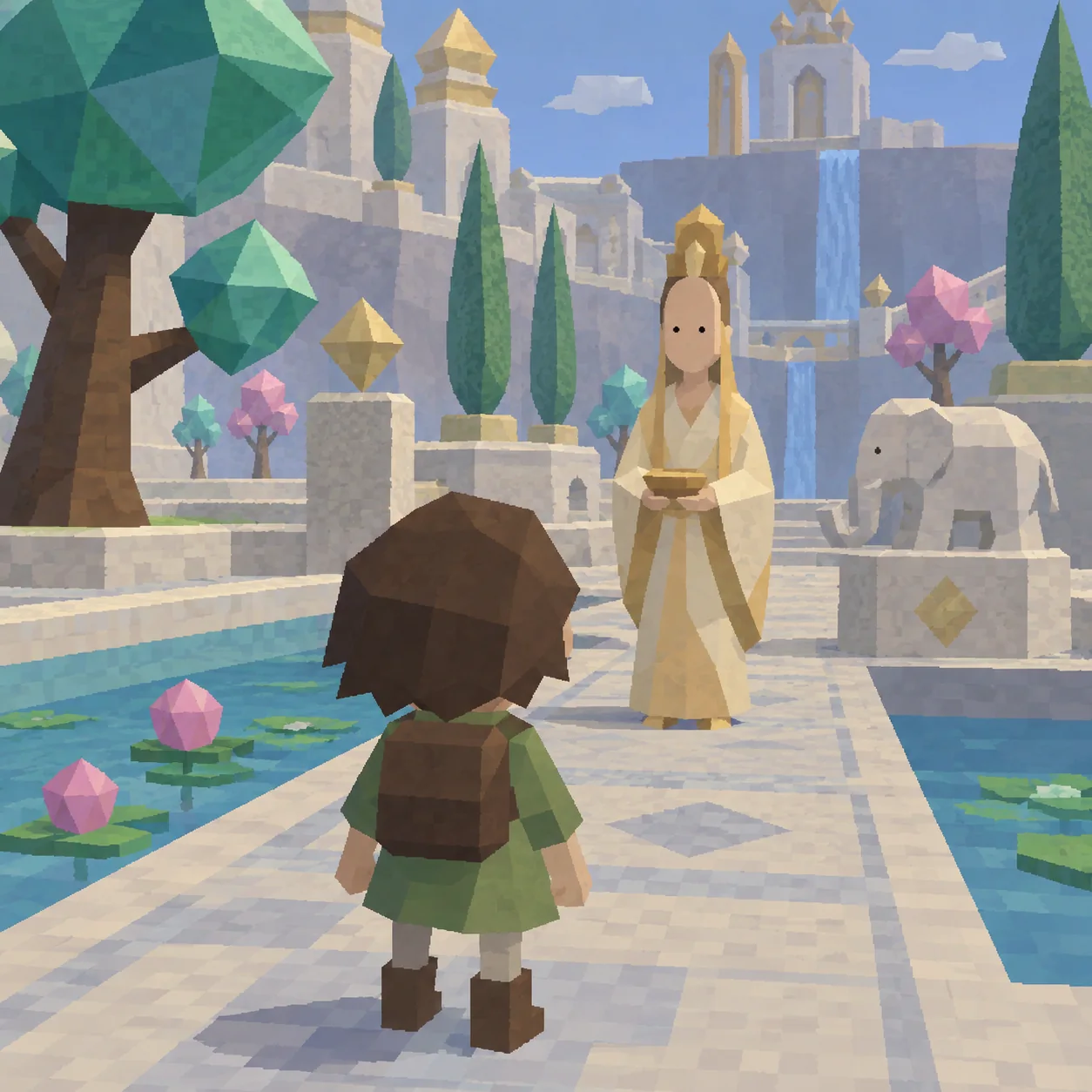
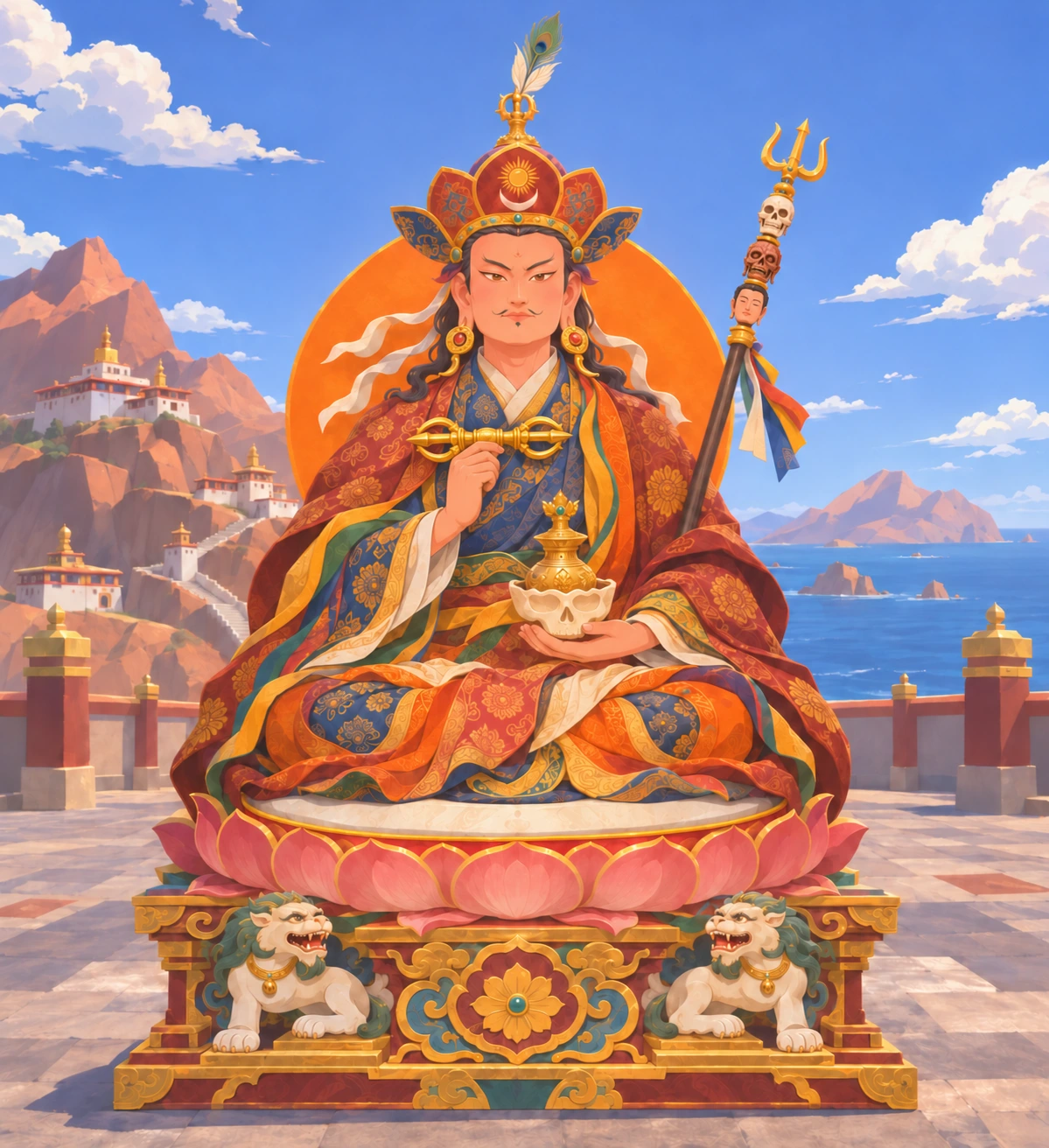
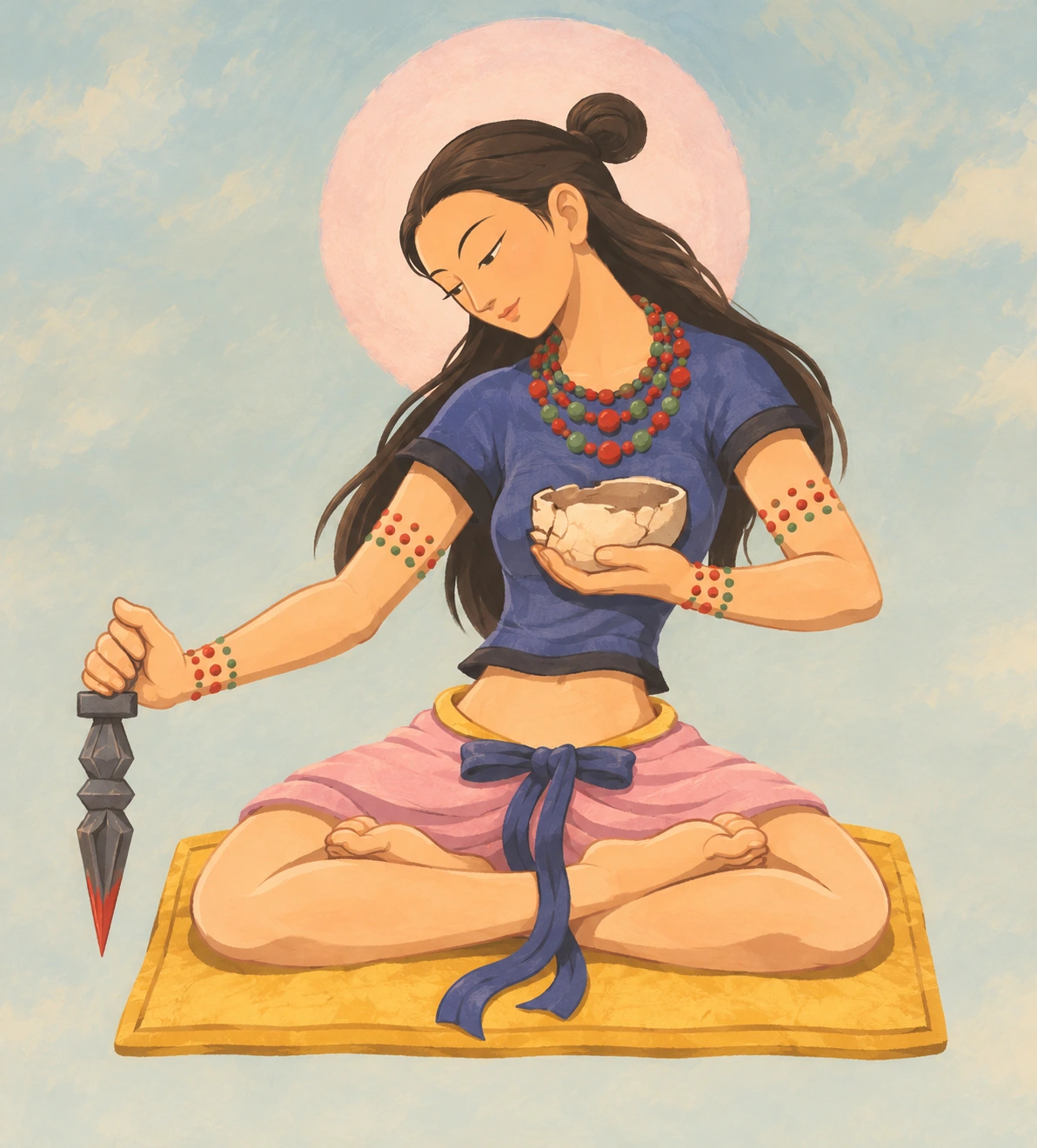
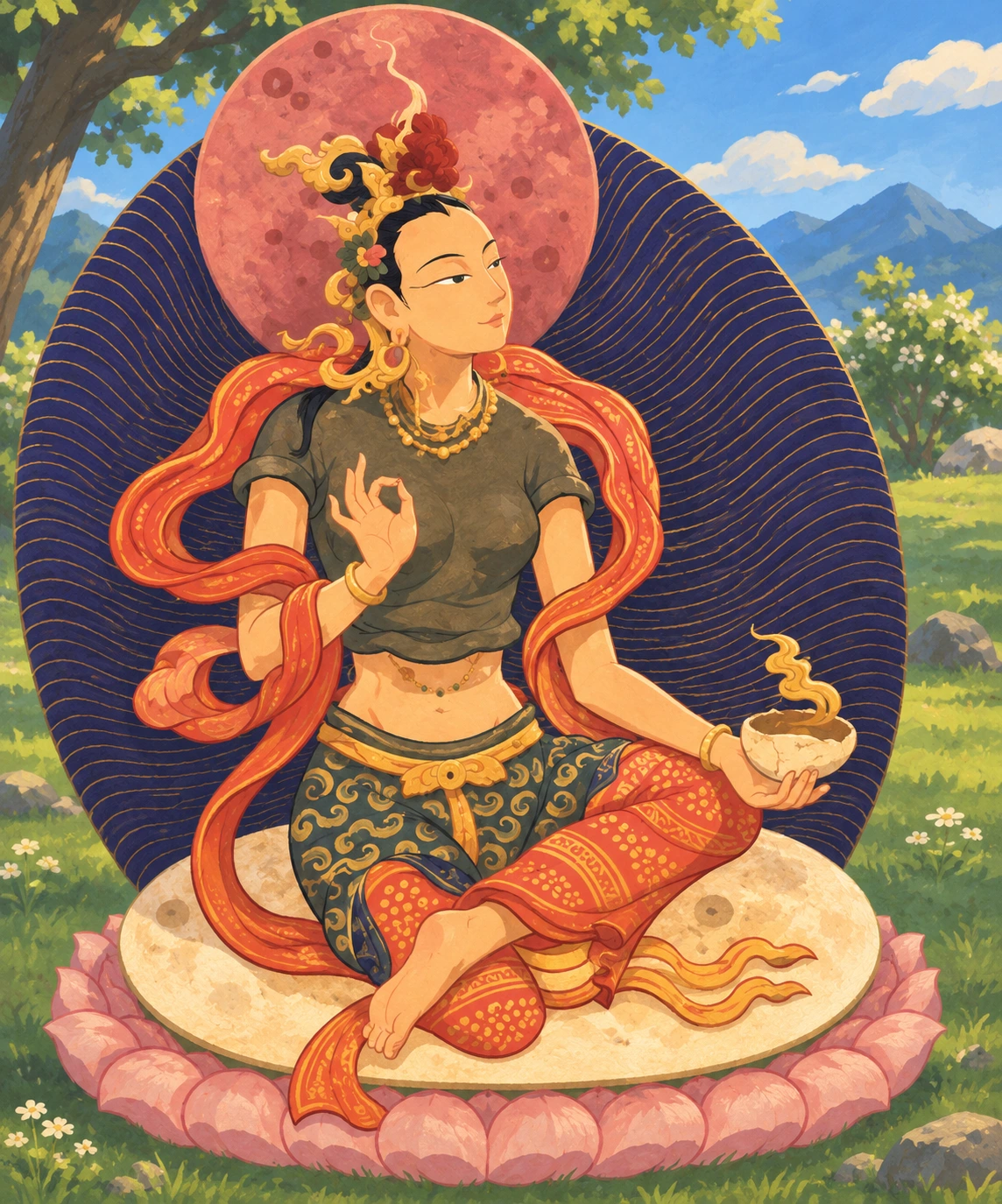
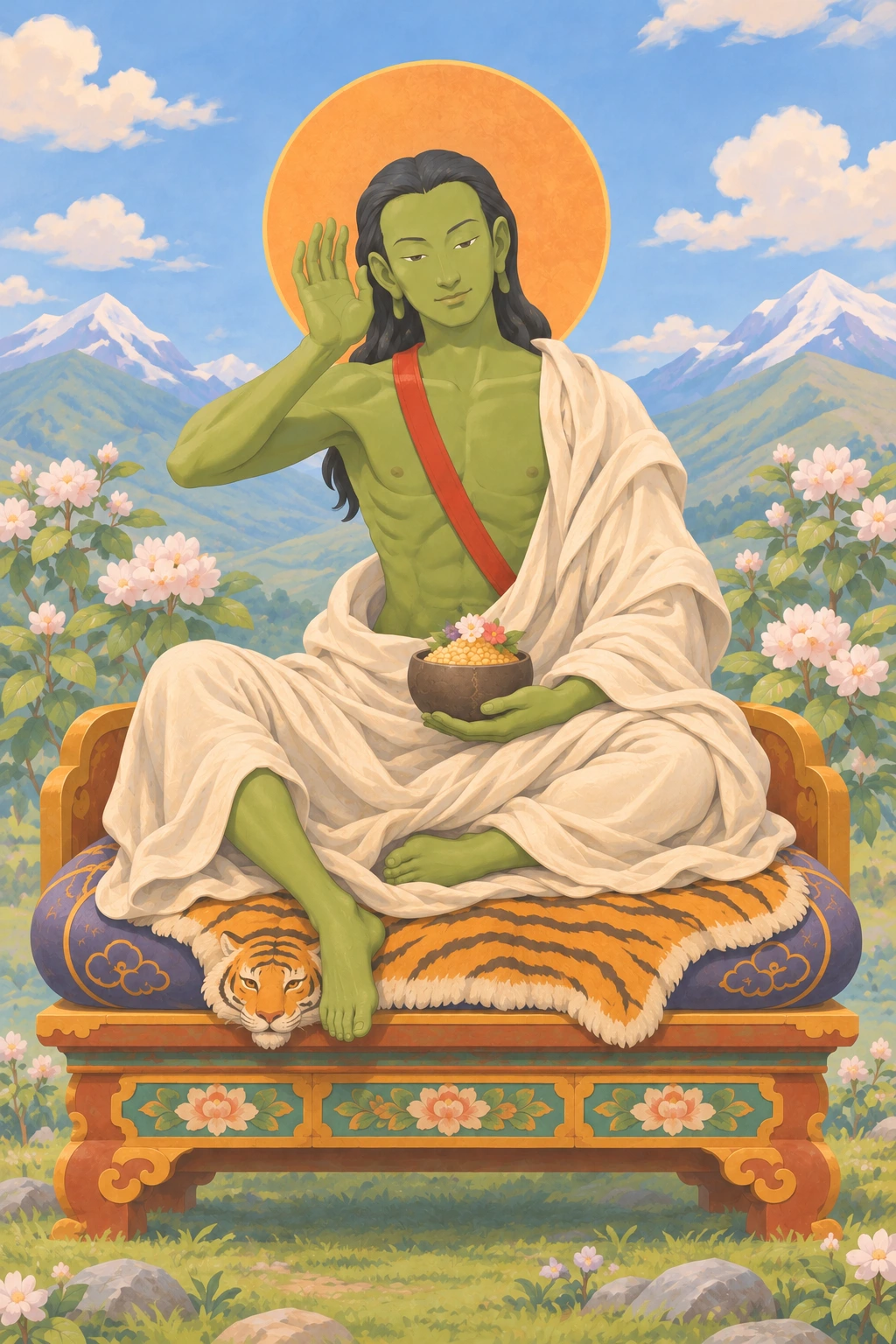
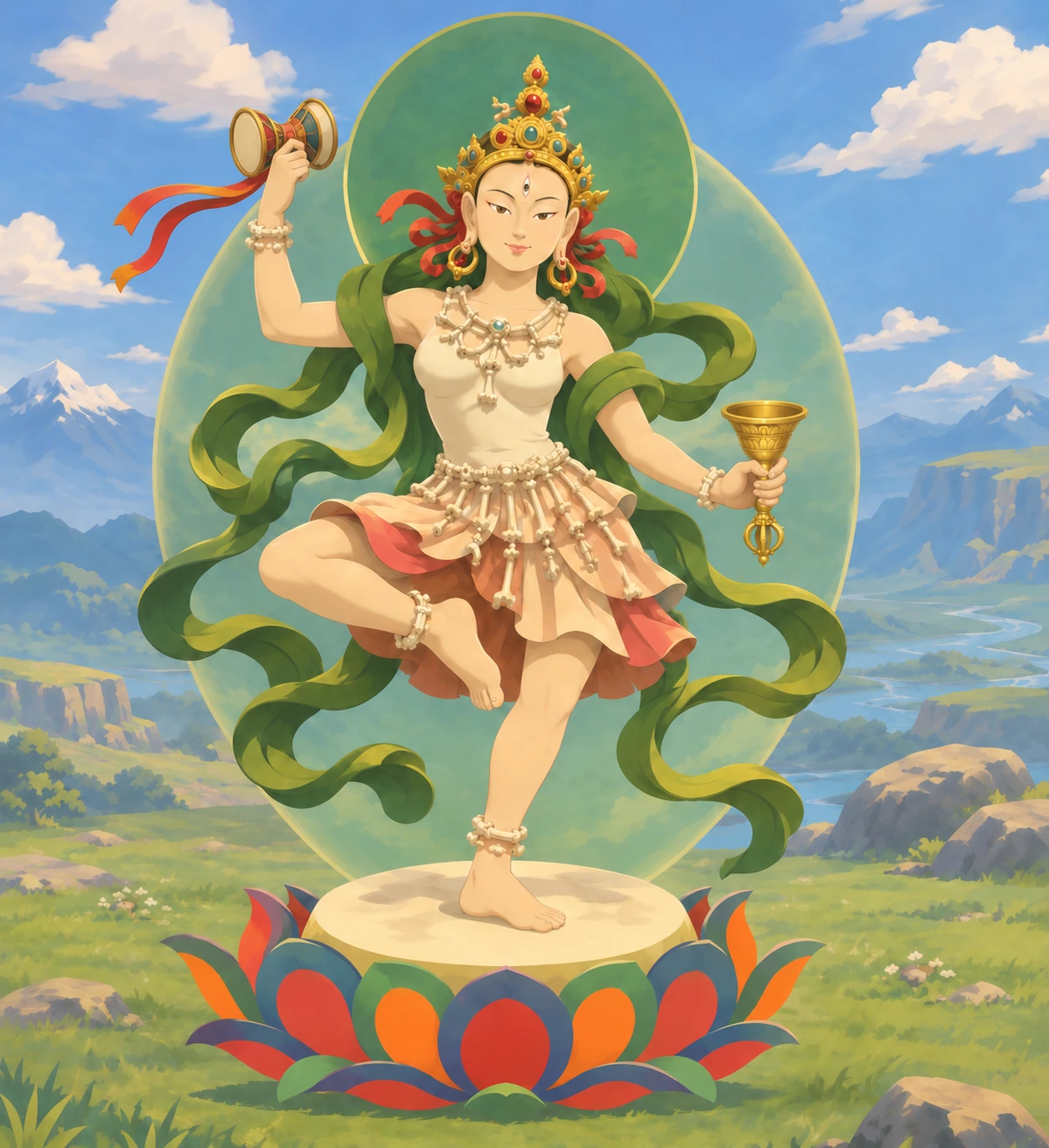
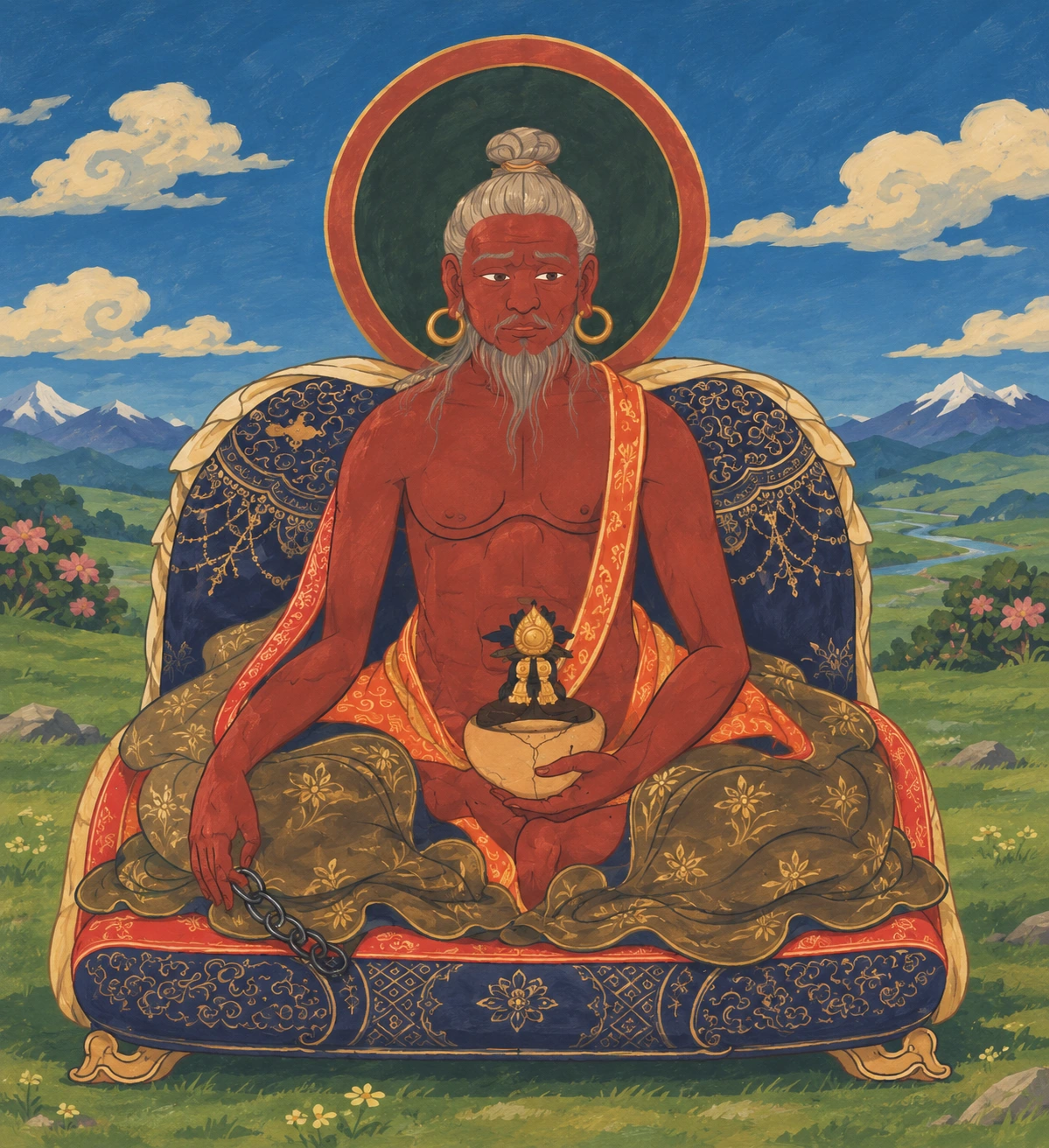
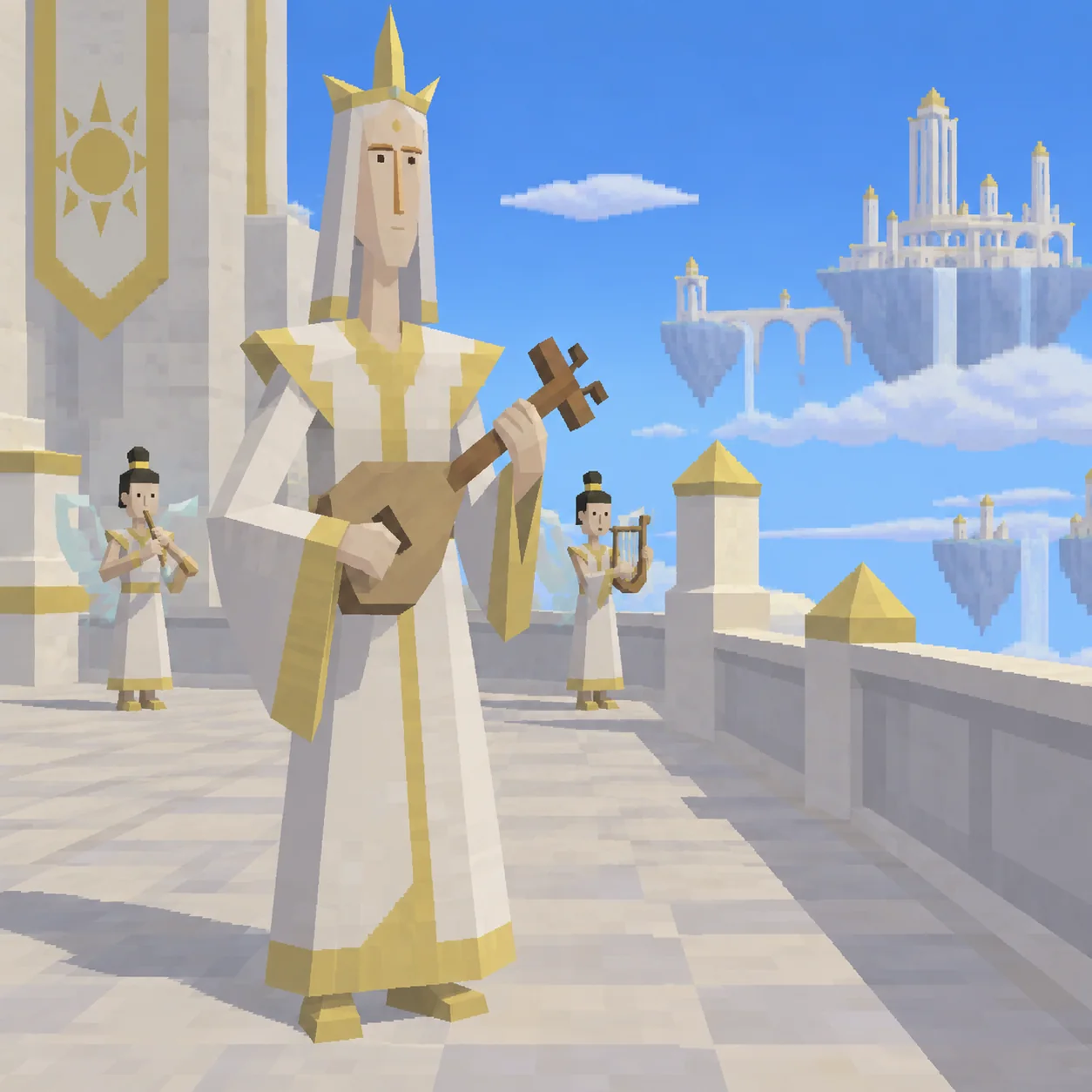
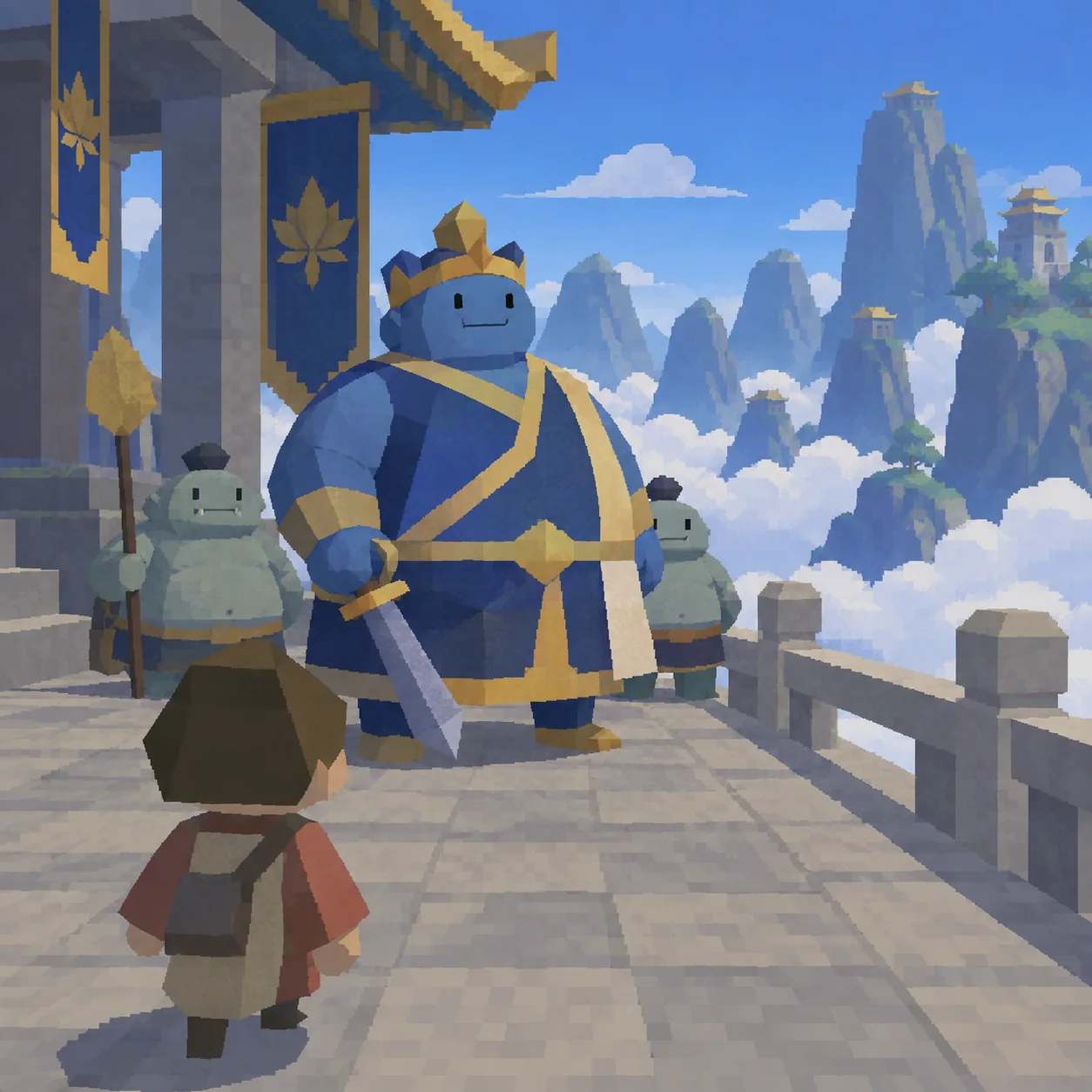
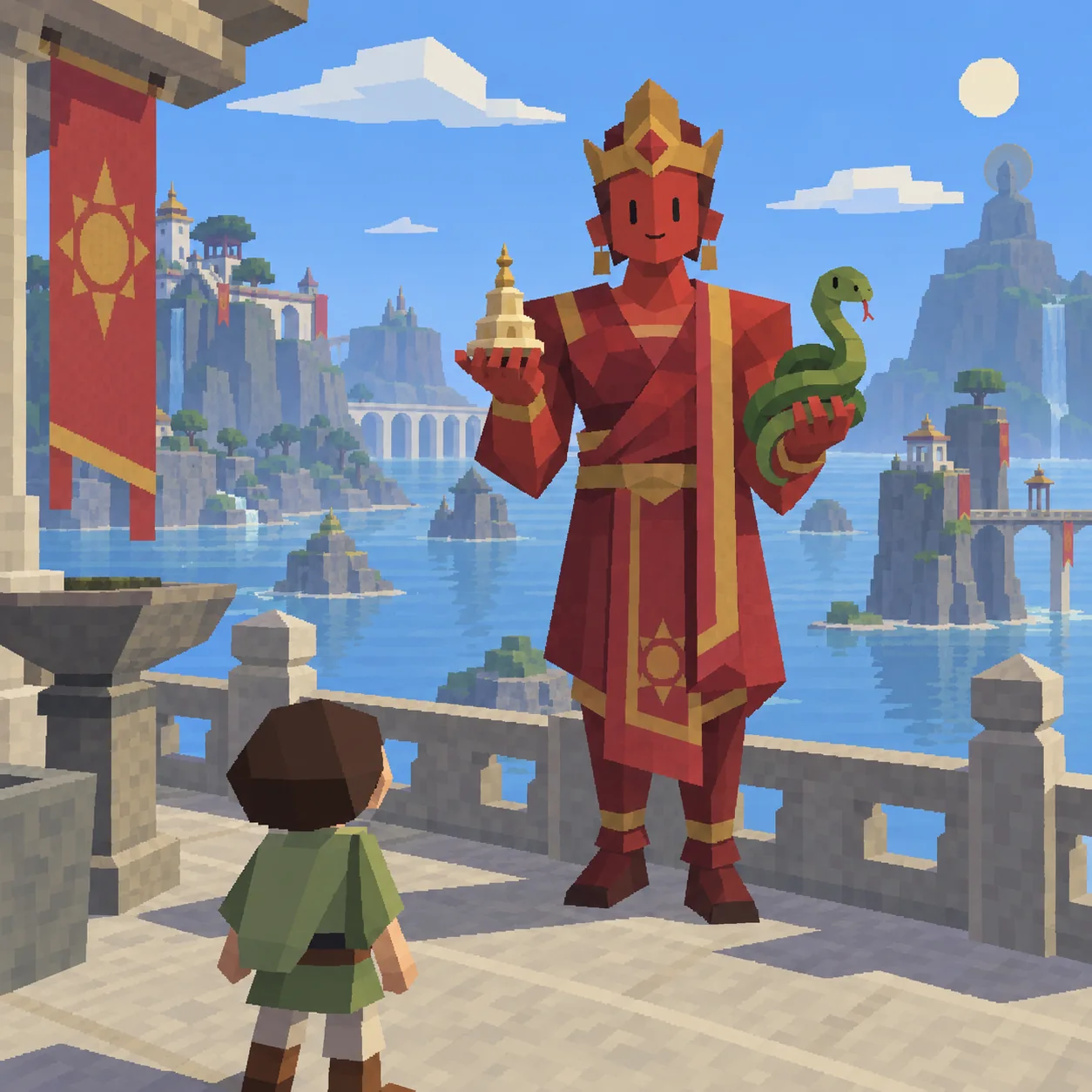
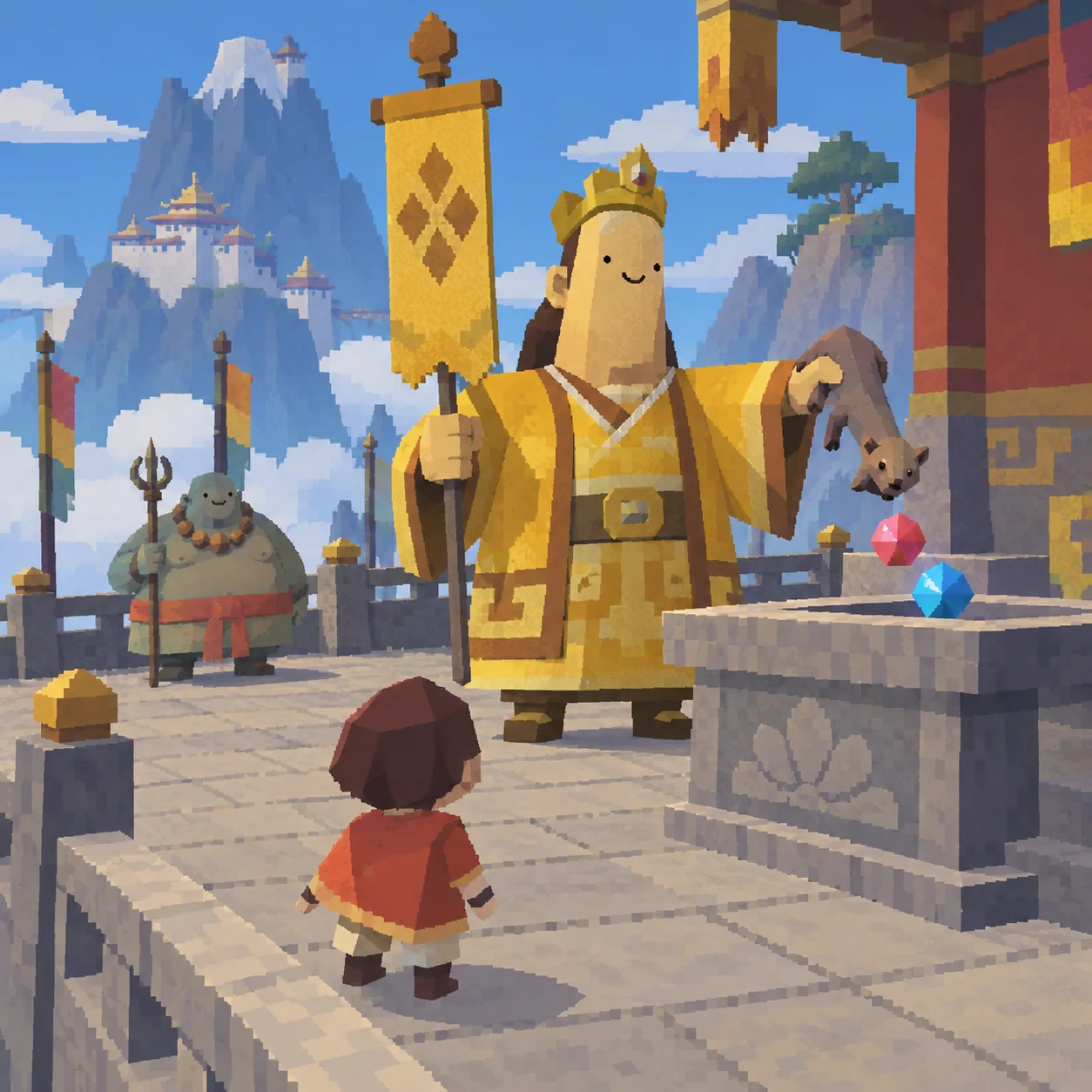
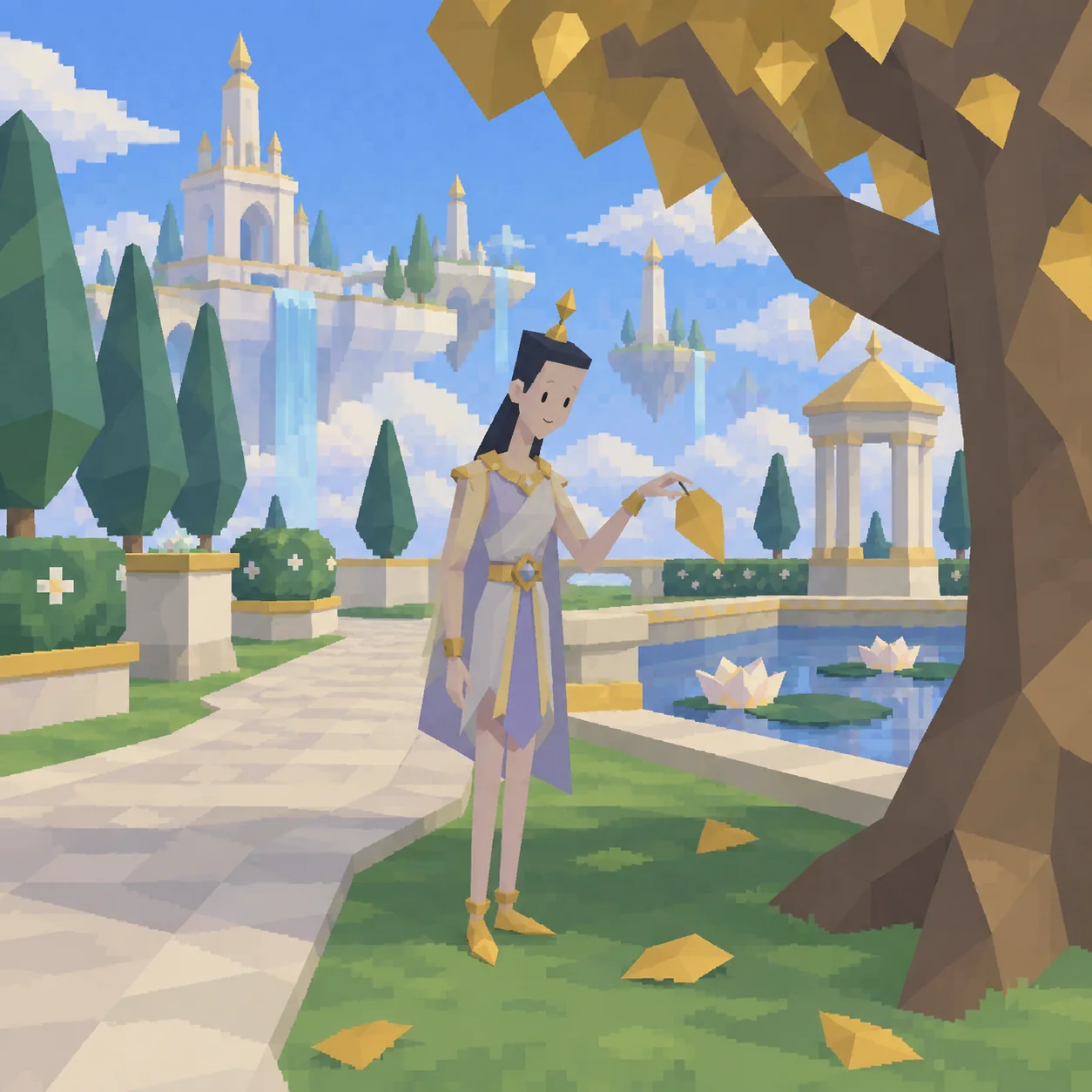
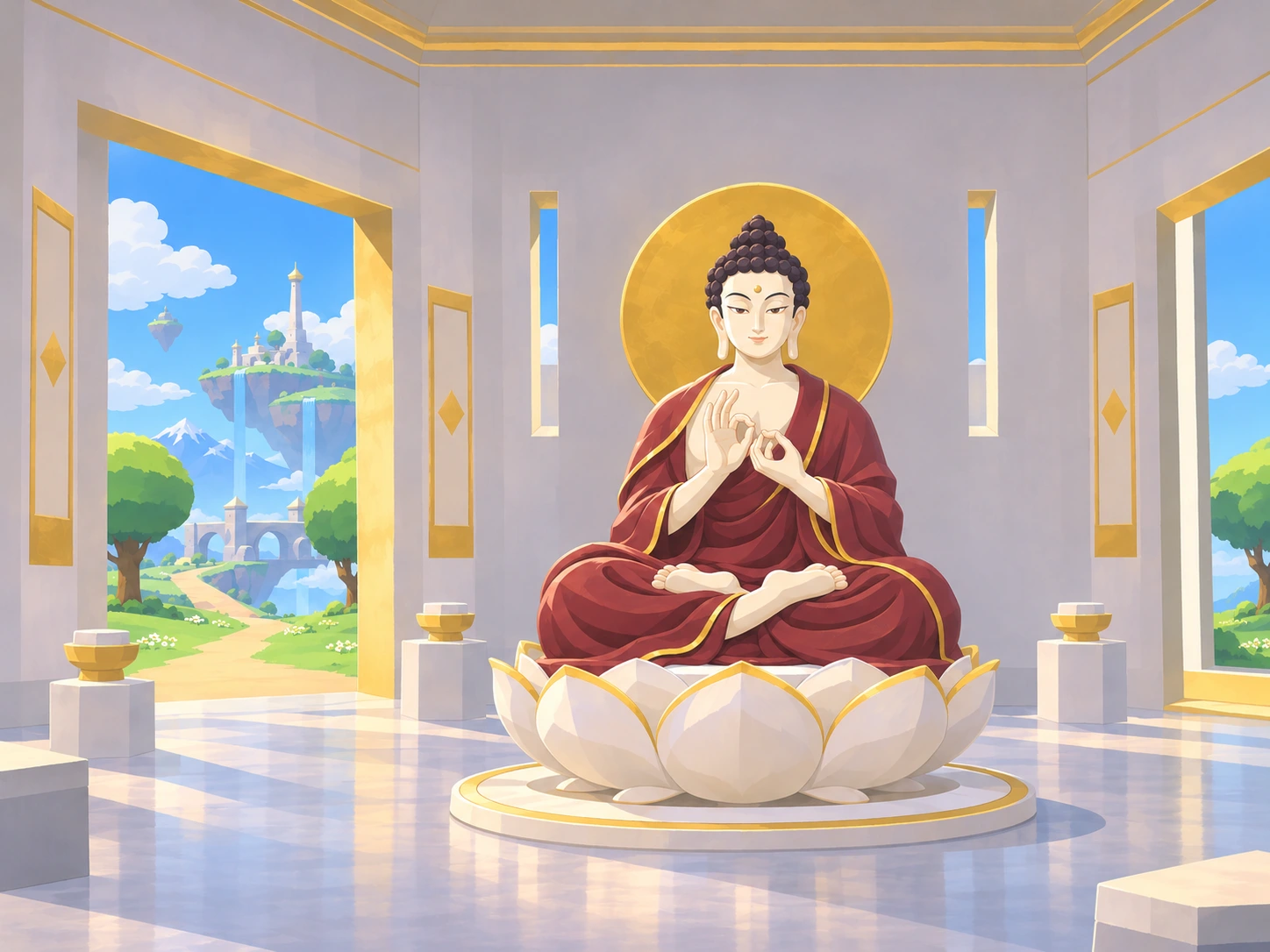
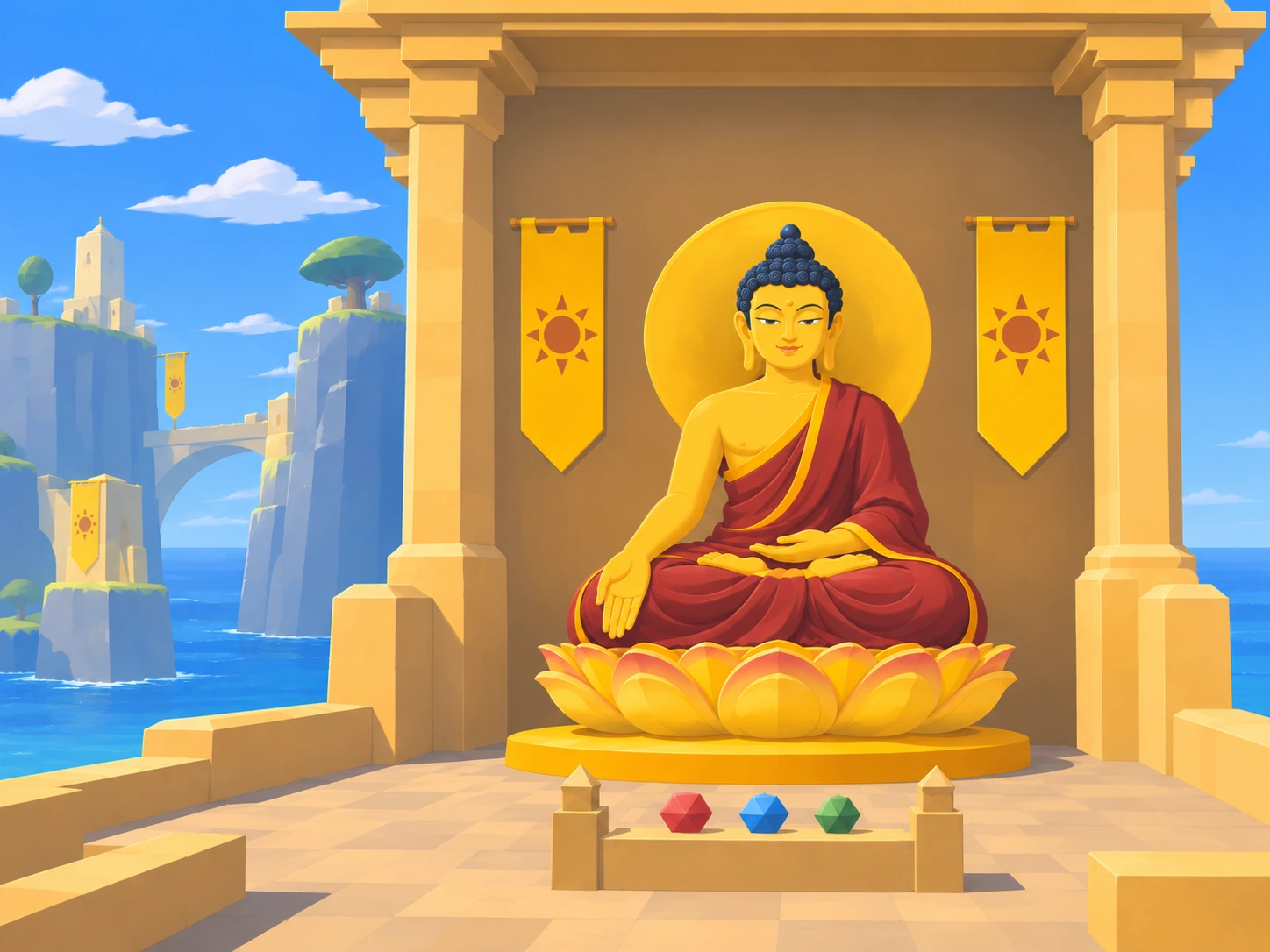
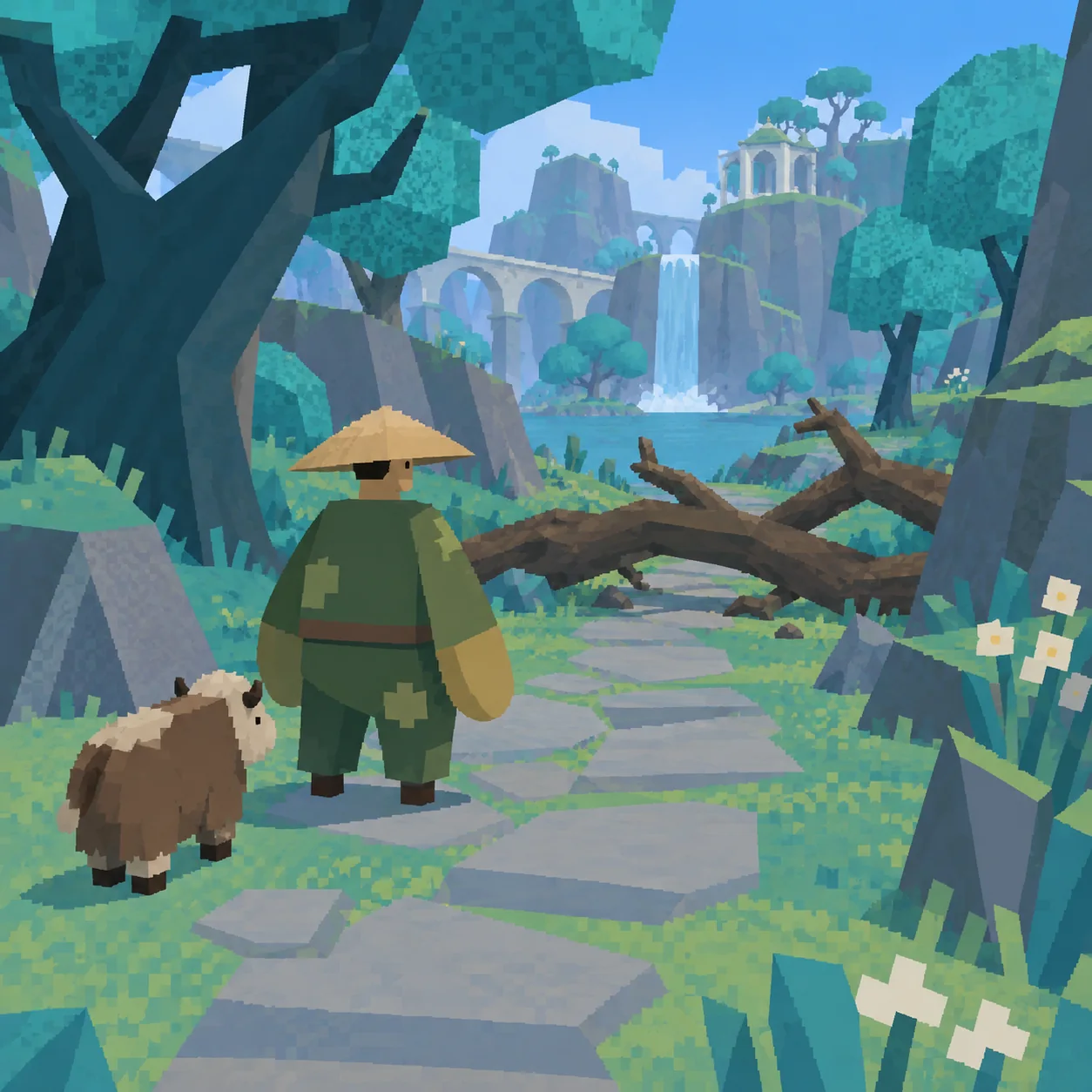
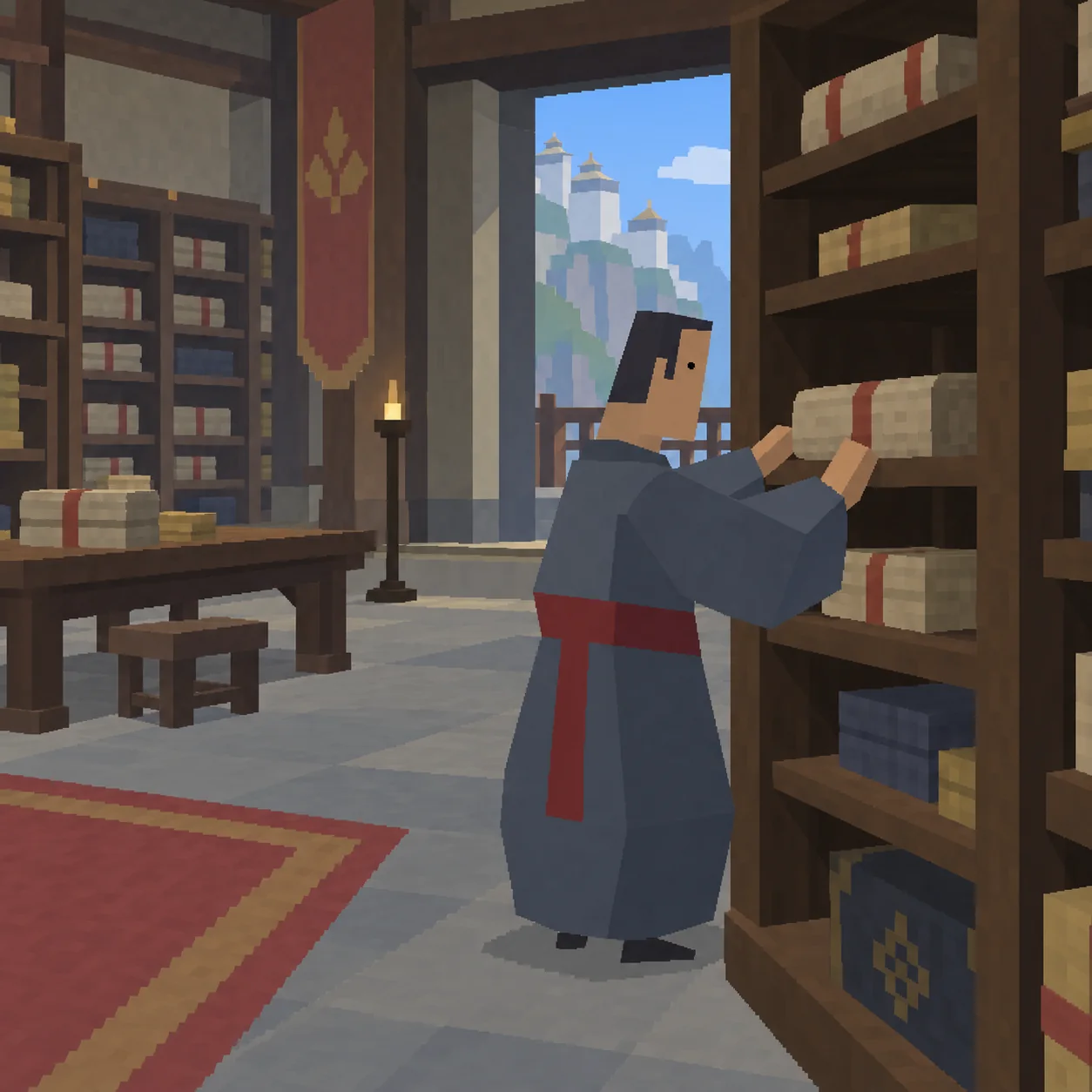
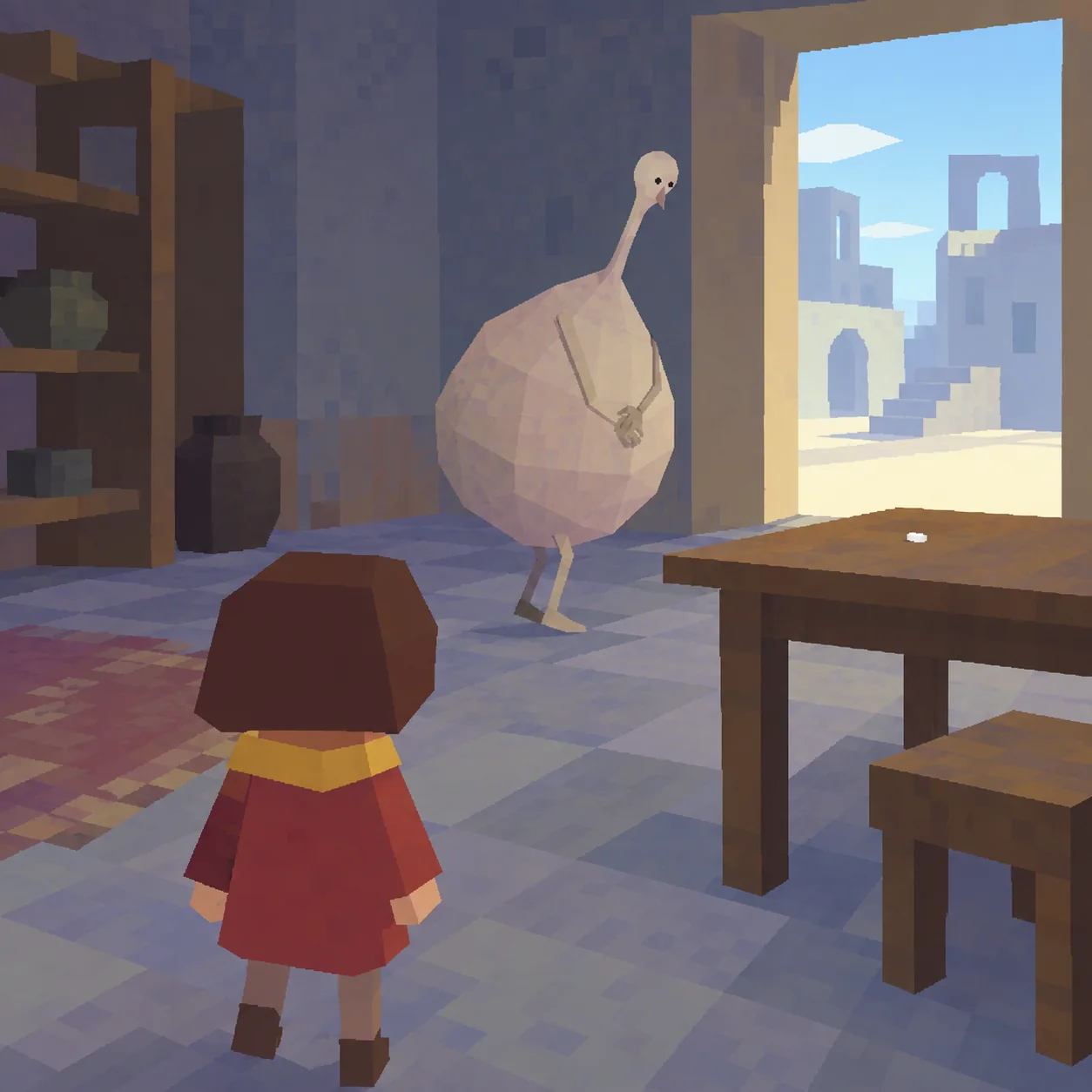
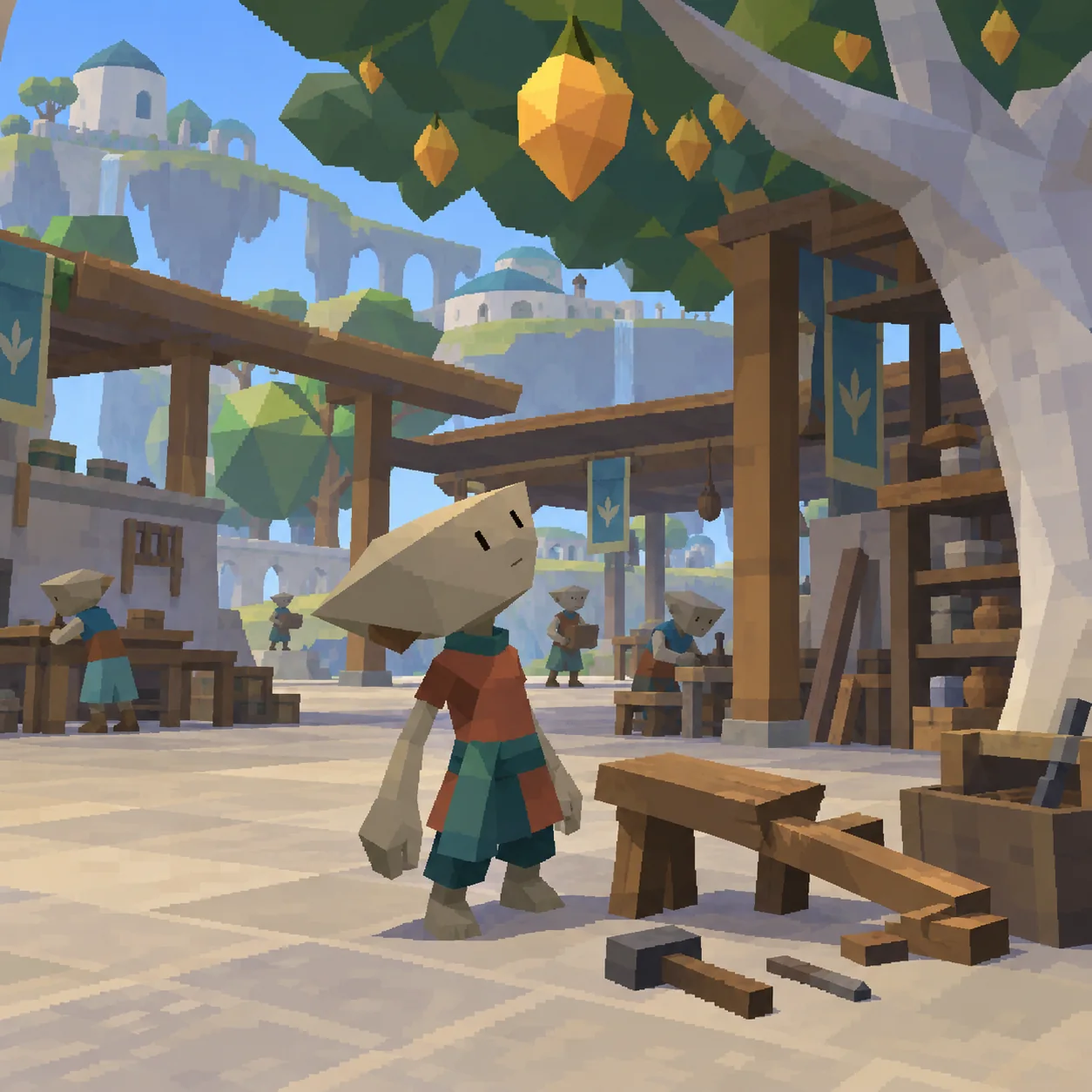
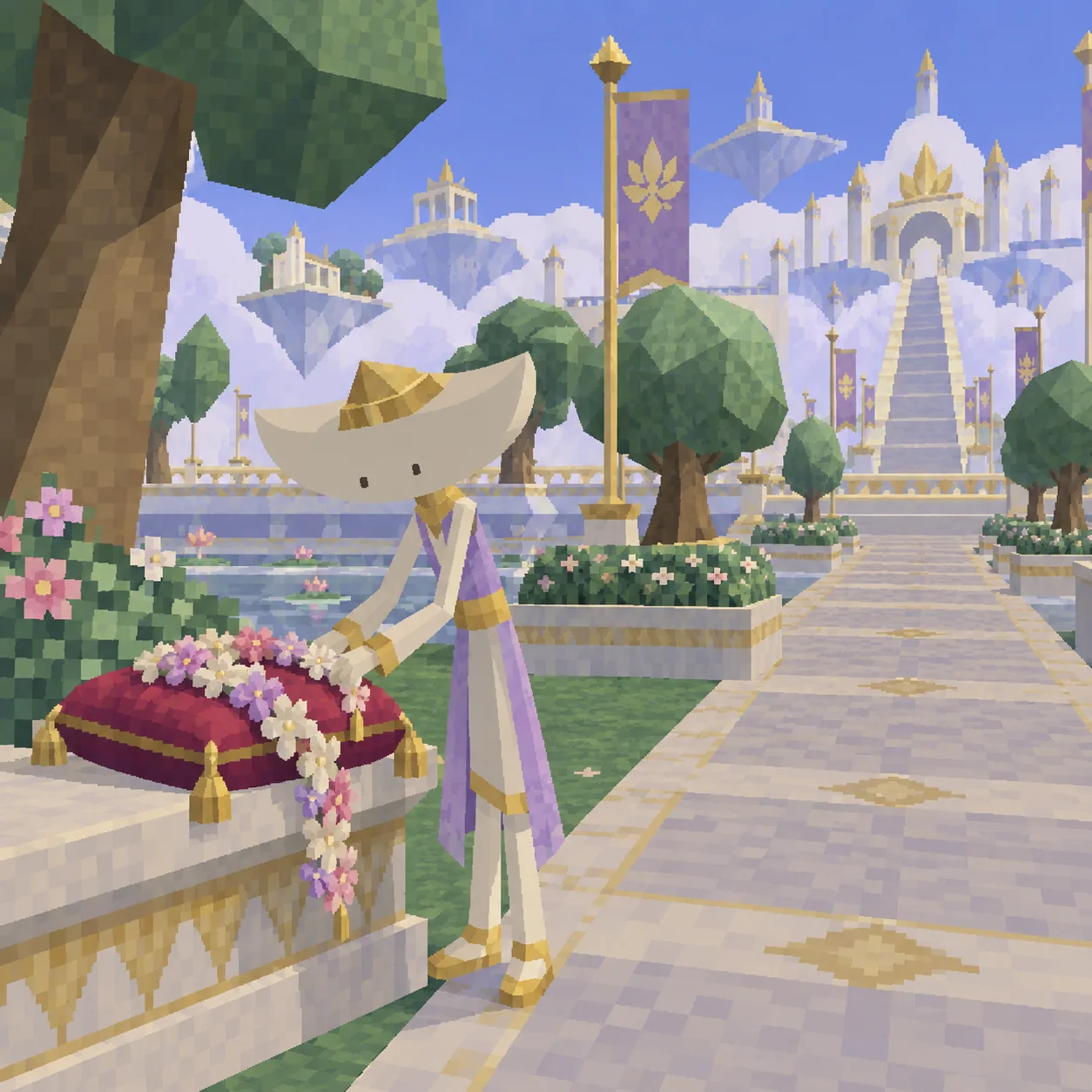
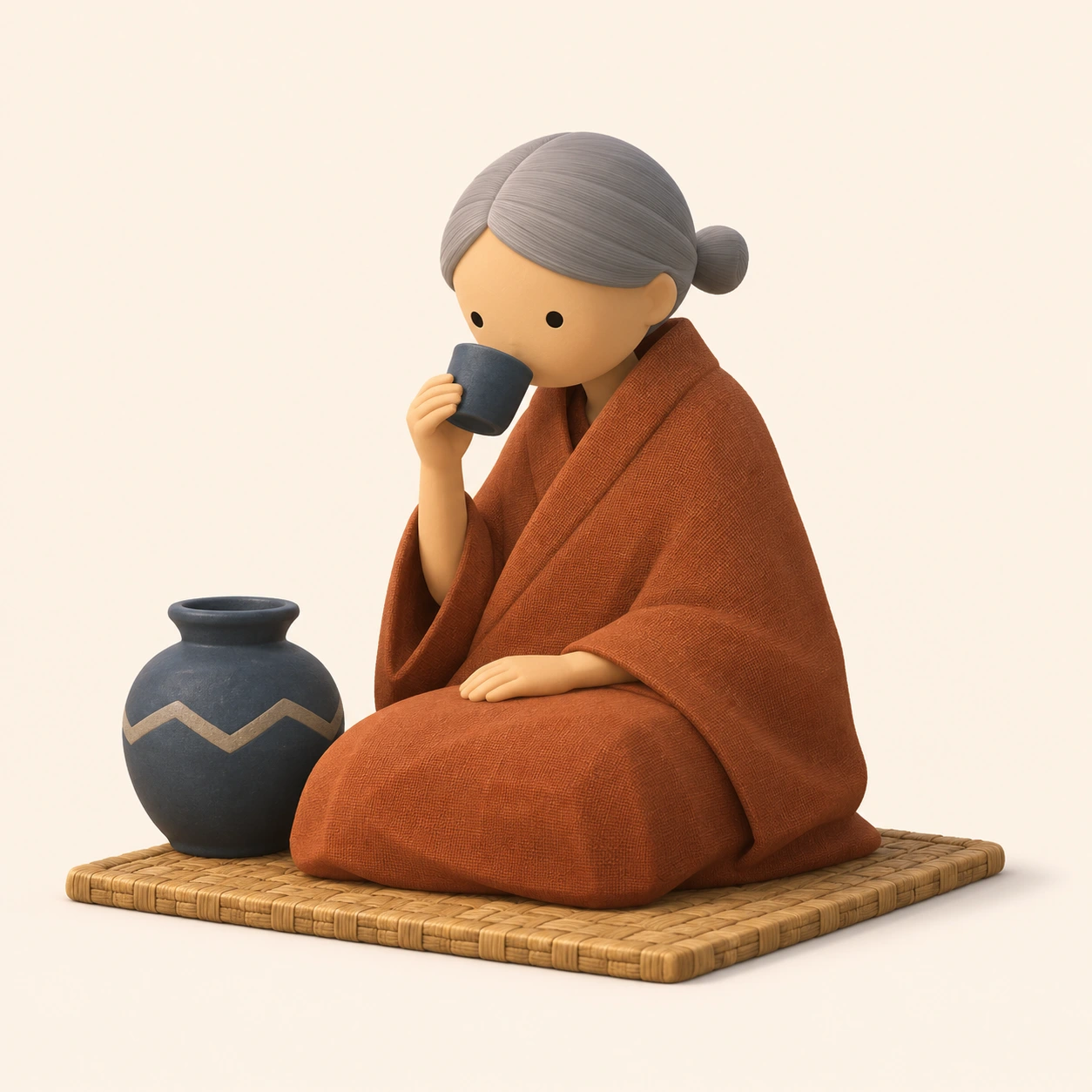
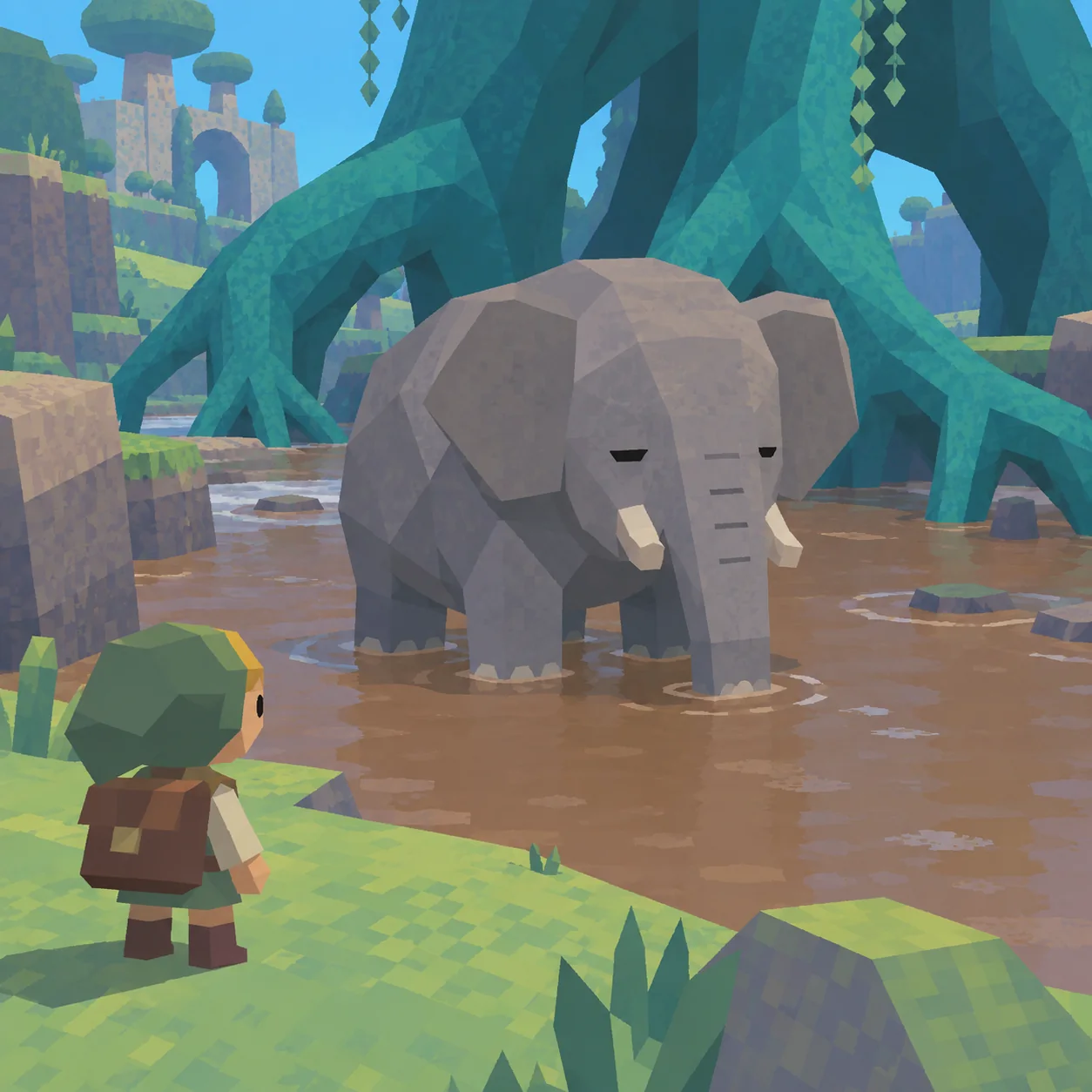
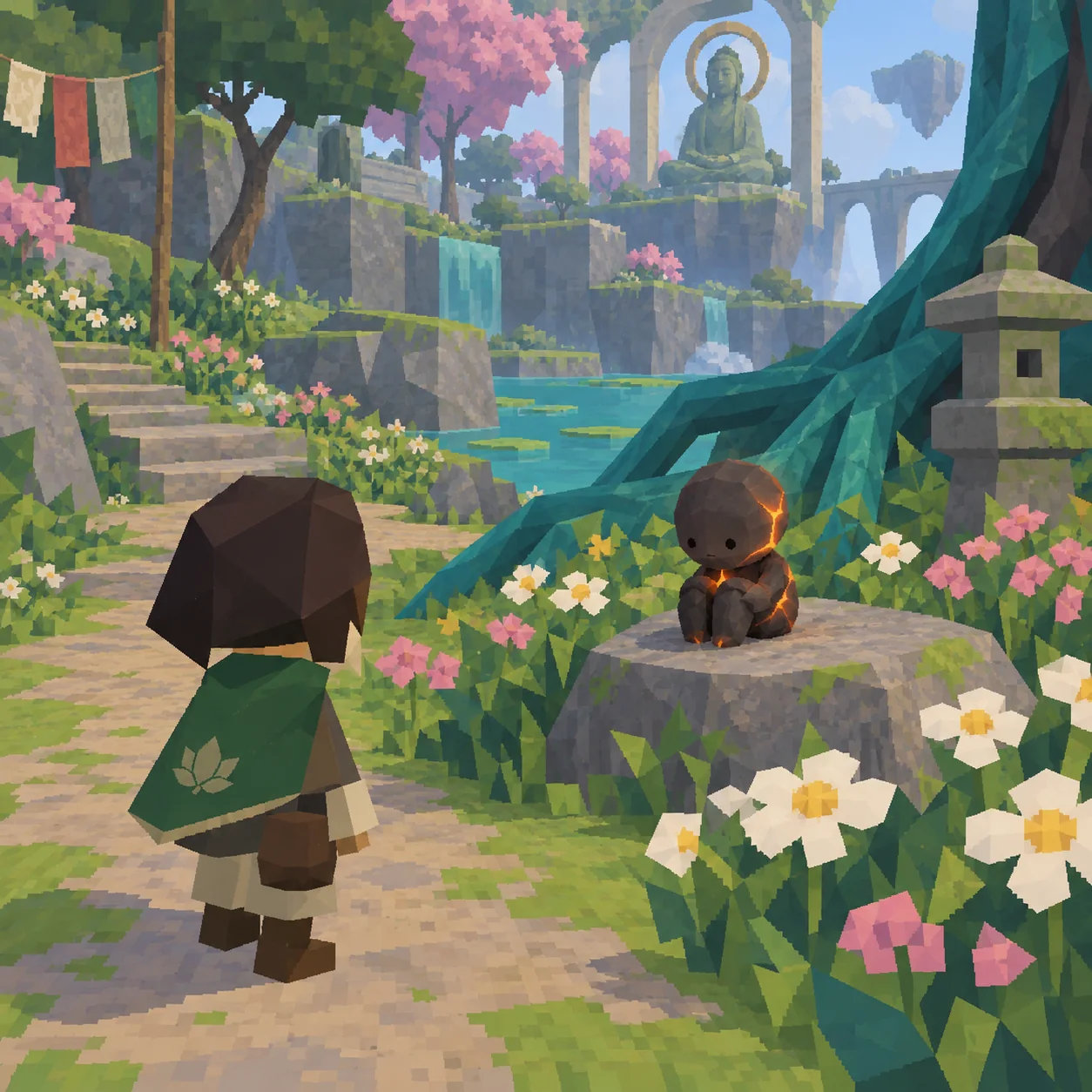
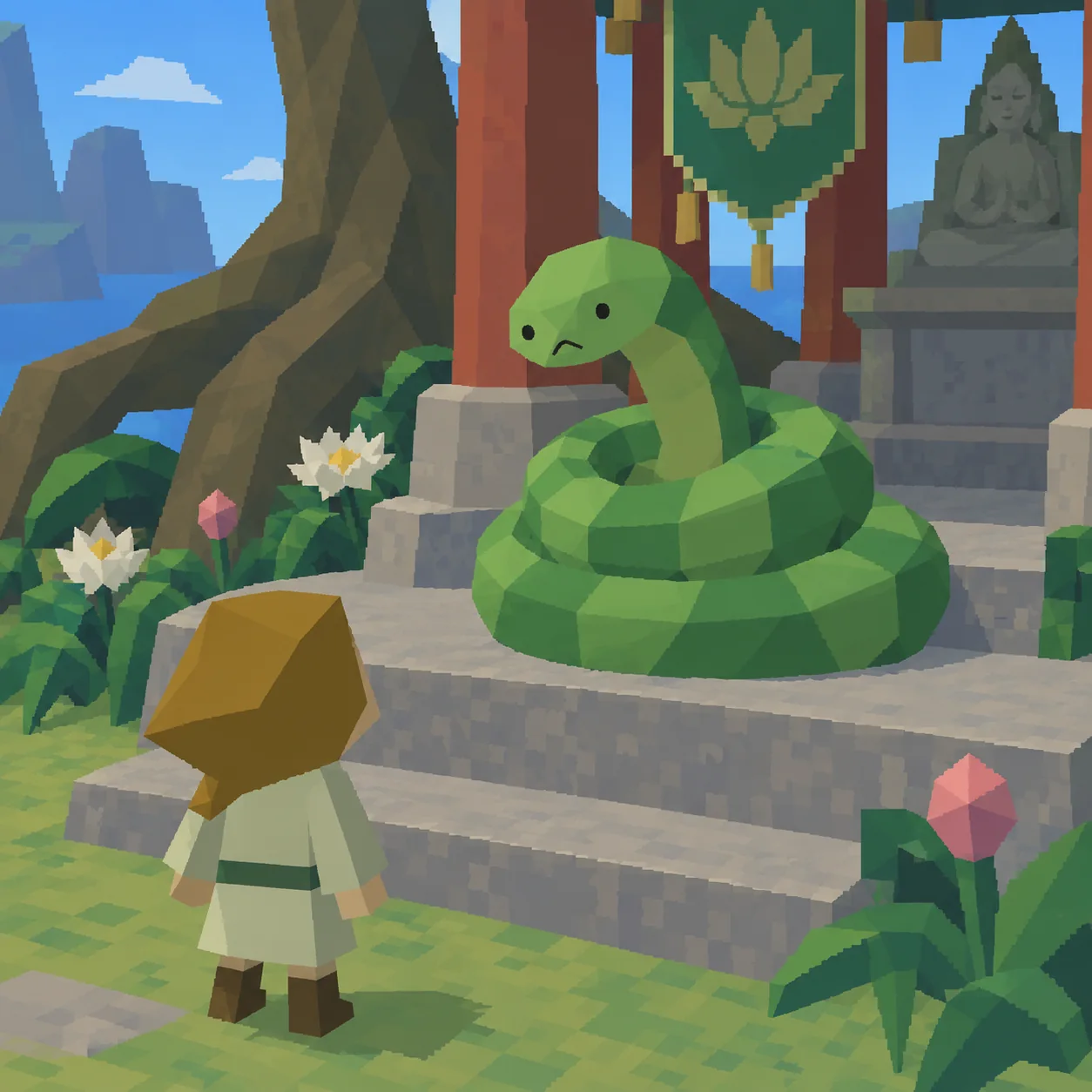
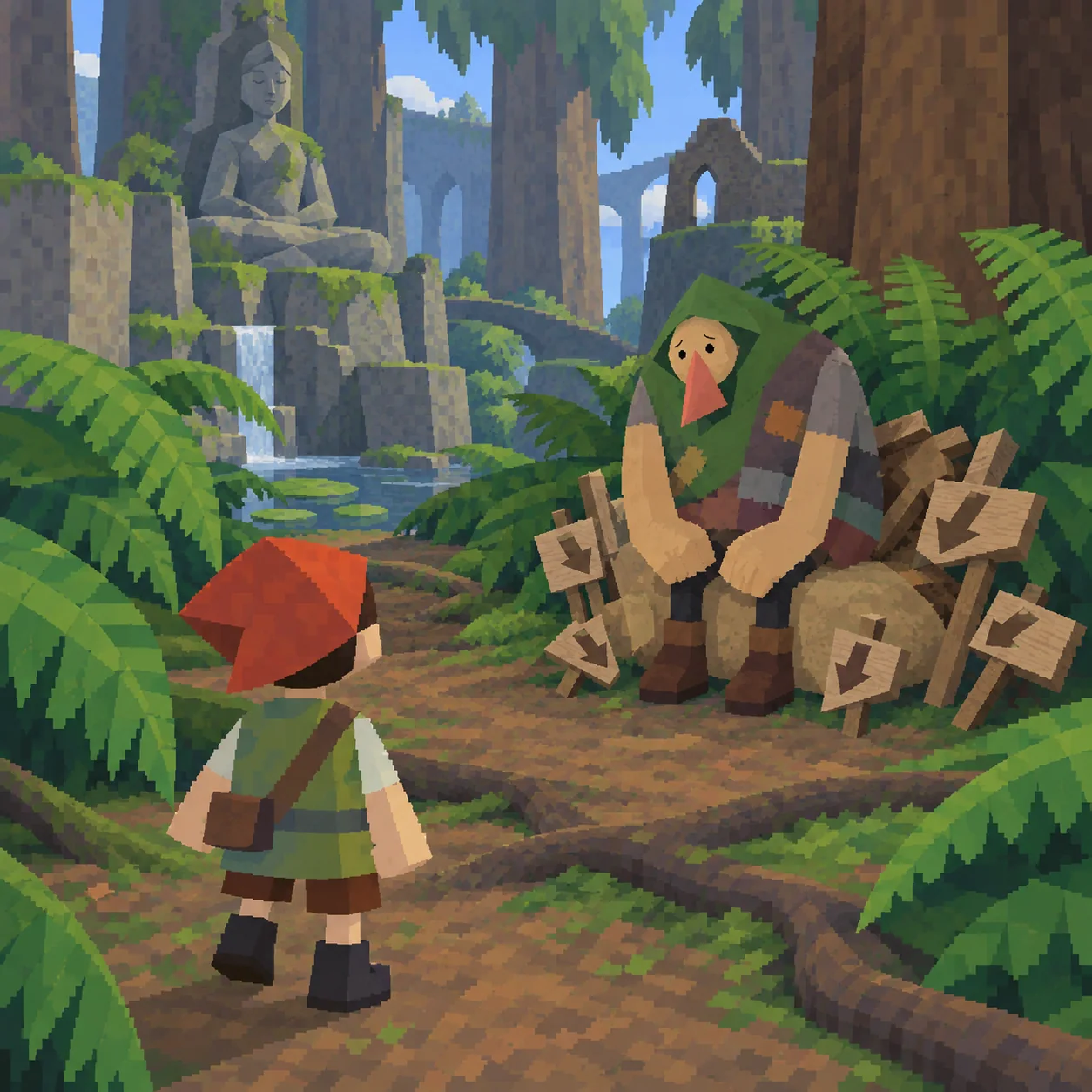
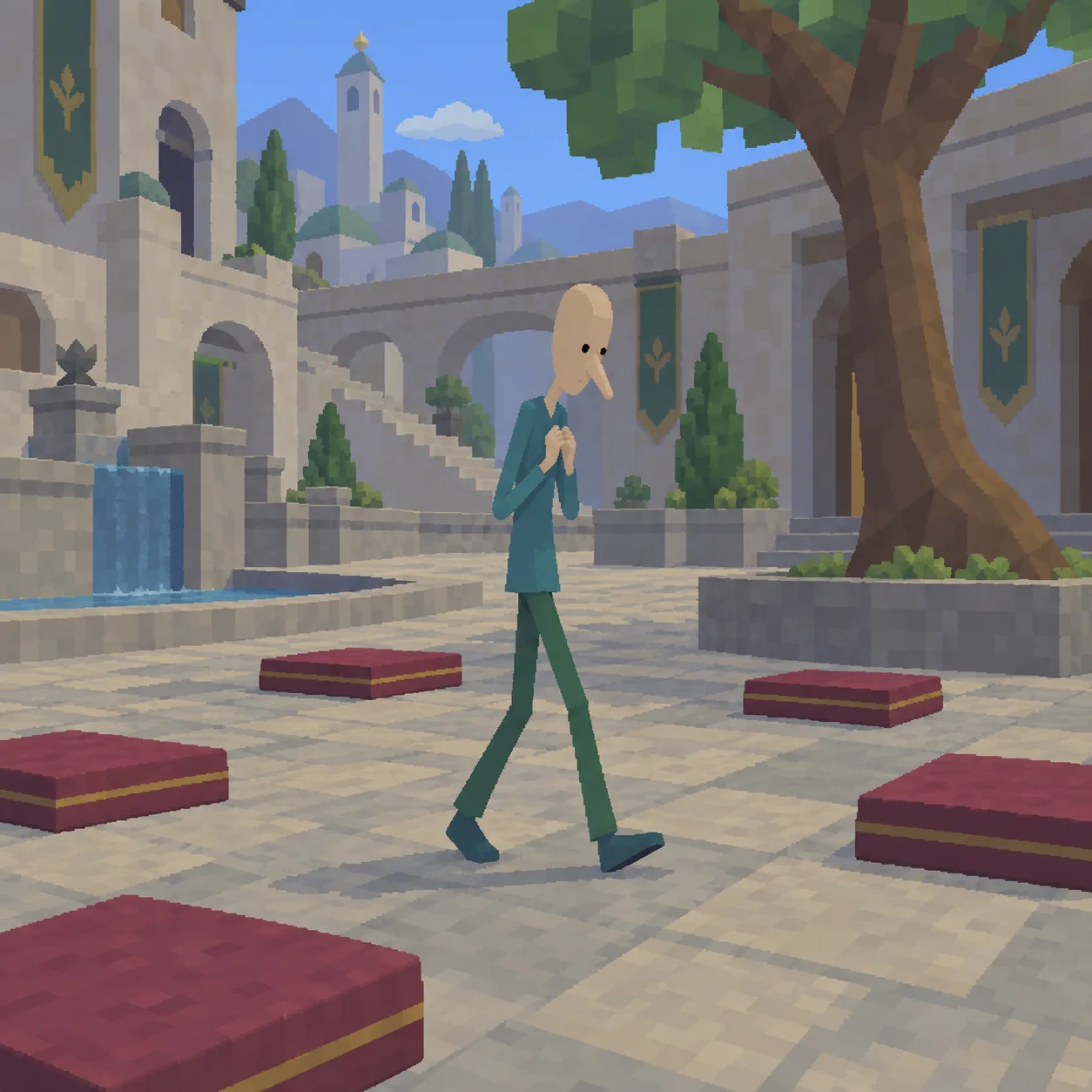
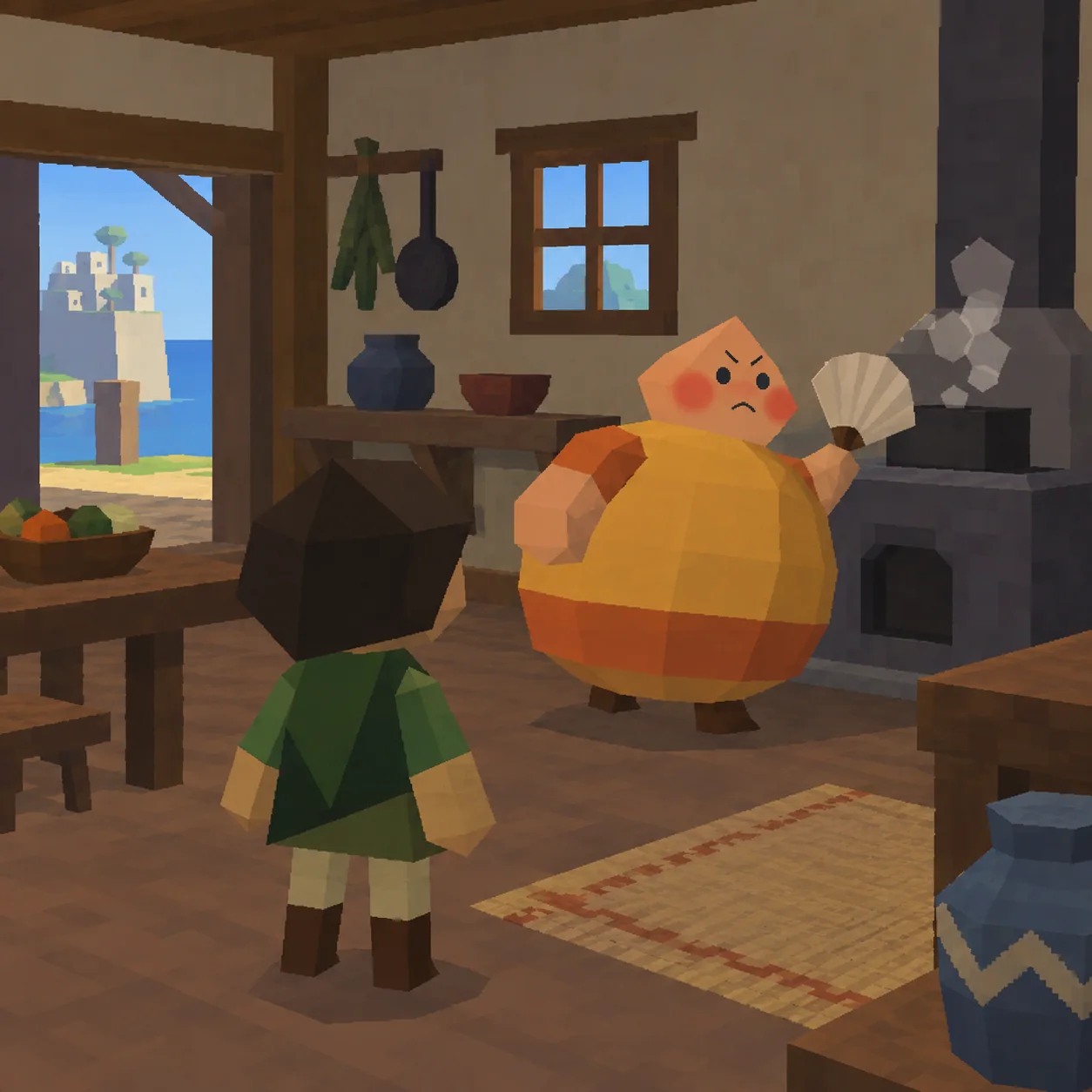
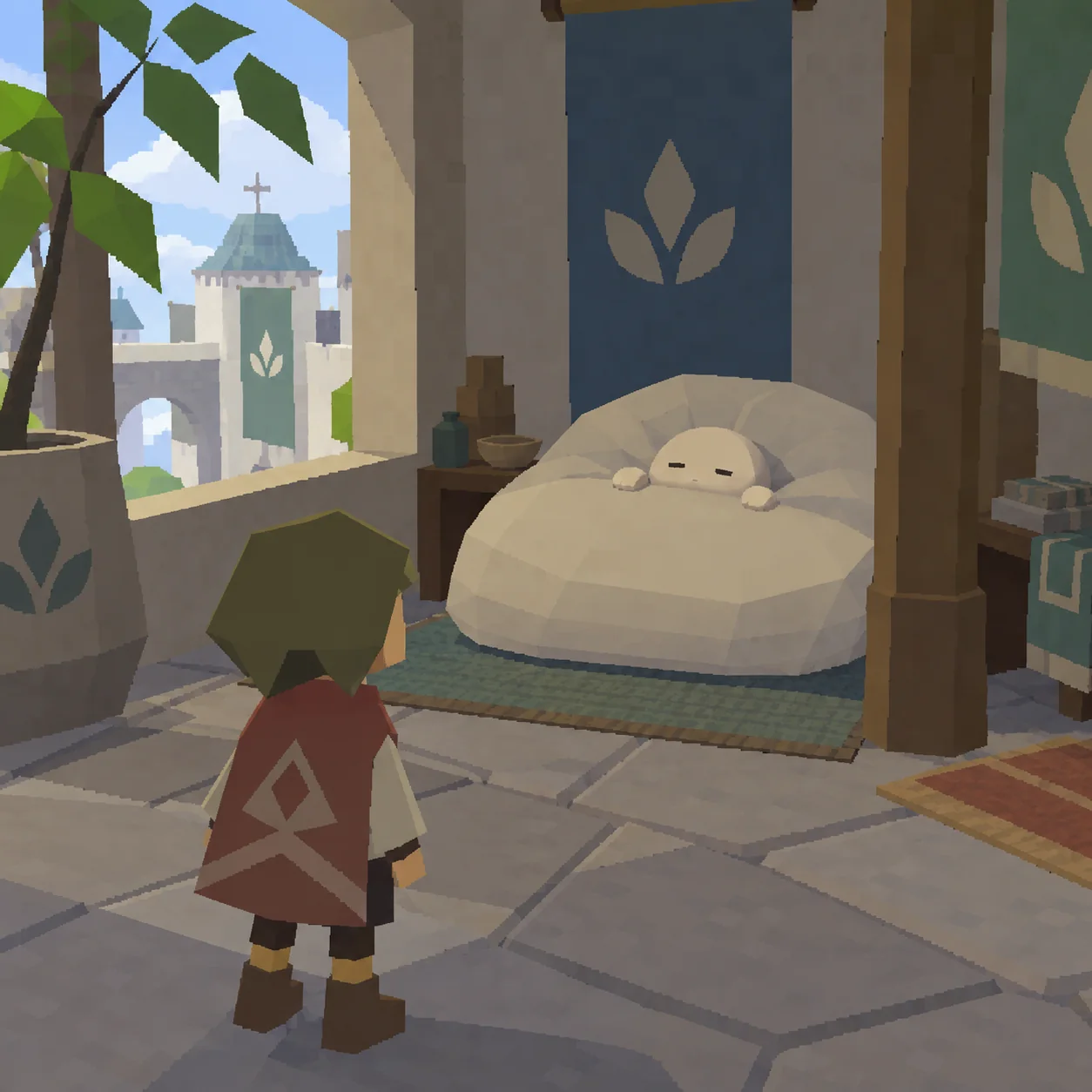
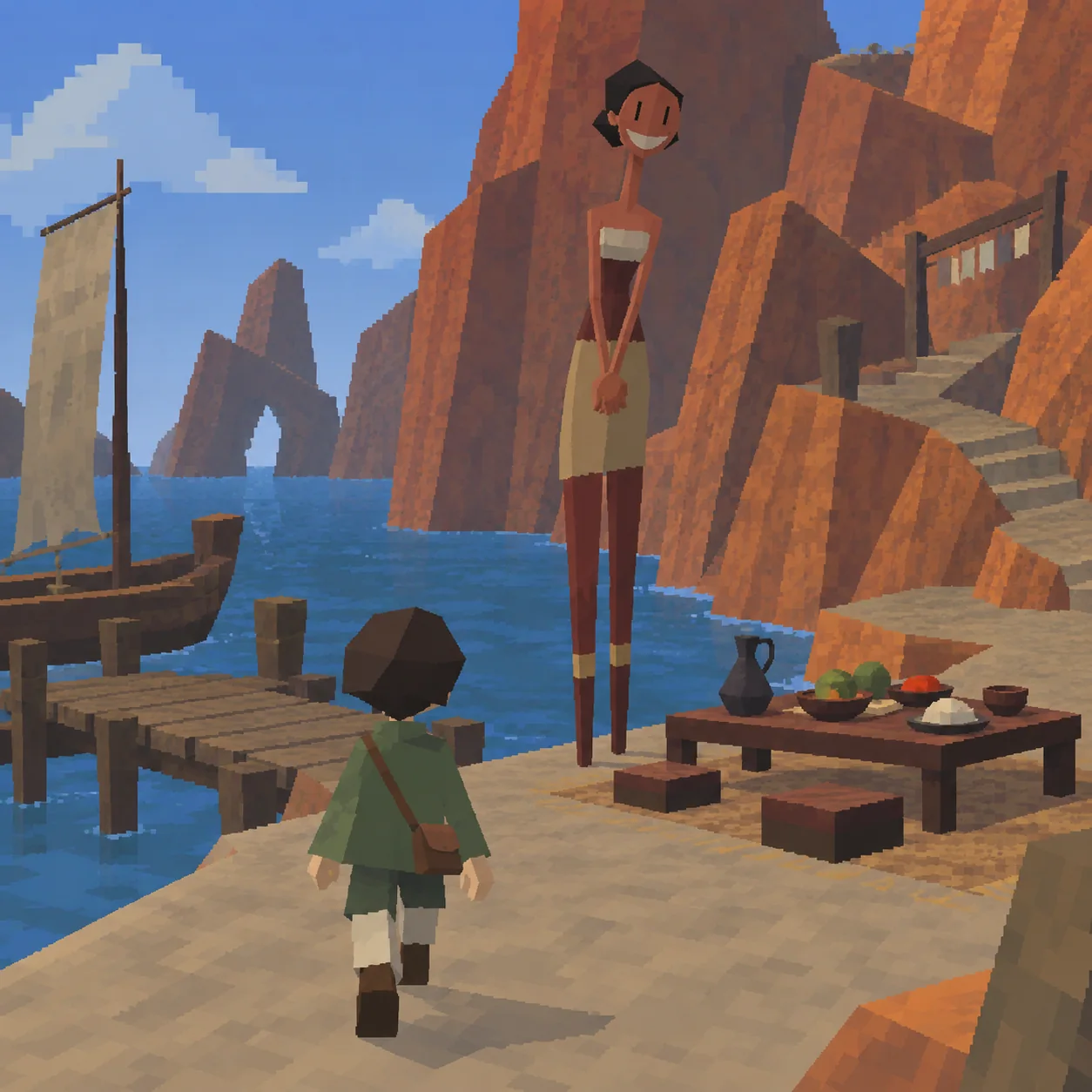
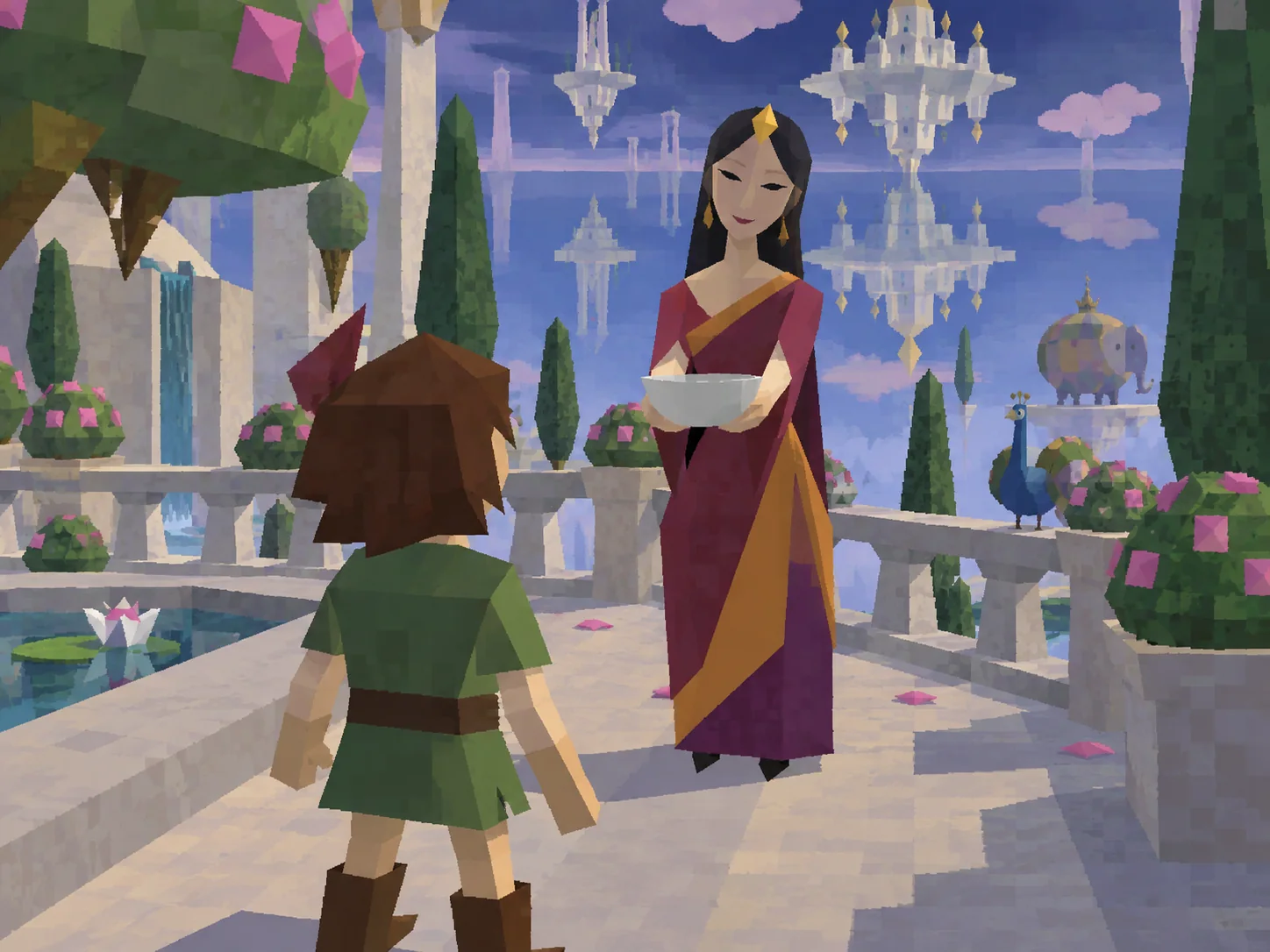
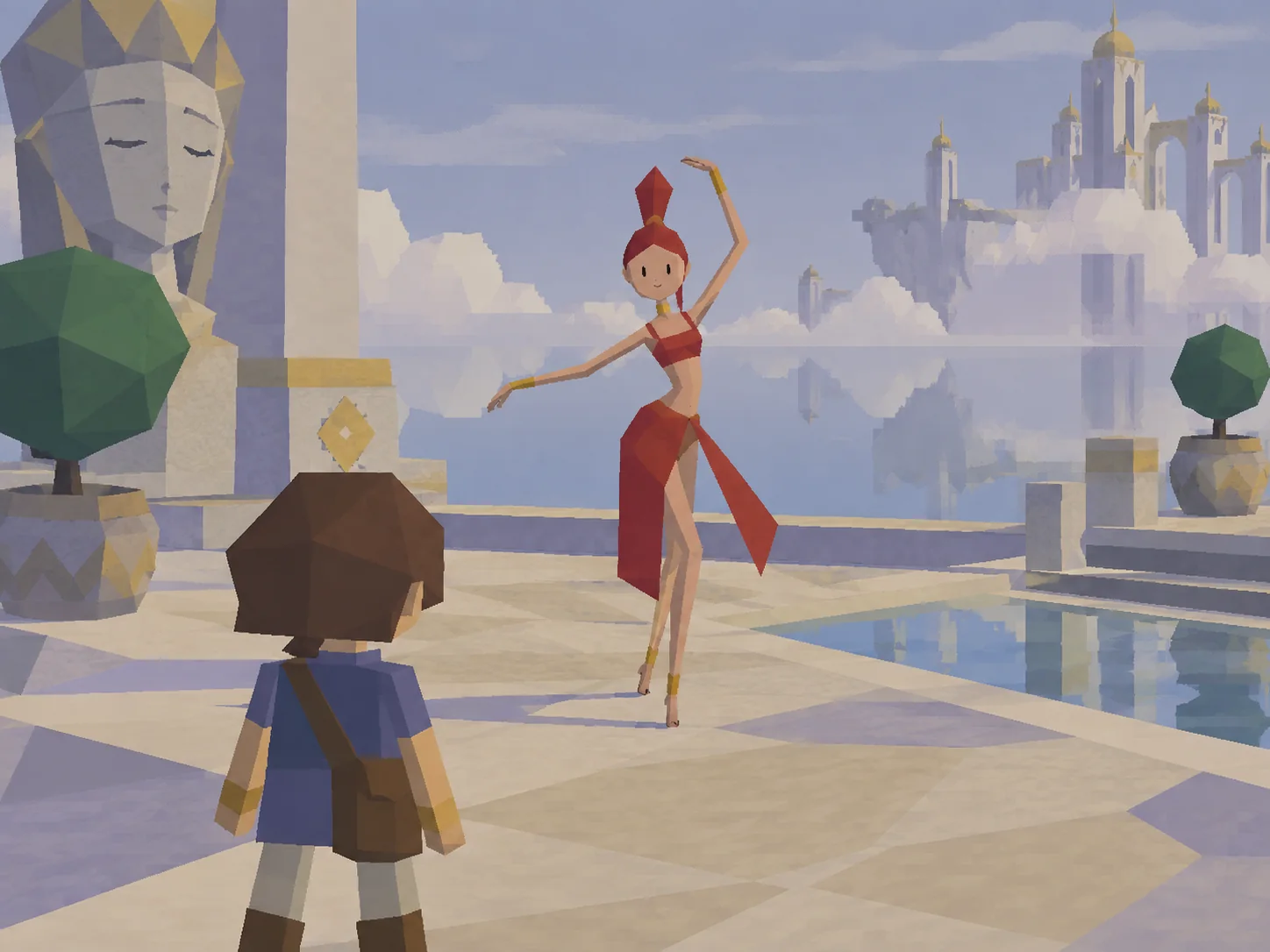
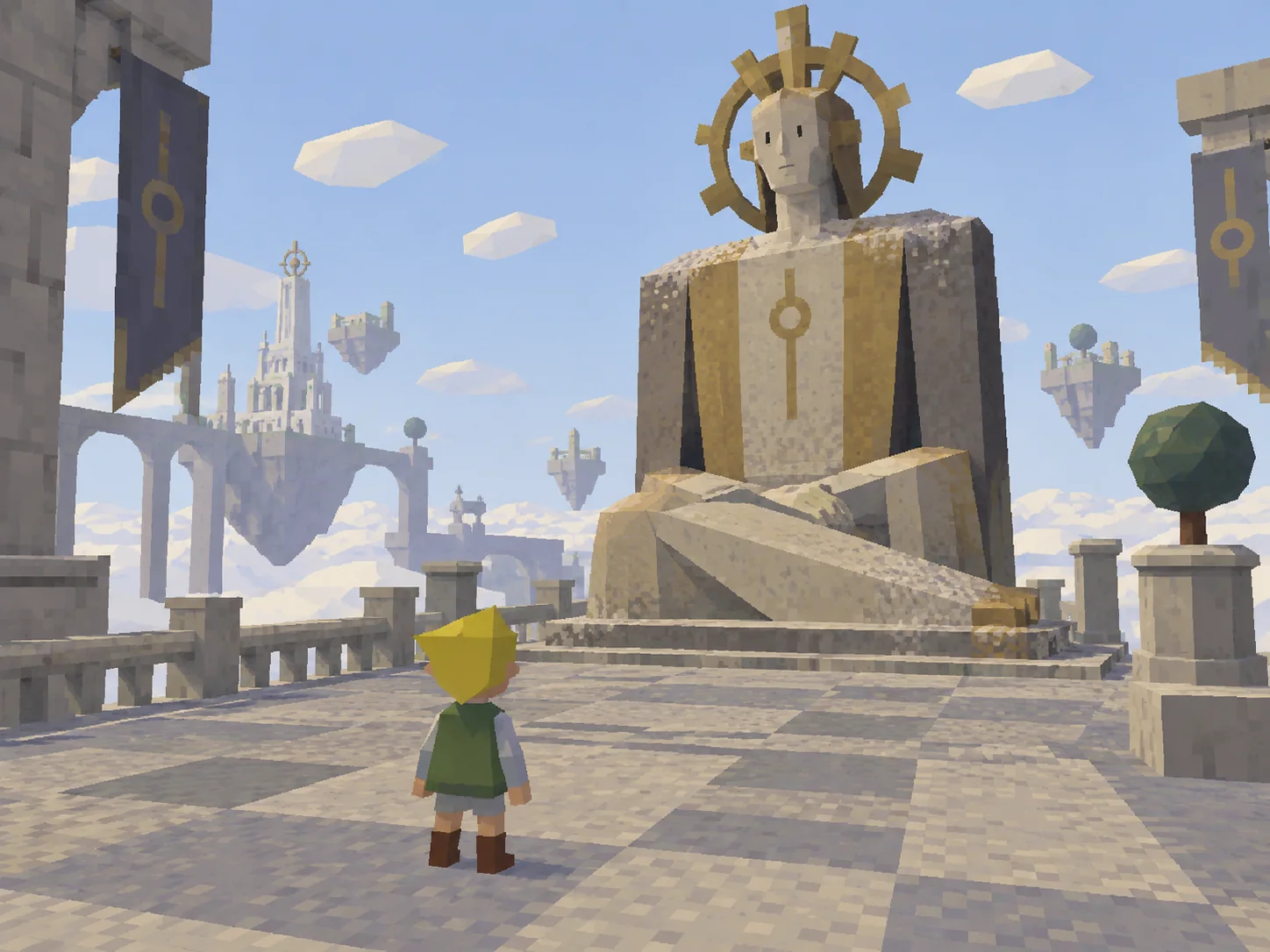
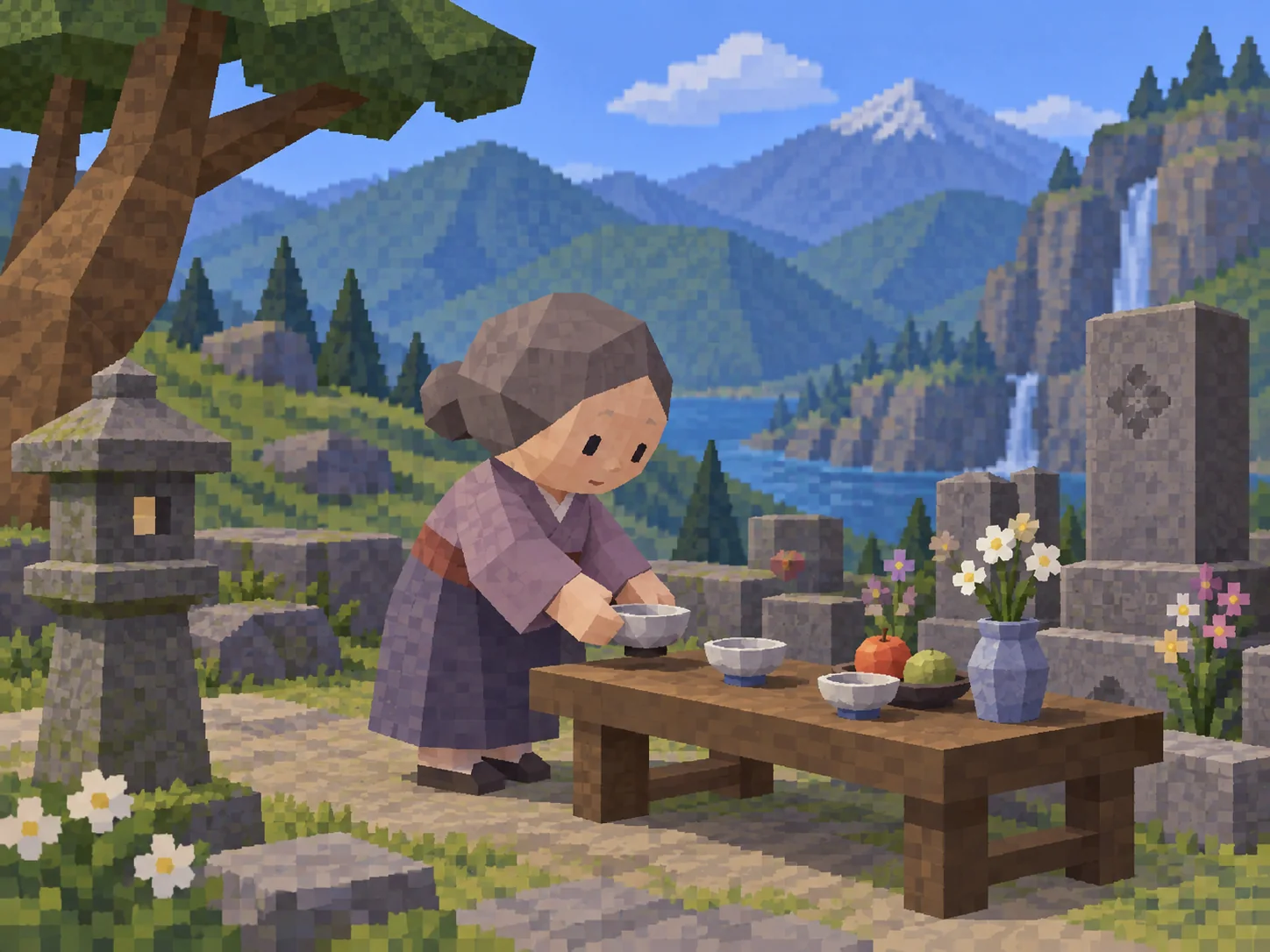
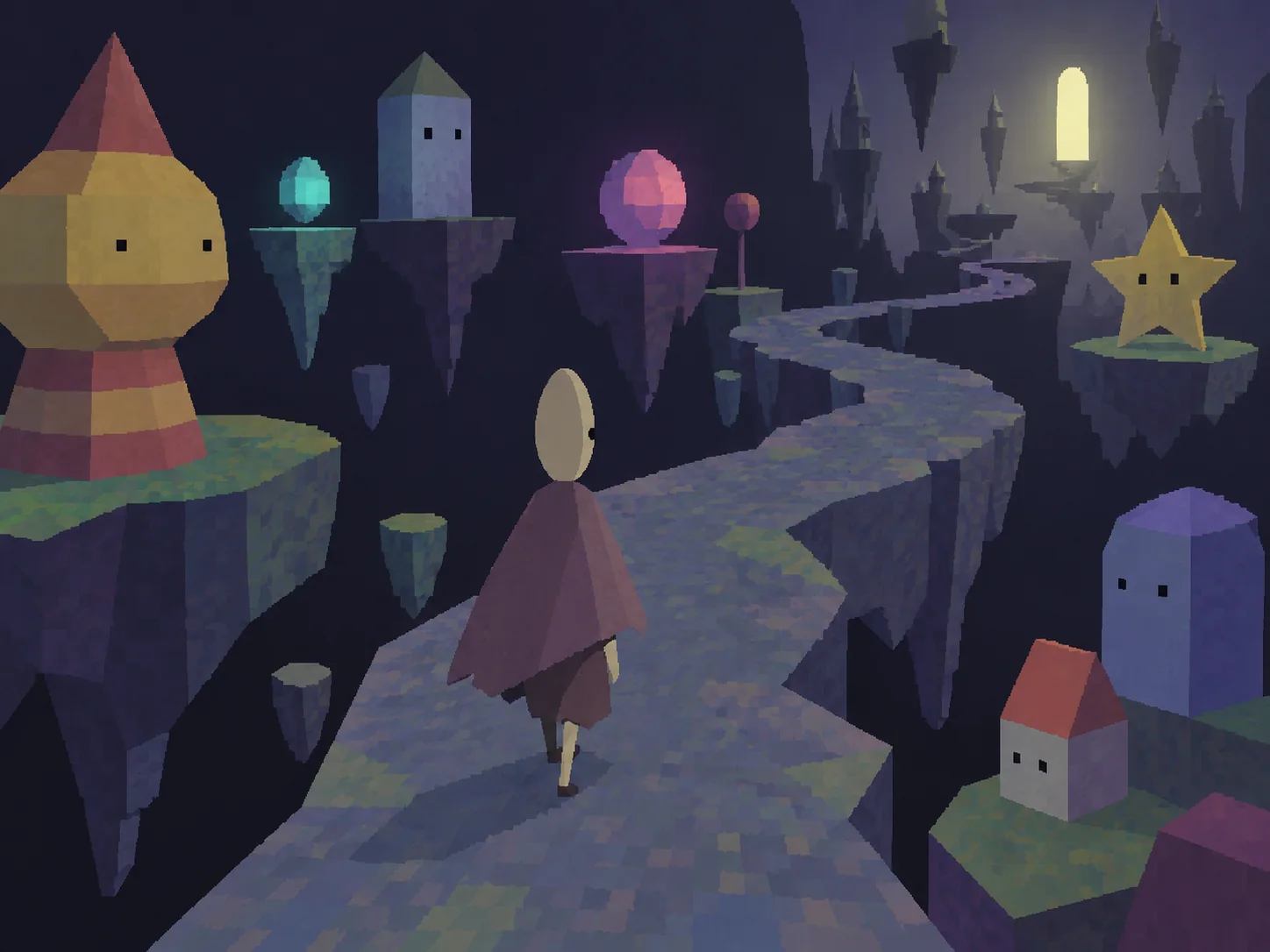
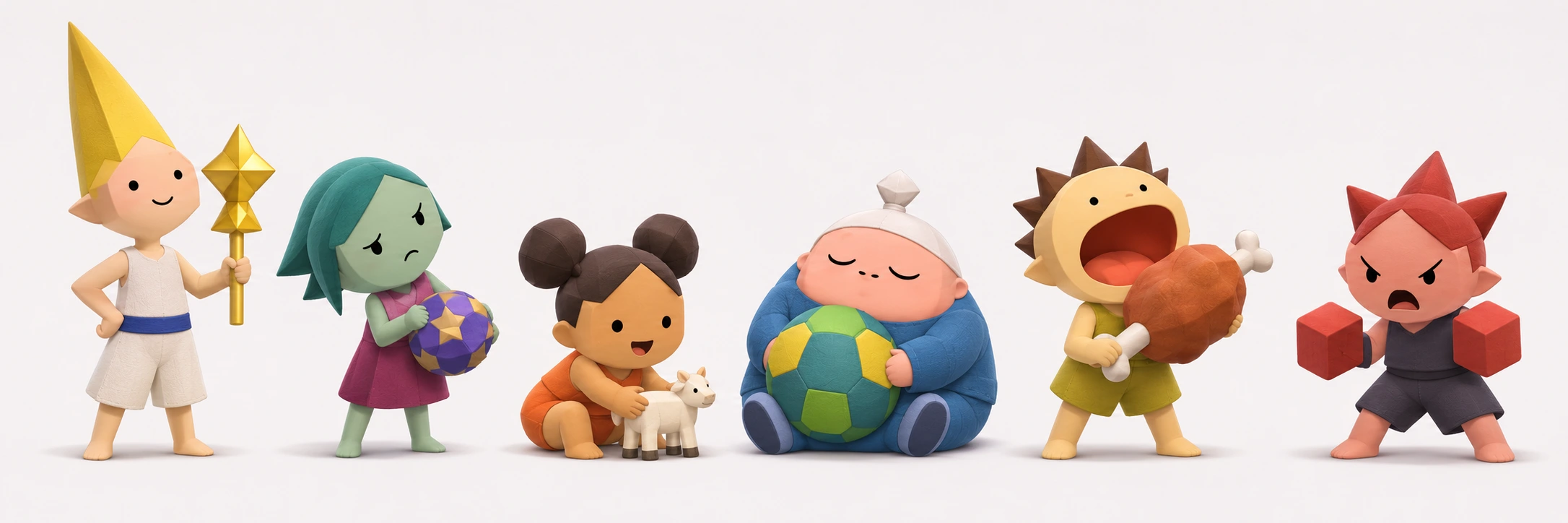
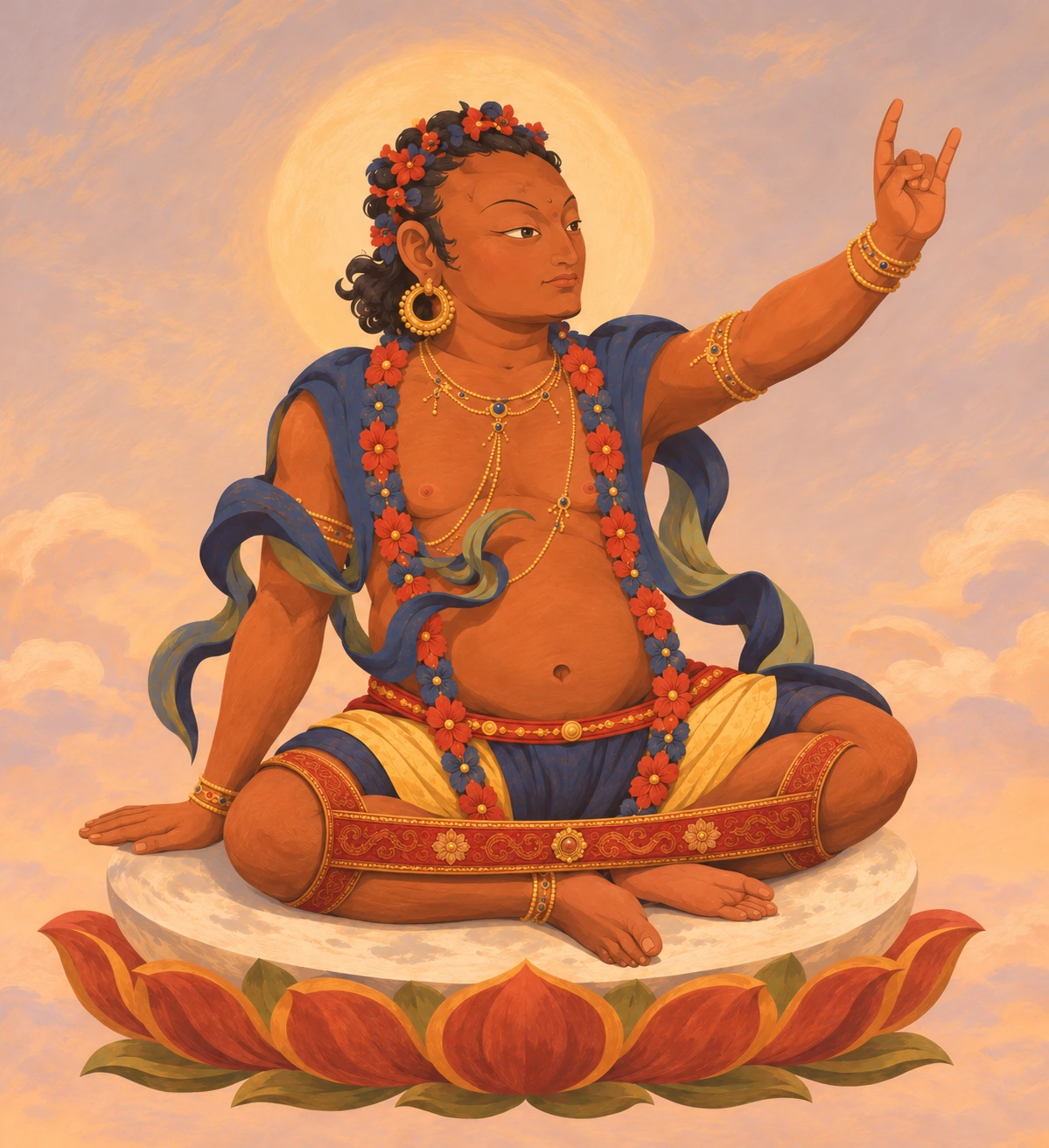
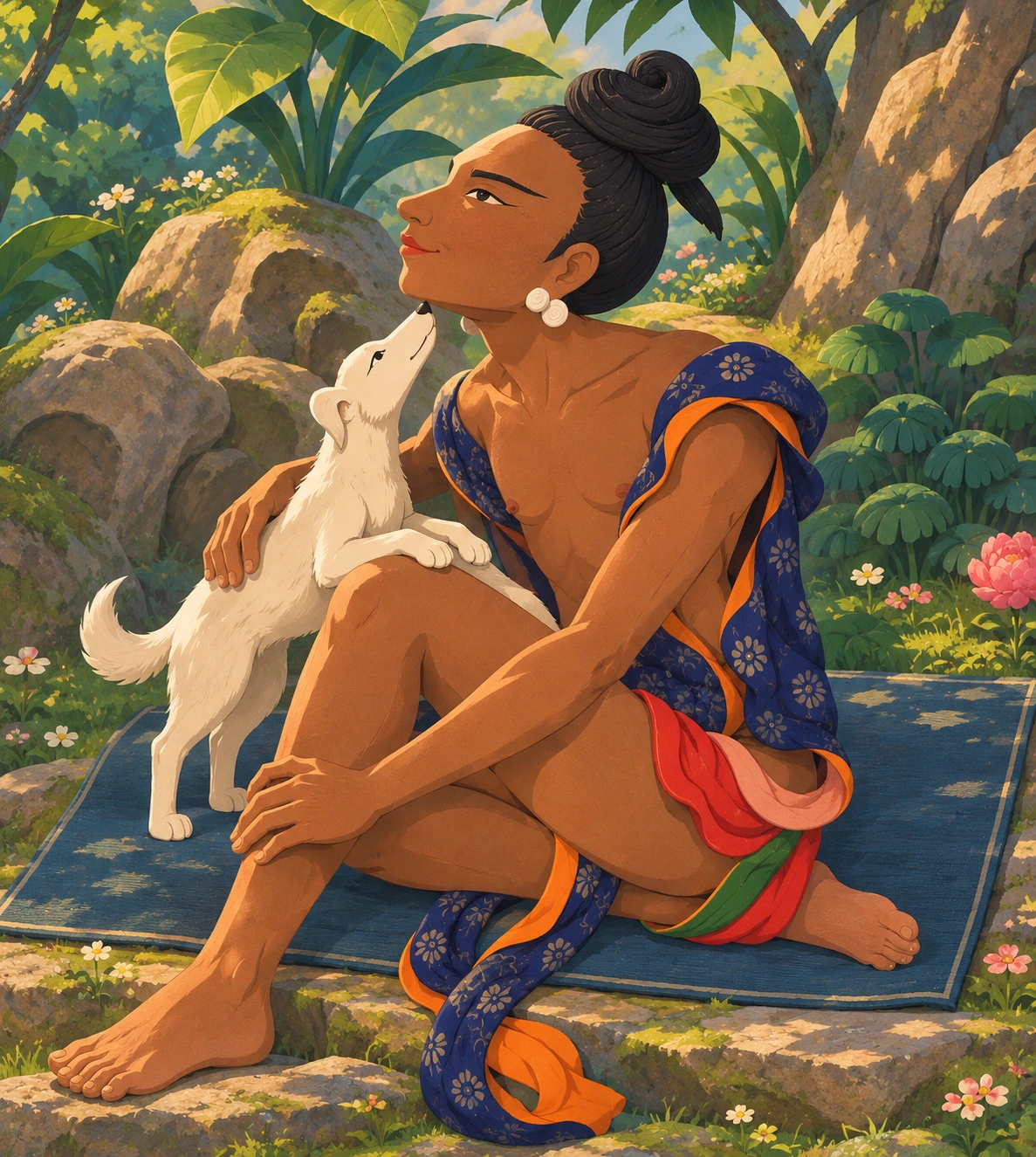
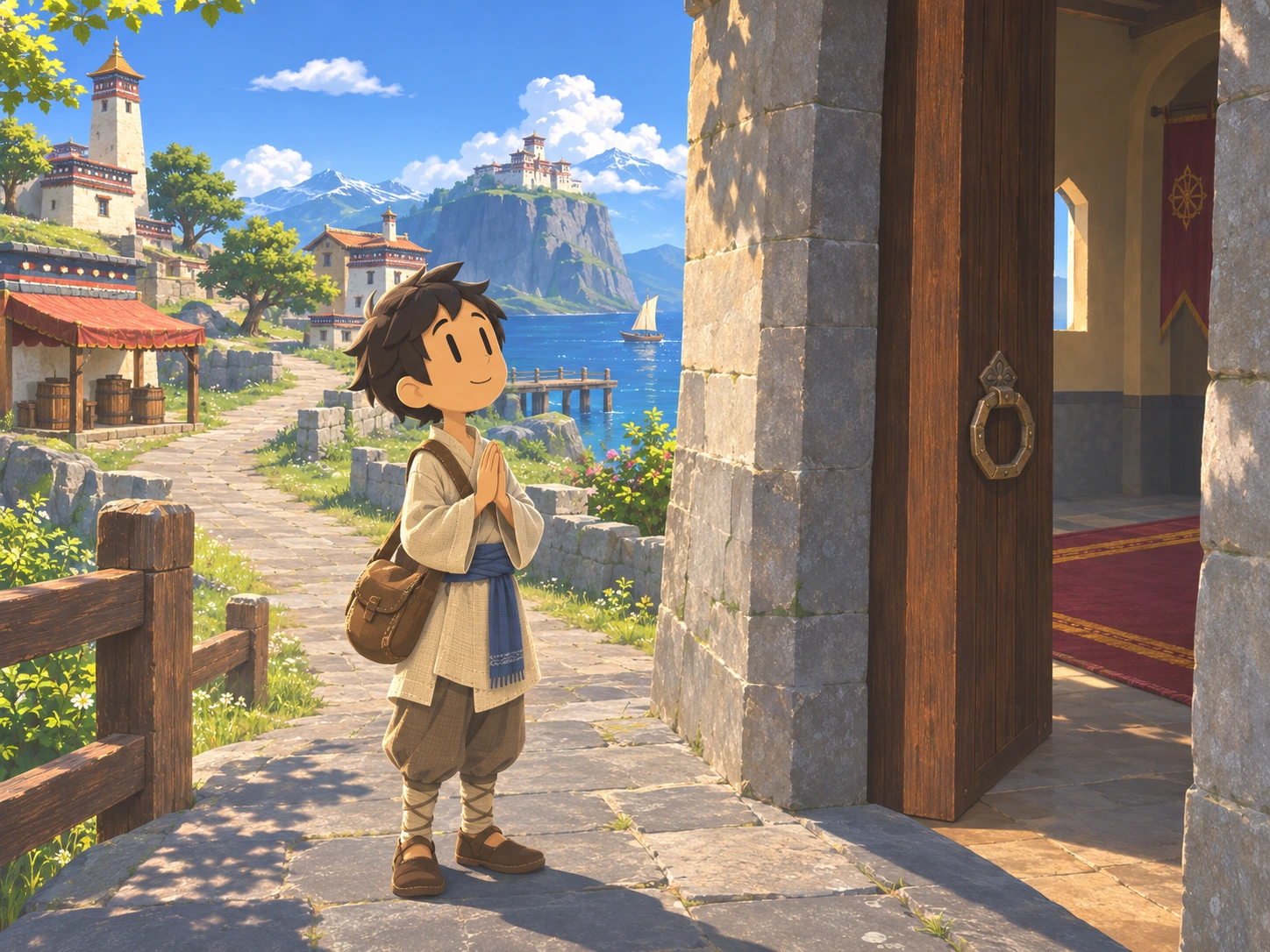
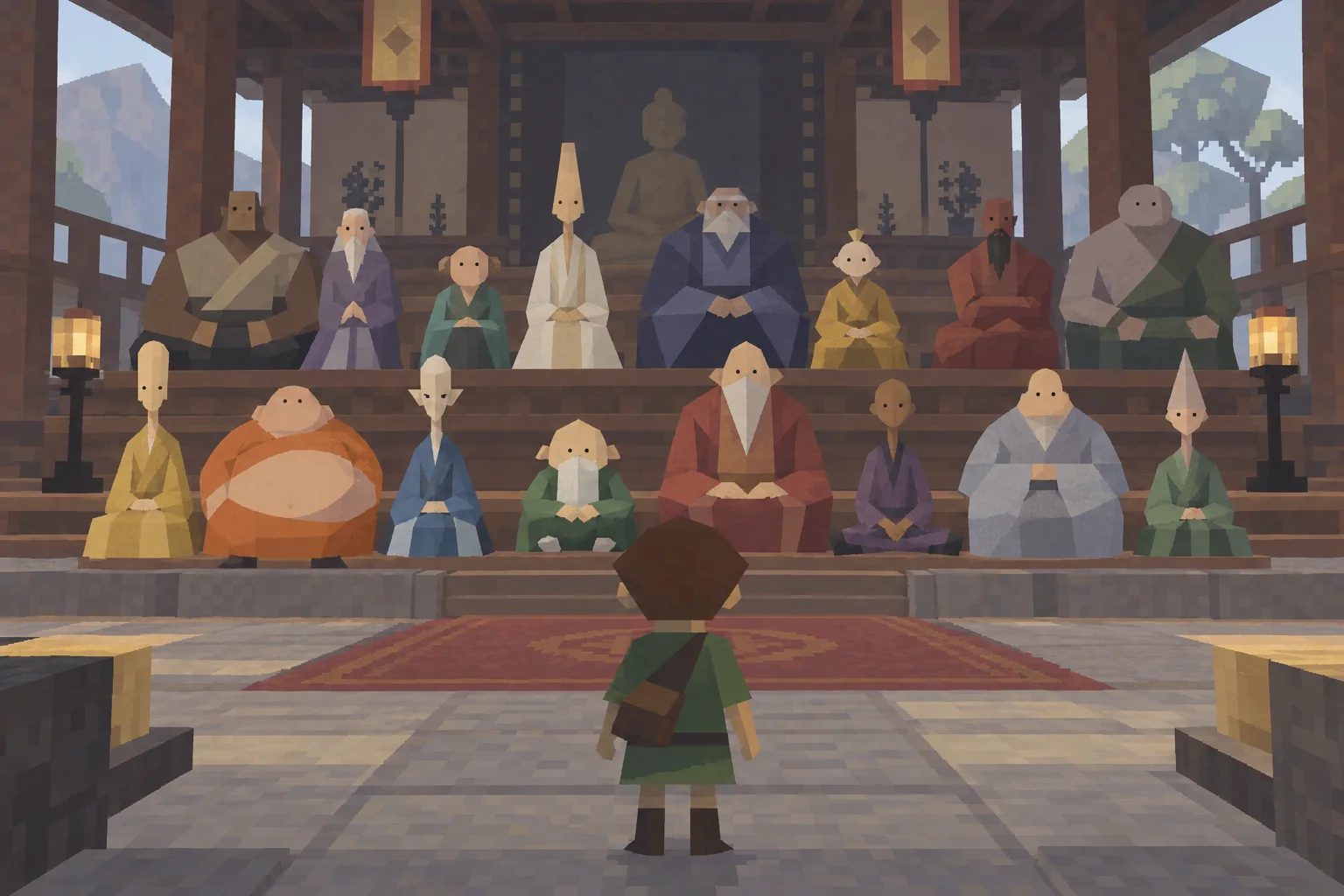
The world of Bodhi Blocks is full of old Tibetan Buddhist ideas. None of them are labelled. There are no signs, no captions, no lessons. You can play without ever noticing them. This page captures the lore already used, what is only partly integrated, and possibilities for later. Character studies and empty environments are kept as reference, with their status made explicit.

In the game You can find this now. Partly integrated Some elements exist; the remainder is recorded. Not integrated Future reference, not a build promise.Local change · not deployed Implemented locally; awaiting release.
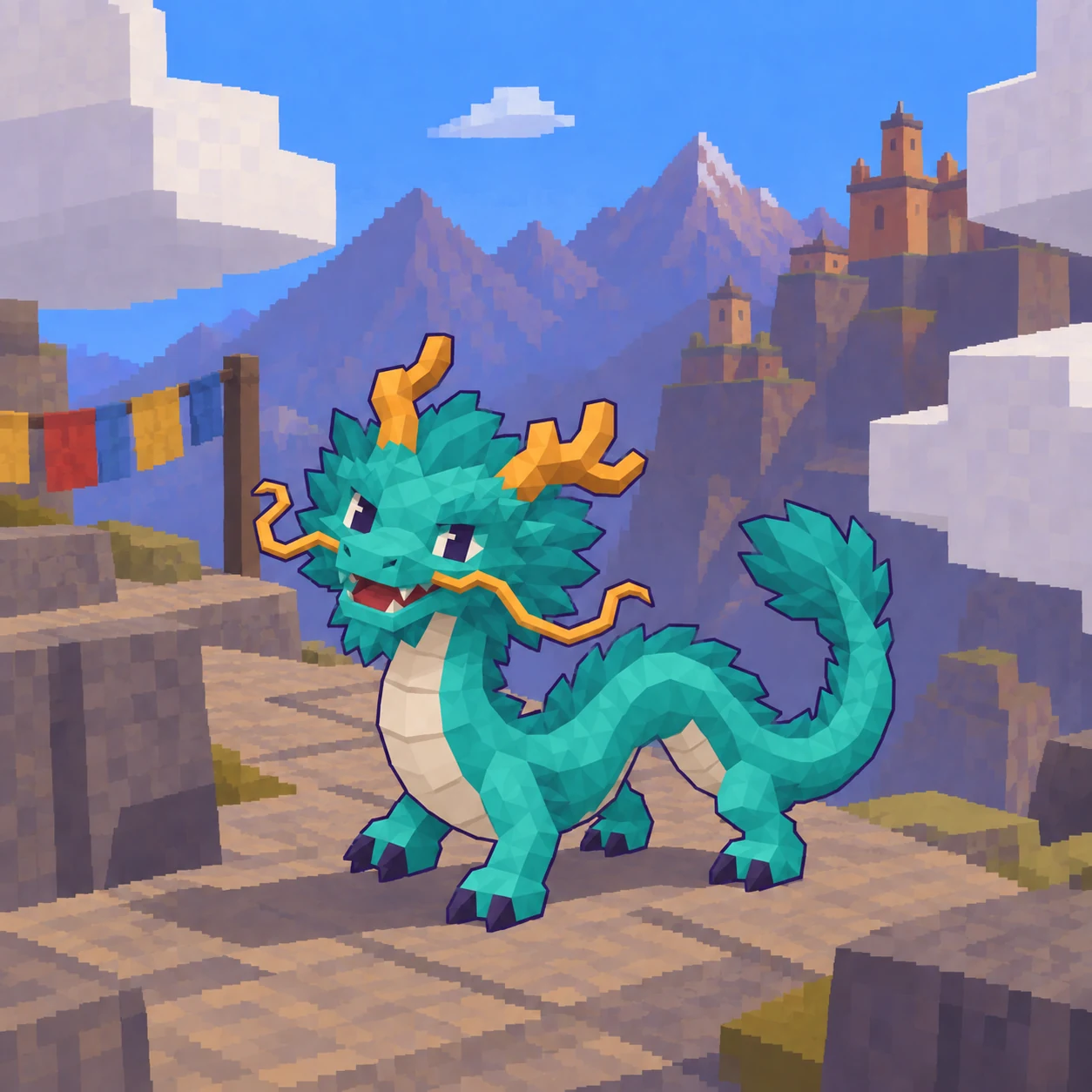
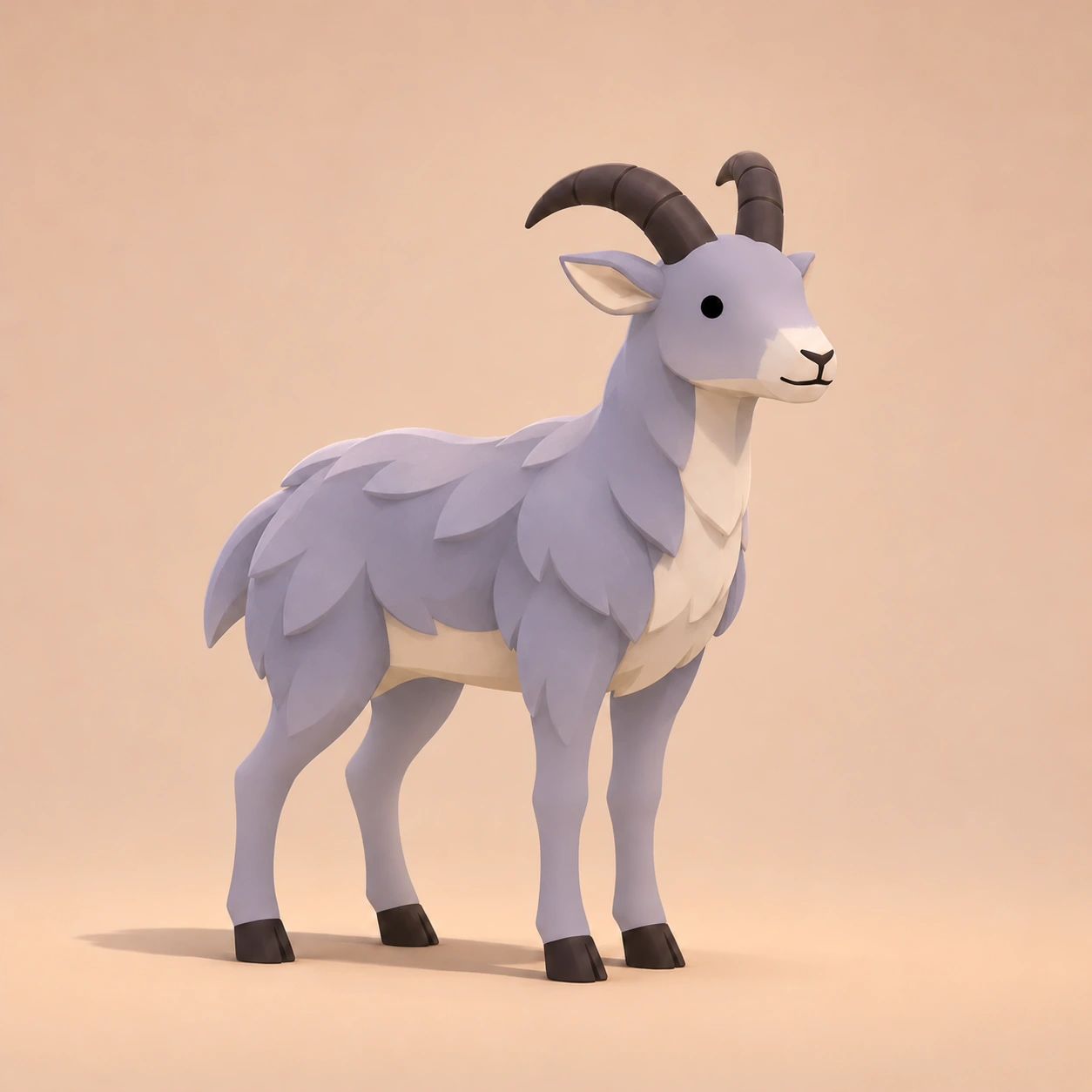
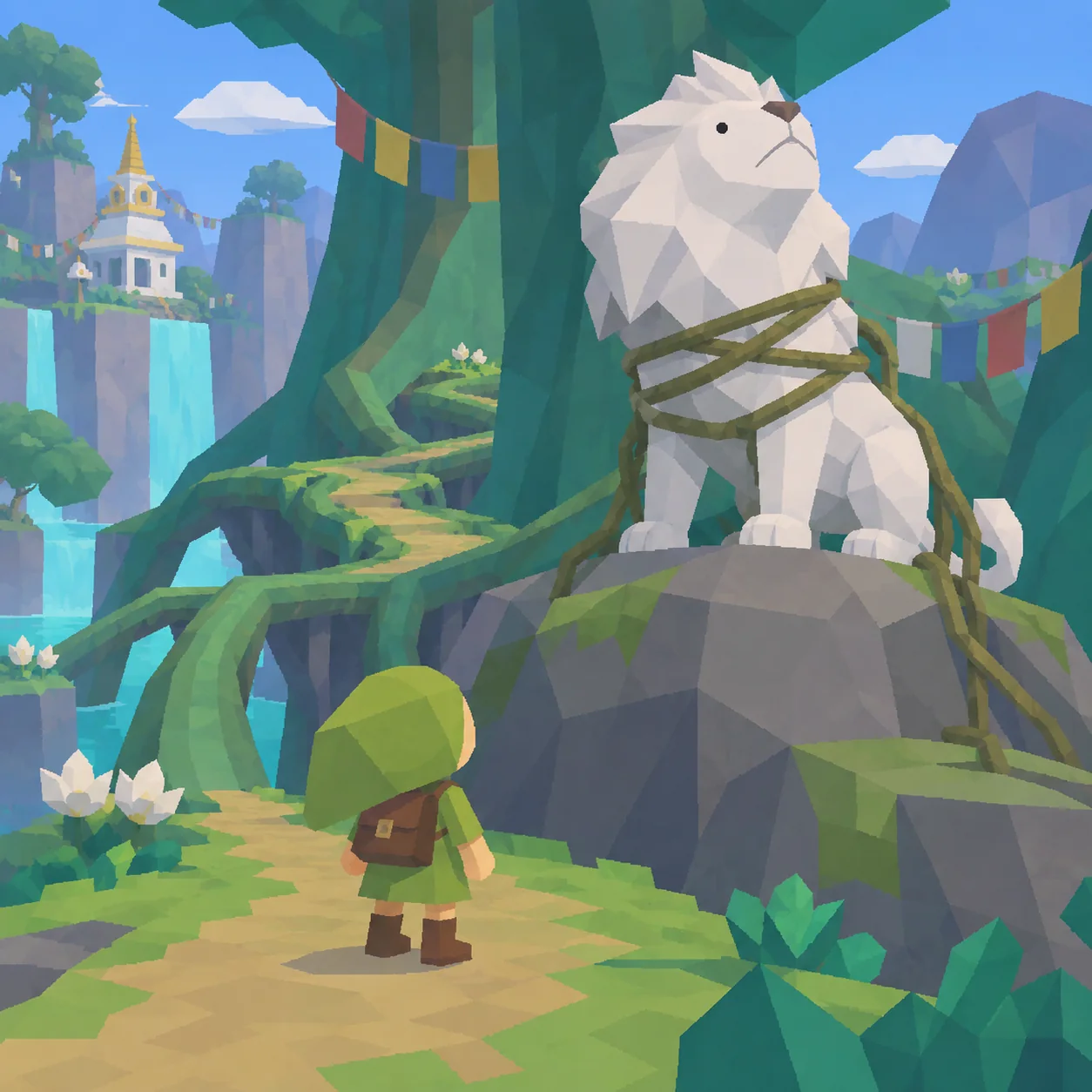
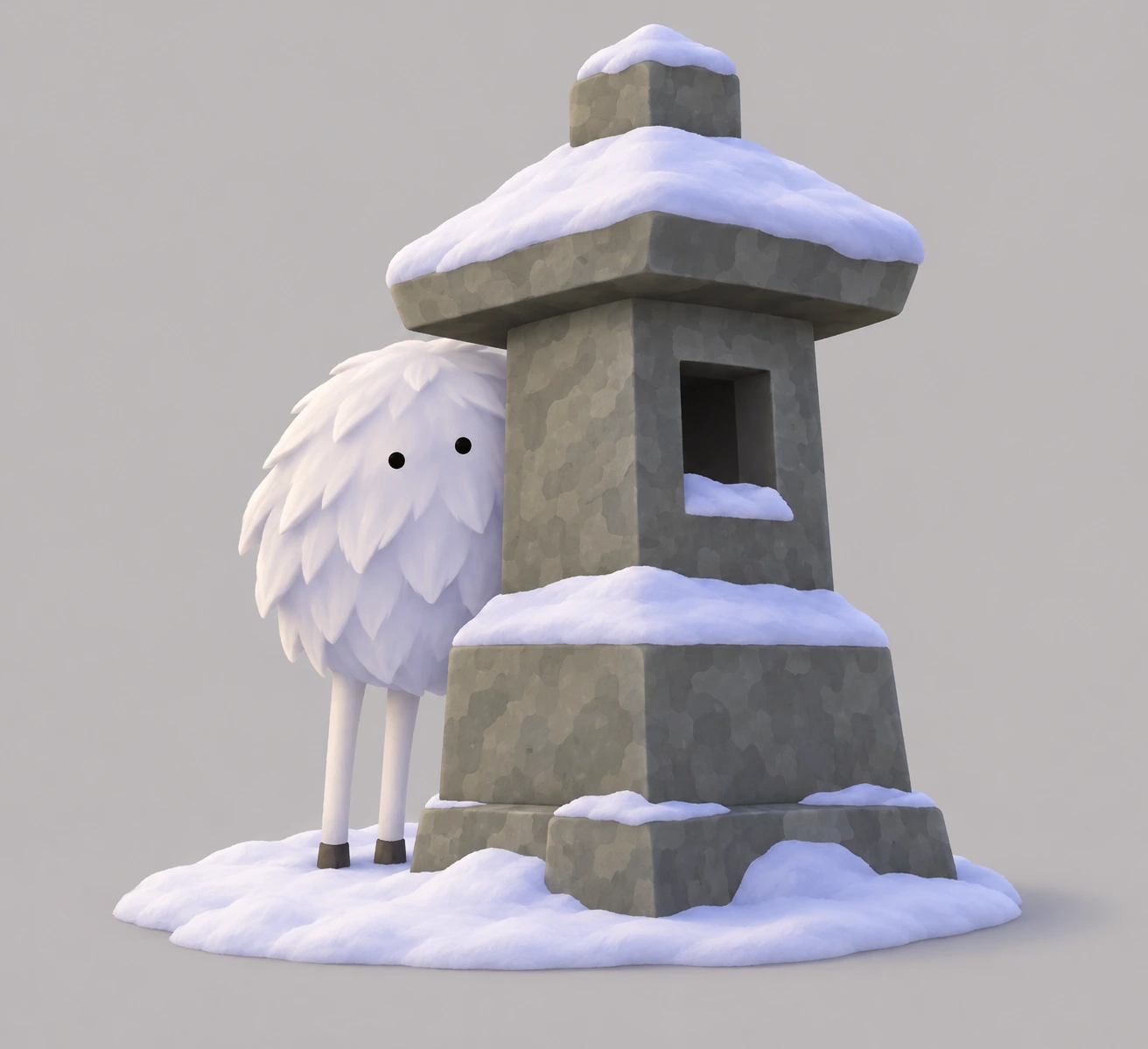
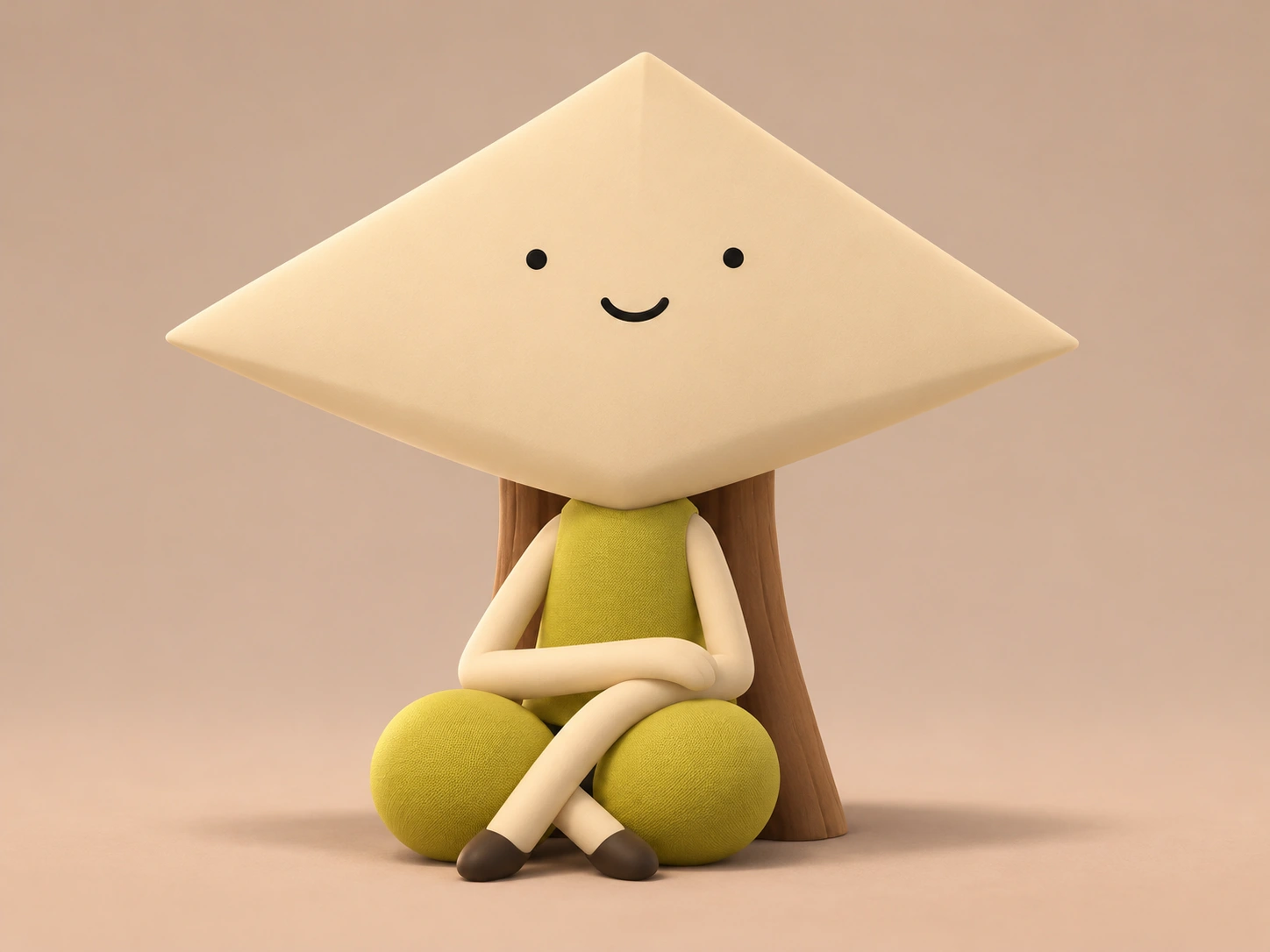
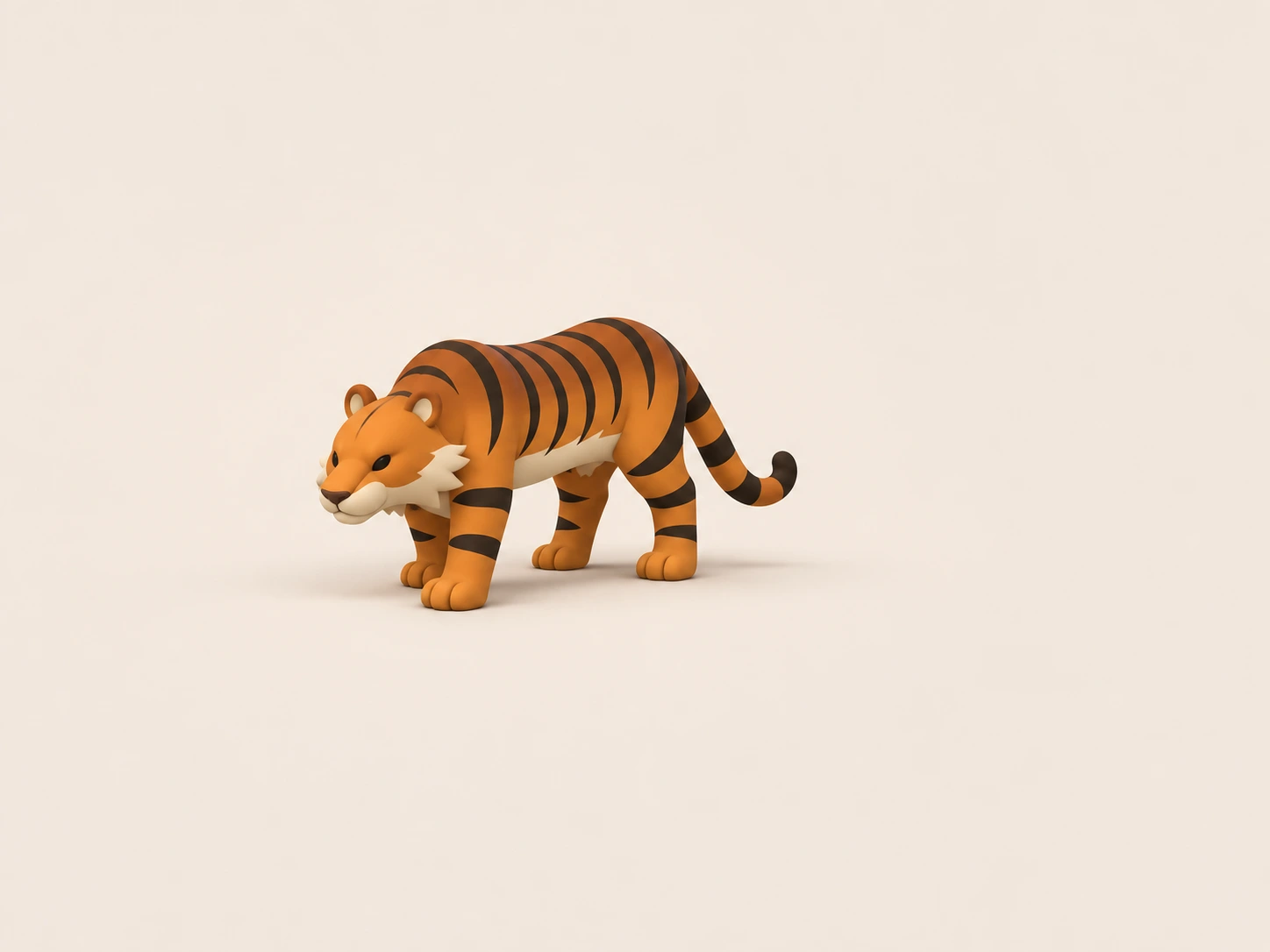
A cheerful low-poly snow lion with a white body and turquoise mane
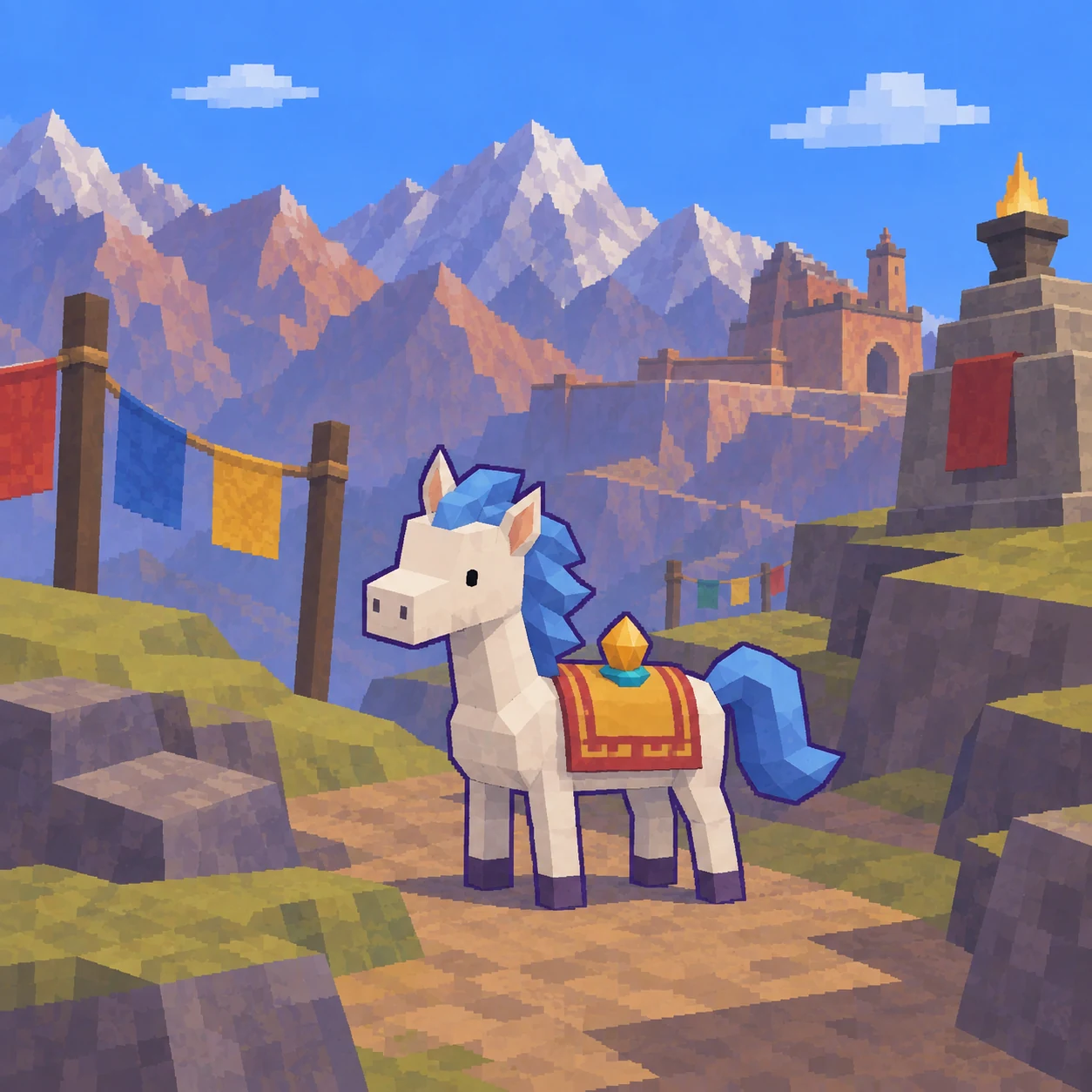
A possible neighbour on the Copper Mountain.
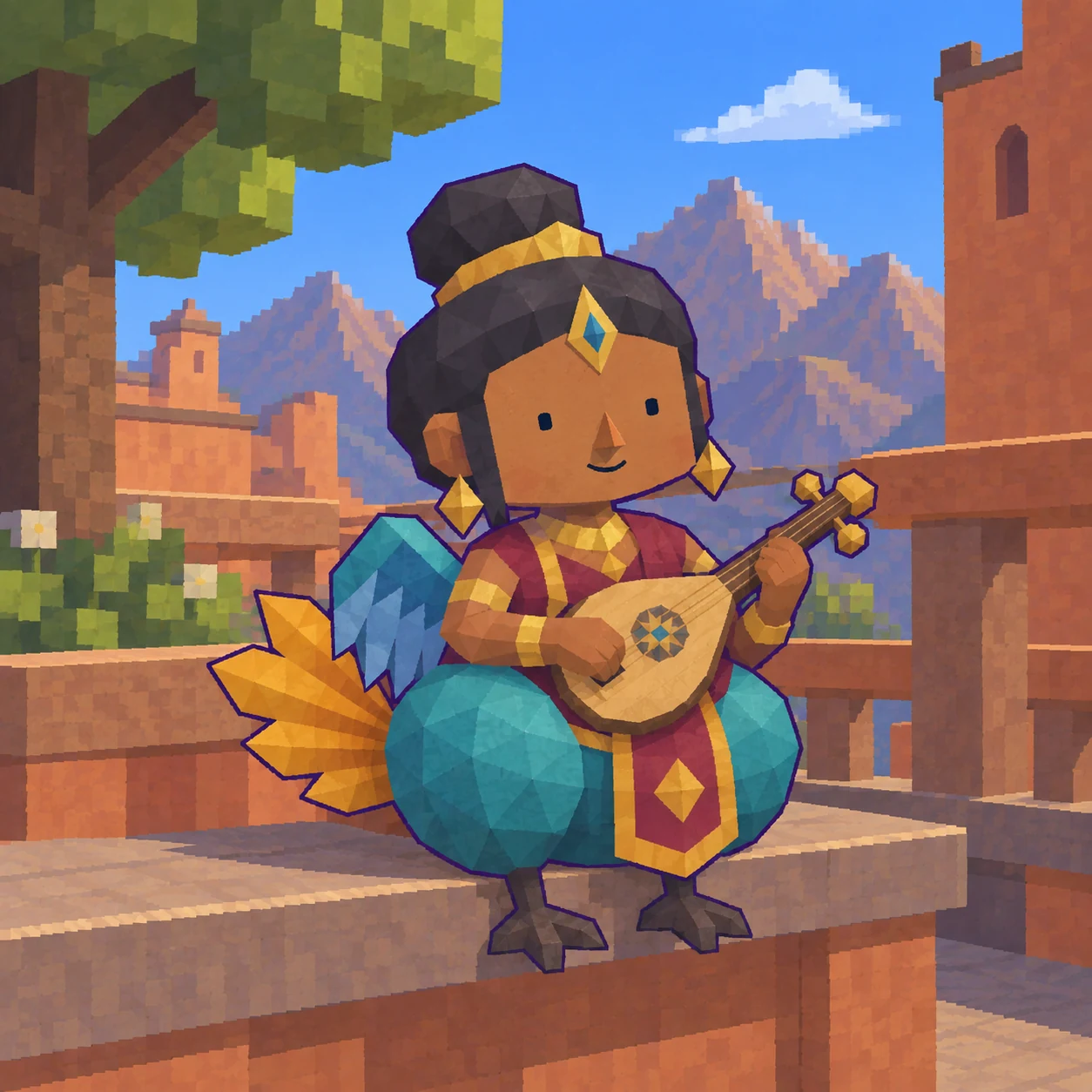
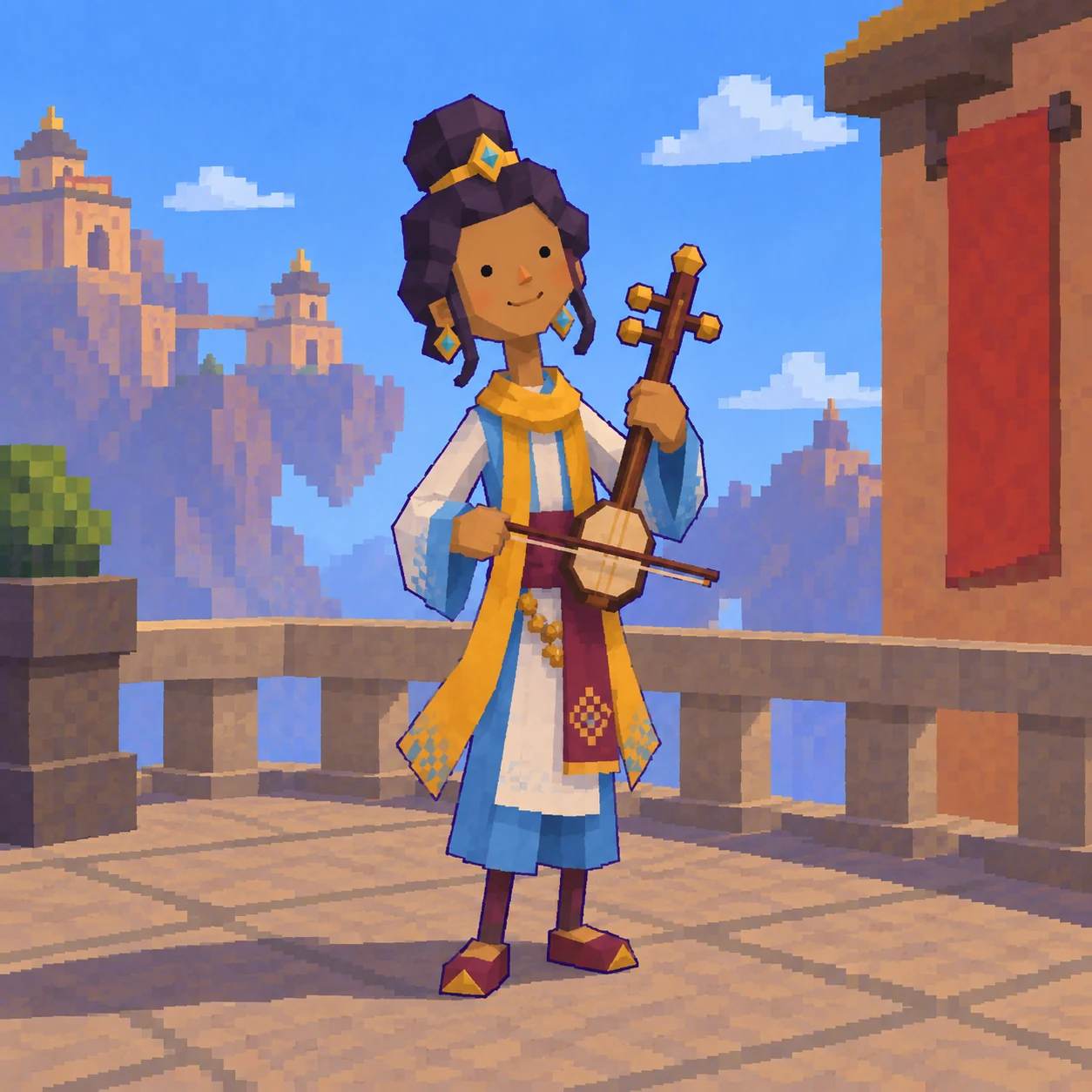
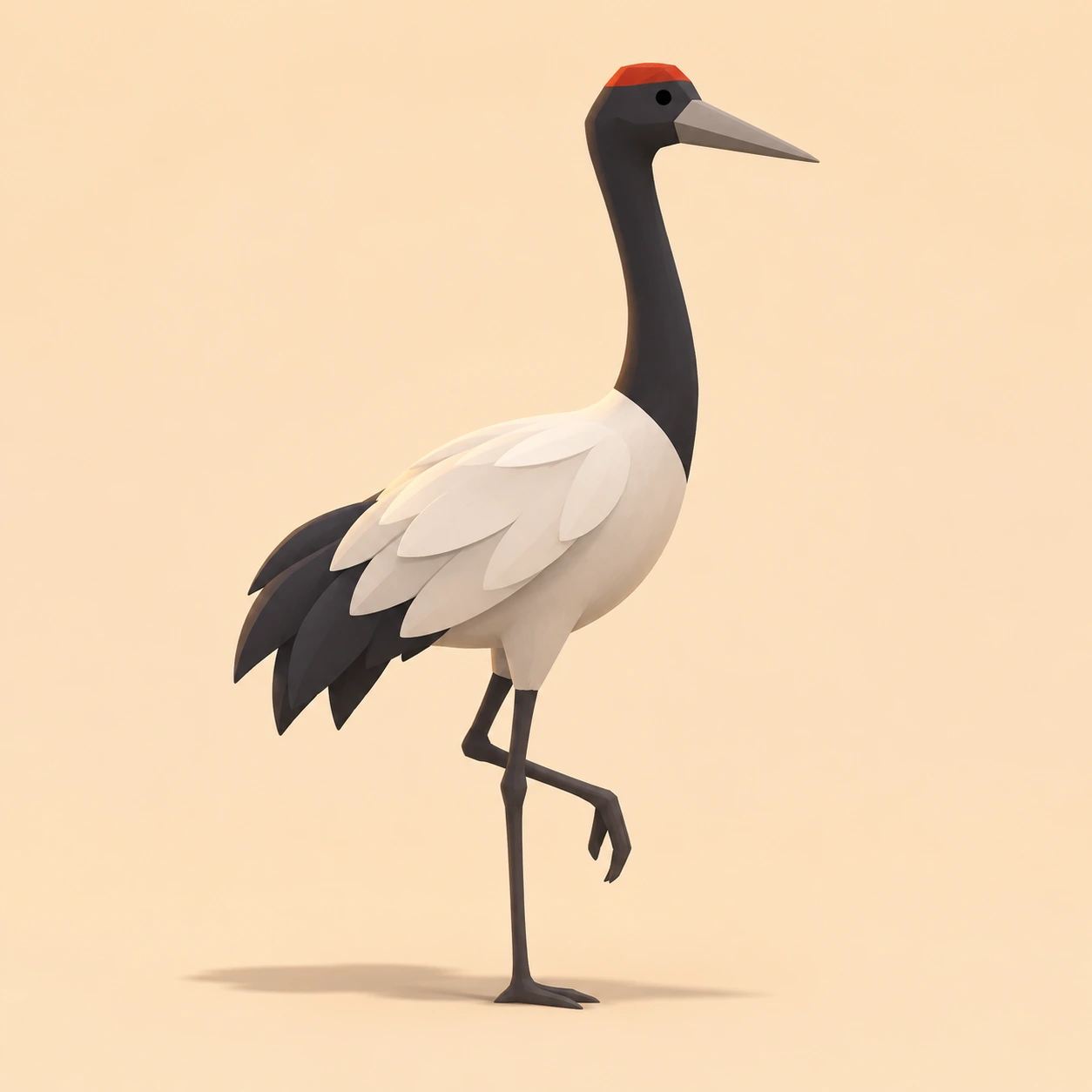
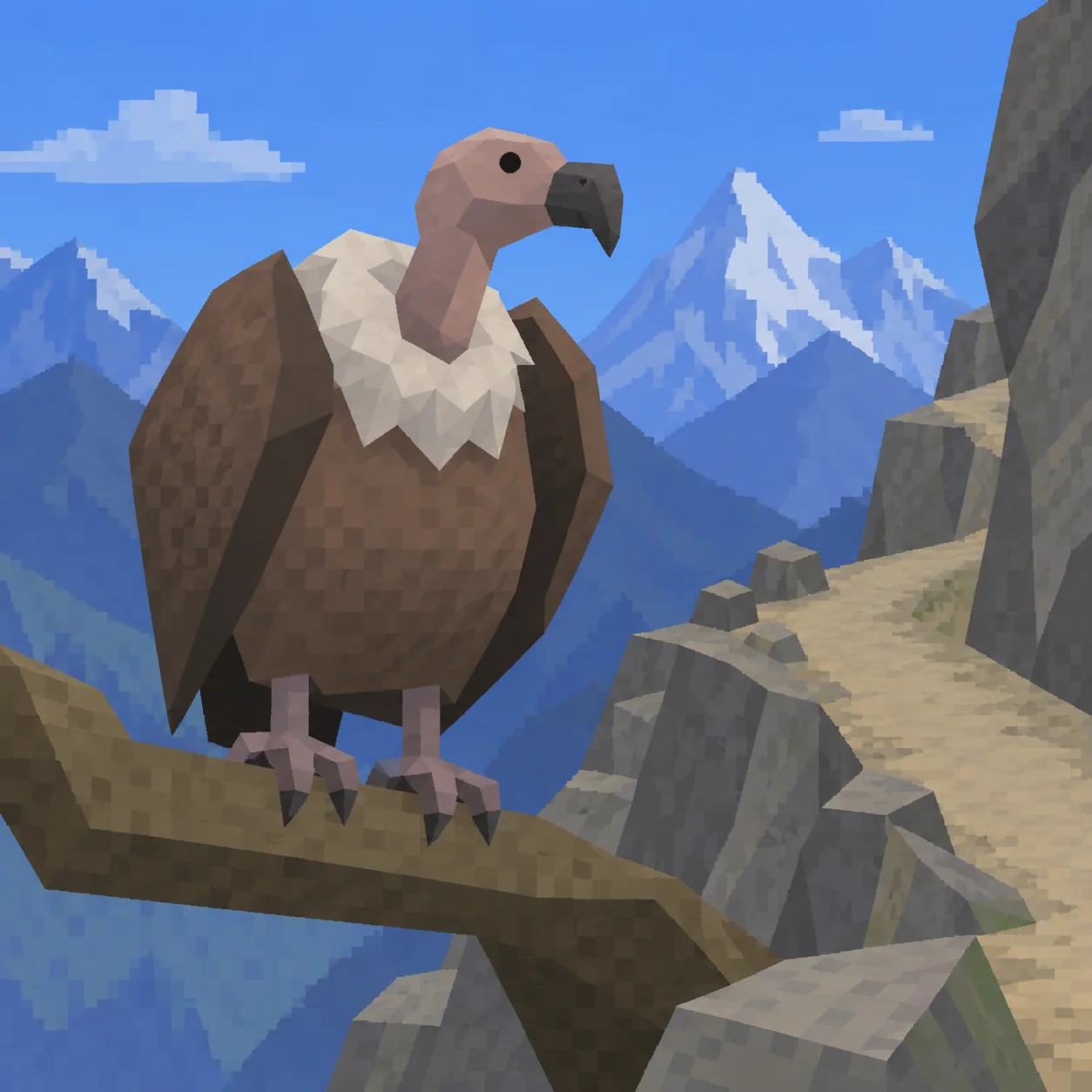
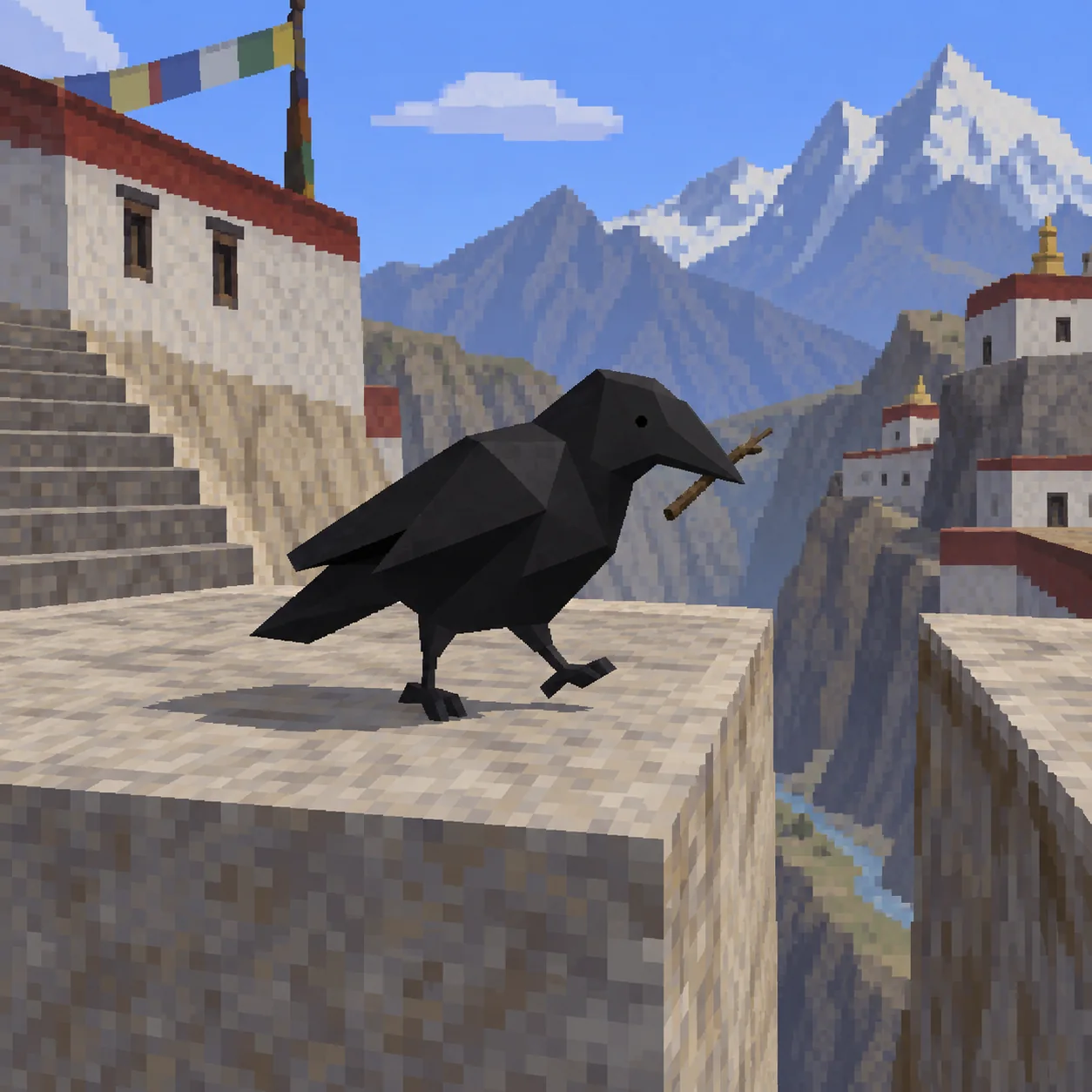
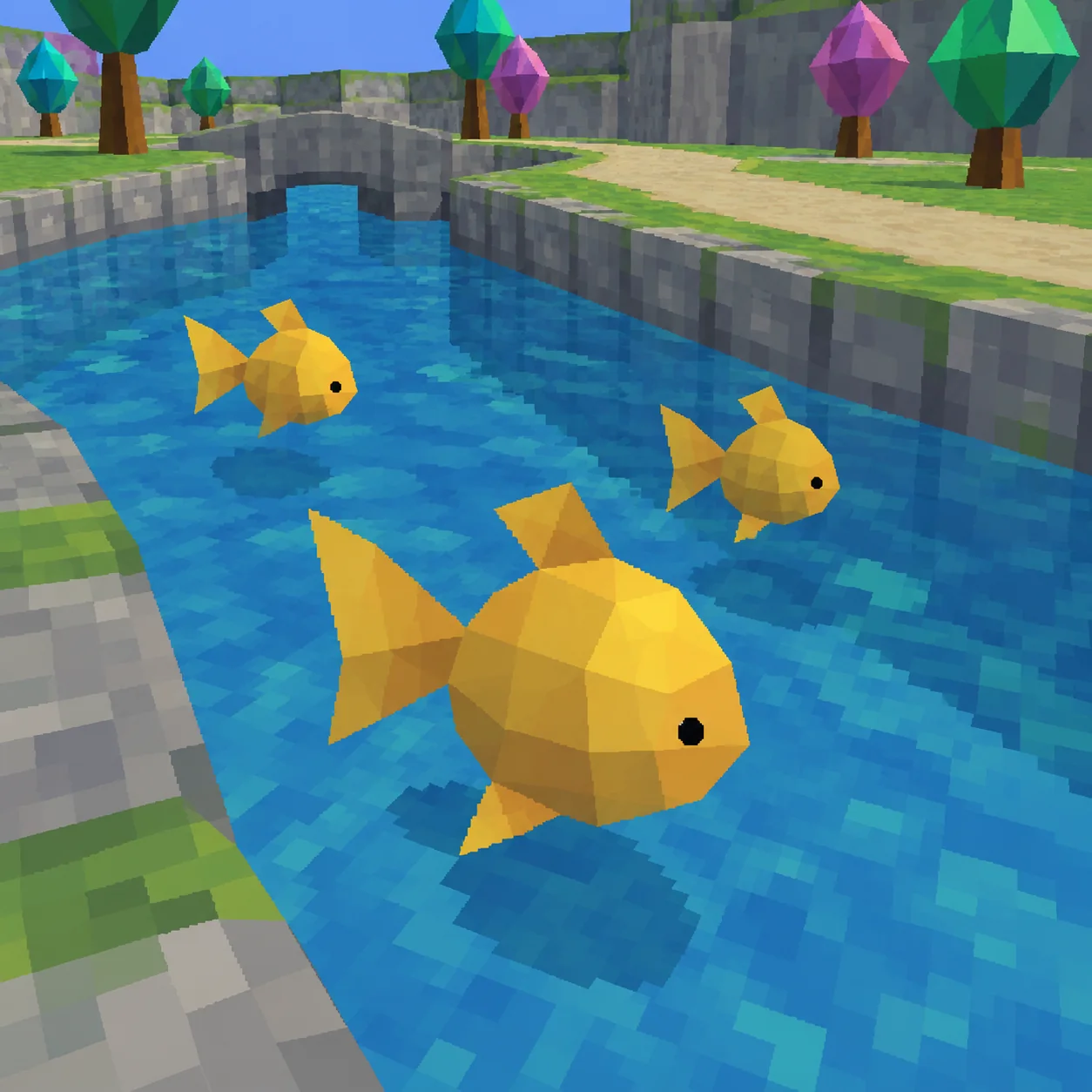
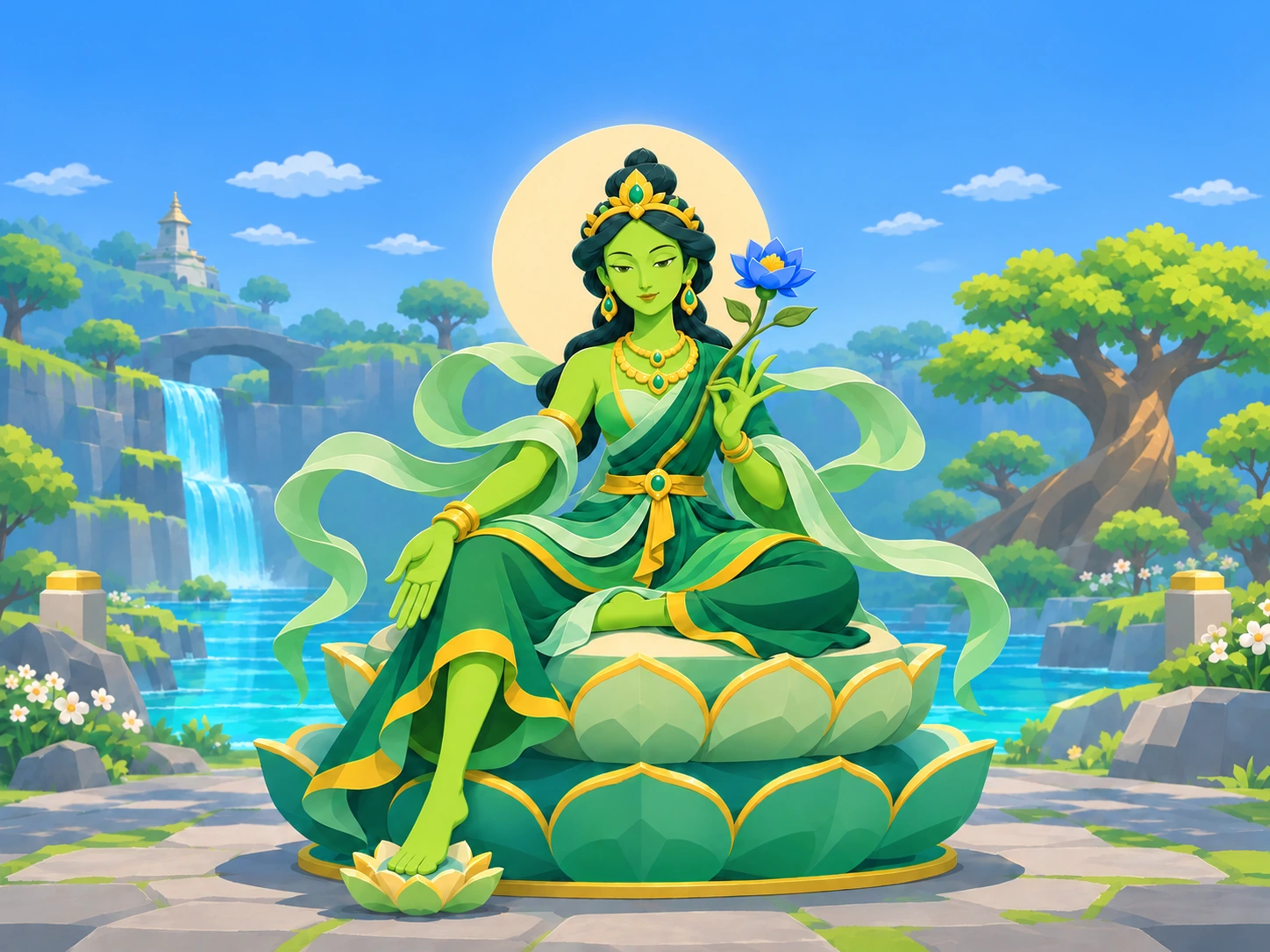
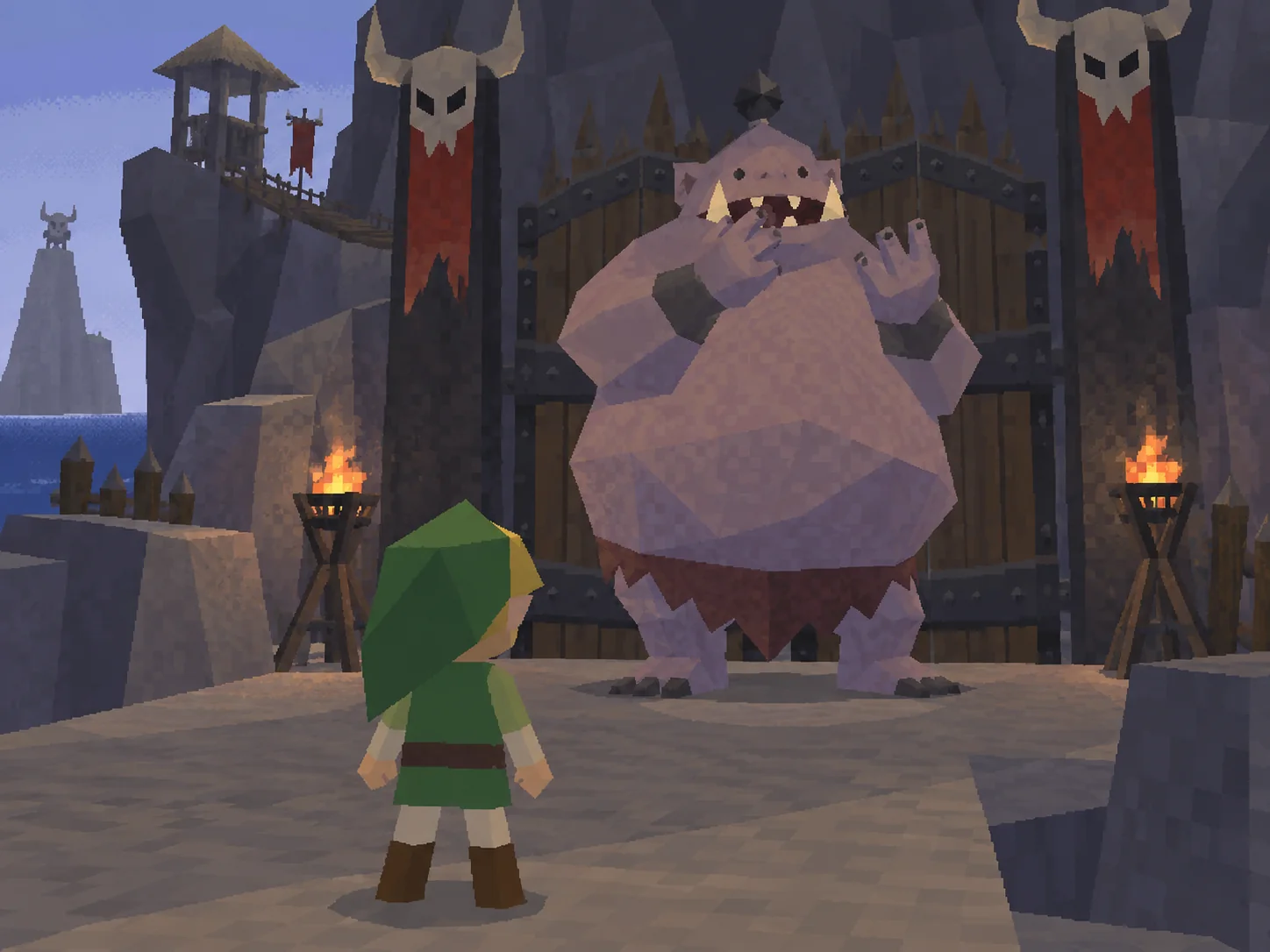
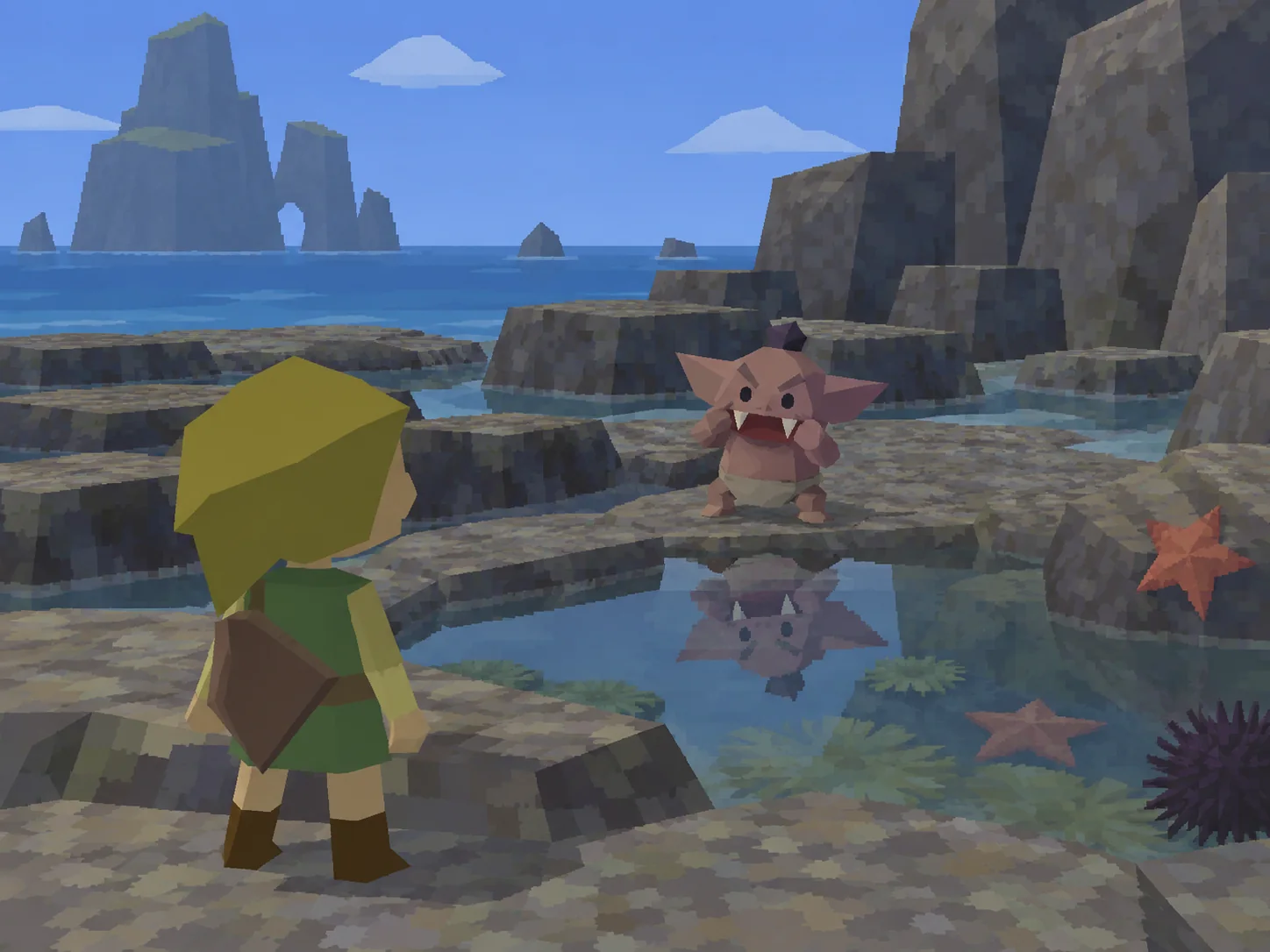
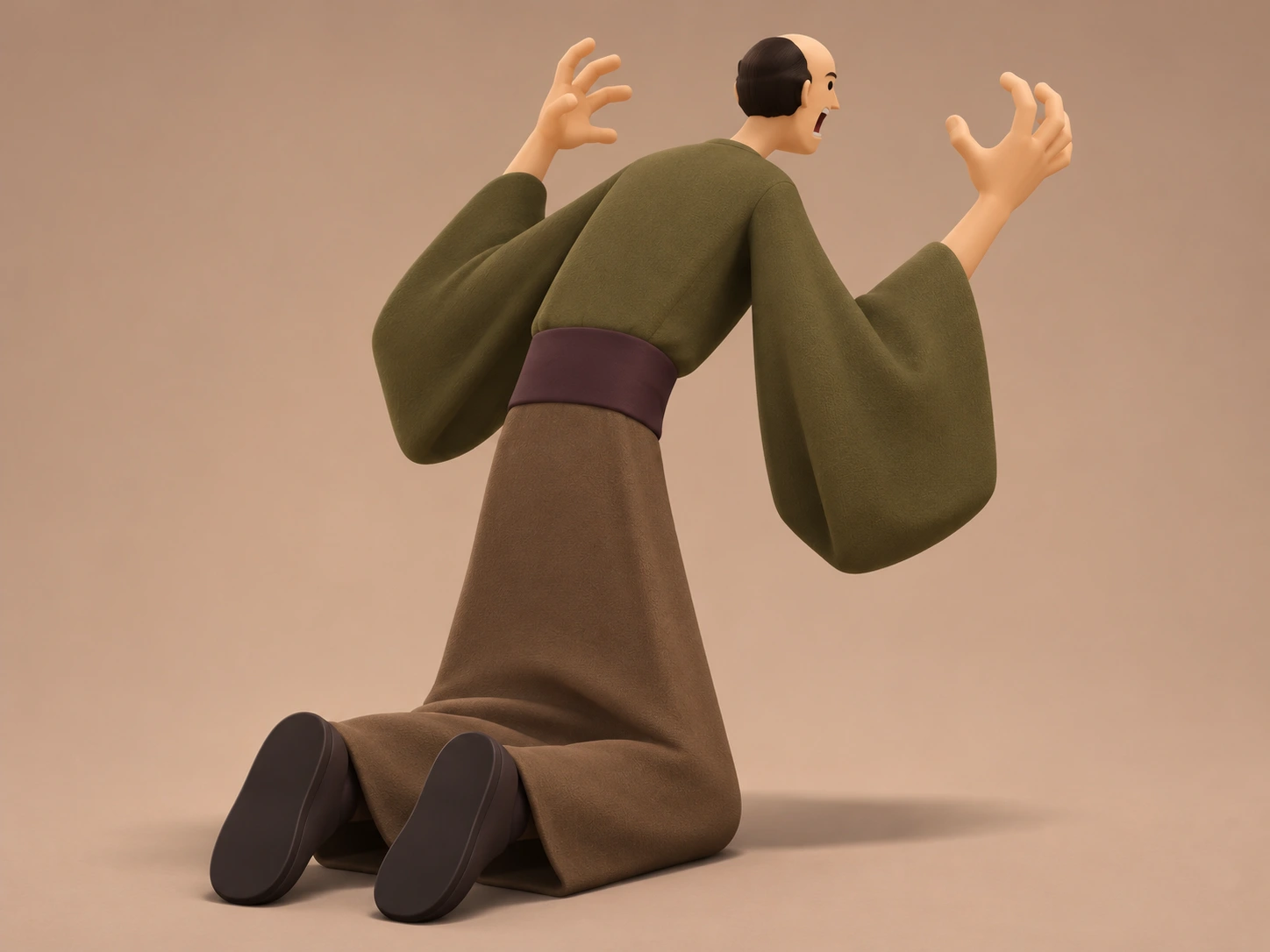
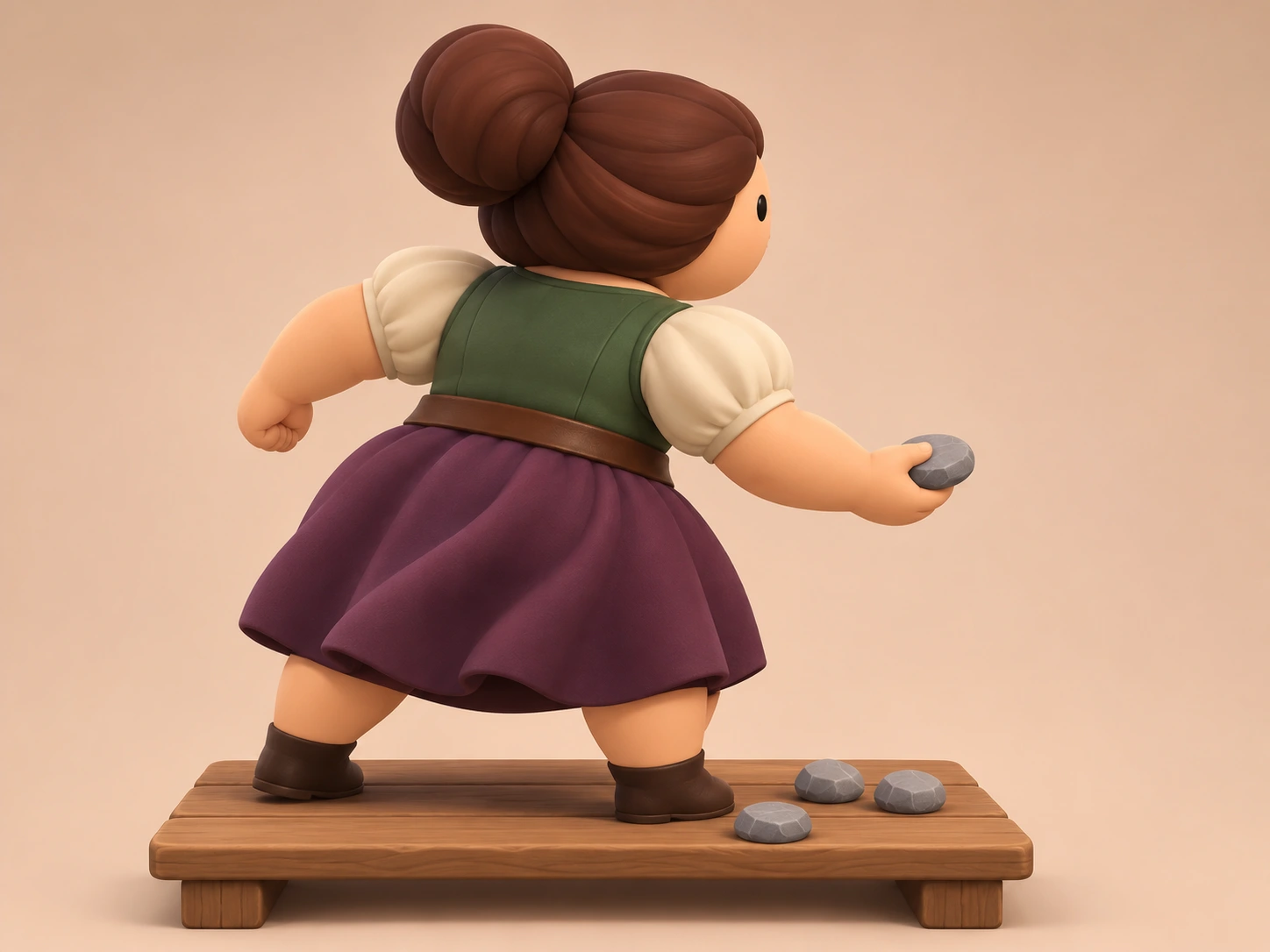
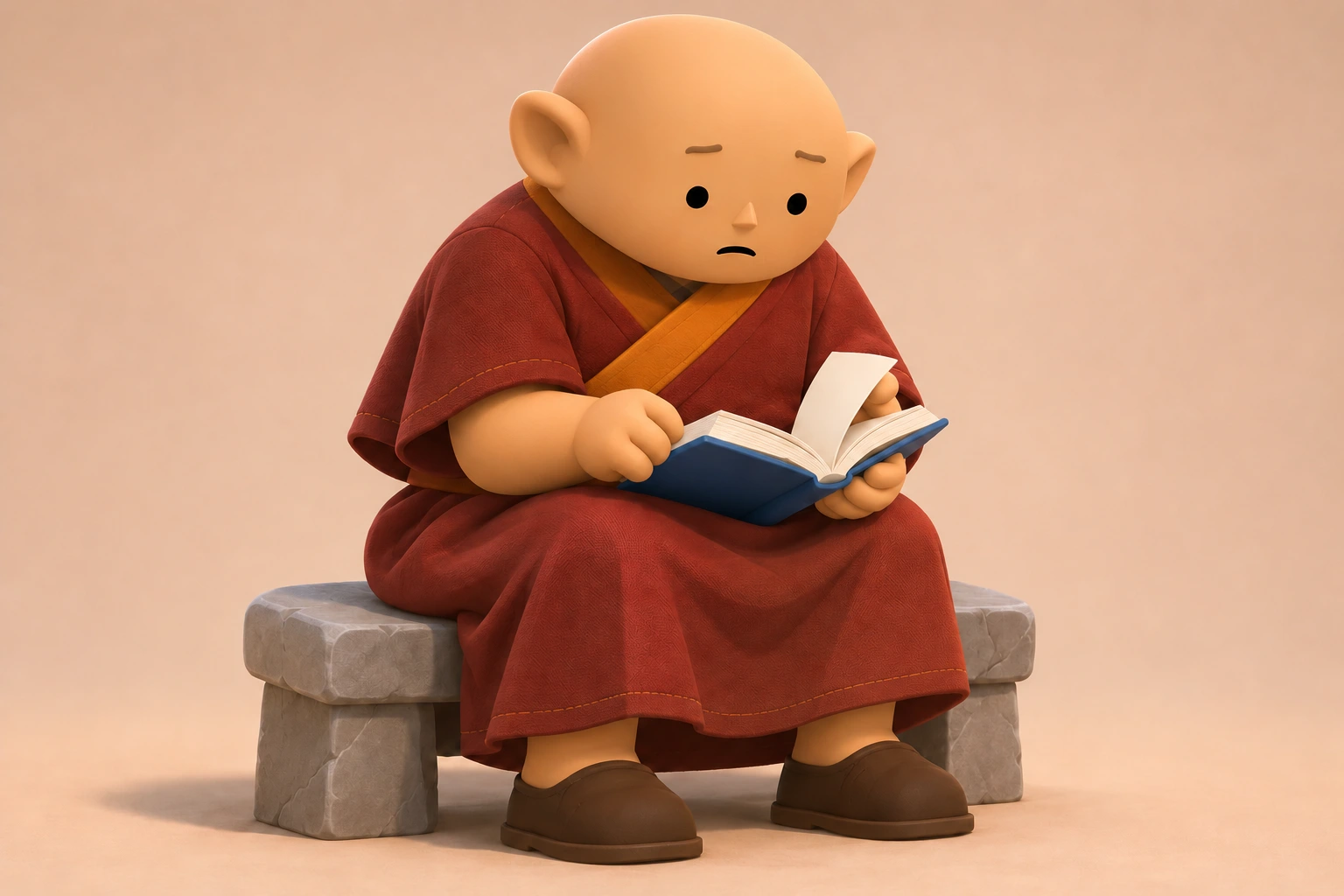
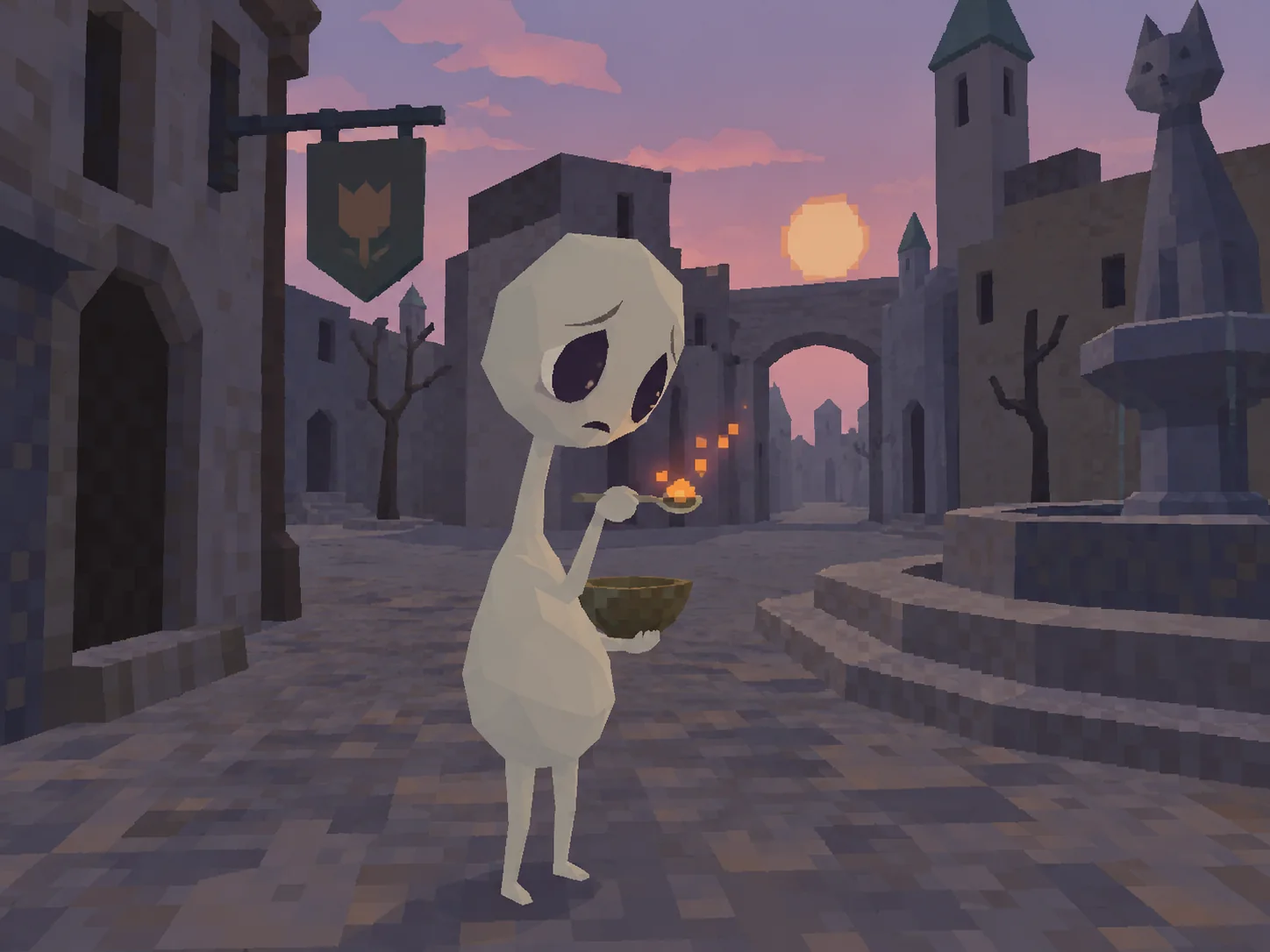
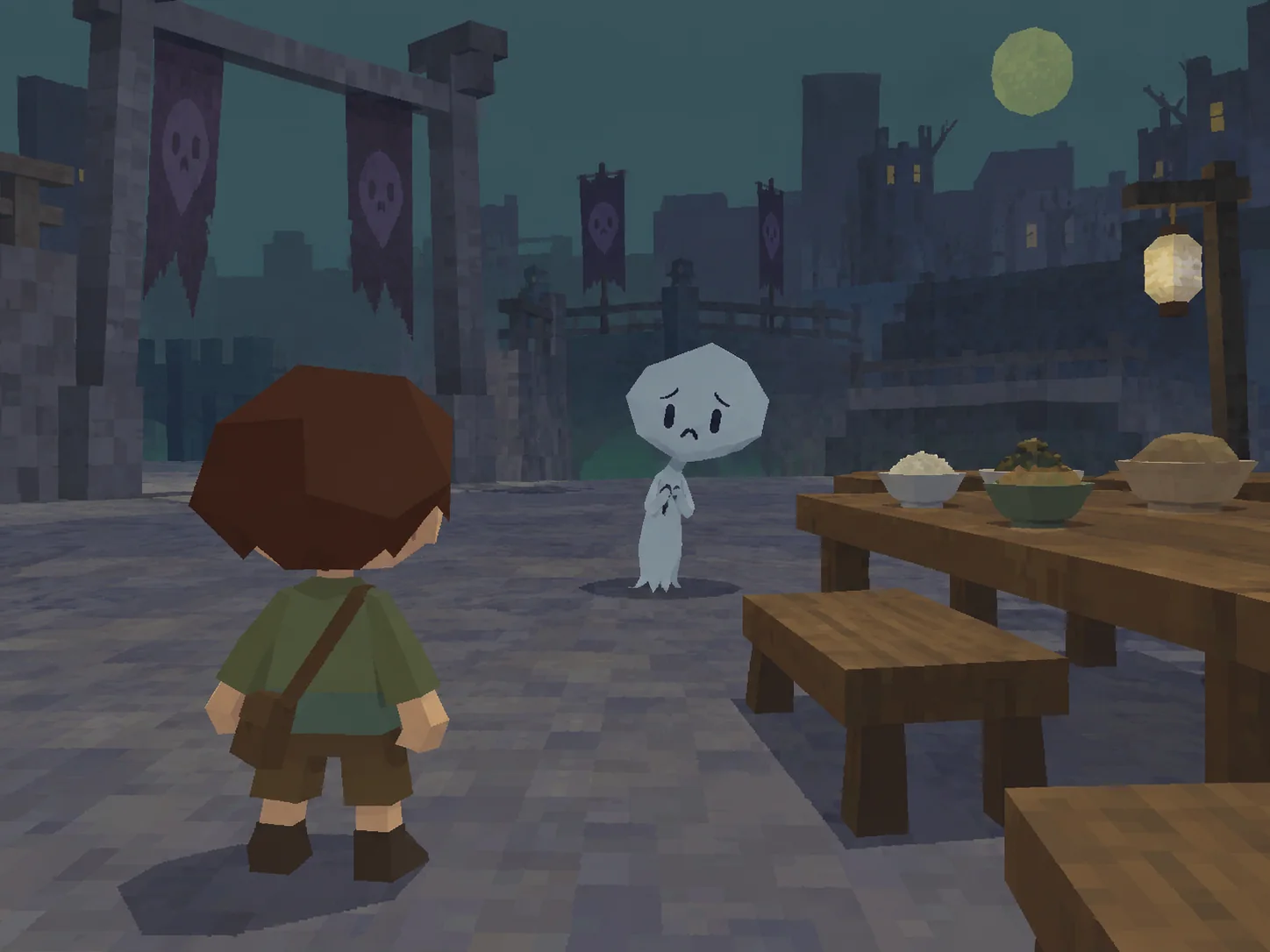
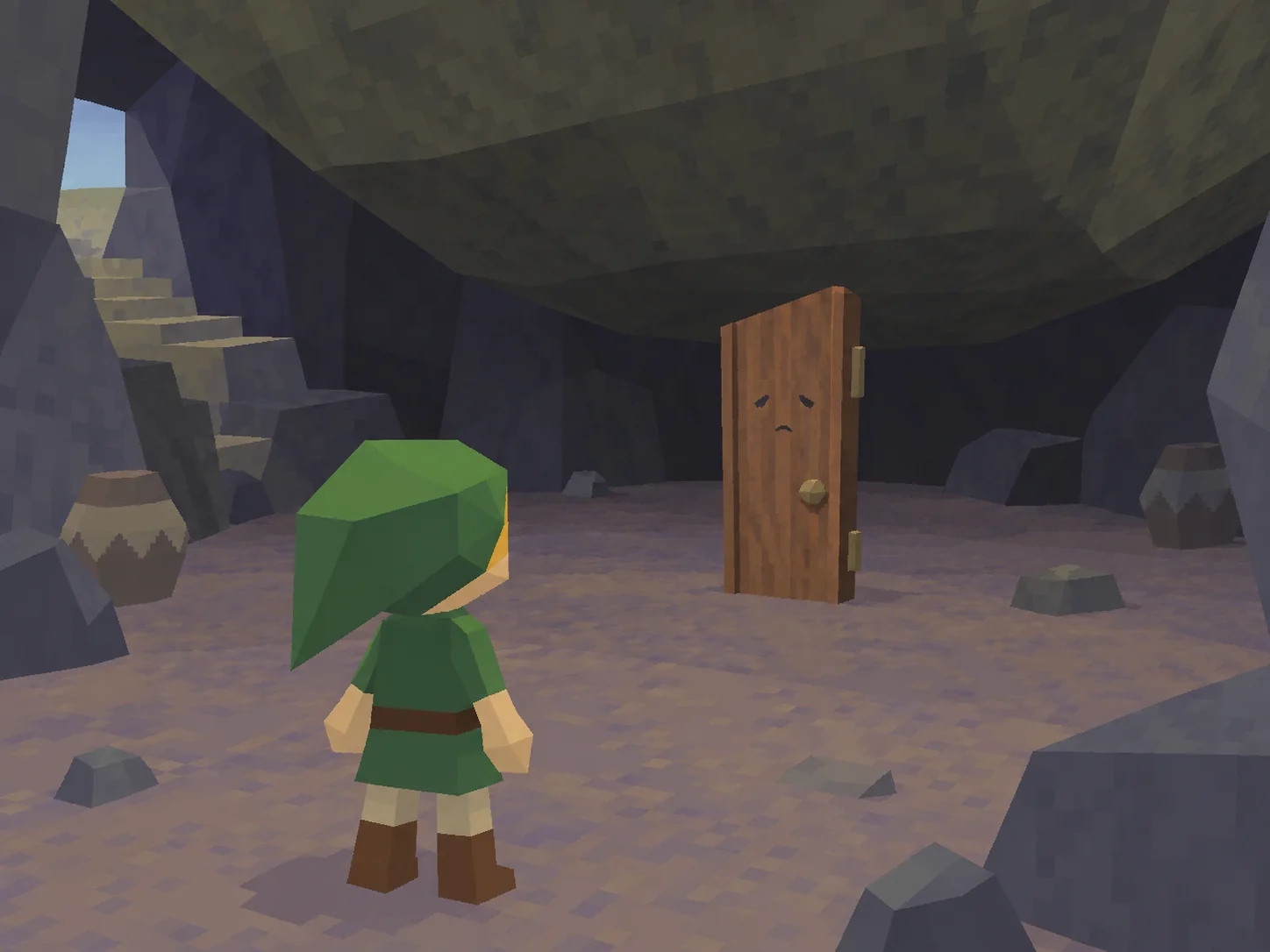
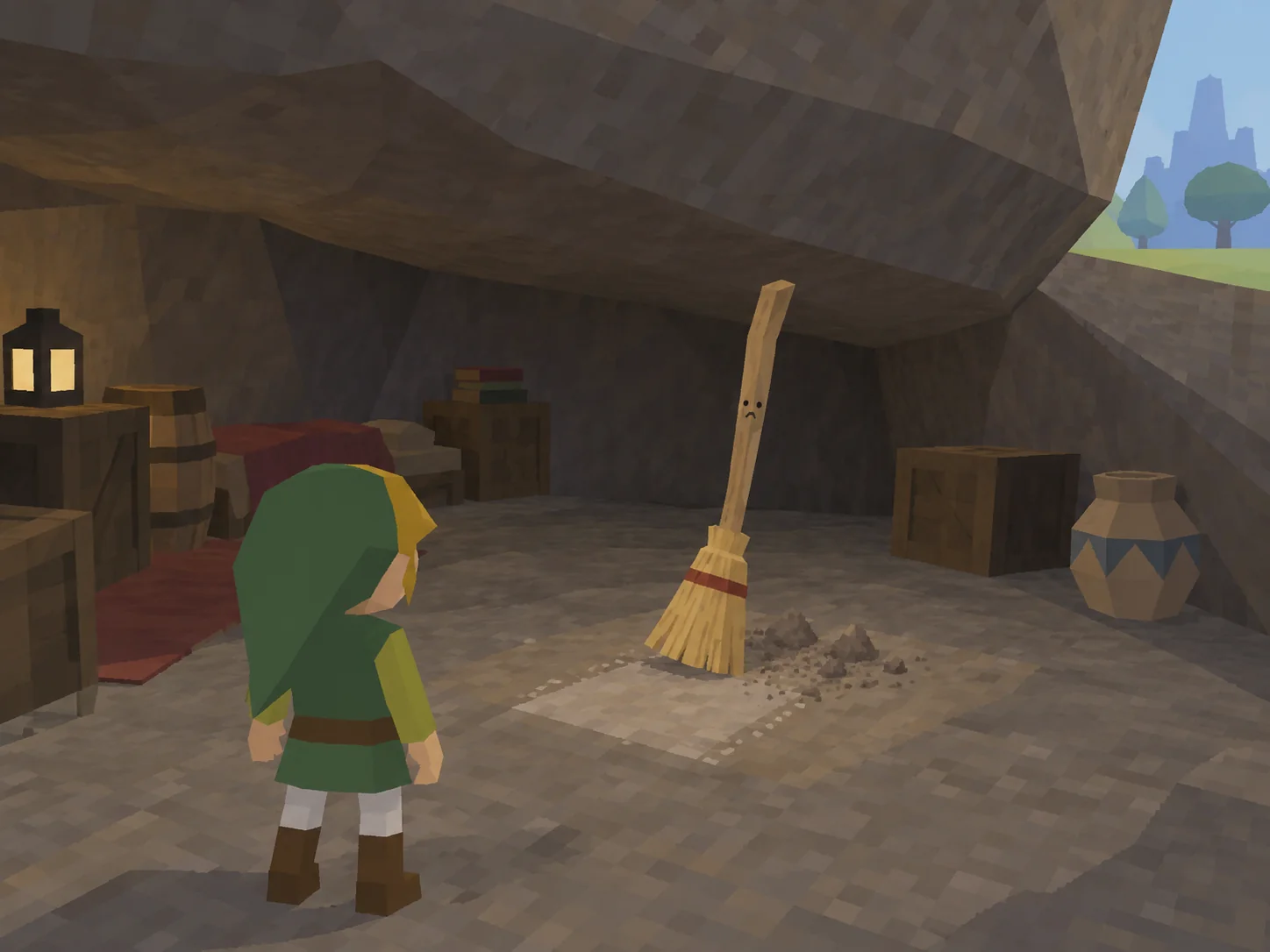
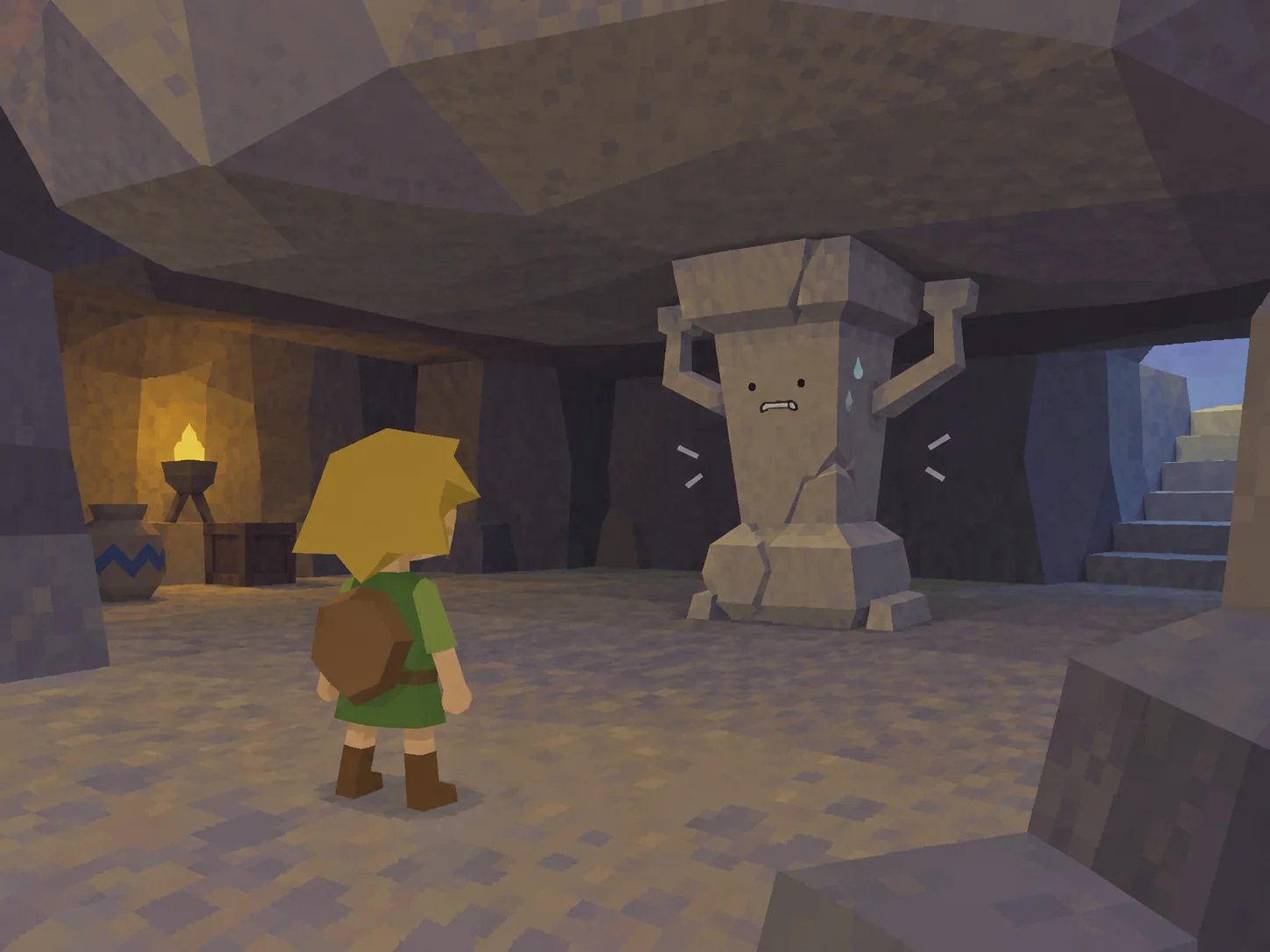
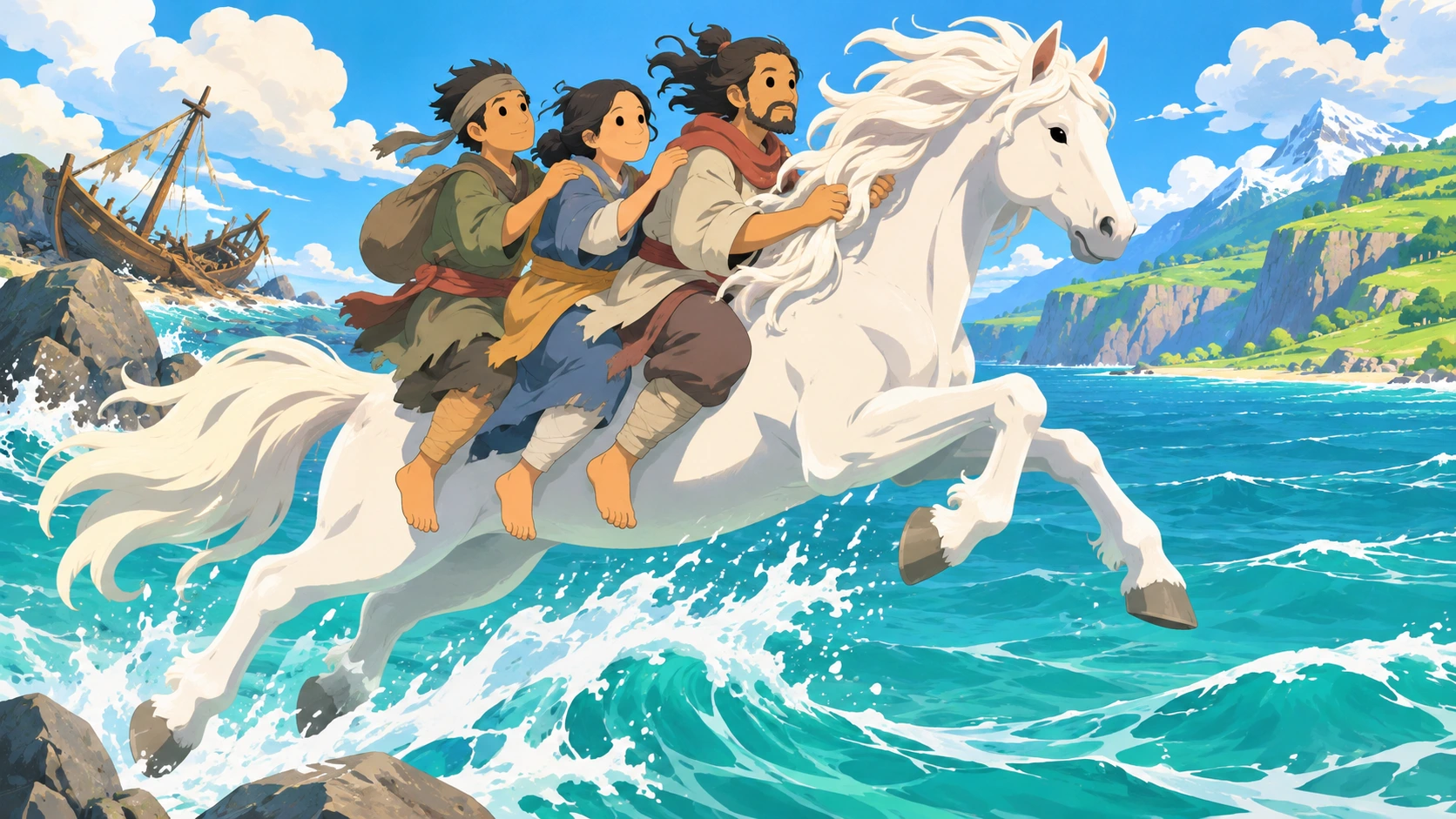
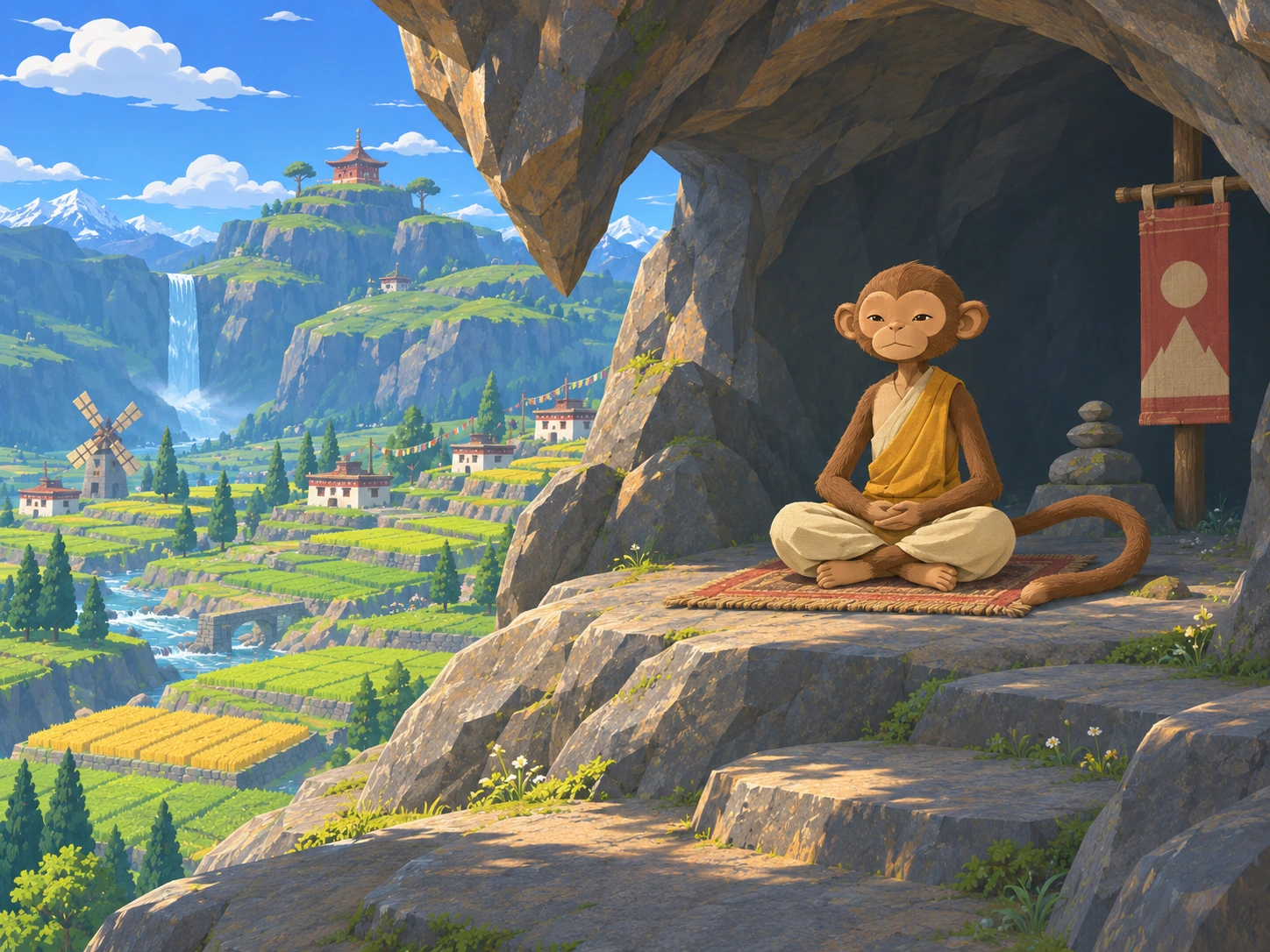
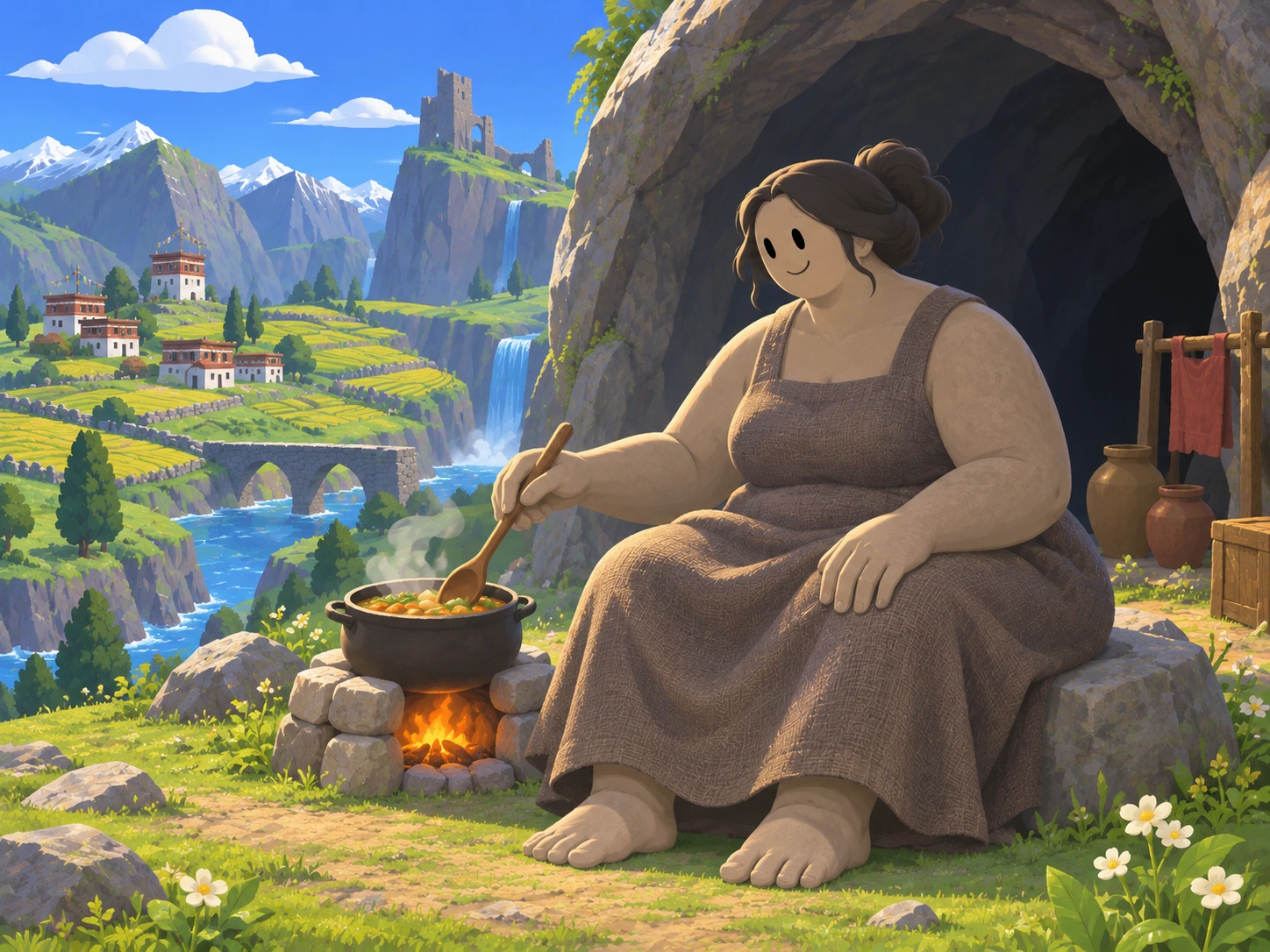
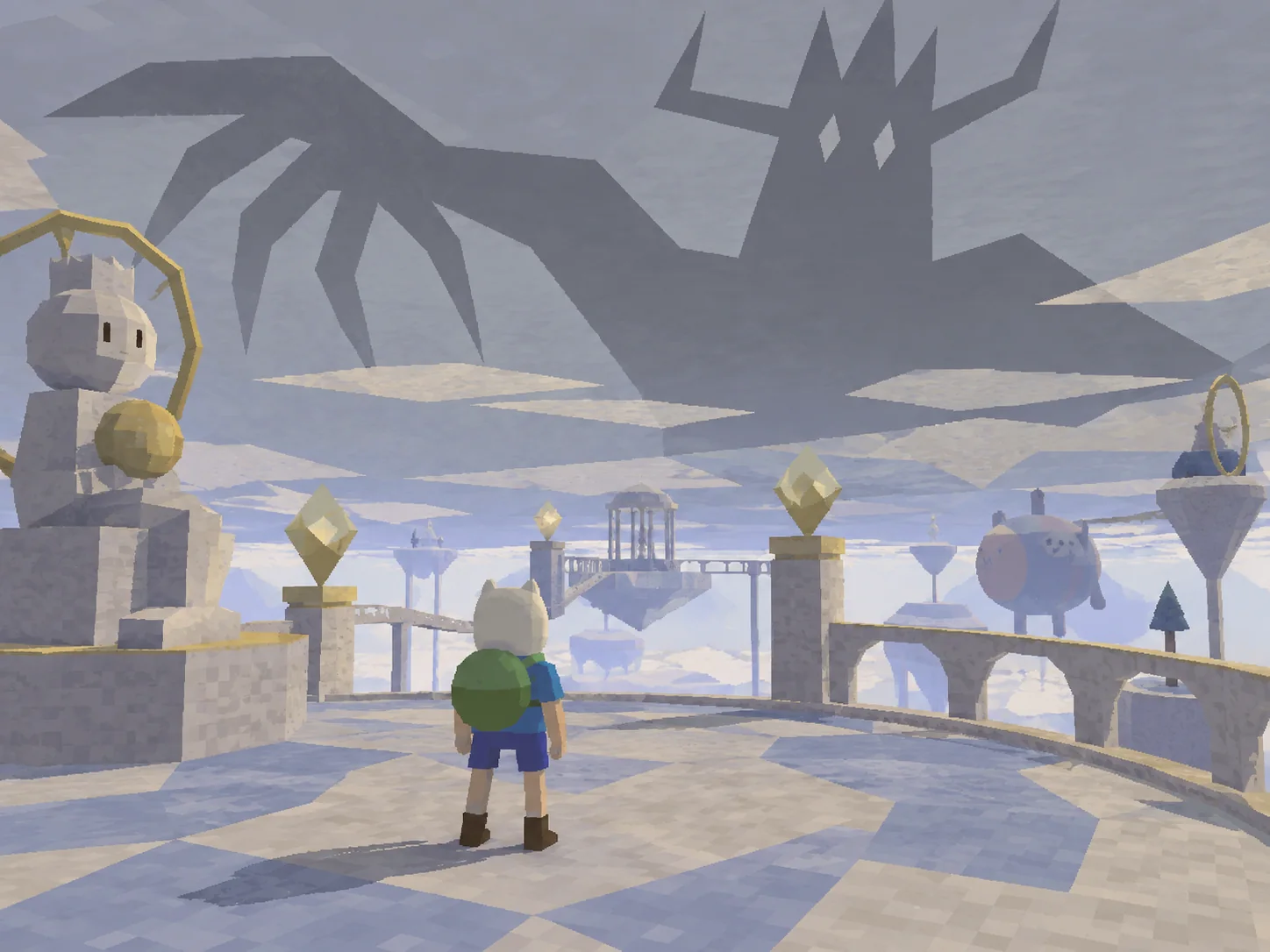
AI-generated gameplay-style study.
World

Great Wheel: layouts and completion

A fully simulated, explorable samsara and Buddhist pure-land world, source-grounded, fully populated with purposeful unique beings, and beautifully polished throughout.

How an area reaches completion
  1. Enumerate source passages, applicable places, populations and relationships; record variants and game adaptations.
  2. Map every claim to a stable destination, appearance or purposeful interaction; expose omissions.
  3. Compare geography, elevation, water, landmarks, routes and neighbours with the concept and current scene.
  4. Verify grounded travel, jumps, doors, talk, encounters, returns and persistence in Chromium and WebKit; attach the tested revision.
  5. Review overview, approach, ground and reverse views, animation, sound, population and phone performance. Record remaining defects.
  6. Accept lore, layout, population, simulation, visual/audio polish and runtime verification independently. Publish only after scoped release and live checks.

“Complete” requires every scoped claim and destination to have evidence and every accepted defect to be resolved. A model, named station, successful build or old screenshot alone cannot satisfy it. Empty rooms may remain intentional; their reason belongs in the inventory. Full simulation remains a target until behaviours and acceptance are explicitly recorded.

For every section below, layout, population, simulation and visual/audio polish are pending fresh acceptance.

Lower left · 240°

Animal

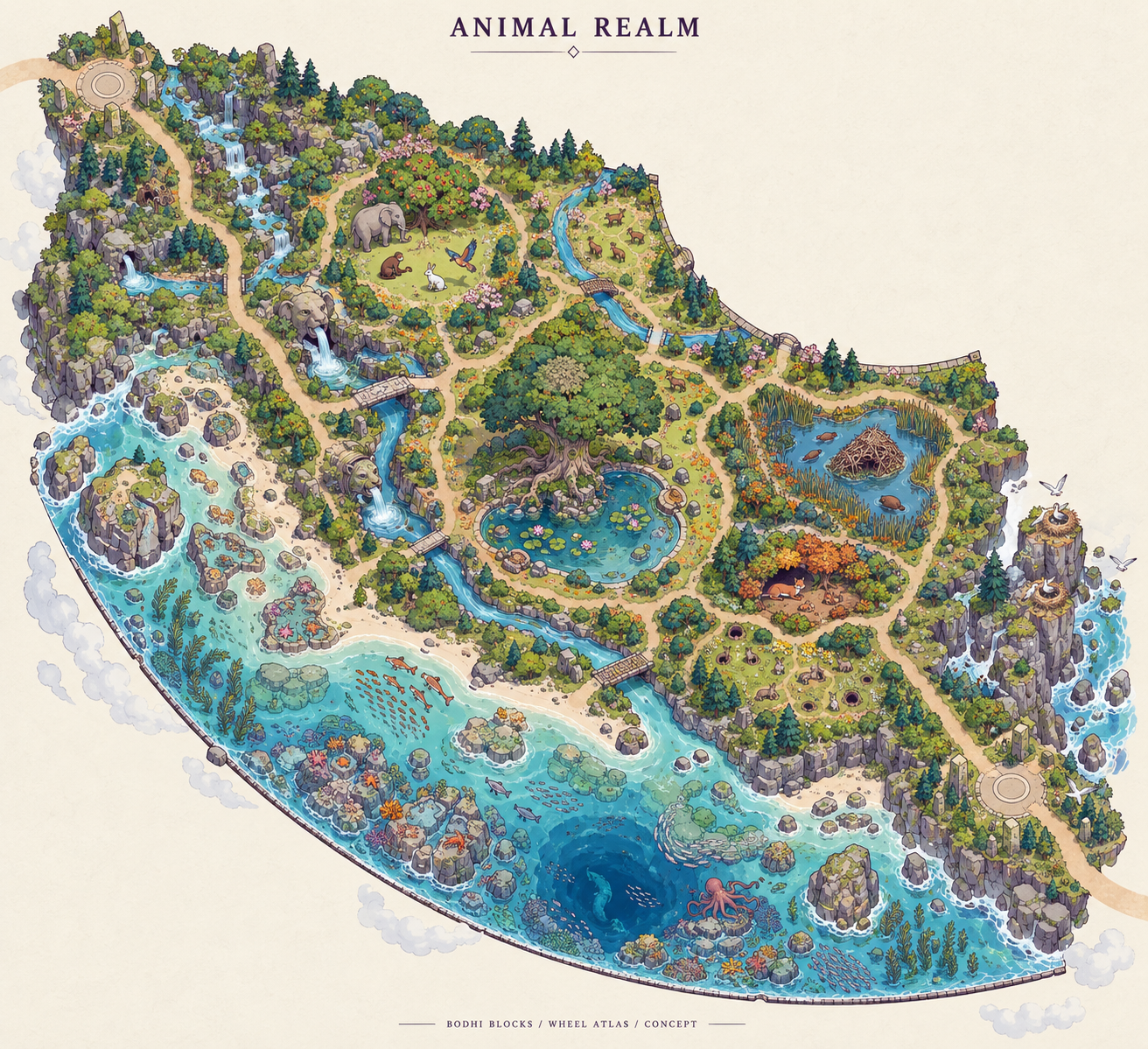
AI layout study for AnimalOpen original generated layout study
Layout contract
Arrival meadow → intact encounter clearing → two habitat wings → outer shorewalk. Naraka-side upland spring feeds a stepped brook and root-framed pond; Asura-side springs and terraces descend toward a tidal cove. Preserve dens, ledge nests, orchard and hidden entrances.
Current source
Source contains stepped watershed relief, pools, terraces and habitat dressing; Four Friends, spring caves, naga palace and hidden-valley identities survive. Anavatapta is now separately registered in C05. Junctions (owp-26): both bridges are timber decks on dry-stone abutments with a low parapet she steps over, flagged thresholds at both feet, and a saddle path from the cove walk up the east terraces crosses the Asura seam at r 66.6 between three boulders; every centre line kept clear (scripts/wheel-animal-junctions.test.mjs) and walked both ways by the real controller. Pilot pass (owp-27) against the to-scale map 01-animal-achievable-v2: the eastern river now rises at a spring crag of library boulders on the Asura-side hillside, two falls and a 9.4-long brook down the seam slope to the river's head, crossed by the cove walk on a plank bridge and by the saddle path on stepping stones (it replaces a hand-high sheet and the runnel to the cove); the cove walk then passes under the old chart's sea-stack arch instead of running into its east leg (a drawn stop the real controller found); the arrival meadow's tor is the map's nest crag, crowned with a nest; all 13 outcrops are three library boulders each instead of stacked primitives, and the tor that stood inside the great tree is gone (scripts/wheel-animal-pilot.test.mjs). Second pass (owp-44) against the same map. The west valley holds the map's lower lake: 51.4 sq u, 1.11 times its 46.5, where the stepped brook's three small pools were. Its head lies under the spring shelf, where the spring rises. A lake walk runs its clearing side from the overlook to the rim. The banyan stands at its waist. ANI-P07 needed the approved shared layout change: Animal's Naraka seam is guarded for relief by the ramp built there (wheel-layout.js seamGuard). The map's two hillside caves are mouths she walks up into. The spring cave stands at the crag's foot beside the falls, reached by the meadow lane round the great tree. The den cave stands on the west hillside, reached by a hillside trail from the rim walk. Two lanes and a plank bridge close the Liberate path into the map's ring round the meadow. The old bank wall's floating ivy poles and ledge nests at u -18.8 are gone (no wall stood there). Claim-to-place inventory (32 claims) and the measured route and area audit (scripts/audit-animal-segment.mjs) are below; scripts/wheel-animal-pilot.test.mjs checks both passes.

prototypes/world-map/wheel-segments/animal.js

Remaining / acceptance
Pending actions in the inventory: ANI-P01 (the great ocean past the shorewalk, a shared rim decision), ANI-P02 (predation by its traces), ANI-P03 and ANI-P04 (den, cave and beaver-lodge inhabitants after concept art), ANI-P05 (nāga residents), ANI-P06 (a source for the clearing's western river) and ANI-P08 (usable floor below the 1,218.42 rule: 990.08 connected flat and 1,046.08 stepped after owp-44; the wedge measures 1,176.96 empty, so the rule needs a shared change). The map's spurs across the clearing wait on the old chart's hills.
World plan · 26 districts, 48 claims (0 pending), 23 orphans
Chosen lore account
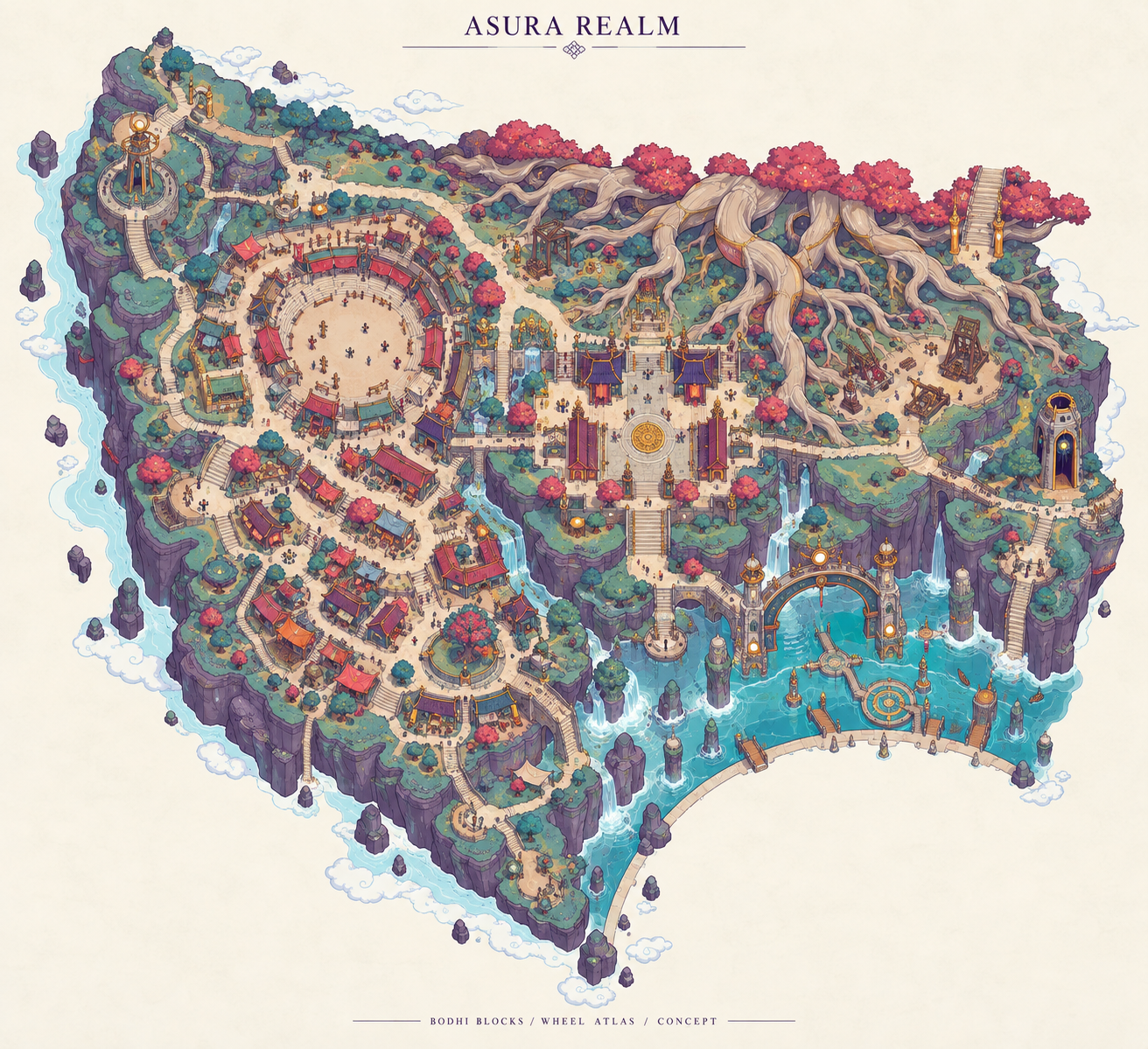
The animals’ principal dwelling is the Great Ocean; they also live dispersed on land, in water and in the air (Vasubandhu, Abhidharmakośabhāṣya III, Pruden vol. II printed p. 460; Kongtrul, Treasury of Knowledge book one, pp. 28–29). The salt ocean lies outside the continents toward the iron rim (K pp. 23–24), so the island’s rim end is its sea: two bays of the outer ocean either side of the spit to the outer bridge, the broad east bay facing Asura’s own sea across the chasm. Inward of the sea the land, fresh water and air habitats: a wooded hillside of dens on the Naraka side, one lake fed by the realm’s rivers, the great tree and its birds at the centre, crags, springs and the fox’s wood on the Asura side, and one worked farm where a domestic animal is kept (Chökyi Drakpa, Torch: wild predation and domestic exploitation). Every river runs to the sea. Every being stands in the habitat of its kind. The Wheel order is kept: Animal southwest (research document, Wheel order).
Orphans listed
23
DistrictPurposeLore claimsPlacementsCharacters
The arrival meadow
animal.arrival
Where she steps off the inner bridge: the path turns west onto the Liberate road at the trailhead, on the old camp ground now planted as meadow (her house is under the Wheel’s hub, R20), and the first sight of how animals live here: a pool to drink at, dens at the nest crag’s foot, nests on the crag and in the corner trees, and the traces of a kill.423Sparrows ×8
The starting field
animal.near-meadow
The grassy field the game opens on (Josie’s design): the first being of the ladder, the bug, in its clover just past the trailhead, and the fork where the route turns west to the water.13Mushi, butterflies ×3
The Muni’s lawn
animal.muni-shrine
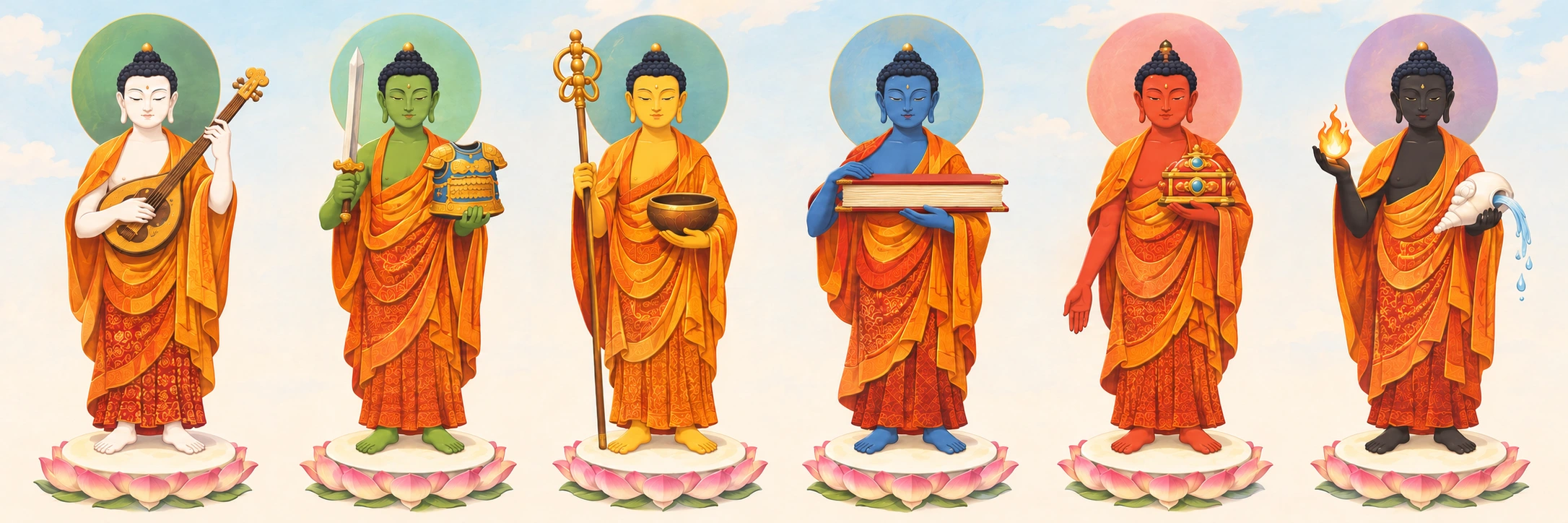
The realm’s teaching place: the Muni of the animals reads on his seat beside the way in, where every arrival passes.35The six realm Munis ×6, Muni of the Animals
The Four Friends’ orchard
animal.friends-orchard
The meadow’s middle, as the to-scale map draws it: one fruit tree taller than anything round it, the four who share it, and the ring path round them that every other path joins. The registry’s place friends-orchard is a walk-in pocket promoted to a district (places.js: promote), so it is planned here, not as a hidden place.37Four Harmonious Friends, Bird, Hare, Orchard Monkey, Elephant
The western river
animal.west-river
A small river valley on the Naraka side of the meadow: the shrimp’s pebble brook, the waterfall with the grotto behind it, the terraced west bank in the river’s bend, and the wind course on its south lawn.113Ebi, Dragonflies ×8
The lake valley
animal.lake-valley
The realm’s fresh water: a spring under a rock shelf fills one long lake down the Naraka-side valley to the rim. The fish, third of the ladder, lives at its head; under its lily lobe lies the nāgas’ palace; herons’ posts, an otter’s slide and the banyan show who else lives here.620Sakana, Shore snail, Herons ×3, Ducks ×8
The hillside wood
animal.den-hillside
The wooded hillside between the lake and the Naraka edge, out to the rim: the realm’s wood of three groves of eight, where land animals shelter. The den cave and the vole household’s burrows, a lookout, the lake’s outlet and the pass into Naraka.415Moon hare, Fireflies ×108, The hillside burrow household ×3
The great tree
animal.great-tree
The realm’s landmark: a great old tree in blossom over a still pond, the bird’s meadow under it and a nest in its low bough.16Tori, songbirds ×3
The savanna and the Merit gate
animal.far-meadow
The open ground from the long river out to the gate: the elephant, last and largest of the ladder, stands before the Merit gate, and the way runs through it to the shore.26Zou
The east ridge and its pool
animal.east-ridge
The meadow’s east side: the cat’s ruined courtyard on the terraced ridge, a still pool under it, and the long river’s east reach.36Neko, Golden pond fish
The east spring
animal.east-spring
The Human-side shelf along the island’s lip: a spring rising under the lip fills a pool whose water sinks underground and feeds the long river; nesting pines and a talus finish the lip above the chasm. A quiet side place off the route, with the stair bridge to Human.110Kites ×3
The spring crag and the fox’s terraces
animal.spring-crag
The Human-side hillside as the to-scale map draws it: a spring cave and its falls under a great tree, a brook down to a plank bridge, and above them meadow terraces with dens under autumn maples, where the fox lives. The saddle path climbs through them to the Human bridge.119Kitsune
The east bay and its reef
animal.tidal-cove
The Great Ocean’s broad inlet on the Human side, where the animals’ principal dwelling is seen: the octopus’s reef under the jetty, the shoal, the creatures below the tide line, a sea stack, and the bay walk along the inner shore from the spit to the saddle lookout.114Tako, The shoal ×108, The neighbours below the tide line ×3
The beaver pond and the pig’s farm
animal.beaver-water
The eastern river’s reach from the spring crag to the sea. Upstream the wild builders: the beaver pond, its dam and lodge. Downstream the worked ground: the pig’s farm, and under a stone beside it the burrow of empty cages.28Buta
Inside the lodge
animal.beaver-lodge
Animals live dispersed on land and in water.26The beaver household ×3
The west bay and the spit
animal.shore
The realm’s sea edge on the Naraka side and the way out: the west bay, a lagoon of the outer ocean fed by the lake’s outlet; the shore walk along its inner strand; the spit between the bays that carries the way from the Merit gate to the outer bridge.210Terns ×8
The waterfall grotto
grotto
A quiet seat behind the river fall provides a small pleasant refuge. No resident or sacred cave is invented.11None
The burrow under the farm stone
animal.hell-hollow
One of the occasional (ephemeral) hells: beings born in everyday objects, always used and unable to leave, in the world of the living (Kongtrul, Treasury of Knowledge, Myriad Worlds). Built into the animal wedge in the open ground of animal.beaver-water (R27): an ordinary stone she can push once; where it stood a shallow round hollow, open to the sky, that she walks down into and back out of by two low steps. No door, no loading, no drop and no way up of its own: the Hell rule’s "only way out is the way in" is now the way she walked. It absorbs the retired hidden place hell-animal.25The door
The fern crack and the crossing
animal.tara-grove-ferns
The way in, and the first two dangers met on the way: robbers and flood.13The robber in the ferns, The one the flood took
The high rock and lookout
animal.tara-grove-spine
The grove's height: a lion held on a rock by his own pride, and a seat that looks west to Potalaka.11The lion on the high rock
The bent tree and its roots
animal.tara-grove-roots
The old tree whose roots are the path, the way home, and a dry chamber under the rain. Under-root chamber tara-grove:roots stays a separate dry rain-listening room; mouth [-1.85,-7.7] is not the Animal exit.12The woman in her own chains, Grove Pika, Grove Guardian
Tara's pavilion
animal.tara-grove-pavilion
The heart of the grove: Green Tara seated in the open, one foot down, ready to rise. Every path in the valley arrives here.13Green Tara, The coiled one, The doubter
The flower garden and water garden
animal.tara-grove-gardens
Where the grove is tended: the endless-knot path, the fish pools, the caretaker and his lame sheep, and the turquoise arch.13The Elephant in the Mud, The ember child, Grove Caretaker, Waiting Sheep, The three pool fish ×3
Camara's shore
animal.camara-shore
The rakshasas' own country: a family at dinner on the sand and a guard filling the one gate. They stay south of the wall.14The Gate Rakshasa, The rākṣasī on the shore, The rākṣasa child
The practitioners' courtyard
animal.camara-courtyard
Where the Guru's students live and practise: cushions, bundles, a garden, a cave. Everyone here has a seat or a task.14Yeshe Tsogyal, Mandarava, Vidyadhara practitioner, Retreat practitioner, Lamp tender, Daka
The band of eight forms
animal.camara-guru-band
Eight stations a short walk apart, west to east in list order: one Guru shown eight ways. The fourth is an arch through which the Guru himself is seen on his throne.18Guru Tsokye Dorje, Guru Shakya Senge, Guru Nyima Ozer, Guru Loden Chokse, Guru Pema Gyalpo, Guru Senge Dradrok, Guru Dorje Drolo, Snow lion

Seams

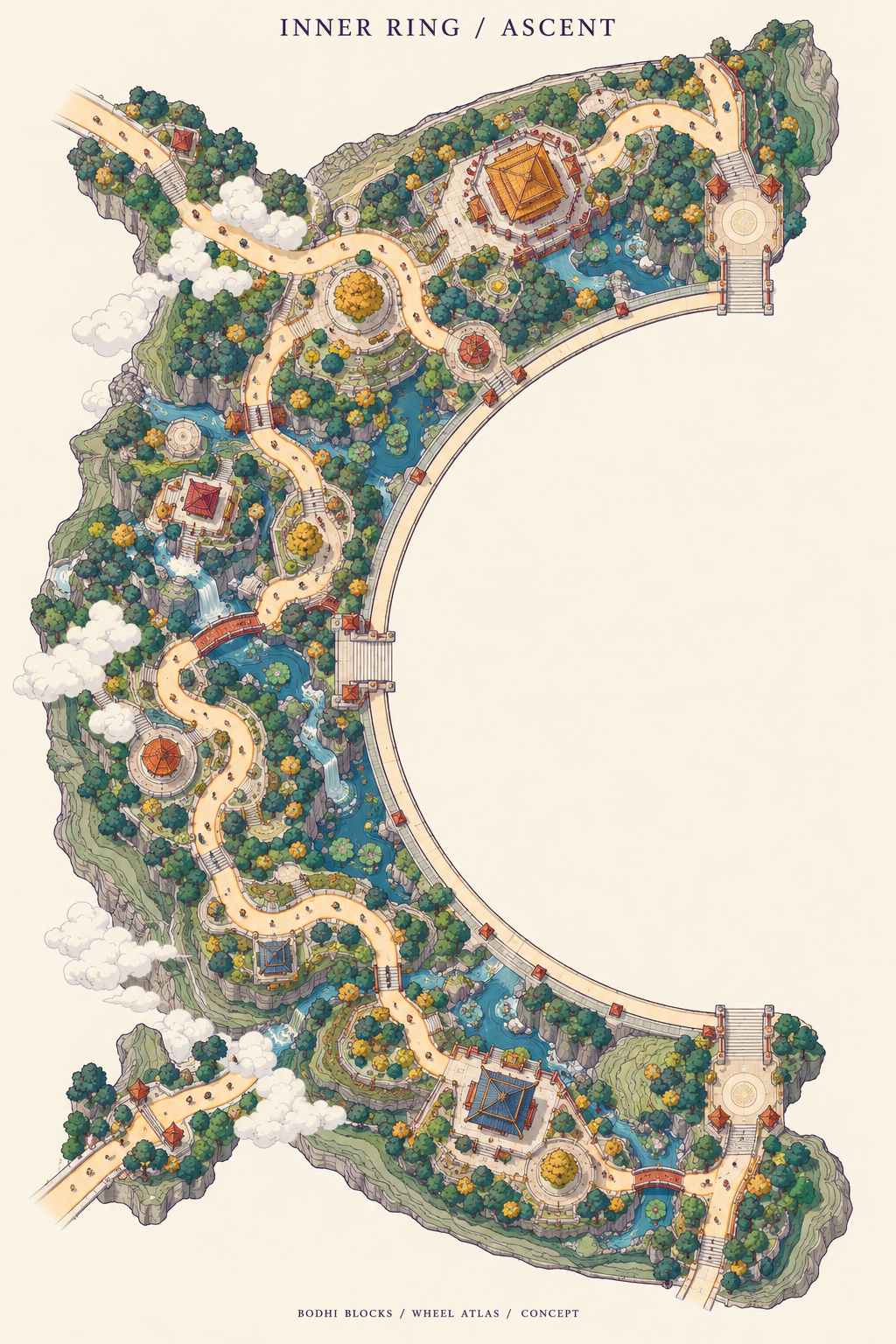
  • wheel-ascent The r 18–20 interval is open air, never filled in, and the realm’s bridge or stair deck is its only crossing (R38). That deck carries the inner-band path over the gap to animal’s dressed foot, where the named 3.2-wide apron joins the realm’s higher ground with no loading zone; its stair/ramp has drawn walls and clear landings. On each side of the gap, ground, facing and coping meet along the whole arc.
  • naraka At 210° Naraka’s cold ground stands 2.6 above Animal across the 2-unit chasm (R28); its bank is Naraka’s. The Animal side ends at its own lip, finished in rock and trees: the spring tors at v -12, the scree below them and the hillside wood. The one crossing is the seam bridge at r 64.4: the den cave’s pass path ends on its deck, three grey boulders and the pass cairn framing it. Planting stops 1.5 short of the deck.
  • human At 270° Human stands 4 above Animal across the chasm (R28). The Animal side ends at its own lip: the east spring shelf’s talus and nesting pines inside r 56, the fox’s wood and the saddle lookout outside it. Two crossings: the saddle path climbs the outer ramp to the seam bridge at r 66.6, three boulders framing it; the east spring’s stair approach ends on the stair bridge at r 54. No collider occupies either deck.
  • wheel-rim-7 The animal outer realm edge at r 72 meets wheel-rim-7 across the r 72–74 interval. Finish both edges to their full arc; the realm owns its ramp down to y 0 and the rim owns the level landing, with a 2-unit clear verge around the join. A single 3.2-wide outer apron at polar angle 240.00000° crosses the interval and joins the r 75–78 promenade. Where it lies on a rim/rim seam both links share this one landing.
  • wheel-rim-8 The animal outer realm edge at r 72 meets wheel-rim-8 across the r 72–74 interval. Finish both edges to their full arc; the realm owns its ramp down to y 0 and the rim owns the level landing, with a 2-unit clear verge around the join. A single 3.2-wide outer apron at polar angle 240.00000° crosses the interval and joins the r 75–78 promenade. Where it lies on a rim/rim seam both links share this one landing.
Claim-to-place inventory · 32 claims, 7 pending (2026-10-02)

Tickets owp-27 and owp-44. Every applicable claim from the linked topics (animal-habitats, anavatapta, naga-palace, four-friends, beyul, tara-grove), the research row and this contract, mapped to a place on the wedge or carrying a pending action with a stable id. Places are in the wedge frame (u clockwise along the tangent, v away from the hub, origin r 48 on the centre line); door positions were read from the live World Map (debug.shot.lists). Statuses: mapped (the claim stands there), adapted (a disclosed game adaptation stands there), elsewhere (the claim belongs to another area, named), pending (an action, ANI-Pnn). Lore calls delegated by Josie to the orchestrator on 2026-10-02 are recorded as decisions.

  • animal.great-ocean pending The animals’ principal dwelling is the Great Ocean; they also live dispersed on land, in water and in the air.

    The tidal cove (animal-coast-meadow, u 18–21, v 13.6–19.9, 12.2 sq u) and the outer shorewalk are the realm’s sea edge; the rim beyond (r 74–84) is the twelve links’ ground. ANI-P01: Make the great ocean legible past the shorewalk (sea surface and its creatures seen from the rim walk), as a shared rim/exterior decision; new creatures wait for concept art. No invented ocean percentage.

    AK: Vasubandhu, Abhidharmakośabhāṣya III, Pruden vol. II printed p. 460 (PDF p. 116); K: Kongtrul, Treasury of Knowledge book one (Tsadra), pp. 28–29

  • animal.marine-cove mapped A gently sloping shore where the sea’s creatures live (corroboration of the marine habitat).

    Tidal cove u 19.4, v 16.8: sand shore, toy jetty, iris reeds, lily pads, heron post; the sea’s inlet at the rim (owp-27: no stream runs into it any more).

    A: AN 8.19 Pahārāda (corroboration only); research construction row

  • animal.dispersed-land mapped Animals live dispersed on land as well as in the ocean.

    Dens: the den cave with a burrow either side on the west hillside (u -27, v 9.4; owp-44), three on the east terraces (u 23.1, v 6.5) and three at the arrival meadow's cliff foot (u 13, v -21.9). The hare's form and wallows. The Four Friends at the orchard. The encounter clearing's nine beings.

    AK: Vasubandhu, Abhidharmakośabhāṣya III, Pruden vol. II printed p. 460 (PDF p. 116)

  • animal.dispersed-water mapped Animals live dispersed in water.

    The lake down the west valley (51.4 sq u, owp-44). The east spring and brook pool. The spring falls, its brook (owp-27) and the spring cave beside the falls (owp-44). The clearing's three rivers (34.5, 17.8 and 19.8 long), its two pools and the beaver dam.

    AK: Vasubandhu, Abhidharmakośabhāṣya III, Pruden vol. II printed p. 460 (PDF p. 116)

  • animal.dispersed-air mapped Animals live dispersed in the air.

    Nesting zone: ledge nests in threes on the Naraka-seam cliff (r 36–46), the Asura-seam cliff (r 35–45), the arrival meadow’s cliff (r 22–26) and the old bank wall; the nest crag u 12.4, v -23.9 crowned with a nest (owp-27); heron and kingfisher posts.

    AK: Vasubandhu, Abhidharmakośabhāṣya III, Pruden vol. II printed p. 460 (PDF p. 116)

  • animal.among-humans elsewhere Animals also live among humans.

    Human realm: the kiln fox, farm pika and tent marmot in human rooms (orchestrator decision 2026-10-02), the yak at the bridge station.

    research construction row; T: Chökyi Drakpa, A Torch for the Path to Omniscience, “The Defects of Saṃsāra”

  • animal.predation pending Wild animals suffer predation and fear.

    Not drawn on the wedge; the Liberate beings’ encounters (Josie’s design) carry their own suffering. ANI-P02: Decision (orchestrator, 2026-10-02): show predation by its traces, cute and never gritty (DESIGN-INTENT §10): feathers and small bones at the nest crag’s foot, a torn den mouth on the west hillside; no hunting scene and no new beings.

    T: Chökyi Drakpa, A Torch for the Path to Omniscience, “The Defects of Saṃsāra”

  • animal.domestic-exploitation adaptation Domestic animals are exploited: worked, caged, slaughtered.

    The occasional hell under a meadow stone (hell-animal, door u 10.83, v -15.12): a burrow of empty cages; the pig's farm-hills clearing in the encounter clearing (Josie's design).

    T: Chökyi Drakpa, A Torch for the Path to Omniscience, “The Defects of Saṃsāra”

  • animal.shelter mapped Animals need shelter: dens, lodges, hollows.

    Eight burrows. The den cave on the west hillside (owp-44: a hill of library boulders, its mouth looking over the lake, she walks up into the hollow). The spring cave at the spring crag's foot beside the falls (owp-44, in the crag's lilac stone, walked into the same way). The beaver lodge (door u 9.65, v 11.65). The grotto behind the western river's little waterfall (door u -9.85, v -0.79).

    Layout contract (this entry): “Preserve dens, ledge nests, orchard and hidden entrances”

  • animal.den-inhabitants pending Original inhabitants for the empty dens (the ledger’s pending item).

    Eight burrows, the den cave and the spring cave stand empty. ANI-P03: Give the dens inhabitants (a concept image is preferred before a new model, not required: AGENTS.md, 2026-10-14); candidates are plateau animals already modelled for the Human rooms, mapped here only with Josie’s approval.

    docs/purelands-cosmology.json#animal-habitats (pending)

  • animal.beaver-household pending A beaver household for the beaver lodge.

    Beaver lodge (door u 9.65, v 11.65) on the eastern river. ANI-P04: Concept art, then a beaver rig and household plan; the lodge’s copied filler stays removed.

    docs/purelands-cosmology.json#animal-habitats

  • animal.west-watershed adaptation Naraka-side upland spring feeds a stepped brook and root-framed pond.

    West lobe (owp-44, the to-scale map): the spring rises at the foot of the spring shelf, the lobe's one tread above the floor (v <= -2.6), under lilac tors, and fills the lake (animal-coast-woodland, 51.4 sq u) down the valley to the rim. The overlook stands on the shelf. The stepped brook's pools are folded into the lake, as the map draws one water.

    Layout contract (this entry)

  • animal.east-watershed adaptation Asura-side springs and terraces descend toward a tidal cove.

    East lobe: spring and brook pool on the upper tread (u 20.5, v -0.5). owp-27: the spring crag at u 27.8, v 7.9 with two falls and a 9.4-long brook down the seam slope to the head of the clearing's eastern river (u 17, v 8.25), which runs out toward the shore. owp-44: the spring cave at the crag's foot beside the falls (u 26.4, v 6.4), the map's top-left cave, reached by the meadow lane round the great tree. The cove is the sea's inlet (to-scale map 01-animal-achievable-v2).

    Layout contract (this entry)

  • animal.watercourse-sources pending Trace every watercourse and lake outflow to its selected source.

    River 0 joins the two upland springs across the clearing; River 1 rises at the spring falls (owp-27); River 2, the grotto’s western river, starts at the clearing’s west edge with no source. ANI-P06: Give River 2 a visible source where it leaves the west wing (u -17, v -11.8): a spring mouth or a rill from the west hillside.

    Layout contract (this entry)

  • animal.anavatapta-account adaptation Chosen account: four rivers leave Anavatapta through animal mouths: the Gaṅgā east from the elephant, the Sindhu south from the bull, the Vakṣu west from the horse, the Śītā north from the lion.

    Four linked spring grottoes in the encounter clearing: spring-elephant u 8.71, v -0.26, spring-ox u -9.04, v -10.61, spring-horse u 9.88, v 8.96, spring-lion u 7.78, v 16.59. They are grottoes, not headwaters; the Wheel sector does not carry the Meru chart's compass, so their bearings are not the account's.

    P: Phagpa, Elucidation of the Knowable (BDK), printed p. 14 / PDF p. 27; K: Kongtrul, Treasury of Knowledge book one (Tsadra), pp. 28–29

  • animal.anavatapta-lake elsewhere Separate Anavatapta’s continental identity from Animal entrance scenery.

    The lake itself is C05, the anavatapta place on Jambudvīpa (Human); the Animal springs are only its linked grottoes.

    research construction row; docs/purelands-cosmology.json#anavatapta

  • animal.anavatapta-peacock adaptation The peacock-mouth alternative of the older field note.

    Not built: a recorded variant, no fifth spring.

    docs/purelands-cosmology.json#anavatapta (pending)

  • animal.naga-palace mapped An aquatic nāga community with entrusted teachings; Nāgārjuna’s visit.

    Naga palace, dived into from the clearing's water (door u -7.8, v 11.85), with Nāgārjuna.

    docs/purelands-cosmology.json#naga-palace

  • animal.naga-society pending Additional original nāga residents.

    Naga palace interior. ANI-P05: Nāga residents after concept art; one identity each, homes in the palace.

    docs/purelands-cosmology.json#naga-palace (pending)

  • animal.four-friends mapped The partridge, hare, monkey and elephant of the Four Harmonious Friends.

    Residents harmonious-bird, -hare, -monkey, -elephant at the orchard u -7, v -2.3 with the age-order stacking.

    docs/purelands-cosmology.json#four-friends (HAR set 1179)

  • animal.orchard mapped The Four Friends’ orchard.

    friends-orchard (walk-in pocket, a promoted district of the clearing), on the meadow ring's west lane (owp-44).

    docs/purelands-cosmology.json#four-friends

  • animal.hidden-valley adaptation A hidden refuge valley among wildlife, rivers and rocks (Milarepa’s songs).

    hidden-valley fog door u 11.67, v -9.85; it returns to Human: Wheel compression and visionary access, not an Animal rebirth valley (research).

    docs/purelands-cosmology.json#beyul

  • animal.tara-grove adaptation Tārā’s refuge from the eight dangers (the turquoise grove is the game’s invention).

    tara-grove (zone, entered by link, no door on the wedge) and field-turquoise-leaves beyond its threshold.

    docs/purelands-cosmology.json#tara-grove

  • animal.hidden-approaches mapped Preserve the hidden entrances.

    Dive: naga palace, beaver lodge; fog: hidden valley; behind a waterfall: the grotto; under a stone: hell-animal.

    Layout contract (this entry)

  • animal.arrival-meadow mapped Arrival meadow between the cliffs.

    u -12…13, v -28…-20: the camp's plank gate, a reed pool, dens, cliff-ledge nests and the nest crag.

    Layout contract (this entry)

  • animal.encounter-clearing mapped Intact encounter clearing: the Liberate path’s nine beings.

    The retained clearing strip (|u| < 17.35, |v| < 21.35): bug, shrimp, fish, bird, cat, fox, octopus, pig and elephant, each on its own ground. owp-44: two lanes close the Liberate path into the map's ring round the meadow, round the cat's courtyard. One runs from the bird's meadow over the long river on a plank bridge to the octopus's reef. The other runs from the fox's bridge past the Four Friends' orchard to the bug's clover. The discs, their order and their ground are unchanged.

    Layout contract (this entry); docs/story-mode-design.html §04 (Josie’s design)

  • animal.shorewalk mapped Outer shorewalk joining both wings.

    Rim walk from the lake's outer end to the east cove (40.4 long), kerbed with stone and tidal rocks, with a sea-lavender verge and sitting stones. owp-44: the hillside trail leaves it round the lake's outer end, up the lake's far shore to the lookout and the den cave.

    Layout contract (this entry)

  • animal.muni mapped A Buddha in every realm: the Muni of the animals.

    munis resident on the shrine seat u 4.6, v -11.9.

    docs/purelands-cosmology.json#six-munis

  • animal.to-scale-wet-habitat mapped The to-scale map’s lower wet habitat: one broad lake with lily pads, waterfowl, reeds and rocks.

    The lake (animal-coast-woodland), 51.4 sq u: 1.11 times the map's 46.5 (owp-44). ANI-P07 resolved by the approved shared layout change: Animal's Naraka seam is guarded for relief by the ramp built there (wheel-layout.js seamGuard), not the older, wider seamWidth, so the west lobe holds the map's lake. It runs u -24.2 to -19.65, v -1.85 to 16.9: its head under the spring shelf where the spring rises, the heron's arm, the waist with the banyan on its hillside bank and the lily lobe toward the rim, with sixteen lily pads, reeds in threes and eights, three heron posts and an otter's slide. The stepped brook's three small pools (29.1 sq u) are folded into it.

    to-scale map 01-animal-achievable-v2 (Josie adopted, 2026-10-02)

  • animal.usable-floor pending One connected usable floor of at least 1,218.42 square units per wedge (OW03 rule).

    Measured in audit.usable (scripts/measure-wheel-usable-area.mjs). ANI-P08: After owp-44: certified connected flat 990.08 (962.08 before), stepped 1,046.08 (1,058.08 before), certified clear tiles 1,214.08 (audit.usable). Removing the west riser joined the old upland tread to the main floor. The lake costs about 22 sq u of dry floor. The wedge measured 1,176.96 with every prop and pool removed (wheel-relief/animal.js), below the 1,218.42 rule, so dressing alone cannot meet it. Meeting it needs a shared change to the seam corridors or to the rule.

    prototypes/world-map/wheel-layout.js (usable-area rule)

  • animal.hillside-caves adaptation The to-scale map's two hillside caves: a spring cave with its falls (top left) and a den cave with its animal (left middle).

    Spring cave: the map's place, at the spring crag's foot beside the falls (u 26.4, v 6.4). Den cave: the map draws it on the clearing's centre line inside the outer gate, which is the Liberate path's elephant ground (Josie's design). It stands instead on the west hillside among the dens (u -27, v 9.4), the hillside the lore gives dens, reached by the hillside trail. Both are mouths she walks up into, stopped by the hollow's dark back. Both stand empty (ANI-P03).

    to-scale map 01-animal-achievable-v2 (Josie adopted, 2026-10-02)

  • animal.meadow-loop adaptation The to-scale map's path loop round the central meadow, joining the arrival, the orchard and the bridges.

    The Liberate path's own route closed into a ring by two lanes (owp-44): bug, shrimp, fish, bird, the new plank bridge, octopus, fox, then the orchard lane back to bug. The arrival joins it by the route from the camp. The route runs on past the elephant to the Merit gate and the outer bridge. The map's spurs across the clearing are not built. The old chart's terraced hills stand on both sides of the meadow, the west bank in the western river's bend and the east ridge at u 10.5 to 14, cut only by the rivers.

    to-scale map 01-animal-achievable-v2 (Josie adopted, 2026-10-02)

Route and area audit · measured

node scripts/audit-animal-segment.mjs (the real segment run bare against the real Wheel layout; areas in square world units, lengths in world units; BodhiBot is 1 unit tall)

  • Footprint: wedge 2485.5, retained clearing strip 1474.8, ground the relief may shape 215.5, sloped ground 168.3 square units.
  • Water: segment pools 70.8 square units (animal-coast-woodland 51.4, animal-meadow-pool 3.8, animal-spring-east 1.8, animal-brook-meadow 1.6, animal-coast-meadow 12.2); rills animal-spring-inlet-west 0.7, animal-spring-drain-east 0.8, animal-brook-inlet-east 0.9, animal-spring-brook 9.4; the old chart's rivers 34.5, 17.8, 19.8 long. The to-scale map paints 68.2 (lower wet habitat 46.5, cove 11.2).
  • Routes drawn by the segment: 11, 155.2 units in all.
  • Habitats (distance from the arrival / to the nearest drawn route): arrival (inner bridge head) 0 / 0.2; shore: outer shorewalk at the outer bridge 50.1 / 0.2; marine: the tidal cove (animal-coast-meadow) 48.8 / 2; freshwater: the lake (animal-coast-woodland, owp-44) 43.5 / 2.9; freshwater: the spring falls (owp-27) 45.4 / 1.8; freshwater: the spring cave (owp-44) 43.3 / 0.6; refuge: the den cave (owp-44) 46.1 / 0.8; refuge: west hillside dens 43 / 2.9; refuge: terrace dens 41.5 / 0.1; refuge: arrival meadow dens 14.4 / 5.6; nesting: the nest crag (owp-27) 13.1 / 4.5; nesting: Naraka-seam ledge nests (r 41) 31.9 / 1.5; nesting: Asura-seam ledge nests (r 40) 25.2 / 16.5.
  • Colliders: 115 round, 7 rectangular. Library assets: assetRock 61, assetReeds 118, assetCairn 5, assetTree 36, assetFlowers 216, assetBush 31.
  • Certified usable floor: before owp-27 (afd1cbcb4): 955.52 connected flat, 1042.56 stepped (rule 1218.42); after owp-27: 962.08 connected flat, 1058.08 stepped (rule 1218.42); after owp-44: 990.08 connected flat, 1046.08 stepped (rule 1218.42).

Animal rebirth and animal habitats · Anavatapta and four river mouths · Naga palace and Nagarjuna’s visit · The Four Harmonious Friends · Hidden refuge valleys and Milarepa’s hermitage · Tara’s grove and eight dangers

Sourced rearrangement plan
Preserve
Arrival meadow, encounter clearing, watershed, dens/nests, orchard, shorewalk, spring caves, Four Friends and nāga identities
Move or clarify
Make the principal marine habitat legible; current ponds/cove alone do not establish a great-ocean population. Separate Anavatapta's continental identity from Animal entrance scenery
Extend / missing research
Populated coastal, submerged and deeper-ocean routes; land/air habitats and animals living among humans. AK p.460 directly supports this combined scope. Determine safe representation of predation, hunting and exploited domestic creatures using T; retain existing original-fiction society/dialogue as disclosed adaptation; new traditional population claims require sources
Observable acceptance
A player can identify and reach shore, marine habitat, terrestrial refuge and nesting zone; every population group has a purposeful home/interaction; source atlas explains concentrated versus dispersed habitats. No invented canonical ocean percentage
Read the source register and variant boundaries

Lower right · 120°

Preta / Hungry Ghost

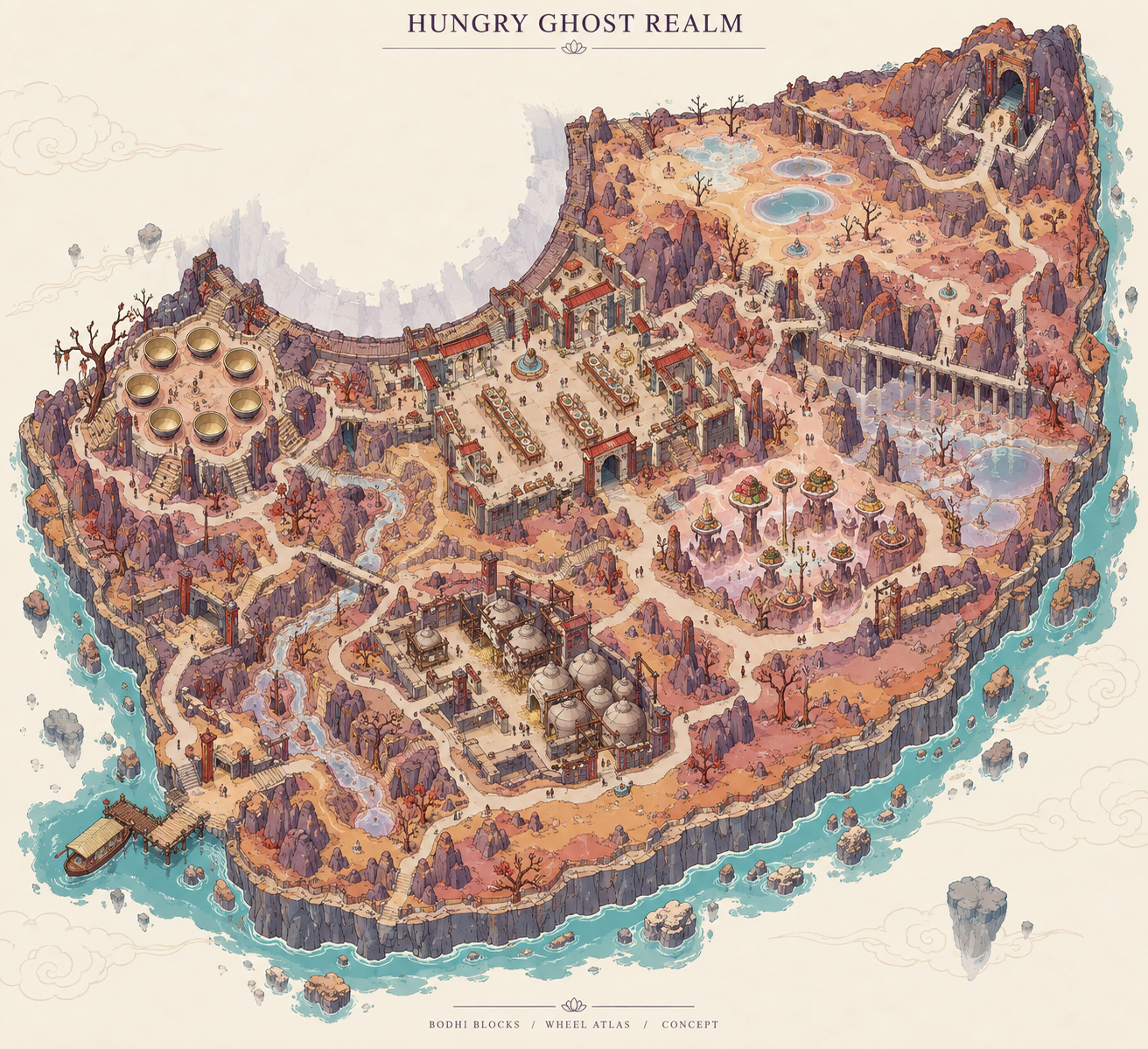
AI layout study for Preta / Hungry GhostOpen original generated layout study
Layout contract
Inner arrival → preserved ghost encounters → public Ghost City → dry pond/cistern and offering courts → outer mirage basin. Shelved gullies and overlooks connect rather than enclosing isolated prop scenes.
Current source
Source contains stepped basin relief, public city, nested households and C07 below-city treatment. Junctions (owp-24): both bridges and ramps are laid as one flight each in the realm's ash-lilac stone by the crossing kit, a low parapet with red bollards she steps over, three red lamp houses a side up each ramp; the mirage basin moved off the outer ramp's lane (she swam into it and met a .42 lip), the stair cut from the gate-wall walk is a side flight of the outer stair, the city's rim-side wall is drawn inside its clip edge with a grille across the shut gate's mouth, a path crosses to the Naraka seam between three cairns and the Human farm track runs on to the keeper's lane; every centre line kept clear (scripts/wheel-preta-junctions.test.mjs) and walked both ways by the real controller. hungry-ghost.rebuild (2026-10-23) built the wedge to its replanned record (docs/world-plan/sections/hungry-ghost.json): every walked path laid from its plan line as one network (wheel-segments/hungry-ghost.js PATHS), the stranded boats, seam-path jars, strata plums, stray windbreak row and hashed rocks, straw and cracks removed, a withered orchard of eight past the dry bed's east end, the mother's stone by the farm track, one table in the city's street, and the Muni's seat off his lane; plan-to-built census 163 of 171 planned positions within 0.9 (scratch census, misses explained in the plan's adaptations).

prototypes/world-map/wheel-segments/hungry-ghost.js

Remaining / acceptance
The waiting mother (preta-waiting-mother) has her stone, home, routine and voice but no model yet: a character pass. The merit gate is the route's rule at the Naraka seam, not a drawn gate, while Josie's playtest keeps the prayer-wheel gates hidden.
World plan · 20 districts, 42 claims (0 pending), 28 orphans
Chosen lore account
Patrul Rinpoche’s Words of My Perfect Teacher (pp. 72–75), where Jigme Lingpa’s preliminaries send the reader for the pretas (note 5): pretas who live collectively, with external, internal or specific obscurations, and pretas who move through space. External: water, an orchard or a feast seen far off is found dried to a stony bed, withered, or guarded by armed men; summer moonlight burns and winter sun freezes. Internal: a needle’s-eye mouth, a horse-hair throat, a belly the size of a country on grass-like limbs; what reaches the belly bursts into flame at night. Specific (the third class): food and drink themselves turn, as for Śroṇa’s four tied pretas (chaff, iron, their own flesh, pus and blood), or creatures devour the body (H). Geography follows Kongtrul (K pp. 28–29) and the Abhidharmakośa (AK printed p. 460): Yama, king of the pretas, has his seat at their principal abode below Jambudvīpa, and others are dispersed. So the surface wedge is the dispersed pretas’ ground, ‘a grim place of rocks and charred tree stumps’ (H), where the external obscuration is the landscape itself; the open cut beside the city (R27) is the collective abode, a court for each obscuration and the door of Yama’s hall; and the city’s offerings are the water tormas the texts prescribe for pretas (Jigme Lingpa, Note on Water Torma Offerings).
Orphans listed
28
DistrictPurposeLore claimsPlacementsCharacters
The arrival gully
hungry-ghost.gully
Pretas are dispersed beyond their principal abode; the pilgrim meets their ground before any city.29None
The waiting flat
hungry-ghost.route
Pretas are dispersed beyond their principal abode, on open ground.22None
The withered tree and the seven bowls
hungry-ghost.seven-bowls
Jvālamukha, the Muni of the hungry ghosts, appears in the preta realm holding a jewelled casket.25Jvālamukha, Muni of the Hungry Ghosts
The dry riverbed and the withered orchard
hungry-ghost.dry-river
Pretas with external obscurations see water and fruit far off and find them dried up and withered.34None
The city's foot gate and the shade corner
hungry-ghost.city-foot
Hungry-ghost teachings distinguish obstruction outside, within and to food itself; three individually authored ghosts carry them.49Has-but-cant
The main street and its tables
hungry-ghost.city-street
A meal laid and never eaten: food in sight that cannot be taken.210None
The well court
hungry-ghost.city-well-court
Water is there and the ghosts cannot reach it; a visitor can carry it to them.26None
The sweet-dew gate
hungry-ghost.city-gate
Sweet dew is what the preta rites offer to loosen a hungry ghost's throat; beyond the gate a feast is laid full.25None
The laid tables and the keeper's shelter
hungry-ghost.west-flank
A feast nobody can swallow: jugs with hair-thin necks beside empty bowls.25The mother of five hundred
The open cut below the city
hungry-ghost.city-below
The pretas’ principal abode lies below Jambudvīpa, where Yama their king has his seat; here it is an open cut in the ground beside the city, eight wide steps down to a sunk round of paving with three courts off it, one for each obscuration of the pretas who live collectively, and the door of Yama’s hall in the south bay of its west face. Walked into with no loading; the three ghosts live at their courts and climb to the lean-to at dusk.722The one kept from the table, The one with the needle throat, The one whose food burns
The west offering court and the cistern
hungry-ghost.west-court
Food is offered to hungry ghosts at a court; the store behind it is empty.29None
The dry wells and the searcher’s ground
hungry-ghost.east-flank
Pretas with external obscurations search for water and find it dried.24Hasnt-but-can
The guarded court, the tank and the rim stair
hungry-ghost.east-court
Food is offered to hungry ghosts at a court; the store behind it is empty.210None
The stone-filled granary
preta-granary
The store whose sacks cannot feed anyone belongs by the dry river’s offering route; its interior is entered through the thatch.11None
The kitchen
hungry-ghost.kitchen
A walk-in kitchen off the public ghost-city street.11None
The grain shop
hungry-ghost.grain-shop
The grain shop opens directly onto the street; hunger is not cured by crossing its threshold.11None
The loft
hungry-ghost.loft
A walkable stair and gallery make the loft part of the city’s open ground.11None
The shrine room
hungry-ghost.shrine-room
A street shrine gives the city a place of offerings reached on foot.11None
The feast
hungry-ghost.feast
The sweet-dew gate at the street’s head admits the player to the offering court after the five ghosts are freed; the ground itself does not transform.11None
The empty bowl under the dry-river stone
hungry-ghost.hell-hollow
One of the occasional (ephemeral) hells: beings born in everyday objects, always used and unable to leave (Kongtrul, Treasury of Knowledge, Myriad Worlds). Built into the hungry ghost wedge in the open ground of hungry-ghost.dry-river (R27): an ordinary stone she can push once; where it stood a shallow round hollow, open to the sky, that she walks down into and back out of by two low steps. No door, no loading, no drop and no way up of its own: the Hell rule’s "only way out is the way in" is now the way she walked. It absorbs the retired hidden place hell-hungry-ghost.26The broom, The one born in a mortar

Seams

  • wheel-descent The r 18–20 interval is open air, never filled in, and the realm’s bridge or stair deck is its only crossing (R38). That deck carries the inner-band path over the gap to hungry-ghost’s dressed foot, where the named 3.2-wide apron joins the realm’s higher ground with no loading zone; its stair/ramp has drawn walls and clear landings. On each side of the gap, ground, facing and coping meet along the whole arc.
  • wheel-rim-4 The hungry-ghost outer realm edge at r 72 meets wheel-rim-4 across the r 72–74 interval. Finish both edges to their full arc; the realm owns its ramp down to y 0 and the rim owns the level landing, with a 2-unit clear verge around the join. A single 3.2-wide outer apron at polar angle 126.98570° crosses the interval and joins the r 75–78 promenade. Where it lies on a rim/rim seam both links share this one landing.
  • wheel-rim-3 The hungry-ghost outer realm edge at r 72 meets wheel-rim-3 across the r 72–74 interval. Finish both edges to their full arc; the realm owns its ramp down to y 0 and the rim owns the level landing, with a 2-unit clear verge around the join. There is no direct crossing on this half; the adjoining rim link carries the realm apron. The verge is finished ground, without an added door or portal.
  • asura At 90° Asura stands 4.2 above Preta across the R28 chasm; the faced bank is cut into Asura’s side, and Preta keeps its sloped seam strip up to the chasm. The farm track crosses on the seam bridge at r 61 (seam.asura-preta.pass), and Preta’s keeper lane meets the bridge; the stair bridge at r 54 (seam.asura-preta.stair) lands on the flank’s open ground. No ramp joins the islands.
  • naraka At 150° Naraka stands 1.4 above Preta across the R28 chasm. Preta keeps its sloped seam strip, dust giving way to ash toward the chasm. The Preta track past the dry wells and between three tsa-tsa cairns crosses on the seam bridge at r 64.5 (seam.preta-naraka.pass) to Naraka’s ash-river approach. No ramp joins the islands.

Three kinds of hungry-ghost obstruction

Sourced rearrangement plan
Preserve
Ghost City, households, dry basin, offering courts, C07 below-city treatment
Move or clarify
Distinguish surface manifestations from principal below-Jambudvīpa dwelling; distinguish judge Yama from exterior Death, heavenly Yāma and Story boss
Extend / missing research
Audit the selected three-obstruction account against individual environments; drought props alone are insufficient. Preserve scattered pretas outside the sector; source each manifestation
Observable acceptance
Surface and underground routes return coherently; nourishment conditions and helpful encounters are observable without a comic starvation reward loop

Read the source register and variant boundaries

Bottom · 180°

Naraka

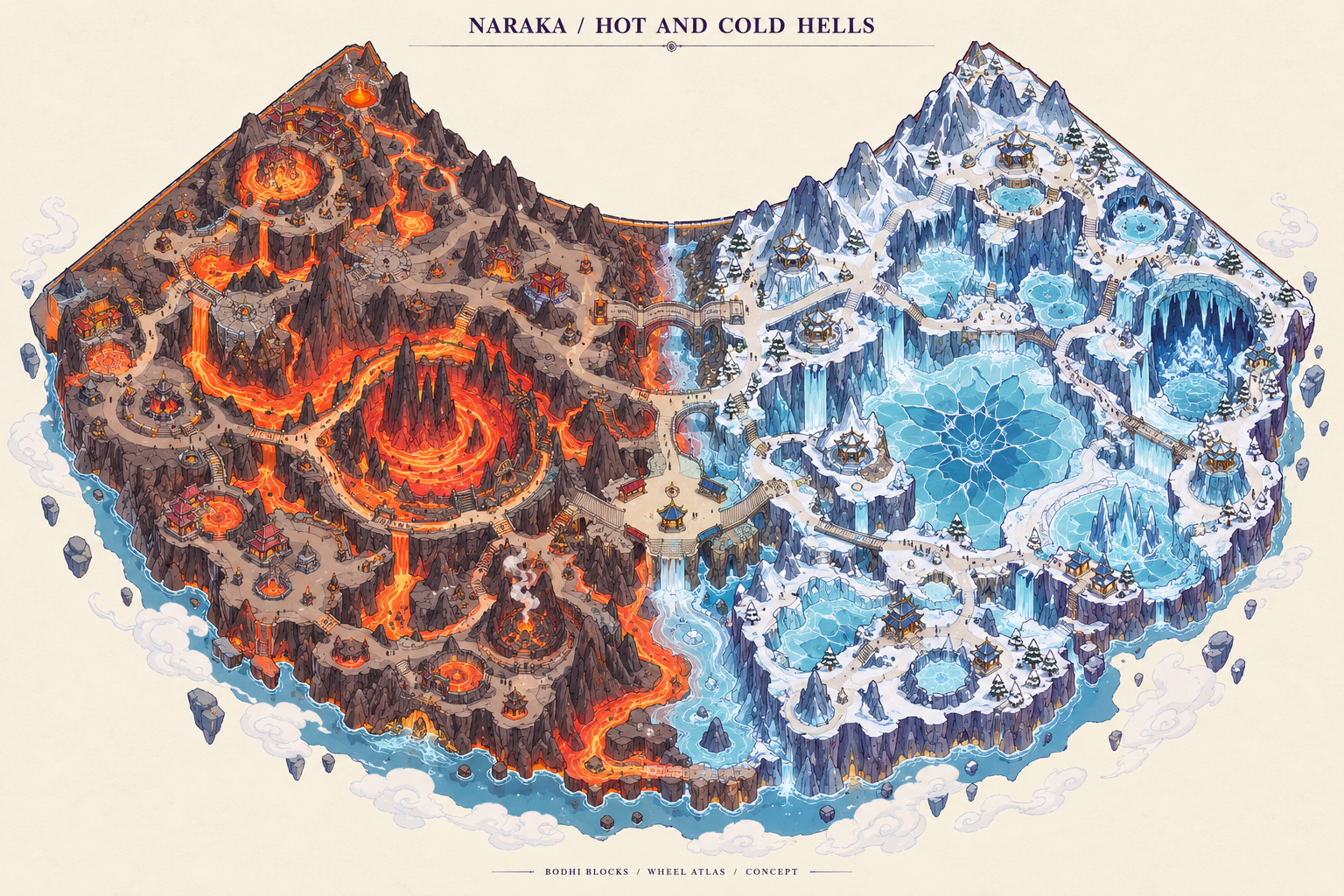
AI layout study for NarakaOpen original generated layout study
Layout contract
Native lava heart remains central. Wheel-local u < 0 is hot, u > 0 cold; low ember/ice/glacier bowls, level station precincts and high cooled-lava mound connect both crossings. Eight hot and eight cold courts retain their cluster IDs.
Current source
Hot/cold districts already exist. C08 adds neighbouring-hell treatment and station registration; isolated object-being hells remain separate. The eight cold station courts now carry their hells in the Tibetan teaching order, each a place of its own told by its land, weather and ambience loop (interiors/naraka-cold-courts.js). Junctions (owp-25): both bridges and both ramps are laid by the shared crossing kit in the pass's own stone (frost-rimed slate treads, basalt and iron trim, a low parapet she steps over), the ramps' lanes cut clean so the terraced shoulders step down to the lane's kerbs; eight basalt columns rail each side of each lane, dark on the hot side and frost-rimed on the cold, a stride apart; a cold pass runs from the north crossing's end over the belt to the Animal seam at r 64.4, toward Animal's pass cairn, between a trail cairn and two frost stones. Every centre line kept clear (scripts/wheel-naraka-junctions.test.mjs) and walked both ways by the real controller.

prototypes/world-map/wheel-segments/naraka.js

Remaining / acceptance
Compare every named court and neighbour relationship with selected passages. Eight labels alone are insufficient. Verify all four directional neighbour categories per hot-hell account, returns, resident roles and the presentation (cute gore, never gritty). Map the cold hells’ beings (a concept image is preferred before a model, not required: AGENTS.md).
World plan · 23 districts, 67 claims (0 pending), 19 orphans
Chosen lore account
Kongtrul's Treasury of Knowledge (K p.27) for the names, order and arrangement: Avīci deepest, the seven other hot hells above it, four kinds of neighbouring hell on each side of each hot hell, the cold hells beyond the neighbours. The Abhidharmakośabhāṣya (AK III.58–59) governs the neighbouring hells' inhabitants and the guardians; Chökyi Drakpa's Torch and Jamyang Khyentse Wangpo's verses give each hell's condition. The cold hells keep the Tibetan teaching's order with Sanskrit names paired as the Mahāvyutpatti pairs them. (docs/wheel-geography-canonical-research-2026-10-01.md, Naraka row; docs/purelands-hell-beings.json, account and decision cold-hell-sanskrit.)
Orphans listed
19
DistrictPurposeLore claimsPlacementsCharacters
The inner pass
naraka.inner-pass
The way in from the hub ring: one lane up the centre line with fire on one hand and snow on the other, ending at a dais where the whole realm is first seen.28None
The pit of embers
naraka.ember-pit
One of the four kinds of neighbouring hell: a sunk bowl that looks like a shady trench from the road and is a bed of live coals. Its beings, the Knee-Deep, are held below, in the neighbouring hells round Avīci (naraka-hot-hells.avici-neighbours); this is the Wheel’s surface picture of the kind, with no being of its own (decision 28).212None
The ice bowl
naraka.ice-bowl
The cold half’s first sight from the dais, the ember pit’s counterpart: a frozen pan whose paved stair climbs out toward the hollow of Naraka’s ephemeral hell.35None
The heart
naraka.lava-heart
Where the two halves meet. The Big Snake, the realm's boss, lies on the seam between fire and snow; the Muni of the Hells stands on the same line, black-bodied with fire in the anatomical right hand and cooling water in the left; the volcano smokes over the hot side.511Mahoraga, Muni of the Hells (Dharmarāja)
The road of razors
naraka.razor-road
The hot half’s south-west flank: the neighbouring hell of blades, where a lovely plain, a pleasant wood and a tree turn to razors, sword leaves and thorns. Its Wayfarers, dogs and Iron-beaks are held below, in the neighbouring hells round Avīci (naraka-hot-hells.avici-neighbours); this is the Wheel’s surface picture of the kind, with no being of its own (decision 28).27None
The eight hot courts
naraka.hot-courts
The basalt approach to the underground hot hells, with one descent and a clear return route; torment courts themselves are below ground.1212None
The river without a ford
naraka.ash-river
The neighbouring hell on the courts’ west side: a river of boiling ash-water with no ford, running the flank from a cleft by Howling to a fall over the rim. Its Grains and bank guards are held below, in the neighbouring hells round Avīci (naraka-hot-hells.avici-neighbours); this is the Wheel’s surface picture of the kind, with no being of its own (decision 28).27None
The swamp of corpses
naraka.corpse-swamp
The neighbouring hell between the courts and the way over to the cold half: what looks like a river from the road is a bog of corpses. Its Sunk and Sharp-mouths are held below, in the neighbouring hells round Avīci (naraka-hot-hells.avici-neighbours); this is the Wheel’s surface picture of the kind, with no being of its own (decision 28).29None
The cooled-lava mound
naraka.lava-mound
The hot half's high ground at the rim: the one place from which the eight courts read in order from Reviving to Avīci, and below it, past Avīci's gate, the lowest hot ground.16None
The outer pass
naraka.outer-pass
The way out to the rim on the centre line and the one road that joins the hot half to the cold: the north crossing.17None
The eight cold courts
naraka.cold-courts
The eight cold hells in the Tibetan teaching's order along one zig-zag route that steps down toward the rim, the cold deepening court by court.112None
The glacier ridge
naraka.glacier-ridge
The cold half's high ground, the mound's counterpart: a stepped ice ridge along the Animal seam whose crown looks west over the heart, and the source of the meltwater that runs down to the basin.27None
The glacier basin
naraka.glacier-basin
Where the meltwater ends: a sunk frozen basin, the glacier mouth standing as scenery, and the cold pass out to Animal.315None
Blisters (Arbuda), cold court 1 (open ground, Naraka wedge frame)
naraka-cold-hells.blisters
Naked on ice in the dark, lashed by freezing wind, the body breaks out in blisters.25The Blistered ×3
Burst Blisters (Nirarbuda), cold court 2 (open ground, Naraka wedge frame)
naraka-cold-hells.burst-blisters
The blisters burst open into festering sores in the cold.25The Burst
Chattering Teeth (Aṭaṭa), cold court 3 (open ground, Naraka wedge frame)
naraka-cold-hells.teeth-clenched
Teeth chatter, grind and clench in the intense cold.25The Chatterers ×3
Lamentation (Huhuva), cold court 4 (open ground, Naraka wedge frame)
naraka-cold-hells.achu
A ceaseless wail in the cold.25The Lamenters ×3
Groaning (Hahava), cold court 5 (open ground, Naraka wedge frame)
naraka-cold-hells.gihu
Strength gone like the dying; only gasps and groans are left.25The Groaners ×3
Split like a Blue Lotus (Utpala), cold court 6 (open ground, Naraka wedge frame)
naraka-cold-hells.blue-lotus
The flesh turns blue and the skin cracks into four pieces like a blue lotus.25The Four-Petalled
Split like a Lotus (Padma), cold court 7 (open ground, Naraka wedge frame)
naraka-cold-hells.red-lotus
The raw red flesh cracks further into eight pieces like a red lotus.25The Eight-Petalled
Split like a Great Lotus (Mahāpadma), cold court 8 (open ground, Naraka wedge frame)
naraka-cold-hells.great-lotus
Darker red, split into sixteen, thirty-two and then innumerable pieces like a great red lotus, with worms in the cracks.25The Many-Petalled, The metal-beaked worms of the cold ×8
The hot hells’ mouth
naraka.hot-hells-mouth
On Yama’s order his servants throw the damned into hell; the way down to the stacked hot hells opens in the hot courts as a pit mouth.11Yama’s servants (Yamarākṣasas) ×3
The hollow of hot cracks
naraka.hell-hollow
One of the occasional (ephemeral) hells: beings born in everyday objects, always used and unable to leave, in the world of the living (Kongtrul, Treasury of Knowledge, Myriad Worlds). Built into the naraka wedge on the heart’s cold half at the end of the ice bowl’s stair (R27): an ordinary stone she can push once; where it stood a shallow round hollow, open to the sky, that she walks down into and back out of by two low steps. No door, no loading, no drop and no way up of its own: the Hell rule’s "only way out is the way in" is now the way she walked. It absorbs the retired hidden place hell-naraka.25The pillar, The one born in a fireplace

Seams

  • hungry-ghost At 150° Naraka’s hot island stands 1.4 above the Preta island across the two-unit chasm (R28). One level deck, seam.preta-naraka.pass at r 64.5, crosses it; on Naraka’s side its foot lands on the ash river’s far bank, and the Yama road runs from there round the river’s head to the courts. The seam crag’s three basalt columns stand a stride in from the island’s edge past the landing; nothing planned stands on the deck or past the edge.
  • animal At 210° Naraka’s cold island stands 2.6 above the Animal island across the chasm. One level deck, seam.naraka-animal.pass at r 64.4, carries the cold pass off the glacier basin’s brow, its cairn and two frost stones a stride hubward of the foot. The glacier ridge’s eight pressure blocks run straight down the seam ray on the island; nothing planned stands on the deck or past the edge.
  • wheel-descent The r 18–20 interval is open air, never filled in, and the realm’s bridge or stair deck is its only crossing (R38). That deck carries the inner-band path over the gap to naraka’s dressed foot, where the named 3.2-wide apron joins the realm’s higher ground with no loading zone; its stair/ramp has drawn walls and clear landings. On each side of the gap, ground, facing and coping meet along the whole arc.
  • wheel-ascent The r 18–20 interval is open air, never filled in, and the realm’s bridge or stair deck is its only crossing (R38). That deck carries the inner-band path over the gap to naraka’s dressed foot, where the named 3.2-wide apron joins the realm’s higher ground with no loading zone; its stair/ramp has drawn walls and clear landings. On each side of the gap, ground, facing and coping meet along the whole arc.
  • wheel-rim-5 The naraka outer realm edge at r 72 meets wheel-rim-5 across the r 72–74 interval. Finish both edges to their full arc; the realm owns its ramp down to y 0 and the rim owns the level landing, with a 2-unit clear verge around the join. A single 3.2-wide outer apron at polar angle 180.00000° crosses the interval and joins the r 75–78 promenade. Where it lies on a rim/rim seam both links share this one landing.
  • wheel-rim-6 The naraka outer realm edge at r 72 meets wheel-rim-6 across the r 72–74 interval. Finish both edges to their full arc; the realm owns its ramp down to y 0 and the rim owns the level landing, with a 2-unit clear verge around the join. A single 3.2-wide outer apron at polar angle 180.00000° crosses the interval and joins the r 75–78 promenade. Where it lies on a rim/rim seam both links share this one landing.

Hot hells, neighboring hells and isolated hells · The eight cold hells

Sourced rearrangement plan
Preserve
Eight hot/eight cold identities, separate relief and C08 station/district infrastructure
Move or clarify
Explain hot stack beneath Jambudvīpa in the cosmographic view; sideways Wheel sector is compression. Keep cold branch distinct; do not put all hells beneath poison hub
Extend / missing research
AK III.58–59 and K selected account govern directional neighbors. Source already registers 16 courts per hot station; audit these before proposing another duplicate. Occasional hells are separate localized adaptations. Hot and cold hells are buildable as environments (Josie, 1 October 2026); map the beings their lore needs, with no new character models until AI concept art exists
Observable acceptance
Every station and directional neighbor resolves and can be traversed; conditions differ beyond labels; cold regions remain distressing; cute gore where the lore calls for it (allowed since Josie, 1 October 2026: Binding of Isaac style, never gritty), help, exits and persistence verified

Read the source register and variant boundaries

Upper left · 300°

Human

AI layout study for HumanOpen original generated layout study
Layout contract
Mainland village/plaza at base → connected cultivated terraces → lower harbour; high tarn/knoll and alpine basin form the upper country. Main Jambudvipa connects to continent satellites by authored ferries; sacred places retain their own entrances and identities.
Current source
C04 registers seven additional subcontinent territories; eastern/western mainland satellites and Uttarakuru pre-exist. C05 adds Anavatapta. Houses, sacred places and nested routes remain authored. Junctions (owp-23): both bridges and their ramps are laid as one dry-stone flight (flagged deck, pale slab treads, a low coped parapet with three stone bollards a side she steps over and off); both ramp cuts are faced ramp to lip in the terrace risers' dry-stone courses, quoined at the wedge's edge and coped at the lip; each head has a flagged threshold where the earth lane begins; a farm track from the hamlet crosses the Preta seam at r 61 under a flag line of eight, three trail cairns beside it. Every centre line kept clear (scripts/wheel-human-junctions.test.mjs) and walked both ways by the real controller in Chromium.

prototypes/world-map/wheel-segments/human.js

Remaining / acceptance
Reconcile all four continents and eight subcontinents with direction, shape and societal conditions in a named cosmographic account. Separate geographic placement from host entrances. Populate care/work/practice relationships deliberately; verify harbours, ferry returns, cultivation and alpine access.
World plan · 66 districts, 144 claims (0 pending), 100 orphans
Chosen lore account
Jambudvīpa, the southern continent, in the Tibetan Abhidharma account the game selected (Jamgön Kongtrul, Treasury of Knowledge book one, pp.22–26, with Phagpa’s Elucidation of the Knowable agreeing on Anavatapta; docs/wheel-geography-canonical-research-2026-10-01.md). Its trapezoid is narrow in the south, so the Wheel sector’s narrow hub end is the southern coast and its broad rim end the snowy north: Himavat, Anavatapta with its four mouths, and beyond it Gandhamādana. Between them lies the central land, where precious human birth means practice amid birth, ageing, sickness and death (precious-human). Its two companion isles and the other three continents are reached by ferry and built as places apart.
Orphans listed
100
DistrictPurposeLore claimsPlacementsCharacters
The south landing and the causeway
human.landing
Where the inner bridge comes up from the descent ring onto Jambudvīpa’s southern shore: the road runs north and crosses the one southern sea on a low causeway, its one arch where the two bays meet. South of the west bay lie the fishers’ net yard, the shelter where the ferryman sleeps and the fishers’ jetty, where the ferry to Aparacāmara, Jambudvīpa’s own companion isle, lies apart from the harbour’s three.317None
The harbour
human.ferry-quay
The quay along the west bay’s north shore. Three ferries lie moored on the water at three short piers, one for each of the other three continents across the outer ocean: Pūrvavideha, Aparagodānīya and Uttarakuru. Each sail carries its land’s shape. Jambudvīpa’s own two companion isles are reached apart: Aparacāmara from the fishers’ jetty across the bay, Cāmara from Potalaka’s pier.49The ferryman
Potalaka, the white crag
human.potalaka
Avalokiteśvara's mountain in the open: a white crag out of a turquoise sea in the east bay of the southern sea, walked to over three stepping stones from the quay lane (or by the shore to the foot of its one stair). South of the sand the keeper's kettle, three tide pools with a wrecked dinghy and its merchant, the spring shelf under its falls with the bowl that is answered, the stair up the west flank where the one who won't hear is pinned, and the terrace with Chenrezig's seat and the cave's mouth. A pier with the ferry lies off the sand's east side: its plank moved clear, the boat carries her to the Copper-Coloured Mountain. The merchant’s wrecked dinghy lies awash at the head of the lagoon’s east arm, not on the sand (R30).713Avalokiteshvara — four-armed, Balāha, the cloud horse, Boat Keeper, The drowned merchant, Black-necked crane, Makara, Garuda, The one who won’t hear
The spring cave
potalaka.cave
The source of the water, in the dark, where a voice answers itself; and the quiet seat on the ledge outside.11The echo
The riverside: the ghat and the cremation ground
human.riverside
The Sindhu’s lower course west of the town: the washing ghat where households wash, the mani cairn, and below it the cremation ground, an ordinary cemetery whose far gate of white cloth opens on the eight charnel grounds (R29).412None
Red Rocks
human.red-rocks
The town’s south-west edge, between the market and the great stupa: the red sandstone bowl and stage that is Ima’s place, and its backstage door. Its lhakhang moved beside the great stupa (human.great-stupa.lhakhang).31Ima
The market at the south gate
human.market
Where the harbour road enters the town: three stalls, the corner shop, the printing house, the tea-house on the road and the potter’s kiln yard with its tsa-tsa room. The Muni of the humans stands at the crossroads with his staff and alms bowl.313Muni of the Humans (Śākyamuni), pigeons ×3
Shoma’s farm
human.shoma-farm
Shoma’s stop, the second of the four: a small barley farm at the town’s east edge, the farmhouse whose door opens on the grain store, his yard and one field.23Shoma, crow
The mill farm
human.mill-farm
The farm of the east fields: the windmill and its court, the one farming household (byre, hearth and shrine; its cellar well goes down to the ghost city), three fields and the drying rack, and the farm track out over the Deva pass with eight flags and three cairns.413None
The great stupa
human.great-stupa
The practice heart west of the town: the great white stupa on its kora path, the small temple (lha-khang) with the Śākyamuni precinct behind it, and the prayer-wheel house beside the path, where pilgrims turn the wheel clockwise as they circle.33Pilgrim of the Long Road
The neon alley
human.neon-alley
Anatta’s stop, the last of the four: a short lit alley of four booths (arcade, karaoke, noodles, laundromat) at the town’s north-west corner, the future end of the realm’s walk through human time.21Anatta
The town
human.town
Seven households on two lanes north of the market, each a well-made house with its room behind the door: Vimalakīrti’s, with the still pool in his garden; the school; the sickroom; the elder’s lamp house; the parlour of lost things; the weaver’s; the painter’s. They hold the human sufferings the sources name: ageing, sickness, loss, alongside learning, work and a lay practitioner’s open door.414The man who shouts at the pool, The stone thrower
The cold cell under the town stone
human.hell-hollow
One of the occasional (ephemeral) hells: beings born in everyday objects, always used and unable to leave, in the world of the living (Kongtrul, Treasury of Knowledge, Myriad Worlds). Built into the human wedge in the open ground of human.town (R27): an ordinary stone she can push once; where it stood a shallow round hollow, open to the sky, that she walks down into and back out of by two low steps. No door, no loading, no drop and no way up of its own: the Hell rule’s "only way out is the way in" is now the way she walked. It absorbs the retired hidden place hell-human.25The Rope, The one in the log
The gorge and the iron bridge
human.chain-bridge
Where the Sindhu leaves the snow country through a short gorge, Thangtong Gyalpo’s iron-chain bridge carries the pasture road over it; the bridge keeper he taught sleeps under a lean-to at the bridgehead.25Thangtong Gyalpo, Bridge keeper
The foothills and the painted cave
human.foothills
Denisova’s stop, the first of the four: the north road from the outer bridge comes down through rocky foothills between Anavatapta and the terraces, past a shoulder of rock with her painted cave and campfire, the oldest human home in the realm’s walk through human time.22Denisova
The barley terraces
human.terraces
Eight barley beds on two terraces climbing north of the town toward the mountain, where the first field lies under the monkey’s cave. The ploughwoman weeds here by day and the Singer of the Steps sings on the stair.26Singer of the Steps
The monkey and the ogress’s cave
human.monkey-cave
The monkey’s cave in the crag at the head of the terraces, the rock ogress’s fire and the six children’s places, with the first barley field below the cave mouth that the terraces grew from.413The monkey bodhisattva, The rock ogress, The six children ×6, Proud child of the cave, Jealous child of the cave, Grasping child of the cave, Sleepy child of the cave, Hungry child of the cave, Furious child of the cave
The sleeping ogress
human.ogress-ridge
The land of Tibet as a demoness lying on her back (Demoness of Tibet, Rubin HAR 65719), a low ridge in the open meadow at the snow country’s east corner, above the mill farm, head east and feet west: toes and foot, knees, a long swell of belly, a waist, one rounded breast, a dip at the neck, then a small hill for the head. From the terraces, end-on, it is a row of hills; from the viewpoint shelf on her south flank, 5 units off and looking north, in the low light of dusk, she is a woman asleep, side-on. Three small whitewashed lhakhang, half the town's size and sunk into their treads, pin her at the heart, the left shoulder and the right hip, spread along her length. No carved face, no figure. One blue sheep grazes the shelf's west lip; a seat stone stands on its back edge.45Blue sheep
The practice ledge
human.milarepa-ledge
Milarepa's cave hermitage on a rock face at the snow country’s east edge, beside the sleeping ogress (R27, ticket 12): a small grass ledge, four across, a stride and a half above the meadow where the lane ends at its five steps, a cave mouth in the rock behind it, his sitting stone, the nettle pot with its one thread of smoke, the yak horn in the grass (a room of its own), and the cairn gate to Fulfilled Activity. High, cold, bare rock under Human daylight. It lies south-east of the sleeping ogress's left shoulder, a clear step off her pinning temple, and inside the Preta seam's free strip; the dossier's u 30 to 34, v 2 to 6 lies across that seam, so the face stands here instead.59Milarepa, Cave Neighbor
Inside the yak horn
human.milarepa-horn
Milarepa sat out a hailstorm inside a yak horn; the horn did not grow and he did not shrink.12None
The high pasture
human.high-pasture
Open dry pasture in the snow country west of Anavatapta: the herders’ black yak-hair tent, the yak, the fog bank that hides the valley, the cairned way north to Shambhala, a bench on the knoll over the lake, and the pass lane to Animal.46Yak
The vision lake
human.vision-lake
Lhamo Latso, the oracle lake: a small pale lake in a fold of the high pasture below Anavatapta’s shelf, found by a goat path of eight flat slabs off the lake path to Anavatapta’s stair, with no sign and no name. She sits on a seat stone and the water clears onto a picture of somewhere she has not been yet (pictures only, never letters).24Lake Crane
Anavatapta, the lake of the four rivers
human.anavatapta
Anavatapta stands on its own raised shelf at the high pasture’s east edge, three risers above the pasture and reached by a stone stair up its west face: a square lake about six across with a stone weir and a carved animal mouth at each of its four heads. The Sindhu runs out from under the south mouth, over the shelf’s edge and down to the gorge, the realm’s one river to the sea; the other three drop over the shelf’s edge and run in under their spring grottoes’ arches on its first tread. A pale strand round the lake fords them on stones; the one seat, the one jambu tree and the bank of silver sand. It is the first thing she sees from the climb.811None
The corner shop
corner-shop
The market’s supplies shop puts the shopkeeper and useful travelling equipment beside daily trade. Stock is the seven distinct game upgrades, not an ornamental group; jars and produce use eight per display and three crates.11Corner Shopkeeper
The three-storey household
human-house
The farming household of the mill farm: BodhiBot climbs from byre to hearth and seven-bowl shrine, with cellar storage below. The miller and the ploughwoman live here.11The miller, The ploughwoman
The woodblock printing house
printing-house
A shared printing bench, 108 block racks and drying court serve the village’s ordinary devotional work.11Pilgrim at the Press, Printer
The tsa-tsa workshop
tsatsa-house
The kiln workshop’s room: the moulding bench and drying racks beside the kiln they fire in.21None
The mill interior
windmill
Millstones, hopper and clockwise spiral stair serve the farm; the mechanism turns only as BodhiBot passes or a realm is freed.21None
The schoolroom
town-school
Eight desks and a 108-bead counting frame give the town a shared place to learn.11Small Pupil, Schoolroom Teacher, The child with the blunt chalk
The lamp house
town-lamp
A quiet two-storey lamp house for sitting beside one tended lamp; its one resident, the neighbour who leaves a lamp, stands across the lamp from the cushion.11The neighbour who leaves a lamp
The lost-property parlour
town-parlour
The town keeps a place where misplaced things can be cared for and returned.11Keeper of Lost Things, The keeper of the spare chair
The weaver’s house
town-weaver
A loom, yarn and work bench make a particular household’s livelihood visible.11Weaver
The painter’s studio
town-studio
Eight pigment cups, a blank prepared cloth and an open drying yard support the town painter’s work.11Thangka Painter, The painter of the same cup
The sickroom
town-sickroom
A bed, privacy screen and medicine bowls place care beside ordinary households.11Sickroom window bird, Resting Traveller, Sickroom Tender
The prayer-wheel house
town-wheel
The prayer-wheel house on the great stupa’s kora; its wheel turns clockwise only as she passes.11None
The arcade booth
neon-arcade
Three cabinets give Anatta’s neon lane a specific gathering place and its existing small game.11Neon Keeper
The karaoke booth
neon-karaoke
A small stage and three audience cushions make a room for the lane’s singer and listeners; visible mantras remain complete.11Karaoke Singer
The noodle counter
neon-noodles
Eight stools face the cook at one shared counter, turning an alley shop into a place to eat together.11Noodle Cook
The laundromat
neon-laundromat
Eight washing drums and a folding bench give the lane an everyday care task; drums turn clockwise only as she passes.11Laundromat Attendant
The household cellar
human-house.cellar
A cellar beneath the ordinary household; the well link from the ghost city is explicitly authored transit, not cosmographic adjacency.11None
The printing drying court
printing-house.court
Three drying rails and a bench behind the printing workroom; no separate exterior entrance.11None
The ferry harbour
human.aparagodaniya-harbour
The continents are separated by ocean.15None
The round market
human.aparagodaniya-market
The western continent is a circle.33None
The pastures
human.aparagodaniya-pasture
Cultivation and herding as ordinary human work.13None
Śāṭhā’s shore
human.isle-shatha
Each continent has two companion lands of its own shape; Śāṭhā belongs to Aparagodānīya.26None
Uttaramantriṇa’s shore
human.isle-uttaramantrina
Each continent has two companion lands of its own shape; Uttaramantriṇa belongs to Aparagodānīya.26None
The south landing
human.uttarakuru-landing
The continent is reached across the ocean.15None
The wish-tree grove
human.uttarakuru-wish-grove
The northern continent is square.43Kuru smiler
The sand court
human.uttarakuru-sand-court
A sand pattern is laid ring by ring, brushed up and poured into the sea.13None
Kaurava’s shore
human.isle-kaurava
Each continent has two companion lands of its own shape; Kaurava belongs to Uttarakuru.25None
Kurava’s shore
human.isle-kurava
Each continent has two companion lands of its own shape; Kurava belongs to Uttarakuru.26None
The ferry harbour
human.purvavideha-harbour
The continents are separated by ocean.15None
The quay town
human.purvavideha-quay-town
The eastern continent is a semicircle (the half-moon).33None
The mill stream and barley terraces
human.purvavideha-terraces
Cultivation and herding as ordinary human work.13None
Deha’s shore
human.isle-deha
Each continent has two companion lands of its own shape; Deha belongs to Pūrvavideha.26None
Videha’s shore
human.isle-videha
Each continent has two companion lands of its own shape; Videha belongs to Pūrvavideha.25None
Aparacāmara’s shore
human.isle-aparacamara
Each continent has two companion lands of its own shape; Aparacāmara belongs to Jambudvīpa.25None
The spring meadow
human.hidden-valley-meadow
An isolated earthly mountain retreat among wildlife, rivers and rocks.48Pika, Marmot, Territorial guardian
The hermit’s path
human.hidden-valley-west-slope
Milarepa’s retreat is an earthly mountain hermitage above a valley.13None
The snow pass
human.shambhala-pass
The hard road in. Everyone on it is either trying to arrive or belongs to the mountain.35The trance runner, The migö, Wind horse / Lungta, Tiger, Fox, Mountain deity
The outer garden
human.shambhala-garden
The first district of the kingdom: a gate, a keeper, and water laid as an eight-petalled lotus that only reads from above.12Gatekeeper, Garden Yaksha, The pilgrim with the blank guidebook
The observatory court
human.shambhala-observatory
Where time is kept: a sun disc and a moon disc turned by hand round a lit stone, on the golden tortoise's back.11Calendar Keeper
The ox’s grotto
human.spring-ox
The Sindhu leaves Anavatapta on its south side through a cliff shaped like a bull’s mouth, carrying blue beryl.27None
The elephant’s grotto
human.spring-elephant
The Gaṅgā leaves Anavatapta on its east side through a cliff shaped like an elephant’s mouth, carrying silver.26None
The horse’s grotto
human.spring-horse
The Vakṣu leaves Anavatapta on its west side through a cliff shaped like a horse’s mouth, carrying crystal.27Horse of the Spring
The lion’s grotto
human.spring-lion
The Śītā leaves Anavatapta on its north side through a cliff shaped like a lion’s mouth, carrying gold.26None

Seams

  • wheel-ascent The r 18–20 interval is open air, never filled in, and the realm’s bridge or stair deck is its only crossing (R38). That deck carries the inner-band path over the gap to human’s dressed foot, where the named 3.2-wide apron joins the realm’s higher ground with no loading zone; its stair/ramp has drawn walls and clear landings. On each side of the gap, ground, facing and coping meet along the whole arc.
  • wheel-rim-9 The human outer realm edge at r 72 meets wheel-rim-9 across the r 72–74 interval. Finish both edges to their full arc; the realm owns its ramp down to y 0 and the rim owns the level landing, with a 2-unit clear verge around the join. A single 3.2-wide outer apron at polar angle 300.00000° crosses the interval and joins the r 75–78 promenade. Where it lies on a rim/rim seam both links share this one landing. On the Human side the outer apron lands the north road in the foothills (human.foothills).
  • wheel-rim-10 The human outer realm edge at r 72 meets wheel-rim-10 across the r 72–74 interval. Finish both edges to their full arc; the realm owns its ramp down to y 0 and the rim owns the level landing, with a 2-unit clear verge around the join. A single 3.2-wide outer apron at polar angle 300.00000° crosses the interval and joins the r 75–78 promenade. Where it lies on a rim/rim seam both links share this one landing. On the Human side the outer apron lands the north road in the foothills (human.foothills).
  • deva At 330° Deva stands 2.8 above Human across the R28 chasm; inside r 56 the bank is cut into Deva’s side and Human keeps its floor to the island’s edge. The mill farm’s track crosses on the seam bridge at r 61 (seam.human-deva.pass), where eight flag lines and three cairns mark Human’s side of the pass.
  • animal At 270° Human stands 4 above Animal across the R28 chasm; inside r 56 the faced bank is cut into Human’s side. The high pasture’s lane crosses on the seam bridge at r 66.6 (seam.animal-human.pass) and ends on its deck; the stair bridge at r 54 (seam.animal-human.stair) lands on Human’s open ground. Josie 2026-10-28: Human stands down left of Deva.

Four continents and eight subcontinents · Uttarakuru · Precious human birth and ordinary impermanence · Anavatapta and four river mouths · Shambhala and Kalachakra · Charnel practice grounds

Sourced rearrangement plan
Preserve
Village, cultivation, harbour, continent satellites, sacred routes and C05 Anavatapta
Move or clarify
Position four continents and eight subcontinents in the Meru chart, not by assuming Human wedge compass equals cosmographic compass. Anavatapta belongs to selected Jambudvīpa mountain account
Extend / missing research
Reconcile shape/direction/social conditions; four named river mouths and outflows require edition-specific source contract. Do not arbitrarily identify a decorative pond as sacred lake
Observable acceptance
Every continent has identity and return route; harbour/ferries work; care/work/practice population and mountain/lake approaches remain coherent; shared animals are present

Read the source register and variant boundaries

Upper right · 60°

Asura

AI layout study for AsuraOpen original generated layout study
Layout contract
Native battlefield lies outward, public sea-city inward; stepped wings, coves and quays connect through authored routes. Keep the wish-tree roots and the Deva fruit vista as one source relationship across their different physical sectors.
Current source
Source contains real relief, public sea-city and C09 paired root/fruit vistas.

prototypes/world-map/wheel-segments/asura.js

Remaining / acceptance
Resolve underwater city, war-front and tree geography against named accounts. A pair of views is not proof of one continuous tree or route. Audit seam connection, city walls, households, original residents and return paths.
World plan · 10 districts, 31 claims (0 pending), 23 orphans
Chosen lore account
Kongtrul’s Treasury of Knowledge (K pp.28–29): asuras live in the crevices of Meru below the water, at differentiated depths. Read with the Wheel of Life’s asura sector (HAR 78; Rubin C2004.21.1) and its sources: one wish tree, rooted among the asuras and fruiting among the gods (Dudjom Rinpoche, Torch, n.154), over which the asuras war with the gods and suffer “wars and strife” (H, The Defects of Saṃsāra); the realm’s green Muni, Vemacitra, holds a sword and presents armour. So the wedge runs from the harbour at its hub end to the war ground at its rim: the harbour and its two coves (the water the asuras live below; A’s ocean as corroboration only, since the world has no ocean, R29), the sunk city below the waterline (the depth), the contest field the Liberate route crosses, the titan’s fortress and the Muni, and along the Deva seam the root shoulder, where the tree is rooted and the siege engines face the gods’ country.
Orphans listed
23
DistrictPurposeLore claimsPlacementsCharacters
The harbour
asura.harbour
The way in from the hub: a sea wall, a stair up to the city gate, and a working quay round each cove. Everything a first visit walks.414The net mender
The sea city
asura.sea-city
The asuras’ sunk city below the waterline (K pp.28–29), built into the Asura wedge and walked into straight from the harbour with no loading door (R17, R24): a walled basin whose floor lies six .29 treads (1.74) under the harbour, its walls holding back the harbour’s water, a tide line on their inner faces, sky above. Two ways in, each a landing at the harbour’s level and eight treads down: the harbour gate and a postern in the back wall onto the field. Inside: three sand training yards, the stair round a column up to the arena undercroft, the tree court where a root of the one wish tree breaks up through the flags, six halls (three households live in three of them), three towers on the back wall; the asura at the shared bench; the bench and fruit deeds; the keepsake. It absorbs the retired hidden place asura-city and its seven districts.919Asura resident, The soup maker of the west hall, The keeper of borrowed things, The mender at the quiet yard
The challenge field
asura.lower-field
Arrival ground and the first two Liberate clearings, the contest the asuras live in (H). The route crosses it once, clearing to clearing: Krodha first, then Rahu beside the eclipse crag. Its west side is open ground to the arena.212Krodha, Rahu
The titan's ground and the merit gate
asura.titan-ground
The boss clearing behind its fortress gate, the Muni Vemacitra with sword and armour, and the merit gate out toward Deva. The route ends here.416Shunya, Muni of the Jealous Gods (Vemacitra)
The arena
asura.arena
The ruined contest ring and the way down to its undercroft.14None
The root shoulder
asura.root-shoulder
Where the one wish tree is rooted (Torch n.154). Its roots come over the Deva edge into the root crown, a spring rises among them, and the asuras’ siege engines stand pointed up at the country the fruit ripens in.410The water carrier
The west terrace
asura.west-terrace
The working side: a training court, a smithy and the smith’s house on the terrace, with the lip walk along its edge and the bridge to Deva past the root crown.38The smith
The north court and outer gate
asura.north-courts
The realm’s outer edge: the east court with its bench looking out over the rim, the two gate towers, the rim parapet, and the stair down to the rim.18None
The arena undercroft
arena-undercroft
Eight tally cells and unreachable trophies below the arena give rivalry an inhabited architectural setting.11Trophy Polisher, Undercroft Tea Seller
The broken spears under the titan-ground stone
asura.hell-hollow
One of the occasional (ephemeral) hells: beings born in everyday objects, always used and unable to leave (Kongtrul, Treasury of Knowledge, Myriad Worlds). Built into the asura wedge in the open ground of asura.titan-ground (R27): an ordinary stone she can push once; where it stood a shallow round hollow, open to the sky, that she walks down into and back out of by two low steps. No door, no loading, no drop and no way up of its own: the Hell rule’s "only way out is the way in" is now the way she walked. It absorbs the retired hidden place hell-asura.25Smiling brass pot, The one trapped inside a stone

Seams

  • deva At 30° Deva stands 1.4 above Asura across the R28 chasm; Asura keeps its floor to the island’s edge. Asura owns the wish tree’s root crown and root lookout; Deva owns the trunk, the fruit crown, the fruit lookout and the sentry (deva.wish-tree). The three great roots reach from the trunk over Deva’s edge into the root crown, and the siege line stands on the belt below it aimed up at the Deva rise. The walk from the root lookout and the terrace’s pass seaward of it end on the seam bridge’s deck at r 67 (seam.deva-asura.pass); the root-and-fruit vista is a view across this edge, its eight marks one group across both sides (four here, four on Deva’s side). Josie 2026-10-28: Asura stands down right of Deva.
  • hungry-ghost At 90° the Asura island stands 4.2 above the Preta island across the R28 chasm. Inside r 56 the faced bank is cut into Asura’s side. Two bridges cross: the stair at r 54 down to the Preta flank (seam.asura-preta.stair), and the pass at r 61 on the outer belt (seam.asura-preta.pass). Paths end on their decks; no collider stands on either.
  • wheel-descent The r 18–20 interval is open air, never filled in, and the realm’s bridge or stair deck is its only crossing (R38). The harbour stair carries the inner-band path over the gap to asura’s dressed foot, where the named 3.2-wide apron joins the realm’s higher ground with no loading zone; its stair/ramp has drawn walls and clear landings. For Asura the gap runs open along the sea wall’s foot, with no water in it (R28); the offset stair aligns with the public city gate.
  • wheel-rim-1 The asura outer realm edge at r 72 meets wheel-rim-1 across the r 72–74 interval. Finish both edges to their full arc; the realm owns its ramp down to y 0 and the rim owns the level landing, with a 2-unit clear verge around the join. A single 3.2-wide outer apron at polar angle 60.00000° crosses the interval and joins the r 75–78 promenade. Where it lies on a rim/rim seam both links share this one landing.
  • wheel-rim-2 The asura outer realm edge at r 72 meets wheel-rim-2 across the r 72–74 interval. Finish both edges to their full arc; the realm owns its ramp down to y 0 and the rim owns the level landing, with a 2-unit clear verge around the join. A single 3.2-wide outer apron at polar angle 60.00000° crosses the interval and joins the r 75–78 promenade. Where it lies on a rim/rim seam both links share this one landing.

Asuras, gods and the wish tree

Sourced rearrangement plan
Preserve
Battlefield, public sea-city, quays/coves, root-and-fruit relationship
Move or clarify
Sea-city and lower Meru relation must remain legible; reciprocal lookouts are not proof of one physically coherent tree. Preserve distinction between root/fruit Wheel motif and detailed Meru cosmography
Extend / missing research
Audit underwater settlement, ocean approach and war-front against K; use A as corroboration only. Provide inhabitants beyond combat stereotypes
Observable acceptance
Shore-to-depth travel, homes, public life and conflict boundary work; root/crown correspondence is clear and explicitly compressed where disconnected

Read the source register and variant boundaries

Top · 0°

Deva

AI layout study for DevaOpen original generated layout study
Layout contract
Public Meru anchors the center of the sector; pearl promenades wrap garden wings. West rises through koi/lotus courts to spring/cloud terraces; east retains a flat lawn. Heavenly stations and nested regions keep distinct addresses.
Current source
C03/C10/C11/C12 register world-system, desire/form and formless treatments; source contains relief and promoted Meru.

prototypes/world-map/wheel-segments/deva.js

Remaining / acceptance
Verify Meru ranges/seas, Four Kings levels and all chosen heaven groups from the source manifest. Distinguish inner teaching Tusita from desire heaven and Pure Abodes from Buddha-fields. Formless experiences are attributed adaptations, not four physical countries.
World plan · 9 districts, 28 claims (0 pending), 23 orphans
Chosen lore account
The god sector of the Wheel of Life (Rubin C2004.21.1, the selected painting, DECISIONS A; HAR 78): a palace and pleasure gardens of beings absorbed in enjoyment, the wish tree whose fruit the gods keep and whose roots the asuras hold, the Muni of the gods with his lute, and the suffering of death and falling that ends a god’s ease (Torch, The Defects of Saṃsāra). Its cosmography follows K: Jamgön Kongtrul, Treasury of Knowledge book one (Myriad Worlds), as selected by cosmology/destinations.js: square Meru with four coloured faces and four terraces (p.22); the Four Kings on the fourth terrace, the Thirty-Three on the summit and four higher desire heavens above (pp.30–34). Those heavens are the meru place’s, entered at Meru’s foot; the sector claims none of them (docs/wheel-geography-canonical-research-2026-10-01.md).
Orphans listed
23
DistrictPurposeLore claimsPlacementsCharacters
The Pearl Road
deva.pearl-road
The one way in: up the inner stair, under the gate, along the pearl road to Meru’s foot. The two Liberate clearings and the Muni of the Gods sit on its shoulders, so the story is met on the way to the mountain. Nothing else stands on it: the lawns either side stay open so the palace and the shed read across them.312The Shitenno, Muni of the Gods
The palace garden
deva.palace-garden
The gods’ pleasure ground: the tiered palace on its pearl plaza (its door opens on the gallery and its eight rooms), three cloud pools on three lawns where the gods bathe, and the gong. A god at ease comes here from the dancing court in the afternoon.28None
The gardeners’ lawn
deva.gardeners-lawn
The plain side of heaven: the gardener’s shed, the ordinary stone over the hollow, and the lookout at the inner edge, where a god whose five signs have come sits looking down at the birth he is falling to.27The god whose garland wilts
Meru’s foot and the kings’ walk
deva.meru-kora
Open kora and forecourt around Meru’s mountain, with clear access to the fourth-terrace kings inside; their seats are not duplicated at the foot.113None
The west water terraces
deva.west-wing
Water coming down toward the hub: the spring on the high terrace falls down both risers to the lotus pool, whose overflow runs to the koi pool by the palace. The cloud terrace on the rim is where the gods sit and look out, with one shelter beside it.214Deva pool koi ×8
The fruit of the wish tree
deva.wish-tree
The wish tree’s trunk and fruiting crown on the Asura seam, its three great roots reaching over the edge into the asuras’ root crown; the fruit lookout from which the view turns down the roots; one young god on sentry; and the walk to the Asura bridge. The war of the Wheel paintings, met as a quiet standoff: the asuras hold the roots, the gods keep the fruit.23The sentry of the fruit
The east lawn wing
deva.east-wing
The flat lawn beside Meru (the layout contract keeps it flat): the dancing court where a god at ease spends his mornings, three orchard trees toward the Asura seam, the walk on to the wish tree and the Asura bridge, and the outer stair down to the rim.37The god at ease
The garden palace
deva-palace
The palace gallery and eight auspicious-symbol rooms express heavenly ease; the open mountain approach remains outside.11Deva of the Sky Doors, Palace Kinnara
The wilted garlands under the gardens’ stone
deva.hell-hollow
One of the occasional (ephemeral) hells: beings born in everyday objects, always used and unable to leave (Kongtrul, Treasury of Knowledge, Myriad Worlds). Built into the deva wedge in the open ground of deva.gardeners-lawn (R27): an ordinary stone she can push once; where it stood a shallow round hollow, open to the sky, that she walks down into and back out of by two low steps. No door, no loading, no drop and no way up of its own: the Hell rule’s "only way out is the way in" is now the way she walked. It absorbs the retired hidden place hell-deva.25The millstone

Seams

  • human At the 330° seam the Deva lawn stands 2.8 above Human across the R28 chasm. Inside r 56 the faced bank is cut into Deva’s side, the palace garden’s seam orchard on its inner half above Human’s mill farm. The west wing’s walk comes down from the terrace loop and ends on the seam bridge’s deck at r 61 (seam.human-deva.pass), with no collider in its approach. Josie 2026-10-28: Human stands down left of Deva.
  • asura At 30° Deva stands 1.4 above Asura across the R28 chasm. Inside r 56 the bank is cut into Deva’s side. Asura owns the wish tree’s root crown and root lookout; Deva owns the trunk, the fruit crown, the fruit lookout and the sentry (deva.wish-tree). The three great roots reach from the trunk over Deva’s edge into the root crown. The walk from the dancing court past the fruit lookout ends on the seam bridge’s deck at r 67 (seam.deva-asura.pass); the root-and-fruit vista is a view across this edge, its eight marks one group across both sides. Josie 2026-10-28: Asura stands down right of Deva.
  • wheel-ascent The r 18–20 interval is open air, never filled in, and the realm’s bridge or stair deck is its only crossing (R38). That deck carries the inner-band path over the gap to deva’s dressed foot, where the named 3.2-wide apron joins the realm’s higher ground with no loading zone; its stair/ramp has drawn walls and clear landings. On each side of the gap, ground, facing and coping meet along the whole arc.
  • wheel-descent The r 18–20 interval is open air, never filled in, and the realm’s bridge or stair deck is its only crossing (R38). That deck carries the inner-band path over the gap to deva’s dressed foot, where the named 3.2-wide apron joins the realm’s higher ground with no loading zone; its stair/ramp has drawn walls and clear landings. On each side of the gap, ground, facing and coping meet along the whole arc.
  • wheel-rim-0 The deva outer realm edge at r 72 meets wheel-rim-0 across the r 72–74 interval. Finish both edges to their full arc; the realm owns its ramp down to y 0 and the rim owns the level landing, with a 2-unit clear verge around the join. A single 3.2-wide outer apron at polar angle 13.28116° crosses the interval and joins the r 75–78 promenade. Where it lies on a rim/rim seam both links share this one landing.
  • wheel-rim-11 The deva outer realm edge at r 72 meets wheel-rim-11 across the r 72–74 interval. Finish both edges to their full arc; the realm owns its ramp down to y 0 and the rim owns the level landing, with a 2-unit clear verge around the join. There is no direct crossing on this half; the adjoining rim link carries the realm apron. The verge is finished ground, without an added door or portal.

Meru, seven mountain ranges and seas · The six desire heavens · Four Kings and directional retinues · Tushita and Maitreya’s teaching court · Form heavens and the Pure Abodes · Ogmin / Akanishtha: two uses · Four formless attainments

Sourced rearrangement plan
Preserve
Meru terraces, gardens, existing Śakra identity and nested C03/C10–C12 destinations
Move or clarify
Keep Four Kings terraces, Thirty-three summit, higher desire heavens and form realms separately addressed. Inner Maitreya Tuṣita court belongs within outer Tuṣita; Pure Abodes and pure buddhafields are distinct
Extend / missing research
Audit selected enumeration, directions, summit parks/tree/hall and world-system seas/ranges. Current source's intentionally empty upper landscapes need population disposition before claiming fully populated. Formless treatment must remain experiential, not four physical countries
Observable acceptance
Correct hierarchy and directional chart; no duplicate canonical teachers; every empty space has reason; every promised assembly/behavior exists; heavenly impermanence is legible without calling a heaven liberation

Read the source register and variant boundaries

Center · radius 0–8

Three-poisons center

AI layout study for Three-poisons centerOpen original generated layout study
Layout contract
Pig, snake and bird silhouettes form an interlocked sculpture garden; a continuous flush promenade and three close viewing bays surround them.
Current source
Source-owned sculpture and circulation exist.

prototypes/world-map/wheel-segments/wheel-hub.js

Remaining / acceptance
Compare silhouette, reciprocal relationship and viewing lines with the selected Wheel reference. Track contemplative interaction and visual acceptance independently from doctrine coverage; Meru is not this symbolic hub.
World plan · 4 districts, 12 claims (0 pending), 0 orphans
Chosen lore account
The painted-Wheel convention (research source W): a pig, a rooster and a snake at the hub, standing for ignorance, attachment and aversion, interlocked nose to tail. The game sets them as one sculpture on a dais in a small walled garden court at the Wheel's centre (r 0 to 8), with a walk round it.
Orphans listed
0
DistrictPurposeLore claimsPlacementsCharacters
The three poisons
wheel-hub.dais
A pig, a rooster and a snake stand at the hub of the Wheel for ignorance, attachment and aversion.54None
The walk round the poisons
wheel-hub.circuit
A flush walk runs unbroken round the sculpture, and no form blocks it or is clipped by it.45None
BodhiBot's home under the hub
wheel-hub.home
Where she lives and where Free Roam sets her down: an open grassy platform hung under the Wheel's hub, looking out over the giant Yama who holds it, with her house and the hall of the liberated beside it. The spiral stair through the poisons' dais brings her up into the hub.29None
BodhiBot’s room
home
Rest, keepsakes and the familiar desk make her house under the Wheel's hub a home. A bedroll and zafu keep a small domestic scale.11home-koi ×3, BodhiBot

Seams

  • wheel-ascent The r 8–10 band is open air, never filled in, and the hub spokes are its only crossings (R38). The hub’s kerb and the inner walk each end at the gap’s edge, and each spoke lands on both.
  • wheel-descent The r 8–10 band is open air, never filled in, and the hub spokes are its only crossings (R38). The hub’s kerb and the inner walk each end at the gap’s edge, and each spoke lands on both.

The three poisons at the hub

Read the sourced center, band and exterior plan

Left half · radii 10–18

Karmic ascent

AI layout study for Karmic ascentOpen original generated layout study
Layout contract
Light procession, planted courts and secondary paths sit outside the uninterrupted inner circumambulation walk at radii 10–13.
Current source
Ascent landscape and teaching sculpture exist.

prototypes/world-map/wheel-segments/wheel-ascent.js

Remaining / acceptance
Keep favourable rebirth inside samsara; verify continuous walking, readable procession and transitions to every adjoining realm. This is neither a pure field nor final liberation.
World plan · 3 districts, 9 claims (0 pending), 8 orphans
Chosen lore account
The painted-Wheel convention (research source W, Rubin C2004.21.1): round the hub, a light half in which beings rise and a dark half in which they fall. The game sets the light half on the west side (r 10 to 18, x below 0) and reads it clockwise, rising from the Naraka line in the south past the Animal and Human bridges to the Deva line in the north. It shows favourable rebirth inside samsara.
Orphans listed
8
DistrictPurposeLore claimsPlacementsCharacters
The helping court
wheel-ascent.helping
The light half of the ring shows beings rising.35None
The lamp court
wheel-ascent.giving
The light procession is legible as movement in one direction.35None
The gate court
wheel-ascent.arriving
Favourable rebirth stays inside samsara. This is not a pure field and not liberation.35None

Seams

  • wheel-hub The r 8–10 band is open air, never filled in, and the hub spokes are its only crossings (R38). The hub’s kerb and the inner walk each end at the gap’s edge, and each spoke lands on both.
  • wheel-descent At 0° and 180° light and dark paving meet along a 3.2-wide neutral sandstone spur: each side lays a straight 1.6-wide half from the seam line, edge to edge on it, and the whole spur meets the hub spoke and the realm stair flush. Both ends of the one inner circuit cross flush; there is no gate, step or invisible boundary.
  • naraka The r 18–20 interval is open air, never filled in, and the realm’s bridge or stair deck is its only crossing (R38). The named 3.2-wide apron carries the inner-band path over the gap to naraka’s dressed foot and joins the realm’s higher ground, with no loading zone; its stair/ramp has drawn walls and clear landings. On each side of the gap, ground, facing and coping meet along the whole arc.
  • animal The r 18–20 interval is open air, never filled in, and the realm’s bridge or stair deck is its only crossing (R38). The named 3.2-wide apron carries the inner-band path over the gap to animal’s dressed foot and joins the realm’s higher ground, with no loading zone; its stair/ramp has drawn walls and clear landings. On each side of the gap, ground, facing and coping meet along the whole arc.
  • human The r 18–20 interval is open air, never filled in, and the realm’s bridge or stair deck is its only crossing (R38). That deck carries the inner-band path over the gap to human’s dressed foot, where the named 3.2-wide apron joins the realm’s higher ground with no loading zone; its stair/ramp has drawn walls and clear landings. On each side of the gap, ground, facing and coping meet along the whole arc.
  • deva The r 18–20 interval is open air, never filled in, and the realm’s bridge or stair deck is its only crossing (R38). The named 3.2-wide apron carries the inner-band path over the gap to deva’s dressed foot and joins the realm’s higher ground, with no loading zone; its stair/ramp has drawn walls and clear landings. On each side of the gap, ground, facing and coping meet along the whole arc.

The three poisons at the hub

Read the sourced center, band and exterior plan

Right half · radii 10–18

Karmic descent

AI layout study for Karmic descentOpen original generated layout study
Layout contract
Dark procession and three sheltered ravines flank the continuous inner walk; secondary paving bends around scenery.
Current source
Descent landscape and teaching sculpture exist. The inner walk, all four spoke returns and the three shelters walk both ways, and its colliders fit what is drawn, the three sculptures' figures and stone bases included; each escarpment stratum's crest is one flat top (wheel-descent.terrain, 2026-10-23).

prototypes/world-map/wheel-segments/wheel-descent.js

Remaining / acceptance
Distinguish karmic descent, world-system darkness and visionary bardo. Check its lighting without turning it into a punishment meter.
World plan · 3 districts, 9 claims (0 pending), 10 orphans
Chosen lore account
The painted-Wheel convention (research source W, Rubin C2004.21.1): round the hub, a light half in which beings rise and a dark half in which they fall. The game sets the dark half on the east side (r 10 to 18, x above 0) and reads it clockwise, falling from the Deva line in the north past the Asura and Preta bridges to the Naraka line in the south. It shows adverse rebirth as the result of conduct, without a score. Rule R7 allows gore here; none is planned only because no repository source describes the dark half's figures, and the three scenes are not softened versions of a sourced one.
Orphans listed
10
DistrictPurposeLore claimsPlacementsCharacters
The court of passing by
wheel-descent.passing-by
The dark half of the ring shows beings falling.35None
The cold lamp court
wheel-descent.hoarding
The descent is a readable counterpart of the ascent, without graphic torment.35None
The court of the cord
wheel-descent.led-down
The dark half is karmic descent. It is not the darkness between worlds and not the visionary bardo.35None

Seams

  • wheel-hub The r 8–10 band is open air, never filled in, and the hub spokes are its only crossings (R38). The hub’s kerb and the inner walk each end at the gap’s edge, and each spoke lands on both.
  • wheel-ascent At 0° and 180° light and dark paving meet along a 3.25-wide neutral sandstone spur. Both ends of the one inner circuit cross flush; there is no gate, step or invisible boundary.
  • deva The r 18–20 interval is open air, never filled in, and the realm’s bridge or stair deck is its only crossing (R38). That deck carries the inner-band path over the gap to deva’s dressed foot, where the named 3.2-wide apron joins the realm’s higher ground with no loading zone; its stair/ramp has drawn walls and clear landings. On each side of the gap, ground, facing and coping meet along the whole arc.
  • asura The r 18–20 interval is open air, never filled in, and the realm’s bridge or stair deck is its only crossing (R38). The named 3.2-wide apron carries the inner-band path over the gap to asura’s dressed foot and joins the realm’s higher ground, with no loading zone; its stair/ramp has drawn walls and clear landings. For Asura the apron is a harbour quay above the water; the offset stair aligns with the public city gate.
  • hungry-ghost The r 18–20 interval is open air, never filled in, and the realm’s bridge or stair deck is its only crossing (R38). That deck carries the inner-band path over the gap to hungry-ghost’s dressed foot, where the named 3.2-wide apron joins the realm’s higher ground with no loading zone; its stair/ramp has drawn walls and clear landings. On each side of the gap, ground, facing and coping meet along the whole arc.
  • naraka The r 18–20 interval is open air, never filled in, and the realm’s bridge or stair deck is its only crossing (R38). That deck carries the inner-band path over the gap to naraka’s dressed foot, where the named 3.2-wide apron joins the realm’s higher ground with no loading zone; its stair/ramp has drawn walls and clear landings. On each side of the gap, ground, facing and coping meet along the whole arc.

The three poisons at the hub · Six dull bardo lights

Read the sourced center, band and exterior plan

Outer rim · radii 74–84 · ordered link 1

Ignorance

AI layout study for IgnoranceOpen original generated layout study
Layout contract
traveller with staff; open navigation and resting views. Preserve the continuous inner four-unit rim promenade (74–78) and both neighbouring joins.
Current source
Authored sculpture scene exists in source. These figures are teaching scenery, not independently saved residents.

prototypes/world-map/wheel-segments/wheel-rim-0.js

Remaining / acceptance
Compare the source motif, concept image and actual scene from overview and ground. Verify neighbour joins, interaction and uninterrupted rim walking; preserve the twelve-link order. The cessation seedling court sits outside the walk at the ignorance/formations seam, not as a thirteenth link.
World plan · 2 districts, 7 claims (0 pending), 9 orphans
Chosen lore account
Ignorance is the first of the twelve links in the order of The Rice Seedling (research source R), shown with the picture the research document selects from historical Wheel paintings (source W, the Wellcome ink drawing): a blind traveller feeling the way with a staff. The scene is authored teaching scenery on the Wheel's rim, not a country.
Orphans listed
9
DistrictPurposeLore claimsPlacementsCharacters
The blind walker's wood
wheel-rim-0.blind-walker
A walking-height teaching scene for ignorance, with a clear approach and a place to pause.510None
The seedling court
wheel-rim-0.seedling-court
A small cessation teaching court at the ignorance/formations seam; it adds no thirteenth link.21None

Seams

  • wheel-rim-11 Level join at y 0; the 3-wide rim walk crosses at r 75–78. Match tread edges, height and colour; blend ground over the last 2 units on each side and keep a 1.5-unit seam margin free of props and colliders. The rim walk closes the circuit here, but the rill does not: it ends beneath the link-11 fang and begins from a separate seep in link 0.
  • wheel-rim-1 Level join at y 0; the 3-wide rim walk crosses at r 75–78. Match tread edges, height and colour; blend ground over the last 2 units on each side and keep a 1.5-unit seam margin free of props and colliders. The 0.6-wide outer rill crosses at r 82.9–83.5, with identical bed depth and water level. The seedling court belongs to wheel-rim-0.seedling-court and occupies the outer corner across this seam; wheel-rim-1.potters-yard excludes it. Pass the rill under the court edge in a shallow covered channel and keep the promenade clear.
  • deva The deva outer realm edge at r 72 meets wheel-rim-0 across the r 72–74 interval. Finish both edges to their full arc; the realm owns its ramp down to y 0 and the rim owns the level landing, with a 2-unit clear verge around the join. A single 3.2-wide outer apron at polar angle 13.28116° crosses the interval and joins the r 75–78 promenade. Where it lies on a rim/rim seam both links share this one landing.
  • wheel-exterior The holder's fang and face form walkable ground across the counter-clockwise half of wheel-rim-0. The bank parts throughout that contact; no tree, rock, seat or collider blocks the approach. The rill passes below the contact without a dam. Match the contact surface and ground at the named crossing; the polar position is the shared planning anchor, and the build pass must measure the actual surface height.

The twelve links of dependent origination

Sourced image and refinement plan

Traveller and staff

Ensure selected blind-traveller motif is recognizable; garden orientation is authored

Acceptance: Explanation concerns misapprehension; blindness never becomes moral blame

Read the doctrine and selected artwork sources

Outer rim · radii 74–84 · ordered link 2

Formations

AI layout study for FormationsOpen original generated layout study
Layout contract
potter and pottery landscape; clay courts and curved paths. Preserve the continuous inner four-unit rim promenade (74–78) and both neighbouring joins.
Current source
Authored sculpture scene exists in source. These figures are teaching scenery, not independently saved residents.

prototypes/world-map/wheel-segments/wheel-rim-1.js

Remaining / acceptance
Compare the source motif, concept image and actual scene from overview and ground. Verify neighbour joins, interaction and uninterrupted rim walking; preserve the twelve-link order. The cessation seedling court sits outside the walk at the ignorance/formations seam, not as a thirteenth link.
World plan · 1 districts, 5 claims (0 pending), 8 orphans
Chosen lore account
Formations is the second of the twelve links in the order of The Rice Seedling (research source R), shown with the picture the research document selects from historical Wheel paintings (source W, the Wellcome ink drawing): a potter shaping clay on a wheel. The scene is authored teaching scenery on the Wheel's rim, not a country.
Orphans listed
8
DistrictPurposeLore claimsPlacementsCharacters
The potter's yard
wheel-rim-1.potters-yard
A walking-height teaching scene for formations, with a clear approach and a place to pause.59None

Seams

  • wheel-rim-0 Level join at y 0; the 3-wide rim walk crosses at r 75–78. Match tread edges, height and colour; blend ground over the last 2 units on each side and keep a 1.5-unit seam margin free of props and colliders. The 0.6-wide outer rill crosses at r 82.9–83.5, with identical bed depth and water level. The seedling court belongs to wheel-rim-0.seedling-court and occupies the outer corner across this seam; wheel-rim-1.potters-yard excludes it. Pass the rill under the court edge in a shallow covered channel and keep the promenade clear.
  • wheel-rim-2 Level join at y 0; the 3-wide rim walk crosses at r 75–78. Match tread edges, height and colour; blend ground over the last 2 units on each side and keep a 1.5-unit seam margin free of props and colliders. The 0.6-wide outer rill crosses at r 82.9–83.5, with identical bed depth and water level. The realm apron lands on the centre of this seam; it shares one unobstructed landing with both links.
  • asura The asura outer realm edge at r 72 meets wheel-rim-1 across the r 72–74 interval. Finish both edges to their full arc; the realm owns its ramp down to y 0 and the rim owns the level landing, with a 2-unit clear verge around the join. A single 3.2-wide outer apron at polar angle 60.00000° crosses the interval and joins the r 75–78 promenade. Where it lies on a rim/rim seam both links share this one landing.
  • wheel-exterior The holder's east fingers and forearm form walkable ground across the whole outer edge of wheel-rim-1. The bank parts throughout that contact; no tree, rock, seat or collider blocks the approach. The rill passes below the contact without a dam. Match the contact surface and ground at the named crossing; the polar position is the shared planning anchor, and the build pass must measure the actual surface height.

The twelve links of dependent origination

Sourced image and refinement plan

Potter and wheel/clay courts

Make shaping action readable; separate karma from ordinary craft stereotype

Acceptance: Wheel/potter visible, next-link direction apparent

Read the doctrine and selected artwork sources

Outer rim · radii 74–84 · ordered link 3

Consciousness

AI layout study for ConsciousnessOpen original generated layout study
Layout contract
monkey grove; changing branch supports beside the canal. Preserve the continuous inner four-unit rim promenade (74–78) and both neighbouring joins.
Current source
Authored sculpture scene exists in source. These figures are teaching scenery, not independently saved residents.

prototypes/world-map/wheel-segments/wheel-rim-2.js

Remaining / acceptance
Compare the source motif, concept image and actual scene from overview and ground. Verify neighbour joins, interaction and uninterrupted rim walking; preserve the twelve-link order. The cessation seedling court sits outside the walk at the ignorance/formations seam, not as a thirteenth link.
World plan · 1 districts, 5 claims (0 pending), 7 orphans
Chosen lore account
Consciousness is the third of the twelve links in the order of The Rice Seedling (research source R), shown with the picture the research document selects from historical Wheel paintings (source W, the Wellcome ink drawing): a monkey moving between branches. The scene is authored teaching scenery on the Wheel's rim, not a country.
Orphans listed
7
DistrictPurposeLore claimsPlacementsCharacters
The monkey's grove
wheel-rim-2.monkey-grove
A walking-height teaching scene for consciousness, with a clear approach and a place to pause.56None

Seams

  • wheel-rim-1 Level join at y 0; the 3-wide rim walk crosses at r 75–78. Match tread edges, height and colour; blend ground over the last 2 units on each side and keep a 1.5-unit seam margin free of props and colliders. The 0.6-wide outer rill crosses at r 82.9–83.5, with identical bed depth and water level. The realm apron lands on the centre of this seam; it shares one unobstructed landing with both links.
  • wheel-rim-3 Level join at y 0; the 3-wide rim walk crosses at r 75–78. Match tread edges, height and colour; blend ground over the last 2 units on each side and keep a 1.5-unit seam margin free of props and colliders. The 0.6-wide outer rill crosses at r 82.9–83.5, with identical bed depth and water level. A separate side stream crosses at r 79–81.4 into the boat canal; its coping aligns on both sides, and the footbridge sits 1.5 units inside link 3.
  • asura The asura outer realm edge at r 72 meets wheel-rim-2 across the r 72–74 interval. Finish both edges to their full arc; the realm owns its ramp down to y 0 and the rim owns the level landing, with a 2-unit clear verge around the join. A single 3.2-wide outer apron at polar angle 60.00000° crosses the interval and joins the r 75–78 promenade. Where it lies on a rim/rim seam both links share this one landing.
  • wheel-exterior No above-ground holder contact occurs on wheel-rim-2; the outer edge is finished with a low earth bank at r 83.6–84. The rill runs just inside it at r 82.9–83.5. The holder body or scarf may show beyond the edge, but this seam has no walkable crossing.

The twelve links of dependent origination

Sourced image and refinement plan

Monkey grove

Preserve monkey image selected by W; branches are adaptation

Acceptance: Recognizable monkey and continuity to boat scene

Read the doctrine and selected artwork sources

Outer rim · radii 74–84 · ordered link 4

Name and form

AI layout study for Name and formOpen original generated layout study
Layout contract
two passengers in a boat; sheltered canal garden and banks. Preserve the continuous inner four-unit rim promenade (74–78) and both neighbouring joins.
Current source
Authored sculpture scene exists in source. These figures are teaching scenery, not independently saved residents.

prototypes/world-map/wheel-segments/wheel-rim-3.js

Remaining / acceptance
Compare the source motif, concept image and actual scene from overview and ground. Verify neighbour joins, interaction and uninterrupted rim walking; preserve the twelve-link order. The cessation seedling court sits outside the walk at the ignorance/formations seam, not as a thirteenth link.
World plan · 1 districts, 5 claims (0 pending), 6 orphans
Chosen lore account
Name and form is the fourth of the twelve links in the order of The Rice Seedling (research source R), shown with the picture the research document selects from historical Wheel paintings (source W, the Wellcome ink drawing): two passengers in a boat. The scene is authored teaching scenery on the Wheel's rim, not a country.
Orphans listed
6
DistrictPurposeLore claimsPlacementsCharacters
The boat on the canal
wheel-rim-3.boat-canal
A walking-height teaching scene for name and form, with a clear approach and a place to pause.511None

Seams

  • wheel-rim-2 Level join at y 0; the 3-wide rim walk crosses at r 75–78. Match tread edges, height and colour; blend ground over the last 2 units on each side and keep a 1.5-unit seam margin free of props and colliders. The 0.6-wide outer rill crosses at r 82.9–83.5, with identical bed depth and water level. A separate side stream crosses at r 79–81.4 into the boat canal; its coping aligns on both sides, and the footbridge sits 1.5 units inside link 3.
  • wheel-rim-4 Level join at y 0; the 3-wide rim walk crosses at r 75–78. Match tread edges, height and colour; blend ground over the last 2 units on each side and keep a 1.5-unit seam margin free of props and colliders. The 0.6-wide outer rill crosses at r 82.9–83.5, with identical bed depth and water level.
  • hungry-ghost The hungry-ghost outer realm edge at r 72 meets wheel-rim-3 across the r 72–74 interval. Finish both edges to their full arc; the realm owns its ramp down to y 0 and the rim owns the level landing, with a 2-unit clear verge around the join. There is no direct crossing on this half; the adjoining rim link carries the realm apron. The verge is finished ground, without an added door or portal.
  • wheel-exterior No above-ground holder contact occurs on wheel-rim-3; the outer edge is finished with a low earth bank at r 83.6–84. The rill runs just inside it at r 82.9–83.5. The holder body or scarf may show beyond the edge, but this seam has no walkable crossing.

The twelve links of dependent origination

Sourced image and refinement plan

Two passengers in boat/canal

Retain distinct passengers; do not call canal a cosmographic river

Acceptance: Boat readable and banks reachable

Read the doctrine and selected artwork sources

Outer rim · radii 74–84 · ordered link 5

Six sense sources

AI layout study for Six sense sourcesOpen original generated layout study
Layout contract
six-opening house; garden and packed-earth approach. Preserve the continuous inner four-unit rim promenade (74–78) and both neighbouring joins.
Current source
Authored sculpture scene exists in source. These figures are teaching scenery, not independently saved residents.

prototypes/world-map/wheel-segments/wheel-rim-4.js

Remaining / acceptance
Compare the source motif, concept image and actual scene from overview and ground. Verify neighbour joins, interaction and uninterrupted rim walking; preserve the twelve-link order. The cessation seedling court sits outside the walk at the ignorance/formations seam, not as a thirteenth link.
World plan · 1 districts, 5 claims (0 pending), 9 orphans
Chosen lore account
Six sense sources is the fifth of the twelve links in the order of The Rice Seedling (research source R), shown with the picture the research document selects from historical Wheel paintings (source W, the Wellcome ink drawing): a house with six openings. The scene is authored teaching scenery on the Wheel's rim, not a country.
Orphans listed
9
DistrictPurposeLore claimsPlacementsCharacters
The house of six doors
wheel-rim-4.six-door-house
A walking-height teaching scene for the six sense sources, with a clear approach and a place to pause.57None

Seams

  • wheel-rim-3 Level join at y 0; the 3-wide rim walk crosses at r 75–78. Match tread edges, height and colour; blend ground over the last 2 units on each side and keep a 1.5-unit seam margin free of props and colliders. The 0.6-wide outer rill crosses at r 82.9–83.5, with identical bed depth and water level.
  • wheel-rim-5 Level join at y 0; the 3-wide rim walk crosses at r 75–78. Match tread edges, height and colour; blend ground over the last 2 units on each side and keep a 1.5-unit seam margin free of props and colliders. The 0.6-wide outer rill crosses at r 82.9–83.5, with identical bed depth and water level.
  • hungry-ghost The hungry-ghost outer realm edge at r 72 meets wheel-rim-4 across the r 72–74 interval. Finish both edges to their full arc; the realm owns its ramp down to y 0 and the rim owns the level landing, with a 2-unit clear verge around the join. A single 3.2-wide outer apron at polar angle 126.98570° crosses the interval and joins the r 75–78 promenade. Where it lies on a rim/rim seam both links share this one landing.
  • wheel-exterior No above-ground holder contact occurs on wheel-rim-4; the outer edge is finished with a low earth bank at r 83.6–84. The rill runs just inside it at r 82.9–83.5. The holder body or scarf may show beyond the edge, but this seam has no walkable crossing. The east thigh passes beneath the rim and stays below the floor.

The twelve links of dependent origination

Sourced image and refinement plan

Six-opening house

Maintain six discernible apertures; exact building style authored

Acceptance: Countable six openings at playable views

Read the doctrine and selected artwork sources

Outer rim · radii 74–84 · ordered link 6

Contact

AI layout study for ContactOpen original generated layout study
Layout contract
two meeting figures; readable meeting place beside the walk. Preserve the continuous inner four-unit rim promenade (74–78) and both neighbouring joins.
Current source
Authored sculpture scene exists in source. These figures are teaching scenery, not independently saved residents.

prototypes/world-map/wheel-segments/wheel-rim-5.js

Remaining / acceptance
Compare the source motif, concept image and actual scene from overview and ground. Verify neighbour joins, interaction and uninterrupted rim walking; preserve the twelve-link order. The cessation seedling court sits outside the walk at the ignorance/formations seam, not as a thirteenth link.
World plan · 1 districts, 5 claims (0 pending), 7 orphans
Chosen lore account
Contact is the sixth of the twelve links in the order of The Rice Seedling (research source R), shown with the picture the research document selects from historical Wheel paintings (source W, the Wellcome ink drawing): an embracing couple. The scene is authored teaching scenery on the Wheel's rim, not a country.
Orphans listed
7
DistrictPurposeLore claimsPlacementsCharacters
The meeting
wheel-rim-5.meeting
A walking-height teaching scene for contact, with a clear approach and a place to pause.56None

Seams

  • wheel-rim-4 Level join at y 0; the 3-wide rim walk crosses at r 75–78. Match tread edges, height and colour; blend ground over the last 2 units on each side and keep a 1.5-unit seam margin free of props and colliders. The 0.6-wide outer rill crosses at r 82.9–83.5, with identical bed depth and water level.
  • wheel-rim-6 Level join at y 0; the 3-wide rim walk crosses at r 75–78. Match tread edges, height and colour; blend ground over the last 2 units on each side and keep a 1.5-unit seam margin free of props and colliders. The 0.6-wide outer rill crosses at r 82.9–83.5, with identical bed depth and water level. The realm apron lands on the centre of this seam; it shares one unobstructed landing with both links.
  • naraka The naraka outer realm edge at r 72 meets wheel-rim-5 across the r 72–74 interval. Finish both edges to their full arc; the realm owns its ramp down to y 0 and the rim owns the level landing, with a 2-unit clear verge around the join. A single 3.2-wide outer apron at polar angle 180.00000° crosses the interval and joins the r 75–78 promenade. Where it lies on a rim/rim seam both links share this one landing.
  • wheel-exterior The holder's east toes and foot form walkable ground across the counter-clockwise half of wheel-rim-5. The bank parts throughout that contact; no tree, rock, seat or collider blocks the approach. The rill passes below the contact without a dam. Match the contact surface and ground at the named crossing; the polar position is the shared planning anchor, and the build pass must measure the actual surface height.

The twelve links of dependent origination

Sourced image and refinement plan

Meeting pair

Make selected embracing/meeting relation legible; contact is doctrinally broader

Acceptance: Pair's relationship readable without requiring explicit sexual imagery

Read the doctrine and selected artwork sources

Outer rim · radii 74–84 · ordered link 7

Sensation

AI layout study for SensationOpen original generated layout study
Layout contract
an arrow striking an eye; narrow sculpture garden. Preserve the continuous inner four-unit rim promenade (74–78) and both neighbouring joins.
Current source
Authored sculpture scene exists in source. These figures are teaching scenery, not independently saved residents.

prototypes/world-map/wheel-segments/wheel-rim-6.js

Remaining / acceptance
Compare the source motif, concept image and actual scene from overview and ground. Verify neighbour joins, interaction and uninterrupted rim walking; preserve the twelve-link order. The cessation seedling court sits outside the walk at the ignorance/formations seam, not as a thirteenth link.
World plan · 1 districts, 6 claims (0 pending), 5 orphans
Chosen lore account
The Rice Seedling (R) for the order of the links; the Wellcome Wheel drawing (W) for the picture: a person struck in the eye by an arrow (W lists "arrow"). The garden around the picture is authored teaching scenery, not a place the sources describe.
Orphans listed
5
DistrictPurposeLore claimsPlacementsCharacters
The arrow court
wheel-rim-6.arrow-court
A walking-height teaching scene for sensation, with a clear approach and a place to pause.67None

Seams

  • wheel-rim-5 Level join at y 0; the 3-wide rim walk crosses at r 75–78. Match tread edges, height and colour; blend ground over the last 2 units on each side and keep a 1.5-unit seam margin free of props and colliders. The 0.6-wide outer rill crosses at r 82.9–83.5, with identical bed depth and water level. The realm apron lands on the centre of this seam; it shares one unobstructed landing with both links.
  • wheel-rim-7 Level join at y 0; the 3-wide rim walk crosses at r 75–78. Match tread edges, height and colour; blend ground over the last 2 units on each side and keep a 1.5-unit seam margin free of props and colliders. The 0.6-wide outer rill crosses at r 82.9–83.5, with identical bed depth and water level.
  • naraka The naraka outer realm edge at r 72 meets wheel-rim-6 across the r 72–74 interval. Finish both edges to their full arc; the realm owns its ramp down to y 0 and the rim owns the level landing, with a 2-unit clear verge around the join. A single 3.2-wide outer apron at polar angle 180.00000° crosses the interval and joins the r 75–78 promenade. Where it lies on a rim/rim seam both links share this one landing.
  • wheel-exterior The holder's west toes and foot form walkable ground across the clockwise half of wheel-rim-6. The bank parts throughout that contact; no tree, rock, seat or collider blocks the approach. The rill passes below the contact without a dam. Match the contact surface and ground at the named crossing; the polar position is the shared planning anchor, and the build pass must measure the actual surface height.

The twelve links of dependent origination

Sourced image and refinement plan

Arrow striking an eye: the built figure and Contemplate line ("An arrow strikes an eye. Contact is felt.") follow Wellcome, Twelve Causal Links item 7, "Arrow in a man's eye" (wellcomecollection.org/works/jzbgkq4r); this supersedes the eye-shaped stone in the row below

Keep the arrow-in-eye image unsoftened; eyes stay solid black per the character eye invariant

Acceptance: Arrow visibly in the eye; motif distinct from a target minigame

Read the doctrine and selected artwork sources

Outer rim · radii 74–84 · ordered link 8

Craving

AI layout study for CravingOpen original generated layout study
Layout contract
offered cup and reaching thirst; curved paths and water scenery. Preserve the continuous inner four-unit rim promenade (74–78) and both neighbouring joins.
Current source
Authored sculpture scene exists in source. These figures are teaching scenery, not independently saved residents.

prototypes/world-map/wheel-segments/wheel-rim-7.js

Remaining / acceptance
Compare the source motif, concept image and actual scene from overview and ground. Verify neighbour joins, interaction and uninterrupted rim walking; preserve the twelve-link order. The cessation seedling court sits outside the walk at the ignorance/formations seam, not as a thirteenth link.
World plan · 1 districts, 6 claims (0 pending), 7 orphans
Chosen lore account
The Rice Seedling (R) for the order of the links; the Wellcome Wheel drawing (W) for the picture: a person drinking (W lists "drink"). The garden around the picture is authored teaching scenery, not a place the sources describe.
Orphans listed
7
DistrictPurposeLore claimsPlacementsCharacters
The drink stall
wheel-rim-7.drink-stall
A walking-height teaching scene for craving, with a clear approach and a place to pause.69None

Seams

  • wheel-rim-6 Level join at y 0; the 3-wide rim walk crosses at r 75–78. Match tread edges, height and colour; blend ground over the last 2 units on each side and keep a 1.5-unit seam margin free of props and colliders. The 0.6-wide outer rill crosses at r 82.9–83.5, with identical bed depth and water level.
  • wheel-rim-8 Level join at y 0; the 3-wide rim walk crosses at r 75–78. Match tread edges, height and colour; blend ground over the last 2 units on each side and keep a 1.5-unit seam margin free of props and colliders. The 0.6-wide outer rill crosses at r 82.9–83.5, with identical bed depth and water level. The realm apron lands on the centre of this seam; it shares one unobstructed landing with both links.
  • animal The animal outer realm edge at r 72 meets wheel-rim-7 across the r 72–74 interval. Finish both edges to their full arc; the realm owns its ramp down to y 0 and the rim owns the level landing, with a 2-unit clear verge around the join. A single 3.2-wide outer apron at polar angle 240.00000° crosses the interval and joins the r 75–78 promenade. Where it lies on a rim/rim seam both links share this one landing.
  • wheel-exterior The holder's outer west toe form walkable ground across the counter-clockwise third of wheel-rim-7. The bank parts throughout that contact; no tree, rock, seat or collider blocks the approach. The rill passes below the contact without a dam. Match the contact surface and ground at the named crossing; the polar position is the shared planning anchor, and the build pass must measure the actual surface height.

The twelve links of dependent origination

Sourced image and refinement plan

Offered cup/reaching thirst

Preserve thirst/drink allusion; drinking itself is not intrinsically evil

Acceptance: Cup and reaching gesture recognizable

Read the doctrine and selected artwork sources

Outer rim · radii 74–84 · ordered link 9

Appropriation

AI layout study for AppropriationOpen original generated layout study
Layout contract
fruit picker, laden neighbour and clutching child; orchard and stall. Preserve the continuous inner four-unit rim promenade (74–78) and both neighbouring joins.
Current source
Authored sculpture scene exists in source. These figures are teaching scenery, not independently saved residents.

prototypes/world-map/wheel-segments/wheel-rim-8.js

Remaining / acceptance
Compare the source motif, concept image and actual scene from overview and ground. Verify neighbour joins, interaction and uninterrupted rim walking; preserve the twelve-link order. The cessation seedling court sits outside the walk at the ignorance/formations seam, not as a thirteenth link.
World plan · 1 districts, 6 claims (0 pending), 10 orphans
Chosen lore account
The Rice Seedling (R) for the order of the links; the Wellcome Wheel drawing (W) for the picture: a person gathering fruit from a tree (W lists "fruit gathering"). The garden around the picture is authored teaching scenery, not a place the sources describe.
Orphans listed
10
DistrictPurposeLore claimsPlacementsCharacters
The fruit tree
wheel-rim-8.fruit-tree
A walking-height teaching scene for appropriation, with a clear approach and a place to pause.69None

Seams

  • wheel-rim-7 Level join at y 0; the 3-wide rim walk crosses at r 75–78. Match tread edges, height and colour; blend ground over the last 2 units on each side and keep a 1.5-unit seam margin free of props and colliders. The 0.6-wide outer rill crosses at r 82.9–83.5, with identical bed depth and water level. The realm apron lands on the centre of this seam; it shares one unobstructed landing with both links.
  • wheel-rim-9 Level join at y 0; the 3-wide rim walk crosses at r 75–78. Match tread edges, height and colour; blend ground over the last 2 units on each side and keep a 1.5-unit seam margin free of props and colliders. The 0.6-wide outer rill crosses at r 82.9–83.5, with identical bed depth and water level.
  • animal The animal outer realm edge at r 72 meets wheel-rim-8 across the r 72–74 interval. Finish both edges to their full arc; the realm owns its ramp down to y 0 and the rim owns the level landing, with a 2-unit clear verge around the join. A single 3.2-wide outer apron at polar angle 240.00000° crosses the interval and joins the r 75–78 promenade. Where it lies on a rim/rim seam both links share this one landing.
  • wheel-exterior No above-ground holder contact occurs on wheel-rim-8; the outer edge is finished with a low earth bank at r 83.6–84. The rill runs just inside it at r 82.9–83.5. The holder body or scarf may show beyond the edge, but this seam has no walkable crossing.

The twelve links of dependent origination

Sourced image and refinement plan

Fruit picker, laden neighbour, child

Keep fruit-taking motif primary; extra residents are adaptation

Acceptance: Fruit-taking silhouette clear; no invented traditional biographies

Read the doctrine and selected artwork sources

Outer rim · radii 74–84 · ordered link 10

Becoming

AI layout study for BecomingOpen original generated layout study
Layout contract
expectant family and cradle; water court and kitchen garden. Preserve the continuous inner four-unit rim promenade (74–78) and both neighbouring joins.
Current source
Authored sculpture scene exists in source. These figures are teaching scenery, not independently saved residents.

prototypes/world-map/wheel-segments/wheel-rim-9.js

Remaining / acceptance
Compare the source motif, concept image and actual scene from overview and ground. Verify neighbour joins, interaction and uninterrupted rim walking; preserve the twelve-link order. The cessation seedling court sits outside the walk at the ignorance/formations seam, not as a thirteenth link.
World plan · 1 districts, 7 claims (0 pending), 6 orphans
Chosen lore account
The Rice Seedling (R) for the order of the links; the Wellcome Wheel drawing (W) for the picture: a pregnant woman (W lists "pregnancy"). The garden around the picture is authored teaching scenery, not a place the sources describe.
Orphans listed
6
DistrictPurposeLore claimsPlacementsCharacters
The waiting house
wheel-rim-9.waiting-house
A walking-height teaching scene for becoming, with a clear approach and a place to pause.710None

Seams

  • wheel-rim-8 Level join at y 0; the 3-wide rim walk crosses at r 75–78. Match tread edges, height and colour; blend ground over the last 2 units on each side and keep a 1.5-unit seam margin free of props and colliders. The 0.6-wide outer rill crosses at r 82.9–83.5, with identical bed depth and water level.
  • wheel-rim-10 Level join at y 0; the 3-wide rim walk crosses at r 75–78. Match tread edges, height and colour; blend ground over the last 2 units on each side and keep a 1.5-unit seam margin free of props and colliders. The 0.6-wide outer rill crosses at r 82.9–83.5, with identical bed depth and water level. The realm apron lands on the centre of this seam; it shares one unobstructed landing with both links.
  • human The human outer realm edge at r 72 meets wheel-rim-9 across the r 72–74 interval. Finish both edges to their full arc; the realm owns its ramp down to y 0 and the rim owns the level landing, with a 2-unit clear verge around the join. A single 3.2-wide outer apron at polar angle 300.00000° crosses the interval and joins the r 75–78 promenade. Where it lies on a rim/rim seam both links share this one landing.
  • wheel-exterior No above-ground holder contact occurs on wheel-rim-9; the outer edge is finished with a low earth bank at r 83.6–84. The rill runs just inside it at r 82.9–83.5. The holder body or scarf may show beyond the edge, but this seam has no walkable crossing.

The twelve links of dependent origination

Sourced image and refinement plan

Expectant family and cradle

Preserve pregnancy allusion while explaining rebirth-conditioned becoming

Acceptance: Scene distinct from birth; no claim pregnancy alone defines the link

Read the doctrine and selected artwork sources

Outer rim · radii 74–84 · ordered link 11

Birth

AI layout study for BirthOpen original generated layout study
Layout contract
open birth-house, parent/newborn, helper and sibling; blossom court. Preserve the continuous inner four-unit rim promenade (74–78) and both neighbouring joins.
Current source
Authored sculpture scene exists in source. These figures are teaching scenery, not independently saved residents.

prototypes/world-map/wheel-segments/wheel-rim-10.js

Remaining / acceptance
Compare the source motif, concept image and actual scene from overview and ground. Verify neighbour joins, interaction and uninterrupted rim walking; preserve the twelve-link order. The cessation seedling court sits outside the walk at the ignorance/formations seam, not as a thirteenth link.
World plan · 1 districts, 6 claims (0 pending), 7 orphans
Chosen lore account
The Rice Seedling (R) for the order of the links; the Wellcome Wheel drawing (W) for the picture: a woman giving birth (W lists "birth"). The garden around the picture is authored teaching scenery, not a place the sources describe.
Orphans listed
7
DistrictPurposeLore claimsPlacementsCharacters
The birth-house
wheel-rim-10.birth-house
A walking-height teaching scene for birth, with a clear approach and a place to pause.66None

Seams

  • wheel-rim-9 Level join at y 0; the 3-wide rim walk crosses at r 75–78. Match tread edges, height and colour; blend ground over the last 2 units on each side and keep a 1.5-unit seam margin free of props and colliders. The 0.6-wide outer rill crosses at r 82.9–83.5, with identical bed depth and water level. The realm apron lands on the centre of this seam; it shares one unobstructed landing with both links.
  • wheel-rim-11 Level join at y 0; the 3-wide rim walk crosses at r 75–78. Match tread edges, height and colour; blend ground over the last 2 units on each side and keep a 1.5-unit seam margin free of props and colliders. The 0.6-wide outer rill crosses at r 82.9–83.5, with identical bed depth and water level.
  • human The human outer realm edge at r 72 meets wheel-rim-10 across the r 72–74 interval. Finish both edges to their full arc; the realm owns its ramp down to y 0 and the rim owns the level landing, with a 2-unit clear verge around the join. A single 3.2-wide outer apron at polar angle 300.00000° crosses the interval and joins the r 75–78 promenade. Where it lies on a rim/rim seam both links share this one landing.
  • wheel-exterior The holder's west fingers and forearm form walkable ground across the whole outer edge of wheel-rim-10. The bank parts throughout that contact; no tree, rock, seat or collider blocks the approach. The rill passes below the contact without a dam. Match the contact surface and ground at the named crossing; the polar position is the shared planning anchor, and the build pass must measure the actual surface height.

The twelve links of dependent origination

Sourced image and refinement plan

Parent/newborn/helper in open house

Maintain birth identity; architecture and helper roster authored

Acceptance: Newborn/parent relationship readable without gore

Read the doctrine and selected artwork sources

Outer rim · radii 74–84 · ordered link 12

Aging and death

AI layout study for Aging and deathOpen original generated layout study
Layout contract
carried elder, memorial chorten, covered bier; cypress garden. Preserve the continuous inner four-unit rim promenade (74–78) and both neighbouring joins.
Current source
Authored sculpture scene exists in source. These figures are teaching scenery, not independently saved residents.

prototypes/world-map/wheel-segments/wheel-rim-11.js

Remaining / acceptance
Compare the source motif, concept image and actual scene from overview and ground. Verify neighbour joins, interaction and uninterrupted rim walking; preserve the twelve-link order. The cessation seedling court sits outside the walk at the ignorance/formations seam, not as a thirteenth link.
World plan · 1 districts, 7 claims (0 pending), 8 orphans
Chosen lore account
The Rice Seedling (R) for the order of the links; the Wellcome Wheel drawing (W) for the motif: its item 12 is a man carrying a corpse. The build keeps the corpse but lays it covered on a still bier, and shows the carrying as a young man bearing an elder past it (aging beside death, kept distinct as the research table asks); both are authored staging, not the drawing's picture. The garden around the picture is authored teaching scenery, not a place the sources describe.
Orphans listed
8
DistrictPurposeLore claimsPlacementsCharacters
The bier and the memorial
wheel-rim-11.bier
A walking-height teaching scene for aging and death, with a clear approach and a place to pause.712None

Seams

  • wheel-rim-10 Level join at y 0; the 3-wide rim walk crosses at r 75–78. Match tread edges, height and colour; blend ground over the last 2 units on each side and keep a 1.5-unit seam margin free of props and colliders. The 0.6-wide outer rill crosses at r 82.9–83.5, with identical bed depth and water level.
  • wheel-rim-0 Level join at y 0; the 3-wide rim walk crosses at r 75–78. Match tread edges, height and colour; blend ground over the last 2 units on each side and keep a 1.5-unit seam margin free of props and colliders. The rim walk closes the circuit here, but the rill does not: it ends beneath the link-11 fang and begins from a separate seep in link 0.
  • deva The deva outer realm edge at r 72 meets wheel-rim-11 across the r 72–74 interval. Finish both edges to their full arc; the realm owns its ramp down to y 0 and the rim owns the level landing, with a 2-unit clear verge around the join. There is no direct crossing on this half; the adjoining rim link carries the realm apron. The verge is finished ground, without an added door or portal.
  • wheel-exterior The holder's west fang and face form walkable ground across the clockwise half of wheel-rim-11. The bank parts throughout that contact; no tree, rock, seat or collider blocks the approach. The rill passes below the contact without a dam. Match the contact surface and ground at the named crossing; the polar position is the shared planning anchor, and the build pass must measure the actual surface height. The rill ends beneath this fang and does not continue to link 0.

The twelve links of dependent origination

Sourced image and refinement plan

Elder, memorial, covered bier

Maintain impermanence image; funerary chorten style attributed separately

Acceptance: Elder/bier distinct; calm accessible memorial route

Read the doctrine and selected artwork sources

Outside the wheel body

Death frame and release imagery

Layout contract
Surrounding death figure frames the wheel; exterior Buddha points toward release and the moon. Preserve the separate Story Yama–Brahma ending.
Current source
Source contains exterior symbolic figures; they introduce no saved encounter identities.

prototypes/world-map/wheel-segments/../wheel-symbols.js

Remaining / acceptance
Review whole-wheel framing and walking-height views. Distinguish death symbolism, the death judge, heavenly Yama and the Story boss. Maintain complete silhouettes and the ending flow.
World plan · 4 districts, 12 claims (0 pending), 1 orphans
Chosen lore account
Rubin C2004.21.1 is the selected historical Wheel composition (DECISIONS default A): a standing Buddha at upper right points toward teachings and liberation symbols. The holder personifies Death/impermanence; its red body and five-skull crown retain the recorded concept adaptation, not the separate hell judge's identity. The upper-left palace and its anonymous Buddha remain a labelled game adaptation because the repository's Rubin evidence does not identify that palace figure. Walkable scarf and rainbow routes are the explicit adaptation accepted in decision 16.
Orphans listed
1
DistrictPurposeLore claimsPlacementsCharacters
Death holding the wheel
wheel-exterior.holder
The walkable exterior holder frames the Wheel and carries the routes to the release image and palace.511None
The Buddha pointing beyond the Wheel
wheel-exterior.release
The outside Buddha directs attention beyond the Wheel, toward teaching and liberation.44None
The palace on the clouds
wheel-exterior.palace
A walkable upper-corner palace image, with an explicitly anonymous seated Buddha.33None
The way on beyond the Wheel: Giant Yama and Brahma
wheel-exterior.endgame
Not stated02None

Seams

  • wheel-rim-0 The holder's fang and face form walkable ground across the counter-clockwise half of wheel-rim-0. The bank parts throughout that contact; no tree, rock, seat or collider blocks the approach. The rill passes below the contact without a dam. Match the contact surface and ground at the named crossing; the polar position is the shared planning anchor, and the build pass must measure the actual surface height. At the contact, the rim approach crosses its rill on stone with water still continuous underneath; the holder owns the fitted limb landing and return.
  • wheel-rim-1 The holder's east fingers and forearm form walkable ground across the whole outer edge of wheel-rim-1. The bank parts throughout that contact; no tree, rock, seat or collider blocks the approach. The rill passes below the contact without a dam. Match the contact surface and ground at the named crossing; the polar position is the shared planning anchor, and the build pass must measure the actual surface height. At the contact, the rim approach crosses its rill on stone with water still continuous underneath; the holder owns the fitted limb landing and return.
  • wheel-rim-2 No above-ground holder contact occurs on wheel-rim-2; the outer edge is finished with a low earth bank at r 83.6–84. The rill runs just inside it at r 82.9–83.5. The holder body or scarf may show beyond the edge, but this seam has no walkable crossing.
  • wheel-rim-3 No above-ground holder contact occurs on wheel-rim-3; the outer edge is finished with a low earth bank at r 83.6–84. The rill runs just inside it at r 82.9–83.5. The holder body or scarf may show beyond the edge, but this seam has no walkable crossing.
  • wheel-rim-4 No above-ground holder contact occurs on wheel-rim-4; the outer edge is finished with a low earth bank at r 83.6–84. The rill runs just inside it at r 82.9–83.5. The holder body or scarf may show beyond the edge, but this seam has no walkable crossing. The east thigh passes beneath the rim and stays below the floor.
  • wheel-rim-5 The holder's east toes and foot form walkable ground across the counter-clockwise half of wheel-rim-5. The bank parts throughout that contact; no tree, rock, seat or collider blocks the approach. The rill passes below the contact without a dam. Match the contact surface and ground at the named crossing; the polar position is the shared planning anchor, and the build pass must measure the actual surface height. At the contact, the rim approach crosses its rill on stone with water still continuous underneath; the holder owns the fitted limb landing and return.
  • wheel-rim-6 The holder's west toes and foot form walkable ground across the clockwise half of wheel-rim-6. The bank parts throughout that contact; no tree, rock, seat or collider blocks the approach. The rill passes below the contact without a dam. Match the contact surface and ground at the named crossing; the polar position is the shared planning anchor, and the build pass must measure the actual surface height. At the contact, the rim approach crosses its rill on stone with water still continuous underneath; the holder owns the fitted limb landing and return.
  • wheel-rim-7 The holder's outer west toe form walkable ground across the counter-clockwise third of wheel-rim-7. The bank parts throughout that contact; no tree, rock, seat or collider blocks the approach. The rill passes below the contact without a dam. Match the contact surface and ground at the named crossing; the polar position is the shared planning anchor, and the build pass must measure the actual surface height. At the contact, the rim approach crosses its rill on stone with water still continuous underneath; the holder owns the fitted limb landing and return.
  • wheel-rim-8 No above-ground holder contact occurs on wheel-rim-8; the outer edge is finished with a low earth bank at r 83.6–84. The rill runs just inside it at r 82.9–83.5. The holder body or scarf may show beyond the edge, but this seam has no walkable crossing.
  • wheel-rim-9 No above-ground holder contact occurs on wheel-rim-9; the outer edge is finished with a low earth bank at r 83.6–84. The rill runs just inside it at r 82.9–83.5. The holder body or scarf may show beyond the edge, but this seam has no walkable crossing.
  • wheel-rim-10 The holder's west fingers and forearm form walkable ground across the whole outer edge of wheel-rim-10. The bank parts throughout that contact; no tree, rock, seat or collider blocks the approach. The rill passes below the contact without a dam. Match the contact surface and ground at the named crossing; the polar position is the shared planning anchor, and the build pass must measure the actual surface height. At the contact, the rim approach crosses its rill on stone with water still continuous underneath; the holder owns the fitted limb landing and return.
  • wheel-rim-11 The holder's west fang and face form walkable ground across the clockwise half of wheel-rim-11. The bank parts throughout that contact; no tree, rock, seat or collider blocks the approach. The rill passes below the contact without a dam. Match the contact surface and ground at the named crossing; the polar position is the shared planning anchor, and the build pass must measure the actual surface height. The rill ends beneath this fang and does not continue to link 0. At the contact, the rim approach crosses its rill on stone with water still continuous underneath; the holder owns the fitted limb landing and return.

Yama, death and the Wheel · Brahma and the story’s lotus ending

Read the sourced center, band and exterior plan

Sources

Canonical geography and the build plan

Source relationships guide the terrain, population and connections. Existing game routes are compared separately.

Segment-by-segment research and proposed rearrangement

Great Wheel geography: source contracts and construction plan

Research date: 1 October 2026. Status: guidance and proposed work, not a terrain change or acceptance certificate.

Later the same day Josie allowed cute gore wherever samsara calls for it (Binding of Isaac style, never gritty-realistic; DESIGN-INTENT.md §10) and made hot and cold hells buildable as environments. Read the “no gore” wording in the segment rows below as “no gritty-realistic gore”.

Scope and authority

Read docs/PURELANDS-WORLD-COVERAGE.md first. This note supplies research for the /purelands/ source inventory and layout contracts. The compared game is /Users/josie/Documents/repos/.worktrees/asset-final-integration, revision 6665812c0; current local source may include uncommitted changes. The Wheel tracker lives in .worktrees/wheel-of-life/docs/purelands-wheel-layouts.json. Its 21 studies are concept evidence, not religious authority. No gameplay, traversal, release or art acceptance was performed by this research.

Josie's goal is an intentional, populated, simulated and polished explorable Samsara and pure-field world. A finite game requires a finite selected corpus, not a claim that all Buddhist traditions describe one finite map. Preserve named variants and distinguish four coordinate frames: Wheel teaching diagram; Meru world-system; independently described buddhafields; local gameplay coordinates. A gateway's host sector is not automatically its destination's canonical location.

Decision labels

  • Textual relationship: a named passage establishes direction, nesting, environment or access.
  • Traditional image: a particular historical artwork establishes a visual arrangement, not terrestrial geography.
  • Adaptation: compressed scale, sector shape, routes, existing original-fiction residents and loading transitions chosen for play.
  • Unresolved: no verified passage yet; do not silently turn an attractive idea into lore.

Source register and access status

AK: Vasubandhu, *Abhidharmakośabhāṣya*, chapter III. Pruden volume II scan, printed p.460: animals occupy land, water and air; their principal dwelling is the Great Ocean. Pretas have a principal Yama-associated dwelling beneath Jambudvīpa, and occur elsewhere. Downloaded the complete 423-page scan and extracted it locally with pypdf on October 1; the animal/preta passage was read directly at PDF p.116, printed p.460. Browser size limits did not prevent local verification. Verse translation, III.3 and III.48–69: Meru world-system, continental relationships, hell relationships and heavens; formless existence has no place. Numeric inconsistencies in that transcription mean exact dimensions require scan verification.

K: Jamgön Kongtrul, *Treasury of Knowledge*, book one, official Tsadra bilingual PDF: Downloaded the official 189-page PDF and read its extracted bilingual pages directly: world-system PDF/printed pp.22–26; lower destinies pp.27–29; desire heavens pp.29–34; form heavens pp.34–36; formless discussion pp.39–41. In this edition these PDF and printed page numbers coincide. Use the Tibetan Abhidharma account already selected by cosmology/destinations.js; do not import another school's heaven enumeration without an explicit variant decision.

T: Chökyi Drakpa, *A Torch for the Path to Omniscience*, “The Defects of Saṃsāra.” Verified live: frozen hell landscapes, obstructed nourishment, wild predation and domestic exploitation, human vulnerabilities, asura conflict and heavenly impermanence. Its neighboring-hell arrangement is a practice-text variant; do not merge its count into K's arrangement. These are suffering conditions, not a complete survey map.

A: AN 8.19, *Pahārāda*, primary discourse translation: asuras' association with the great ocean; gently sloping shore, marine treasures and large creatures. This cross-tradition corroboration does not override the selected Tibetan cosmography or supply a castle blueprint.

R: *The Rice Seedling*, PDF pp.1–2, printed pp.63–64, twelve-link arising and cessation; PDF pp.7–9 explains the links. This is doctrinal evidence, not an instruction to construct twelve geographical countries.

W: Historical Wheel images are primary visual evidence. Wellcome ink drawing displays blind traveller, potter, monkey, boat, six-window house, embracing couple, arrow, drink, fruit gathering, pregnancy, birth and corpse. Rubin C2004.21.1 establishes light ascent/dark descent and six-region composition in a named Sikkim painting. Rubin C2006.66.131 provides a separate Tibetan/Mongolian example.

V-excerpt: HAR hub, rim, impermanence reproduce the Chinese Mūlasarvāstivāda Vinaya Vibhanga passage through Teiser, pp.55–56. These are explicitly mediated primary excerpts, not a freshly checked critical edition. The passage and Tibetan painted conventions differ. Exterior holder is impermanence personified; equating it with the judge Yama is not uniform across accounts. No rigid cardinal start for ignorance is established by these examples.

General rearrangement policy

Keep the approved Wheel order: Deva north, Asura northeast, Preta southeast, Naraka south, Animal southwest, Human northwest (Josie, 2026-10-28: Human down left of Deva, Asura down right; before that Human stood northeast and Asura northwest). Neither a source discrepancy nor a new cosmographic chart authorizes changing the six-realm Liberate plot. The sectors are pedagogical landscapes. Show actual cosmographic relations in a separately identifiable Meru overview and nested destinations; never claim that the poison hub is Meru.

Use existing source modules before adding replacements. The registry has 58 additions represented, 57 marked explorable and zero marked verified/deployed; flags do not prove population or polish. Measure current relief and routes again. Do not count legacy flat-terrain certificates as acceptance for later stepped terrain.

Six-realm construction contracts

SegmentPreserve from current gameMove or clarifyExtend / missing researchObservable acceptance
AnimalArrival meadow, encounter clearing, watershed, dens/nests, orchard, shorewalk, spring caves, Four Friends and nāga identitiesMake the principal marine habitat legible; current ponds/cove alone do not establish a great-ocean population. Separate Anavatapta's continental identity from Animal entrance sceneryPopulated coastal, submerged and deeper-ocean routes; land/air habitats and animals living among humans. AK p.460 directly supports this combined scope. Determine safe representation of predation, hunting and exploited domestic creatures using T; retain existing original-fiction society/dialogue as disclosed adaptation; new traditional population claims require sourcesA player can identify and reach shore, marine habitat, terrestrial refuge and nesting zone; every population group has a purposeful home/interaction; source atlas explains concentrated versus dispersed habitats. No invented canonical ocean percentage
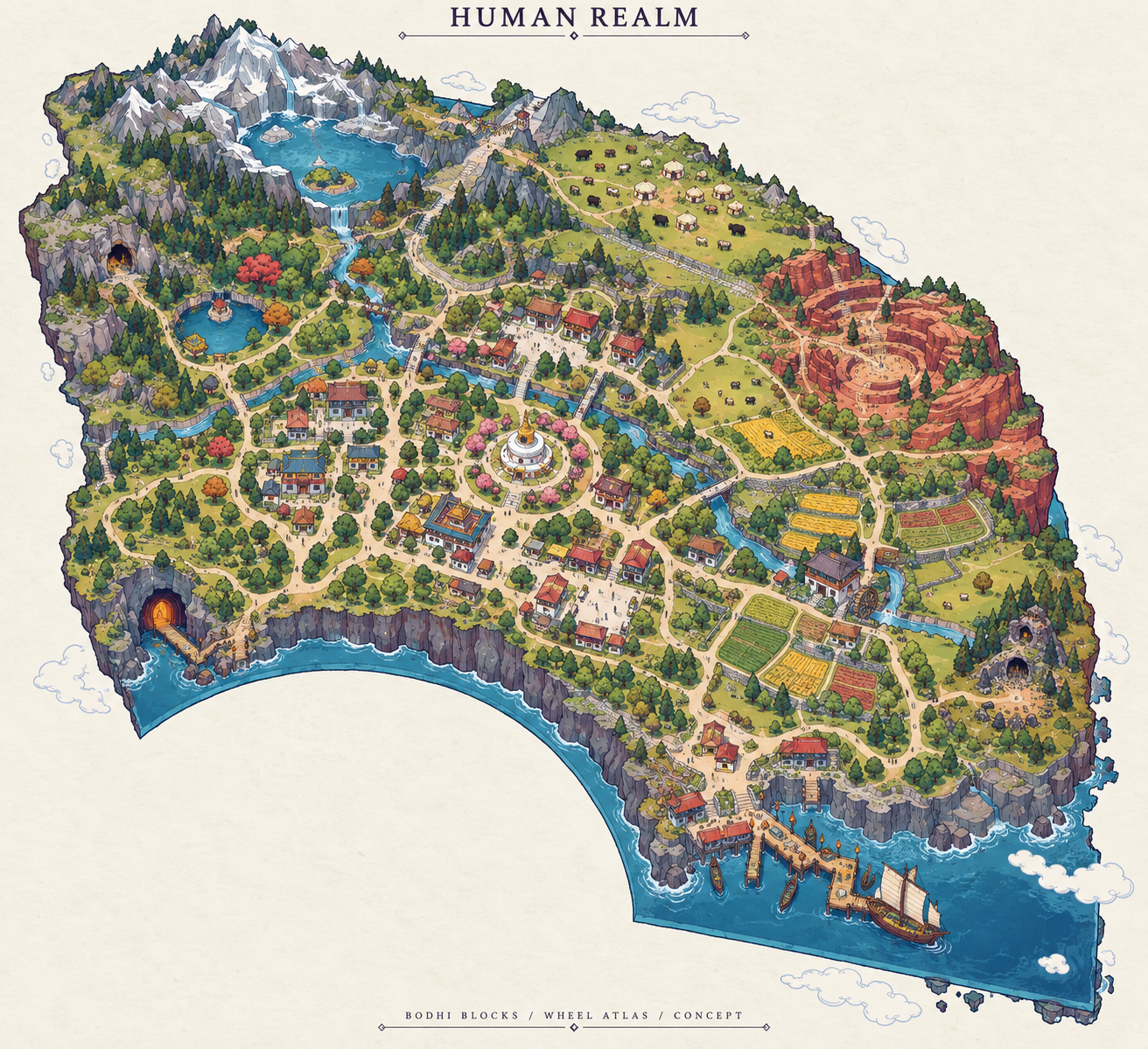
PretaGhost City, households, dry basin, offering courts, C07 below-city treatmentDistinguish surface manifestations from principal below-Jambudvīpa dwelling; distinguish judge Yama from exterior Death, heavenly Yāma and Story bossAudit the selected three-obstruction account against individual environments; drought props alone are insufficient. Preserve scattered pretas outside the sector; source each manifestationSurface and underground routes return coherently; nourishment conditions and helpful encounters are observable without a comic starvation reward loop
NarakaEight hot/eight cold identities, separate relief and C08 station/district infrastructureExplain hot stack beneath Jambudvīpa in the cosmographic view; sideways Wheel sector is compression. Keep cold branch distinct; do not put all hells beneath poison hubAK III.58–59 and K selected account govern directional neighbors. Source already registers 16 courts per hot station; audit these before proposing another duplicate. Occasional hells are separate localized adaptations. Hot and cold hells are buildable as environments (Josie, 1 October 2026); map the beings their lore needs, with no new character models until AI concept art existsEvery station and directional neighbor resolves and can be traversed; conditions differ beyond labels; cold regions remain distressing; cute gore where the lore calls for it (allowed since Josie, 1 October 2026: Binding of Isaac style, never gritty), help, exits and persistence verified
HumanVillage, cultivation, harbour, continent satellites, sacred routes and C05 AnavataptaPosition four continents and eight subcontinents in the Meru chart, not by assuming Human wedge compass equals cosmographic compass. Anavatapta belongs to selected Jambudvīpa mountain accountReconcile shape/direction/social conditions; four named river mouths and outflows require edition-specific source contract. Do not arbitrarily identify a decorative pond as sacred lakeEvery continent has identity and return route; harbour/ferries work; care/work/practice population and mountain/lake approaches remain coherent; shared animals are present
AsuraBattlefield, public sea-city, quays/coves, root-and-fruit relationshipSea-city and lower Meru relation must remain legible; reciprocal lookouts are not proof of one physically coherent tree. Preserve distinction between root/fruit Wheel motif and detailed Meru cosmographyAudit underwater settlement, ocean approach and war-front against K; use A as corroboration only. Provide inhabitants beyond combat stereotypesShore-to-depth travel, homes, public life and conflict boundary work; root/crown correspondence is clear and explicitly compressed where disconnected
DevaMeru terraces, gardens, existing Śakra identity and nested C03/C10–C12 destinationsKeep Four Kings terraces, Thirty-three summit, higher desire heavens and form realms separately addressed. Inner Maitreya Tuṣita court belongs within outer Tuṣita; Pure Abodes and pure buddhafields are distinctAudit selected enumeration, directions, summit parks/tree/hall and world-system seas/ranges. Current source's intentionally empty upper landscapes need population disposition before claiming fully populated. Formless treatment must remain experiential, not four physical countriesCorrect hierarchy and directional chart; no duplicate canonical teachers; every empty space has reason; every promised assembly/behavior exists; heavenly impermanence is legible without calling a heaven liberation

Center, karmic bands and exterior

Three-poisons hub: preserve interlocked pig/snake/bird sculptures, flush circuit and viewing bays. Select W's ordinary pig/rooster/snake treatment; V-excerpt documents pigeon and central-Buddha differences. Move no Meru installation into doctrinal identity with this hub. Extend short sourced interpretation and readable relationships; plants, seating and exact garden footprint are adaptation. Acceptance: all three distinct silhouettes readable at overview and ground height, no clipped forms or blocked circuit, variants recorded.

Ascent left half: preserve light procession and courts. Clarify favourable rebirth inside Samsara; it is not pure-field entry or final liberation. Extend legible movement/procession and a teaching connection to conduct; exact courtyards and walk geometry are authored. Acceptance: continuous inner circuit, returns to all spokes, clear distinction from exterior release imagery.

Descent right half: preserve dark procession/ravines and circuit. Clarify adverse rebirth; do not conflate this band with all bardo, hell geography or a punishment meter. Extend a readable counterpart to ascent without mandatory graphic torment. Acceptance: complete circulation, visibility, safe movement and distinction among bands, realms and optional bardo experiences.

Exterior Death/Buddha/moon: preserve exterior framing and separate Story ending. Label the holder as impermanence/Death, with Yama identification attributed to chosen image tradition; do not merge the judge, heavenly Yāma, Māra or Story boss. The exterior Buddha/release image is pedagogical, not a new adjacent continent; the liberation moon is not automatically Meru's astronomical moon. If exact Buddha/moon gesture must be called canonical, inventory a specific historical image showing that pair first. Acceptance: silhouettes readable at whole-wheel scale and approaches, gesture intelligible, no extra encounter identity, unaltered ending.

Every dependent-origination rim segment

R establishes the ordered links; W establishes the selected familiar pictures. V-excerpt supplies different pictures for several links. Preserve the present clockwise order and continuous inner rim promenade. The twelve gardens are authored teaching scenery, not twelve Buddhist geographical territories. No source prescribes their fountains, cultivation or dimensions.

Stable ID / linkExisting picture to preserveClarify or extendSegment-specific acceptance
wheel-rim-0 / IgnoranceTraveller and staffEnsure selected blind-traveller motif is recognizable; garden orientation is authoredExplanation concerns misapprehension; blindness never becomes moral blame
wheel-rim-1 / FormationsPotter and wheel/clay courtsMake shaping action readable; separate karma from ordinary craft stereotypeWheel/potter visible, next-link direction apparent
wheel-rim-2 / ConsciousnessMonkey grovePreserve monkey image selected by W; branches are adaptationRecognizable monkey and continuity to boat scene
wheel-rim-3 / Name and formTwo passengers in boat/canalRetain distinct passengers; do not call canal a cosmographic riverBoat readable and banks reachable
wheel-rim-4 / Six sense basesSix-opening houseMaintain six discernible apertures; exact building style authoredCountable six openings at playable views
wheel-rim-5 / ContactMeeting pairMake selected embracing/meeting relation legible; contact is doctrinally broaderPair's relationship readable without requiring explicit sexual imagery
wheel-rim-6 / Feeling (2026-10-07)Arrow striking an eye: the built figure and Contemplate line ("An arrow strikes an eye. Contact is felt.") follow Wellcome, Twelve Causal Links item 7, "Arrow in a man's eye" (wellcomecollection.org/works/jzbgkq4r); this supersedes the eye-shaped stone in the row belowKeep the arrow-in-eye image unsoftened; eyes stay solid black per the character eye invariantArrow visibly in the eye; motif distinct from a target minigame
wheel-rim-6 / FeelingArrow and eye-shaped stoneLabel softened arrow-in-eye image; preserve character eye invariantMotif distinct from a target minigame and no bodily gore
wheel-rim-7 / CravingOffered cup/reaching thirstPreserve thirst/drink allusion; drinking itself is not intrinsically evilCup and reaching gesture recognizable
wheel-rim-8 / GraspingFruit picker, laden neighbour, childKeep fruit-taking motif primary; extra residents are adaptationFruit-taking silhouette clear; no invented traditional biographies
wheel-rim-9 / BecomingExpectant family and cradlePreserve pregnancy allusion while explaining rebirth-conditioned becomingScene distinct from birth; no claim pregnancy alone defines the link
wheel-rim-10 / BirthParent/newborn/helper in open houseMaintain birth identity; architecture and helper roster authoredNewborn/parent relationship readable without gore
wheel-rim-11 / Aging and deathElder, memorial, covered bierMaintain impermanence image; funerary chorten style attributed separatelyElder/bier distinct; calm accessible memorial route

For each row: inspect current wheel-segments/wheel-rim-N.js, compare its original numbered concept, walk both neighbor joins, check sculpture views and teaching text, then record population/simulation/art/runtime independently. Do not infer an NPC schedule from scenery. A rice-seedling cessation court at the seam may be an attributed allusion to R; it is not a thirteenth link.

Hidden and sacred connection policy

The following connection research distinguishes affirmative evidence from unverified adjacency. Local traversable connectors are gameplay arrangements unless a named source establishes literal adjacency. Keep source destination identity, world-system and access mode in every graph edge; every shortcut needs a visible adaptation label in the atlas.

Place / current linkVerified relationship and sourcePlan for current game
SukhāvatīWestern distant buddhafield; aspiration and rebirth in Toh115, with fuller account Toh49Keep independent field; western host approach is orientation adaptation, never the canonical next country beyond Animal/Asura
AbhiratiIts own gods/humans connected by stairs: Toh50 introduction i.6Main three ladders already lead to abhirati:heaven, which is appropriate. Separate abhirati:stair → surface abhirati-stair → ordinary Deva remains authored shortcut; relabel or reroute it. Do not duplicate Akṣobhya or replace same-field heaven
Vaiḍūryanirbhāsa / Medicine fieldsToh504 §1.6: east beyond innumerable fieldsPreserve distant-field identity. tanaduk → field-lapis-radiance is thematic traversal; no verified literal neighbor relation. Keep Tanaduk's medical source independently
Copper-coloured mountain / CāmaraChokgyur Lingpa, Threefold Aspiration, opening and rebirth verses: southwest island/mountain, jewel mansion, pools/forest, blue-lotus birthExtend source-pinned offshore mountain/island composition; Potalaka ferry is authored journey, not proof of adjacent coasts
PotalakaToh721 locates Avalokiteśvara's assembly; Toh686 §§2.583–2.584 prescribes mountain/water/palace image, not a surveyPreserve residence and coastal sacred-image treatment, attribute account. Verify terrestrial pilgrimage sources separately; no checked text establishes ferry to Cāmara
TuṣitaDesire heaven associated with Maitreya: Toh199 and its 84000 authority locatorCurrent tower far door self-targets tower; old Tuṣita shortcut comments are stale. Do not introduce a correction for a removed edge. Heavenly entry, if added, must be attributed adaptation; inner teaching court nests in this heaven
Tārā / Turquoise LeavesSera Khandro aspiration: remembered Tārā and direct rebirth in her realmtara-grove → field-turquoise-leaves may stay as devotional/visionary game passage; not ordinary neighboring woodland
Copper → KhecaraPrimary named Khecara arrangement now verified (see below), but no passage establishing literal Copper adjacencycopper:khechara → field-khechara stays adaptation/pending. Distinguish specific source's realm from general celestial *khecara/khecarī* vocabulary
AkaniṣṭhaDilgo Khyentse, Swift Primordial Path, field-of-merit/mandala sections: Akaniṣṭha Ghanavyūha pure-field presentationKeep sambhogakāya-field usage distinct from highest form heaven; palace geometry in a practice visualization does not establish a terrestrial road
DhātviśvarīNo independently verified primary geographic description in this passPending source; do not derive a country or adjacency merely from a deity name
Animal hidden valley / MilarepaNo checked passage establishes Animal rebirth sector next to Milarepa caveActual valley-out returns Human; Milarepa path enters valley; Milarepa cairn gate enters field-fulfilled-activity. Treat these as Wheel compression/visionary access. Ordinary terrestrial animals do not classify a Himalayan valley as Animal rebirth realm
Named caves / charnel placesSite-specific guide corpus: Samyé Chimpu textsBefore rearrangement choose and inspect the exact guide passage. Nest documented caves in human-world geography; distinguish real cemeteries from directional mandala charnel sets
OḍḍiyānaSeven-Line Prayer: Padmasambhava's northwest birth location is within OḍḍiyānaRead selected primary prayer/commentary before laying out region. Northwest wording does not put Oḍḍiyāna in project's Asura wedge; historical identification and visionary accounts remain separate
ŚambhalaPrimary layout remains unverified; lead Mipham Kālacakra commentary fetch failedKeep pending. Verify Kalāpa, mountain enclosure, divisions, river and access in one named account before claiming canonical road or neighboring country

The October 1 parent extraction of actual descriptors contains 74 places, 160 interiors, four pockets and 136 explicit uses[].to links, with no extraction errors. These counts establish graph inventory, not lore completion. Stale comments and surface host lists must not override resolved descriptors.

Required graph record

For every actual edge record: stable from/to; physical same-world path, same-world heavenly relationship, distant buddhafield passage, vision/mandala access, or authored shortcut; source and passage; relationship actually supported; physical inference not supported; implementation; return behavior; save identity; independent runtime evidence. An edge may have a supported devotional relationship and an adapted physical form at the same time. Do not claim canonical two-way travel when a prayer concerns rebirth.

Proposed work order and finish criteria

  1. Freeze the selected corpus and graph; annotate every existing edge before moving terrain. Choose K as cosmographic baseline, W as attributed Wheel imagery, and individual pure-field texts for each destination. Dispose alternatives explicitly.
  2. Complete Animal as the first full geographic unit: ocean extension, coastal route, marine population, terrestrial/air habitats, shared human-world animals, watershed and sacred entrance classifications. Do not add source-free named creatures or geographical correspondences.
  3. Audit Human and Meru chart together: continents, mountain/lake/river contracts, shared outer ocean, lower-world depth and heavenly hierarchy. Preserve existing C03–C12 infrastructure rather than duplicating it.
  4. Resolve Asura/Deva relation, then Preta/Naraka depth and neighboring districts. Match source claims to actual descriptor addresses and population evidence.
  5. Complete hub/bands/all twelve rim scenes/exterior as explicitly adapted teaching landscapes, preserving circulation and devotional meaning.
  6. Complete each hidden region/field using its own source inventory. Review source-correct internal layouts before rearranging host gateways. Unverified Śambhala/Dhātviśvarī geography and inter-field adjacency stay research backlog; Khecara now has a selected, verified internal arrangement below.
  7. Accept lore, layout, population, simulation, art/audio and runtime separately. For each source claim show actual place or explicit disposition; for each area verify ground/water/jump, Talk/Enter, returns, save/reload, matches only where eligible, Chromium/WebKit desktop/phone and accepted approach/reverse/overview views. No region is complete because its name, building or model exists.

Limits and open research

This pass covers all 21 mapped Wheel sections and exterior explicitly, and the identified hidden-link risks. It does not exhaust every Buddhist text, prove every traditional geographic relation, or furnish literal kilometer measurements. Several sources describe visions, aspirations or iconographic instructions rather than ordinary terrain. No primary account verifies every decorative garden, route, private biography or resident schedule already authored for the game. Retain those as documented creative adaptation; Josie's present request authorizes source-faithful guidance, not retrospective claims that inventions were canonical.

Before implementation: preserve the verified AK/K/P page locators below; obtain complete primary Śambhala/Dhātviśvarī accounts; select exact site guides rather than topic pages; pin a historical Buddha/moon image; reconcile every source claim with the full current descriptor graph. Keep these visible as pending in /purelands/ until evidence closes them.

Direct PDF verification: geographic relationships to preserve

October 1 follow-up downloaded K (official Tsadra, 189 pages), AK (Pruden, 423 pages) and P (official BDK, 151 pages). pdftotext was unavailable; pypdf extracted the complete scans into temporary /tmp/wheel-research-{K,AK,P}.txt for direct reading. These temporary paths are verification working files, not canonical repo inputs. Source URLs above and below remain the retrieval authority.

Selected K account: exact compact contract

Locator (PDF = printed)Relationship
K p.22Square Meru; faces east crystal/south blue beryl/west ruby/north gold; four terraces; seven enclosing square golden ranges and intervening seas
K pp.23–24East Majestic Body semicircle; south Jambu trapezoid; west Bountiful Cow circle; north Unpleasant Sound square; two matching-shape adjacent islands each; salt ocean outside golden ranges to iron rim
K p.27Avīci deepest below Jambu; seven hot hells above; four neighbor types on each side of each hot hell; cold hells beyond neighbors
K pp.28–29Preta principal abode below Jambu, others dispersed; Animal principal ocean, also sky/water/earth; Asuras in Meru crevices below water, differentiated depth levels
K pp.30–34Four Kings fourth terrace; Thirty-three summit; four higher desire heavens above: Conflict Free, Joyful, Enjoying Creations, Mastery Over Others’ Creations
K pp.34–36,41Seventeen form classes; no-perception within Great Result; principal formless presentation has no fixed spatial levels; attributed spatial alternatives separately acknowledged

Implementation consequence: a single local sector cannot literally preserve all these relations. Keep the Wheel playable, but make the named Meru chart authoritative for directions, coast, depths and heavens. Do not impose the lower world's Yama identity on the exterior figure. Above map relationships justify graph/terrain audits, not unsupported named settlements or biographies.

Anavatapta: verified K and P agree here

Phagpa, *Elucidation of the Knowable*, BDK translation, PDF p.27, printed p.14, and K PDF/printed pp.24–25, directly agree on this selected arrangement:

Lake sideMouth-shaped cliffRiverCarried substance
EastElephantGaṅgāSilver
SouthBullSindhuBlue beryl
WestHorseVakṣuCrystal
NorthLionSītāGold

Both accounts put the lake between Snowy/Himavat to the south and Fragrant/Gandhamādana to the north, beyond nine black mountain ranges north of central India; each river circles the lake seven times clockwise before its directional ocean outflow. P explicitly gives a square lake. There is no verified K-versus-P mouth/order variant here. Preserve the current C05 contract, which already uses this order. A later different Tibetan/Himalayan account must be registered as a separate variant, never silently swapped in. The playable waterways may compress tributaries/circuits only with an explicit scale-compression disposition; a pond's decorative stream is not automatically one of these rivers.

AK independently checked

AK PDF p.116 / printed p.460 verifies ocean Animal and dispersed land/water/air, principal underground Preta with Yama, and dispersed pretas including differently endowed ones. AK PDF p.115 / printed p.459 places cold hells below Jambudvīpa on the level of the great hells. This is more general wording than K's cold-beyond-neighbors layout; use K for the selected game contract and retain AK's wording as corroboration/variant detail rather than manufacturing an exact common cold stack.

Khecara: primary praise now verified

The link is HAR set 2395, not artwork item 2395: *The Staircase Ascending to Khechara*, Ngorchen Konchog Lhundrub, translated Jeff Watt, opening through courtyard verses and colophon. The text describes an elevated jeweled realm, ruby ground, central five-gem palace, four sides/four doors/three floors/pinnacle, Vajrayoginī, lineage assembly above, Vajradharma/root guru atop, and surrounding airborne vīras/ḍākinīs. This is a named Naropa-tradition arrangement, not an unspecified universal sky island. The same page's Tsarchen aspiration recounts visionary access from Oḍḍiyāna and a Ganges island; it still does not establish neighboring terrain with Copper.

Plan: compare existing field-khechara courtyard, palace and assembly levels to this selected arrangement; retain existing no-gore simplifications and teacher identities. Mark copper:khechara as an authored inter-field transition. Do not claim that the praise's title establishes a physically walkable staircase between Copper and Khecara.

Śambhala and new lore additions

The cited Mipham PDF lead returned HTTP 404 on direct retrieval. No complete primary Śambhala layout was verified in this pass. Keep it pending and seek another authoritative edition before adding Kalāpa divisions, enclosing mountains or directional roads. Dhātviśvarī likewise remains pending.

Josie's latest no made-up lore instruction governs future additions: research source-grounded geography, inhabitants and relationships first. Existing original residents and private biographies remain disclosed game fiction, not canonical evidence. This note does not authorize new unsupported traditional beings, settlements, biographies or named geographic correspondences. Practical path surfaces and loading transitions must be labeled adaptation; they cannot be presented as scripture-derived.

Download the complete research note

Connections

How hidden places connect to Samsara

Keep physical geography, heavenly relationships, distant Buddha-fields, visions and game shortcuts distinct.

Connection acceptance contract
  1. Stable endpoints and named arrivals
  2. Destination cosmological identity distinct from entrance host
  3. Relationship type and source passage
  4. Explicit physical compression or unsupported adjacency
  5. Reverse route or recorded return stack
  6. Save/discovery identity
  7. Revision-pinned browser evidence

An unverified connection remains an authored game route or a research item. Source-supported rebirth, vision or teaching relationships do not establish a canonical bidirectional footpath.

physical same-world landscape with compressed Wheel presentation

Animal shore, ocean and naga approaches

Current game connection
animal → coast → marine habitats; animal pond → naga-palace
Proposed treatment
Retain the terrestrial watershed, dens and Four Friends. Extend a legible marine region and depth access alongside land/air habitats; give animals sourced habitat roles rather than invented traditional species.
Source boundary
The Great Ocean as principal animal abode supports substantial marine representation; it supplies no percentage or exact cove map.

Source passages and unresolved claims: see the research above. Route and lore acceptance remain independent.

physical same-world relationship pending exact source mapping

Four animal-mouth springs and Anavatapta

Current game connection
animal → spring-lion / elephant / horse / ox; human → anavatapta
Proposed treatment
Keep spring cave save identities. Compare the chosen lake account and directional mouths before positioning them as tributaries or actual Anavatapta outflows. A resemblance between four props and four mouths is insufficient.
Source boundary
Anavatapta is continental sacred geography; an Animal entrance does not establish its canon location.

Source passages and unresolved claims: see the research above. Route and lore acceptance remain independent.

authored cross-sector shortcut and human sacred geography

Hidden valley and Milarepa

Current game connection
animal → hidden-valley → milarepa; hidden-valley → surface valley-out (Human)
Proposed treatment
Treat the valley as terrestrial Himalayan/beyul-inspired geography. Keep discovery/return behaviour; plan a coherent Human mountain relationship and label the Animal-to-Human shortcut as compression.
Source boundary
No verified canon adjacency between an Animal-rebirth wedge and Milarepa. Existing fiction should remain labelled.

Source passages and unresolved claims: see the research above. Route and lore acceptance remain independent.

physical same-world sea travel with scale compression

Four continents and companion lands

Current game connection
Human mainland ↔ eastern/western/northern lands ↔ companion islands
Proposed treatment
Preserve every continent ID and ferry. Show directional/shape relationships around Meru in the cosmographic view; retain a practical compressed harbour route rather than equating dock headings with scriptural directions.
Source boundary
Directional destination grouping is sourceable; exact ferry services, village layouts and short distances are game choices.

Source passages and unresolved claims: see the research above. Route and lore acceptance remain independent.

lower-world relationship, Wheel compression

Preta surface and principal dwelling

Current game connection
hungry-ghost → ghost-city → ghost-city:below
Proposed treatment
Retain public city and below-city layer; distinguish scattered surface pretas from the principal below-Jambudvipa account. Map obstruction environments to sources.
Source boundary
The Preta sector is a teaching landscape; its southeast Wheel position is not the geographic coordinate of the principal abode.

Source passages and unresolved claims: see the research above. Route and lore acceptance remain independent.

lower-world relationship, scale-compressed route

Hot/cold clusters and neighbouring districts

Current game connection
naraka → naraka-hot-hells / naraka-cold-hells; hot courts → directional neighbours
Proposed treatment
Audit existing stations and neighbour courts before building additions. Show the source hierarchy/depth diagram and preserve all return anchors; isolate occasional hells from the major groups.
Source boundary
A lateral Wheel layout compresses subterranean source relationships; source variants must stay separate.

Source passages and unresolved claims: see the research above. Route and lore acceptance remain independent.

physical same-world ocean and Meru relationship

Asura city, Meru base and conflict vistas

Current game connection
asura → sea-city; asura roots ↔ deva fruit viewpoints
Proposed treatment
Retain quays, sea-city, battlefield and root/fruit vistas. Connect coherent marine depth/shore routes and make the tree relationship legible while marking its physical compression.
Source boundary
A pair of cross-sector lookouts is not proof of a single source-accurate tree or war road.

Source passages and unresolved claims: see the research above. Route and lore acceptance remain independent.

same-world heavenly relationship and experiential access

Meru, desire heavens, form regions and Maitreya

Current game connection
deva / deva-palace → meru → desire/form regions; outer Tuṣita → tushita
Proposed treatment
Keep existing heaven IDs and sequence. Separate world-system geography from Wheel hub; distinguish Four Kings levels and summit from higher aerial heavens. Treat formless entries as nonspatial contemplative experiences.
Source boundary
Same source-specific heaven hierarchy; no claim that corporeal stairs reach formless existence.

Source passages and unresolved claims: see the research above. Route and lore acceptance remain independent.

local game architecture

Tower and former Tuṣita shortcut

Current game connection
tower far door → tower
Proposed treatment
Current resolved descriptor self-targets tower. Preserve it; remove stale documentation claiming it still enters Tuṣita.
Source boundary
No new tower-to-heaven route is required to correct an already removed shortcut.

Source passages and unresolved claims: see the research above. Route and lore acceptance remain independent.

same-field physical relation plus authored cross-world shortcut

Abhirati ladders and lingering Deva shortcut

Current game connection
abhirati ↔ abhirati:heaven; abhirati:heaven ↔ abhirati:stair → surface abhirati-stair (Deva)
Proposed treatment
Preserve the three ladders to its own heaven. Prefer rerouting the legacy stair exit to the same field; alternatively retain it with an explicit authored-portal explanation. Retain IDs and arrival safety.
Source boundary
The text supports heaven and humans inside Abhirati; it does not establish an ordinary road into our Deva wedge.

Source passages and unresolved claims: see the research above. Route and lore acceptance remain independent.

narrative/vision access to a distinct Buddha-field

Vimalakirti and Akṣobhya field

Current game connection
human → vimalakirti → abhirati
Proposed treatment
Retain the miracle/narrative passage as an adaptation of the field encounter; frame the actual door and return as game access rather than a literal neighboring estate.
Source boundary
Narrative transfer of a world is different from canonical reciprocal walking access.

Source passages and unresolved claims: see the research above. Route and lore acceptance remain independent.

physical regional journey with unverified itinerary

Potalaka and Copper Mountain

Current game connection
human shore → potalaka; ferry ↔ copper-mountain
Proposed treatment
Keep the existing two ferry callbacks and plank/seat conditions. Ground Potalaka approach in its selected coastal/mountain account and Copper in Cāmara. Mark the inter-island itinerary as authored; no source establishes the two are neighbouring coasts.
Source boundary
Preserve both destinations; source-correct internal terrain comes before gateway relocation.

Source passages and unresolved claims: see the research above. Route and lore acceptance remain independent.

visionary passage, adjacency unresolved

Copper palace and Khechara continuation

Current game connection
copper-mountain → lamps → copper-mountain:khechara → field-khechara
Proposed treatment
Keep palace and field identities distinct. Source the selected Khechara palace account; classify the crossing as visionary/thematic unless literal adjacency can be verified.
Source boundary
The term khecara and an existing terrace do not prove one geographic country beside Copper Mountain.

Source passages and unresolved claims: see the research above. Route and lore acceptance remain independent.

devotional/visionary passage to distinct field

Tara grove and Turquoise Leaves

Current game connection
spring-ox → tara-grove ↔ field-turquoise-leaves
Proposed treatment
Keep the grove as an existing refuge and the distinct field as a devotional/visionary destination. Source its palace, landscape and full chosen assembly without calling the grove a mundane entrance described by scripture.
Source boundary
Aspiration/rebirth relation supports the field, not a canonical doorway through these ferns.

Source passages and unresolved claims: see the research above. Route and lore acceptance remain independent.

devotional/visionary passage to distinct fields

Tanaduk and seven Medicine fields

Current game connection
human → tanaduk ↔ field-lapis-radiance ↔ medicine-field-01…06
Proposed treatment
Preserve medical city, seven field identities and assemblies. Show source-specific eastward distinct-field relationships; annotate current gates as thematic vision access with returns for play.
Source boundary
Tanaduk is not the Lapis field. Six gates around a court are not scriptural neighbouring provinces.

Source passages and unresolved claims: see the research above. Route and lore acceptance remain independent.

devotional/visionary passage to distinct fields

Other family Buddha-fields

Current game connection
lhakhang ↔ field-glorious-beauty; milarepa ↔ field-fulfilled-activity; stupa ↔ field-dense-array
Proposed treatment
Preserve devotional entrance hosts and destination identities; source each field separately. Show attributed directional relations without merging competing mandala systems.
Source boundary
Terrestrial niches/cairns/light-wells are authored access; form-heaven Akaniṣṭha and pure-field Dense Array retain distinct identities.

Source passages and unresolved claims: see the research above. Route and lore acceptance remain independent.

distinct Buddha-field with game return route

Sukhavati and release route

Current game connection
endgame → sukhavati → net / lotus
Proposed treatment
Keep distant western field identity and existing ending. Show sourced pools, teaching assemblies and birth/practice relationships inside; access and visit returns are game affordances.
Source boundary
It is not the next physical country after the Wheel, nor an ordinary Deva district.

Source passages and unresolved claims: see the research above. Route and lore acceptance remain independent.

regional/visionary adaptations with source-specific submaps

Shambhala, vision lake, ogress ridge and charnel places

Current game connection
human → shambhala → garden/chamber/guesthouse + vision-lake / ogress-ridge; human → charnel
Proposed treatment
Preserve routes and local rooms. Pin a source for each geographic set before making it literal: do not merge Shambhala, historical oracle lake, sacred demoness geography and mandala cemeteries into a supposedly canonical valley.
Source boundary
Current shared entrances are authored relationships; specific source geography remains to be verified.

Source passages and unresolved claims: see the research above. Route and lore acceptance remain independent.

authored transit and experiential access

World-system darkness and visionary bardo

Current game connection
selected falls → dark; dark → dark:bardo
Proposed treatment
Separate the existing transit-space fiction from the chosen bardo sequence. Preserve safe returns; label dream/vision access independently.
Source boundary
A chasm is not proof of the postmortem intermediate state; ascent/descent is not automatically bardo.

Source passages and unresolved claims: see the research above. Route and lore acceptance remain independent.

All 77 registered places, grouped by current entrance host

Host is an engine address, not the canonical cosmological address. Every place retains its save ID.

between
  • dark · zone · fall · transit

    Authored transit Keep dark transit; distinguish inter-world darkness, karmic band and visionary bardo.

animal
  • hell-animal · zone · push · occasional-hell

    Occasional hell Preserve existing identity, activity, return, save and source-specific role; expand only when named by the cosmology plan.

  • naga-palace · interior · dive · worldly-lower

    Nāga domain Preserve Nagarjuna visit and naga identity; additional naga ecology optional.

  • tara-grove · zone · link · sacred-regional

    Liminal sacred refuge Preserve Tara and eight invented fears; never call fears canonical retinue.

  • friends-orchard · pocket · walk · local

    Existing local interior / pocket Preserve existing identity, activity, return, save and source-specific role; expand only when named by the cosmology plan.

  • beaver-lodge · interior · dive · local

    Existing local interior / pocket Preserve existing identity, activity, return, save and source-specific role; expand only when named by the cosmology plan.

  • field-turquoise-leaves · zone · link · pure-field

    inner field beyond the liminal grove C19: grove (tara-grove, eight fear-beings) stays the liminal refuge outside the pure field; threshold door grove-threshold; interiors/zc-tara-khechara.js

hungry-ghost
  • hell-hungry-ghost · zone · push · occasional-hell

    Occasional hell Preserve existing identity, activity, return, save and source-specific role; expand only when named by the cosmology plan.

  • ghost-city · zone · link · preta

    Authored preta settlement Keep public Preta district and nested households; expand three obstruction categories.

naraka
  • hell-naraka · zone · push · occasional-hell

    Occasional hell Preserve existing identity, activity, return, save and source-specific role; expand only when named by the cosmology plan.

  • ember-cavern · interior · door · local

    Existing local interior / pocket Preserve existing identity, activity, return, save and source-specific role; expand only when named by the cosmology plan.

  • naraka-hot-hells · zone · door · hell

    Hot hell cluster Expand eight already existing station courts and adjacent-hell relationships.

  • naraka-cold-hells · zone · walk · hell

    Cold hell cluster Expand eight already existing station courts; do not rebuild as missing.

  • naraka-ember-pit · pocket · walk · hell

    one of each kind against the eight hot courts on its own side (the sunk south bowl, south-east of the block); the full four-by-four scheme stays each court's district room (kit: embers) A pocket on the Naraka wedge (places.js kind pocket, entrance walk): standing in it is being there. The sunk south bowl, south-east of the block. No residents yet: its beings are mapped, not yet modelled.

  • naraka-corpse-swamp · pocket · walk · hell

    one of each kind against the eight hot courts on its own side (north-east, between the block and the way over to the cold half, beside the descent opening into the dark); the full four-by-four scheme stays each court's district room (kit: filth) A pocket on the Naraka wedge (places.js kind pocket, entrance walk): standing in it is being there. North-east, between the block and the way over to the cold half, beside the descent opening into the dark. No residents yet: its beings are mapped, not yet modelled.

  • naraka-razor-plain · pocket · walk · hell

    one of each kind against the eight hot courts on its own side (where the district road leaves the block southward, short of the native volcano); the full four-by-four scheme stays each court's district room (kit: weapons) A pocket on the Naraka wedge (places.js kind pocket, entrance walk): standing in it is being there. Where the district road leaves the block southward, short of the native volcano. No residents yet: its beings are mapped, not yet modelled.

  • naraka-ash-river · pocket · walk · hell

    one of each kind against the eight hot courts on its own side (down the west flank, between the block and the Preta seam); the full four-by-four scheme stays each court's district room (kit: unfordable-river) A pocket on the Naraka wedge (places.js kind pocket, entrance walk): standing in it is being there. Down the west flank, between the block and the Preta seam. No residents yet: its beings are mapped, not yet modelled.

human
  • hell-human · zone · push · occasional-hell

    Occasional hell Preserve existing identity, activity, return, save and source-specific role; expand only when named by the cosmology plan.

  • spring-lion · interior · door · worldly-earth

    River-headwater allusion Preserve existing identity, activity, return, save and source-specific role; expand only when named by the cosmology plan.

  • spring-elephant · interior · door · worldly-earth

    River-headwater allusion Preserve existing identity, activity, return, save and source-specific role; expand only when named by the cosmology plan.

  • spring-horse · interior · door · worldly-earth

    River-headwater allusion Preserve existing identity, activity, return, save and source-specific role; expand only when named by the cosmology plan.

  • spring-ox · interior · door · worldly-earth

    River-headwater allusion Preserve existing identity, activity, return, save and source-specific role; expand only when named by the cosmology plan.

  • uttarakuru · zone · boat · worldly-continent

    Northern human continent Preserve northern human identity and resident; expand distinctive society without equating comfort to awakening.

  • hidden-valley · zone · fog · sacred-regional

    Hidden refuge region Keep beyul-inspired adaptation; connect doctrinal account to Human sacred geography.

  • charnel · zone · walk · sacred-regional

    Sacred practice / mandala-region adaptation Keep eight practice grounds; choose traditional set before adding correspondences.

  • potalaka · pocket · walk · sacred-regional

    Sacred regional geography Preserve listening coast and mixed assembly; pilgrimage geography rather than a generic samsara realm.

  • copper-mountain · zone · link · sacred-regional

    Sacred regional/visionary geography Preserve Camara shore, palace and inhabitants; expand sourced structure and distinguish Khechara connection.

  • milarepa · interior · walk · sacred-regional

    Teacher / retreat setting Preserve hermitage and impossible horn; historical sacred setting.

  • shambhala · zone · walk · sacred-regional

    Source-specific hidden kingdom Expand capital/teaching relationships within chosen Kalachakra account.

  • vision-lake · pocket · walk · sacred-regional

    Sacred regional allusion Keep adapted oracle-lake imagery; not another rebirth realm.

  • ogress-ridge · pocket · walk · symbolic

    Symbolic sacred landscape Keep sacred-landscape metaphor; not a monster encounter.

  • abhirati · zone · walk · pure-field

    Distinct Buddha-field Keep distinct Buddha-field; palm/pool/stair are authored passages, not ordinary geographical adjacency.

  • vimalakirti · interior · door · visionary

    Human house / miraculous interior Preserve impossible room/palm Abhirati passage; narrative connection.

  • bridge-station · pocket · walk · local

    Existing local interior / pocket Preserve existing identity, activity, return, save and source-specific role; expand only when named by the cosmology plan.

  • tanaduk · zone · walk · sacred-regional

    Medical teaching/care setting Preserve medical setting; do not relabel as Vaiḍūryanirbhāsa.

  • monkey-cave · pocket · climb · local

    Existing local interior / pocket Preserve existing identity, activity, return, save and source-specific role; expand only when named by the cosmology plan.

  • shoma-farm · interior · door · local

    Existing local interior / pocket Preserve existing identity, activity, return, save and source-specific role; expand only when named by the cosmology plan.

  • stupa · interior · door · local

    Existing local interior / pocket Preserve existing identity, activity, return, save and source-specific role; expand only when named by the cosmology plan.

  • red-rocks-backstage · interior · door · local

    Existing local interior / pocket Preserve existing identity, activity, return, save and source-specific role; expand only when named by the cosmology plan.

  • denisova-cave · interior · door · local

    Existing local interior / pocket Preserve existing identity, activity, return, save and source-specific role; expand only when named by the cosmology plan.

  • lhakhang · interior · door · local

    Existing local interior / pocket Preserve existing identity, activity, return, save and source-specific role; expand only when named by the cosmology plan.

  • teahouse · interior · door · local

    Existing local interior / pocket Preserve existing identity, activity, return, save and source-specific role; expand only when named by the cosmology plan.

  • nomad-tent · interior · door · local

    Existing local interior / pocket Preserve existing identity, activity, return, save and source-specific role; expand only when named by the cosmology plan.

  • kiln · interior · door · local

    Existing local interior / pocket Preserve existing identity, activity, return, save and source-specific role; expand only when named by the cosmology plan.

  • purvavideha · zone · boat · worldly-continent

    Eastern human continent Preserve existing eastern continent, ferry and irrigation activity.

  • aparagodaniya · zone · boat · worldly-continent

    Western human continent Preserve existing western continent, ferry and pastoral activity.

  • isle-deha · zone · link · worldly-continent

    companion of the eastern continent Ferry arrival, one landscape composition with a seated landmark and keepsake, an exit and a ferry home; reached by coastal voyage from its principal continent (Aparacāmara from the Human harbour). Cāmara is the existing Copper Mountain shore, source-qualified only. No residents.

  • isle-videha · zone · link · worldly-continent

    companion of the eastern continent Ferry arrival, one landscape composition with a seated landmark and keepsake, an exit and a ferry home; reached by coastal voyage from its principal continent (Aparacāmara from the Human harbour). Cāmara is the existing Copper Mountain shore, source-qualified only. No residents.

  • isle-aparacamara · zone · boat · worldly-continent

    companion of the southern continent Ferry arrival, one landscape composition with a seated landmark and keepsake, an exit and a ferry home; reached by coastal voyage from its principal continent (Aparacāmara from the Human harbour). Cāmara is the existing Copper Mountain shore, source-qualified only. No residents.

  • isle-shatha · zone · link · worldly-continent

    companion of the western continent Ferry arrival, one landscape composition with a seated landmark and keepsake, an exit and a ferry home; reached by coastal voyage from its principal continent (Aparacāmara from the Human harbour). Cāmara is the existing Copper Mountain shore, source-qualified only. No residents.

  • isle-uttaramantrina · zone · link · worldly-continent

    companion of the western continent Ferry arrival, one landscape composition with a seated landmark and keepsake, an exit and a ferry home; reached by coastal voyage from its principal continent (Aparacāmara from the Human harbour). Cāmara is the existing Copper Mountain shore, source-qualified only. No residents.

  • isle-kurava · zone · link · worldly-continent

    companion of the northern continent Ferry arrival, one landscape composition with a seated landmark and keepsake, an exit and a ferry home; reached by coastal voyage from its principal continent (Aparacāmara from the Human harbour). Cāmara is the existing Copper Mountain shore, source-qualified only. No residents.

  • isle-kaurava · zone · link · worldly-continent

    companion of the northern continent Ferry arrival, one landscape composition with a seated landmark and keepsake, an exit and a ferry home; reached by coastal voyage from its principal continent (Aparacāmara from the Human harbour). Cāmara is the existing Copper Mountain shore, source-qualified only. No residents.

  • anavatapta · zone · walk · worldly-earth

    four directed outflows; springs are linked grottoes, not literal headwaters Square lake on a high plateau, open ground on the east meadow of the Human tarn since R27 (human.anavatapta, compressed to three across); Gaṅgā east/elephant (silver), Sindhu south/bull, Vakṣu west/horse, Śītā north/lion (Phagpa pp. 11–19), each from its own carved mouth on a weir; jambu tree and a silver bank on the Gaṅgā. Each mouth has a low arch to its spring grotto (a symbolic approach, never a literal headwater), and the back passage of each grotto comes out on the strand. Nobody lives here.

  • field-glorious-beauty · zone · link · pure-field

    sacred field distinct from any wheel wedge or worldly heaven Preserve stable identity, discovery, arrivals and returns; verify scene and source relationship.

  • field-fulfilled-activity · zone · link · pure-field

    sacred field distinct from any wheel wedge or worldly heaven Preserve stable identity, discovery, arrivals and returns; verify scene and source relationship.

  • field-dense-array · zone · link · pure-field

    sacred field distinct from any wheel wedge or worldly heaven Preserve stable identity, discovery, arrivals and returns; verify scene and source relationship.

  • field-lapis-radiance · zone · link · pure-field

    separate from Tanaduk’s care garden Reached from Tanaduk by the authored lapis gate (tanaduk-lapis-gate); safe return lapis-return. The Medicine Buddha, Sunlight and Moonlight are seats/depictions of the Tanaduk identities (one primary appearance).

  • medicine-field-01 · zone · link · pure-field

    small visitable sanctuary Reached from the Medicine court of Vaiḍūryanirbhāsa; principal Buddha seat is placed: purelands:medicine-buddha-0N sits on it, a presence, never a match (interiors/zc-g2-medicine.js); door back to its own vision gate.

  • medicine-field-02 · zone · link · pure-field

    small visitable sanctuary Reached from the Medicine court of Vaiḍūryanirbhāsa; principal Buddha seat is placed: purelands:medicine-buddha-0N sits on it, a presence, never a match (interiors/zc-g2-medicine.js); door back to its own vision gate.

  • medicine-field-03 · zone · link · pure-field

    small visitable sanctuary Reached from the Medicine court of Vaiḍūryanirbhāsa; principal Buddha seat is placed: purelands:medicine-buddha-0N sits on it, a presence, never a match (interiors/zc-g2-medicine.js); door back to its own vision gate.

  • medicine-field-04 · zone · link · pure-field

    small visitable sanctuary Reached from the Medicine court of Vaiḍūryanirbhāsa; principal Buddha seat is placed: purelands:medicine-buddha-0N sits on it, a presence, never a match (interiors/zc-g2-medicine.js); door back to its own vision gate.

  • medicine-field-05 · zone · link · pure-field

    small visitable sanctuary Reached from the Medicine court of Vaiḍūryanirbhāsa; principal Buddha seat is placed: purelands:medicine-buddha-0N sits on it, a presence, never a match (interiors/zc-g2-medicine.js); door back to its own vision gate.

  • medicine-field-06 · zone · link · pure-field

    small visitable sanctuary Reached from the Medicine court of Vaiḍūryanirbhāsa; principal Buddha seat is placed: purelands:medicine-buddha-0N sits on it, a presence, never a match (interiors/zc-g2-medicine.js); door back to its own vision gate.

  • field-khechara · zone · link · pure-field

    reached from copper-mountain:khechara, an authored connection C21: passage door khechara-passage on copper-mountain:khechara (old id and khechara-slit exit kept); Vajrayogini sits on the palace centre seat (purelands:vajrayogini, a presence, no opponent); Vajradharma stays the top storey's lit window depiction (the storey is a closed volume, no full rig placed); relation to sacred Akanishtha is lineage-specific, never meru:ogmin; interiors/zc-tara-khechara.js

asura
  • hell-asura · zone · push · occasional-hell

    Occasional hell Preserve existing identity, activity, return, save and source-specific role; expand only when named by the cosmology plan.

  • asura-city · zone · link · asura

    Asura maritime settlement Keep public underwater/sea-city identity; source-check tree, sea and war relationships.

  • eclipse-ledge · pocket · walk · world-system

    Cosmographic viewing pocket Preserve existing identity, activity, return, save and source-specific role; expand only when named by the cosmology plan.

  • asura-gatehouse · interior · door · local

    Existing local interior / pocket Preserve existing identity, activity, return, save and source-specific role; expand only when named by the cosmology plan.

  • titan-hall · interior · door · local

    Existing local interior / pocket Preserve existing identity, activity, return, save and source-specific role; expand only when named by the cosmology plan.

deva
  • hell-deva · zone · push · occasional-hell

    Occasional hell Preserve existing identity, activity, return, save and source-specific role; expand only when named by the cosmology plan.

  • meru · zone · climb · world-system

    World-system / heavenly access Expand to chosen source scheme; preserve six desire stations and nested formless rooms.

  • tower · interior · link · visionary

    Visionary sacred interior Preserve existing identity, activity, return, save and source-specific role; expand only when named by the cosmology plan.

  • tushita · zone · link · desire-heaven

    Maitreya court in desire-heaven context Preserve teaching court separately from outer desire heaven.

  • garden-shed · interior · door · local

    Existing local interior / pocket Preserve existing identity, activity, return, save and source-specific role; expand only when named by the cosmology plan.

endgame
  • mirror-hall · interior · door · preta

    Yama judgment staging Keep Story Yama identity distinct from wheel death frame and heavenly Yama.

  • sukhavati · zone · walk · pure-field

    Distinct pure field Keep distinct Buddha-field; expand birth/practice/teaching relationships.

All 152 source-resolved transitions

This inventory covers explicit links, root-relative room doors and the two callback ferries. Exit uses without a target return by the caller stack and are recorded separately; outside entrances require candidate inspection.

abhirati
  • abhirati → abhirati:heaven · door · explicit-link · arrival ladder-2
  • abhirati → abhirati:heaven · door · explicit-link · arrival ladder-1
  • abhirati → abhirati:heaven · door · explicit-link · arrival ladder-3
abhirati:stair
  • abhirati:stair → abhirati:heaven · door · explicit-link · arrival portal
  • abhirati:stair → surface abhirati-stair · door · explicit-link
arena-undercroft
  • arena-undercroft → surface asura-city-stair · door · explicit-link
copper-mountain
  • copper-mountain → copper-mountain:lamps · door · relative-room-door
  • copper-mountain → potalaka · ferry · animation-callback · arrival ferry · occupied boat departs
copper-mountain:lamps
  • copper-mountain:lamps → copper-mountain:khechara · door · relative-room-door
copper-mountain:khechara
  • copper-mountain:khechara → field-khechara · door · explicit-link · arrival approach
dark
  • dark → surface realm-animal · door · explicit-link
  • dark → surface realm-hungry-ghost · door · explicit-link
  • dark → surface realm-naraka · door · explicit-link
  • dark → surface realm-human · door · explicit-link
  • dark → surface realm-asura · door · explicit-link
  • dark → surface realm-deva · door · explicit-link
  • dark → dark:bardo · door · relative-room-door
ghost-city
  • ghost-city → human-house:cellar · door · explicit-link · arrival well
  • ghost-city → surface ghost-city-foot · door · explicit-link
  • ghost-city → ghost-city:feast · door · explicit-link · arrival gate
human-house:cellar
  • human-house:cellar → human-house · door · explicit-link · arrival cellar
  • human-house:cellar → surface ghost-city-well · door · explicit-link
hidden-valley
  • hidden-valley → surface valley-out · door · explicit-link
  • hidden-valley → surface milarepa-path · door · explicit-link
lhakhang
  • lhakhang → field-glorious-beauty · door · explicit-link · arrival threshold
  • lhakhang → lhakhang:precinct · door · relative-room-door
meru
  • meru → deva-palace · door · explicit-link · arrival ladder
  • meru → meru:space · door · relative-room-door
  • meru → meru:mind · door · relative-room-door
  • meru → meru:nothing · door · relative-room-door
  • meru → meru:neither · door · relative-room-door
  • meru → tushita · door · explicit-link · arrival terrace
  • meru → meru:ogmin · door · relative-room-door
  • meru → meru:heaven-yama · door · relative-room-door
  • meru → meru:heaven-tushita · door · relative-room-door
  • meru → meru:heaven-nirmanarati · door · relative-room-door
  • meru → meru:heaven-paranirmita · door · relative-room-door
  • meru → meru:form-1 · door · relative-room-door
  • meru → meru:system · door · relative-room-door
deva-palace
  • deva-palace → meru · door · explicit-link
  • deva-palace → deva-palace:parasol · door · relative-room-door
  • deva-palace → deva-palace:music · door · relative-room-door
  • deva-palace → deva-palace:fish · door · relative-room-door
  • deva-palace → deva-palace:vase · door · relative-room-door
  • deva-palace → deva-palace:bath · door · relative-room-door
  • deva-palace → deva-palace:banner · door · relative-room-door
  • deva-palace → deva-palace:wheel · door · relative-room-door
  • deva-palace → deva-palace:bed · door · relative-room-door
potalaka:cave
  • potalaka:cave → surface potalaka-falls · door · explicit-link
  • potalaka:cave → surface potalaka-terrace · door · explicit-link
  • potalaka:cave → surface potalaka-ledge · door · explicit-link
printing-house
  • printing-house → printing-house:court · door · relative-room-door
shambhala
  • shambhala → shambhala:garden · door · explicit-link · arrival col
  • shambhala → shambhala:garden · door · explicit-link · arrival channel-walk
shambhala:garden
  • shambhala:garden → shambhala · door · explicit-link · arrival col
  • shambhala:garden → shambhala:guesthouse · door · explicit-link · arrival door
  • shambhala:garden → shambhala:chamber · door · explicit-link · arrival lit-door
  • shambhala:garden → shambhala · door · explicit-link · arrival channel
shambhala:chamber
  • shambhala:chamber → shambhala:guesthouse · door · explicit-link · arrival stair
  • shambhala:chamber → shambhala:garden · door · explicit-link · arrival lit-door
shambhala:guesthouse
  • shambhala:guesthouse → shambhala:garden · door · explicit-link · arrival guesthouse
  • shambhala:guesthouse → shambhala:chamber · door · explicit-link · arrival stair
spring-elephant
  • spring-elephant → surface anavatapta-elephant · door · explicit-link
spring-ox
  • spring-ox → tara-grove · door · explicit-link · arrival fern
stupa
  • stupa → field-dense-array · door · explicit-link · arrival threshold
sukhavati
  • sukhavati → sukhavati:net · door · relative-room-door
  • sukhavati → sukhavati:lotus · door · relative-room-door
tanaduk
  • tanaduk → tanaduk:kitchen · door · relative-room-door
  • tanaduk → field-lapis-radiance · door · explicit-link · arrival gate
tanaduk:kitchen
  • tanaduk:kitchen → tanaduk · door · explicit-link · arrival kitchen
  • tanaduk:kitchen → tanaduk:rest · door · relative-room-door
tanaduk:rest
  • tanaduk:rest → tanaduk · door · explicit-link · arrival side
tara-grove
  • tara-grove → spring-ox · door · explicit-link · arrival fern
  • tara-grove → tara-grove:roots · door · relative-room-door
  • tara-grove → surface grove-out · door · explicit-link
  • tara-grove → field-turquoise-leaves · door · explicit-link · arrival grove
tower
  • tower → tushita · door · explicit-link · arrival tower
  • tower → tower · door · explicit-link
human-house
  • human-house → human-house:cellar · door · relative-room-door
tushita
  • tushita → meru · door · explicit-link · arrival tushita
  • tushita → meru · door · explicit-link · arrival creating
  • tushita → tower · door · explicit-link
  • tushita → tushita:room · door · relative-room-door
uttarakuru
  • uttarakuru → purvavideha · door · explicit-link · arrival ferry
  • uttarakuru → aparagodaniya · door · explicit-link · arrival ferry
  • uttarakuru → isle-kurava · door · explicit-link · arrival ferry
  • uttarakuru → isle-kaurava · door · explicit-link · arrival ferry
vimalakirti
  • vimalakirti → abhirati · door · explicit-link · arrival palm
purvavideha
  • purvavideha → surface realm-human · door · explicit-link
  • purvavideha → uttarakuru · door · explicit-link · arrival kuru-east-ferry
  • purvavideha → isle-deha · door · explicit-link · arrival ferry
  • purvavideha → isle-videha · door · explicit-link · arrival ferry
aparagodaniya
  • aparagodaniya → surface realm-human · door · explicit-link
  • aparagodaniya → uttarakuru · door · explicit-link · arrival kuru-west-ferry
  • aparagodaniya → isle-shatha · door · explicit-link · arrival ferry
  • aparagodaniya → isle-uttaramantrina · door · explicit-link · arrival ferry
naraka-hot-hells:reviving
  • naraka-hot-hells:reviving → naraka-hot-hells · door · explicit-link · arrival reviving
naraka-hot-hells:black-line
  • naraka-hot-hells:black-line → naraka-hot-hells · door · explicit-link · arrival black-line
naraka-hot-hells:crushing
  • naraka-hot-hells:crushing → naraka-hot-hells · door · explicit-link · arrival crushing
naraka-hot-hells:howling
  • naraka-hot-hells:howling → naraka-hot-hells · door · explicit-link · arrival howling
naraka-hot-hells:great-howling
  • naraka-hot-hells:great-howling → naraka-hot-hells · door · explicit-link · arrival great-howling
naraka-hot-hells:heating
  • naraka-hot-hells:heating → naraka-hot-hells · door · explicit-link · arrival heating
naraka-hot-hells:intense-heating
  • naraka-hot-hells:intense-heating → naraka-hot-hells · door · explicit-link · arrival intense-heating
naraka-hot-hells:avici
  • naraka-hot-hells:avici → naraka-hot-hells · door · explicit-link · arrival avici
naraka-hot-hells
  • naraka-hot-hells → naraka-hot-hells:reviving · door · explicit-link · arrival gate
  • naraka-hot-hells → naraka-hot-hells:black-line · door · explicit-link · arrival gate
  • naraka-hot-hells → naraka-hot-hells:crushing · door · explicit-link · arrival gate
  • naraka-hot-hells → naraka-hot-hells:howling · door · explicit-link · arrival gate
  • naraka-hot-hells → naraka-hot-hells:great-howling · door · explicit-link · arrival gate
  • naraka-hot-hells → naraka-hot-hells:heating · door · explicit-link · arrival gate
  • naraka-hot-hells → naraka-hot-hells:intense-heating · door · explicit-link · arrival gate
  • naraka-hot-hells → naraka-hot-hells:avici · door · explicit-link · arrival gate
meru:heaven-yama
  • meru:heaven-yama → meru:heaven-tushita · door · relative-room-door
meru:heaven-tushita
  • meru:heaven-tushita → tushita · door · explicit-link · arrival terrace
  • meru:heaven-tushita → meru:heaven-nirmanarati · door · relative-room-door
meru:heaven-nirmanarati
  • meru:heaven-nirmanarati → meru:heaven-paranirmita · door · relative-room-door
meru:heaven-paranirmita
  • meru:heaven-paranirmita → meru:form-1 · door · relative-room-door
field-glorious-beauty
  • field-glorious-beauty → lhakhang · door · explicit-link · arrival vision-niche
field-fulfilled-activity
  • field-fulfilled-activity → surface milarepa-cairn-gate · door · explicit-link
field-dense-array
  • field-dense-array → stupa · door · explicit-link · arrival light-well
meru:form-1
  • meru:form-1 → meru:form-2 · door · relative-room-door
meru:form-2
  • meru:form-2 → meru:form-3 · door · relative-room-door
meru:form-3
  • meru:form-3 → meru:form-4 · door · relative-room-door
meru:form-4
  • meru:form-4 → meru:pure-abodes · door · relative-room-door
meru:pure-abodes
  • meru:pure-abodes → meru:ogmin · door · relative-room-door
field-lapis-radiance
  • field-lapis-radiance → tanaduk · door · explicit-link · arrival lapis
  • field-lapis-radiance → medicine-field-01 · door · explicit-link · arrival gate
  • field-lapis-radiance → medicine-field-02 · door · explicit-link · arrival gate
  • field-lapis-radiance → medicine-field-03 · door · explicit-link · arrival gate
  • field-lapis-radiance → medicine-field-04 · door · explicit-link · arrival gate
  • field-lapis-radiance → medicine-field-05 · door · explicit-link · arrival gate
  • field-lapis-radiance → medicine-field-06 · door · explicit-link · arrival gate
medicine-field-01
  • medicine-field-01 → field-lapis-radiance · door · explicit-link · arrival vision-01
medicine-field-02
  • medicine-field-02 → field-lapis-radiance · door · explicit-link · arrival vision-02
medicine-field-03
  • medicine-field-03 → field-lapis-radiance · door · explicit-link · arrival vision-03
medicine-field-04
  • medicine-field-04 → field-lapis-radiance · door · explicit-link · arrival vision-04
medicine-field-05
  • medicine-field-05 → field-lapis-radiance · door · explicit-link · arrival vision-05
medicine-field-06
  • medicine-field-06 → field-lapis-radiance · door · explicit-link · arrival vision-06
abhirati:heaven
  • abhirati:heaven → abhirati · door · explicit-link · arrival ladder-1
  • abhirati:heaven → abhirati · door · explicit-link · arrival stair
  • abhirati:heaven → abhirati · door · explicit-link · arrival ladder-3
  • abhirati:heaven → abhirati:stair · door · explicit-link · arrival foot
isle-deha
  • isle-deha → purvavideha · door · explicit-link · arrival ferry
isle-videha
  • isle-videha → purvavideha · door · explicit-link · arrival ferry
isle-aparacamara
  • isle-aparacamara → surface realm-human · door · explicit-link
isle-shatha
  • isle-shatha → aparagodaniya · door · explicit-link · arrival ferry
isle-uttaramantrina
  • isle-uttaramantrina → aparagodaniya · door · explicit-link · arrival ferry
isle-kurava
  • isle-kurava → uttarakuru · door · explicit-link · arrival kurava-ferry
isle-kaurava
  • isle-kaurava → uttarakuru · door · explicit-link · arrival kaurava-ferry
field-turquoise-leaves
  • field-turquoise-leaves → tara-grove · door · explicit-link · arrival field
field-khechara
  • field-khechara → copper-mountain:khechara · door · explicit-link · arrival passage
Return-stack exits and surface destinations
  • abhirati · abhirati-pool · returns to recorded caller/origin; verify
  • neon-arcade · arcade-door · returns to recorded caller/origin; verify
  • arena-undercroft · arena-door · returns to recorded caller/origin; verify
  • asura-gatehouse · gatehouse-door · returns to recorded caller/origin; verify
  • beaver-lodge · lodge-pool · returns to recorded caller/origin; verify
  • charnel · charnel-gap · returns to recorded caller/origin; verify
  • copper-mountain:lamps · lamps-door · returns to recorded caller/origin; verify
  • copper-mountain:khechara · khechara-slit · returns to recorded caller/origin; verify
  • denisova-cave · cave-door · returns to recorded caller/origin; verify
  • ember-cavern · cavern-door · returns to recorded caller/origin; verify
  • garden-shed · shed-door · returns to recorded caller/origin; verify
  • ghost-city:feast · ghost-feast-gate · returns to recorded caller/origin; verify
  • preta-granary · thatch-hole, granary-door · returns to recorded caller/origin; verify
  • grotto · grotto-gap · returns to recorded caller/origin; verify
  • liberated-hall · hall-door · returns to recorded caller/origin; verify
  • home · home-door · returns to recorded caller/origin; verify
  • kiln · kiln-door · returns to recorded caller/origin; verify
  • lhakhang · lhakhang-door · returns to recorded caller/origin; verify
  • meru · wheel-exit:meru · returns to recorded caller/origin; verify
  • meru:space · space-door, space-leave · returns to recorded caller/origin; verify
  • meru:mind · mind-door, mind-leave · returns to recorded caller/origin; verify
  • meru:nothing · nothing-door, nothing-leave · returns to recorded caller/origin; verify
  • meru:neither · neither-door, neither-leave · returns to recorded caller/origin; verify
  • meru:ogmin · ogmin-exit · returns to recorded caller/origin; verify
  • milarepa:horn · horn-mouth · returns to recorded caller/origin; verify
  • mirror-hall · mirror-hall-door · returns to recorded caller/origin; verify
  • naga-palace · naga-roof · returns to recorded caller/origin; verify
  • nomad-tent · tent-door · returns to recorded caller/origin; verify
  • deva-palace · palace-door · returns to recorded caller/origin; verify
  • deva-palace:music · deva-palace:music-door · returns to recorded caller/origin; verify
  • deva-palace:bath · deva-palace:bath-door · returns to recorded caller/origin; verify
  • deva-palace:bed · deva-palace:bed-door · returns to recorded caller/origin; verify
  • deva-palace:parasol · deva-palace:parasol-door · returns to recorded caller/origin; verify
  • deva-palace:fish · deva-palace:fish-door · returns to recorded caller/origin; verify
  • deva-palace:vase · deva-palace:vase-door · returns to recorded caller/origin; verify
  • deva-palace:banner · deva-palace:banner-door · returns to recorded caller/origin; verify
  • deva-palace:wheel · deva-palace:wheel-door · returns to recorded caller/origin; verify
  • eclipse-ledge · eclipse-ledge-step · returns to recorded caller/origin; verify
  • printing-house · printing-house-door · returns to recorded caller/origin; verify
  • printing-house:court · court-door · returns to recorded caller/origin; verify
  • red-rocks-backstage · stage-door · returns to recorded caller/origin; verify
  • shambhala · sham-road-down · returns to recorded caller/origin; verify
  • shoma-farm · farm-door · returns to recorded caller/origin; verify
  • spring-lion · spring-lion-fall · returns to recorded caller/origin; verify
  • spring-elephant · spring-elephant-fall · returns to recorded caller/origin; verify
  • spring-horse · spring-horse-fall · returns to recorded caller/origin; verify
  • spring-ox · spring-ox-fall · returns to recorded caller/origin; verify
  • stupa · stupa-door · returns to recorded caller/origin; verify
  • sukhavati · sukhavati-arrival · returns to recorded caller/origin; verify
  • sukhavati:net · net-stair-up · returns to recorded caller/origin; verify
  • sukhavati:lotus · lotus-out · returns to recorded caller/origin; verify
  • tanaduk · tanaduk-arch · returns to recorded caller/origin; verify
  • tanaduk:rest · rest-kitchen · returns to recorded caller/origin; verify
  • tara-grove:roots · grove-chamber-out · returns to recorded caller/origin; verify
  • teahouse · teahouse-door · returns to recorded caller/origin; verify
  • titan-hall · titan-door · returns to recorded caller/origin; verify
  • human-house · house-door · returns to recorded caller/origin; verify
  • tsatsa-house · tsatsa-door · returns to recorded caller/origin; verify
  • tushita:room · model-room-door · returns to recorded caller/origin; verify
  • uttarakuru · uttarakuru-boat · returns to recorded caller/origin; verify
  • vimalakirti · vimalakirti-door · returns to recorded caller/origin; verify
  • purvavideha · purvavideha-return-ferry · returns to recorded caller/origin; verify
  • aparagodaniya · aparagodaniya-return-ferry · returns to recorded caller/origin; verify
  • naraka-hot-hells · naraka-hot-hells-return · returns to recorded caller/origin; verify
  • windmill · mill-door · returns to recorded caller/origin; verify
  • dark:bardo · bardo-return · returns to recorded caller/origin; verify
  • meru:heaven-yama · heaven-yama-exit · returns to recorded caller/origin; verify
  • meru:heaven-tushita · heaven-tushita-exit · returns to recorded caller/origin; verify
  • meru:heaven-nirmanarati · heaven-nirmanarati-exit · returns to recorded caller/origin; verify
  • meru:heaven-paranirmita · heaven-paranirmita-exit · returns to recorded caller/origin; verify
  • meru:form-1 · form-1-exit · returns to recorded caller/origin; verify
  • meru:form-2 · form-2-exit · returns to recorded caller/origin; verify
  • meru:form-3 · form-3-exit · returns to recorded caller/origin; verify
  • meru:form-4 · form-4-exit · returns to recorded caller/origin; verify
  • meru:pure-abodes · pure-abodes-exit · returns to recorded caller/origin; verify
  • isle-deha · isle-deha-return-boat · returns to recorded caller/origin; verify
  • isle-videha · isle-videha-return-boat · returns to recorded caller/origin; verify
  • isle-aparacamara · isle-aparacamara-return-boat · returns to recorded caller/origin; verify
  • isle-shatha · isle-shatha-return-boat · returns to recorded caller/origin; verify
  • isle-uttaramantrina · isle-uttaramantrina-return-boat · returns to recorded caller/origin; verify
  • isle-kurava · isle-kurava-return-boat · returns to recorded caller/origin; verify
  • isle-kaurava · isle-kaurava-return-boat · returns to recorded caller/origin; verify
  • meru:system · system-return · returns to recorded caller/origin; verify
  • town-lamp · lamp-door · returns to recorded caller/origin; verify
  • town-parlour · parlour-door · returns to recorded caller/origin; verify
  • town-school · school-door · returns to recorded caller/origin; verify
  • town-sickroom · sickroom-door · returns to recorded caller/origin; verify
  • town-studio · studio-door · returns to recorded caller/origin; verify
  • town-teahouse · teahouse-door · returns to recorded caller/origin; verify
  • town-weaver · weaver-door · returns to recorded caller/origin; verify
  • town-wheel · wheel-door · returns to recorded caller/origin; verify
  • lhakhang:precinct · precinct-door · returns to recorded caller/origin; verify
  • neon-karaoke · karaoke-door · returns to recorded caller/origin; verify
  • neon-laundromat · laundry-door · returns to recorded caller/origin; verify
  • neon-noodles · noodle-door · returns to recorded caller/origin; verify
  • neon-photo · photo-door · returns to recorded caller/origin; verify
  • neon-vending · vending-door · returns to recorded caller/origin; verify
  • corner-shop · shop-door · returns to recorded caller/origin; verify
  • realm-animal → current host animal · source-chart coordinates (-12.2, 15.8); not global wheel coordinates
  • realm-hungry-ghost → current host hungry-ghost · source-chart coordinates (-4.4, -50.4); not global wheel coordinates
  • realm-naraka → current host naraka · source-chart coordinates (9.6, -80.4); not global wheel coordinates
  • realm-human → current host human · source-chart coordinates (8.4, -120.8); not global wheel coordinates
  • realm-asura → current host asura · source-chart coordinates (6.8, -158.8); not global wheel coordinates
  • realm-deva → current host deva · source-chart coordinates (-3.2, -200.4); not global wheel coordinates
  • realm-endgame → current host endgame · source-chart coordinates (-0.8, -230.8); not global wheel coordinates
  • valley-out → current host human · source-chart coordinates (-59.856, -163.796); not global wheel coordinates
  • grove-out → current host animal · source-chart coordinates (0.2, -3.1); not global wheel coordinates
  • abhirati-stair → current host deva · source-chart coordinates (-27.5, -219.6); not global wheel coordinates
  • ghost-city-foot → current host hungry-ghost · source-chart coordinates (1.8, -77.6); not global wheel coordinates
  • ghost-city-well → current host hungry-ghost · source-chart coordinates (7.1, -103.8); not global wheel coordinates
  • asura-city-stair → current host asura · source-chart coordinates (1.114, -136.724); not global wheel coordinates
  • milarepa-path → current host human · source-chart coordinates (50.3, -155); not global wheel coordinates
  • milarepa-cairn-gate → current host human · source-chart coordinates (55.9, -153); not global wheel coordinates
  • potalaka-ferry → current host human · source-chart coordinates (17.4, -92.4); not global wheel coordinates
  • potalaka-falls → current host human · source-chart coordinates (12.2, -88.8); not global wheel coordinates
  • potalaka-ledge → current host human · source-chart coordinates (12.6, -85.6); not global wheel coordinates
  • potalaka-terrace → current host human · source-chart coordinates (12, -81); not global wheel coordinates
  • anavatapta-elephant → current host human · source-chart coordinates (-10.54, -171.2); not global wheel coordinates
  • eclipse-ledge-foot → current host asura · source-chart coordinates (-12.8, -173.2); not global wheel coordinates
World plan · 40 hidden places, 34 retired

Each place’s gateway, routes and districts as the plan records them. A gateway labelled adaptation is a game link with no textual adjacency.

  • abhirati

    Gateway from vimalakirti at vimalakirti.room adaptation Abhirati is Akshobhya’s eastern field. Vimalakirti’s narrative display of Abhirati inspires this entrance.

    Routes: abhirati.first-pool → abhirati.lake; abhirati.lake → abhirati.court; abhirati.court → abhirati.pavilion; abhirati.pavilion → abhirati.west-shore; abhirati.west-shore → abhirati.first-pool; abhirati.pavilion → abhirati.heaven; abhirati.heaven → deva.palace-garden

    Districts: The first pool, The pier and the still lake, The still-water court, The blue pavilion, The garden wall and outer shore, Abhirati's divine terrace

  • anavatapta · retired · now human.anavatapta

    Rule R27 (Josie, 2026-10-10): the hidden places come up into the overworld. Anavatapta, the lake of the four rivers, stands on open ground on the Human tarn's high meadow at human.anavatapta, walked up to from the pasture climb with no loading. The 30 by 30 zone and its plateau-edge void are gone; the four spring grottoes stay where they are, now entered from the lake's four weirs. Its keepsake hook moved with it.

  • aparagodaniya · retired · now human.aparagodaniya-harbour

    Aparagodānīya opens on its round island in the western arm: the harbour, the market hall and the paddocks as open ground.

  • asura-city · retired · now asura.sea-city

    Rule R24 (Josie, 2026-10-08): the asura city is part of the overworld, built into the Asura wedge at asura.sea-city and walked into straight from the harbour with no loading door. The hidden place's yards, stair, tree court and halls, its resident and its deeds moved into that district.

  • asura-gatehouse

    Gateway from asura at asura.titan-ground adaptation The asuras’ wall has a guardroom, and what they keep in it is a measure of one another.

    Routes: asura.titan-ground → asura-gatehouse.guardroom; asura-gatehouse.guardroom → asura.titan-ground

    Districts: The guardroom and wall walk

  • beaver-lodge · retired · now animal.beaver-lodge

    The beaver lodge opens in its pond on the eastern river: its dome stands in the dammed water, its platform of three nests, its clay dam model and log stacks under it; she swims in under its wall from the pond, up the tunnel into its pool, without loading.

  • bridge-station · retired · now human.bridge-road

    The bridge station is part of the Human bridge road on open ground (R1); Thangtong has one home there.

  • charnel

    Gateway from human at human.riverside adaptation The eight charnel grounds are a mandala’s directional surround, a practice landscape reached by stepping out of ordinary life. The town’s ordinary cremation ground by the river is where that step is taken: two posts and white cloth at its far side (human.riverside.gateway-charnel).

    Routes: human.riverside → charnel.hub; charnel.hub → charnel.ground-1; charnel.hub → charnel.ground-2; charnel.hub → charnel.ground-3; charnel.hub → charnel.ground-4; charnel.hub → charnel.ground-5; charnel.hub → charnel.ground-6; charnel.hub → charnel.ground-7; charnel.hub → charnel.ground-8; charnel.ground-1 → charnel.ground-8; charnel.hub → human.riverside

    Districts: The crossroads, Skull Terror (bhairavakapalika), the south ground (room charnel:1, "Skeleton grove"), Terrible Darkness (bhairavandhakara), the southwest ground (room charnel:2, "Cool grove"), Flame Garland (jvalamalalankara), the west ground (room charnel:3, "Vajra fire"), Kili-kili Cries (Kilikilaghoshanadita), the northwest ground (room charnel:4, "Clamour of stakes"), Deep Forest (girigahvaronnati), the north ground (room charnel:5, "Dense dark"), Fierce Roar (ugropanyasa), the northeast ground (room charnel:6, "Lakshmivana"), Fierce Ground (chandograkatasi), the east ground (room charnel:7, "Laughter"), Lord’s Grove (ishvaravana), the southeast ground (room charnel:8, "Chandogra")

  • copper-mountain

    Gateway from human at human.potalaka adaptation Cāmara, Jambudvīpa’s south-western companion isle, is reached by the ferry at Potalaka’s pier on the southern sea; the harbour’s old dry-slip boat to it is gone (R30).

    Routes: animal.camara-shore → animal.camara-courtyard; animal.camara-courtyard → animal.camara-guru-band; animal.camara-guru-band → copper-mountain.palace; copper-mountain.palace → copper-mountain.ledges; copper-mountain.ledges → field-khechara.approach

    Districts: The palace of three floors, The red-sky ledges

  • dark

    Gateway from wheel-rim-9 at wheel-rim-9.waiting-house adaptation Darkness between world systems lies outside the world. Josie's rule R21 and decision 33 (2026-10-11): the only way in is a leap off the Wheel's outer rim; Meru's iron ring has no gap. The leap stands in link 10's garden (wheel-rim-9), whose outer edge lies over clear void.

    Routes: wheel-rim-9.waiting-house → dark.ground; dark.ground → animal.west-river; dark.ground → hungry-ghost.gully; dark.ground → naraka.lava-heart; dark.ground → human.market; dark.ground → asura.lower-field; dark.ground → deva.pearl-road; dark.ground → dark.bardo; dark.bardo → dark.ground

    Districts: The dark between worlds, The bardo chamber

  • denisova-cave · Denisova’s painted cave

    Gateway from human at human.foothills adaptation The home of the Human realm’s first being, the oldest painter: a cave in the lit rock wall she stands before. A cave is in a rock face, so its mouth is wherever the Human section’s map puts her wall.

    Routes: human.foothills → denisova-cave.cave

    Districts: The painted cave

  • eclipse-ledge

    Gateway from asura at asura.lower-field adaptation A lookout on the Asura ground from which the world mountain’s lapis face and the sun’s circuit round it can be seen.

    Routes: asura.lower-field → eclipse-ledge.crag; eclipse-ledge.crag → asura

    Districts: The eclipse ledge

  • ember-cavern

    Gateway from naraka at naraka.lava-heart adaptation Naraka’s one warm place: behind the smouldering portal someone has made a home in a hot cave and kept it, the way you keep a house in a bad country.

    Routes: naraka.lava-heart → ember-cavern.cave; ember-cavern.cave → naraka.lava-heart

    Districts: The ember cavern

  • field-dense-array

    Gateway from stupa at stupa.chamber adaptation Densely Ornamented Akanishtha is Vairocana's field in Chokgyur Lingpa's A Prayer to the Vidyādhara Gurus. A pure field is reached through devotion, so the game opens it from a place of practice.

    Routes: field-dense-array.threshold → field-dense-array.court; field-dense-array.threshold → stupa.chamber

    Districts: The threshold, Densely Ornamented Akanishtha

  • field-fulfilled-activity

    Gateway from human at human.milarepa-ledge adaptation Fulfilled Activity is the north field of Amoghasiddhi in Chokgyur Lingpa's prayer of the five families' fields. A pure field is reached through devotion, so the game opens it from a place of practice.

    Routes: field-fulfilled-activity.threshold → field-fulfilled-activity.court; field-fulfilled-activity.threshold → human.milarepa-ledge

    Districts: The threshold, Fulfilled Activity

  • field-glorious-beauty

    Gateway from lhakhang at lhakhang.hall adaptation Glorious Beauty is the south field of Ratnasambhava in Chokgyur Lingpa's prayer of the five families' fields. A pure field is reached through devotion, so the game opens it from a place of practice.

    Routes: field-glorious-beauty.threshold → field-glorious-beauty.court; field-glorious-beauty.threshold → lhakhang.hall

    Districts: The threshold, Glorious Beauty

  • field-khechara

    Gateway from copper-mountain at copper-mountain.ledges adaptation Khechara is Vajrayogini's field in the Naro Khechari tradition, reached in vision by practice. The game opens it from the red-sky ledges behind the Copper palace because both belong to the dakinis.

    Routes: field-khechara.approach → field-khechara.courtyard; field-khechara.courtyard → field-khechara.palace

    Districts: The approach, The courtyard, The five-gem palace

  • field-lapis-radiance

    Gateway from tanaduk at tanaduk.pavilion adaptation Vaiḍūryanirbhāsa is the Medicine Buddha's own field, far to the east beyond countless worlds. It is a different place from Tanaduk; the game joins them because the same Buddha is met in both.

    Routes: field-lapis-radiance.hemicycle → field-lapis-radiance.court; field-lapis-radiance.court → field-lapis-radiance.dais; field-lapis-radiance.court → medicine-field-01.sanctuary; field-lapis-radiance.court → medicine-field-02.sanctuary; field-lapis-radiance.court → medicine-field-03.sanctuary; field-lapis-radiance.court → medicine-field-04.sanctuary; field-lapis-radiance.court → medicine-field-05.sanctuary; field-lapis-radiance.court → medicine-field-06.sanctuary

    Districts: The generals' hemicycle, The Medicine court, The assembly dais

  • field-turquoise-leaves

    Gateway from tara-grove at animal.tara-grove-gardens adaptation Tara's own field, Turquoise Leaves, is where those who remember her are reborn. The grove is the refuge on this side; the field lies past a turquoise arch at the grove's east edge.

    Routes: field-turquoise-leaves.approach → field-turquoise-leaves.centre; field-turquoise-leaves.palace-arc → field-turquoise-leaves.east-pool; field-turquoise-leaves.east-pool → field-turquoise-leaves.west-pool; field-turquoise-leaves.west-pool → field-turquoise-leaves.palace-arc

    Districts: The approach, The centre throne, The palace arc (forms 1 to 7), The east pool (forms 8 to 14), The west pool (forms 15 to 21)

  • friends-orchard · retired · now animal.friends-orchard

    Decision 27: the Four Friends live together on open Animal ground.

  • garden-shed · The gardener’s shed

    Gateway from deva at deva.gardeners-lawn adaptation The shed of the deva who keeps the heavenly garden, so it stands on the gardeners’ lawn, beside the beds it serves.

    Routes: deva.gardeners-lawn → garden-shed.shed

    Districts: The potting shed

  • ghost-city · retired · now hungry-ghost.city-street

    Rule R27 (Josie, 2026-10-10): the preta abode is part of the overworld, an open cut in the Hungry Ghost wedge at hungry-ghost.city-below, walked into from the city's west lane with no loading door. The four below districts forward there (each carries its own forwardTo); the place's street city, keepsake, lean-to and tables are the hungry-ghost section's (the R2 handover above), at hungry-ghost.city-street.

  • hell-animal · retired · now animal.hell-hollow

    Rule R27 (Josie, 2026-10-10): the ephemeral hell under the animal stone is an open hollow in the realm’s own ground, walked into with no loading, drop or hole. Its hollow, its object being, its keepsake and its seat moved into animal.hell-hollow.

  • hell-asura · retired · now asura.hell-hollow

    Rule R27 (Josie, 2026-10-10): the ephemeral hell under the asura stone is an open hollow in the realm’s own ground, walked into with no loading, drop or hole. Its hollow, its object being, its keepsake and its seat moved into asura.hell-hollow.

  • hell-deva · retired · now deva.hell-hollow

    Rule R27 (Josie, 2026-10-10): the ephemeral hell under the deva stone is an open hollow in the realm’s own ground, walked into with no loading, drop or hole. Its hollow, its object being, its keepsake and its seat moved into deva.hell-hollow.

  • hell-human · retired · now human.hell-hollow

    Rule R27 (Josie, 2026-10-10): the ephemeral hell under the human stone is an open hollow in the realm’s own ground, walked into with no loading, drop or hole. Its hollow, its object being, its keepsake and its seat moved into human.hell-hollow.

  • hell-hungry-ghost · retired · now hungry-ghost.hell-hollow

    Rule R27 (Josie, 2026-10-10): the ephemeral hell under the hungry ghost stone is an open hollow in the realm’s own ground, walked into with no loading, drop or hole. Its hollow, its object being, its keepsake and its seat moved into hungry-ghost.hell-hollow.

  • hell-naraka · retired · now naraka.hell-hollow

    Rule R27 (Josie, 2026-10-10): the ephemeral hell under the naraka stone is an open hollow in the realm’s own ground, walked into with no loading, drop or hole. Its hollow, its object being, its keepsake and its seat moved into naraka.hell-hollow.

  • hidden-valley · retired · now human.hidden-valley-meadow

    The hidden valley opens in the land: its green bowl (hot spring, flowers, eight hills) inside Himavat's west wing, its way in the cleft from the high pasture, fog in the slot.

  • isle-aparacamara · retired · now human.isle-aparacamara

    Aparacāmara opens as its own islet in the fishers' bay at the southern sea's west end, on a bar from the fishers' jetty (whose boat to it retires).

  • isle-deha · retired · now human.isle-deha

    Deha opens as its own small island off Pūrvavideha's west side, the northern of its two isles, on a bar from Pūrvavideha.

  • isle-kaurava · retired · now human.isle-kaurava

    Kaurava opens as its own small island at Uttarakuru's west side, on a bar from Uttarakuru.

  • isle-kurava · retired · now human.isle-kurava

    Kurava opens as its own small island at Uttarakuru's east side, on a bar from Uttarakuru.

  • isle-shatha · retired · now human.isle-shatha

    Śāṭhā opens as its own small island at Aparagodānīya's south side, on a bar from it.

  • isle-uttaramantrina · retired · now human.isle-uttaramantrina

    Uttaramantriṇa opens as its own small island at Aparagodānīya's north side, on a bar from it.

  • isle-videha · retired · now human.isle-videha

    Videha opens as its own small island off Pūrvavideha's west side, the southern of its two isles, on a bar from Deha's.

  • kiln · The potter’s kiln

    Gateway from human at human.market adaptation The kiln fires the clay tsa-tsas and pots, so it stands beside the tsa-tsa house whose moulds it serves, at the edge of the worked land where clay and firewood are.

    Routes: human.market → kiln.room

    Districts: The potter’s hall

  • lhakhang · The lha-khang, a small temple, and its teaching precinct

    Gateway from human at human.great-stupa adaptation A lha-khang is a hall built to hold a shrine, and the precinct behind it gathers Śākyamuni with the Sixteen Elders and the eight close sons. Śākyamuni taught in the human world, so the temple belongs in the Human village, on a lane where villagers would pass it every day.

    Routes: human.great-stupa → lhakhang.hall; lhakhang.hall → lhakhang.precinct; lhakhang.hall → field-glorious-beauty; lhakhang.hall → human.great-stupa

    Districts: The shrine hall, The teaching precinct

  • medicine-field-01

    Gateway from field-lapis-radiance at field-lapis-radiance.court adaptation Unconquered, the field of Suparikīrtitanāmadheyaśrīrāja. One of the seven eastern fields of the seven Medicine Buddhas, each with its own Buddha and vows. It is seen from the Medicine court as a vision and entered through that vision's gate.

    Routes: field-lapis-radiance.court → medicine-field-01.sanctuary; medicine-field-01.sanctuary → field-lapis-radiance.court

    Districts: Unconquered, the field of Suparikīrtitanāmadheyaśrīrāja

  • medicine-field-02

    Gateway from field-lapis-radiance at field-lapis-radiance.court adaptation Abounding in Jewels, the field of Kuśalatejonirghoṣarāja. One of the seven eastern fields of the seven Medicine Buddhas, each with its own Buddha and vows. It is seen from the Medicine court as a vision and entered through that vision's gate.

    Routes: field-lapis-radiance.court → medicine-field-02.sanctuary; medicine-field-02.sanctuary → field-lapis-radiance.court

    Districts: Abounding in Jewels, the field of Kuśalatejonirghoṣarāja

  • medicine-field-03

    Gateway from field-lapis-radiance at field-lapis-radiance.court adaptation Heaped with Jewels and Full of Perfume, the field of Suvarṇabhadravimalaratnaprabhāsavratasiddhi. One of the seven eastern fields of the seven Medicine Buddhas, each with its own Buddha and vows. It is seen from the Medicine court as a vision and entered through that vision's gate.

    Routes: field-lapis-radiance.court → medicine-field-03.sanctuary; medicine-field-03.sanctuary → field-lapis-radiance.court

    Districts: Heaped with Jewels and Full of Perfume, the field of Suvarṇabhadravimalaratnaprabhāsavratasiddhi

  • medicine-field-04

    Gateway from field-lapis-radiance at field-lapis-radiance.court adaptation Without Anguish, the field of Aśokottamaśrī. One of the seven eastern fields of the seven Medicine Buddhas, each with its own Buddha and vows. It is seen from the Medicine court as a vision and entered through that vision's gate.

    Routes: field-lapis-radiance.court → medicine-field-04.sanctuary; medicine-field-04.sanctuary → field-lapis-radiance.court

    Districts: Without Anguish, the field of Aśokottamaśrī

  • medicine-field-05

    Gateway from field-lapis-radiance at field-lapis-radiance.court adaptation Victory Banner of the Dharma, the field of Dharmakīrtisāgaraghoṣa. One of the seven eastern fields of the seven Medicine Buddhas, each with its own Buddha and vows. It is seen from the Medicine court as a vision and entered through that vision's gate.

    Routes: field-lapis-radiance.court → medicine-field-05.sanctuary; medicine-field-05.sanctuary → field-lapis-radiance.court

    Districts: Victory Banner of the Dharma, the field of Dharmakīrtisāgaraghoṣa

  • medicine-field-06

    Gateway from field-lapis-radiance at field-lapis-radiance.court adaptation Standing in an Ocean of Jewels, the field of Dharmasāgarāgramativikrīḍitābhijñārāja. One of the seven eastern fields of the seven Medicine Buddhas, each with its own Buddha and vows. It is seen from the Medicine court as a vision and entered through that vision's gate.

    Routes: field-lapis-radiance.court → medicine-field-06.sanctuary; medicine-field-06.sanctuary → field-lapis-radiance.court

    Districts: Standing in an Ocean of Jewels, the field of Dharmasāgarāgramativikrīḍitābhijñārāja

  • meru

    Gateway from deva at deva.meru-kora not labelled adaptation Meru is the mountain the Deva heavens stand on: the Four Kings on its terraces, the Thirty-Three on its summit, the higher desire heavens and the form heavens in the sky above it. So the climb begins in the Deva realm. The first terrace should be ground she walks onto from Deva (R1); the palace ladder stays as the second way.

    Routes: meru.four-kings → meru.thirty-three; meru.thirty-three → meru.desire-sky; meru.desire-sky → meru.form; meru.form → meru.formless; meru.desire-sky → meru.form; meru.desire-sky → tushita.court; meru.four-kings → meru.system; meru.terrace-1 → deva.meru-kora

    Districts: The Four Kings’ fourth terrace, The Thirty-Three's summit city, The four upper desire heavens, The form heavens, Outer Tuṣita, The first form heaven, The four formless rooms, The world-system chart, Meru terrace 1 — Vessel-Bearers, Meru terrace 2 — Garland-Bearers, Meru terrace 3 — Inebriates

  • milarepa · retired · now human.milarepa-ledge

    Rule R27 (Josie, 2026-10-10, approved): the hidden place leaves its interior room and stands in open ground in the Human realm's east common, walked to with no loading; the hidden valley's path comes out at its steps (a map link), and the valley has no way down from it.

  • mirror-hall

    Gateway from hungry-ghost at hungry-ghost.city-below adaptation Yama, king of the pretas, has his seat at the pretas’ principal dwelling below Jambudvīpa, and his servants set out from it with the newly judged. So his hall opens off the landing below the ghost city.

    Routes: hungry-ghost.city-below → mirror-hall.hall (realm); mirror-hall.hall → hungry-ghost.city-below

    Districts: Yama’s mirror hall

  • monkey-cave · retired · now human.monkey-cave

    Rule R27 (Josie, 2026-10-10, approved): the monkey and ogress cave leaves its interior room at the top of a stair and opens onto the Human craft row’s hill as walkable open ground, no door and no loading; the room, its map door and its way down are removed, not redirected.

  • naga-palace · The nāga palace under the pond

    Gateway from animal at animal.lake-valley adaptation The sourced aquatic community and entrusted teachings motivate an authored palace under Animal’s lake valley, with its own surfaced approach.

    Routes: animal.lake-valley → naga-palace.hall; naga-palace.hall → animal.lake-valley

    Districts: The coral hall

  • naraka-cold-hells · retired · now naraka.cold-courts

    Decision 28: the eight cold hells are open ground on the Naraka wedge. Their stable district and character ids now belong to sections/naraka.json; the indoor copy is orphaned.

  • naraka-hot-hells

    Gateway from naraka at naraka.hot-hells-mouth adaptation The hot hells lie stacked below the ground, Reviving highest and Avīci deepest, so the way to them is a way down from Naraka’s hot half: an open pit mouth in the hot courts, down whose steps Yama’s servants send the judged.

    Routes: naraka.hot-courts → naraka.hot-hells-mouth; naraka.hot-hells-mouth → naraka-hot-hells.refuge; naraka-hot-hells.reviving → naraka-hot-hells.reviving-neighbours; naraka-hot-hells.black-line → naraka-hot-hells.black-line-neighbours; naraka-hot-hells.crushing → naraka-hot-hells.crushing-neighbours; naraka-hot-hells.howling → naraka-hot-hells.howling-neighbours; naraka-hot-hells.great-howling → naraka-hot-hells.great-howling-neighbours; naraka-hot-hells.heating → naraka-hot-hells.heating-neighbours; naraka-hot-hells.intense-heating → naraka-hot-hells.intense-heating-neighbours; naraka-hot-hells.avici → naraka-hot-hells.avici-neighbours; naraka-hot-hells.avici → naraka-hot-hells.avici-neighbours; naraka-hot-hells.reviving → naraka.hot-hells-mouth

    Districts: The lane down the eight steps, Reviving (Sañjīva), the first hot court, Black-Line (Kālasūtra), the second hot court, Crushing (Saṅghāta), the third hot court, Howling (Raurava), the fourth hot court, Great Howling (Mahāraurava), the fifth hot court, Heating (Tapana), the sixth hot court, Intense Heating (Pratāpana), the seventh hot court, Avīci, Ultimate Torment, the eighth hot court, The refuge below Avīci, The neighbouring hells round Reviving (room naraka-hot-hells:reviving), The neighbouring hells round Black-Line (room naraka-hot-hells:black-line), The neighbouring hells round Crushing (room naraka-hot-hells:crushing), The neighbouring hells round Howling (room naraka-hot-hells:howling), The neighbouring hells round Great Howling (room naraka-hot-hells:great-howling), The neighbouring hells round Heating (room naraka-hot-hells:heating), The neighbouring hells round Intense Heating (room naraka-hot-hells:intense-heating), The neighbouring hells round Avīci (room naraka-hot-hells:avici)

  • nomad-tent · The nomad’s black tent

    Gateway from human at human.high-pasture adaptation A yak-hair tent is a herder’s home, so it stands on the Human section’s high pasture, away from the fields and the town.

    Routes: human.high-pasture → nomad-tent.room; nomad-tent.room → human.high-pasture

    Districts: Inside the tent

  • ogress-ridge · retired · now human.ogress-ridge

    Rule R27 (Josie, 2026-10-10, approved): the hidden place leaves its Shambhala-linked pocket room and stands in open ground in the Human realm's east common, walked to with no loading; Shambhala's overlook door and the ridge's way back are removed, not redirected.

  • potalaka · retired · now human.potalaka

    Rule R27 (Josie, 2026-10-10, approved): the hidden place leaves its loading-room zone, reached by a boat, and stands in open ground in the Human realm's harbour basin: a white crag out of a turquoise sea, walked to over stepping stones from the quay lane's landing with no loading. Its spring cave stays a room of the place, entered from the terrace.

  • purvavideha · retired · now human.purvavideha-harbour

    Pūrvavideha opens on its half-moon island at the ocean's east end, its flat side turned to Meru in the Deva wedge: the harbour, the quay town and the terraces as open ground.

  • red-rocks-backstage · Red Rocks, the green room under the stage

    Gateway from human at human.red-rocks adaptation The room under the stage of Ima’s sandstone amphitheatre, entered by the stage door in the back of its eastern wing. A backstage belongs behind its stage, wherever the Human section’s map puts the amphitheatre.

    Routes: human.red-rocks → red-rocks-backstage.green-room

    Districts: The green room

  • ring-wall · retired

    Josie retired the old ring wall: the seven iron wall pieces at the realms’ rims, with their shut doors, causeways and answering knocks, are gone, and the world’s outer metal ring replaces them (docs/DESIGN-INTENT.md, "The old ring wall is gone"; prototypes/world-map/cosmology/existing.js). docs/purelands-connections.json still lists the pocket with no room and no links.

  • shambhala

    Gateway from human at human.high-pasture adaptation Shambhala is a hidden teaching kingdom associated with Kalachakra.

    Routes: human.shambhala-pass → human.shambhala-garden; human.shambhala-garden → human.shambhala-pass; human.shambhala-garden → human.shambhala-observatory; human.shambhala-garden → shambhala.guesthouse; human.shambhala-observatory → shambhala.chamber (puzzle); shambhala.chamber → shambhala.guesthouse; shambhala.guesthouse → shambhala.chamber

    Districts: The guesthouse, The chamber above

  • shoma-farm · Shoma’s barley store

    Gateway from human at human.shoma-farm adaptation The long ochre house at the back of Shoma’s farmyard: the home and working store of the farmer who stands out in the yard. A house belongs with its fields, so its door is on the Human section’s cultivated ground, wherever the section’s map puts her farm.

    Routes: human.shoma-farm → shoma-farm.store

    Districts: The barley store

  • spring-elephant · retired · now human.spring-elephant

    The elephant's spring opens as a grotto in the land at Anavatapta's east mouth, beside the Gaṅgā's head, its arch facing the lake: walked into from the strand, no door.

  • spring-horse · retired · now human.spring-horse

    The horse's spring opens as a grotto in the land at Anavatapta's west mouth, beside the Vakṣu's head, its arch facing the lake: walked into from the strand, no door.

  • spring-lion · retired · now human.spring-lion

    The lion's spring opens as a grotto in the land at Anavatapta's north mouth, beside the Śītā's head, its arch facing the lake: walked into from the strand, no door.

  • spring-ox · retired · now human.spring-ox

    The bull's spring opens as a grotto in the land at Anavatapta's south mouth, beside the Sindhu's head, its arch facing the lake: walked into from the strand, no door.

  • stupa · The great stupa’s relic chamber

    Gateway from human at human.great-stupa adaptation The chamber inside the bell of the Human section’s great white stupa, entered by the door in its plinth. From the ogress ridge the same stupa is seen standing over the heart of the land.

    Routes: human.great-stupa → stupa.chamber; stupa.chamber → field-dense-array; stupa.chamber → human.great-stupa

    Districts: The relic chamber

  • sukhavati

    Gateway from wheel-exterior at wheel-exterior.release adaptation Amitabha’s western field is reached through aspiration and lotus birth in the sources. The game’s lotus threshold sits on the Wheel’s release approach after the Liberate route, an authored devotional transition.

    Routes: sukhavati.arrival → sukhavati.orchard; sukhavati.orchard → sukhavati.pond; sukhavati.pond → sukhavati.pavilion; sukhavati.pavilion → sukhavati.arrival; sukhavati.pond → sukhavati.assembly

    Districts: The lotus arrival, The jewel orchard, The bathing pond, The gathering pavilion, The aisle and Amitabha's seat

  • tanaduk

    Gateway from human at human.town adaptation Tanaduk, "Lovely to Behold", is the city of medicine where the Medicine Buddha teaches the Four Medical Tantras, ringed by four medicine mountains. Medicine is taught for human sickness, so the game opens it from the Human realm, along the water.

    Routes: tanaduk.arch → tanaduk.herb-garden; tanaduk.herb-garden → tanaduk.courtyard; tanaduk.courtyard → tanaduk.pavilion; tanaduk.pavilion → tanaduk.house; tanaduk.rest → tanaduk.arch; tanaduk.pavilion → field-lapis-radiance.hemicycle; tanaduk.house → tanaduk.kitchen; tanaduk.kitchen → tanaduk.rest; tanaduk.rest → tanaduk.kitchen; tanaduk.arch → human.town

    Districts: The arch and the channel, The herb garden, The care courtyard, The lapis pavilion, The house, The kitchen, The resting room

  • tara-grove

    Gateway from spring-ox at human.spring-ox adaptation Tārā is refuge from the eight dangers. An authored fern crack in Anavatapta’s ox-mouth grotto leads to her refuge grove; the source does not place a grove behind a spring.

    Routes: tara-grove.ferns → tara-grove.spine; tara-grove.spine → tara-grove.roots; tara-grove.roots → tara-grove.pavilion; tara-grove.pavilion → tara-grove.gardens; tara-grove.gardens → tara-grove.ferns; tara-grove.gardens → field-turquoise-leaves.approach; tara-grove.roots → animal.friends-orchard; tara-grove.ferns → human.spring-ox

    Districts: The chamber under the roots

  • teahouse · The roadside teahouse

    Gateway from human at human.market adaptation An inn for those who have walked a long way. It belongs on the Human section’s through road, at the point a traveller first comes off a crossing and wants to sit down.

    Routes: human.market → teahouse.room; teahouse.room → human.market

    Districts: The tea room

  • titan-hall

    Gateway from asura at asura.titan-ground adaptation Behind the Hollow Titan’s little stepped shrine is the throne hall nobody will sit in: the asuras’ jealousy held still.

    Routes: asura.titan-ground → titan-hall.nave; titan-hall.nave → asura.titan-ground

    Districts: The empty throne hall

  • tower

    Gateway from tushita at tushita.court adaptation Maitreya’s tower of towers is reached from his Tuṣita teaching court. The common figure supports the choice; no source makes the two settings physically adjacent.

    Routes: tower.room → tower.room; tower.room → tushita.court

    Districts: The room of towers

  • tushita

    Gateway from meru at meru.desire-sky not labelled adaptation Tuṣita is the fourth desire heaven, above Meru. Its inner teaching court opens from the Tuṣita reach of meru.desire-sky; this does not place the heaven on a terrestrial mountain terrace.

    Routes: tushita.court → meru.desire-sky; tushita.walkway → meru.desire-sky; tushita.court → tushita.balcony; tushita.court → tushita.model-hall; tushita.court → tower.room

    Districts: The teaching court, The garden balcony, The model-city hall, The upper walkway

  • uttarakuru · retired · now human.uttarakuru-landing

    Uttarakuru opens on its own square island north of the town: the landing, the wish-tree lawn and the sand court as open ground, Kuru's people under the trees.

  • vimalakirti

    Gateway from human at human.town adaptation Vimalakirti is a householder who lives in a city among ordinary people, and his small room holds every guest who comes. So he is behind an ordinary door in the Human town.

    Routes: vimalakirti.room → abhirati.lake; vimalakirti.room → human.town

    Districts: The room that holds everyone

  • vision-lake · retired · now human.vision-lake

    Rule R27 (Josie, 2026-10-10, approved): the vision lake leaves its Shambhala-linked pocket room and stands in open ground in the Human realm's riverside, walked to with no loading; Shambhala's side path and the lake's way back are removed, not redirected.

Atlas

Cosmology: integrated and still possible

An outline of the game-applicable lore collected so far, with room to add more. Each entry separates source lore, the current adaptation and what remains available.

What’s left to integrate

53 topics are partly integrated; 12 have not been integrated. Open a group to see the remaining lore and follow a title to its source notes. These historical badges describe the September 29 baseline. The current-source comparison below each topic and the Wheel layouts record later work. Remaining lore belongs to the whole-world completion inventory; its implementation order is still to be planned.

Rebirth · 6 topics with remaining lore
  • Precious human birth and ordinary impermanence Partly integrated

    More individual human stories and care relationships. Empty households await original residents.

  • Hot hells, neighboring hells and isolated hells Partly integrated

    The beings: each hot hell’s and each neighbouring kind’s population is mapped with a concept prompt (a concept image is preferred before a model, not required: AGENTS.md, 14 October 2026); the ephemeral hells still lack a being born in a fireplace and in a mortar (the millstone stands in). An independent art review of the courts and the four neighbouring places, and browser traversal evidence for them. The cosmographic view of the hot stack beneath Jambudvīpa (the Wheel’s sector is a compression).

  • The eight cold hells Partly integrated

    The beings each cold hell needs are mapped in the lore populations, with a concept prompt each (a concept image is preferred before a model, not required: AGENTS.md, 14 October 2026). An independent review of the courts’ art and of their ambience by ear. Earlier: deferred by Josie, 29 September 2026 (capture the lore here; build no cold-hell content in that pass); buildable since her decision of 1 October 2026.

  • Three kinds of hungry-ghost obstruction Partly integrated

    A fuller treatment of each category, if useful; no generic humans in their households.

  • Animal rebirth and animal habitats Partly integrated

    Original inhabitants for empty dens and the beaver lodge. No copied human caretakers.

  • Asuras, gods and the wish tree Partly integrated

    A fuller connected asura society or original workshop residents. Human shop staff have been removed.

Wheel · 2 topics with remaining lore
Heavens · 7 topics with remaining lore
World structure · 6 topics with remaining lore
Buddha-fields · 14 topics with remaining lore
Manifestations · 4 topics with remaining lore
Healing · 3 topics with remaining lore
  • Tanaduk and the Four Medical Tantras Partly integrated

    Full medicine-mountain geography and original healer/patient residents; duplicate caretakers and elders are removed.

  • Seven Medicine Buddhas Not integrated

    The other six Buddhas/fields. Do not create seven copies of one model and call that the ensemble.

  • Twelve yaksha generals Partly integrated

    The complete twelve distinct generals and source-specific attributes.

Hidden assemblies · 4 topics with remaining lore
Assemblies · 1 topics with remaining lore
  • The Sixteen Elders Not integrated

    A correctly identified ensemble or a modest representative depiction; no generic copied monks.

Visionary cosmology · 3 topics with remaining lore
Game adaptation · 2 topics with remaining lore
  • Freed beings’ visits and remembrance Partly integrated

    A more explicit visit schedule if wanted; never turn a visit into another independently saved person.

  • Buildings, impossible spaces and small discoveries in reserve Not integrated

    The buildings-and-details inventory, sensory discoveries and full symbol-behavior proposals remain reference unless a specific implemented feature is named elsewhere in the ledger or activities. New residents and their speculative behaviors remain unintegrated until deliberately authored and placed.

World geography · 2 topics with remaining lore
  • Anavatapta and four river mouths Partly integrated

    A complete lake and four-river geography is not integrated. The peacock-mouth alternative in the older field note remains an unused reference, not an extra spring.

  • The supine demoness as sacred landscape Partly integrated

    The full temple-and-body geography is not reconstructed. Additional temple correspondences remain reference; the landscape is not another roaming monster.

Symbols and assemblies · 2 topics with remaining lore
  • The Eight Auspicious Symbols Partly integrated

    The full arranged set and the new behaviours in “Let a symbol do something” are not integrated as a complete system. Do not claim a complete eight-symbol display from scattered props.

  • The Eight Great Bodhisattvas Partly integrated

    No complete eight-member assembly is integrated. Sarvanivaranavishkambhin and Akashagarbha remain unintegrated; existing figures would keep shared identities in any future depiction.

Teachers and visionary places · 6 topics with remaining lore
  • Dream yoga and the remembered doorway Partly integrated

    A fuller dream-yoga or dream-bardo treatment is not integrated. New dream-only places and teachers remain optional; the current doorway is authored game fiction.

  • Lhamo Latso and the vision lake Partly integrated

    A direct Palden Lhamo presence, the historical recognition narrative and a broader oracle-lake tradition are not integrated. The game’s picture-only lake is an adaptation.

  • Jewel networks and mutual reflection Partly integrated

    A fuller interpenetrating world composition and the additional reciprocal-reflection ideas in the details reserve are not integrated. Indra’s net remains a wider Buddhist reference.

  • Rainbow-body imagery Partly integrated

    A complete rainbow-body narrative or transformation is not integrated. The empty robe is our environmental metaphor, not a reconstruction of a particular teacher’s death.

  • Milarepa’s retreat and inner heat Partly integrated

    His full life, lineage relationships, songs and practice narratives are not integrated. Additional retreats need their own identities rather than copied practitioners.

  • Great adepts, ordinary work and extraordinary gestures Partly integrated

    A complete eighty-four-adept assembly, expanded biographies and new adepts are not integrated. The small existing selections do not imply the whole tradition is represented.

Practice and material culture · 3 topics with remaining lore
  • Offerings, lamps and sacred everyday objects Partly integrated

    Complete source-specific offering arrangements and ritual sequences are not integrated. Copied recipients and guesthouse crowds have been removed; any later users need original identities. Additional objects in the details reserve remain reference.

  • Windhorse, prayer flags and the pass Partly integrated

    A fuller source-specific windhorse composition and the associated Gesar traditions are not integrated. Existing flags do not imply a complete Gesar cast or story.

  • The six perfections as environmental relationships Partly integrated

    A deliberate six-part environmental composition is not integrated. The remaining action-and-change ideas in the symbols reserve are future reference, not a virtue score or required sequence.

78 collected lore topics · 13 integrated adaptations. The character directory separately tracks studies and placements in this documentation checkout; compare candidate resident and appearance records before claiming population completeness. The buildings, details and symbols sections retain further staging ideas, explicitly marked as reference.

RebirthIn the game

The six rebirth realms

Human, animal, hungry ghost, hell, asura and deva are kinds of rebirth. The game’s route is an adaptation, not a ladder of awakening.

In the game
The fixed six-realm Liberate campaign and distinct environments.
Remaining
No additional main rebirth realm is proposed. Population cleanup is recorded separately.

Sources: Transformation of Karma · Wheel of Life

Current local source · C02

Preserve existing composition; no duplicate realm or cast required.

  • wheel:seedling-court · installation · represented, route recorded

    the twelve links can cease as their conditions cease Seed, sprout, plant with earth, water and warmth beside each; an outer row of the same seed with a condition missing and no sprout. One short line. The Rice Seedling 1.4-1.5.

  • wheel:borders · installation · represented, exploration pending

    composed terrain seams between six equal wedges J2: silent chart hand-off (no fade), one continuous surface in the outer belt (r 60-72), low ridge shoulders inward, carved aprons that clear the Meru, ghost-city and Asura-city districts. Not marked explorable: relief (OW03) and a full on-foot circuit are unproven. See docs/cosmology/terrain-ledger.md.

World plan · 6 claims, 26 characters
  • claim The gods’ realm is a rebirth inside samsara, one of six, and the game’s route through it is an adaptation, not a ladder of awakening: the road is walked as one more realm to free. deva.pearl-road.samsara

    The Pearl Road · deva

  • claim The Shitenno, four kings huddled as one being, and Māra are this realm’s Liberate beings, met on the road in that order. deva.pearl-road.shitenno

    The Pearl Road · deva

  • claim The asuras war with the gods over the tree; the gods, armoured, keep its fruit. deva.wish-tree.war

    The fruit of the wish tree · deva

  • claim The gods live in enjoyment (music, dance, ornament) that does not look past itself. deva.east-wing.revelry

    The east lawn wing · deva

  • claim The Hungry Ghost realm is the second stop of the six-realm Liberate route, with two archetypal ghosts. hungry-ghost.route.liberate

    The waiting flat · hungry-ghost

  • claim Six ways lead out from the poisons, one to each of the six kinds of rebirth. wheel-hub.circuit.six-ways

    The walk round the poisons · wheel-hub

  • character Mushi liberate-bug

    The starting field · animal

  • character Ebi liberate-shrimp

    The western river · animal

  • character Sakana liberate-fish

    The lake valley · animal

  • character Tori liberate-bird

    The great tree · animal

  • character Neko liberate-cat

    The east ridge and its pool · animal

  • character Kitsune liberate-fox

    The spring crag and the fox’s terraces · animal

  • character Tako liberate-octopus

    The east bay and its reef · animal

  • character Buta liberate-pig

    The beaver pond and the pig’s farm · animal

  • character Zou liberate-elephant

    The savanna and the Merit gate · animal

  • character Krodha liberate-the-many-armed-berserker

    The challenge field · asura

  • character Rahu liberate-the-storm-crowned-duelist

    The challenge field · asura

  • character Shunya liberate-the-hollow-titan

    The titan's ground and the merit gate · asura

  • character Trophy Polisher arena-polisher

    The arena undercroft · asura

  • character Undercroft Tea Seller arena-tea-seller

    The arena undercroft · asura

  • character The Shitenno liberate-the-four-kings-huddled

    The Pearl Road · deva

  • character The god at ease deva.east-wing.revelling-god

    The east lawn wing · deva

  • character The sentry of the fruit deva.wish-tree.sentry

    The fruit of the wish tree · deva

  • character Denisova liberate-denisova

    The foothills and the painted cave · human

  • character Shoma liberate-shoma

    Shoma’s farm · human

  • character Ima liberate-ima

    Red Rocks · human

  • character Anatta liberate-anatta

    The neon alley · human

  • character Mahoraga liberate-the-big-snake

    The heart · naraka

  • character Yama liberate-giant-yama

    Yama’s mirror hall · mirror-hall

  • character Kalasutra liberate-the-sliced-one

    Black-Line (Kālasūtra), the second hot court · naraka-hot-hells

  • character Sanghata liberate-the-mountain-pressed-one

    Crushing (Saṅghāta), the third hot court · naraka-hot-hells

  • character Tapana liberate-the-ember-wreathed-one

    Heating (Tapana), the sixth hot court · naraka-hot-hells

RebirthIn the game

Realm populations and unique residents

Awakened helpers can meet a realm’s beings. A humanoid deity is not an ordinary human. Hidden assemblies need a purpose.

In the game
The cleanup keeps one primary home per character, removes copied jobs and leaves empty environments.
Remaining
Future residents need distinct identities and art; do not refill rooms with aliases.

Sources: Wheel of Life · Four kinds of guests

Current local source · C01

Freeze actual placements rather than treating model reserves or editorial profiles as inhabitants. Every appearance needs a home, world, role and match policy.

This topic concerns preserved content or population; its package has no new destination record. Inspect the existing scenes and resident placements.

World plan: no plan record cites this topic.

RebirthPartly integrated

Precious human birth and ordinary impermanence

Human life offers practice amid aging, illness, loss and care. A higher heaven does not automatically mean greater spiritual opportunity.

In the game
Human homes, work, elders, school and sickroom scenery.
Remaining
More individual human stories and care relationships. Empty households await original residents.

Sources: Jigme Lingpa: preliminaries

Current local source · C05

Use existing sickroom, farm, school and homes for at least one original care relationship, one aging/loss vignette and one practice opportunity; no generic duplicated residents.

  • anavatapta · place · represented, route recorded

    four directed outflows; springs are linked grottoes, not literal headwaters Lake between Himavat (south) and Gandhamādana (north) silhouettes; Gaṅgā east/elephant, Sindhu south/bull, Vakṣu west/horse, Śītā north/lion (Phagpa pp. 11–19), each from its own headwater; jambu tree vista and a golden bank on the Gaṅgā. The four springs link in by a back passage as symbolic approaches, never literal headwaters. Nobody lives here.

World plan · 19 claims, 14 characters, 3 gateways
  • claim Death is among the sufferings of human life; the cremation ground is where the town takes its dead. human.riverside.death

    The riverside: the ghat and the cremation ground · human

  • claim Human life is work and trade as well as care and practice. human.market.work

    The market at the south gate · human

  • claim Human life is work on the land amid care and practice. human.shoma-farm.work

    Shoma’s farm · human

  • claim Ploughing, harvest and the household’s byre and hearth are the human sector’s ordinary life. human.mill-farm.work

    The mill farm · human

  • claim Human life offers practice amid aging, illness, loss and care. human.great-stupa.practice

    The great stupa · human

  • claim Human life offers practice amid aging, illness, loss and care. human.neon-alley.ordinary-life

    The neon alley · human

  • claim Human life offers practice amid ageing, illness, loss and care; birth, ageing, sickness and death are its sufferings. human.town.sufferings

    The town · human

  • claim Each household has its own residents with their own work, and by day they are out in the lanes, the market, the ghat and the stupa. human.town.residents

    The town · human

  • claim Human life offers practice amid aging, illness, loss and care. human.terraces.livelihood

    The barley terraces · human

  • claim Byre, hearth and shrine shelf give an ordinary farming household its work, shelter and devotional life. human-house.everyday-room

    The three-storey household · human

  • claim Eight desks and a 108-bead counting frame give the town a shared place to learn. town-school.everyday-room

    The schoolroom · human

  • claim A quiet lamp household and contemplation cushion, kept by the written lamp keeper (its own model, lamp-keeper). town-lamp.everyday-room

    The lamp house · human

  • claim The town keeps a place where misplaced things can be cared for and returned. town-parlour.everyday-room

    The lost-property parlour · human

  • claim A loom, yarn and work bench make a particular household’s livelihood visible. town-weaver.everyday-room

    The weaver’s house · human

  • claim Eight pigment cups, a blank prepared cloth and an open drying yard support the town painter’s work. town-studio.everyday-room

    The painter’s studio · human

  • claim A bed, privacy screen and medicine bowls place care beside ordinary households. town-sickroom.everyday-room

    The sickroom · human

  • claim Human life offers practice amid ordinary homes and work. nomad-tent.room.home

    Inside the tent · nomad-tent

  • claim Human life offers practice amid ordinary work and care. shoma-farm.store.work

    The barley store · shoma-farm

  • claim Human life offers practice amid care for others. teahouse.room.care

    The tea room · teahouse

  • character Pilgrim of the Long Road overworld:elderly-pilgrim:5

    The great stupa · human

  • character The child with the blunt chalk human.town.school-child

    The schoolroom · human

  • character The neighbour who leaves a lamp human.town.lamp-keeper

    The lamp house · human

  • character The painter of the same cup human.town.studio-painter

    The painter’s studio · human

  • character The keeper of the spare chair human.town.parlour-neighbour

    The lost-property parlour · human

  • character The miller human.mill-farm.miller

    The three-storey household · human

  • character The ploughwoman human.mill-farm.ploughwoman

    The three-storey household · human

  • character The ferryman human.ferry-quay.ferryman

    The harbour · human

  • character Kiln Fox kiln:fox:1

    The potter’s hall · kiln

  • character Tender of the Yak-Hair Tent nomad-tent:animal-caretaker:3

    Inside the tent · nomad-tent

  • character Marmot under the Quilt nomad-tent:marmot:2

    Inside the tent · nomad-tent

  • character Pika among the Sacks shoma-farm:pika:3

    The barley store · shoma-farm

  • character Butter-Tea Maker of the Road teahouse:tea-maker:1

    The tea room · teahouse

  • character Pilgrim with the Leaned Staff teahouse:elderly-pilgrim:6

    The tea room · teahouse

  • gateway The nomad’s black tent nomad-tent

    from human at The high pasture

  • gateway Shoma’s barley store shoma-farm

    from human at Shoma’s farm

  • gateway The roadside teahouse teahouse

    from human at The market at the south gate

WheelIn the game

The three poisons at the hub

The pig, rooster and snake represent ignorance, attachment and aversion in the Wheel.

In the game
The hub imagery and the six-realm emotional framing.
Remaining
No extra residents are needed for this composition.

Sources: Wheel of Life

Current local source · C02

Preserve existing composition; no duplicate realm or cast required.

  • wheel:seedling-court · installation · represented, route recorded

    the twelve links can cease as their conditions cease Seed, sprout, plant with earth, water and warmth beside each; an outer row of the same seed with a condition missing and no sprout. One short line. The Rice Seedling 1.4-1.5.

  • wheel:borders · installation · represented, exploration pending

    composed terrain seams between six equal wedges J2: silent chart hand-off (no fade), one continuous surface in the outer belt (r 60-72), low ridge shoulders inward, carved aprons that clear the Meru, ghost-city and Asura-city districts. Not marked explorable: relief (OW03) and a full on-foot circuit are unproven. See docs/cosmology/terrain-ledger.md.

World plan · 1 claim
  • claim A pig, a rooster and a snake stand at the hub of the Wheel for ignorance, attachment and aversion. wheel-hub.dais.poisons

    The three poisons · wheel-hub

WheelNot integrated

The twelve links of dependent origination

The Wheel’s outer scenes show a dependent process, rather than twelve new gods or monsters.

In the game
The Wheel exists; its twelve-link cycle is not separately integrated.
Remaining
A complete twelve-scene rim or environmental sequence, if chosen.

Sources: Twelve links

Current local source · C02

Preserve + verify: twelve locally authored rim scenes now exist; atlas future status is stale for the worktree.

  • wheel:seedling-court · installation · represented, route recorded

    the twelve links can cease as their conditions cease Seed, sprout, plant with earth, water and warmth beside each; an outer row of the same seed with a condition missing and no sprout. One short line. The Rice Seedling 1.4-1.5.

  • wheel:borders · installation · represented, exploration pending

    composed terrain seams between six equal wedges J2: silent chart hand-off (no fade), one continuous surface in the outer belt (r 60-72), low ridge shoulders inward, carved aprons that clear the Meru, ghost-city and Asura-city districts. Not marked explorable: relief (OW03) and a full on-foot circuit are unproven. See docs/cosmology/terrain-ledger.md.

World plan · 12 claims
  • claim The scene is a teaching picture of a dependent process, not a territory, god or monster. wheel-rim-0.blind-walker.not-a-country

    The blind walker's wood · wheel-rim-0

  • claim The scene is a teaching picture of a dependent process, not a territory, god or monster. wheel-rim-1.potters-yard.not-a-country

    The potter's yard · wheel-rim-1

  • claim The scene is a picture of a step in a dependent process. It is not a territory, and it adds no gods, monsters or residents. wheel-rim-10.birth-house.not-a-country

    The birth-house · wheel-rim-10

  • claim The scene is a picture of a step in a dependent process. It is not a territory, and it adds no gods, monsters or residents. wheel-rim-11.bier.not-a-country

    The bier and the memorial · wheel-rim-11

  • claim The scene is a teaching picture of a dependent process, not a territory, god or monster. wheel-rim-2.monkey-grove.not-a-country

    The monkey's grove · wheel-rim-2

  • claim The scene is a teaching picture of a dependent process, not a territory, god or monster. wheel-rim-3.boat-canal.not-a-country

    The boat on the canal · wheel-rim-3

  • claim The scene is a teaching picture of a dependent process, not a territory, god or monster. wheel-rim-4.six-door-house.not-a-country

    The house of six doors · wheel-rim-4

  • claim The scene is a teaching picture of a dependent process, not a territory, god or monster. wheel-rim-5.meeting.not-a-country

    The meeting · wheel-rim-5

  • claim The scene is a picture of a step in a dependent process. It is not a territory, and it adds no gods, monsters or residents. wheel-rim-6.arrow-court.not-a-country

    The arrow court · wheel-rim-6

  • claim The scene is a picture of a step in a dependent process. It is not a territory, and it adds no gods, monsters or residents. wheel-rim-7.drink-stall.not-a-country

    The drink stall · wheel-rim-7

  • claim The scene is a picture of a step in a dependent process. It is not a territory, and it adds no gods, monsters or residents. wheel-rim-8.fruit-tree.not-a-country

    The fruit tree · wheel-rim-8

  • claim The scene is a picture of a step in a dependent process. It is not a territory, and it adds no gods, monsters or residents. wheel-rim-9.waiting-house.not-a-country

    The waiting house · wheel-rim-9

WheelIn the game

A Muni in each realm

The six realm Buddhas carry gifts suited to the beings they meet.

In the game
Six distinct realm members, their implements and quiet placements.
Remaining
No replacement with ordinary human workers; preserve this meaningful ensemble.

Sources: Six realm Buddhas · Wheel of Life

Current local source · C02

Preserve existing composition; no duplicate realm or cast required.

  • munis · assembly · represented, route recorded

    a Muni in each realm, carrying the gift its beings need Six quiet shrine spots, one off the route in each realm (prototypes/world-map/interiors/munis.js MUNI_SPOTS): a lotus seat and aureole with the realm's gift (book for the animals, food for the hungry ghosts, flame and water for the hells, alms bowl and ringed staff for humans, sword and armour for the titans, lute for the gods). The Munis stand there on lotus supports: residents munis and overworld:munis:1-5, rig parts/purelands/munis.js. Talk on foot recorded by npm run check:talk.

World plan · 4 claims, 5 characters
  • claim A Buddha in every realm: the Muni of the animals. animal.muni

    The Muni’s lawn · animal

  • claim A Muni stands in each realm with a gift suited to its beings; the gods’ Muni carries the lute. deva.pearl-road.muni

    The Pearl Road · deva

  • claim A Muni appears in each realm with the gift its beings need; among humans he carries a mendicant’s staff and an alms bowl, so he stands where the households go to market. human.market.muni

    The market at the south gate · human

  • claim A Muni stands in each realm with a gift suited to its beings; in the hells, warming fire and cooling water. naraka.lava-heart.muni

    The heart · naraka

  • character Muni of the Animals animal.muni-shrine.muni

    The Muni’s lawn · animal

  • character Muni of the Jealous Gods (Vemacitra) overworld:munis:4

    The titan's ground and the merit gate · asura

  • character Muni of the Gods overworld:munis:5

    The Pearl Road · deva

  • character Muni of the Humans (Śākyamuni) overworld:munis:3

    The market at the south gate · human

  • character Muni of the Hells (Dharmarāja) overworld:munis:2

    The heart · naraka

WheelPartly integrated

Yama, death and the Wheel

The living judge Yama, Death holding the Wheel and enlightened Yama-related deities require different identities.

In the game
The established Yama encounter, mirror hall and symbolic Wheel threshold.
Remaining
Full Yama iconographic variants remain reference; the game’s threshold is symbolic, not an extra rebirth realm.

Sources: Yama, Yamari, Yamantaka

Current local source · C02

Preserve saved boss, mirror hall and exterior death sculpture; distinguish them from Yāma heaven and Yamāntaka. No additional boss needed.

  • wheel:seedling-court · installation · represented, route recorded

    the twelve links can cease as their conditions cease Seed, sprout, plant with earth, water and warmth beside each; an outer row of the same seed with a condition missing and no sprout. One short line. The Rice Seedling 1.4-1.5.

  • wheel:borders · installation · represented, exploration pending

    composed terrain seams between six equal wedges J2: silent chart hand-off (no fade), one continuous surface in the outer belt (r 60-72), low ridge shoulders inward, carved aprons that clear the Meru, ghost-city and Asura-city districts. Not marked explorable: relief (OW03) and a full on-foot circuit are unproven. See docs/cosmology/terrain-ledger.md.

World plan · 2 claims, 1 character, 1 gateway
  • claim He is not the judge Yama of the hells, the Yāma heaven, Māra or the Story boss: he has no talk, match or save identity and adds no encounter. wheel-exterior.holder.not-the-judge

    Death holding the wheel · wheel-exterior

  • claim Yama the judge is a distinct identity from the Death that holds the Wheel, from the Yāma heaven and from Yamāntaka. mirror-hall.hall.judge

    Yama’s mirror hall · mirror-hall

  • character Yama liberate-giant-yama

    Yama’s mirror hall · mirror-hall

  • gateway mirror-hall mirror-hall

    from hungry-ghost at The open cut below the city

HeavensPartly integrated

Brahma and the story’s lotus ending

A worldly Brahma belongs to samsaric form heavens. Amitabha is the principal Buddha of Sukhavati.

In the game
The authored final liberation of Brahma; the same Brahma sits bound on his pedestal in the form heavens (the separate Pilgrimage Brahma was retired into him on 2026-10-03). Canon’s Brahmās are the brahma group in docs/purelands-lore-populations.json.
Remaining
Keep the story’s symbolism distinct from a claim that Brahma rules Sukhavati.

Sources: Subahu’s Questions · Sukhavati sutra

Current local source · C11

Keep Brahmā’s final match and first-form association; separate that encounter from Amitābha’s identity and Sukhāvatī arrival. Do not make Brahmā a creator outside saṃsāra.

  • meru:form-1 · room · represented, route recorded

    meditative register, progressively quieter residences carried in the room descriptor, names never on a sign

  • meru:form-2 · room · represented, route recorded

    meditative register, progressively quieter residences carried in the room descriptor, names never on a sign

  • meru:form-3 · room · represented, route recorded

    meditative register, progressively quieter residences carried in the room descriptor, names never on a sign

  • meru:form-4 · room · represented, route recorded

    meditative register, progressively quieter residences carried in the room descriptor, names never on a sign

  • meru:pure-abodes · room · represented, route recorded

    meditative register, progressively quieter four Pure Abodes together; Akaniṣṭha is the door on to meru:ogmin (untouched); non-returners are presences only, none modelled

World plan · 3 claims, 1 character
  • claim The Story's Yama–Brahma ending is separate and unchanged by anything here. wheel-exterior.holder.ending

    Death holding the wheel · wheel-exterior

  • claim A worldly Brahma belongs to the first form heavens, inside samsara. meru.form.brahma

    The form heavens · meru

  • claim When a contracted cosmos expands, an empty mansion of Brahmā appears in the first form heaven, and the first being reborn there comes from the luminous gods. meru.form-1.empty-mansion

    The first form heaven · meru

  • character Brahma liberate-brahma

    The form heavens · meru

RebirthPartly integrated

Hot hells, neighboring hells and isolated hells

Traditional hell descriptions distinguish several conditions, not one undifferentiated lava world.

In the game
The Naraka route and its lava heart; the hot zone’s descent of eight courts, Reviving highest to Avīci deepest, each told by its own condition, pieces and sound, each with its district of the four kinds of neighbouring hell on all four sides; on the Wheel’s hot half, eight station courts told by their floor, light, heat, sound and props, and one of each neighbouring kind beside them as a walkable place of its own (the pit of embers, the swamp of corpses, the road of razors with the sword-leaf forest and the thorn tree, the river without a ford); the six object-being hells.
Remaining
The beings: each hot hell’s and each neighbouring kind’s population is mapped with a concept prompt (a concept image is preferred before a model, not required: AGENTS.md, 14 October 2026); the ephemeral hells still lack a being born in a fireplace and in a mortar (the millstone stands in). An independent art review of the courts and the four neighbouring places, and browser traversal evidence for them. The cosmographic view of the hot stack beneath Jambudvīpa (the Wheel’s sector is a compression).

Sources: Illuminating the Excellent Path

Current local source · C08

Expand existing naraka-hot-hells with source-specific relationships and neighboring hells; eight local stations already exist.

  • naraka-hot-hells:neighbours · addresses · represented, route recorded

    128 addresses sharing four kits Eight district rooms (id = the hot station id), each with a hub, four causeways (east +x, south +z, west −x, north −z) and 16 courts: embers, filth, weapons (sword-road, sword-forest, thorn-tree as its subfeatures), unfordable river; four shared kits; courts are built only when she is within 21 units and hidden beyond 33 (room-level streaming: only the district she is in is built). Pure resolver: INTERIORS[station].resolve(address) / addresses() / allAddresses(). The alternate sixteen-around-Avīci practice-text scheme is a variant, not mixed into this count. The six hell-{realm} pockets remain occasional-hell adaptations (interiors/hells.js), not stations or neighbours.

  • naraka-hells/stations · installation · represented, route recorded

    sixteen stations each with approach, condition and safe route Hot zone is a compressed cutaway descent (Reviving highest at the way in, Avīci deepest, refuge and Kṣitigarbha anchor at the bottom); each hot court has a gate to its district. Cold zone is a level glacial way out of eight ice courts; cold lies beyond the neighbouring hells (recorded, not a literal stack). No literal hell stack under the wheel’s poison hub. Landscape only: no bodily injury.

  • naraka-ember-pit · place · represented, exploration pending

    the pit of hot embers, one of the four kinds of neighbouring hell, beside the eight hot courts A pocket on the Naraka wedge: the sunk south bowl south-east of the station block, its floor and lower ring live coals, ember beds, flames, charred bones (wheel-segments/naraka-hot-courts.js; interiors/naraka-neighbours.js).

  • naraka-corpse-swamp · place · represented, exploration pending

    the swamp of putrefying corpses, one of the four kinds of neighbouring hell, beside the eight hot courts; the cold hells lie beyond A pocket on the Naraka wedge: olive murk north-east of the station block, by the way over to the cold half and the descent opening into the dark, waded to the knees, floating skull and bones, worms, dead snags (wheel-segments/naraka-hot-courts.js; interiors/naraka-neighbours.js).

  • naraka-razor-plain · place · represented, exploration pending

    the plain of razors with the sword-leaf forest and the thorn trees, one of the four kinds of neighbouring hell, beside the eight hot courts A pocket on the Naraka wedge: the district road leaving the station block southward laid with blades and red footprints, a blade-leaf grove and an iron thorn tree, short of the native volcano (wheel-segments/naraka-hot-courts.js; interiors/naraka-neighbours.js).

  • naraka-ash-river · place · represented, exploration pending

    the river without a ford, one of the four kinds of neighbouring hell, beside the eight hot courts A pocket on the Naraka wedge: deep ash-grey water down the west flank between the station block and the Preta seam, a bridge stub that stops at the water, a lamp on the far bank (wheel-segments/naraka-hot-courts.js; interiors/naraka-neighbours.js).

World plan · 58 claims, 23 characters, 3 gateways
  • claim Beings are born in everyday objects (a door, a pillar, a fireplace, a rope, a mortar, a broom, a pot, a stone, a log), always used and unable to leave. animal.hell-hollow.ephemeral

    The burrow under the farm stone · animal

  • claim Beings are born in everyday objects (a door, a pillar, a fireplace, a rope, a mortar, a broom, a pot, a stone, a log), always used and unable to leave. asura.hell-hollow.ephemeral

    The broken spears under the titan-ground stone · asura

  • claim Isolated hells occur apart from the main hells; one opens under a stone even here. deva.gardeners-lawn.isolated-hell

    The gardeners’ lawn · deva

  • claim Beings are born in everyday objects (a door, a pillar, a fireplace, a rope, a mortar, a broom, a pot, a stone, a log), always used and unable to leave. deva.hell-hollow.ephemeral

    The wilted garlands under the gardens’ stone · deva

  • claim Beings are born in everyday objects (a door, a pillar, a fireplace, a rope, a mortar, a broom, a pot, a stone, a log), always used and unable to leave. human.hell-hollow.ephemeral

    The cold cell under the town stone · human

  • claim Beings are born in everyday objects (a door, a pillar, a fireplace, a rope, a mortar, a broom, a pot, a stone, a log), always used and unable to leave. hungry-ghost.hell-hollow.ephemeral

    The empty bowl under the dry-river stone · hungry-ghost

  • claim Pit of Hot Embers: flesh and bones are burnt away. naraka.ember-pit.embers

    The pit of embers · naraka

  • claim Ephemeral hells: beings born in a door, a pillar, a fireplace, a rope and the like, always made use of. naraka.ice-bowl.ephemeral

    The ice bowl · naraka

  • claim Traditional hell descriptions distinguish several conditions, not one undifferentiated lava world. naraka.lava-heart.conditions

    The heart · naraka

  • claim Plain of Razor Blades, Forest of Sword Blades and the thorn trees: feet are cut to ribbons on the plain; in the forest the body is gashed and chopped. naraka.razor-road.weapons

    The road of razors · naraka

  • claim Reviving (Sañjīva): Whatever is seen turns into an enemy who attacks with weapons; head and body are hacked apart. naraka.hot-courts.reviving

    The eight hot courts · naraka

  • claim Black-Line (Kālasūtra): Bodies are ripped apart with saws. naraka.hot-courts.black-line

    The eight hot courts · naraka

  • claim Crushing (Saṅghāta): Beings are crushed with red-hot hammers. naraka.hot-courts.crushing

    The eight hot courts · naraka

  • claim Howling (Raurava): Trapped in a doorless cell of burning iron. naraka.hot-courts.howling

    The eight hot courts · naraka

  • claim Great Howling (Mahāraurava): Trapped behind double walls, screaming under the hammers. naraka.hot-courts.great-howling

    The eight hot courts · naraka

  • claim Heating (Tapana): Impaled on red-hot spikes and tridents. naraka.hot-courts.heating

    The eight hot courts · naraka

  • claim Intense Heating (Pratāpana): Boiled in great vats of molten bronze. naraka.hot-courts.intense-heating

    The eight hot courts · naraka

  • claim Avīci, Ultimate Torment: Burned in a fire of the most intense heat. naraka.hot-courts.avici

    The eight hot courts · naraka

  • claim In the eight hot hells the entire floor is of burning iron. naraka.hot-courts.iron-floor

    The eight hot courts · naraka

  • claim The river without a ford: boiling water thick with burning ashes, round the great hell like a moat; guards on both banks push back whoever climbs out. naraka.ash-river.river

    The river without a ford · naraka

  • claim Swamp of Putrefying Corpses: beings sink into it among flesh-eating worms. naraka.corpse-swamp.swamp

    The swamp of corpses · naraka

  • claim On Yama’s order his servants throw the damned into hell; the hot hells lie stacked below Jambudvīpa, Reviving highest. naraka.hot-hells-mouth.thrown-in

    The hot hells’ mouth · naraka

  • claim Beings are born in everyday objects (a door, a pillar, a fireplace, a rope, a mortar, a broom, a pot, a stone, a log), always used and unable to leave. naraka.hell-hollow.ephemeral

    The hollow of hot cracks · naraka

  • claim In the hot hells the whole floor underfoot is burning iron. ember-cavern.cave.burning-floor

    The ember cavern · ember-cavern

  • claim The seven hot hells lie above Avīci, one over another. naraka-hot-hells.descent.stack

    The lane down the eight steps · naraka-hot-hells

  • claim Whatever is seen turns into an enemy who attacks with weapons; head and body are hacked apart, and a cold wind revives them. naraka-hot-hells.reviving.condition

    Reviving (Sañjīva), the first hot court · naraka-hot-hells

  • claim This hell lies above Avīci, highest of the eight. naraka-hot-hells.reviving.depth

    Reviving (Sañjīva), the first hot court · naraka-hot-hells

  • claim Four kinds of neighbouring hell lie on each of its four sides. naraka-hot-hells.reviving.neighbours

    Reviving (Sañjīva), the first hot court · naraka-hot-hells

  • claim Black lines are snapped across bodies, which are sawn apart along them. naraka-hot-hells.black-line.condition

    Black-Line (Kālasūtra), the second hot court · naraka-hot-hells

  • claim This hell lies above Avīci, one step lower than the last. naraka-hot-hells.black-line.depth

    Black-Line (Kālasūtra), the second hot court · naraka-hot-hells

  • claim Four kinds of neighbouring hell lie on each of its four sides. naraka-hot-hells.black-line.neighbours

    Black-Line (Kālasūtra), the second hot court · naraka-hot-hells

  • claim Beings are wedged together in iron mortars the size of valleys and crushed with red-hot hammers. naraka-hot-hells.crushing.condition

    Crushing (Saṅghāta), the third hot court · naraka-hot-hells

  • claim This hell lies above Avīci, one step lower than the last. naraka-hot-hells.crushing.depth

    Crushing (Saṅghāta), the third hot court · naraka-hot-hells

  • claim Four kinds of neighbouring hell lie on each of its four sides. naraka-hot-hells.crushing.neighbours

    Crushing (Saṅghāta), the third hot court · naraka-hot-hells

  • claim Beings are shut in a doorless cell of burning iron. naraka-hot-hells.howling.condition

    Howling (Raurava), the fourth hot court · naraka-hot-hells

  • claim This hell lies above Avīci, one step lower than the last. naraka-hot-hells.howling.depth

    Howling (Raurava), the fourth hot court · naraka-hot-hells

  • claim Four kinds of neighbouring hell lie on each of its four sides. naraka-hot-hells.howling.neighbours

    Howling (Raurava), the fourth hot court · naraka-hot-hells

  • claim Beings are shut behind double iron walls and scream under the hammers. naraka-hot-hells.great-howling.condition

    Great Howling (Mahāraurava), the fifth hot court · naraka-hot-hells

  • claim This hell lies above Avīci, one step lower than the last. naraka-hot-hells.great-howling.depth

    Great Howling (Mahāraurava), the fifth hot court · naraka-hot-hells

  • claim Four kinds of neighbouring hell lie on each of its four sides. naraka-hot-hells.great-howling.neighbours

    Great Howling (Mahāraurava), the fifth hot court · naraka-hot-hells

  • claim Beings are run through on red-hot spikes and tridents and wrapped in heated iron. naraka-hot-hells.heating.condition

    Heating (Tapana), the sixth hot court · naraka-hot-hells

  • claim This hell lies above Avīci, one step lower than the last. naraka-hot-hells.heating.depth

    Heating (Tapana), the sixth hot court · naraka-hot-hells

  • claim Four kinds of neighbouring hell lie on each of its four sides. naraka-hot-hells.heating.neighbours

    Heating (Tapana), the sixth hot court · naraka-hot-hells

  • claim Beings are boiled in great vats of molten bronze; a hammer blow is the only relief. naraka-hot-hells.intense-heating.condition

    Intense Heating (Pratāpana), the seventh hot court · naraka-hot-hells

  • claim This hell lies above Avīci, one step lower than the last. naraka-hot-hells.intense-heating.depth

    Intense Heating (Pratāpana), the seventh hot court · naraka-hot-hells

  • claim Four kinds of neighbouring hell lie on each of its four sides. naraka-hot-hells.intense-heating.neighbours

    Intense Heating (Pratāpana), the seventh hot court · naraka-hot-hells

  • claim Beings burn in the hottest fire, bodies indistinguishable from the flames, with no break. naraka-hot-hells.avici.condition

    Avīci, Ultimate Torment, the eighth hot court · naraka-hot-hells

  • claim Avīci is the deepest hot hell. naraka-hot-hells.avici.depth

    Avīci, Ultimate Torment, the eighth hot court · naraka-hot-hells

  • claim Four kinds of neighbouring hell lie on each of its four sides. naraka-hot-hells.avici.neighbours

    Avīci, Ultimate Torment, the eighth hot court · naraka-hot-hells

  • claim Four kinds of neighbouring hell lie on each of the four sides of each hot hell: the pit of embers, the swamp of corpses, the razor road with the sword forest and thorn trees, and the river without a ford. naraka-hot-hells.reviving-neighbours.four-kinds

    The neighbouring hells round Reviving (room naraka-hot-hells:reviving) · naraka-hot-hells

  • claim Four kinds of neighbouring hell lie on each of the four sides of each hot hell: the pit of embers, the swamp of corpses, the razor road with the sword forest and thorn trees, and the river without a ford. naraka-hot-hells.black-line-neighbours.four-kinds

    The neighbouring hells round Black-Line (room naraka-hot-hells:black-line) · naraka-hot-hells

  • claim Four kinds of neighbouring hell lie on each of the four sides of each hot hell: the pit of embers, the swamp of corpses, the razor road with the sword forest and thorn trees, and the river without a ford. naraka-hot-hells.crushing-neighbours.four-kinds

    The neighbouring hells round Crushing (room naraka-hot-hells:crushing) · naraka-hot-hells

  • claim Four kinds of neighbouring hell lie on each of the four sides of each hot hell: the pit of embers, the swamp of corpses, the razor road with the sword forest and thorn trees, and the river without a ford. naraka-hot-hells.howling-neighbours.four-kinds

    The neighbouring hells round Howling (room naraka-hot-hells:howling) · naraka-hot-hells

  • claim Four kinds of neighbouring hell lie on each of the four sides of each hot hell: the pit of embers, the swamp of corpses, the razor road with the sword forest and thorn trees, and the river without a ford. naraka-hot-hells.great-howling-neighbours.four-kinds

    The neighbouring hells round Great Howling (room naraka-hot-hells:great-howling) · naraka-hot-hells

  • claim Four kinds of neighbouring hell lie on each of the four sides of each hot hell: the pit of embers, the swamp of corpses, the razor road with the sword forest and thorn trees, and the river without a ford. naraka-hot-hells.heating-neighbours.four-kinds

    The neighbouring hells round Heating (room naraka-hot-hells:heating) · naraka-hot-hells

  • claim Four kinds of neighbouring hell lie on each of the four sides of each hot hell: the pit of embers, the swamp of corpses, the razor road with the sword forest and thorn trees, and the river without a ford. naraka-hot-hells.intense-heating-neighbours.four-kinds

    The neighbouring hells round Intense Heating (room naraka-hot-hells:intense-heating) · naraka-hot-hells

  • claim Four kinds of neighbouring hell lie on each of the four sides of each hot hell: the pit of embers, the swamp of corpses, the razor road with the sword forest and thorn trees, and the river without a ford. naraka-hot-hells.avici-neighbours.four-kinds

    The neighbouring hells round Avīci (room naraka-hot-hells:avici) · naraka-hot-hells

  • claim Sixteen neighbouring hells ring Avīci, and beings walk out into them when their time in Avīci is spent. naraka-hot-hells.avici-neighbours.torch

    The neighbouring hells round Avīci (room naraka-hot-hells:avici) · naraka-hot-hells

  • character The one trapped inside a stone ephemeral-hells:stone/stone

    The broken spears under the titan-ground stone · asura

  • character The one in the log ephemeral-hells:log/log

    The cold cell under the town stone · human

  • character The one born in a mortar ephemeral-hells:mortar/mortar

    The empty bowl under the dry-river stone · hungry-ghost

  • character Yama’s servants (Yamarākṣasas) naraka-hot-hells:guardians/yama-servants

    The hot hells’ mouth · naraka

  • character The one born in a fireplace ephemeral-hells:fireplace/hearth

    The hollow of hot cracks · naraka

  • character Ember Child of the Cavern ember-cavern:fear-fire:1

    The ember cavern · ember-cavern

  • character The Revived naraka-hot-hells:reviving/beings/revived

    Reviving (Sañjīva), the first hot court · naraka-hot-hells

  • character The Lined naraka-hot-hells:black-line/beings/lined

    Black-Line (Kālasūtra), the second hot court · naraka-hot-hells

  • character The Pressed naraka-hot-hells:crushing/beings/pressed

    Crushing (Saṅghāta), the third hot court · naraka-hot-hells

  • character The Howlers naraka-hot-hells:howling/beings/howlers

    Howling (Raurava), the fourth hot court · naraka-hot-hells

  • character The Double-Walled naraka-hot-hells:great-howling/beings/double-walled

    Great Howling (Mahāraurava), the fifth hot court · naraka-hot-hells

  • character The Skewered naraka-hot-hells:heating/beings/skewered

    Heating (Tapana), the sixth hot court · naraka-hot-hells

  • character The Boiled naraka-hot-hells:intense-heating/beings/boiled

    Intense Heating (Pratāpana), the seventh hot court · naraka-hot-hells

  • character The Flame-Bodied naraka-hot-hells:avici/beings/flame-bodied

    Avīci, Ultimate Torment, the eighth hot court · naraka-hot-hells

  • character The hell-workers naraka-hot-hells:guardians/hell-workers

    Avīci, Ultimate Torment, the eighth hot court · naraka-hot-hells

  • character The Knee-Deep naraka-hot-hells:neighbours:embers/beings/knee-deep

    The neighbouring hells round Avīci (room naraka-hot-hells:avici) · naraka-hot-hells

  • character The Sunk naraka-hot-hells:neighbours:filth/beings/sunk

    The neighbouring hells round Avīci (room naraka-hot-hells:avici) · naraka-hot-hells

  • character The Sharp-mouths naraka-hot-hells:neighbours:filth/beings/sharp-mouths

    The neighbouring hells round Avīci (room naraka-hot-hells:avici) · naraka-hot-hells

  • character The Wayfarers of the razor road naraka-hot-hells:neighbours:weapons/beings/wayfarers

    The neighbouring hells round Avīci (room naraka-hot-hells:avici) · naraka-hot-hells

  • character The Śyāmaśabala dogs naraka-hot-hells:neighbours:weapons/beings/spotted-dogs

    The neighbouring hells round Avīci (room naraka-hot-hells:avici) · naraka-hot-hells

  • character The Iron-beaks naraka-hot-hells:neighbours:weapons/beings/iron-beaks

    The neighbouring hells round Avīci (room naraka-hot-hells:avici) · naraka-hot-hells

  • character The Grains of the river naraka-hot-hells:neighbours:unfordable-river/beings/grains

    The neighbouring hells round Avīci (room naraka-hot-hells:avici) · naraka-hot-hells

  • character The bank guards of the river naraka-hot-hells:neighbours:unfordable-river/beings/bank-guards

    The neighbouring hells round Avīci (room naraka-hot-hells:avici) · naraka-hot-hells

  • gateway ember-cavern ember-cavern

    from naraka at The heart

  • gateway mirror-hall mirror-hall

    from hungry-ghost at The open cut below the city

  • gateway naraka-hot-hells naraka-hot-hells

    from naraka at The hot hells’ mouth

RebirthPartly integrated

The eight cold hells

Cold hells are a separate traditional group; cracked-lotus imagery alone is not that complete environment.

In the game
The eight cold hells are built as environments on the Naraka wedge’s cold half: eight courts on the cold station pads, each its own place (naraka-cold-hells:<slug>) in Josie’s names and the Tibetan teaching order (Blisters, Burst Blisters, Chattering Teeth, Lamentation, Groaning, Split like a Blue Lotus, Split like a Lotus, Split like a Great Lotus). Each is told by its land (the hell works and a floor that carries its condition), its weather (drifts and ice spires that deepen court by court) and its own ambience loop, faded in and out as she enters and leaves. The Sanskrit names pair with the Tibetan as the Mahāvyutpatti pairs them (nos. 4931–4933: Chattering Teeth = Aṭaṭa, Lamentation = Huhuva, Groaning = Hahava; recorded with its sources as decision cold-hell-sanskrit in docs/purelands-hell-beings.json). The Cold Hells zone room behind the glacier door keeps its own eight ice courts, named and ordered as the courts are, and Kṣitigarbha’s refuge.
Remaining
The beings each cold hell needs are mapped in the lore populations, with a concept prompt each (a concept image is preferred before a model, not required: AGENTS.md, 14 October 2026). An independent review of the courts’ art and of their ambience by ear. Earlier: deferred by Josie, 29 September 2026 (capture the lore here; build no cold-hell content in that pass); buildable since her decision of 1 October 2026.

Sources: Illuminating the Excellent Path

Current local source · C08

Preserve + expand existing naraka-cold-hells; atlas deferred status belongs to earlier baseline, not current source.

  • naraka-hot-hells:neighbours · addresses · represented, route recorded

    128 addresses sharing four kits Eight district rooms (id = the hot station id), each with a hub, four causeways (east +x, south +z, west −x, north −z) and 16 courts: embers, filth, weapons (sword-road, sword-forest, thorn-tree as its subfeatures), unfordable river; four shared kits; courts are built only when she is within 21 units and hidden beyond 33 (room-level streaming: only the district she is in is built). Pure resolver: INTERIORS[station].resolve(address) / addresses() / allAddresses(). The alternate sixteen-around-Avīci practice-text scheme is a variant, not mixed into this count. The six hell-{realm} pockets remain occasional-hell adaptations (interiors/hells.js), not stations or neighbours.

  • naraka-hells/stations · installation · represented, route recorded

    sixteen stations each with approach, condition and safe route Hot zone is a compressed cutaway descent (Reviving highest at the way in, Avīci deepest, refuge and Kṣitigarbha anchor at the bottom); each hot court has a gate to its district. Cold zone is a level glacial way out of eight ice courts; cold lies beyond the neighbouring hells (recorded, not a literal stack). No literal hell stack under the wheel’s poison hub. Landscape only: no bodily injury.

World plan · 28 claims
  • claim Hot hells and cold hells are separate traditional groups; the cold branch is kept distinct from the hot. naraka.inner-pass.two-halves

    The inner pass · naraka

  • claim The last three cold hells are named for the lotus the cold splits the body into. naraka.ice-bowl.lotus

    The ice bowl · naraka

  • claim Blisters (Arbuda): Lashed by freezing wind on ice and snow, the body breaks out in blisters. naraka.cold-courts.blisters

    The eight cold courts · naraka

  • claim Burst Blisters (Nirarbuda): The blisters burst open into festering sores. naraka.cold-courts.burst-blisters

    The eight cold courts · naraka

  • claim Chattering Teeth (Aṭaṭa): Teeth chatter and clench in the cold. naraka.cold-courts.teeth-clenched

    The eight cold courts · naraka

  • claim Lamentation (Huhuva): Cries of lament in the cold. naraka.cold-courts.achu

    The eight cold courts · naraka

  • claim Groaning (Hahava): Groans in the cold. naraka.cold-courts.gihu

    The eight cold courts · naraka

  • claim Split like a Blue Lotus (Utpala): The skin cracks open into four pieces like a blue lotus. naraka.cold-courts.blue-lotus

    The eight cold courts · naraka

  • claim Split like a Lotus (Padma): Then into eight pieces like a red lotus. naraka.cold-courts.red-lotus

    The eight cold courts · naraka

  • claim Split like a Great Lotus (Mahāpadma): Then into sixteen, thirty-two and innumerable pieces like a great red lotus. naraka.cold-courts.great-lotus

    The eight cold courts · naraka

  • claim The cold hells are frozen landscapes of ice and snow lashed by freezing wind. naraka.glacier-ridge.frozen-land

    The glacier ridge · naraka

  • claim Selected K p.27 places cold hells beyond the neighbouring hells. Alternative/corroboration AK printed p.459 / PDF p.115 places them below Jambudvipa on the level of the great hells; these are not merged into one exact layout. naraka.glacier-basin.cold-door

    The glacier basin · naraka

  • claim Naked on ice in the dark, lashed by freezing wind, the body breaks out in blisters. naraka-cold-hells.blisters.condition

    Blisters (Arbuda), cold court 1 (open ground, Naraka wedge frame) · naraka

  • claim The cold hells lie beyond the hot hells’ neighbouring hells. naraka-cold-hells.blisters.beyond

    Blisters (Arbuda), cold court 1 (open ground, Naraka wedge frame) · naraka

  • claim The blisters burst open into festering sores in the cold. naraka-cold-hells.burst-blisters.condition

    Burst Blisters (Nirarbuda), cold court 2 (open ground, Naraka wedge frame) · naraka

  • claim The cold hells lie beyond the hot hells’ neighbouring hells. naraka-cold-hells.burst-blisters.beyond

    Burst Blisters (Nirarbuda), cold court 2 (open ground, Naraka wedge frame) · naraka

  • claim Teeth chatter, grind and clench in the intense cold. naraka-cold-hells.teeth-clenched.condition

    Chattering Teeth (Aṭaṭa), cold court 3 (open ground, Naraka wedge frame) · naraka

  • claim The cold hells lie beyond the hot hells’ neighbouring hells. naraka-cold-hells.teeth-clenched.beyond

    Chattering Teeth (Aṭaṭa), cold court 3 (open ground, Naraka wedge frame) · naraka

  • claim A ceaseless wail in the cold. naraka-cold-hells.achu.condition

    Lamentation (Huhuva), cold court 4 (open ground, Naraka wedge frame) · naraka

  • claim The cold hells lie beyond the hot hells’ neighbouring hells. naraka-cold-hells.achu.beyond

    Lamentation (Huhuva), cold court 4 (open ground, Naraka wedge frame) · naraka

  • claim Strength gone like the dying; only gasps and groans are left. naraka-cold-hells.gihu.condition

    Groaning (Hahava), cold court 5 (open ground, Naraka wedge frame) · naraka

  • claim The cold hells lie beyond the hot hells’ neighbouring hells. naraka-cold-hells.gihu.beyond

    Groaning (Hahava), cold court 5 (open ground, Naraka wedge frame) · naraka

  • claim The flesh turns blue and the skin cracks into four pieces like a blue lotus. naraka-cold-hells.blue-lotus.condition

    Split like a Blue Lotus (Utpala), cold court 6 (open ground, Naraka wedge frame) · naraka

  • claim The cold hells lie beyond the hot hells’ neighbouring hells. naraka-cold-hells.blue-lotus.beyond

    Split like a Blue Lotus (Utpala), cold court 6 (open ground, Naraka wedge frame) · naraka

  • claim The raw red flesh cracks further into eight pieces like a red lotus. naraka-cold-hells.red-lotus.condition

    Split like a Lotus (Padma), cold court 7 (open ground, Naraka wedge frame) · naraka

  • claim The cold hells lie beyond the hot hells’ neighbouring hells. naraka-cold-hells.red-lotus.beyond

    Split like a Lotus (Padma), cold court 7 (open ground, Naraka wedge frame) · naraka

  • claim Darker red, split into sixteen, thirty-two and then innumerable pieces like a great red lotus, with worms in the cracks. naraka-cold-hells.great-lotus.condition

    Split like a Great Lotus (Mahāpadma), cold court 8 (open ground, Naraka wedge frame) · naraka

  • claim The cold hells lie beyond the hot hells’ neighbouring hells. naraka-cold-hells.great-lotus.beyond

    Split like a Great Lotus (Mahāpadma), cold court 8 (open ground, Naraka wedge frame) · naraka

RebirthPartly integrated

Three kinds of hungry-ghost obstruction

Hungry-ghost teachings distinguish obstruction outside, within and to food itself.

In the game
Ghost city, inaccessible food and three individually authored hungry ghosts.
Remaining
A fuller treatment of each category, if useful; no generic humans in their households.

Sources: Jigme Lingpa: preliminaries

Current local source · C07

Expand existing setting according to the documented remaining scope; preserve identities and authored content.

  • ghost-city:below · room · represented, route recorded

    source-qualified underground approach Reached by a hollow at the ghost city’s street foot (a wrapper on INTERIORS[ghost-city]; ghost-city.js is untouched). Courts: west external (food and water in sight behind a fence, a shut gate and a stream that dries short), east internal (full jars with hair-thin necks), south food-and-drink (a laid table of embers and ash). A practice-text grouping, not a 36-type census. Four Yamas are kept apart: Yama the judge is the Story mirror-hall boss (untouched, absent here); heavenly Yāma is the desire heaven meru:heaven-yama; the outer Death is the figure the Wheel holds; Yamāntaka is a wrathful tantric form. No comic starvation reward loop.

World plan · 25 claims, 6 characters, 1 gateway
  • claim Pretas are dispersed beyond their principal abode; the pilgrim meets their ground before any city. hungry-ghost.gully.dispersed

    The arrival gully · hungry-ghost

  • claim Pretas are dispersed beyond their principal abode, on open ground. hungry-ghost.route.dispersed

    The waiting flat · hungry-ghost

  • claim Pretas with external obscurations see a stream far off and find nothing but the stony bed; they see an orchard and find the trees withered. hungry-ghost.dry-river.dried

    The dry riverbed and the withered orchard · hungry-ghost

  • claim A full store they cannot get into: the abundance the external obscuration sees is barred to them. hungry-ghost.dry-river.granary

    The dry riverbed and the withered orchard · hungry-ghost

  • claim Pretas who live collectively suffer external, internal or specific obscurations; three individually authored ghosts carry them. hungry-ghost.city-foot.three-kinds

    The city's foot gate and the shade corner · hungry-ghost

  • claim The pretas' principal abode lies below Jambudvīpa. hungry-ghost.city-foot.below

    The city's foot gate and the shade corner · hungry-ghost

  • claim Pretas with internal obscurations are prevented by no one: the food is there and their own needle mouths and horse-hair throats cannot take it. hungry-ghost.city-foot.inner-obstruction

    The city's foot gate and the shade corner · hungry-ghost

  • claim A meal laid and never eaten: food and drink in sight that the pretas cannot take. hungry-ghost.city-street.laid-tables

    The main street and its tables · hungry-ghost

  • claim No generic humans in the ghosts' households. hungry-ghost.city-street.no-humans

    The main street and its tables · hungry-ghost

  • claim Water is there and the ghosts cannot reach it; a visitor can carry it to them. hungry-ghost.city-well-court.water-carried

    The well court · hungry-ghost

  • claim Water is offered to the pretas as the water torma, with the dhāraṇīs and the names of four tathāgatas. The shut gate holds back the feast that answers it. hungry-ghost.city-gate.sweet-dew

    The sweet-dew gate · hungry-ghost

  • claim A feast nobody can swallow: jugs with hair-thin necks beside empty bowls. hungry-ghost.west-flank.feast-unswallowed

    The laid tables and the keeper's shelter · hungry-ghost

  • claim The pretas’ principal abode lies below Jambudvīpa; others are dispersed elsewhere. hungry-ghost.city-below.principal-abode

    The open cut below the city · hungry-ghost

  • claim Yama, king of the pretas, has his seat at their principal abode below Jambudvīpa; the door of his hall (mirror-hall) opens in the cut’s west face. hungry-ghost.city-below.yama-seat

    The open cut below the city · hungry-ghost

  • claim Pretas with external obscurations see water and food and find them dried up or guarded by armed men who beat them. hungry-ghost.city-below.external-obstruction

    The open cut below the city · hungry-ghost

  • claim The three obscurations belong to the pretas who live collectively; they are a grouping to teach by, not a census. hungry-ghost.city-below.external-grouping

    The open cut below the city · hungry-ghost

  • claim Pretas with internal obscurations have needle-eye mouths and horse-hair throats: the inability is in the vessel, not the world. hungry-ghost.city-below.internal-obstruction

    The open cut below the city · hungry-ghost

  • claim For some pretas the food and drink themselves are obstructed: what they eat burns them (the fire garland), or what is given turns to chaff, iron, flesh, pus and blood. hungry-ghost.city-below.food-obstruction

    The open cut below the city · hungry-ghost

  • claim Food and water set out for the pretas at a court, as food and water tormas are. hungry-ghost.west-court.offering

    The west offering court and the cistern · hungry-ghost

  • claim What they find is dried up. hungry-ghost.west-court.dried

    The west offering court and the cistern · hungry-ghost

  • claim What the external obscuration finds is dried up: wells with nothing to draw, a pond gone to cracked plates. hungry-ghost.east-flank.dried

    The dry wells and the searcher’s ground · hungry-ghost

  • claim Pretas obstructed from outside: months and years without hearing of food or water; what they find is dried up or guarded. hungry-ghost.east-flank.outer-obstruction

    The dry wells and the searcher’s ground · hungry-ghost

  • claim Pretas with external obscurations see an abundance of food and drink and find it guarded by armed men who chase and beat them. hungry-ghost.east-court.offering

    The guarded court, the tank and the rim stair · hungry-ghost

  • claim Water in sight that cannot be drunk. hungry-ghost.east-court.water-guarded

    The guarded court, the tank and the rim stair · hungry-ghost

  • claim Yama, king of the pretas, has his seat at the pretas’ principal dwelling below Jambudvīpa. mirror-hall.hall.seat-below

    Yama’s mirror hall · mirror-hall

  • character Has-but-cant liberate-pinhole-neck-one

    The city's foot gate and the shade corner · hungry-ghost

  • character Hasnt-but-can liberate-legs-only-wanderer

    The dry wells and the searcher’s ground · hungry-ghost

  • character The one kept from the table preta-guarded

    The open cut below the city · hungry-ghost

  • character The one with the needle throat preta-throat

    The open cut below the city · hungry-ghost

  • character The one whose food burns preta-embers

    The open cut below the city · hungry-ghost

  • character The mother of five hundred preta-waiting-mother

    The laid tables and the keeper's shelter · hungry-ghost

  • gateway mirror-hall mirror-hall

    from hungry-ghost at The open cut below the city

RebirthPartly integrated

Animal rebirth and animal habitats

Animal rebirth is distinct from human life. Ordinary animals can coexist with human geography; the game chooses a separate animal-centered realm.

In the game
Animal clearings, Four Friends, natural homes and waterways.
Remaining
Original inhabitants for empty dens and the beaver lodge. No copied human caretakers.

Sources: Transformation of Karma · Wheel of Life

Current local source · C06

Expand existing setting according to the documented remaining scope; preserve identities and authored content.

  • naga-palace/society · installation · represented, route recorded

    nāga domain reached from surface water Descent: dive from the pond surface lands in a pearl-ring arrival court under the shaft, then the hall; swim, dive, seat and roof-shaft return unchanged. Complete manifest of every figure present: naga-gate-posts (carved guardians of the inlet, architecture), naga (N01a, the palace’s own ordinary resident, bound, not an emanation), nagarjuna (N21a, a visiting realized teacher, awake, a presence, never a match), scripture-chests (shut; the Nāgārjuna scripture association, a presence), scripture-custodian (N23b, an ordinary bound nāga keeper; no approved model and no live anchor, so an empty place). No copied human service workers. Other classes by source, none present and none a rebirth realm: yakṣa (earth and wealth spirits of Vaiśravaṇa’s retinue, non-human spirits), gandharva (fragrance-eating musicians of Dhṛtarāṣṭra’s retinue), garuḍa (winged beings, the nāgas’ traditional foes, a spirit class), kinnara (celestial musicians), and nāga courts themselves (Virūpākṣa commands the western nāgas). Humanoid appearance is not human rebirth.

World plan · 5 claims, 12 characters, 1 gateway
  • claim A beaver household for the beaver lodge (beaver-lodge/beings, in places/beaver-lodge.json). animal.beaver-household

    The beaver pond and the pig’s farm · animal

  • claim Animals live dispersed on land and in water. beaver-lodge.lodge.shelter

    Inside the lodge · animal

  • claim A beaver household for the lodge. beaver-lodge.lodge.household

    Inside the lodge · animal

  • claim A nāga’s humanoid appearance is not human rebirth; no copied human service workers stand here. naga-palace.hall.not-human

    The coral hall · naga-palace

  • claim Gandharvas are fragrance-eating musicians of Dhṛtarāṣṭra’s retinue, a spirit class and not a rebirth realm. red-rocks-backstage.green-room.gandharva

    The green room · red-rocks-backstage

  • character butterflies ambient-butterflies

    The starting field · animal

  • character home-koi ambient-home-koi

    BodhiBot’s room · animal

  • character songbirds ambient-songbirds

    The great tree · animal

  • character Golden pond fish golden-koi

    The east ridge and its pool · animal

  • character The hillside burrow household animal.den-hillside.burrowers

    The hillside wood · animal

  • character The beaver household beaver-lodge/beings

    Inside the lodge · animal

  • character crow ambient-crow

    Shoma’s farm · human

  • character pigeons ambient-pigeons

    The market at the south gate · human

  • character Sickroom window bird inline-sickroom-bird

    The sickroom · human

  • character Naga naga

    The coral hall · naga-palace

  • character Nagarjuna nagarjuna

    The coral hall · naga-palace

  • character Gandharva of the Bare Lute red-rocks-backstage:gandharva:3

    The green room · red-rocks-backstage

  • gateway The nāga palace under the pond naga-palace

    from animal at The lake valley

RebirthPartly integrated

Asuras, gods and the wish tree

The tree links asura striving below with divine enjoyment above.

In the game
Asura arena, sea city, tree roots and Deva palace.
Remaining
A fuller connected asura society or original workshop residents. Human shop staff have been removed.

Sources: Wheel of Life · Dudjom Rinpoche: cosmology

Current local source · C09

Expand existing setting according to the documented remaining scope; preserve identities and authored content.

  • asura-deva/vistas · installation · represented, route recorded

    two reciprocal vistas and a discoverable route dressing/zc-root-fruit.js: a lookout on Asura ground by the roots (looks up and across at crown and fruit) and one on the Deva side under the fruit (looks down over the roots); eight marks root-brown/low to fruit-gold/tall. Summit counterpart: the wish tree NE in meru/terraces-and-summit, its roots marked as going down toward the asura country. No objective, no Sakra/Mara, not every asura is at war.

World plan · 12 claims, 2 characters
  • claim The cited Torch account describes asura conflict. asura-city.south-yards.training

    The sea city · asura

  • claim There is one wish tree: its roots are in the asuras’ country and its fruit is enjoyed by the gods above. asura-city.tree-court.tree

    The sea city · asura

  • claim The asuras suffer from wars and strife. asura.lower-field.conflict

    The challenge field · asura

  • claim What the asuras strive for, the tree’s fruit, belongs to the gods above them. asura.titan-ground.envy

    The titan's ground and the merit gate · asura

  • claim Asuras live for contest and rank. asura.arena.rank

    The arena · asura

  • claim The tree links asura striving below with divine enjoyment above: rooted here, fruiting in the gods' country. asura.root-shoulder.roots

    The root shoulder · asura

  • claim Two reciprocal vistas and a discoverable route between roots and fruit. asura.root-shoulder.vista

    The root shoulder · asura

  • claim The asuras war with the gods over the tree. asura.root-shoulder.war

    The root shoulder · asura

  • claim Asura life is contest. asura.west-terrace.contest

    The west terrace · asura

  • claim The wish tree links asura striving below with divine enjoyment above: its roots are the asuras’, its fruit the gods’. deva.wish-tree.fruit

    The fruit of the wish tree · deva

  • claim The asuras war with the gods over the tree; the gods, armoured, keep its fruit. deva.wish-tree.war

    The fruit of the wish tree · deva

  • claim The wish tree's roots run down toward the asura country (the root and fruit motif). meru.thirty-three.tree

    The Thirty-Three's summit city · meru

  • character Asura resident asura

    The sea city · asura

  • character The sentry of the fruit deva.wish-tree.sentry

    The fruit of the wish tree · deva

World structurePartly integrated

Meru, seven mountain ranges and seas

One Tibetan presentation surrounds Meru with seven decreasing mountain screens and intervening seas. Concentric circles are a game simplification.

In the game
World mountain, ocean imagery and an outer boundary.
Remaining
The full seven-range/seven-sea arrangement and its distinct aquatic inhabitants.

Sources: Dudjom Rinpoche: cosmology

Current local source · C03

Expand source-owned meru; current connected mountain is incomplete seven-range/seven-sea cosmography.

  • meru:system · room · represented, route recorded

    Meru’s nested ranges and seas, compressed Nested room of the one Meru (door "system-door" on the first terrace rim; exit returns beside it). Scale compressed, no km conversions. Explorable per src/pages/mantra-attack/worldMap/meruSystem.test.ts.

  • meru:system/foundation · installation · represented, route recorded

    finite cutaway Finite three-layer cutaway plinth (wind, water, golden ground) on the foot ring, plus the same layers as the slab under the whole chart.

World plan · 4 claims, 2 gateways
  • claim Meru is square, its faces crystal to the east, blue beryl to the south, ruby to the west and gold to the north. deva.meru-kora.faces

    Meru’s foot and the kings’ walk · deva

  • claim Seven golden ranges and seven seas ring Meru, with their own aquatic inhabitants. deva.meru-kora.seas

    Meru’s foot and the kings’ walk · deva

  • claim The sun circles the world mountain in the lower world-system; Meru’s south face is blue beryl. eclipse-ledge.crag.sun-circuit

    The eclipse ledge · eclipse-ledge

  • claim Seven decreasing golden ranges and their inner seas surround Meru. meru.system.ranges

    The world-system chart · meru

  • gateway eclipse-ledge eclipse-ledge

    from asura at The challenge field

  • gateway meru meru

    from deva at Meru’s foot and the kings’ walk

World structurePartly integrated

The outer iron enclosure

The cosmological world system has an iron perimeter.

In the game
The iron boundary round the salt ocean of the Meru-system chart.
Remaining
The Wheel of Time’s perimeter of fire and wind and the Āgama’s two diamond-mountain chains are not drawn.

Sources: Thirty-seven-point offering · Dudjom Rinpoche: cosmology

Current local source · C03

Preserve the eight-plate ring-wall pocket. Add a source-correct outer iron enclosure in the Meru-system composition; the pocket and twelve-link rim are not substitutes.

  • meru:system · room · represented, route recorded

    Meru’s nested ranges and seas, compressed Nested room of the one Meru (door "system-door" on the first terrace rim; exit returns beside it). Scale compressed, no km conversions. Explorable per src/pages/mantra-attack/worldMap/meruSystem.test.ts.

  • meru:system/foundation · installation · represented, route recorded

    finite cutaway Finite three-layer cutaway plinth (wind, water, golden ground) on the foot ring, plus the same layers as the slab under the whole chart.

World plan · 1 claim
  • claim An iron perimeter encloses the world-system. meru.system.iron

    The world-system chart · meru

World structurePartly integrated

Four continents and eight subcontinents

East Purvavideha, south Jambudvipa, west Aparagodaniya and north Uttarakuru each have two subcontinents. These are human continents, not extra rebirth realms.

In the game
Uttarakuru, the Human landscape and Camara’s Copper Mountain connection.
Remaining
A full four-continent and eight-subcontinent atlas; eastern/western continents and the other subcontinents have no explorable territories.

Sources: Thirty-seven-point offering

Current local source · C04

Expand: Human mainland/Jambudvipa, uttarakuru, purvavideha, aparagodaniya already exist locally. Add missing eight-subcontinent relationships after choosing source scheme.

  • isle-deha · place · represented, route recorded

    companion of the eastern continent Ferry arrival, one landscape composition with a seated landmark and keepsake, an exit and a ferry home; reached by coastal voyage from its principal continent (Aparacāmara from the Human harbour). Cāmara is the existing Copper Mountain shore, source-qualified only. No residents.

  • isle-videha · place · represented, route recorded

    companion of the eastern continent Ferry arrival, one landscape composition with a seated landmark and keepsake, an exit and a ferry home; reached by coastal voyage from its principal continent (Aparacāmara from the Human harbour). Cāmara is the existing Copper Mountain shore, source-qualified only. No residents.

  • isle-aparacamara · place · represented, route recorded

    companion of the southern continent Ferry arrival, one landscape composition with a seated landmark and keepsake, an exit and a ferry home; reached by coastal voyage from its principal continent (Aparacāmara from the Human harbour). Cāmara is the existing Copper Mountain shore, source-qualified only. No residents.

  • isle-shatha · place · represented, route recorded

    companion of the western continent Ferry arrival, one landscape composition with a seated landmark and keepsake, an exit and a ferry home; reached by coastal voyage from its principal continent (Aparacāmara from the Human harbour). Cāmara is the existing Copper Mountain shore, source-qualified only. No residents.

  • isle-uttaramantrina · place · represented, route recorded

    companion of the western continent Ferry arrival, one landscape composition with a seated landmark and keepsake, an exit and a ferry home; reached by coastal voyage from its principal continent (Aparacāmara from the Human harbour). Cāmara is the existing Copper Mountain shore, source-qualified only. No residents.

  • isle-kurava · place · represented, route recorded

    companion of the northern continent Ferry arrival, one landscape composition with a seated landmark and keepsake, an exit and a ferry home; reached by coastal voyage from its principal continent (Aparacāmara from the Human harbour). Cāmara is the existing Copper Mountain shore, source-qualified only. No residents.

  • isle-kaurava · place · represented, route recorded

    companion of the northern continent Ferry arrival, one landscape composition with a seated landmark and keepsake, an exit and a ferry home; reached by coastal voyage from its principal continent (Aparacāmara from the Human harbour). Cāmara is the existing Copper Mountain shore, source-qualified only. No residents.

World plan · 17 claims
  • claim Four continents lie round Meru in the salt ocean: east Pūrvavideha a half-moon, south Jambudvīpa a trapezoid, west Aparagodānīya a circle, north Uttarakuru a square, each with two companion isles of its own shape. human.ferry-quay.continents

    The harbour · human

  • claim Each continent has two companions of its shape: east Deha/Videha; south Camara/Aparacamara; west Shatha/Uttaramantrina; north Kurava/Kaurava. human.ferry-quay.companion-inventory

    The harbour · human

  • claim The continents are separated by ocean. aparagodaniya.harbour.sea

    The ferry harbour · human

  • claim The western continent is a circle. aparagodaniya.market.shape

    The round market · human

  • claim These are human continents, not extra rebirth realms. aparagodaniya.market.human

    The round market · human

  • claim Each continent has two companion lands of its own shape; Śāṭhā belongs to Aparagodānīya. isle-shatha.shore.companion

    Śāṭhā’s shore · human

  • claim Each continent has two companion lands of its own shape; Uttaramantriṇa belongs to Aparagodānīya. isle-uttaramantrina.shore.companion

    Uttaramantriṇa’s shore · human

  • claim The continent is reached across the ocean. uttarakuru.landing.sea

    The south landing · human

  • claim The northern continent is square. uttarakuru.wish-grove.square

    The wish-tree grove · human

  • claim Each continent has two companion lands of its own shape; Kaurava belongs to Uttarakuru. isle-kaurava.shore.companion

    Kaurava’s shore · human

  • claim Each continent has two companion lands of its own shape; Kurava belongs to Uttarakuru. isle-kurava.shore.companion

    Kurava’s shore · human

  • claim The continents are separated by ocean. purvavideha.harbour.sea

    The ferry harbour · human

  • claim The eastern continent is a semicircle (the half-moon). purvavideha.quay-town.shape

    The quay town · human

  • claim These are human continents, not extra rebirth realms. purvavideha.quay-town.human

    The quay town · human

  • claim Each continent has two companion lands of its own shape; Deha belongs to Pūrvavideha. isle-deha.shore.companion

    Deha’s shore · human

  • claim Each continent has two companion lands of its own shape; Videha belongs to Pūrvavideha. isle-videha.shore.companion

    Videha’s shore · human

  • claim Each continent has two companion lands of its own shape; Aparacāmara belongs to Jambudvīpa. isle-aparacamara.shore.companion

    Aparacāmara’s shore · human

World structurePartly integrated

Uttarakuru

The northern human continent has extraordinary conditions; it is neither an ordinary Deva heaven nor Amitabha’s land.

In the game
A hidden green land and its smiling dweller.
Remaining
A fuller distinct northern-human society, if chosen.

Sources: Thirty-seven-point offering · Dudjom Rinpoche: cosmology

Current local source · C04

Retain the northern continent and its residents; refine source-specific landscape/society and two companions. Comfort does not establish liberation.

  • isle-deha · place · represented, route recorded

    companion of the eastern continent Ferry arrival, one landscape composition with a seated landmark and keepsake, an exit and a ferry home; reached by coastal voyage from its principal continent (Aparacāmara from the Human harbour). Cāmara is the existing Copper Mountain shore, source-qualified only. No residents.

  • isle-videha · place · represented, route recorded

    companion of the eastern continent Ferry arrival, one landscape composition with a seated landmark and keepsake, an exit and a ferry home; reached by coastal voyage from its principal continent (Aparacāmara from the Human harbour). Cāmara is the existing Copper Mountain shore, source-qualified only. No residents.

  • isle-aparacamara · place · represented, route recorded

    companion of the southern continent Ferry arrival, one landscape composition with a seated landmark and keepsake, an exit and a ferry home; reached by coastal voyage from its principal continent (Aparacāmara from the Human harbour). Cāmara is the existing Copper Mountain shore, source-qualified only. No residents.

  • isle-shatha · place · represented, route recorded

    companion of the western continent Ferry arrival, one landscape composition with a seated landmark and keepsake, an exit and a ferry home; reached by coastal voyage from its principal continent (Aparacāmara from the Human harbour). Cāmara is the existing Copper Mountain shore, source-qualified only. No residents.

  • isle-uttaramantrina · place · represented, route recorded

    companion of the western continent Ferry arrival, one landscape composition with a seated landmark and keepsake, an exit and a ferry home; reached by coastal voyage from its principal continent (Aparacāmara from the Human harbour). Cāmara is the existing Copper Mountain shore, source-qualified only. No residents.

  • isle-kurava · place · represented, route recorded

    companion of the northern continent Ferry arrival, one landscape composition with a seated landmark and keepsake, an exit and a ferry home; reached by coastal voyage from its principal continent (Aparacāmara from the Human harbour). Cāmara is the existing Copper Mountain shore, source-qualified only. No residents.

  • isle-kaurava · place · represented, route recorded

    companion of the northern continent Ferry arrival, one landscape composition with a seated landmark and keepsake, an exit and a ferry home; reached by coastal voyage from its principal continent (Aparacāmara from the Human harbour). Cāmara is the existing Copper Mountain shore, source-qualified only. No residents.

World plan · 1 claim, 1 character
  • claim The northern human continent has extraordinary conditions; it is neither a Deva heaven nor Amitābha’s land. uttarakuru.wish-grove.conditions

    The wish-tree grove · human

  • character Kuru smiler kuru-smiler

    The wish-tree grove · human

World structurePartly integrated

Sun, moon and world systems

Mandala offerings place sun and moon within the cosmological world arrangement.

In the game
Moon phase, sun movement and Meru imagery.
Remaining
A literal astronomical cosmography or additional world systems is not implemented.

Sources: Thirty-seven-point offering · Dudjom Rinpoche: cosmology

Current local source · C13

Add coherent lower-world-system sun/moon positioning, repeated world vista and optional cosmic-cycle representation; existing chariots are not a complete astronomy.

  • meru:system/sun-moon · installation · represented, route recorded

    sun/moon belong to the lower world-system, not a heaven terrace Chariots circle the lower world-system at the Yoke height, clockwise as she walks. meru.js still stages a sun and moon chariot over its third terrace (saved content, left untouched); this room is the source-correct display and those meru.js chariots are legacy staging, not the source relationship.

  • meru:system/multiplicity · installation · represented, route recorded

    one playable unit plus a distant multiplicity vista Two rings of eight small Meru-systems on the horizon, and a three-plinth scale exhibit: one system, only three, and the great thousandfold (1000 x 1000 x 1000).

  • meru:system/cycles · installation · represented, route recorded

    optional exhibit; never resets saved places Static walk-past: four 20-age phase bars and an 8 x 8 tile floor of the 64 destructions. No timer, no reset, nothing destroyed.

World plan · 3 claims, 1 gateway
  • claim The sun circles the world mountain in the lower world-system; Meru’s south face is blue beryl. eclipse-ledge.crag.sun-circuit

    The eclipse ledge · eclipse-ledge

  • claim Sun and moon circle Meru at the height of the first range, not over a desire heaven. meru.desire-sky.chariots

    The four upper desire heavens · meru

  • claim Sun and moon circle at the first range's height. meru.system.sun-moon

    The world-system chart · meru

  • gateway eclipse-ledge eclipse-ledge

    from asura at The challenge field

World structurePartly integrated

Dark between worlds and visionary bardo

Cosmological darkness and the intermediate state after death are different concepts.

In the game
A dark transit zone borrowing bardo imagery and one wanderer.
Remaining
An explicit visionary bardo branch; the chasms should not be described as literal postmortem geography.

Sources: Bardo Thodol: public retreat text · Dudjom Rinpoche: cosmology

Current local source · C14

Correct category: preserve dark transit; local bardo alcove is symbolic borrowing, not a completed postmortem cosmology.

  • dark:bardo · room · represented, route recorded

    clearly framed optional vision, not the wheel’s underside Six contexts as six unlettered stelae; five inspectable lights in source order; a still recognition place beside a drifting renewed-becoming threshold; return frame with a beacon.

World plan · 2 claims, 1 gateway
  • claim The dark half is karmic descent. It is not the darkness between worlds and not the visionary bardo. wheel-descent.led-down.not-bardo

    The court of the cord · wheel-descent

  • claim Cosmological darkness and the intermediate state after death are different concepts. dark.ground.lokantarika

    The dark between worlds · dark

  • gateway dark dark

    from wheel-rim-9 at The waiting house

HeavensPartly integrated

The six desire heavens

Four Kings, Thirty-Three, Yama heaven, Tushita, Enjoying Creation and Controlling Others’ Creations belong to samsara. Yama heaven is not the hell judge’s household.

In the game
An ordered Meru climb with corresponding terraces and Mara’s region.
Remaining
Full distinct heavenly societies. Repeated Deva and human service clones are removed.

Sources: Subahu’s Questions · Tushita

Current local source · C10

Expand existing six Meru stations into distinct environments; do not add six duplicate destination identities.

  • meru:heaven-yama · room · represented, route recorded

    spatial ascent compressed; no rebirth by walking interiors/zc-desire-{slope,summit,upper}.js: a room of Meru reached through a sky threshold on the third terrace (heaven-yama gate), safe exit back to it, a way on to the next heaven.

  • meru:heaven-tushita · room · represented, route recorded

    spatial ascent compressed; no rebirth by walking interiors/zc-desire-{slope,summit,upper}.js: a room of Meru reached through a sky threshold on the third terrace (heaven-tushita gate), safe exit back to it, a way on to the next heaven; a link to Maitreya’s court (tushita, terrace arrival) beside the old gate, which is unchanged.

  • meru:heaven-nirmanarati · room · represented, route recorded

    spatial ascent compressed; no rebirth by walking interiors/zc-desire-{slope,summit,upper}.js: a room of Meru reached through a sky threshold on the third terrace (heaven-nirmanarati gate), safe exit back to it, a way on to the next heaven.

  • meru:heaven-paranirmita · room · represented, route recorded

    spatial ascent compressed; no rebirth by walking interiors/zc-desire-{slope,summit,upper}.js: a room of Meru reached through a sky threshold on the third terrace (heaven-paranirmita gate), safe exit back to it, no way on (the form heavens are another package).

  • meru/terraces-and-summit · installation · represented, route recorded

    subregions of the first two desire heavens interiors/zc-desire-{slope,summit,upper}.js wraps Meru: Vessel-Bearers / Garland-Bearers / Inebriates tableaux (objects and rest, no people) climbing the south slope; the Four Kings as empty seats with retinue motifs in their directions (gandharvas E, kumbhāṇḍas S, nāgas W, yakṣas N); on the summit terrace four parks (chariot E, armory S, activities W, delights N), the wish tree NE with slab and seat, the teaching hall SW with eight assembly cushions round an empty taller seat. Śakra is the existing summit role; no cloned NPCs.

World plan · 10 claims, 16 characters, 1 gateway
  • claim The gods’ realm is a rebirth inside samsara, one of six, and the game’s route through it is an adaptation, not a ladder of awakening: the road is walked as one more realm to free. deva.pearl-road.samsara

    The Pearl Road · deva

  • claim The gods live in enjoyment that does not look past itself; their happiness is impermanent. deva.palace-garden.enjoyment

    The palace garden · deva

  • claim A god’s ease ends: the gods face the suffering of death and transmigration and of falling into the lower realms. Heavenly impermanence is legible here without calling a heaven liberation. deva.gardeners-lawn.fall

    The gardeners’ lawn · deva

  • claim The Four Great Kings and their retinues keep the four directions of Meru: Dhṛtarāṣṭra and the gandharvas east, Virūḍhaka and the kumbhāṇḍas south, Virūpākṣa and the nāgas west, Vaiśravaṇa and the yakṣas north. deva.meru-kora.kings

    Meru’s foot and the kings’ walk · deva

  • claim The Thirty-Three are on the summit and four higher desire heavens above; form heavens above those; formless existence has no place. deva.meru-kora.heavens-above

    Meru’s foot and the kings’ walk · deva

  • claim Shakra, four summit parks, wish tree and teaching hall belong to the Meru summit inventory. deva.meru-kora.summit-inventory

    Meru’s foot and the kings’ walk · deva

  • claim The gods live in enjoyment (music, dance, ornament) that does not look past itself. deva.east-wing.revelry

    The east lawn wing · deva

  • claim The desire heavens belong to samsara: comfort that is still impermanent. garden-shed.shed.ease

    The potting shed · garden-shed

  • claim Above the Thirty-Three come Yama's heaven, Tushita, Enjoying Creation and Controlling Others' Creations; Yama's heaven is not the hell judge's household. meru.desire-sky.order

    The four upper desire heavens · meru

  • claim The heaven of those who delight in creating lies above Tushita. tushita.walkway.next

    The upper walkway · tushita

  • character The god whose garland wilts deva.gardeners-lawn.dying-god

    The gardeners’ lawn · deva

  • character The god at ease deva.east-wing.revelling-god

    The east lawn wing · deva

  • character Deva of the Garden Shed garden-shed:deva:5

    The potting shed · garden-shed

  • character Shakra / Indra shakra

    The Thirty-Three's summit city · meru

  • character Craving, Māra's daughter mara-craving

    The four upper desire heavens · meru

  • character Discontent, Mara's daughter mara-discontent

    The four upper desire heavens · meru

  • character Passion, Mara's daughter mara-passion

    The four upper desire heavens · meru

  • character Māra liberate-mara

    The four upper desire heavens · meru

  • character Dhritarashtra dhritarashtra

    The Four Kings’ fourth terrace · meru

  • character Virudhaka virudhaka

    The Four Kings’ fourth terrace · meru

  • character Virupaksha virupaksha

    The Four Kings’ fourth terrace · meru

  • character Vaishravana vaishravana

    The Four Kings’ fourth terrace · meru

  • character Deva of the Sky Doors palace-door-deva

    The garden palace · meru

  • character Palace Kinnara palace-kinnara

    The garden palace · meru

  • character The living summit assembly meru.thirty-three.assembly

    The Thirty-Three's summit city · meru

  • character The summit pavilion devas meru.thirty-three.co-residents

    The Thirty-Three's summit city · meru

  • gateway meru meru

    from deva at Meru’s foot and the kings’ walk

HeavensPartly integrated

Four Kings and directional retinues

The kings and their retinues belong to directional protection compositions; their groups have specific roles.

In the game
Four outlooks and the original Liberate identity, with selected retinue figures.
Remaining
Distinct kumbhanda art and any expanded retinue. Copied Medicine General bodies are not substitutes.

Sources: Wheel of Life · Thirty-seven-point offering

Current local source · C10

Keep four identities in correct directions and chosen retinue classes. A distinct kumbhāṇḍa representation fills the missing class; do not reuse a Medicine General as its identity.

  • meru:heaven-yama · room · represented, route recorded

    spatial ascent compressed; no rebirth by walking interiors/zc-desire-{slope,summit,upper}.js: a room of Meru reached through a sky threshold on the third terrace (heaven-yama gate), safe exit back to it, a way on to the next heaven.

  • meru:heaven-tushita · room · represented, route recorded

    spatial ascent compressed; no rebirth by walking interiors/zc-desire-{slope,summit,upper}.js: a room of Meru reached through a sky threshold on the third terrace (heaven-tushita gate), safe exit back to it, a way on to the next heaven; a link to Maitreya’s court (tushita, terrace arrival) beside the old gate, which is unchanged.

  • meru:heaven-nirmanarati · room · represented, route recorded

    spatial ascent compressed; no rebirth by walking interiors/zc-desire-{slope,summit,upper}.js: a room of Meru reached through a sky threshold on the third terrace (heaven-nirmanarati gate), safe exit back to it, a way on to the next heaven.

  • meru:heaven-paranirmita · room · represented, route recorded

    spatial ascent compressed; no rebirth by walking interiors/zc-desire-{slope,summit,upper}.js: a room of Meru reached through a sky threshold on the third terrace (heaven-paranirmita gate), safe exit back to it, no way on (the form heavens are another package).

  • meru/terraces-and-summit · installation · represented, route recorded

    subregions of the first two desire heavens interiors/zc-desire-{slope,summit,upper}.js wraps Meru: Vessel-Bearers / Garland-Bearers / Inebriates tableaux (objects and rest, no people) climbing the south slope; the Four Kings as empty seats with retinue motifs in their directions (gandharvas E, kumbhāṇḍas S, nāgas W, yakṣas N); on the summit terrace four parks (chariot E, armory S, activities W, delights N), the wish tree NE with slab and seat, the teaching hall SW with eight assembly cushions round an empty taller seat. Śakra is the existing summit role; no cloned NPCs.

World plan · 4 claims, 17 characters
  • claim Vessel-Bearers, Garland-Bearers and Inebriates live on Meru’s first three terraces. deva.meru-kora.terrace-peoples

    Meru’s foot and the kings’ walk · deva

  • claim Kongtrul places the Vessel-Bearers on terrace 1. meru.terrace-1.population

    Meru terrace 1 — Vessel-Bearers · meru

  • claim Kongtrul places the Garland-Bearers on terrace 2. meru.terrace-2.population

    Meru terrace 2 — Garland-Bearers · meru

  • claim Kongtrul places the Inebriates on terrace 3. meru.terrace-3.population

    Meru terrace 3 — Inebriates · meru

  • character Dhritarashtra dhritarashtra

    The Four Kings’ fourth terrace · meru

  • character Virudhaka virudhaka

    The Four Kings’ fourth terrace · meru

  • character Virupaksha virupaksha

    The Four Kings’ fourth terrace · meru

  • character Vaishravana vaishravana

    The Four Kings’ fourth terrace · meru

  • character Gandharva of the First String gandharva

    The Four Kings’ fourth terrace · meru

  • character Gandharva of the Middle String overworld:gandharva:1

    The Four Kings’ fourth terrace · meru

  • character Gandharva of the Last String overworld:gandharva:2

    The Four Kings’ fourth terrace · meru

  • character Big-Jar Kumbhanda kumbhanda

    The Four Kings’ fourth terrace · meru

  • character Little-Jar Kumbhanda overworld:kumbhanda:2

    The Four Kings’ fourth terrace · meru

  • character Cracked-Jar Kumbhanda overworld:kumbhanda:3

    The Four Kings’ fourth terrace · meru

  • character Court Naga overworld:naga:1

    The Four Kings’ fourth terrace · meru

  • character Yaksha of the Water Jar overworld:yaksha:2

    The Four Kings’ fourth terrace · meru

  • character Yaksha of the Rice Sack overworld:yaksha:3

    The Four Kings’ fourth terrace · meru

  • character Yaksha of the Lamp Oil overworld:yaksha:4

    The Four Kings’ fourth terrace · meru

  • character Vessel-Bearers of Meru meru:terrace-1

    Meru terrace 1 — Vessel-Bearers · meru

  • character Garland-Bearers of Meru meru:terrace-2

    Meru terrace 2 — Garland-Bearers · meru

  • character Inebriates of Meru meru:terrace-3

    Meru terrace 3 — Inebriates · meru

HeavensPartly integrated

Tushita and Maitreya’s teaching court

Tushita is a desire heaven. Maitreya’s court gives an intentional practice setting; ordinary gods are not all awakened.

In the game
The terrace, Maitreya, a musician and a selected Deva.
Remaining
A fuller outer-heaven/inner-court distinction. No extra copied court staff.

Sources: Tushita · The Stem Array

Current local source · C10

Preserve local explicit outer-Tusita station versus tushita teaching court; refine presentation.

  • meru:heaven-tushita · room · represented, route recorded

    spatial ascent compressed; no rebirth by walking interiors/zc-desire-{slope,summit,upper}.js: a room of Meru reached through a sky threshold on the third terrace (heaven-tushita gate), safe exit back to it, a way on to the next heaven; a link to Maitreya’s court (tushita, terrace arrival) beside the old gate, which is unchanged.

World plan · 6 claims, 8 characters, 2 gateways
  • claim Maitreya's court nests inside outer Tushita. meru.desire-sky.tushita

    The four upper desire heavens · meru

  • claim The Dharmoccaya Palace and Uccadhvaja are palaces of Tuṣita where the Bodhisattva taught before his descent; Dharmoccaya stands apart from his own palace, and neither is Maitreya's court. meru.heaven-tushita.teaching-palaces

    Outer Tuṣita · meru

  • claim Maitreya teaches in Tushita as a bodhisattva, seated with both legs down, ready to rise. tushita.court.maitreya

    The teaching court · tushita

  • claim Tushita is a desire heaven: its ordinary gods are not all awakened. tushita.court.gods

    The teaching court · tushita

  • claim An outer desire heaven of enjoyment surrounds the teaching court. tushita.balcony.pleasure

    The garden balcony · tushita

  • claim The game’s model hall lets a miniature tower look back into the hall; this recursion is authored pending a precise source passage. tushita.model-hall.towers

    The model-city hall · tushita

  • character Stair Counter tower-stair-counter

    The room of towers · tower

  • character Maitreya maitreya

    The teaching court · tushita

  • character Sudhana, the young pilgrim sudhana

    The teaching court · tushita

  • character Kinnara kinnara

    The garden balcony · tushita

  • character Deva of the Fruit Basket tushita:deva:1

    The teaching court · tushita

  • character Deva of the Terrace Rail tushita:deva:2

    The garden balcony · tushita

  • character Deva of the Morning Light tushita:deva:3

    The teaching court · tushita

  • character Deva of the Long Nap tushita:deva:4

    The garden balcony · tushita

  • gateway tower tower

    from tushita at The teaching court

  • gateway tushita tushita

    from meru at The four upper desire heavens

HeavensPartly integrated

Form heavens and the Pure Abodes

Form heavens include Brahma regions and higher meditative births. Pure Abodes specifically concern non-returners.

In the game
Upper terraces, Brahma and a contemplative Ogmin room.
Remaining
A chosen lineage’s complete form-heaven scheme; counts and names differ across presentations.

Sources: Subahu’s Questions · Pure Abodes

Current local source · C11

Complete the seventeen named residence manifest in four grouped scenes, including all five Pure Abodes and the non-percipient subentry.

  • meru:form-1 · room · represented, route recorded

    meditative register, progressively quieter residences carried in the room descriptor, names never on a sign

  • meru:form-2 · room · represented, route recorded

    meditative register, progressively quieter residences carried in the room descriptor, names never on a sign

  • meru:form-3 · room · represented, route recorded

    meditative register, progressively quieter residences carried in the room descriptor, names never on a sign

  • meru:form-4 · room · represented, route recorded

    meditative register, progressively quieter residences carried in the room descriptor, names never on a sign

  • meru:pure-abodes · room · represented, route recorded

    meditative register, progressively quieter four Pure Abodes together; Akaniṣṭha is the door on to meru:ogmin (untouched); non-returners are presences only, none modelled

World plan · 3 claims, 1 character
  • claim K’s seventeen form-heaven classes include no-perception within Great Result (Bṛhatphala), not as an eighteenth class; the five Pure Abodes are Avrha, Atapa, Sudrsha, Sudarshana and Akanishtha. deva.meru-kora.form-inventory

    Meru’s foot and the kings’ walk · deva

  • claim Seventeen form classes in four groups, with the five Pure Abodes for non-returners. No-perception is a subentry within Great Result (Bṛhatphala), not an eighteenth form class. meru.form.residences

    The form heavens · meru

  • claim When a contracted cosmos expands, an empty mansion of Brahmā appears in the first form heaven, and the first being reborn there comes from the luminous gods. meru.form-1.empty-mansion

    The first form heaven · meru

  • character The god who stopped perceiving statue-god

    The form heavens · meru

HeavensPartly integrated

Ogmin / Akanishtha: two uses

Akanishtha can name the highest form heaven or a pure sambhogakaya field. These uses should be distinguished.

In the game
A chamber atop the form-heaven climb.
Remaining
A separate pure-realm doorway or an explicit decision to use only the cosmological sense.

Sources: Akanishtha: glossary · Chokgyur Lingpa: fields

Current local source · C11

Correct labels if necessary: local meru:ogmin expressly means highest form heaven. A tantric pure field needs a separate semantic identity.

  • meru:form-1 · room · represented, route recorded

    meditative register, progressively quieter residences carried in the room descriptor, names never on a sign

  • meru:form-2 · room · represented, route recorded

    meditative register, progressively quieter residences carried in the room descriptor, names never on a sign

  • meru:form-3 · room · represented, route recorded

    meditative register, progressively quieter residences carried in the room descriptor, names never on a sign

  • meru:form-4 · room · represented, route recorded

    meditative register, progressively quieter residences carried in the room descriptor, names never on a sign

  • meru:pure-abodes · room · represented, route recorded

    meditative register, progressively quieter four Pure Abodes together; Akaniṣṭha is the door on to meru:ogmin (untouched); non-returners are presences only, none modelled

World plan · 2 claims
  • claim Akanishtha as highest form heaven is distinct from the pure-field meaning Ogmin. deva.meru-kora.akanishtha-distinction

    Meru’s foot and the kings’ walk · deva

  • claim meru:ogmin is Akanishtha as the highest form heaven only; the pure field of the same name is field-dense-array. meru.form.ogmin

    The form heavens · meru

HeavensPartly integrated

Four formless attainments

Infinite space, infinite consciousness, nothingness and neither perception nor nonperception are meditative rebirth conditions, not bodily towns.

In the game
Four contemplative rooms.
Remaining
A fuller experiential adaptation; no bodily citizens, homes or markets are planned.

Sources: Subahu’s Questions

Current local source · C12

Keep four saved chamber IDs as thresholds. Depict four non-corporeal states without literal physical populations, floors or nirvāṇa claims.

  • meru/formless-experiences · installation · represented, route recorded

    contemplative sequences behind four threshold chambers

World plan · 2 claims
  • claim Four nonspatial conditions: infinite space, infinite consciousness, nothingness, neither perception nor non-perception. deva.meru-kora.formless-inventory

    Meru’s foot and the kings’ walk · deva

  • claim Infinite space, infinite consciousness, nothingness, and neither perception nor non-perception are meditative conditions, not towns. meru.formless.four

    The four formless rooms · meru

Buddha-fieldsPartly integrated

Five Buddha families and their fields

Directional family/field names depend on the source tradition. Attribute a chosen arrangement rather than merging lists.

In the game
Amitabha and Akshobhya have lands; the three other fields are small courts reached from places of practice, with Amoghasiddhi seated in his; Vairocana and Ratnasambhava are reserve models.
Remaining
A chosen central pure-field presentation; no duplicated sacred personalities.

Sources: Chokgyur Lingpa: fields · Sukhavati sutra

Current local source · C17

Preserve Sukhāvatī and Abhirati; add three distinct fields. Attribute individual sources, including the eastern Vajrasattva variant in the Chokgyur prayer. Do not claim one composite universal mandala.

  • field-glorious-beauty · place · represented, route recorded

    sacred field distinct from any wheel wedge or worldly heaven

  • field-fulfilled-activity · place · represented, route recorded

    sacred field distinct from any wheel wedge or worldly heaven

  • field-dense-array · place · represented, route recorded

    sacred field distinct from any wheel wedge or worldly heaven

World plan · 3 claims, 3 characters, 3 gateways
  • claim The centre field is named Densely Ornamented Akanishtha and is vairocana's. field-dense-array.court.field

    Densely Ornamented Akanishtha · field-dense-array

  • claim The north field is named Fulfilled Activity and is amoghasiddhi's. field-fulfilled-activity.court.field

    Fulfilled Activity · field-fulfilled-activity

  • claim The south field is named Glorious Beauty and is ratnasambhava's. field-glorious-beauty.court.field

    Glorious Beauty · field-glorious-beauty

  • character Vairocana vairocana

    Densely Ornamented Akanishtha · field-dense-array

  • character Amoghasiddhi amoghasiddhi

    Fulfilled Activity · field-fulfilled-activity

  • character Ratnasambhava ratnasambhava

    Glorious Beauty · field-glorious-beauty

  • gateway field-dense-array field-dense-array

    from stupa at The relic chamber

  • gateway field-fulfilled-activity field-fulfilled-activity

    from human at The practice ledge

  • gateway field-glorious-beauty field-glorious-beauty

    from lhakhang at The shrine hall

Buddha-fieldsPartly integrated

Ratnasambhava’s southern field

Chokgyur Lingpa’s prayer names the southern field Glorious Beauty. Sanskrit nomenclature is tradition-dependent.

In the game
Glorious Beauty is built: a small court reached through a shrine niche in the lha-khang, its lotus seat empty; Ratnasambhava is a reserve model, not yet seated.
Remaining
Ratnasambhava seated on his lotus seat once his model passes review.

Sources: Chokgyur Lingpa: fields

Current local source · C17

Built as a small court reached from the lha-khang; its lotus seat stays empty while the Ratnasambhava model is a reserve awaiting review.

  • field-glorious-beauty · place · represented, route recorded

    sacred field distinct from any wheel wedge or worldly heaven

  • field-fulfilled-activity · place · represented, route recorded

    sacred field distinct from any wheel wedge or worldly heaven

  • field-dense-array · place · represented, route recorded

    sacred field distinct from any wheel wedge or worldly heaven

World plan · 2 claims, 1 gateway
  • claim The south field is named Glorious Beauty and is ratnasambhava's. field-glorious-beauty.court.field

    Glorious Beauty · field-glorious-beauty

  • claim Ratnasambhava’s southern field is named Glorious Beauty. lhakhang.hall.field

    The shrine hall · lhakhang

  • gateway field-glorious-beauty field-glorious-beauty

    from lhakhang at The shrine hall

Buddha-fieldsPartly integrated

Amoghasiddhi’s northern field

Chokgyur Lingpa’s prayer names the northern field Fulfilled Activity.

In the game
Fulfilled Activity is built: a small court reached through a cairn gate on Milarepa’s practice ledge, with Amoghasiddhi seated at its head.
Remaining
Nothing beyond what the field prayer names, unless a further source is found.

Sources: Chokgyur Lingpa: fields

Current local source · C17

Built as a small court, Amoghasiddhi seated at its head; the field prayer names only the field, its direction and its principal.

  • field-glorious-beauty · place · represented, route recorded

    sacred field distinct from any wheel wedge or worldly heaven

  • field-fulfilled-activity · place · represented, route recorded

    sacred field distinct from any wheel wedge or worldly heaven

  • field-dense-array · place · represented, route recorded

    sacred field distinct from any wheel wedge or worldly heaven

World plan · 2 claims, 1 gateway
  • claim Amoghasiddhi’s northern field is named Fulfilled Activity. milarepa.ledge.field-gate

    The practice ledge · human

  • claim The north field is named Fulfilled Activity and is amoghasiddhi's. field-fulfilled-activity.court.field

    Fulfilled Activity · field-fulfilled-activity

  • gateway field-fulfilled-activity field-fulfilled-activity

    from human at The practice ledge

Buddha-fieldsPartly integrated

Vairocana and Densely Ornamented Akanishtha

A central Vairocana field is named in the chosen lineage prayer; it should not silently become the existing form-heaven room.

In the game
Densely Ornamented Akanishtha is built: a field reached through a well of light in the great stupa’s relic chamber, its moon-disc lotus seat empty; Vairocana is a reserve model, not yet seated. It is not the worldly Ogmin on Meru.
Remaining
Vairocana seated on his lotus seat once his model carries the gesture his iconography asks for and passes review.

Sources: Chokgyur Lingpa: fields · Akanishtha: glossary

Current local source · C17

Built as a field of its own reached from the great stupa’s relic chamber, never the cosmological meru:ogmin; its lotus seat stays empty while the Vairocana model is a reserve awaiting review.

  • field-glorious-beauty · place · represented, route recorded

    sacred field distinct from any wheel wedge or worldly heaven

  • field-fulfilled-activity · place · represented, route recorded

    sacred field distinct from any wheel wedge or worldly heaven

  • field-dense-array · place · represented, route recorded

    sacred field distinct from any wheel wedge or worldly heaven

World plan · 2 claims, 1 gateway
  • claim The centre field is named Densely Ornamented Akanishtha and is vairocana's. field-dense-array.court.field

    Densely Ornamented Akanishtha · field-dense-array

  • claim A central Vairocana field, Densely Ornamented Akaniṣṭha, is named in the chosen lineage prayer. stupa.chamber.field

    The relic chamber · stupa

  • gateway field-dense-array field-dense-array

    from stupa at The relic chamber

Buddha-fieldsPartly integrated

Sukhavati, Amitabha’s western field

The western Buddha-field has jewel trees, lotus birth, responsive water and teaching sounds.

In the game
Jewel gardens, lotus ending imagery, water, offerings and a principal Amitabha appearance.
Remaining
Further source-specific lotus-birth and practice relationships. The story’s Brahma lotus remains a separate symbol.

Sources: Sukhavati sutra

Current local source · C15

Expand existing setting according to the documented remaining scope; preserve identities and authored content.

  • sukhavati/field · installation · represented, route recorded

    garden, pond, lotus and jewel trees as one field Pond ring lane joins the existing loop into one field; both attendant seats are inspectable depiction seats with no resident body (the rigs already exist, but each identity has one primary appearance: Avalokiteśvara at Potalaka, Vajrapāṇi in the Śākyamuni teaching court, so no second body is placed); border-land/closed lotus is a source-qualified reference only and unbuilt (Chinese Larger Sutra, BDK; Toh 115 alone does not establish it), no trapped-animal encounter. Ending arrival, petal fall, post-ending access and saved destination untouched. Known conflict for the integrator: the base resident roster still gives the offering goddesses (`offering-water`, a side being) a liberation challenge in this field; the dossier says none, but that is the shared resident system.

World plan · 4 claims, 3 characters, 1 gateway
  • claim Beings arrive in Sukhavati born from lotuses. sukhavati.arrival.lotus

    The lotus arrival · sukhavati

  • claim The field has rows of jewel trees whose sound teaches. sukhavati.orchard.trees

    The jewel orchard · sukhavati

  • claim The ponds' water answers the bather's wish, and lotuses grow in them. sukhavati.pond.water

    The bathing pond · sukhavati

  • claim Amitabha teaches in Sukhavati. sukhavati.assembly.amitabha

    The aisle and Amitabha's seat · sukhavati

  • character Amitabha amitabha

    The aisle and Amitabha's seat · sukhavati

  • character white-birds ambient-white-birds

    The jewel orchard · sukhavati

  • character Offering goddess offering-goddess

    The aisle and Amitabha's seat · sukhavati

  • gateway sukhavati sukhavati

    from wheel-exterior at The Buddha pointing beyond the Wheel

Buddha-fieldsIn the game

Sukhavati’s teaching birds

The extraordinary birds are Buddha manifestations, not unfortunate animal rebirths.

In the game
Kalavinka and Jivajivaka models/placements; the cleanup removes their liberation matches as specific Buddha manifestations. Other unawakened residents retain liberation paths.
Remaining
The full source description of Sukhavati’s teaching birds remains available for later environmental detail. Residence near a Buddha does not declare every resident already awakened.

Sources: Sukhavati sutra

Current local source · C15

Preserve existing composition; no duplicate realm or cast required.

  • sukhavati/field · installation · represented, route recorded

    garden, pond, lotus and jewel trees as one field Pond ring lane joins the existing loop into one field; both attendant seats are inspectable depiction seats with no resident body (the rigs already exist, but each identity has one primary appearance: Avalokiteśvara at Potalaka, Vajrapāṇi in the Śākyamuni teaching court, so no second body is placed); border-land/closed lotus is a source-qualified reference only and unbuilt (Chinese Larger Sutra, BDK; Toh 115 alone does not establish it), no trapped-animal encounter. Ending arrival, petal fall, post-ending access and saved destination untouched. Known conflict for the integrator: the base resident roster still gives the offering goddesses (`offering-water`, a side being) a liberation challenge in this field; the dossier says none, but that is the shared resident system.

World plan · 1 claim, 2 characters
  • claim The teaching birds are manifestations of Amitabha, not animal rebirths. sukhavati.orchard.birds

    The jewel orchard · sukhavati

  • character Kalavinka kalavinka

    The jewel orchard · sukhavati

  • character Jivajivaka jivajivaka

    The bathing pond · sukhavati

Buddha-fieldsNot integrated

Sukhavati’s principal attendant grouping

Chenrezig and the principal attendant relationship should be deliberate. Tibetan sources identify Mahasthamaprapta with Vajrapani in some contexts.

In the game
Chenrezig and Vajrapani exist elsewhere as unique figures.
Remaining
A chosen attendant composition, using representations or intentional visits rather than duplicate resident bodies.

Sources: The Basket’s Display

Current local source · C15

Use the named Karma Chakme Tibetan trio; secondary shrine/vision appearances preserve identities. Retain the Mahāsthāmaprāpta variant in the source record.

  • sukhavati/field · installation · represented, route recorded

    garden, pond, lotus and jewel trees as one field Pond ring lane joins the existing loop into one field; both attendant seats are inspectable depiction seats with no resident body (the rigs already exist, but each identity has one primary appearance: Avalokiteśvara at Potalaka, Vajrapāṇi in the Śākyamuni teaching court, so no second body is placed); border-land/closed lotus is a source-qualified reference only and unbuilt (Chinese Larger Sutra, BDK; Toh 115 alone does not establish it), no trapped-animal encounter. Ending arrival, petal fall, post-ending access and saved destination untouched. Known conflict for the integrator: the base resident roster still gives the offering goddesses (`offering-water`, a side being) a liberation challenge in this field; the dossier says none, but that is the shared resident system.

World plan · 1 claim
  • claim Avalokiteshvara and Vajrapani attend him; some contexts name the third Mahasthamaprapta. sukhavati.assembly.trio

    The aisle and Amitabha's seat · sukhavati

Buddha-fieldsNot integrated

The Sukhavati border-land / closed lotus

The Chinese Larger Sutra connects doubt with delayed lotus opening and a border-region palace. It describes no ill-treatment, but delayed access to Buddha and Dharma can cause distress.

In the game
A reserved field-note idea; no implemented border-land encounter.
Remaining
Choose a specific textual account before designing it; no punitive trapped-animal match.

Sources: Chinese Larger Sutra on Amitayus, BDK

Current local source · C15

Do not add a punitive closed-lotus level. Preserve the earlier explicit hold; Toh 115 alone does not establish every longer-sūtra border account. A later selected treatment needs a verified longer-sūtra source.

  • sukhavati/field · installation · represented, route recorded

    garden, pond, lotus and jewel trees as one field Pond ring lane joins the existing loop into one field; both attendant seats are inspectable depiction seats with no resident body (the rigs already exist, but each identity has one primary appearance: Avalokiteśvara at Potalaka, Vajrapāṇi in the Śākyamuni teaching court, so no second body is placed); border-land/closed lotus is a source-qualified reference only and unbuilt (Chinese Larger Sutra, BDK; Toh 115 alone does not establish it), no trapped-animal encounter. Ending arrival, petal fall, post-ending access and saved destination untouched. Known conflict for the integrator: the base resident roster still gives the offering goddesses (`offering-water`, a side being) a liberation challenge in this field; the dossier says none, but that is the shared resident system.

World plan · 1 claim
  • claim The Chinese Larger Sūtra links doubt with border-region palace or lotus-bud birth and delayed access to Buddha, Dharma and assembly, without ill-treatment. sukhavati.assembly.border

    The aisle and Amitabha's seat · sukhavati

Buddha-fieldsPartly integrated

Abhirati, Akshobhya’s eastern world

Abhirati has its own assembly and, in Vimalakirti’s account, jewel ladders between human and divine levels.

In the game
Eastern reflecting-pool entrance, shore, Akshobhya, jewel stair and the land in Vimalakirti’s hand.
Remaining
Fuller source relationships. Both angry visitors occupy the Human approach; this is a boundary choice, not a claim of absolutely no anger.

Sources: Vimalakirti sutra

Current local source · C16

Expand existing setting according to the documented remaining scope; preserve identities and authored content.

  • abhirati:heaven · room · represented, route recorded

    internal ladder stays inside Abhirati Three jewel ladders (`jewel-stair` kept as the middle, `abhirati-ladder-1`, `abhirati-ladder-3`) join the shore to Abhirati's own divine terrace, under its own Meru and seven ranges; metadata `notLocalDeva`. The old shortcut to the overworld Deva palace (SURFACES `abhirati-stair`) is preserved as a separate miraculous portal (`abhirati-portal`) at the terrace's far side, through the unchanged stair room, reached only after crossing the terrace; travel only, clears no gate, no Merit. Stair room `stair-foot` now returns to the terrace portal. No new resident identity; Vimalakīrti stays one identity; angry visitors stay on the Human approach as a boundary choice.

World plan · 6 claims, 5 characters, 1 gateway
  • claim Vimalakīrti is a householder of Vaiśālī whose small room holds every guest; in his hand he shows the assembly Abhirati, so the still pool that holds Abhirati’s reflection lies in his garden. human.town.vimalakirti

    The town · human

  • claim Akshobhya is the Immovable. abhirati.lake.unmoving

    The pier and the still lake · abhirati

  • claim Akṣobhya teaches Abhirati’s own assembly of bodhisattvas and disciples; its gods and humans belong to that world. abhirati.court.assembly

    The still-water court · abhirati

  • claim Akshobhya, blue, touching the earth with his right hand. abhirati.pavilion.akshobhya

    The blue pavilion · abhirati

  • claim Three jewel ladders join Abhirati's human and divine levels. abhirati.pavilion.ladders

    The blue pavilion · abhirati

  • claim Abhirati's gods are its own, not our Deva realm's. abhirati.heaven.own

    Abhirati's divine terrace · abhirati

  • character The man who shouts at the pool abhi-shouter

    The town · human

  • character The stone thrower abhi-stones

    The town · human

  • character Akshobhya akshobhya

    The blue pavilion · abhirati

  • character Yaksha of the Shore yaksha

    The blue pavilion · abhirati

  • character Deva of the Shore deva

    The blue pavilion · abhirati

  • gateway abhirati abhirati

    from vimalakirti at The room that holds everyone

Teachers and visionary placesIn the game

Vimalakirti’s room and hand-held world

The sutra supplies a purposeful lay practitioner, impossible spatial hospitality and the miraculous presentation of Abhirati.

In the game
The ordinary house, impossible room and palm passage.
Remaining
The game does not reproduce the sutra’s whole teaching sequence.

Sources: Vimalakirti sutra

Current local source · C16

Preserve existing composition; no duplicate realm or cast required.

  • abhirati:heaven · room · represented, route recorded

    internal ladder stays inside Abhirati Three jewel ladders (`jewel-stair` kept as the middle, `abhirati-ladder-1`, `abhirati-ladder-3`) join the shore to Abhirati's own divine terrace, under its own Meru and seven ranges; metadata `notLocalDeva`. The old shortcut to the overworld Deva palace (SURFACES `abhirati-stair`) is preserved as a separate miraculous portal (`abhirati-portal`) at the terrace's far side, through the unchanged stair room, reached only after crossing the terrace; travel only, clears no gate, no Merit. Stair room `stair-foot` now returns to the terrace portal. No new resident identity; Vimalakīrti stays one identity; angry visitors stay on the Human approach as a boundary choice.

World plan · 4 claims, 4 characters, 2 gateways
  • claim Vimalakīrti is a householder of Vaiśālī whose small room holds every guest; in his hand he shows the assembly Abhirati, so the still pool that holds Abhirati’s reflection lies in his garden. human.town.vimalakirti

    The town · human

  • claim His small room holds vast assemblies. vimalakirti.room.space

    The room that holds everyone · vimalakirti

  • claim Without rising he brings Abhirati into the assembly in his right hand. vimalakirti.room.abhirati

    The room that holds everyone · vimalakirti

  • claim Manjushri visits him. vimalakirti.room.manjushri

    The room that holds everyone · vimalakirti

  • character Manjushri manjushri

    The room that holds everyone · vimalakirti

  • character Pilgrim by the Small Door vimalakirti:elderly-pilgrim:4

    The room that holds everyone · vimalakirti

  • character Singer of the Small Room vimalakirti:wandering-singer:2

    The room that holds everyone · vimalakirti

  • character Vimalakirti vimalakirti

    The room that holds everyone · vimalakirti

  • gateway abhirati abhirati

    from vimalakirti at The room that holds everyone

  • gateway vimalakirti vimalakirti

    from human at The town

Buddha-fieldsPartly integrated

Potalaka’s intentional mixed assembly

Avalokiteshvara’s assembly includes human practitioners and specified nonhuman listeners. Mixing here has a source-based reason.

In the game
Listening coast, Chenrezig, human side beings and selected coastal creatures.
Remaining
More individually defined listeners, if wanted; empty cushions are welcome.

Sources: Potalaka assembly

Current local source · C20

Retain boat/cave/listeners; develop sacred mountain waters and teaching focus with an intentionally mixed assembly. No automatic separate-universe classification.

  • copper-mountain/three-kayas · installation · represented, route recorded

    upper appearances are visions, not samsaric storeys Ground floor: Padmasambhava's own throne (presence). Middle floor: a mandorla of light behind the lotus seat, where the thousand-armed depiction of the one Avalokiteśvara sits (an appearance; his four-armed primary is Potalaka's). Top floor, unreached: a red-gold eight-petalled disc in the shaft of light (Samantabhadra displayed as Amitābha, a vision). Khangsar's variant stays a separate note. Cāmara's shore (rākṣasas, sand, gate) and the sacred mountain (courtyard, palace) are recorded as two domains; three white banners mark the change at the gate. Wrapper: interiors/zi-copper-assemblies.js.

  • eight-guru-forms · assembly · represented, route recorded

    one Guru identity, eight depicted forms Eight stations on a paved band before the palace, ids guru-form-01…08 (Rigpa list), list order west to east; station 04 is an arch whose depiction is the principal Padmasambhava already on the ground-floor throne (no second copy). The other seven are placed stations: a lotus seat and an unlettered marker, each holding its own rig purelands:guru-form-0N (the approved concepts are the models' references), an anchor named for the rig slug. All eight are the one Guru (APPEARANCES in residentPlacement.ts); characterModels is modeled (seven new rigs and the existing Padmasambhava).

World plan · 5 claims, 7 characters
  • claim The harbour’s west bay and Potalaka’s east bay are one sea, joined under the causeway’s arch. human.landing.one-sea

    The south landing and the causeway · human

  • claim Avalokiteshvara's assembly mixes humans with named non-human listeners, on purpose. human.potalaka.mixed

    Potalaka, the white crag · human

  • claim The assembly is on the mountain, above the water. human.potalaka.climb

    Potalaka, the white crag · human

  • claim Avalokiteshvara dwells and teaches on Potalaka. human.potalaka.chenrezig

    Potalaka, the white crag · human

  • claim Potalaka is Avalokiteśvara’s mountain on the southern coast, so it stands on Jambudvīpa’s south shore beside the harbour. human.potalaka.south-coast

    Potalaka, the white crag · human

  • character Avalokiteshvara — four-armed avalokiteshvara-four-armed

    Potalaka, the white crag · human

  • character Boat Keeper pota-boat-keeper

    Potalaka, the white crag · human

  • character Black-necked crane crane

    Potalaka, the white crag · human

  • character Makara makara

    Potalaka, the white crag · human

  • character Garuda garuda

    Potalaka, the white crag · human

  • character The one who won’t hear pota-ears

    Potalaka, the white crag · human

  • character The echo pota-echo

    The spring cave · human

ManifestationsIn the game

Balaha, the rescuing horse

The rescuing horse is an Avalokiteshvara manifestation. Its demon-island story is not automatically identical with Camara.

In the game
A unique purposeful horse appearance linked to the sea passage.
Remaining
The complete rescue story is not reproduced; preserve the identity distinction.

Sources: The Basket’s Display

Current local source · C20

Preserve existing composition; no duplicate realm or cast required.

  • copper-mountain/three-kayas · installation · represented, route recorded

    upper appearances are visions, not samsaric storeys Ground floor: Padmasambhava's own throne (presence). Middle floor: a mandorla of light behind the lotus seat, where the thousand-armed depiction of the one Avalokiteśvara sits (an appearance; his four-armed primary is Potalaka's). Top floor, unreached: a red-gold eight-petalled disc in the shaft of light (Samantabhadra displayed as Amitābha, a vision). Khangsar's variant stays a separate note. Cāmara's shore (rākṣasas, sand, gate) and the sacred mountain (courtyard, palace) are recorded as two domains; three white banners mark the change at the gate. Wrapper: interiors/zi-copper-assemblies.js.

  • eight-guru-forms · assembly · represented, route recorded

    one Guru identity, eight depicted forms Eight stations on a paved band before the palace, ids guru-form-01…08 (Rigpa list), list order west to east; station 04 is an arch whose depiction is the principal Padmasambhava already on the ground-floor throne (no second copy). The other seven are placed stations: a lotus seat and an unlettered marker, each holding its own rig purelands:guru-form-0N (the approved concepts are the models' references), an anchor named for the rig slug. All eight are the one Guru (APPEARANCES in residentPlacement.ts); characterModels is modeled (seven new rigs and the existing Padmasambhava).

World plan · 1 claim, 2 characters
  • claim The rescuing horse is a manifestation of Avalokiteshvara who carries the shipwrecked over the sea. human.potalaka.balaha

    Potalaka, the white crag · human

  • character Balāha, the cloud horse balaha

    Potalaka, the white crag · human

  • character The drowned merchant pota-merchant

    Potalaka, the white crag · human

Buddha-fieldsPartly integrated

Camara and the Copper-Coloured Mountain

Guru Rinpoche’s land stands in a rakshasa domain with an ordered assembly of realized teachers, practitioners and protectors.

In the game
Island shore, rakshasa beings, Guru Rinpoche, Yeshe Tsogyal, Mandarava and practice spaces.
Remaining
Fuller source assemblies; copied filler residents are removed.

Sources: Crystal Stairway

Current local source · C20

Keep Cāmara shore, sacred slopes and palace distinct. Reuse the existing identity when adding the southern companion-land relationship.

  • copper-mountain/three-kayas · installation · represented, route recorded

    upper appearances are visions, not samsaric storeys Ground floor: Padmasambhava's own throne (presence). Middle floor: a mandorla of light behind the lotus seat, where the thousand-armed depiction of the one Avalokiteśvara sits (an appearance; his four-armed primary is Potalaka's). Top floor, unreached: a red-gold eight-petalled disc in the shaft of light (Samantabhadra displayed as Amitābha, a vision). Khangsar's variant stays a separate note. Cāmara's shore (rākṣasas, sand, gate) and the sacred mountain (courtyard, palace) are recorded as two domains; three white banners mark the change at the gate. Wrapper: interiors/zi-copper-assemblies.js.

  • eight-guru-forms · assembly · represented, route recorded

    one Guru identity, eight depicted forms Eight stations on a paved band before the palace, ids guru-form-01…08 (Rigpa list), list order west to east; station 04 is an arch whose depiction is the principal Padmasambhava already on the ground-floor throne (no second copy). The other seven are placed stations: a lotus seat and an unlettered marker, each holding its own rig purelands:guru-form-0N (the approved concepts are the models' references), an anchor named for the rig slug. All eight are the one Guru (APPEARANCES in residentPlacement.ts); characterModels is modeled (seven new rigs and the existing Padmasambhava).

World plan · 2 claims, 12 characters, 1 gateway
  • claim The mountain stands in a rakshasa land that Guru Rinpoche went to tame. copper-mountain.shore.rakshasas

    Camara's shore · animal

  • claim An ordered assembly of realized teachers, practitioners, dakas and dakinis surrounds the Guru. copper-mountain.courtyard.assembly

    The practitioners' courtyard · animal

  • character Yeshe Tsogyal yeshe-tsogyal

    The practitioners' courtyard · animal

  • character Mandarava mandarava

    The practitioners' courtyard · animal

  • character Vidyadhara practitioner vidyadhara

    The practitioners' courtyard · animal

  • character Retreat practitioner retreat-practitioner

    The practitioners' courtyard · animal

  • character Lamp tender lamp-tender

    The practitioners' courtyard · animal

  • character Daka daka

    The practitioners' courtyard · animal

  • character Snow lion snow-lion

    The band of eight forms · animal

  • character The Gate Rakshasa rak-gate

    Camara's shore · animal

  • character The rākṣasī on the shore rak-shore

    Camara's shore · animal

  • character The rākṣasa child rak-child

    Camara's shore · animal

  • character Padmasambhava padmasambhava

    The palace of three floors · copper-mountain

  • character Dakini of the Copper Halls dakini

    The palace of three floors · copper-mountain

  • gateway copper-mountain copper-mountain

    from human at Potalaka, the white crag

Buddha-fieldsPartly integrated

Three levels of the Copper palace

The three palace levels express the kayas through Guru Rinpoche, Chenrezig and a highest Samantabhadra/Amitabha presentation.

In the game
Three-floor architectural symbolism.
Remaining
The duplicate living Chenrezig/Amitabha bodies are removed. Future shrine/vision art can convey the levels without extra personalities.

Sources: Secret Path to the Mountain of Glory

Current local source · C20

Use Jigme Lingpa’s stated hierarchy; make upper manifestations shrine/vision appearances. Do not describe the three kāyas as three worldly heavens.

  • copper-mountain/three-kayas · installation · represented, route recorded

    upper appearances are visions, not samsaric storeys Ground floor: Padmasambhava's own throne (presence). Middle floor: a mandorla of light behind the lotus seat, where the thousand-armed depiction of the one Avalokiteśvara sits (an appearance; his four-armed primary is Potalaka's). Top floor, unreached: a red-gold eight-petalled disc in the shaft of light (Samantabhadra displayed as Amitābha, a vision). Khangsar's variant stays a separate note. Cāmara's shore (rākṣasas, sand, gate) and the sacred mountain (courtyard, palace) are recorded as two domains; three white banners mark the change at the gate. Wrapper: interiors/zi-copper-assemblies.js.

  • eight-guru-forms · assembly · represented, route recorded

    one Guru identity, eight depicted forms Eight stations on a paved band before the palace, ids guru-form-01…08 (Rigpa list), list order west to east; station 04 is an arch whose depiction is the principal Padmasambhava already on the ground-floor throne (no second copy). The other seven are placed stations: a lotus seat and an unlettered marker, each holding its own rig purelands:guru-form-0N (the approved concepts are the models' references), an anchor named for the rig slug. All eight are the one Guru (APPEARANCES in residentPlacement.ts); characterModels is modeled (seven new rigs and the existing Padmasambhava).

World plan · 1 claim, 1 character
  • claim The palace's three levels show Guru Rinpoche, Avalokiteshvara, and Samantabhadra displayed as Amitabha. copper-mountain.palace.kayas

    The palace of three floors · copper-mountain

  • character Avalokiteshvara — thousand-armed avalokiteshvara-thousand-armed

    The palace of three floors · copper-mountain

ManifestationsNot integrated

Eight Guru manifestations

These are forms of one Padmasambhava identity. Lists vary; choose and attribute one tradition.

In the game
Padmasambhava has one placed form.
Remaining
The complete eight-form composition; use paintings, reliefs or form changes if selected.

Sources: Orgyen Padma’s enlightened deeds

Current local source · C20

Add the selected eight-form relief/vision sequence, preserving a single Guru identity. Names, dress and implements must pass the art manifest.

  • copper-mountain/three-kayas · installation · represented, route recorded

    upper appearances are visions, not samsaric storeys Ground floor: Padmasambhava's own throne (presence). Middle floor: a mandorla of light behind the lotus seat, where the thousand-armed depiction of the one Avalokiteśvara sits (an appearance; his four-armed primary is Potalaka's). Top floor, unreached: a red-gold eight-petalled disc in the shaft of light (Samantabhadra displayed as Amitābha, a vision). Khangsar's variant stays a separate note. Cāmara's shore (rākṣasas, sand, gate) and the sacred mountain (courtyard, palace) are recorded as two domains; three white banners mark the change at the gate. Wrapper: interiors/zi-copper-assemblies.js.

  • eight-guru-forms · assembly · represented, route recorded

    one Guru identity, eight depicted forms Eight stations on a paved band before the palace, ids guru-form-01…08 (Rigpa list), list order west to east; station 04 is an arch whose depiction is the principal Padmasambhava already on the ground-floor throne (no second copy). The other seven are placed stations: a lotus seat and an unlettered marker, each holding its own rig purelands:guru-form-0N (the approved concepts are the models' references), an anchor named for the rig slug. All eight are the one Guru (APPEARANCES in residentPlacement.ts); characterModels is modeled (seven new rigs and the existing Padmasambhava).

World plan · 1 claim, 7 characters
  • claim The eight manifestations are forms of one Padmasambhava; lists vary and one is chosen. copper-mountain.guru-band.eight

    The band of eight forms · animal

  • character Guru Tsokye Dorje guru-form-01

    The band of eight forms · animal

  • character Guru Shakya Senge guru-form-02

    The band of eight forms · animal

  • character Guru Nyima Ozer guru-form-03

    The band of eight forms · animal

  • character Guru Loden Chokse guru-form-05

    The band of eight forms · animal

  • character Guru Pema Gyalpo guru-form-06

    The band of eight forms · animal

  • character Guru Senge Dradrok guru-form-07

    The band of eight forms · animal

  • character Guru Dorje Drolo guru-form-08

    The band of eight forms · animal

Buddha-fieldsPartly integrated

Khechara and Vajrayogini

The Naro Khecari tradition describes Vajrayogini’s celestial palace and Khecara. This visionary practice setting is distinct from an ordinary heavenly town.

In the game
Red-sky terrace and a single dakini appearance.
Remaining
Vajrayogini’s direct modeled form and fuller lineage-specific field imagery; the terrace remains an adaptation.

Sources: Ngorchen: Staircase Ascending to Khecara

Current local source · C21

Preserve copper-mountain:khechara as entry/alias; add a distinct Naro Khechari field scene, not a literal extra worldly mountain floor.

  • field-khechara · place · represented, route recorded

    reached from copper-mountain:khechara, an authored connection C21: passage door khechara-passage on copper-mountain:khechara (old id and khechara-slit exit kept); Vajrayogini sits on the palace centre seat (purelands:vajrayogini, a presence, no opponent); Vajradharma stays the top storey's lit window depiction (the storey is a closed volume, no full rig placed); relation to sacred Akanishtha is lineage-specific, never meru:ogmin; interiors/zc-tara-khechara.js

World plan · 1 claim, 2 characters, 1 gateway
  • claim Khechara is the sky-goers' realm. copper-mountain.ledges.approach

    The red-sky ledges · copper-mountain

  • character Sky Dakini copper-mountain:khechara:dakini:1

    The red-sky ledges · copper-mountain

  • character Vajrayogini — Naro Khechari vajrayogini

    The five-gem palace · field-khechara

  • gateway field-khechara field-khechara

    from copper-mountain at The red-sky ledges

Buddha-fieldsPartly integrated

Tara’s grove and eight dangers

The turquoise grove is the game’s invention, grounded in Tara’s compassionate refuge and eight dangers.

In the game
Green Tara, all eight fear personifications, outer paths and a central pavilion.
Remaining
No claim that these invented fear characters are a canonical retinue. Additional original residents remain optional.

Sources: Green Tara practice: eight dangers · Twenty-one homages

Current local source · C19

Keep eight fear-personifications in the liminal grove; add a separately identified Turquoise Leaves pure field beyond its threshold.

  • field-turquoise-leaves · place · represented, route recorded

    inner field beyond the liminal grove C19: grove (tara-grove, eight fear-beings) stays the liminal refuge outside the pure field; threshold door grove-threshold; interiors/zc-tara-khechara.js

  • twenty-one-taras · assembly · represented, route recorded

    manifestations of one Tārā, separately credited from Sera Khandro C19: 21 lotus-seat stations (ids = manifest ids), each now holding its own rig purelands:tara-atisha-NN (the approved concepts are the models' references), presences, never a match. The twenty-one are appearances of the one Tārā (residentPlacement.ts APPEARANCES: the grove's green-tara is the primary); characterModels is modeled. Central Green Tara stays one identity (grove anchor); the palace centre holds a depiction seat only.

World plan · 4 claims, 13 characters, 1 gateway
  • claim Tārā’s refuge from the eight dangers (the turquoise grove is the game’s invention). animal.tara-grove

    The Four Friends’ orchard · animal

  • claim Tara protects from eight dangers. tara-grove.ferns.dangers

    The fern crack and the crossing · animal

  • claim A refuge shelters whoever comes. tara-grove.roots.refuge

    The bent tree and its roots · animal

  • claim Green Tara: one face, two arms, right hand giving, right leg extended, a blue utpala at her left. tara-grove.pavilion.tara

    Tara's pavilion · animal

  • character Green Tara green-tara

    Tara's pavilion · animal

  • character The robber in the ferns fear-robber

    The fern crack and the crossing · animal

  • character The one the flood took fear-flood

    The fern crack and the crossing · animal

  • character The lion on the high rock fear-lion

    The high rock and lookout · animal

  • character The woman in her own chains fear-chains

    The bent tree and its roots · animal

  • character The coiled one fear-snake

    Tara's pavilion · animal

  • character The doubter fear-doubt

    Tara's pavilion · animal

  • character The Elephant in the Mud fear-elephant

    The flower garden and water garden · animal

  • character The ember child fear-fire

    The flower garden and water garden · animal

  • character Grove Caretaker tara-grove:animal-caretaker:1

    The flower garden and water garden · animal

  • character Waiting Sheep waiting-animal

    The flower garden and water garden · animal

  • character Grove Pika tara-grove:pika:1

    The bent tree and its roots · animal

  • character Grove Guardian tara-grove:territorial-guardian:1

    The bent tree and its roots · animal

  • gateway tara-grove tara-grove

    from spring-ox at The ox’s grotto

ManifestationsNot integrated

Twenty-One Taras

The praise and different iconographic traditions describe Tara’s manifestations. They are not twenty-one unrelated people.

In the game
Green Tara and the eight-dangers adaptation.
Remaining
Select a lineage before adding the full twenty-one-form composition; use one identity and intentional depictions.

Sources: Twenty-one homages

Current local source · C19

Use the selected Atiśa-lineage reference series.

  • field-turquoise-leaves · place · represented, route recorded

    inner field beyond the liminal grove C19: grove (tara-grove, eight fear-beings) stays the liminal refuge outside the pure field; threshold door grove-threshold; interiors/zc-tara-khechara.js

  • twenty-one-taras · assembly · represented, route recorded

    manifestations of one Tārā, separately credited from Sera Khandro C19: 21 lotus-seat stations (ids = manifest ids), each now holding its own rig purelands:tara-atisha-NN (the approved concepts are the models' references), presences, never a match. The twenty-one are appearances of the one Tārā (residentPlacement.ts APPEARANCES: the grove's green-tara is the primary); characterModels is modeled. Central Green Tara stays one identity (grove anchor); the palace centre holds a depiction seat only.

World plan · 4 claims, 21 characters, 1 gateway
  • claim One Tara, many forms. field-turquoise-leaves.centre.one

    The centre throne · field-turquoise-leaves

  • claim The praise in twenty-one homages describes Tara's forms; they are one Tara, not twenty-one people. field-turquoise-leaves.palace-arc.forms

    The palace arc (forms 1 to 7) · field-turquoise-leaves

  • claim The praise in twenty-one homages describes Tara's forms; they are one Tara, not twenty-one people. field-turquoise-leaves.east-pool.forms

    The east pool (forms 8 to 14) · field-turquoise-leaves

  • claim The praise in twenty-one homages describes Tara's forms; they are one Tara, not twenty-one people. field-turquoise-leaves.west-pool.forms

    The west pool (forms 15 to 21) · field-turquoise-leaves

  • character Tara 01: Heroic swiftness tara-atisha-01

    The palace arc (forms 1 to 7) · field-turquoise-leaves

  • character Tara 02: Autumn-moon whiteness tara-atisha-02

    The palace arc (forms 1 to 7) · field-turquoise-leaves

  • character Tara 03: Golden radiance tara-atisha-03

    The palace arc (forms 1 to 7) · field-turquoise-leaves

  • character Tara 04: Tathagata crown tara-atisha-04

    The palace arc (forms 1 to 7) · field-turquoise-leaves

  • character Tara 05: Hum proclamation tara-atisha-05

    The palace arc (forms 1 to 7) · field-turquoise-leaves

  • character Tara 06: Three-world victory tara-atisha-06

    The palace arc (forms 1 to 7) · field-turquoise-leaves

  • character Tara 07: Overcoming adversaries tara-atisha-07

    The palace arc (forms 1 to 7) · field-turquoise-leaves

  • character Tara 08: Supreme ability; defeating maras tara-atisha-08

    The east pool (forms 8 to 14) · field-turquoise-leaves

  • character Tara 09: Granting gifts tara-atisha-09

    The east pool (forms 8 to 14) · field-turquoise-leaves

  • character Tara 10: Ending sorrow tara-atisha-10

    The east pool (forms 8 to 14) · field-turquoise-leaves

  • character Tara 11: Summoning; averting misfortune tara-atisha-11

    The east pool (forms 8 to 14) · field-turquoise-leaves

  • character Tara 12: Auspicious illumination tara-atisha-12

    The east pool (forms 8 to 14) · field-turquoise-leaves

  • character Tara 13: Ripening tara-atisha-13

    The east pool (forms 8 to 14) · field-turquoise-leaves

  • character Tara 14: Wrathful brow tara-atisha-14

    The east pool (forms 8 to 14) · field-turquoise-leaves

  • character Tara 15: Deep peace tara-atisha-15

    The west pool (forms 15 to 21) · field-turquoise-leaves

  • character Tara 16: Releasing attachment tara-atisha-16

    The west pool (forms 15 to 21) · field-turquoise-leaves

  • character Tara 17: Accomplishing bliss tara-atisha-17

    The west pool (forms 15 to 21) · field-turquoise-leaves

  • character Tara 18: Victory tara-atisha-18

    The west pool (forms 15 to 21) · field-turquoise-leaves

  • character Tara 19: Removing suffering tara-atisha-19

    The west pool (forms 15 to 21) · field-turquoise-leaves

  • character Tara 20: Accomplishments tara-atisha-20

    The west pool (forms 15 to 21) · field-turquoise-leaves

  • character Tara 21: Completion tara-atisha-21

    The west pool (forms 15 to 21) · field-turquoise-leaves

  • gateway field-turquoise-leaves field-turquoise-leaves

    from tara-grove at The flower garden and water garden

Buddha-fieldsNot integrated

Vaiḍūryanirbhāsa

Medicine Buddha’s eastern field is distinct from Tanaduk’s medical teaching landscape.

In the game
Medicine Buddha’s identity and some imagery exist in Tanaduk.
Remaining
A separately identified Vaiḍūryanirbhāsa field; do not silently rename the patient garden.

Sources: Seven Medicine Buddhas · Sorig Museum

Current local source · C18

Add Vaiḍūryanirbhāsa with Medicine Buddha and Sunlight/Moonlight; Tanaduk’s existing care garden remains separate.

  • field-lapis-radiance · place · represented, route recorded

    separate from Tanaduk’s care garden Reached from Tanaduk by the authored lapis gate (tanaduk-lapis-gate); safe return lapis-return. The Medicine Buddha, Sunlight and Moonlight are seats/depictions of the Tanaduk identities (one primary appearance).

  • medicine-field-01 · place · represented, route recorded

    small visitable sanctuary Reached from the Medicine court of Vaiḍūryanirbhāsa; principal Buddha seat is placed: purelands:medicine-buddha-0N sits on it, a presence, never a match (interiors/zc-g2-medicine.js); door back to its own vision gate.

  • medicine-field-02 · place · represented, route recorded

    small visitable sanctuary Reached from the Medicine court of Vaiḍūryanirbhāsa; principal Buddha seat is placed: purelands:medicine-buddha-0N sits on it, a presence, never a match (interiors/zc-g2-medicine.js); door back to its own vision gate.

  • medicine-field-03 · place · represented, route recorded

    small visitable sanctuary Reached from the Medicine court of Vaiḍūryanirbhāsa; principal Buddha seat is placed: purelands:medicine-buddha-0N sits on it, a presence, never a match (interiors/zc-g2-medicine.js); door back to its own vision gate.

  • medicine-field-04 · place · represented, route recorded

    small visitable sanctuary Reached from the Medicine court of Vaiḍūryanirbhāsa; principal Buddha seat is placed: purelands:medicine-buddha-0N sits on it, a presence, never a match (interiors/zc-g2-medicine.js); door back to its own vision gate.

  • medicine-field-05 · place · represented, route recorded

    small visitable sanctuary Reached from the Medicine court of Vaiḍūryanirbhāsa; principal Buddha seat is placed: purelands:medicine-buddha-0N sits on it, a presence, never a match (interiors/zc-g2-medicine.js); door back to its own vision gate.

  • medicine-field-06 · place · represented, route recorded

    small visitable sanctuary Reached from the Medicine court of Vaiḍūryanirbhāsa; principal Buddha seat is placed: purelands:medicine-buddha-0N sits on it, a presence, never a match (interiors/zc-g2-medicine.js); door back to its own vision gate.

  • twelve-generals · assembly · represented, route recorded

    differentiated protecting composition (may be a relief) Twelve unlettered niches (interiors/zc-g2-medicine.js), one distinct shape each; every niche now holds its own approved-concept rig purelands:medicine-general-NN (a plinth-standing guard in the relief). They stay the existing generic general's class in the eligibility table (their liberation is unsettled until lore settles it), so they are placed only here, in the protected field, where residentEligibility(…, space) makes each a non-match. The one generic general stays at Tanaduk (not source-validly a named member). The dais seats of the Medicine Buddha, Sunlight and Moonlight stay empty depiction seats: one primary appearance each, at Tanaduk.

  • tanaduk/medicine-mountains · installation · represented, route recorded

    source diagram of the four directions A no-text plinth diagram east of the courtyard; the four distant mountains on the horizon are unchanged.

World plan · 1 claim, 2 characters, 1 gateway
  • claim The field has blue-beryl ground and the two bodhisattvas Sunlight and Moonlight. field-lapis-radiance.dais.assembly

    The assembly dais · field-lapis-radiance

  • character Sunlight Bodhisattva sunlight-bodhisattva

    The lapis pavilion · tanaduk

  • character Moonlight Bodhisattva moonlight-bodhisattva

    The lapis pavilion · tanaduk

  • gateway field-lapis-radiance field-lapis-radiance

    from tanaduk at The lapis pavilion

HealingPartly integrated

Tanaduk and the Four Medical Tantras

Tanaduk’s medical-mandala setting is surrounded by medicine mountains. The game’s care garden is an adaptation.

In the game
Medical garden, Medicine Buddha, Sunlight/Moonlight, three humours, kitchen and rest spaces.
Remaining
Full medicine-mountain geography and original healer/patient residents; duplicate caretakers and elders are removed.

Sources: Sorig Museum · Seven Medicine Buddhas

Current local source · C18

Complete a source-attributed four-medicine-mountain composition around the care garden and give any added patient/healer original identities. Never rename it Vaiḍūryanirbhāsa.

  • field-lapis-radiance · place · represented, route recorded

    separate from Tanaduk’s care garden Reached from Tanaduk by the authored lapis gate (tanaduk-lapis-gate); safe return lapis-return. The Medicine Buddha, Sunlight and Moonlight are seats/depictions of the Tanaduk identities (one primary appearance).

  • medicine-field-01 · place · represented, route recorded

    small visitable sanctuary Reached from the Medicine court of Vaiḍūryanirbhāsa; principal Buddha seat is placed: purelands:medicine-buddha-0N sits on it, a presence, never a match (interiors/zc-g2-medicine.js); door back to its own vision gate.

  • medicine-field-02 · place · represented, route recorded

    small visitable sanctuary Reached from the Medicine court of Vaiḍūryanirbhāsa; principal Buddha seat is placed: purelands:medicine-buddha-0N sits on it, a presence, never a match (interiors/zc-g2-medicine.js); door back to its own vision gate.

  • medicine-field-03 · place · represented, route recorded

    small visitable sanctuary Reached from the Medicine court of Vaiḍūryanirbhāsa; principal Buddha seat is placed: purelands:medicine-buddha-0N sits on it, a presence, never a match (interiors/zc-g2-medicine.js); door back to its own vision gate.

  • medicine-field-04 · place · represented, route recorded

    small visitable sanctuary Reached from the Medicine court of Vaiḍūryanirbhāsa; principal Buddha seat is placed: purelands:medicine-buddha-0N sits on it, a presence, never a match (interiors/zc-g2-medicine.js); door back to its own vision gate.

  • medicine-field-05 · place · represented, route recorded

    small visitable sanctuary Reached from the Medicine court of Vaiḍūryanirbhāsa; principal Buddha seat is placed: purelands:medicine-buddha-0N sits on it, a presence, never a match (interiors/zc-g2-medicine.js); door back to its own vision gate.

  • medicine-field-06 · place · represented, route recorded

    small visitable sanctuary Reached from the Medicine court of Vaiḍūryanirbhāsa; principal Buddha seat is placed: purelands:medicine-buddha-0N sits on it, a presence, never a match (interiors/zc-g2-medicine.js); door back to its own vision gate.

  • twelve-generals · assembly · represented, route recorded

    differentiated protecting composition (may be a relief) Twelve unlettered niches (interiors/zc-g2-medicine.js), one distinct shape each; every niche now holds its own approved-concept rig purelands:medicine-general-NN (a plinth-standing guard in the relief). They stay the existing generic general's class in the eligibility table (their liberation is unsettled until lore settles it), so they are placed only here, in the protected field, where residentEligibility(…, space) makes each a non-match. The one generic general stays at Tanaduk (not source-validly a named member). The dais seats of the Medicine Buddha, Sunlight and Moonlight stay empty depiction seats: one primary appearance each, at Tanaduk.

  • tanaduk/medicine-mountains · installation · represented, route recorded

    source diagram of the four directions A no-text plinth diagram east of the courtyard; the four distant mountains on the horizon are unchanged.

World plan · 8 claims, 10 characters, 1 gateway
  • claim Tanaduk’s medical-mandala setting is surrounded by medicine mountains; the game’s care garden is an adaptation. human.great-stupa.tanaduk

    The great stupa · human

  • claim The medicine city opens beside the sickroom and its care. human.town.tanaduk

    The town · human

  • claim Four mountains of medicines surround the city. tanaduk.herb-garden.mountains

    The herb garden · tanaduk

  • claim Illness arises from wind, bile and phlegm. tanaduk.courtyard.humours

    The care courtyard · tanaduk

  • claim The Medicine Buddha teaches medicine in Tanaduk. tanaduk.pavilion.teaching

    The lapis pavilion · tanaduk

  • claim Diet and rest are part of treatment. tanaduk.house.care

    The house · tanaduk

  • claim Room and private patient care are authored adaptations, not extracted medical treatment. tanaduk.kitchen.care

    The kitchen · tanaduk

  • claim Room and private patient care are authored adaptations, not extracted medical treatment. tanaduk.rest.care

    The resting room · tanaduk

  • character Medicine Buddha medicine-buddha

    The lapis pavilion · tanaduk

  • character Garden Tender tanaduk-gardener

    The lapis pavilion · tanaduk

  • character Tanaduk's Animal Healer animal-caretaker

    The herb garden · tanaduk

  • character The garden sheep tanaduk-sheep

    The herb garden · tanaduk

  • character Herb-Garden Crane tanaduk:crane:1

    The arch and the channel · tanaduk

  • character The one who cannot sit humour-wind

    The care courtyard · tanaduk

  • character The fevered one humour-bile

    The kitchen · tanaduk

  • character The heavy sleeper humour-phlegm

    The resting room · tanaduk

  • character Garden Visitor tanaduk-visitor

    The care courtyard · tanaduk

  • character Pilgrim of the Herb Garden tanaduk:elderly-pilgrim:3

    The care courtyard · tanaduk

  • gateway tanaduk tanaduk

    from human at The town

HealingNot integrated

Seven Medicine Buddhas

The sutra describes seven distinct eastern Buddha-fields, culminating in the familiar Medicine Buddha’s field.

In the game
One Medicine Buddha teaching presence.
Remaining
The other six Buddhas/fields. Do not create seven copies of one model and call that the ensemble.

Sources: Seven Medicine Buddhas

Current local source · C18

All seven named pairs receive visitable sanctuaries; six small zones plus Vaiḍūryanirbhāsa. A list or remote picture alone does not meet this dossier’s field requirement.

  • field-lapis-radiance · place · represented, route recorded

    separate from Tanaduk’s care garden Reached from Tanaduk by the authored lapis gate (tanaduk-lapis-gate); safe return lapis-return. The Medicine Buddha, Sunlight and Moonlight are seats/depictions of the Tanaduk identities (one primary appearance).

  • medicine-field-01 · place · represented, route recorded

    small visitable sanctuary Reached from the Medicine court of Vaiḍūryanirbhāsa; principal Buddha seat is placed: purelands:medicine-buddha-0N sits on it, a presence, never a match (interiors/zc-g2-medicine.js); door back to its own vision gate.

  • medicine-field-02 · place · represented, route recorded

    small visitable sanctuary Reached from the Medicine court of Vaiḍūryanirbhāsa; principal Buddha seat is placed: purelands:medicine-buddha-0N sits on it, a presence, never a match (interiors/zc-g2-medicine.js); door back to its own vision gate.

  • medicine-field-03 · place · represented, route recorded

    small visitable sanctuary Reached from the Medicine court of Vaiḍūryanirbhāsa; principal Buddha seat is placed: purelands:medicine-buddha-0N sits on it, a presence, never a match (interiors/zc-g2-medicine.js); door back to its own vision gate.

  • medicine-field-04 · place · represented, route recorded

    small visitable sanctuary Reached from the Medicine court of Vaiḍūryanirbhāsa; principal Buddha seat is placed: purelands:medicine-buddha-0N sits on it, a presence, never a match (interiors/zc-g2-medicine.js); door back to its own vision gate.

  • medicine-field-05 · place · represented, route recorded

    small visitable sanctuary Reached from the Medicine court of Vaiḍūryanirbhāsa; principal Buddha seat is placed: purelands:medicine-buddha-0N sits on it, a presence, never a match (interiors/zc-g2-medicine.js); door back to its own vision gate.

  • medicine-field-06 · place · represented, route recorded

    small visitable sanctuary Reached from the Medicine court of Vaiḍūryanirbhāsa; principal Buddha seat is placed: purelands:medicine-buddha-0N sits on it, a presence, never a match (interiors/zc-g2-medicine.js); door back to its own vision gate.

  • twelve-generals · assembly · represented, route recorded

    differentiated protecting composition (may be a relief) Twelve unlettered niches (interiors/zc-g2-medicine.js), one distinct shape each; every niche now holds its own approved-concept rig purelands:medicine-general-NN (a plinth-standing guard in the relief). They stay the existing generic general's class in the eligibility table (their liberation is unsettled until lore settles it), so they are placed only here, in the protected field, where residentEligibility(…, space) makes each a non-match. The one generic general stays at Tanaduk (not source-validly a named member). The dais seats of the Medicine Buddha, Sunlight and Moonlight stay empty depiction seats: one primary appearance each, at Tanaduk.

  • tanaduk/medicine-mountains · installation · represented, route recorded

    source diagram of the four directions A no-text plinth diagram east of the courtyard; the four distant mountains on the horizon are unchanged.

World plan · 7 claims, 6 characters, 6 gateways
  • claim Seven Buddhas, seven eastern fields, the seventh being Vaiḍūryanirbhāsa. field-lapis-radiance.court.seven

    The Medicine court · field-lapis-radiance

  • claim Unconquered, the field of Suparikīrtitanāmadheyaśrīrāja. medicine-field-01.sanctuary.field

    Unconquered, the field of Suparikīrtitanāmadheyaśrīrāja · medicine-field-01

  • claim Abounding in Jewels, the field of Kuśalatejonirghoṣarāja. medicine-field-02.sanctuary.field

    Abounding in Jewels, the field of Kuśalatejonirghoṣarāja · medicine-field-02

  • claim Heaped with Jewels and Full of Perfume, the field of Suvarṇabhadravimalaratnaprabhāsavratasiddhi. medicine-field-03.sanctuary.field

    Heaped with Jewels and Full of Perfume, the field of Suvarṇabhadravimalaratnaprabhāsavratasiddhi · medicine-field-03

  • claim Without Anguish, the field of Aśokottamaśrī. medicine-field-04.sanctuary.field

    Without Anguish, the field of Aśokottamaśrī · medicine-field-04

  • claim Victory Banner of the Dharma, the field of Dharmakīrtisāgaraghoṣa. medicine-field-05.sanctuary.field

    Victory Banner of the Dharma, the field of Dharmakīrtisāgaraghoṣa · medicine-field-05

  • claim Standing in an Ocean of Jewels, the field of Dharmasāgarāgramativikrīḍitābhijñārāja. medicine-field-06.sanctuary.field

    Standing in an Ocean of Jewels, the field of Dharmasāgarāgramativikrīḍitābhijñārāja · medicine-field-06

  • character Suparikīrtitanāmadheyaśrīrāja medicine-buddha-01

    Unconquered, the field of Suparikīrtitanāmadheyaśrīrāja · medicine-field-01

  • character Kuśalatejonirghoṣarāja medicine-buddha-02

    Abounding in Jewels, the field of Kuśalatejonirghoṣarāja · medicine-field-02

  • character Suvarṇabhadravimalaratnaprabhāsavratasiddhi medicine-buddha-03

    Heaped with Jewels and Full of Perfume, the field of Suvarṇabhadravimalaratnaprabhāsavratasiddhi · medicine-field-03

  • character Aśokottamaśrī medicine-buddha-04

    Without Anguish, the field of Aśokottamaśrī · medicine-field-04

  • character Dharmakīrtisāgaraghoṣa medicine-buddha-05

    Victory Banner of the Dharma, the field of Dharmakīrtisāgaraghoṣa · medicine-field-05

  • character Dharmasāgarāgramativikrīḍitābhijñārāja medicine-buddha-06

    Standing in an Ocean of Jewels, the field of Dharmasāgarāgramativikrīḍitābhijñārāja · medicine-field-06

  • gateway medicine-field-01 medicine-field-01

    from field-lapis-radiance at The Medicine court

  • gateway medicine-field-02 medicine-field-02

    from field-lapis-radiance at The Medicine court

  • gateway medicine-field-03 medicine-field-03

    from field-lapis-radiance at The Medicine court

  • gateway medicine-field-04 medicine-field-04

    from field-lapis-radiance at The Medicine court

  • gateway medicine-field-05 medicine-field-05

    from field-lapis-radiance at The Medicine court

  • gateway medicine-field-06 medicine-field-06

    from field-lapis-radiance at The Medicine court

HealingPartly integrated

Twelve yaksha generals

The Medicine Buddha protection composition has twelve named generals.

In the game
One Medicine General model and resident.
Remaining
The complete twelve distinct generals and source-specific attributes.

Sources: Seven Medicine Buddhas

Current local source · C18

Twelve individually identified protective depictions using Toh 503 names; one talkable general need not become twelve independently saved copies.

  • field-lapis-radiance · place · represented, route recorded

    separate from Tanaduk’s care garden Reached from Tanaduk by the authored lapis gate (tanaduk-lapis-gate); safe return lapis-return. The Medicine Buddha, Sunlight and Moonlight are seats/depictions of the Tanaduk identities (one primary appearance).

  • medicine-field-01 · place · represented, route recorded

    small visitable sanctuary Reached from the Medicine court of Vaiḍūryanirbhāsa; principal Buddha seat is placed: purelands:medicine-buddha-0N sits on it, a presence, never a match (interiors/zc-g2-medicine.js); door back to its own vision gate.

  • medicine-field-02 · place · represented, route recorded

    small visitable sanctuary Reached from the Medicine court of Vaiḍūryanirbhāsa; principal Buddha seat is placed: purelands:medicine-buddha-0N sits on it, a presence, never a match (interiors/zc-g2-medicine.js); door back to its own vision gate.

  • medicine-field-03 · place · represented, route recorded

    small visitable sanctuary Reached from the Medicine court of Vaiḍūryanirbhāsa; principal Buddha seat is placed: purelands:medicine-buddha-0N sits on it, a presence, never a match (interiors/zc-g2-medicine.js); door back to its own vision gate.

  • medicine-field-04 · place · represented, route recorded

    small visitable sanctuary Reached from the Medicine court of Vaiḍūryanirbhāsa; principal Buddha seat is placed: purelands:medicine-buddha-0N sits on it, a presence, never a match (interiors/zc-g2-medicine.js); door back to its own vision gate.

  • medicine-field-05 · place · represented, route recorded

    small visitable sanctuary Reached from the Medicine court of Vaiḍūryanirbhāsa; principal Buddha seat is placed: purelands:medicine-buddha-0N sits on it, a presence, never a match (interiors/zc-g2-medicine.js); door back to its own vision gate.

  • medicine-field-06 · place · represented, route recorded

    small visitable sanctuary Reached from the Medicine court of Vaiḍūryanirbhāsa; principal Buddha seat is placed: purelands:medicine-buddha-0N sits on it, a presence, never a match (interiors/zc-g2-medicine.js); door back to its own vision gate.

  • twelve-generals · assembly · represented, route recorded

    differentiated protecting composition (may be a relief) Twelve unlettered niches (interiors/zc-g2-medicine.js), one distinct shape each; every niche now holds its own approved-concept rig purelands:medicine-general-NN (a plinth-standing guard in the relief). They stay the existing generic general's class in the eligibility table (their liberation is unsettled until lore settles it), so they are placed only here, in the protected field, where residentEligibility(…, space) makes each a non-match. The one generic general stays at Tanaduk (not source-validly a named member). The dais seats of the Medicine Buddha, Sunlight and Moonlight stay empty depiction seats: one primary appearance each, at Tanaduk.

  • tanaduk/medicine-mountains · installation · represented, route recorded

    source diagram of the four directions A no-text plinth diagram east of the courtyard; the four distant mountains on the horizon are unchanged.

World plan · 2 claims, 13 characters
  • claim Twelve named yaksha generals protect the teaching. field-lapis-radiance.hemicycle.twelve

    The generals' hemicycle · field-lapis-radiance

  • claim Yaksha generals guard the Medicine Buddha's teaching. tanaduk.arch.general

    The arch and the channel · tanaduk

  • character Kiṃbhīra, Medicine Buddha general medicine-general-01

    The generals' hemicycle · field-lapis-radiance

  • character Vajra, Medicine Buddha general medicine-general-02

    The generals' hemicycle · field-lapis-radiance

  • character Mekhila, Medicine Buddha general medicine-general-03

    The generals' hemicycle · field-lapis-radiance

  • character Antila, Medicine Buddha general medicine-general-04

    The generals' hemicycle · field-lapis-radiance

  • character Anila, Medicine Buddha general medicine-general-05

    The generals' hemicycle · field-lapis-radiance

  • character Saṇṭhila, Medicine Buddha general medicine-general-06

    The generals' hemicycle · field-lapis-radiance

  • character Indala, Medicine Buddha general medicine-general-07

    The generals' hemicycle · field-lapis-radiance

  • character Pāyila, Medicine Buddha general medicine-general-08

    The generals' hemicycle · field-lapis-radiance

  • character Mahāla, Medicine Buddha general medicine-general-09

    The generals' hemicycle · field-lapis-radiance

  • character Cidāla, Medicine Buddha general medicine-general-10

    The generals' hemicycle · field-lapis-radiance

  • character Caundhula, Medicine Buddha general medicine-general-11

    The generals' hemicycle · field-lapis-radiance

  • character Vikala, Medicine Buddha general medicine-general-12

    The generals' hemicycle · field-lapis-radiance

  • character Medicine Buddha yaksha general medicine-yaksha-general

    The arch and the channel · tanaduk

Hidden assembliesIn the game

Naga palace and Nagarjuna’s visit

An aquatic naga community and entrusted teachings give a clear reason for Nagarjuna’s exceptional visit.

In the game
Underwater palace and Nagarjuna; cleanup moves the existing naga here and removes the copied human custodian.
Remaining
Additional original naga residents remain future options; Nagarjuna’s intentional visit uses the existing identity.

Sources: Four kinds of guests · Dudjom Rinpoche: cosmology

Current local source · C06

Preserve existing composition; no duplicate realm or cast required.

  • naga-palace/society · installation · represented, route recorded

    nāga domain reached from surface water Descent: dive from the pond surface lands in a pearl-ring arrival court under the shaft, then the hall; swim, dive, seat and roof-shaft return unchanged. Complete manifest of every figure present: naga-gate-posts (carved guardians of the inlet, architecture), naga (N01a, the palace’s own ordinary resident, bound, not an emanation), nagarjuna (N21a, a visiting realized teacher, awake, a presence, never a match), scripture-chests (shut; the Nāgārjuna scripture association, a presence), scripture-custodian (N23b, an ordinary bound nāga keeper; no approved model and no live anchor, so an empty place). No copied human service workers. Other classes by source, none present and none a rebirth realm: yakṣa (earth and wealth spirits of Vaiśravaṇa’s retinue, non-human spirits), gandharva (fragrance-eating musicians of Dhṛtarāṣṭra’s retinue), garuḍa (winged beings, the nāgas’ traditional foes, a spirit class), kinnara (celestial musicians), and nāga courts themselves (Virūpākṣa commands the western nāgas). Humanoid appearance is not human rebirth.

World plan · 5 claims, 2 characters, 1 gateway
  • claim An aquatic nāga community with entrusted teachings; Nāgārjuna’s visit. animal.naga-palace

    The lake valley · animal

  • claim An aquatic nāga community, with the authored keeper of the closed chests as an additional resident. animal.naga-society

    The lake valley · animal

  • claim An aquatic nāga community lives in the water. naga-palace.hall.domain

    The coral hall · naga-palace

  • claim The nāgas held Mahāyāna scriptures, which Nāgārjuna brought back from them. naga-palace.hall.scriptures

    The coral hall · naga-palace

  • claim The authored ordinary nāga keeper of the closed chests (N23b), with further original residents optional. naga-palace.hall.keeper

    The coral hall · naga-palace

  • character Naga naga

    The coral hall · naga-palace

  • character Nagarjuna nagarjuna

    The coral hall · naga-palace

  • gateway The nāga palace under the pond naga-palace

    from animal at The lake valley

Hidden assembliesPartly integrated

Hidden refuge valleys and Milarepa’s hermitage

Milarepa’s songs describe an isolated earthly mountain retreat among wildlife, rivers and rocks. The game combines hermitage and hidden-refuge motifs; the yak-horn room is an additional story adaptation.

In the game
Fog valley, springs, an intentional guardian, animals, Milarepa’s ledge and impossible yak horn.
Remaining
More source-specific beyul history or a new Human mountain approach; no copied retreat students.

Sources: Milarepa: Kyangpen Namkha Dzong

Current local source · C22

Keep hidden valley and hermitage routes, identifying their game-fiction links. A bounded refuge journey suffices; not every Tibetan beyul is a new level.

  • charnel/hevajra-arrangement · installation · represented, route recorded

    sacred mandala-region arrangement, not eight planetary provinces Present content recorded first (see docs/cosmology/charnel-assignment.md): 1 Skeleton grove: bone field, skull cairn, Saraha's arrows; 2 Cool grove: sky-burial stone, vultures, Machig's drum; 3 Vajra fire: three pyres, Tilopa's mortar; 4 Clamour of stakes: ring of eight stakes, great blade, Virūpa's table and stopped sun; 5 Dense dark: black pool, banyan, rolang's bier; 6 Lakshmivana: tall grass, Kukkuripa's dog; 7 Laughter: pale ash, 33-skull spiral, Citipati rounds; 8 Chandogra: ribcage, flies, Shidre's table. Assignment (ahead-on-arrival is south; ways go clockwise): 1 south bhairavakapalika, 2 southwest bhairavandhakara, 3 west jvalamalalankara, 4 northwest Kilikilaghoshanadita, 5 north girigahvaronnati, 6 northeast ugropanyasa, 7 east chandograkatasi, 8 southeast ishvaravana. Room ids unchanged. Central shrine: platform, crossed vajra and an empty cup, no figure. Wrapper: interiors/zi-charnel-arrangement.js.

  • lhakhang:precinct · room · represented, route recorded

    Śākyamuni teaching precinct behind the small temple Entered by a doorway in the lha-khang's west wall (one use appended by interiors/zi-lhakhang-precinct.js); an open stone court: Śākyamuni's seat (his rig sits on it) and the elders' tableau at the back, eight close-son stations down the sides, the eight symbols in a ring round a sit spot.

  • sixteen-elders · assembly · represented, route recorded

    assembly scene with Śākyamuni; reuse parts/purelands/arhats.js members Reuses the arhats rig whole (one anchor `arhats`, a presence: not a match). Reconciled by name and attribute to the ELDERS manifest from arhats.js source (not visual QA): 3 slots match, 3 need review, 10 record the attribute as missing (existing-asset corrections, no new characters). The rig is one fixed two-tier tableau facing the court, not a ring round the seat. Śākyamuni now sits on his seat (rig purelands:shakyamuni, an approved-concept model).

  • eight-close-sons · assembly · represented, route recorded

    shrine ensemble; Ākāśagarbha and Sarvanivāraṇaviṣkambhin are newly modeled All eight niches hold a figure on the lotus seat (POL-C09). Vajrapāṇi and bodhisattva Samantabhadra moved here (the court is their only home; they left the bridge station and Sukhāvatī). Mañjuśrī, four-armed Avalokiteśvara, Maitreya and Kṣitigarbha are second appearances of the one person each (ids manjushri-court, avalokiteshvara-court, maitreya-court, ksitigarbha-court), their own homes untouched. Ākāśagarbha and Sarvanivāraṇaviṣkambhin: purelands:akashagarbha and purelands:sarvanivaranavishkambhin (approved-concept models; identification of the two is contested in the sources). The bodhisattva Samantabhadra is distinct from the Buddha Samantabhadra of the Copper Mountain vision.

  • shambhala/kalacakra · installation · represented, route recorded

    Kālacakra kingdom identity; its alternate cosmology is not grafted onto the Abhidharma map The garden's lotus-shaped channels, sun and moon discs and golden tortoise are recorded as the kingdom's Kālacakra motifs; the chamber above the guesthouse holds Suchandra's transmission as two presence seats (a teacher's dais, the king's cushion) with an offering tray, no figures; a still windhorse banner with the four dignities in its corners stands at the pass's col. No alternate cosmology grafted onto the Abhidharma map.

World plan · 8 claims, 3 characters
  • claim Milarepa’s songs describe an isolated earthly mountain retreat among wildlife, rivers and rocks. animal.hidden-valley

    The Muni’s lawn · animal

  • claim An isolated mountain retreat among wildlife, rivers and rocks. milarepa.ledge.setting

    The practice ledge · human

  • claim One allusion to Milarepa’s song of Kyangpen Namkha Dzong suffices here: rivers below, rocks behind and wildlife around the retreat. milarepa.ledge.life

    The practice ledge · human

  • claim Milarepa sat out a hailstorm inside a yak horn; the horn did not grow and he did not shrink. human.milarepa-horn.story

    Inside the yak horn · human

  • claim Hidden refuge valleys lie in the mountains, entered through mist. human.high-pasture.beyul

    The high pasture · human

  • claim An isolated earthly mountain retreat among wildlife, rivers and rocks. hidden-valley.meadow.refuge

    The spring meadow · human

  • claim An unnamed earthly mountain refuge staged from Milarepa’s isolated hermitage landscape; no named beyul revelation history is assigned. hidden-valley.meadow.history

    The spring meadow · human

  • claim Milarepa’s retreat is an earthly mountain hermitage above a valley. hidden-valley.west-slope.path

    The hermit’s path · human

  • character Milarepa milarepa

    The practice ledge · human

  • character Pika pika

    The spring meadow · human

  • character Marmot marmot

    The spring meadow · human

Hidden assembliesPartly integrated

Shambhala and Kalachakra

Shambhala is a hidden teaching kingdom with purposeful human residents, rulers and transmissions.

In the game
Northern pass, district, observatory, guesthouse and selected inhabitants.
Remaining
Full capital and ruler/teaching succession. Copied town workers are removed; empty rooms await original characters.

Sources: Dalai Lama: Kalachakra

Current local source · C22

Preserve pass/garden/chamber/observatory; add a source-attributed capital/teaching-focus composition and a compact succession depiction. No literal modern coordinates or merged Kālacakra universe.

  • charnel/hevajra-arrangement · installation · represented, route recorded

    sacred mandala-region arrangement, not eight planetary provinces Present content recorded first (see docs/cosmology/charnel-assignment.md): 1 Skeleton grove: bone field, skull cairn, Saraha's arrows; 2 Cool grove: sky-burial stone, vultures, Machig's drum; 3 Vajra fire: three pyres, Tilopa's mortar; 4 Clamour of stakes: ring of eight stakes, great blade, Virūpa's table and stopped sun; 5 Dense dark: black pool, banyan, rolang's bier; 6 Lakshmivana: tall grass, Kukkuripa's dog; 7 Laughter: pale ash, 33-skull spiral, Citipati rounds; 8 Chandogra: ribcage, flies, Shidre's table. Assignment (ahead-on-arrival is south; ways go clockwise): 1 south bhairavakapalika, 2 southwest bhairavandhakara, 3 west jvalamalalankara, 4 northwest Kilikilaghoshanadita, 5 north girigahvaronnati, 6 northeast ugropanyasa, 7 east chandograkatasi, 8 southeast ishvaravana. Room ids unchanged. Central shrine: platform, crossed vajra and an empty cup, no figure. Wrapper: interiors/zi-charnel-arrangement.js.

  • lhakhang:precinct · room · represented, route recorded

    Śākyamuni teaching precinct behind the small temple Entered by a doorway in the lha-khang's west wall (one use appended by interiors/zi-lhakhang-precinct.js); an open stone court: Śākyamuni's seat (his rig sits on it) and the elders' tableau at the back, eight close-son stations down the sides, the eight symbols in a ring round a sit spot.

  • sixteen-elders · assembly · represented, route recorded

    assembly scene with Śākyamuni; reuse parts/purelands/arhats.js members Reuses the arhats rig whole (one anchor `arhats`, a presence: not a match). Reconciled by name and attribute to the ELDERS manifest from arhats.js source (not visual QA): 3 slots match, 3 need review, 10 record the attribute as missing (existing-asset corrections, no new characters). The rig is one fixed two-tier tableau facing the court, not a ring round the seat. Śākyamuni now sits on his seat (rig purelands:shakyamuni, an approved-concept model).

  • eight-close-sons · assembly · represented, route recorded

    shrine ensemble; Ākāśagarbha and Sarvanivāraṇaviṣkambhin are newly modeled All eight niches hold a figure on the lotus seat (POL-C09). Vajrapāṇi and bodhisattva Samantabhadra moved here (the court is their only home; they left the bridge station and Sukhāvatī). Mañjuśrī, four-armed Avalokiteśvara, Maitreya and Kṣitigarbha are second appearances of the one person each (ids manjushri-court, avalokiteshvara-court, maitreya-court, ksitigarbha-court), their own homes untouched. Ākāśagarbha and Sarvanivāraṇaviṣkambhin: purelands:akashagarbha and purelands:sarvanivaranavishkambhin (approved-concept models; identification of the two is contested in the sources). The bodhisattva Samantabhadra is distinct from the Buddha Samantabhadra of the Copper Mountain vision.

  • shambhala/kalacakra · installation · represented, route recorded

    Kālacakra kingdom identity; its alternate cosmology is not grafted onto the Abhidharma map The garden's lotus-shaped channels, sun and moon discs and golden tortoise are recorded as the kingdom's Kālacakra motifs; the chamber above the guesthouse holds Suchandra's transmission as two presence seats (a teacher's dais, the king's cushion) with an offering tray, no figures; a still windhorse banner with the four dignities in its corners stands at the pass's col. No alternate cosmology grafted onto the Abhidharma map.

World plan · 7 claims, 9 characters, 1 gateway
  • claim Shambhala lies to the north; its way leaves from the realm’s northern pasture. human.high-pasture.shambhala

    The high pasture · human

  • claim Shambhala is a hidden teaching kingdom associated with Kalachakra. shambhala.pass.hidden

    The snow pass · human

  • claim The Dalai Lama’s Kālacakra account names Suchandra, ninety-six lands and their rulers, and transmission through successive kalkis; it does not give this pass or garden a surveyed location. shambhala.pass.geography

    The snow pass · human

  • claim The game garden uses an authored eight-petalled lotus motif. shambhala.garden.lotus

    The outer garden · human

  • claim Shambhala keeps the Kalachakra, the wheel of time. shambhala.observatory.kalachakra

    The observatory court · human

  • claim The kingdom has purposeful human residents. shambhala.guesthouse.residents

    The guesthouse · shambhala

  • claim The teaching was given to Shambhala's king and passed down its rulers. shambhala.chamber.transmission

    The chamber above · shambhala

  • character The trance runner sham-runner

    The snow pass · human

  • character The migö sham-migo

    The snow pass · human

  • character Gatekeeper gatekeeper

    The outer garden · human

  • character Garden Yaksha shambhala:garden:yaksha:1

    The outer garden · human

  • character The pilgrim with the blank guidebook sham-pilgrim

    The outer garden · human

  • character Calendar Keeper calendar-keeper

    The observatory court · human

  • character Shambhala's Guesthouse Host tea-maker

    The guesthouse · shambhala

  • character Guesthouse Singer wandering-singer

    The guesthouse · shambhala

  • character Guesthouse Pilgrim shambhala:guesthouse:elderly-pilgrim:1

    The guesthouse · shambhala

  • gateway shambhala shambhala

    from human at The high pasture

Hidden assembliesPartly integrated

Charnel practice grounds

A specific practice landscape can intentionally gather adepts, wisdom protectors, restless dead and scavengers.

In the game
Eight hidden grounds, selected adepts, Citipati pair, corpse spirits and birds.
Remaining
Full traditional ground names, trees, guardians and symbolic correspondences; no generic street monsters.

Sources: Four kinds of guests · Crystal Stairway

Current local source · C22

Map existing charnel:1…8 to the selected Hevajra arrangement; preserve all content and safe routes. Correspondences absent from the chosen excerpt stay unclaimed.

  • charnel/hevajra-arrangement · installation · represented, route recorded

    sacred mandala-region arrangement, not eight planetary provinces Present content recorded first (see docs/cosmology/charnel-assignment.md): 1 Skeleton grove: bone field, skull cairn, Saraha's arrows; 2 Cool grove: sky-burial stone, vultures, Machig's drum; 3 Vajra fire: three pyres, Tilopa's mortar; 4 Clamour of stakes: ring of eight stakes, great blade, Virūpa's table and stopped sun; 5 Dense dark: black pool, banyan, rolang's bier; 6 Lakshmivana: tall grass, Kukkuripa's dog; 7 Laughter: pale ash, 33-skull spiral, Citipati rounds; 8 Chandogra: ribcage, flies, Shidre's table. Assignment (ahead-on-arrival is south; ways go clockwise): 1 south bhairavakapalika, 2 southwest bhairavandhakara, 3 west jvalamalalankara, 4 northwest Kilikilaghoshanadita, 5 north girigahvaronnati, 6 northeast ugropanyasa, 7 east chandograkatasi, 8 southeast ishvaravana. Room ids unchanged. Central shrine: platform, crossed vajra and an empty cup, no figure. Wrapper: interiors/zi-charnel-arrangement.js.

  • lhakhang:precinct · room · represented, route recorded

    Śākyamuni teaching precinct behind the small temple Entered by a doorway in the lha-khang's west wall (one use appended by interiors/zi-lhakhang-precinct.js); an open stone court: Śākyamuni's seat (his rig sits on it) and the elders' tableau at the back, eight close-son stations down the sides, the eight symbols in a ring round a sit spot.

  • sixteen-elders · assembly · represented, route recorded

    assembly scene with Śākyamuni; reuse parts/purelands/arhats.js members Reuses the arhats rig whole (one anchor `arhats`, a presence: not a match). Reconciled by name and attribute to the ELDERS manifest from arhats.js source (not visual QA): 3 slots match, 3 need review, 10 record the attribute as missing (existing-asset corrections, no new characters). The rig is one fixed two-tier tableau facing the court, not a ring round the seat. Śākyamuni now sits on his seat (rig purelands:shakyamuni, an approved-concept model).

  • eight-close-sons · assembly · represented, route recorded

    shrine ensemble; Ākāśagarbha and Sarvanivāraṇaviṣkambhin are newly modeled All eight niches hold a figure on the lotus seat (POL-C09). Vajrapāṇi and bodhisattva Samantabhadra moved here (the court is their only home; they left the bridge station and Sukhāvatī). Mañjuśrī, four-armed Avalokiteśvara, Maitreya and Kṣitigarbha are second appearances of the one person each (ids manjushri-court, avalokiteshvara-court, maitreya-court, ksitigarbha-court), their own homes untouched. Ākāśagarbha and Sarvanivāraṇaviṣkambhin: purelands:akashagarbha and purelands:sarvanivaranavishkambhin (approved-concept models; identification of the two is contested in the sources). The bodhisattva Samantabhadra is distinct from the Buddha Samantabhadra of the Copper Mountain vision.

  • shambhala/kalacakra · installation · represented, route recorded

    Kālacakra kingdom identity; its alternate cosmology is not grafted onto the Abhidharma map The garden's lotus-shaped channels, sun and moon discs and golden tortoise are recorded as the kingdom's Kālacakra motifs; the chamber above the guesthouse holds Suchandra's transmission as two presence seats (a teacher's dais, the king's cushion) with an offering tray, no figures; a still windhorse banner with the four dignities in its corners stands at the pass's col. No alternate cosmology grafted onto the Abhidharma map.

World plan · 12 claims, 12 characters, 1 gateway
  • claim The eight charnel grounds are a mandala’s directional surround, reached in practice, not a quarter of a town; the ordinary cemetery and the mandala set stay distinct. human.riverside.charnel

    The riverside: the ghat and the cremation ground · human

  • claim Eight charnel grounds surround a central mandala in the eight directions. charnel.hub.arrangement

    The crossroads · charnel

  • claim The eight named Hevajra grounds and directions are recorded in the selected HAR 792 account. charnel.hub.names

    The crossroads · charnel

  • claim No per-ground tree, guardian or symbolic-correspondence table is asserted for this build. charnel.hub.correspondences

    The crossroads · charnel

  • claim One of eight charnel grounds set round the mandala; this is the south one. charnel.ground-1.direction

    Skull Terror (bhairavakapalika), the south ground (room charnel:1, "Skeleton grove") · charnel

  • claim One of eight charnel grounds set round the mandala; this is the southwest one. charnel.ground-2.direction

    Terrible Darkness (bhairavandhakara), the southwest ground (room charnel:2, "Cool grove") · charnel

  • claim One of eight charnel grounds set round the mandala; this is the west one. charnel.ground-3.direction

    Flame Garland (jvalamalalankara), the west ground (room charnel:3, "Vajra fire") · charnel

  • claim One of eight charnel grounds set round the mandala; this is the northwest one. charnel.ground-4.direction

    Kili-kili Cries (Kilikilaghoshanadita), the northwest ground (room charnel:4, "Clamour of stakes") · charnel

  • claim One of eight charnel grounds set round the mandala; this is the north one. charnel.ground-5.direction

    Deep Forest (girigahvaronnati), the north ground (room charnel:5, "Dense dark") · charnel

  • claim One of eight charnel grounds set round the mandala; this is the northeast one. charnel.ground-6.direction

    Fierce Roar (ugropanyasa), the northeast ground (room charnel:6, "Lakshmivana") · charnel

  • claim One of eight charnel grounds set round the mandala; this is the east one. charnel.ground-7.direction

    Fierce Ground (chandograkatasi), the east ground (room charnel:7, "Laughter") · charnel

  • claim One of eight charnel grounds set round the mandala; this is the southeast one. charnel.ground-8.direction

    Lord’s Grove (ishvaravana), the southeast ground (room charnel:8, "Chandogra") · charnel

  • character Machig Labdrön machig-labdron

    Terrible Darkness (bhairavandhakara), the southwest ground (room charnel:2, "Cool grove") · charnel

  • character Citipati Pair citipati-pair

    Fierce Ground (chandograkatasi), the east ground (room charnel:7, "Laughter") · charnel

  • character The rolang rolang

    Deep Forest (girigahvaronnati), the north ground (room charnel:5, "Dense dark") · charnel

  • character The woman setting the table shidre

    Lord’s Grove (ishvaravana), the southeast ground (room charnel:8, "Chandogra") · charnel

  • character Raven raven

    The crossroads · charnel

  • character Himalayan Vulture vulture

    Terrible Darkness (bhairavandhakara), the southwest ground (room charnel:2, "Cool grove") · charnel

  • character charnel-2-birds ambient-charnel-2-birds

    Terrible Darkness (bhairavandhakara), the southwest ground (room charnel:2, "Cool grove") · charnel

  • character charnel-4-birds ambient-charnel-4-birds

    Kili-kili Cries (Kilikilaghoshanadita), the northwest ground (room charnel:4, "Clamour of stakes") · charnel

  • character charnel-6-birds ambient-charnel-6-birds

    Fierce Roar (ugropanyasa), the northeast ground (room charnel:6, "Lakshmivana") · charnel

  • character charnel-7-birds ambient-charnel-7-birds

    Fierce Ground (chandograkatasi), the east ground (room charnel:7, "Laughter") · charnel

  • character charnel-birds ambient-charnel-birds

    Skull Terror (bhairavakapalika), the south ground (room charnel:1, "Skeleton grove") · charnel

  • character charnel-flies ambient-charnel-flies

    Skull Terror (bhairavakapalika), the south ground (room charnel:1, "Skeleton grove") · charnel

  • gateway charnel charnel

    from human at The riverside: the ghat and the cremation ground

AssembliesNot integrated

The Sixteen Elders

Sixteen named arhats form a composition around Shakyamuni; attendants and Four Kings are outside the count of sixteen.

In the game
An arhat reserve model/concept only.
Remaining
A correctly identified ensemble or a modest representative depiction; no generic copied monks.

Sources: Sixteen Elders

Current local source · C22

Use the named Sixteen Elders with Śākyamuni as a relief/assembly in existing Human sacred space; no new sixteenth realm or copied monks.

  • charnel/hevajra-arrangement · installation · represented, route recorded

    sacred mandala-region arrangement, not eight planetary provinces Present content recorded first (see docs/cosmology/charnel-assignment.md): 1 Skeleton grove: bone field, skull cairn, Saraha's arrows; 2 Cool grove: sky-burial stone, vultures, Machig's drum; 3 Vajra fire: three pyres, Tilopa's mortar; 4 Clamour of stakes: ring of eight stakes, great blade, Virūpa's table and stopped sun; 5 Dense dark: black pool, banyan, rolang's bier; 6 Lakshmivana: tall grass, Kukkuripa's dog; 7 Laughter: pale ash, 33-skull spiral, Citipati rounds; 8 Chandogra: ribcage, flies, Shidre's table. Assignment (ahead-on-arrival is south; ways go clockwise): 1 south bhairavakapalika, 2 southwest bhairavandhakara, 3 west jvalamalalankara, 4 northwest Kilikilaghoshanadita, 5 north girigahvaronnati, 6 northeast ugropanyasa, 7 east chandograkatasi, 8 southeast ishvaravana. Room ids unchanged. Central shrine: platform, crossed vajra and an empty cup, no figure. Wrapper: interiors/zi-charnel-arrangement.js.

  • lhakhang:precinct · room · represented, route recorded

    Śākyamuni teaching precinct behind the small temple Entered by a doorway in the lha-khang's west wall (one use appended by interiors/zi-lhakhang-precinct.js); an open stone court: Śākyamuni's seat (his rig sits on it) and the elders' tableau at the back, eight close-son stations down the sides, the eight symbols in a ring round a sit spot.

  • sixteen-elders · assembly · represented, route recorded

    assembly scene with Śākyamuni; reuse parts/purelands/arhats.js members Reuses the arhats rig whole (one anchor `arhats`, a presence: not a match). Reconciled by name and attribute to the ELDERS manifest from arhats.js source (not visual QA): 3 slots match, 3 need review, 10 record the attribute as missing (existing-asset corrections, no new characters). The rig is one fixed two-tier tableau facing the court, not a ring round the seat. Śākyamuni now sits on his seat (rig purelands:shakyamuni, an approved-concept model).

  • eight-close-sons · assembly · represented, route recorded

    shrine ensemble; Ākāśagarbha and Sarvanivāraṇaviṣkambhin are newly modeled All eight niches hold a figure on the lotus seat (POL-C09). Vajrapāṇi and bodhisattva Samantabhadra moved here (the court is their only home; they left the bridge station and Sukhāvatī). Mañjuśrī, four-armed Avalokiteśvara, Maitreya and Kṣitigarbha are second appearances of the one person each (ids manjushri-court, avalokiteshvara-court, maitreya-court, ksitigarbha-court), their own homes untouched. Ākāśagarbha and Sarvanivāraṇaviṣkambhin: purelands:akashagarbha and purelands:sarvanivaranavishkambhin (approved-concept models; identification of the two is contested in the sources). The bodhisattva Samantabhadra is distinct from the Buddha Samantabhadra of the Copper Mountain vision.

  • shambhala/kalacakra · installation · represented, route recorded

    Kālacakra kingdom identity; its alternate cosmology is not grafted onto the Abhidharma map The garden's lotus-shaped channels, sun and moon discs and golden tortoise are recorded as the kingdom's Kālacakra motifs; the chamber above the guesthouse holds Suchandra's transmission as two presence seats (a teacher's dais, the king's cushion) with an offering tray, no figures; a still windhorse banner with the four dignities in its corners stands at the pass's col. No alternate cosmology grafted onto the Abhidharma map.

World plan · 1 claim, 2 characters, 1 gateway
  • claim Sixteen named arhats form a composition around Śākyamuni; attendants and the Four Kings are outside the count. lhakhang.precinct.elders

    The teaching precinct · lhakhang

  • character Shakyamuni shakyamuni

    The teaching precinct · lhakhang

  • character The sixteen arhats arhats

    The teaching precinct · lhakhang

  • gateway The lha-khang, a small temple, and its teaching precinct lhakhang

    from human at The great stupa

Hidden assembliesPartly integrated

Worldly spirits and wisdom protectors

Local gods, nagas and spirits differ from awakened wrathful deities. Frightening appearance alone does not determine spiritual status.

In the game
Selected territorial/mountain guardians and charnel spirits in intentional settings.
Remaining
Any broader local-spirit ecology must be individually located and authored; Human streets remain ordinary.

Sources: Four kinds of guests · Yama, Yamari, Yamantaka

Current local source · C06

Expand existing setting according to the documented remaining scope; preserve identities and authored content.

  • naga-palace/society · installation · represented, route recorded

    nāga domain reached from surface water Descent: dive from the pond surface lands in a pearl-ring arrival court under the shaft, then the hall; swim, dive, seat and roof-shaft return unchanged. Complete manifest of every figure present: naga-gate-posts (carved guardians of the inlet, architecture), naga (N01a, the palace’s own ordinary resident, bound, not an emanation), nagarjuna (N21a, a visiting realized teacher, awake, a presence, never a match), scripture-chests (shut; the Nāgārjuna scripture association, a presence), scripture-custodian (N23b, an ordinary bound nāga keeper; no approved model and no live anchor, so an empty place). No copied human service workers. Other classes by source, none present and none a rebirth realm: yakṣa (earth and wealth spirits of Vaiśravaṇa’s retinue, non-human spirits), gandharva (fragrance-eating musicians of Dhṛtarāṣṭra’s retinue), garuḍa (winged beings, the nāgas’ traditional foes, a spirit class), kinnara (celestial musicians), and nāga courts themselves (Virūpākṣa commands the western nāgas). Humanoid appearance is not human rebirth.

World plan · 1 claim, 3 characters
  • claim Local gods and spirits of a place differ from awakened deities; the valley has one keeper of its spring. hidden-valley.meadow.guardian

    The spring meadow · human

  • character Territorial guardian territorial-guardian

    The spring meadow · human

  • character Mountain deity mountain-deity

    The snow pass · human

  • character Citipati Pair citipati-pair

    Fierce Ground (chandograkatasi), the east ground (room charnel:7, "Laughter") · charnel

ManifestationsNot integrated

Yamantaka and other wrathful wisdom forms

Yamantaka is distinct from worldly Yama. A wisdom deity is not a generic angry monster.

In the game
Source distinction and conceptual references.
Remaining
Direct modeled Yamantaka and additional source-specific wrathful compositions.

Sources: Yama, Yamari, Yamantaka

Current local source · C23

Add a clearly identified Yamāntaka shrine depiction if needed for the Yama distinction; preserve appropriate protectors. An exhaustive wrathful pantheon is outside the map minimum.

This topic concerns preserved content or population; its package has no new destination record. Inspect the existing scenes and resident placements.

World plan: no plan record cites this topic.

ManifestationsPartly integrated

Chenrezig’s forms and manifestations

Four-armed/thousand-armed depictions and purposeful manifestations should remain connected to the same sacred identity.

In the game
Four-armed Chenrezig, Balaha and the Tibetan progenitor-monkey adaptation.
Remaining
Thousand-armed modeled form and fuller iconographic alternatives; no independently saved duplicate personalities.

Sources: The Basket’s Display · Potalaka assembly

Current local source · C23

Retain four-armed principal form; add a source-selected thousand-armed shrine/vision representation, with one canonical Avalokiteśvara identity.

This topic concerns preserved content or population; its package has no new destination record. Inspect the existing scenes and resident placements.

World plan: no plan record cites this topic.

Visionary cosmologyPartly integrated

Six dull bardo lights

The familiar realm lights are white, red, blue, green, yellow and smoky. They are visionary appearances, not six physical towns.

In the game
Six soft lights borrowed for dark transit and one wanderer.
Remaining
A complete source-based bardo experience; distinguish this borrowing from world-system darkness.

Sources: Bardo Thodol: public retreat text

Current local source · C14

Retain current six lights as six-realm entry imagery. Do not assert an unsourced complete Karma Lingpa colour/day scheme; selected visionary module is separately attributed.

  • dark:bardo · room · represented, route recorded

    clearly framed optional vision, not the wheel’s underside Six contexts as six unlettered stelae; five inspectable lights in source order; a still recognition place beside a drifting renewed-becoming threshold; return frame with a beacon.

World plan · 2 claims, 1 character
  • claim The dark half is karmic descent. It is not the darkness between worlds and not the visionary bardo. wheel-descent.led-down.not-bardo

    The court of the cord · wheel-descent

  • claim The six realms show as six dull lights: white gods, red asuras, blue humans, green animals, yellow hungry ghosts, smoky hells. dark.ground.six-lights

    The dark between worlds · dark

  • character The bardo wanderer bardo-wanderer

    The dark between worlds · dark

Visionary cosmologyNot integrated

Five wisdom radiances

The source’s wisdom radiances relate to Buddha families. Their colors and stages differ from dull realm lights and bodily colors.

In the game
Five inspectable lights in the bardo room off the dark, in Minling Terchen’s order, light only with no Buddha figure.
Remaining
The complete stage-specific five-wisdom appearance; not five identical beams always present together.

Sources: Bardo Thodol: public retreat text

Current local source · C14

Five successive appearance lights follow the Minling Terchen table in this dossier, not a generic five-family body palette.

  • dark:bardo · room · represented, route recorded

    clearly framed optional vision, not the wheel’s underside Six contexts as six unlettered stelae; five inspectable lights in source order; a still recognition place beside a drifting renewed-becoming threshold; return frame with a beacon.

World plan · 1 claim
  • claim Five lights of the bardo of dharmatā appear in the game’s interpreted sequence: blue, white, yellow, red, green. dark.bardo.five-lights

    The bardo chamber · dark

Visionary cosmologyNot integrated

Bardo recognition and rebirth guidance

Intermediate-state teachings give stages of recognition and orientation. They require a chosen account, not a blend of every diagram.

In the game
General transition imagery and the bardo wanderer.
Remaining
Death-process stages and a fuller guidance adaptation, if selected.

Sources: Bardo Thodol: public retreat text

Current local source · C14

Add the chosen dying/dharmatā/becoming interpretation with reliable return and no spiritual score. Full peaceful/wrathful liturgical cycle is not claimed.

  • dark:bardo · room · represented, route recorded

    clearly framed optional vision, not the wheel’s underside Six contexts as six unlettered stelae; five inspectable lights in source order; a still recognition place beside a drifting renewed-becoming threshold; return frame with a beacon.

World plan · 2 claims
  • claim Six root contexts (life, dream, meditation, dying, dharmatā, becoming) stand as six stelae in the game’s interpreted order. dark.bardo.six-contexts

    The bardo chamber · dark

  • claim This bounded bardo interpretation omits a complete peaceful/wrathful cycle, day count and player-selected rebirth. dark.bardo.not-full-cycle

    The bardo chamber · dark

Game adaptationIn the game

Empty places are part of the atlas

A room’s existence, its lore and its population are separate decisions.

In the game
Local cleanup retains built rooms while retiring copied school, shop, medical, backstage and heavenly filler.
Remaining
Future occupants need a reason to live there and an original identity/design.

Sources: Wheel of Life · Four kinds of guests

Current local source · C23

Keep purposeful empty rooms. Fill only where a package requires an assembly or original individual; no population target by room count.

This topic concerns preserved content or population; its package has no new destination record. Inspect the existing scenes and resident placements.

World plan: no plan record cites this topic.

Game adaptationPartly integrated

Freed beings’ visits and remembrance

The shared gathering is game fiction. A visit uses the original identity and saved progress.

In the game
Hall and Sukhavati visits using existing identities and forms.
Remaining
A more explicit visit schedule if wanted; never turn a visit into another independently saved person.

Sources: Sukhavati sutra

Current local source · C23

Existing visitors share one saved identity, no duplicate rewards, no simultaneous ordinary copies unless explicitly marked as manifestations.

This topic concerns preserved content or population; its package has no new destination record. Inspect the existing scenes and resident placements.

World plan: no plan record cites this topic.

AssembliesIn the game

Offering figures and meaningful ensembles

A coherent traditional composition has distinct members; a shared asset does not automatically make them accidental duplicate people.

In the game
Eight offering roles, Citipati pair, Four Friends and the six progenitor children remain meaningful groups.
Remaining
Additional compositions require source-specific membership rather than crowd filler.

Sources: Thirty-seven-point offering · Crystal Stairway

Current local source · C23

Retain correct existing ensembles and meaningful counts. Track representation separately from independent people.

This topic concerns preserved content or population; its package has no new destination record. Inspect the existing scenes and resident placements.

World plan · 2 claims, 8 characters
  • claim An ordered assembly of realized teachers, practitioners, dakas and dakinis surrounds the Guru. copper-mountain.courtyard.assembly

    The practitioners' courtyard · animal

  • claim Eight offering figures form one ensemble, each with her own offering. sukhavati.pavilion.offerings

    The gathering pavilion · sukhavati

  • character The water bearer offering-water

    The gathering pavilion · sukhavati

  • character The washing-water bearer offering-washing

    The gathering pavilion · sukhavati

  • character The flower bearer offering-flower

    The gathering pavilion · sukhavati

  • character The incense bearer offering-incense

    The gathering pavilion · sukhavati

  • character The lamp bearer offering-light

    The gathering pavilion · sukhavati

  • character The fragrance bearer offering-perfume

    The gathering pavilion · sukhavati

  • character The food bearer offering-food

    The gathering pavilion · sukhavati

  • character The music bearer offering-music

    The gathering pavilion · sukhavati

World geographyPartly integrated

Anavatapta and four river mouths

The naga king of Lake Anavatapta is associated with four great rivers that nourish the human world. The game adapts this lake-and-rivers imagery into linked animal-mouth springs.

In the game
Four spring caves and their lion, elephant, horse and ox entrances.
Remaining
A complete lake and four-river geography is not integrated. The peacock-mouth alternative in the older field note remains an unused reference, not an extra spring.

Sources: Vidyutprapta’s Questions, 1.26 · The Questions of the Naga King Anavatapta

Current local source · C05

Expand existing setting according to the documented remaining scope; preserve identities and authored content.

  • anavatapta · place · represented, route recorded

    four directed outflows; springs are linked grottoes, not literal headwaters Lake between Himavat (south) and Gandhamādana (north) silhouettes; Gaṅgā east/elephant, Sindhu south/bull, Vakṣu west/horse, Śītā north/lion (Phagpa pp. 11–19), each from its own headwater; jambu tree vista and a golden bank on the Gaṅgā. The four springs link in by a back passage as symbolic approaches, never literal headwaters. Nobody lives here.

World plan · 11 claims, 1 character
  • claim Chosen account: four rivers leave Anavatapta through animal mouths: the Gaṅgā east from the elephant, the Sindhu south from the bull, the Vakṣu west from the horse, the Śītā north from the lion. animal.anavatapta-account

    The east ridge and its pool · animal

  • claim Separate Anavatapta’s continental identity from Animal entrance scenery. animal.anavatapta-lake

    The east ridge and its pool · animal

  • claim The peacock-mouth alternative of the older field note. animal.anavatapta-peacock

    The east ridge and its pool · animal

  • claim Four rivers leave the lake through carved animal mouths: elephant east (Gaṅgā, silver), bull south (Sindhu, blue beryl), horse west (Vakṣu, crystal), lion north (Śītā, gold). Each mouth stands on a stone weir across its river's head, with its own river running a few steps from under it and a thread of its own colour in the water. human.anavatapta.mouths

    Anavatapta, the lake of the four rivers · human

  • claim The lake lies on a high plateau of Jambudvīpa, north of nine black mountain ranges and the Himavat, this side of the Fragrant mountain (Gandhamādana). Here it stands on its own shelf at the high pasture’s east edge, three risers up. human.anavatapta.plateau

    Anavatapta, the lake of the four rivers · human

  • claim The naga king Anavatapta lives in the lake. He is not shown; nobody lives here. human.anavatapta.naga-king

    Anavatapta, the lake of the four rivers · human

  • claim Each spring's grotto opens from a dark arch ringed with three rough rocks. The bull's stands in the end of its weir beside the Sindhu, facing along the strand. The Gaṅgā's, the Vakṣu's and the Śītā's stand astride their rivers on the shelf's first tread, facing the lake, and each river runs in under its arch: the three leave by their grottoes. These four arches are the grottoes' only doors: rule R10 removed the Animal-wedge doors, and the Animal rivers keep a plain fall. human.anavatapta.grottoes

    Anavatapta, the lake of the four rivers · human

  • claim The Sindhu leaves Anavatapta on its south side through a cliff shaped like a bull’s mouth, carrying blue beryl. spring-ox.grotto.mouth

    The ox’s grotto · human

  • claim The Gaṅgā leaves Anavatapta on its east side through a cliff shaped like an elephant’s mouth, carrying silver. spring-elephant.grotto.mouth

    The elephant’s grotto · human

  • claim The Vakṣu leaves Anavatapta on its west side through a cliff shaped like a horse’s mouth, carrying crystal. spring-horse.grotto.mouth

    The horse’s grotto · human

  • claim The Śītā leaves Anavatapta on its north side through a cliff shaped like a lion’s mouth, carrying gold. spring-lion.grotto.mouth

    The lion’s grotto · human

  • character Horse of the Spring spring-horse-wind

    The horse’s grotto · human

Symbols and assembliesPartly integrated

The Eight Auspicious Symbols

Mipham’s verses name umbrella, golden fishes, vase, lotus, conch, endless knot, victory banner and wheel as auspicious emblems. Their source identities are distinct from the game’s invented interactions.

In the game
Selected umbrella, fish, vase, lotus, conch, knot-like paths, banners and wheel motifs occur in props and scenery.
Remaining
The full arranged set and the new behaviours in “Let a symbol do something” are not integrated as a complete system. Do not claim a complete eight-symbol display from scattered props.

Sources: Mipham: Eight Noble Auspicious Ones

Current local source · C24

Place all eight as one coherent sacred composition in an existing court; scattered props do not prove a complete set. Optional actions remain local and quiet.

  • eight-symbols-court · assembly · represented, route recorded

    one arranged complete set in a teaching court Eight symbols once each, in manifest order, clockwise round a sit spot in the precinct court; rebuilt in the Deva palace gallery's style because those builders are inline and unshared. No text, no currency or control use.

  • six-perfections · installation · represented, route recorded

    optional care/attention interactions; puzzle mastery certifies nothing Six small optional acts in six existing Human rooms, one 'tend' use each: generosity (teahouse), ethical conduct (kiln), patience (windmill), diligence (shoma-farm), concentration (stupa), wisdom (tsatsa-house). Each leaves only a cozy deed; no reward, no counter, no line.

World plan · 2 claims, 1 character
  • claim An endless knot of rills and bridges. tara-grove.gardens.knot

    The flower garden and water garden · animal

  • claim Umbrella, golden fishes, vase, lotus, conch, endless knot, victory banner and wheel are the eight auspicious symbols. lhakhang.precinct.symbols

    The teaching precinct · lhakhang

  • character Deva pool koi inline-deva-pool-koi

    The west water terraces · deva

Symbols and assembliesPartly integrated

The Eight Great Bodhisattvas

Mipham’s prayer groups Manjushri, Vajrapani, Avalokiteshvara, Maitreya, Kshitigarbha, Sarvanivaranavishkambhin, Akashagarbha and Samantabhadra. The group can inform a future composition without duplicating existing figures.

In the game
Six of these identities already appear in their own places.
Remaining
No complete eight-member assembly is integrated. Sarvanivaranavishkambhin and Akashagarbha remain unintegrated; existing figures would keep shared identities in any future depiction.

Sources: Mipham: Eight Noble Auspicious Ones

Current local source · C22

Use the explicit eight-member set; retain existing personalities, add missing Ākāśagarbha and Sarvanīvaraṇaviṣkambhin depictions.

  • charnel/hevajra-arrangement · installation · represented, route recorded

    sacred mandala-region arrangement, not eight planetary provinces Present content recorded first (see docs/cosmology/charnel-assignment.md): 1 Skeleton grove: bone field, skull cairn, Saraha's arrows; 2 Cool grove: sky-burial stone, vultures, Machig's drum; 3 Vajra fire: three pyres, Tilopa's mortar; 4 Clamour of stakes: ring of eight stakes, great blade, Virūpa's table and stopped sun; 5 Dense dark: black pool, banyan, rolang's bier; 6 Lakshmivana: tall grass, Kukkuripa's dog; 7 Laughter: pale ash, 33-skull spiral, Citipati rounds; 8 Chandogra: ribcage, flies, Shidre's table. Assignment (ahead-on-arrival is south; ways go clockwise): 1 south bhairavakapalika, 2 southwest bhairavandhakara, 3 west jvalamalalankara, 4 northwest Kilikilaghoshanadita, 5 north girigahvaronnati, 6 northeast ugropanyasa, 7 east chandograkatasi, 8 southeast ishvaravana. Room ids unchanged. Central shrine: platform, crossed vajra and an empty cup, no figure. Wrapper: interiors/zi-charnel-arrangement.js.

  • lhakhang:precinct · room · represented, route recorded

    Śākyamuni teaching precinct behind the small temple Entered by a doorway in the lha-khang's west wall (one use appended by interiors/zi-lhakhang-precinct.js); an open stone court: Śākyamuni's seat (his rig sits on it) and the elders' tableau at the back, eight close-son stations down the sides, the eight symbols in a ring round a sit spot.

  • sixteen-elders · assembly · represented, route recorded

    assembly scene with Śākyamuni; reuse parts/purelands/arhats.js members Reuses the arhats rig whole (one anchor `arhats`, a presence: not a match). Reconciled by name and attribute to the ELDERS manifest from arhats.js source (not visual QA): 3 slots match, 3 need review, 10 record the attribute as missing (existing-asset corrections, no new characters). The rig is one fixed two-tier tableau facing the court, not a ring round the seat. Śākyamuni now sits on his seat (rig purelands:shakyamuni, an approved-concept model).

  • eight-close-sons · assembly · represented, route recorded

    shrine ensemble; Ākāśagarbha and Sarvanivāraṇaviṣkambhin are newly modeled All eight niches hold a figure on the lotus seat (POL-C09). Vajrapāṇi and bodhisattva Samantabhadra moved here (the court is their only home; they left the bridge station and Sukhāvatī). Mañjuśrī, four-armed Avalokiteśvara, Maitreya and Kṣitigarbha are second appearances of the one person each (ids manjushri-court, avalokiteshvara-court, maitreya-court, ksitigarbha-court), their own homes untouched. Ākāśagarbha and Sarvanivāraṇaviṣkambhin: purelands:akashagarbha and purelands:sarvanivaranavishkambhin (approved-concept models; identification of the two is contested in the sources). The bodhisattva Samantabhadra is distinct from the Buddha Samantabhadra of the Copper Mountain vision.

  • shambhala/kalacakra · installation · represented, route recorded

    Kālacakra kingdom identity; its alternate cosmology is not grafted onto the Abhidharma map The garden's lotus-shaped channels, sun and moon discs and golden tortoise are recorded as the kingdom's Kālacakra motifs; the chamber above the guesthouse holds Suchandra's transmission as two presence seats (a teacher's dais, the king's cushion) with an offering tray, no figures; a still windhorse banner with the four dignities in its corners stands at the pass's col. No alternate cosmology grafted onto the Abhidharma map.

World plan · 1 claim, 4 characters, 1 gateway
  • claim Mañjuśrī, Vajrapāṇi, Avalokiteśvara, Maitreya, Kṣitigarbha, Sarvanīvaraṇaviṣkambhin, Ākāśagarbha and Samantabhadra are the eight great bodhisattvas. lhakhang.precinct.sons

    The teaching precinct · lhakhang

  • character Vajrapani vajrapani

    The teaching precinct · lhakhang

  • character Samantabhadra bodhisattva samantabhadra

    The teaching precinct · lhakhang

  • character Akashagarbha akashagarbha

    The teaching precinct · lhakhang

  • character Sarvanivaranavishkambhin sarvanivaranavishkambhin

    The teaching precinct · lhakhang

  • gateway The lha-khang, a small temple, and its teaching precinct lhakhang

    from human at The great stupa

Teachers and visionary placesPartly integrated

Dream yoga and the remembered doorway

Dream yoga includes recognizing dreams and training in their illusory nature. The game borrows that imagery for travel, rather than reproducing a practice curriculum.

In the game
BodhiBot can sleep after dark, see the doubled moon and revisit hidden places already discovered on foot.
Remaining
A fuller dream-yoga or dream-bardo treatment is not integrated. New dream-only places and teachers remain optional; the current doorway is authored game fiction.

Sources: Patrul Rinpoche: Six Yogas Synopsis

Current local source · C14

Keep remembered-doorway travel, framed as authored dream experience. Separate it from death bardo and canonical rebirth conditions.

  • dark:bardo · room · represented, route recorded

    clearly framed optional vision, not the wheel’s underside Six contexts as six unlettered stelae; five inspectable lights in source order; a still recognition place beside a drifting renewed-becoming threshold; return frame with a beacon.

World plan: no plan record cites this topic.

Teachers and visionary placesPartly integrated

Lhamo Latso and the vision lake

The Dalai Lama’s biographical account describes visions at Lhamo Latso guiding the search for his incarnation. A lake that reveals distant places draws on this Tibetan sacred-geography motif.

In the game
The vision lake and its pictures of places, in open ground in a fold of the Human realm’s high pasture below Anavatapta’s shelf (human.vision-lake), reached by a goat path; no way leads to it from Shambhala’s pass.
Remaining
A direct Palden Lhamo presence, the historical recognition narrative and a broader oracle-lake tradition are not integrated. The game’s picture-only lake is an adaptation.

Sources: The Dalai Lama: birth and recognition

Current local source · C22

Keep existing picture-only oracle-lake adaptation; add source context in the developer atlas. No required Palden Lhamo NPC or full recognition-history reenactment.

  • charnel/hevajra-arrangement · installation · represented, route recorded

    sacred mandala-region arrangement, not eight planetary provinces Present content recorded first (see docs/cosmology/charnel-assignment.md): 1 Skeleton grove: bone field, skull cairn, Saraha's arrows; 2 Cool grove: sky-burial stone, vultures, Machig's drum; 3 Vajra fire: three pyres, Tilopa's mortar; 4 Clamour of stakes: ring of eight stakes, great blade, Virūpa's table and stopped sun; 5 Dense dark: black pool, banyan, rolang's bier; 6 Lakshmivana: tall grass, Kukkuripa's dog; 7 Laughter: pale ash, 33-skull spiral, Citipati rounds; 8 Chandogra: ribcage, flies, Shidre's table. Assignment (ahead-on-arrival is south; ways go clockwise): 1 south bhairavakapalika, 2 southwest bhairavandhakara, 3 west jvalamalalankara, 4 northwest Kilikilaghoshanadita, 5 north girigahvaronnati, 6 northeast ugropanyasa, 7 east chandograkatasi, 8 southeast ishvaravana. Room ids unchanged. Central shrine: platform, crossed vajra and an empty cup, no figure. Wrapper: interiors/zi-charnel-arrangement.js.

  • lhakhang:precinct · room · represented, route recorded

    Śākyamuni teaching precinct behind the small temple Entered by a doorway in the lha-khang's west wall (one use appended by interiors/zi-lhakhang-precinct.js); an open stone court: Śākyamuni's seat (his rig sits on it) and the elders' tableau at the back, eight close-son stations down the sides, the eight symbols in a ring round a sit spot.

  • sixteen-elders · assembly · represented, route recorded

    assembly scene with Śākyamuni; reuse parts/purelands/arhats.js members Reuses the arhats rig whole (one anchor `arhats`, a presence: not a match). Reconciled by name and attribute to the ELDERS manifest from arhats.js source (not visual QA): 3 slots match, 3 need review, 10 record the attribute as missing (existing-asset corrections, no new characters). The rig is one fixed two-tier tableau facing the court, not a ring round the seat. Śākyamuni now sits on his seat (rig purelands:shakyamuni, an approved-concept model).

  • eight-close-sons · assembly · represented, route recorded

    shrine ensemble; Ākāśagarbha and Sarvanivāraṇaviṣkambhin are newly modeled All eight niches hold a figure on the lotus seat (POL-C09). Vajrapāṇi and bodhisattva Samantabhadra moved here (the court is their only home; they left the bridge station and Sukhāvatī). Mañjuśrī, four-armed Avalokiteśvara, Maitreya and Kṣitigarbha are second appearances of the one person each (ids manjushri-court, avalokiteshvara-court, maitreya-court, ksitigarbha-court), their own homes untouched. Ākāśagarbha and Sarvanivāraṇaviṣkambhin: purelands:akashagarbha and purelands:sarvanivaranavishkambhin (approved-concept models; identification of the two is contested in the sources). The bodhisattva Samantabhadra is distinct from the Buddha Samantabhadra of the Copper Mountain vision.

  • shambhala/kalacakra · installation · represented, route recorded

    Kālacakra kingdom identity; its alternate cosmology is not grafted onto the Abhidharma map The garden's lotus-shaped channels, sun and moon discs and golden tortoise are recorded as the kingdom's Kālacakra motifs; the chamber above the guesthouse holds Suchandra's transmission as two presence seats (a teacher's dais, the king's cushion) with an offering tray, no figures; a still windhorse banner with the four dignities in its corners stands at the pass's col. No alternate cosmology grafted onto the Abhidharma map.

World plan · 2 claims, 1 character
  • claim Visions seen in the lake Lhamo Latso guided the search for the Dalai Lama's incarnation. human.vision-lake.visions

    The vision lake · human

  • claim A direct Palden Lhamo presence at the lake. human.vision-lake.lhamo

    The vision lake · human

  • character Lake Crane lake-crane

    The vision lake · human

World geographyPartly integrated

The supine demoness as sacred landscape

Tibetan paintings portray the country as a supine demoness, with temples placed across her body. This landscape image is distinct from the rock ogress in the ancestor story.

In the game
The sleeping-ogress overlook and a stupa above her heart.
Remaining
The full temple-and-body geography is not reconstructed. Additional temple correspondences remain reference; the landscape is not another roaming monster.

Sources: Rubin collection: Demoness of Tibet

Current local source · C22

Keep ridge/body-landscape metaphor; do not claim it reconstructs the full Tibetan temple-and-body geography. No roaming landscape monster.

  • charnel/hevajra-arrangement · installation · represented, route recorded

    sacred mandala-region arrangement, not eight planetary provinces Present content recorded first (see docs/cosmology/charnel-assignment.md): 1 Skeleton grove: bone field, skull cairn, Saraha's arrows; 2 Cool grove: sky-burial stone, vultures, Machig's drum; 3 Vajra fire: three pyres, Tilopa's mortar; 4 Clamour of stakes: ring of eight stakes, great blade, Virūpa's table and stopped sun; 5 Dense dark: black pool, banyan, rolang's bier; 6 Lakshmivana: tall grass, Kukkuripa's dog; 7 Laughter: pale ash, 33-skull spiral, Citipati rounds; 8 Chandogra: ribcage, flies, Shidre's table. Assignment (ahead-on-arrival is south; ways go clockwise): 1 south bhairavakapalika, 2 southwest bhairavandhakara, 3 west jvalamalalankara, 4 northwest Kilikilaghoshanadita, 5 north girigahvaronnati, 6 northeast ugropanyasa, 7 east chandograkatasi, 8 southeast ishvaravana. Room ids unchanged. Central shrine: platform, crossed vajra and an empty cup, no figure. Wrapper: interiors/zi-charnel-arrangement.js.

  • lhakhang:precinct · room · represented, route recorded

    Śākyamuni teaching precinct behind the small temple Entered by a doorway in the lha-khang's west wall (one use appended by interiors/zi-lhakhang-precinct.js); an open stone court: Śākyamuni's seat (his rig sits on it) and the elders' tableau at the back, eight close-son stations down the sides, the eight symbols in a ring round a sit spot.

  • sixteen-elders · assembly · represented, route recorded

    assembly scene with Śākyamuni; reuse parts/purelands/arhats.js members Reuses the arhats rig whole (one anchor `arhats`, a presence: not a match). Reconciled by name and attribute to the ELDERS manifest from arhats.js source (not visual QA): 3 slots match, 3 need review, 10 record the attribute as missing (existing-asset corrections, no new characters). The rig is one fixed two-tier tableau facing the court, not a ring round the seat. Śākyamuni now sits on his seat (rig purelands:shakyamuni, an approved-concept model).

  • eight-close-sons · assembly · represented, route recorded

    shrine ensemble; Ākāśagarbha and Sarvanivāraṇaviṣkambhin are newly modeled All eight niches hold a figure on the lotus seat (POL-C09). Vajrapāṇi and bodhisattva Samantabhadra moved here (the court is their only home; they left the bridge station and Sukhāvatī). Mañjuśrī, four-armed Avalokiteśvara, Maitreya and Kṣitigarbha are second appearances of the one person each (ids manjushri-court, avalokiteshvara-court, maitreya-court, ksitigarbha-court), their own homes untouched. Ākāśagarbha and Sarvanivāraṇaviṣkambhin: purelands:akashagarbha and purelands:sarvanivaranavishkambhin (approved-concept models; identification of the two is contested in the sources). The bodhisattva Samantabhadra is distinct from the Buddha Samantabhadra of the Copper Mountain vision.

  • shambhala/kalacakra · installation · represented, route recorded

    Kālacakra kingdom identity; its alternate cosmology is not grafted onto the Abhidharma map The garden's lotus-shaped channels, sun and moon discs and golden tortoise are recorded as the kingdom's Kālacakra motifs; the chamber above the guesthouse holds Suchandra's transmission as two presence seats (a teacher's dais, the king's cushion) with an offering tray, no figures; a still windhorse banner with the four dignities in its corners stands at the pass's col. No alternate cosmology grafted onto the Abhidharma map.

World plan · 5 claims, 1 character, 1 gateway
  • claim The country is portrayed as a supine demoness, with temples placed across her body. human.ogress-ridge.demoness

    The sleeping ogress · human

  • claim Three temples pin her body: at the heart, the left shoulder and the right hip. human.ogress-ridge.temples

    The sleeping ogress · human

  • claim This landscape image is distinct from the rock ogress of the ancestor story. human.ogress-ridge.distinct

    The sleeping ogress · human

  • claim Which way her head lies is not stated in the cited record. human.ogress-ridge.head

    The sleeping ogress · human

  • claim Temples and stupas are placed on the body of the supine demoness; this one stands over her heart. stupa.chamber.heart

    The relic chamber · stupa

  • character Blue sheep blue-sheep

    The sleeping ogress · human

  • gateway The great stupa’s relic chamber stupa

    from human at The great stupa

Teachers and visionary placesPartly integrated

Jewel networks and mutual reflection

The Stem Array’s visionary world is filled with jewel networks and immense sacred spaces. The observatory adapts a wider Buddhist vocabulary of mutual reflection; it is not a separate Tibetan rebirth realm.

In the game
Sukhavati’s jewel-net observatory and reflections of changed places.
Remaining
A fuller interpenetrating world composition and the additional reciprocal-reflection ideas in the details reserve are not integrated. Indra’s net remains a wider Buddhist reference.

Sources: The Stem Array

Current local source · C15

Keep sukhavati:net as a wider Mahāyāna-inspired visualization, not a claim that every detail is in Toh 115. Add one clear reciprocal reflection with a source attribution; no new universe required.

  • sukhavati/field · installation · represented, route recorded

    garden, pond, lotus and jewel trees as one field Pond ring lane joins the existing loop into one field; both attendant seats are inspectable depiction seats with no resident body (the rigs already exist, but each identity has one primary appearance: Avalokiteśvara at Potalaka, Vajrapāṇi in the Śākyamuni teaching court, so no second body is placed); border-land/closed lotus is a source-qualified reference only and unbuilt (Chinese Larger Sutra, BDK; Toh 115 alone does not establish it), no trapped-animal encounter. Ending arrival, petal fall, post-ending access and saved destination untouched. Known conflict for the integrator: the base resident roster still gives the offering goddesses (`offering-water`, a side being) a liberation challenge in this field; the dossier says none, but that is the shared resident system.

World plan · 2 claims
  • claim Jewel networks reflect one another without end. sukhavati.orchard.net

    The jewel orchard · sukhavati

  • claim Inside Maitreya’s kūṭāgāra Sudhana sees a hundred thousand more, as vast and as adorned, appearing in a single perception like reflections, separate and not mingled; bowing, he finds he has entered all of them. tower.room.towers

    The room of towers · tower

Teachers and visionary placesPartly integrated

Rainbow-body imagery

Dzogchen accounts describe accomplished practitioners’ material bodies dissolving into rainbow light. The game uses a quiet trace rather than depicting or teaching the practice.

In the game
The Copper Mountain’s empty robe and faint rainbow in the practice cave.
Remaining
A complete rainbow-body narrative or transformation is not integrated. The empty robe is our environmental metaphor, not a reconstruction of a particular teacher’s death.

Sources: Dudjom Rinpoche: Mountain Retreat Teachings

Current local source · C22

Keep robe/rainbow metaphor. No requirement to simulate a teacher’s death; label it an environmental allusion, not a literal process model.

  • charnel/hevajra-arrangement · installation · represented, route recorded

    sacred mandala-region arrangement, not eight planetary provinces Present content recorded first (see docs/cosmology/charnel-assignment.md): 1 Skeleton grove: bone field, skull cairn, Saraha's arrows; 2 Cool grove: sky-burial stone, vultures, Machig's drum; 3 Vajra fire: three pyres, Tilopa's mortar; 4 Clamour of stakes: ring of eight stakes, great blade, Virūpa's table and stopped sun; 5 Dense dark: black pool, banyan, rolang's bier; 6 Lakshmivana: tall grass, Kukkuripa's dog; 7 Laughter: pale ash, 33-skull spiral, Citipati rounds; 8 Chandogra: ribcage, flies, Shidre's table. Assignment (ahead-on-arrival is south; ways go clockwise): 1 south bhairavakapalika, 2 southwest bhairavandhakara, 3 west jvalamalalankara, 4 northwest Kilikilaghoshanadita, 5 north girigahvaronnati, 6 northeast ugropanyasa, 7 east chandograkatasi, 8 southeast ishvaravana. Room ids unchanged. Central shrine: platform, crossed vajra and an empty cup, no figure. Wrapper: interiors/zi-charnel-arrangement.js.

  • lhakhang:precinct · room · represented, route recorded

    Śākyamuni teaching precinct behind the small temple Entered by a doorway in the lha-khang's west wall (one use appended by interiors/zi-lhakhang-precinct.js); an open stone court: Śākyamuni's seat (his rig sits on it) and the elders' tableau at the back, eight close-son stations down the sides, the eight symbols in a ring round a sit spot.

  • sixteen-elders · assembly · represented, route recorded

    assembly scene with Śākyamuni; reuse parts/purelands/arhats.js members Reuses the arhats rig whole (one anchor `arhats`, a presence: not a match). Reconciled by name and attribute to the ELDERS manifest from arhats.js source (not visual QA): 3 slots match, 3 need review, 10 record the attribute as missing (existing-asset corrections, no new characters). The rig is one fixed two-tier tableau facing the court, not a ring round the seat. Śākyamuni now sits on his seat (rig purelands:shakyamuni, an approved-concept model).

  • eight-close-sons · assembly · represented, route recorded

    shrine ensemble; Ākāśagarbha and Sarvanivāraṇaviṣkambhin are newly modeled All eight niches hold a figure on the lotus seat (POL-C09). Vajrapāṇi and bodhisattva Samantabhadra moved here (the court is their only home; they left the bridge station and Sukhāvatī). Mañjuśrī, four-armed Avalokiteśvara, Maitreya and Kṣitigarbha are second appearances of the one person each (ids manjushri-court, avalokiteshvara-court, maitreya-court, ksitigarbha-court), their own homes untouched. Ākāśagarbha and Sarvanivāraṇaviṣkambhin: purelands:akashagarbha and purelands:sarvanivaranavishkambhin (approved-concept models; identification of the two is contested in the sources). The bodhisattva Samantabhadra is distinct from the Buddha Samantabhadra of the Copper Mountain vision.

  • shambhala/kalacakra · installation · represented, route recorded

    Kālacakra kingdom identity; its alternate cosmology is not grafted onto the Abhidharma map The garden's lotus-shaped channels, sun and moon discs and golden tortoise are recorded as the kingdom's Kālacakra motifs; the chamber above the guesthouse holds Suchandra's transmission as two presence seats (a teacher's dais, the king's cushion) with an offering tray, no figures; a still windhorse banner with the four dignities in its corners stands at the pass's col. No alternate cosmology grafted onto the Abhidharma map.

World plan: no plan record cites this topic.

Teachers and visionary placesPartly integrated

Milarepa’s retreat and inner heat

Cotton-clad retreat and inner-heat practice supply the vocabulary for Milarepa’s cold mountain hermitage. The cloth activity is a game metaphor, not instruction in tummo.

In the game
Milarepa’s nettle hermitage, cotton cloth and the optional cloth-drying interaction.
Remaining
His full life, lineage relationships, songs and practice narratives are not integrated. Additional retreats need their own identities rather than copied practitioners.

Sources: Patrul Rinpoche: Six Yogas Synopsis

Current local source · C22

Retain hermitage, horn-room and teacher identity; one short source-grounded song/story allusion suffices. Full biography and practice instruction are not geographic requirements.

  • charnel/hevajra-arrangement · installation · represented, route recorded

    sacred mandala-region arrangement, not eight planetary provinces Present content recorded first (see docs/cosmology/charnel-assignment.md): 1 Skeleton grove: bone field, skull cairn, Saraha's arrows; 2 Cool grove: sky-burial stone, vultures, Machig's drum; 3 Vajra fire: three pyres, Tilopa's mortar; 4 Clamour of stakes: ring of eight stakes, great blade, Virūpa's table and stopped sun; 5 Dense dark: black pool, banyan, rolang's bier; 6 Lakshmivana: tall grass, Kukkuripa's dog; 7 Laughter: pale ash, 33-skull spiral, Citipati rounds; 8 Chandogra: ribcage, flies, Shidre's table. Assignment (ahead-on-arrival is south; ways go clockwise): 1 south bhairavakapalika, 2 southwest bhairavandhakara, 3 west jvalamalalankara, 4 northwest Kilikilaghoshanadita, 5 north girigahvaronnati, 6 northeast ugropanyasa, 7 east chandograkatasi, 8 southeast ishvaravana. Room ids unchanged. Central shrine: platform, crossed vajra and an empty cup, no figure. Wrapper: interiors/zi-charnel-arrangement.js.

  • lhakhang:precinct · room · represented, route recorded

    Śākyamuni teaching precinct behind the small temple Entered by a doorway in the lha-khang's west wall (one use appended by interiors/zi-lhakhang-precinct.js); an open stone court: Śākyamuni's seat (his rig sits on it) and the elders' tableau at the back, eight close-son stations down the sides, the eight symbols in a ring round a sit spot.

  • sixteen-elders · assembly · represented, route recorded

    assembly scene with Śākyamuni; reuse parts/purelands/arhats.js members Reuses the arhats rig whole (one anchor `arhats`, a presence: not a match). Reconciled by name and attribute to the ELDERS manifest from arhats.js source (not visual QA): 3 slots match, 3 need review, 10 record the attribute as missing (existing-asset corrections, no new characters). The rig is one fixed two-tier tableau facing the court, not a ring round the seat. Śākyamuni now sits on his seat (rig purelands:shakyamuni, an approved-concept model).

  • eight-close-sons · assembly · represented, route recorded

    shrine ensemble; Ākāśagarbha and Sarvanivāraṇaviṣkambhin are newly modeled All eight niches hold a figure on the lotus seat (POL-C09). Vajrapāṇi and bodhisattva Samantabhadra moved here (the court is their only home; they left the bridge station and Sukhāvatī). Mañjuśrī, four-armed Avalokiteśvara, Maitreya and Kṣitigarbha are second appearances of the one person each (ids manjushri-court, avalokiteshvara-court, maitreya-court, ksitigarbha-court), their own homes untouched. Ākāśagarbha and Sarvanivāraṇaviṣkambhin: purelands:akashagarbha and purelands:sarvanivaranavishkambhin (approved-concept models; identification of the two is contested in the sources). The bodhisattva Samantabhadra is distinct from the Buddha Samantabhadra of the Copper Mountain vision.

  • shambhala/kalacakra · installation · represented, route recorded

    Kālacakra kingdom identity; its alternate cosmology is not grafted onto the Abhidharma map The garden's lotus-shaped channels, sun and moon discs and golden tortoise are recorded as the kingdom's Kālacakra motifs; the chamber above the guesthouse holds Suchandra's transmission as two presence seats (a teacher's dais, the king's cushion) with an offering tray, no figures; a still windhorse banner with the four dignities in its corners stands at the pass's col. No alternate cosmology grafted onto the Abhidharma map.

World plan · 2 claims, 2 characters
  • claim Cotton-clad retreat and inner heat in a cold mountain hermitage. milarepa.ledge.retreat

    The practice ledge · human

  • claim One allusion to Milarepa’s song of Kyangpen Namkha Dzong suffices here: rivers below, rocks behind and wildlife around the retreat. milarepa.ledge.life

    The practice ledge · human

  • character Milarepa milarepa

    The practice ledge · human

  • character Cave Neighbor milarepa:retreat-practitioner:1

    The practice ledge · human

Teachers and visionary placesPartly integrated

Great adepts, ordinary work and extraordinary gestures

Mahasiddha traditions preserve distinct accomplished teachers and their attributes. They are specific figures, not a species of generic holy people.

In the game
Saraha, Tilopa, Virupa and Kukkuripa in distinct charnel grounds; arrow work and sesame oil appear as optional activities.
Remaining
A complete eighty-four-adept assembly, expanded biographies and new adepts are not integrated. The small existing selections do not imply the whole tradition is represented.

Sources: Indian Adept / Mahasiddha overview · Saraha iconography

Current local source · C22

Keep all existing named adepts and their purposeful settings; no claim that a handful completes eighty-four biographies.

  • charnel/hevajra-arrangement · installation · represented, route recorded

    sacred mandala-region arrangement, not eight planetary provinces Present content recorded first (see docs/cosmology/charnel-assignment.md): 1 Skeleton grove: bone field, skull cairn, Saraha's arrows; 2 Cool grove: sky-burial stone, vultures, Machig's drum; 3 Vajra fire: three pyres, Tilopa's mortar; 4 Clamour of stakes: ring of eight stakes, great blade, Virūpa's table and stopped sun; 5 Dense dark: black pool, banyan, rolang's bier; 6 Lakshmivana: tall grass, Kukkuripa's dog; 7 Laughter: pale ash, 33-skull spiral, Citipati rounds; 8 Chandogra: ribcage, flies, Shidre's table. Assignment (ahead-on-arrival is south; ways go clockwise): 1 south bhairavakapalika, 2 southwest bhairavandhakara, 3 west jvalamalalankara, 4 northwest Kilikilaghoshanadita, 5 north girigahvaronnati, 6 northeast ugropanyasa, 7 east chandograkatasi, 8 southeast ishvaravana. Room ids unchanged. Central shrine: platform, crossed vajra and an empty cup, no figure. Wrapper: interiors/zi-charnel-arrangement.js.

  • lhakhang:precinct · room · represented, route recorded

    Śākyamuni teaching precinct behind the small temple Entered by a doorway in the lha-khang's west wall (one use appended by interiors/zi-lhakhang-precinct.js); an open stone court: Śākyamuni's seat (his rig sits on it) and the elders' tableau at the back, eight close-son stations down the sides, the eight symbols in a ring round a sit spot.

  • sixteen-elders · assembly · represented, route recorded

    assembly scene with Śākyamuni; reuse parts/purelands/arhats.js members Reuses the arhats rig whole (one anchor `arhats`, a presence: not a match). Reconciled by name and attribute to the ELDERS manifest from arhats.js source (not visual QA): 3 slots match, 3 need review, 10 record the attribute as missing (existing-asset corrections, no new characters). The rig is one fixed two-tier tableau facing the court, not a ring round the seat. Śākyamuni now sits on his seat (rig purelands:shakyamuni, an approved-concept model).

  • eight-close-sons · assembly · represented, route recorded

    shrine ensemble; Ākāśagarbha and Sarvanivāraṇaviṣkambhin are newly modeled All eight niches hold a figure on the lotus seat (POL-C09). Vajrapāṇi and bodhisattva Samantabhadra moved here (the court is their only home; they left the bridge station and Sukhāvatī). Mañjuśrī, four-armed Avalokiteśvara, Maitreya and Kṣitigarbha are second appearances of the one person each (ids manjushri-court, avalokiteshvara-court, maitreya-court, ksitigarbha-court), their own homes untouched. Ākāśagarbha and Sarvanivāraṇaviṣkambhin: purelands:akashagarbha and purelands:sarvanivaranavishkambhin (approved-concept models; identification of the two is contested in the sources). The bodhisattva Samantabhadra is distinct from the Buddha Samantabhadra of the Copper Mountain vision.

  • shambhala/kalacakra · installation · represented, route recorded

    Kālacakra kingdom identity; its alternate cosmology is not grafted onto the Abhidharma map The garden's lotus-shaped channels, sun and moon discs and golden tortoise are recorded as the kingdom's Kālacakra motifs; the chamber above the guesthouse holds Suchandra's transmission as two presence seats (a teacher's dais, the king's cushion) with an offering tray, no figures; a still windhorse banner with the four dignities in its corners stands at the pass's col. No alternate cosmology grafted onto the Abhidharma map.

World plan · 1 claim, 5 characters
  • claim The full eighty-four-mahasiddha assembly is outside this build; retain the selected named practitioners. charnel.hub.eighty-four

    The crossroads · charnel

  • character Saraha saraha

    Skull Terror (bhairavakapalika), the south ground (room charnel:1, "Skeleton grove") · charnel

  • character Tilopa tilopa

    Flame Garland (jvalamalalankara), the west ground (room charnel:3, "Vajra fire") · charnel

  • character Virūpa virupa

    Kili-kili Cries (Kilikilaghoshanadita), the northwest ground (room charnel:4, "Clamour of stakes") · charnel

  • character Kukkuripa kukkuripa

    Fierce Roar (ugropanyasa), the northeast ground (room charnel:6, "Lakshmivana") · charnel

  • character Kukkuripa’s dog kukkuripa-dog

    Fierce Roar (ugropanyasa), the northeast ground (room charnel:6, "Lakshmivana") · charnel

AssembliesIn the game

The monkey and rock-ogress ancestor story

The monkey-ancestor story gives the cave its distinct family. The game’s six children form a deliberate ensemble; they are not six aliases used to fill unrelated rooms.

In the game
The monkey, rock ogress and six children in one hidden cave.
Remaining
The full historical and lineage-dependent telling is not reproduced. Preserve this family’s shared setting and distinct members.

Sources: Monkey imagery in Himalayan art

Current local source · C22

Preserve existing composition; no duplicate realm or cast required.

This topic concerns preserved content or population; its package has no new destination record. Inspect the existing scenes and resident placements.

World plan · 3 claims, 8 characters
  • claim The monkey, the rock ogress and their children are one family in one home. human.monkey-cave.family

    The monkey and the ogress’s cave · human

  • claim The full historical and lineage-dependent telling. human.monkey-cave.telling

    The monkey and the ogress’s cave · human

  • claim The monkey meditated in a mountain cave, where the rock ogress came to him; their children were fed from the first field, and the land’s farming began there. human.monkey-cave.mountain

    The monkey and the ogress’s cave · human

  • character The rock ogress ogress

    The monkey and the ogress’s cave · human

  • character The six children six-children

    The monkey and the ogress’s cave · human

  • character Proud child of the cave six-children-proud

    The monkey and the ogress’s cave · human

  • character Jealous child of the cave six-children-jealous

    The monkey and the ogress’s cave · human

  • character Grasping child of the cave six-children-grasping

    The monkey and the ogress’s cave · human

  • character Sleepy child of the cave six-children-sleepy

    The monkey and the ogress’s cave · human

  • character Hungry child of the cave six-children-hungry

    The monkey and the ogress’s cave · human

  • character Furious child of the cave six-children-furious

    The monkey and the ogress’s cave · human

AssembliesIn the game

The Four Harmonious Friends

The partridge, hare, monkey and elephant form the familiar Four Friends composition. Cooperation and age-ordering inform the game’s invented stacking activity.

In the game
The Animal orchard, four distinct members and the optional age-order activity.
Remaining
No extra cast is needed to complete this composition. Further tellings and depictions remain available without creating duplicate resident identities.

Sources: Four Harmonious Brothers

Current local source · C24

Preserve existing composition; no duplicate realm or cast required.

  • eight-symbols-court · assembly · represented, route recorded

    one arranged complete set in a teaching court Eight symbols once each, in manifest order, clockwise round a sit spot in the precinct court; rebuilt in the Deva palace gallery's style because those builders are inline and unshared. No text, no currency or control use.

  • six-perfections · installation · represented, route recorded

    optional care/attention interactions; puzzle mastery certifies nothing Six small optional acts in six existing Human rooms, one 'tend' use each: generosity (teahouse), ethical conduct (kiln), patience (windmill), diligence (shoma-farm), concentration (stupa), wisdom (tsatsa-house). Each leaves only a cozy deed; no reward, no counter, no line.

World plan · 2 claims, 5 characters
  • claim The partridge, hare, monkey and elephant of the Four Harmonious Friends. animal.four-friends

    The Four Friends’ orchard · animal

  • claim The Four Friends’ orchard. animal.orchard

    The Four Friends’ orchard · animal

  • character Four Harmonious Friends four-harmonious-friends

    The Four Friends’ orchard · animal

  • character Bird harmonious-bird

    The Four Friends’ orchard · animal

  • character Hare harmonious-hare

    The Four Friends’ orchard · animal

  • character Orchard Monkey harmonious-monkey

    The Four Friends’ orchard · animal

  • character Elephant harmonious-elephant

    The Four Friends’ orchard · animal

ManifestationsIn the game

The hare in the moon

The Hare Jataka links the moon’s hare image to the bodhisattva’s generosity. The game keeps the animal and moon association while omitting the story’s bodily sacrifice.

In the game
The moon hare in the Animal realm’s hillside wood above the otter’s slide, and its gentle sitting encounter.
Remaining
The complete Jataka narrative is not staged. No additional moon-hare copy is required.

Sources: Jataka 316: The Wise Hare

Current local source · C13

Preserve existing composition; no duplicate realm or cast required.

  • meru:system/sun-moon · installation · represented, route recorded

    sun/moon belong to the lower world-system, not a heaven terrace Chariots circle the lower world-system at the Yoke height, clockwise as she walks. meru.js still stages a sun and moon chariot over its third terrace (saved content, left untouched); this room is the source-correct display and those meru.js chariots are legacy staging, not the source relationship.

World plan · 1 character
  • character Moon hare moon-hare

    The hillside wood · animal

Practice and material culturePartly integrated

Offerings, lamps and sacred everyday objects

Mandala offerings present the world and its treasures as a gift. Bowls, lamps, votive forms, beads, printed mantras and prayer wheels supply further everyday devotional vocabulary; a small game interaction does not reproduce an entire rite.

In the game
Shrine bowls, tending lamps, rice-mandala shapes, printing, tsa-tsa, butter flowers, beads, sand patterns and a prayer wheel appear as props or optional activities.
Remaining
Complete source-specific offering arrangements and ritual sequences are not integrated. Copied recipients and guesthouse crowds have been removed; any later users need original identities. Additional objects in the details reserve remain reference.

Sources: Thirty-seven-point mandala offering

Current local source · C24

Use existing lamps/objects to make one coherent source-attributed offering setting; maintain whole-mantra and intentional-action rules. Exhaustive ritual sequences are not required.

  • eight-symbols-court · assembly · represented, route recorded

    one arranged complete set in a teaching court Eight symbols once each, in manifest order, clockwise round a sit spot in the precinct court; rebuilt in the Deva palace gallery's style because those builders are inline and unshared. No text, no currency or control use.

  • six-perfections · installation · represented, route recorded

    optional care/attention interactions; puzzle mastery certifies nothing Six small optional acts in six existing Human rooms, one 'tend' use each: generosity (teahouse), ethical conduct (kiln), patience (windmill), diligence (shoma-farm), concentration (stupa), wisdom (tsatsa-house). Each leaves only a cozy deed; no reward, no counter, no line.

World plan · 7 claims, 3 characters, 2 gateways
  • claim Printed mantras and tsa-tsa are everyday devotional objects made by ordinary craft. human.market.objects

    The market at the south gate · human

  • claim Prayer wheels belong with the everyday devotional objects of stupas and temples, turned clockwise as pilgrims pass. human.great-stupa.prayer-wheel

    The great stupa · human

  • claim Offering a lamp belongs to the everyday devotional vocabulary. wheel-ascent.giving.lamp

    The lamp court · wheel-ascent

  • claim Votive forms such as tsa-tsa are part of everyday devotional work. kiln.room.tsatsa

    The potter’s hall · kiln

  • claim Bowls, lamps, scarves and a prayer wheel are the everyday vocabulary of offering. lhakhang.hall.offerings

    The shrine hall · lhakhang

  • claim A household shrine with butter lamps. nomad-tent.room.shrine

    Inside the tent · nomad-tent

  • claim Votive forms, lamps and prayer wheels are the everyday vocabulary of devotion. stupa.chamber.offerings

    The relic chamber · stupa

  • character Mould-Presser at the Kiln kiln:printer:2

    The potter’s hall · kiln

  • character Scripture custodian scripture-custodian

    The shrine hall · lhakhang

  • character Keeper of the Stupa Lamps stupa:lamp-tender:2

    The relic chamber · stupa

  • gateway The potter’s kiln kiln

    from human at The market at the south gate

  • gateway The great stupa’s relic chamber stupa

    from human at The great stupa

Practice and material culturePartly integrated

Windhorse, prayer flags and the pass

Windhorse texts accompany raising prayer flags and aspirations for auspicious circumstances. A living windhorse sighting in the game is an imaginative extension of the motif.

In the game
Prayer flags, paper windhorse activity at the pass and the consolidated windhorse presence in Shambhala.
Remaining
A fuller source-specific windhorse composition and the associated Gesar traditions are not integrated. Existing flags do not imply a complete Gesar cast or story.

Sources: Lungta texts and flag prayers

Current local source · C24

Preserve flags and mountain pass; add a coherent windhorse/four-dignities composition if absent. Gesar epic expansion stays reference, not silently counted as modeled.

  • eight-symbols-court · assembly · represented, route recorded

    one arranged complete set in a teaching court Eight symbols once each, in manifest order, clockwise round a sit spot in the precinct court; rebuilt in the Deva palace gallery's style because those builders are inline and unshared. No text, no currency or control use.

  • six-perfections · installation · represented, route recorded

    optional care/attention interactions; puzzle mastery certifies nothing Six small optional acts in six existing Human rooms, one 'tend' use each: generosity (teahouse), ethical conduct (kiln), patience (windmill), diligence (shoma-farm), concentration (stupa), wisdom (tsatsa-house). Each leaves only a cozy deed; no reward, no counter, no line.

World plan · 4 claims, 2 characters
  • claim Windhorse texts accompany raising prayer flags and aspirations for auspicious circumstances: two five-colour spans mark the gate up from the ring. human.landing.flags

    The south landing and the causeway · human

  • claim Prayer flags and aspirations at a wayside cairn. human.riverside.mani

    The riverside: the ghat and the cremation ground · human

  • claim Prayer flags and cairns mark a pass. human.mill-farm.pass

    The mill farm · human

  • claim The windhorse banner carries a horse and the four dignities: tiger, snow lion, garuda, dragon. shambhala.pass.windhorse

    The snow pass · human

  • character Wind horse / Lungta wind-horse

    The snow pass · human

  • character Tiger tiger

    The snow pass · human

Practice and material culturePartly integrated

The six perfections as environmental relationships

Generosity, ethical discipline, patience, diligence, meditative steadiness and wisdom offer ways to organize meaningful care. The symbolic action ideas are analogies, not proof of a player’s realization.

In the game
Small acts of sharing, tending and making room already appear in activities.
Remaining
A deliberate six-part environmental composition is not integrated. The remaining action-and-change ideas in the symbols reserve are future reference, not a virtue score or required sequence.

Sources: Rongton: The Six Paramitas

Current local source · C24

Six optional relationships in existing places: giving, careful conduct, patient company, sustained repair, quiet steadiness and a changed viewpoint. Label as analogies internally; no virtue score.

  • eight-symbols-court · assembly · represented, route recorded

    one arranged complete set in a teaching court Eight symbols once each, in manifest order, clockwise round a sit spot in the precinct court; rebuilt in the Deva palace gallery's style because those builders are inline and unshared. No text, no currency or control use.

  • six-perfections · installation · represented, route recorded

    optional care/attention interactions; puzzle mastery certifies nothing Six small optional acts in six existing Human rooms, one 'tend' use each: generosity (teahouse), ethical conduct (kiln), patience (windmill), diligence (shoma-farm), concentration (stupa), wisdom (tsatsa-house). Each leaves only a cozy deed; no reward, no counter, no line.

World plan · 6 claims
  • claim The optional wisdom action is a small attention exercise, not attainment of a pāramitā. tsatsa-house.wisdom-analogy

    The tsa-tsa workshop · human

  • claim The optional patience action is a small attention exercise, not attainment of a pāramitā. windmill.patience-analogy

    The mill interior · human

  • claim Ethical conduct, one of the six perfections, as a small act of care. kiln.room.ethics

    The potter’s hall · kiln

  • claim Diligence, one of the six perfections, as a small act of care. shoma-farm.store.diligence

    The barley store · shoma-farm

  • claim Meditative steadiness, one of the six perfections, as a small act. stupa.chamber.concentration

    The relic chamber · stupa

  • claim Generosity, one of the six perfections, as a small act of care. teahouse.room.generosity

    The tea room · teahouse

Game adaptationNot integrated

Buildings, impossible spaces and small discoveries in reserve

Buddha-field texts describe jewel materials, trees, water and spaces suited to practice. The field note turns that vocabulary into optional authored scenery and interaction ideas.

In the game
Individual luminous surfaces, jewel trees and impossible rooms exist; this reserve is not integrated as a complete set.
Remaining
The buildings-and-details inventory, sensory discoveries and full symbol-behavior proposals remain reference unless a specific implemented feature is named elsewhere in the ledger or activities. New residents and their speculative behaviors remain unintegrated until deliberately authored and placed.

Sources: Sukhavati sutra · The Stem Array

Current local source · C24

Use reserved building and sensory ideas only to fulfill named packages. Keep the rest explicitly unbuilt; reserve inventory does not establish new geographical coverage.

  • eight-symbols-court · assembly · represented, route recorded

    one arranged complete set in a teaching court Eight symbols once each, in manifest order, clockwise round a sit spot in the precinct court; rebuilt in the Deva palace gallery's style because those builders are inline and unshared. No text, no currency or control use.

  • six-perfections · installation · represented, route recorded

    optional care/attention interactions; puzzle mastery certifies nothing Six small optional acts in six existing Human rooms, one 'tend' use each: generosity (teahouse), ethical conduct (kiln), patience (windmill), diligence (shoma-farm), concentration (stupa), wisdom (tsatsa-house). Each leaves only a cozy deed; no reward, no counter, no line.

World plan: no plan record cites this topic.

01

Pure lands in two minutes

You do not need to know any of this to play. It helps to see why the world looks the way it does.

  • A pure land is a Buddha-field suited to awakening. Different texts describe different lands and conditions. Sukhavati’s sutra describes its residents as progressing without falling back; that promise should not be applied indiscriminately to every hidden place.
  • The best known is Sukhavati, the Land of Bliss. It belongs to Amitabha, the Buddha of Boundless Light. It lies far to the west, where the sun sets.
  • The old texts describe it in detail. Trees made of jewels stand in rows. Nets of little bells hang in the branches and ring in the breeze. Ponds have golden sand. Birds sing in harmony. Flowers fall from the sky six times a day.
  • You are born there from a lotus. The lotus grows out of mud and still flowers clean. That is why lotuses sit at the top of the game's climb.
  • Everyone else goes round the Wheel of Life. Beings are reborn again and again into six realms. Each realm is stuck in one habit of mind. The game's six realms are these six.
  • Tibetan art paints all of this. Scroll paintings called thangkas show pure lands with blue-green rocks, curly clouds and rainbow borders. Much of the game's look borrows those habits.
The Wheel of Life Six realms around a hub, each with the habit of mind that keeps beings there, turning clockwise, with the lotus outside the wheel. Godspride Titansenvy Humanswanting Hellsanger Ghostsgreed Animalsnot seeing round
The six realms and the habit that keeps each one turning. In Tibetan paintings Yama, the lord of death, holds this wheel. In the game it stands behind Yama too.
02

Four quiet rules under everything

These are never shown. They decide which way things turn, how many there are, and where the light falls.

Everything turns clockwise

In the game

Tibetan pilgrims walk around holy places keeping them on their right, so they go clockwise. In the game, every prayer wheel, windmill, circling bird and fish goes the same way. Wheels only turn when BodhiBot passes by, as if she turned them.

Threes, eights and 108

In the game

These are sacred numbers. There are three jewels, an eightfold path, and 108 beads on a prayer string. Things in the world come in these groups. Two exceptions keep their own numbers: seven offering bowls, and the five prayer-flag colours.

The climb faces west

In the game

The Land of Bliss is in the west. So the whole World Map climbs toward the sunset. At the end of the day, the sun goes down right behind Brahma's lotus, where the journey ends.

Five colours, one order

In the game

Prayer flags always go blue, white, red, green, yellow. They stand for sky, air, fire, water and earth. The prayer flags in the world use that order. Menu tabs and flower beds will follow it too.

03

The climb, realm by realm

The World Map is one long walk uphill, from BodhiBot's home, through the six realms, to the lotus. Here is what hides along the way.

BodhiBot's home

where the walk starts

A little whitewashed house on its own floating island. It is built like a Himalayan house: walls leaning in, a flat roof, a dark red band under the eaves.

  • The dark red band under the roofIn the game Tibetan temples wear a band like this, made of packed twigs. It quietly says "this house is kept with care".
  • Prayer flags from the roof to a poleIn the game Wind carries the flags' good wishes out into the world. They hang in the five-colour order.
  • The round window shows the real moonIn the game The moon is an old image for a waking mind. The window shows the same moon as the game's sky clock.
  • The keepsake shelf, up high, with seven placesIn the game Every Tibetan home has a shrine shelf at the highest point of a room, often with seven water bowls. The keepsakes you collect fill it, left to right.

Animal realm

stuck in: not seeing

Meadows, a river, a great old tree. Animals live by instinct and fear. The realm is soft, but nothing here looks up.

  • The great tree by the pondIn the game The Buddha woke up under a tree by a river. A heart-shaped leaf, like that tree's, is planned for it.
  • The grotto behind the little waterfallIn the game Tibetan stories tell of hidden valleys behind cliffs and falls. Inside, it is brighter and quieter than outside, with one stone to sit on.
  • A white snail with a right-turning shellIn the game A white conch that spirals to the right is one of the eight lucky signs. Here it is just a snail.
  • Koi that always swim in pairsIn the game Two golden fish are another lucky sign. They stand for swimming freely, without fear.

Hungry Ghost realm

stuck in: greed

Hungry ghosts have huge bellies and tiny throats. They can never eat enough. Their land is dry, empty and set for meals that never come.

  • A ring of empty stone bowlsIn the game Offering bowls with nothing in them. There are exactly seven. When the realm is freed, they fill with water.
  • Water that vanishes when you get closeIn the game To a hungry ghost, water turns to nothing as it reaches for it. These mirage pools do the same to BodhiBot.
  • Tables laid for a meal, all empty; blank signpostsIn the game Hunger shown, never explained. The signs stay blank even after the realm is freed.
  • A granary full of sacks made of stoneIn the game You get in by jumping through the roof. The store is full, and none of it can be eaten.

Hell realm

stuck in: anger

A volcano, lava rivers, falling ash. In Buddhism the hells are not forever. They end, like everything else.

  • Iron cages standing openIn the game The strongest idea on the map. The hell is made by the mind, and the door was never locked.
  • Black glass bridges over the lavaIn the game Hell is crossed, not escaped. The bridges are the way through.
  • Cracks in cooled lava that open like a flowerIn the game Some hells are freezing cold, and are named after skin cracking open like a lotus. Once the realm is freed, the cracks split into eight petals.

Human realm

stuck in: wanting

Bus stops, laundry lines, a corner shop, a playground. Buddhism calls a human life "precious", because it is ordinary enough to notice things. So this realm stays ordinary on purpose.

  • The great white stupa, with butter lamps you light by walking round itIn the game A stupa is a shrine shaped like a seated Buddha. Pilgrims circle it clockwise. Walk round it three times and lamps appear.
  • A bench at the cliff edge, facing the Titan realmIn the game A person sitting and looking up at power, wanting it. Nothing says so.
  • The windmillIn the game Tibetans build prayer wheels that the wind turns. This windmill is one in disguise. Inside, a stair spirals clockwise up round the turning shaft.

Titan realm

stuck in: envy

The asuras, or titans, are powerful but always jealous of the gods above them. Their land is an arena, trophy racks, training dummies and a broken siege engine.

  • Trophies, dummies, a toppled war machineIn the game Endless competition. Nobody ever wins it.
  • A giant tree whose fruit hangs over the gateIn the game An old story says a wish-granting tree grows in the titans' land, but its fruit ripens in the gods' land. The titans fight forever over it.
  • A fruit under the arena that rolls away when you chase itIn the game Wanting, turned into a game mechanic.

God realm

stuck in: pride

A palace with gold roofs, wind chimes, a gong, cloud pools. The gods live long and happy lives, and forget to practise. When their good luck runs out, they fall.

  • Petals rising up from the lotus pondIn the game In the pure land, flowers rain down. Here they drift up and away, like good fortune leaving.
  • The gongIn the game A temple instrument. Strike it three times and something happens.
  • Thirty-three doors, most opening onto skyIn the game The old texts name a heaven of thirty-three gods. Inside the palace, only three doors lead to rooms, and even those have no ceilings. Paradise is thin.
  • A wilted flower garland on a pillowIn the game The first sign that a god is about to fall is a garland that starts to wilt.

Yama and the lotus

a symbolic threshold

The last two meetings. First Yama, lord of death. Then a rainbow lotus on a still lake.

  • The six-part wheel behind YamaIn the game This is the Wheel of Life itself, standing behind death the way it does in Tibetan paintings. When a realm is freed, it turns by one part.
  • Stepping stones across a still lake to a lotusIn the game In the Land of Bliss, beings are born from lotuses on jewel ponds. The walk across the water is that arrival.
04

Inside the buildings

The map’s buildings have interiors, with some entrances discovered or opened through their own interactions. The rooms echo each realm’s habits. A built room can stay empty; its existence does not promise an occupant.

AnimalBurrows and nests. No straight walls, no doors. You can't stand up.
Hungry GhostAlways set for a meal. The way out is narrow, like a throat.
HellOne room. The only exit is the way you came in.
HumanClutter, clocks, mirrors, and one thing from a higher realm.
TitanOne thing you can never reach. The view up is always the palace.
GodNo ceilings. Nothing can be picked up.
Land of BlissThe same size inside as out. Light, a seat, nothing else.

You can sit down, anywhere

In the game

BodhiBot can sit anywhere, and most rooms have a seat. When she sits, the sky clock changes speed and the sounds of the world go quiet. Stillness becomes something the game can do.

Why: sitting is the first thing a meditator learns. Nothing in the game says "meditate". There is only a seat.

Town house

In the game

Three floors: animals below, people in the middle, grain and the shrine shelf at the top. The hearth never goes out.

Why: this is how real Himalayan houses are built. The holiest thing sits highest.

Hall of freed beings

In the game

Beside BodhiBot's house. Each being you free stands in an alcove, in the order you freed them, going clockwise round a pillar of light.

Why: in paintings, a freed being sits on a lotus with a white moon disc on top. Each alcove has one.

Arcade: Hungry Ghost Buffet

In the game

A booth in the neon alley has a little 8-bit game. Tiny ghosts with pinhole mouths float about. Flick rice balls at them. A perfect shot feeds one, and it pops into a cloud.

Why: Tibetan practice really does set out food for hungry ghosts. Here it is a silly minute of fun.

The stupas keep a quiet inner space

In the game

The Human stupa has a quiet room around a sealed relic core; the relic core itself remains closed.

Why: a stupa is solid. It is a thing to walk around, not to go into.

05

Beneath and beyond

The six realms have edges, cellars and skies. Pockets, underground rooms and lands across the chasms draw from Buddhist geography and authored game fiction. Each keeps its own ambience under the current soundtrack rules; Yama’s mirror hall remains silent. Some places have residents and others stay empty on purpose. Anyone present who is not already awakened can be freed. The status register separates source lore, built adaptations and future possibilities.

AboveA mountain climbs past the gods' palace.
AcrossA boat, a fog bank, a gap in the washing lines, and lands beyond the map.
On the mapStones, springs, ledges and one looping tower.
BelowCities under the granary, the arena and the pond.
BetweenThe dark under the chasms, linking everything.

The dark between worlds

In the game

Some chasms are not just a fall. Drop into one and you land in the dark between worlds. The realms glow far above. One small light shines for each being you have freed. Walk toward a realm's glow and you climb out into it.

Why: old texts say the gaps between worlds are pitch dark. They light up only for a moment, when a Buddha is born or wakes up.

Small hells under stones

In the game

One ordinary boulder in each realm can be pushed. Under it is one small room. The only way out is the way you came in.

Why: the texts say some hells are tiny and can appear anywhere: under a stone, inside a hill.

Four springs with animal mouths

In the game

Four falls on the Animal realm's rivers pour from stone mouths: a lion, an elephant, a horse and an ox. Behind each one is a small grotto.

Why: the lake at the centre of the world pours out through four mouths like these, one river each.

A palace under the pond

In the game

Dive in the Animal realm's pond and you reach a drowned palace of coral. Chests of scripture stand shut.

Why: nagas are water spirits. A famous teacher, Nagarjuna, is said to have fetched lost sutras from their palace under the sea.

The ghost city

In the game

A stair under the granary goes down to a city of long tables, set for meals that never come. A well in the town house cellar leads there too. The city gate never opens.

Why: the texts put the hungry ghosts' capital far below the human world.

The titans' sea city

In the game

Under the arena, a second stair goes down to a city under the sea. The wish tree's trunk rises through its roof.

Why: the titans were thrown down into the ocean, and they built their city there.

The green land across the chasm

In the game

A boat below the cliff bench rows across the chasm to a green, square land. Wish trees give everything. Nothing ever happens.

Why: it is the northern of the four continents. People there live a thousand years without work. Its ease can obscure the urgency to practice; this is a human continent, not final liberation.

The eight charnel grounds

In the game

At a crossroads in the Human realm, a gap in the washing lines leads to eight old burial grounds, set in a ring. Each has its own tree, its own cloud and a small stupa. These are the only places in the game meant to frighten. They are drawn in the same toy-like style as everywhere else.

Why: Tibetan paintings ring the mandala with eight charnel grounds. Practitioners went to places like these to face death without fear.

The mountain above the palace

In the game

A ladder in the palace climbs the world mountain. Each terrace is emptier than the one below. At the top are four rooms of plain colour, each with one seat.

Why: above the gods' heaven are heavens of pure form. Above those are four with no form at all: endless space, endless mind, nothing, and neither.

A tower inside a tower

In the game

A narrow tower stands in the Titan realm. Its far door leads back into the same room, with one thing moved.

Why: an old sutra describes a tower that holds countless towers, each one holding all the others.

A valley behind the fog

In the game

A fog bank at the Animal realm's edge lets you through, once a day. Inside is a hot spring and a seat. You leave by a different way.

Why: Tibetans tell of beyul, hidden valleys that open only when someone is ready to find them.

A ledge where the sun is eaten

In the game

A ledge high above the arena, reached only by jumping the trophy racks. From it, the sun sits inside Rahu's mouth.

Why: Rahu is the titan who swallows the sun and moon. An eclipse is his bite.

The wall at the edge of the world

In the game

Walk past the last thing on any realm's outer edge and you reach an iron wall with one shut door. It is the same door everywhere.

Why: the old map rings the whole world with a wall of iron mountains.

Yama's mirror

In the game

Behind the Wheel is a plain hall. Its one seat faces a mirror, and the mirror shows only BodhiBot.

Why: in Tibetan paintings, Yama holds a mirror that shows every deed. Here it only shows her.

06

Menus, board and scoring

The quiet ideas carry on into the parts of the game that are not the world.

Six colours, six mantras

In the game

Every panel colour carries one whole mantra. Clearing a line of panels is reading a line of prayer.

Why: people turn prayer wheels full of mantras, so that just seeing and turning them does good. The board works like a wheel you can see.

The frame round the board

In the game

The board sits in a silk mount, the same way a thangka painting is hung. A small panel of brocade sits at the bottom centre, where BodhiBot stands.

Why: real thangka mounts have that square of brocade. It is called the "door".

Merit, not points

In the game

The score is called Merit. Garbage blocks are called dukkha blocks, from the word for suffering. All the merit you have ever earned is counted too. It makes a soft bead click every 108, and a fuller one every 108 × 108.

Why: merit is the good that practice makes. 108 is the number of beads on a prayer string.

Merit levels named as stages

In the game

Joyful, Stainless, Luminous, Radiant, Hard to Conquer, Facing Forward, Far Gone, Immovable, Good Intelligence, Cloud of Dharma.

Why: these are the ten stages on the path of someone who wakes up to help everyone. They describe, they don't rank.

Holy days by the moon

In the game

On certain days, merit counts extra. The calendar draws the moon on moon days. The great holy days get a small wheel.

Why: Tibetan holy days follow the moon. Full and new moons matter most.

Dedication

In the game

After a run, you can dedicate its merit to someone. The dedication card is the very last frame of the credits.

Why: Buddhist practice ends by giving away the good it made, to all beings.

07

Moments and cutscenes

The big moments each carry one small borrowed image.

Eyes that start to shine

In the game

A trapped being's eyes are dull, with no shine at all. Only when it is freed do its eyes catch the light. It glows white-gold, inside a halo of light.

Why: waking up is seeing clearly. The halo is the light behind every figure in a thangka.

A white moon under the feet

In the game

At the moment a being is freed, a flat white disc settles under it.

Why: in paintings, awakened beings sit on a moon disc resting on a lotus.

A gentle loss

In the game

If your stack reaches the top, nobody dies. The being just isn't freed this time, and water rises round the board.

Why: the cycle of rebirth is often pictured as an ocean. Falling back in is sad, not a punishment.

White light between realms

In the game

Walking through a realm gate fades to white, never to black.

Why: Tibetan teachings say the space between one life and the next is full of clear light.

Petals fall, just once

In the game

Everywhere else in the game, petals drift upward. At the true ending, and only there, they fall down.

Why: in the Land of Bliss, flowers rain from the sky. The one change of direction says you have arrived.

08

What the game will never do

Keeping these ideas quiet takes a few firm rules.

No labelsNothing in the world is captioned or explained. This page is the only place it is said out loud.
No broken mantrasTibetan writing only ever appears as a whole mantra, one of the six. Never a single letter, never as decoration.
No symbols as iconsNo lotus buttons, no Om signs, no Dharma wheel as a settings cog, no mandala loading spinner.
No rewritten Liberate storyThe six-realm path belongs to the game's creator and stays as she made it. Pilgrimage's side beings, their words and the hidden lore are written for the game, grounded in real Tibetan stories.
No ringing on its ownBells and wheels move when BodhiBot passes, not by themselves. Mystery without spookiness.
An expanded atlas · September 2026

More places to get quietly lost

Eight new lands, thirteen smaller discoveries, the beings who wait to be freed in them, and grid maps of how it all joins up. Each grows from the scale of the world already here: a short walk, a recognisable silhouette, a room you almost missed. The names and explanations belong on this page. In the game, you would find the places for yourself.

What changed in this revision (28 September 2026)
09

A land can fit in a short walk

Give each place one memorable shape, one everyday kindness and one discovery. Its distant landscape can suggest a much larger world.

A whole land

Three outdoor areas

About one existing realm in scope. A looping path, one or two enterable rooms, a principal figure, a few residents and a concealed corner.

A hidden pocket

A clearing or courtyard

About the hidden valley or a palace terrace. One entrance, a seat, a visible change and a way back that makes the route click.

A room

One impossible thing

About a house interior or Yama's mirror hall. One idea carried by light, sound, proportion or the way a visitor behaves.

A passing encounter

Part of an existing place

A bird, a repair, a glimpse of a guardian. Often a new resident and a short animation are enough; no new map needed.

The discovery rhythm: glimpse something → find a physical entrance → recognise a landmark → walk a clockwise loop → help with one small thing → notice an opening → return somewhere familiar. Access follows the host realm's existing availability. A side being tied to a realm is not drawn at all until that realm is finished in Liberate. Hidden realms never appear on the World Map; they are found on foot. No map pins, quest log, lore plaques or collectible checklist are needed. A place can be satisfying even if you never find its secret.

See where every place joins the world ↓

10

How it all connects

Grid maps of the whole atlas. Each column or cell is a place; each line is a way between two places, labelled with how you get through. Places in the game come from its own hidden-place list; everything dashed is a proposal. Tap a dashed link box to jump to that map or land.

A realm on the climbIn the gameProposalComingSeen, not reachedLink to another map The routeA built way inA proposed way inA sight line3Beings to free

The whole atlas, one column per realm

The climb runs left to right, as on the World Map. Everything that hangs off a realm sits in its column: above it, beside the route, or below. Filled dots are in the game; hollow dots are proposals. A red badge counts the proposed beings to free there. Cross-links between realms run along the bottom strip.

The whole atlas, one column per realmThe whole atlas, one column per realm. The climb runs left to right, as on the World Map. Everything that hangs off a realm sits in its column: above it, beside the route, or below. Filled dots are in the game; hollow dots are proposals. A red badge counts the proposed beings to free there. Cross-links between realms run along the bottom strip. A list of every connection follows the map.AboveThe climbOff the routeCross-linksBetweenMeru●Meru’s terraces●Yāma · Tuṣita●Māra’s heaven●Form heavens,Ogmin●Four formlessrooms4 proposed beings to free4Sukhāvatī●Jewel gardens●Jewel-net room○Border-landlotusHomeAnimalHungry GhostHellHumanTitanGodYama & lotusBodhiBot’s home (under the hub)●Hall of freedbeings●Her bed: thedream doorMeadows & river●Four mouthsprings●Nāga palace(dive)●Hidden valley(fog)●Hell under astone●Tārā’s grove●Four Friends’orchard●Milarepa’sledge●The yak horn9 proposed beings to free9Dry country●Granary●Ghost city(stair)●Hell under astone4 proposed beings to free4Lava fields●Hell under astone●Thangtong’sbridge1 proposed being to free1Town & cliff●Charnel grounds●Uttarakuru(boat)●Hell under astone●Town house●Printing house●Vimalakīrti’shouse●Abhirati●Tanaduk●Monkey’s cave●Potalaka (boat)●Copper Mountain●Khechara●Northern pass●Shambhala●Vision lake24 proposed beings to free24Arena●Asura sea city●Tower of towers●Eclipse ledge●Hell under astone1 proposed being to free1Palace●Meru ladder●Hell under astone●Four Kings’outlooks1 proposed being to free1Wheel & lake●Yama’s mirrorhall●Pebbles by themirrorThe dark between worldsFall from one chosen chasm span per crossing · climb out toward any realm’s glow · the six soft bardo lights · the dream door · proposed: one wanderer1 proposed being to free1Tārā’s lookout sees PotalakaAbhirati’s jewel stairthe tower’s far door → Tuṣitadream door
Read this map as a list

Proposed beings to free: Meru 4 · Meadows & river 9 · Dry country 4 · Lava fields 1 · Town & cliff 24 · Arena 1 · Palace 1 · The dark between worlds 1.

  • Home → Animal (the route)
  • Animal → Hungry Ghost (the route)
  • Hungry Ghost → Hell (the route)
  • Hell → Human (the route)
  • Human → Titan (the route)
  • Titan → God (the route)
  • God → Yama & lotus (the route)
  • Home → BodhiBot’s home (under the hub) (in the game)
  • Animal → Meadows & river (in the game)
  • Hungry Ghost → Dry country (in the game)
  • Hell → Lava fields (in the game)
  • Human → Town & cliff (in the game)
  • Titan → Arena (in the game)
  • God → Palace (in the game)
  • Yama & lotus → Wheel & lake (in the game)
  • God → Meru: ladder (in the game)
  • Yama & lotus → Sukhāvatī: past the lotus (in the game)
  • Meadows & river → Town & cliff: Tārā’s lookout sees Potalaka (a sight line)
  • Town & cliff → Palace: Abhirati’s jewel stair (in the game)
  • Arena → Palace: the tower’s far door → Tuṣita (in the game)
  • BodhiBot’s home (under the hub) → The dark between worlds: dream door (in the game)

The lowland branch: home and the Animal realm

Water leads almost everywhere here. A spring hides the fern crack to Tārā’s grove; the pond hides the nāga palace; the fog leads into the hidden valley.

The lowland branch: home and the Animal realmThe lowland branch: home and the Animal realm. Water leads almost everywhere here. A spring hides the fern crack to Tārā’s grove; the pond hides the nāga palace; the fog leads into the hidden valley. A list of every connection follows the map.Hall of freedbeingsBodhiBot’s homeHer bed, afterdarkdream yogaAny hidden placealready foundAnimal realma boulder · a chasmspanHungry Ghostrealm →Four mouthspringslion · elephant ·horse · oxTārā’sturquoisegrove8 proposed beings to free8Potalaka’s whitemountain, far offFour Friends’orchardNāga palaceunder the pondHidden valleyhot spring · a seatMilarepa’s ledgethe yak horn · tummoInside the yakhorna whole roomwalkafter darkdreamdoorfern cracklookoutside clearingdivefogcliff pathcrawl in
Read this map as a list

Proposed beings to free: Tārā’s turquoise grove 8.

  • BodhiBot’s home → Animal realm (the route)
  • Animal realm → Hungry Ghost realm → (the route)
  • BodhiBot’s home → Hall of freed beings: walk (in the game)
  • BodhiBot’s home → Her bed, after dark: after dark (in the game)
  • Her bed, after dark → Any hidden place already found: dream (in the game)
  • Animal realm → Four mouth springs: door (in the game)
  • Four mouth springs → Tārā’s turquoise grove: fern crack (in the game)
  • Tārā’s turquoise grove → Potalaka’s white mountain, far off: lookout (a sight line)
  • Animal realm → Four Friends’ orchard: side clearing (in the game)
  • Animal realm → Nāga palace: dive (in the game)
  • Animal realm → Hidden valley: fog (in the game)
  • Hidden valley → Milarepa’s ledge: cliff path (in the game)
  • Milarepa’s ledge → Inside the yak horn: crawl in (in the game)

The Human crossroads

The ordinary realm is the busiest junction. Boats leave from under the cliff; a pool, a channel and a friend’s palm each open onto a Buddha-field; the northern pass leads out of the map altogether.

The Human crossroadsThe Human crossroads. The ordinary realm is the busiest junction. Boats leave from under the cliff; a pool, a channel and a friend’s palm each open onto a Buddha-field; the northern pass leads out of the map altogether. A list of every connection follows the map.← Hell realmHuman realma boulder · a chasmspanTitan realm →Thangtong’sbridge stationPrinting houseVimalakīrti’shouseAbhirati2 proposed beings to free2Gods’ palace ↑Monkey &ogress’scave6 proposed beings to free6Tanaduk,themedicinecity3 proposed beings to free3Town housecellar well ↓ ghostcityNorthernsnow passlungta · a shrine2 proposed beings to free2The land as asleeping ogressPotalaka3 proposed beings to free3Uttarakurubelow the cliff bench1 proposed being to free1Eightcharnelgrounds2 proposed beings to free2Vision lakeShambhala’soutergarden1 proposed being to free1CopperMountainon Cāmara3 proposed beings to free3Khechara terraceat the crossingside doordoorheld in his palmeastern pooljewel stairblue channelabove the fieldsdoornorth roadoverlookside pathover the colboata second boatby sea, southwestnarrow passagewashing lines
Read this map as a list

Proposed beings to free: Abhirati 2 · Monkey & ogress’s cave 6 · Tanaduk, the medicine city 3 · Northern snow pass 2 · Potalaka 3 · Uttarakuru 1 · Eight charnel grounds 2 · Shambhala’s outer garden 1 · Copper Mountain on Cāmara 3.

  • ← Hell realm → Human realm (the route)
  • Human realm → Titan realm → (the route)
  • ← Hell realm → Thangtong’s bridge station: at the crossing (in the game)
  • Human realm → Printing house: side door (in the game)
  • Human realm → Vimalakīrti’s house: door (in the game)
  • Vimalakīrti’s house → Abhirati: held in his palm (in the game)
  • Human realm → Abhirati: eastern pool (in the game)
  • Abhirati → Gods’ palace ↑: jewel stair (in the game)
  • Human realm → Tanaduk, the medicine city: blue channel (in the game)
  • Human realm → Monkey & ogress’s cave: above the fields (in the game)
  • Human realm → Town house: door (in the game)
  • Human realm → Northern snow pass: north road (in the game)
  • Northern snow pass → The land as a sleeping ogress: overlook (a sight line)
  • Northern snow pass → Vision lake: side path (in the game)
  • Northern snow pass → Shambhala’s outer garden: over the col (in the game)
  • Human realm → Uttarakuru: boat (in the game)
  • Human realm → Potalaka: a second boat (in the game)
  • Potalaka → Copper Mountain on Cāmara: by sea, southwest (in the game)
  • Copper Mountain on Cāmara → Khechara terrace: narrow passage (in the game)
  • Human realm → Eight charnel grounds: washing lines (in the game)

Up the world mountain

The old cosmology stacks the heavens in a fixed order. The built Meru climb has the terraces, and each one now has its identity. The four formless rooms stay at the top, as they are now.

Up the world mountainUp the world mountain. The old cosmology stacks the heavens in a fixed order. The built Meru climb has the terraces, and each one now has its identity. The four formless rooms stay at the top, as they are now. A list of every connection follows the map.Four formless roomsspace · mind · nothing ·neitherUnconsciousgodsstill as statues1 proposed being to free1Form heavensquieter at every stepOgminthe top of formMāra’s heaventop of the desire heavens3 proposed beings to free3Delight-in-creatinggods who make theirpleasuresTuṣitaMaitreya’s courtTower of towers(Titan realm)Yāma heavenfree from fightingThe builtMeru climba ladder from thepalace; each terraceemptier than the lastGods’ palacethe Thirty-ThreeAbhirati ↓Four Kings’ outlooks, on Meru’s slopesE lute · S sword · W stupa & nāga · N banner & mongooseDeva realmapproachAsura sea citythe wish tree’s rootsTitan realmThe sun and moon circle MeruRahu bites them from the eclipse ledgeladderjewel stairterraceterraceterraceterraceterracethe topfar doorthe wish tree: roots below, fruit above
Read this map as a list

Proposed beings to free: Unconscious gods 1 · Māra’s heaven 3.

  • Deva realm approach → Gods’ palace (the route)
  • Deva realm approach → Four Kings’ outlooks, on Meru’s slopes: outlooks on the approach (in the game)
  • Gods’ palace → The built Meru climb: ladder (in the game)
  • Gods’ palace → Abhirati ↓: jewel stair (in the game)
  • Gods’ palace → Yāma heaven: terrace (in the game)
  • Yāma heaven → Tuṣita: terrace (in the game)
  • Tuṣita → Delight-in-creating: terrace (in the game)
  • Delight-in-creating → Māra’s heaven: terrace (in the game)
  • Māra’s heaven → Form heavens: terrace (in the game)
  • Form heavens → Unconscious gods (proposal)
  • Form heavens → Ogmin (in the game)
  • Form heavens → Four formless rooms: the top (in the game)
  • Tower of towers (Titan realm) → Tuṣita: far door (in the game)
  • Titan realm → Asura sea city: stair under the arena (in the game)
  • Asura sea city → Gods’ palace: the wish tree: roots below, fruit above (a sight line)

Below and between

Every realm has a boulder that moves and a chasm span that drops into the dark. Two cities lie deeper still. Proposals give the rooms under the stones their object-beings; the dark now holds six soft lights.

Below and betweenBelow and between. Every realm has a boulder that moves and a chasm span that drops into the dark. Two cities lie deeper still. Proposals give the rooms under the stones their object-beings; the dark now holds six soft lights. A list of every connection follows the map.HomeAnimalHungry GhostHellHumanTitanGodYama & lotusSix small hells, one under a boulder in each realmproposed object-beings: a door · a broom · a pillar · a rope · a pot · a millstone6 proposed beings to free6Yama’s mirrorhallpebbles, uncountedNāga palaceGranaryfull, inedibleTown housecellarGhostcitythree kinds ofhunger3 proposed beings to free3Asura sea citythe wish tree’strunkThe dark between worldseach realm’s glow takes its soft bardo colour · proposed: one wanderer follows them1 proposed being to free1behind the Wheeldivethrough the roofstairdoorwellstair under the arenafalldream door
Read this map as a list

Proposed beings to free: Six small hells, one under a boulder in each realm 6 · Ghost city 3 · The dark between worlds 1.

  • Home → Animal (the route)
  • Animal → Hungry Ghost (the route)
  • Hungry Ghost → Hell (the route)
  • Hell → Human (the route)
  • Human → Titan (the route)
  • Titan → God (the route)
  • God → Yama & lotus (the route)
  • Animal → Six small hells, one under a boulder in each realm: push a boulder (in the game)
  • Hungry Ghost → Six small hells, one under a boulder in each realm (in the game)
  • Hell → Six small hells, one under a boulder in each realm (in the game)
  • Human → Six small hells, one under a boulder in each realm (in the game)
  • Titan → Six small hells, one under a boulder in each realm (in the game)
  • God → Six small hells, one under a boulder in each realm (in the game)
  • Yama & lotus → Yama’s mirror hall: behind the Wheel (in the game)
  • Animal → Nāga palace: dive (in the game)
  • Hungry Ghost → Granary: through the roof (in the game)
  • Granary → Ghost city: stair (in the game)
  • Human → Town house cellar: door (in the game)
  • Town house cellar → Ghost city: well (in the game)
  • Titan → Asura sea city: stair under the arena (in the game)
  • the crossing → the dark between worlds: fall (in the game)
  • Home → The dark between worlds: dream door (in the game)

The ten directions, around Meru

Buddha-fields are not higher floors of our world; they lie in the directions, beyond it. The heavens are stacked above Meru. Our own continent lies to the south.

The ten directions, around MeruThe ten directions, around Meru. Buddha-fields are not higher floors of our world; they lie in the directions, beyond it. The heavens are stacked above Meru. Our own continent lies to the south. A list of every connection follows the map.Meruthe heavens stacked aboveVairocana at the centreNorth●Uttarakuru, the square continent○Amoghasiddhi’s field (reserve)South: our continentthe lapis face turns our sky blue●Potalaka, on its southern coast●Shambhala, in its far north○Ratnasambhava’s field (reserve)East●Abhirati: Akṣobhya○Vaiḍūryanirbhāsa: Medicine Buddha◌Videha, the half-moon continentWest: the way of the climb●Sukhāvatī: Amitābha◌Godānīya, the round continentSouthwest●Cāmara and the Copper Mountain●its rākṣasa shoreNot a direction: upTuṣita and the heavensOgmin at the top of formNo direction givenTārā’s Turquoise Leaf landKhechara, the sky-goers’ realmFolded into our landhidden valleys, found on footTanaduk, the medicine cityby sea
Read this map as a list
  • Meru → North (in the game)
  • Meru → South: our continent (in the game)
  • Meru → East (in the game)
  • Meru → West: the way of the climb (in the game)
  • South: our continent → Southwest: by sea (in the game)
11

Who is freed out here

Pilgrimage is full of side beings, and each one is freed by a single game of Bodhi Blocks. The old stories say where such beings are found. They say just as clearly where they are not.

Stillness at the centreBuddhas, bodhisattvas, realized teachers and identified wisdom manifestations are presences, not matches. Other residents can be freed even beside them. Empty rooms remain available for future original characters.
Need at the edgesBound beings wait where the stories put them: on thresholds, shores and passes; in heavens and hidden cities that are still inside the wheel; under stones; in the dark. The awakened figures are close by, which is the point.
Hidden until earnedA side being tied to a realm is not drawn at all until that realm is finished in Liberate. Then it appears, optional. Freed, its eyes catch the light for the first time, and it joins the hall beside BodhiBot's house.
The bound cast, place by place. 45 beings in all; the maps show the same counts as red badges.
PlaceBeingsWho waits there
Tārā's turquoise grove8The eight great fears, each an inner poison: the lion of pride, the elephant of delusion, the fire of anger, the snake of envy, the robber of wrong views, the chains of avarice, the flood of attachment and the spirit of doubt.
Monkey & ogress's cave6Their six children, one from each realm, each with that realm's temper.
Under the six stones6Object-beings from the "occasional hells": a door, a broom, a pillar, a rope, a pot, a millstone.
Meru's higher heavens4Māra's three daughters, craving, discontent and passion; one god who has stopped perceiving anything.
Tanaduk3The three humours of Tibetan medicine: wind (desire), bile (anger), phlegm (ignorance).
Potalaka3A drowned merchant, a girl who won't hear, and the echo in the cave.
Cāmara's shore3Two rākṣasas and a rākṣasa child.
The ghost city3Three kinds of hunger: a throat too thin, food that turns to embers, guards who aren't there.
The northern pass & Shambhala3A trance runner, a migö with backwards feet, a pilgrim with a blank guidebook.
Abhirati's threshold2Two angry people at the still lake. Akṣobhya vowed never to feel anger.
The charnel grounds2A rolang, a stiff risen corpse; a dead woman who doesn't know it.
Uttarakuru1One dweller who smiles at nothing.
The dark between worlds1A wanderer drawn to the soft lights.
Sukhāvatī, Tuṣita's court, Khechara, Ogmin0No one is stuck here. Freed beings come to visit instead.
Spirits of place: a Tibetan pool for later beings

Tibetan stories fill the land with spirits who own a spring, a rock or a patch of soil. Many were bound by oath, most famously by Guru Rinpoche, to protect the teachings instead of harming people. That suits beings whose story here ends in being freed. Lists of "the eight classes of gods and demons" differ from text to text; these are the kinds that turn up most.

SpiritWhere they liveHow one might be bound here
Lu (klu)Springs, lakes and the underworld: the Tibetan nāgas.A lu sulking in the nāga palace because someone fouled its spring. Clean water matters to them.
Nyen (gnyan)Trees, rocks and the air between.A nyen living in a stump in the hidden valley, still angry about the axe.
Sadak (sa bdag)Lords of the soil, disturbed by digging and building.A sadak under the arena's foundations, woken by every new trophy rack.
Tsen (btsan)Red rocks; red riders on red horses.A tsen circling the Hell realm's red cliffs, clockwise, on a horse that never tires.
Gyalpo (rgyal po)King spirits, proud and restless.A gyalpo haunting the gods' palace, sure one of its thirty-three doors is his.
Dü (bdud)Black spirits of obstruction.A dü piling snow on the northern pass so no one can cross.
Mamo (ma mo)Fierce mother spirits of sickness and the charnel grounds.A mamo sewing in one of the eight grounds, never finishing.
Za (gza')Planetary spirits; Rahu leads them.A za on the eclipse ledge, holding the sun in its teeth a little too long.
Sinpo (srin po)Rākṣasas.Already cast: Cāmara's shore.
Shi-dre (shi 'dre)The restless dead.Already cast: the charnel grounds and the dark.
12

The character studies

Fourteen AI-generated gameplay-style studies are featured here; every other study is linked from its directory card. Some figures are placed, some models remain in reserve and some forms are still concepts. Each directory card records that distinction. Select an image to see it larger.

A rounded white snow lion with a turquoise mane and a cheerful face.

Snow lion

Copper Mountain: a sleeping neighbour beside the upper stair.

AI-generated gameplay study · 01
A friendly faceted garuda with a broad beak, outstretched wings and bright plumage.

Garuda / Khyung

Meru: an opened wing reveals the continuation of a ridge path.

AI-generated gameplay study · 02
A slender human-faced naga with a turquoise coiled body and protective serpent hood beside a pool.

Naga / Lu

Water palace: a guardian tending a spring or a wrapped scripture chest.

AI-generated gameplay study · 03
A pink-and-turquoise makara with a curled trunk and tail standing in a shallow tide pool.

Makara

Potalaka: a living echo of the carved mouths feeding the tide pools.

AI-generated gameplay study · 04
A turquoise low-poly druk dragon with a curled tail and golden horns on a mountain path.

Druk dragon

High mountains: a brief shape within a break in the clouds.

AI-generated gameplay study · 05
A pale blocky wind horse with a blue mane and a jewel above its saddle on a mountain pass.

Wind horse / Lungta

Mountain pass: a distant glimpse beyond the prayer flags.

AI-generated gameplay study · 06
A compact round bird-bodied kinnara playing a stringed instrument on a balcony.

Kinnara musician

Palace balcony: a musician who turns toward an opened screen.

AI-generated gameplay study · 07
A lanky celestial gandharva with a simple face and bowed string instrument on a balcony.

Gandharva musician

Palace balcony: a second visible source for a brief musical answer.

AI-generated gameplay study · 08
A small turquoise kalavinka bird with a simple human-like face and open saffron wings.

Kalavinka

Jewel orchard: a local call answers a visitor settling nearby.

AI-generated gameplay study · 09
A coral-and-turquoise two-headed jivajivaka sharing one rounded bird body by a pond.

Two-headed Jivajivaka

Sukhavati: two points of attention, one shared place to rest.

AI-generated gameplay study · 10
A broad ochre yaksha guardian holding a small covered vessel at a garden gate.

Yaksha guardian

Garden entrance: protective strength carrying something delicate.

AI-generated gameplay study · 11
A broad mountain guardian with a snow-peak crown, walking staff and turquoise cloak.

Mountain guardian

High pass: a still silhouette that turns out to shelter a seat.

AI-generated gameplay study · 12
A small round moss-green spring guardian in coral robes holding a water bowl.

Guardian of a spring

Turquoise Grove: a resident looking after one particular source of water.

AI-generated gameplay study · 13
A long-limbed dakini with a simple face stepping across a Copper Mountain balcony.

Dakini

Copper Mountain: movement briefly reveals a passage behind hanging cloth.

AI-generated gameplay study · 14
13

Eight lands beyond the familiar paths

All eight environments are built, and several have distinct residents. Each has a bounded playable area, even when the view beyond it is enormous. The cards preserve layout and interaction reference, including unintegrated ideas. Their lore-status links identify what remains; the directory records current character placement. The pictured studies are characters, not landscape captures.

01Environment built

Tārā's Turquoise Grove

Partly integrated lore · see what remains

A green valley folded behind the Animal realm. Water runs under the roots of a huge bent tree. On its far side, a figure already has one foot extended, ready to stand.

Animal realm branchHidden-valley scale + one room
Small round moss-green spring guardian holding a water bowl beside a stream
Possible spring guardian · AI gameplay-style study
  1. Fern passage
  2. Stream crossing
  3. Flower garden
  4. Open pavilion
  5. Root path home
The walk, the residents and the discovery
Tārā’s grove as a grid. One clockwise loop around the bent tree. The eight fears wait at points along it.
Tārā’s grove as a gridTārā’s grove as a grid. One clockwise loop around the bent tree. The eight fears wait at points along it. A list of every connection follows the map.Fern crackin from a spring1 proposed being to free1High rockon the root path1 proposed being to free1LookoutPotalaka, far offRoot pathOpenpavilionTārā, one foot out2 proposed beings to free2Flowergarden1 proposed being to free1Streamcrossing2 proposed beings to free2The bent treea dry chamber under the roots1 proposed being to free1a gap by the seat
Read this map as a list

Proposed beings to free: Fern crack 1 · High rock 1 · Open pavilion 2 · Flower garden 1 · Stream crossing 2 · The bent tree 1.

  • Fern crack → High rock (in the game)
  • High rock → Lookout (in the game)
  • Lookout → Root path (in the game)
  • Root path → Open pavilion (in the game)
  • Open pavilion → Flower garden (in the game)
  • Flower garden → Stream crossing (in the game)
  • Stream crossing → Fern crack (in the game)
  • Stream crossing → The bent tree: a gap by the seat (in the game)

Let the entrance be seen indirectly

The spring is audible before it is visible. A turquoise leaf washes out through the ferns. Following the channel takes BodhiBot behind an ordinary rock face; the valley's colour arrives gradually rather than in a title card.

A small, inhabited loop

Green Tārā and the eight invented fear beings occupy the grove. Roots make an upper return path above a warm, rain-sheltered chamber. The earlier caretaker and wildlife ensemble is not placed here; the spring guardian, pika and marmot have their own homes in the hidden valley.

Compassion as a visible action

A branch has dammed the shallow crossing. Move it and the water lowers enough for the animal to cross. On the way back, the same animal rests on the far bank. The spring guardian simply makes room beside the pool.

The thing you nearly miss

From the low seat, daylight shows through a gap under the roots. Inside, rain can be heard overhead while the floor stays dry. A leaf caught on BodhiBot's scarf can be a temporary keepsake, with no inventory notification.

What informs it

Tārā's readiness to help, her green imagery and the turquoise-leafed forest associated with her supply the vocabulary. The bent tree, spring route and crossing are invented staging. Her twenty-one forms could inform later reliefs; a twenty-one-part display would need an explicit exception to the count rule. The eight great fears already fit the rule of eights. A common teaching pairs each outer fear with an inner one: lions with pride, wild elephants with delusion, fire with anger, snakes with envy, robbers with wrong views, chains with avarice, floods with attachment and flesh-eating spirits with doubt. Here each becomes one being to free. A later story says Tārā was born from a lotus in a lake of Chenrezig's tears; the lookout toward Potalaka quietly remembers it.

Eight beings to free

  • Pride: a lion on a high rock by the root path. Delusion: an elephant knee-deep at the crossing. Attachment: someone clinging to a branch in the stream. Anger: an ember child among curled-up flowers.
  • Envy: a snake round the pavilion step. Doubt: a flickering shape beyond the pavilion. Wrong views: a robber on a sack of signposts in the ferns. Avarice: a woman in her own chains under the roots.
02Environment built

Tanaduk, the medicine city

Partly integrated lore · see what remains

A blue water channel leaves the Human town and passes under an arch. Beyond it: arura trees, warm bowls, deep shade and a lapis pavilion whose walls seem to hold the daylight. A different mountain stands on each horizon, each green with its own medicines.

Human realm branchThree gardens / courts + two rooms
Broad ochre yaksha guardian holding a small covered vessel at a garden gate
Guardian shape study · AI gameplay-style image; not yet a Medicine Buddha general
  1. Water channel
  2. Herb garden
  3. Care courtyard
  4. Lapis pavilion
  5. Kitchen & resting room
The walk, the residents and the discovery
Tanaduk as a grid. A clockwise garden loop. The three humours wait where their discomfort shows.
Tanaduk as a gridTanaduk as a grid. A clockwise garden loop. The three humours wait where their discomfort shows. A list of every connection follows the map.Blue channelfrom the Human townArchHerb gardenarura treesCarecourtyard1 proposed being to free1Lapis pavilionMedicine BuddhaKitchen1 proposed being to free1Restingroom1 proposed being to free1Side doorFour medicine mountainsone on each horizon
Read this map as a list

Proposed beings to free: Care courtyard 1 · Kitchen 1 · Resting room 1.

  • Blue channel → Arch (in the game)
  • Arch → Herb garden (in the game)
  • Herb garden → Care courtyard (in the game)
  • Care courtyard → Lapis pavilion (in the game)
  • Lapis pavilion → Kitchen (in the game)
  • Kitchen → Resting room (in the game)
  • Resting room → Side door (in the game)
  • Side door → Blue channel (in the game)

Human scale, luminous materials

The garden beds and kitchen are modest. The pavilion beyond is translucent lapis, with a distant landscape held inside its colour. A clockwise path through the beds returns along a shaded wall; it does not become a vast hospital or city.

Care has ordinary witnesses

Medicine Buddha, Sunlight and Moonlight Bodhisattvas, one protective general and the three invented humour beings are placed. The garden’s ordinary healer, gardener and caretaker roles remain uncast. The full medicine retinue belongs to a later iconographic study.

Make somewhere comfortable

Fill a water bowl, slide a screen into the sun, then carry a cushion to the resting room. A tired visitor arrives and uses what was prepared. The result is comfort and company, with no health bar, miracle cure or reward screen.

Look again from the seat

Outside, a blue wall looks solid. From a low seat inside, it becomes clear enough to see the gardener beyond. A side door leads back to the same water channel, so the impossible material sits within a comprehensible walk.

Three beings to free

  • Wind: someone who can't stop pacing the courtyard. Tibetan medicine traces wind disorders to desire.
  • Bile: a flushed, fevered figure by the kitchen stove. Bile comes from anger.
  • Phlegm: a heavy sleeper sunk into a cushion in the resting room. Phlegm comes from ignorance.

What informs it

The Four Medical Tantras, the root texts of Tibetan medicine, open in Tanaduk, a city of medicine (the name is usually given as "Lovely to Behold") where the Medicine Buddha teaches. Four mountains around it grow different medicines. His own Buddha-field, Vaiḍūryanirbhāsa, lies far to the east; the pavilion's glow can hint at it. The three humours come from the same texts, each rooted in one of the three poisons. The arura fruit he holds is a real medicine, the myrobalan. Plant beds, kitchens and visitors are game inventions. The twelve yaksha generals remain a later decision; one representative keeps this version small.

03Environment built

Potalaka's Listening Coast

Partly integrated lore · see what remains

A white mountain rises directly from a turquoise sea. Waterfalls hide narrow stairs. A sound heard through the cliff turns out to belong to someone on its other side.

Boat below the Human cliffDeva-length ascent + one looping cave
Pink-and-turquoise makara with a curled trunk and aquatic tail in a tide pool
A shoreline neighbour · AI gameplay-style study
  1. Boat landing
  2. Tide pools
  3. Waterfall stair
  4. Listening terrace
  5. Cave back to the shore
The walk, the residents and the discovery
Potalaka as a grid. Up the waterfall, across the terrace, back down through the cave to the landing. The sea route to Cāmara leaves from the same pier.
Potalaka as a gridPotalaka as a grid. Up the waterfall, across the terrace, back down through the cave to the landing. The sea route to Cāmara leaves from the same pier. A list of every connection follows the map.Boat landingthe keeper’s kettleTide pools1 proposed being to free1Freshwater poola nāga watchesWaterfallstair1 proposed being to free1ListeningterraceChenrezigCave1 proposed being to free1Ledge abovethe landingWater through the rocka ripple answers a tapCāmara by sea →boat
Read this map as a list

Proposed beings to free: Tide pools 1 · Waterfall stair 1 · Cave 1.

  • Boat landing → Tide pools (in the game)
  • Tide pools → Freshwater pool (in the game)
  • Freshwater pool → Waterfall stair (in the game)
  • Waterfall stair → Listening terrace (in the game)
  • Listening terrace → Cave (in the game)
  • Cave → Ledge above the landing (in the game)
  • Ledge above the landing → Boat landing (in the game)
  • Freshwater pool → Water through the rock (a sight line)
  • Boat landing → Cāmara by sea →: boat (in the game)

Let the mountain do the work

Only one strip of coast and one ascending route are playable. The mountain continues above and behind them. White stone, turquoise pools and suspended mist make this feel different from another forest or palace.

Residents at different heights

Chenrezig sits at the upper terrace. The makara, crane, garuda, Balāha and three bound beings have distinct placements here. The nāga now has its primary home in the nāga palace. A future boat keeper needs an original identity; the earlier borrowed keeper is removed.

Listen, then find a way through

A bowl tapped near the spring sends a ripple across a pool on the far side of the rock. The ripple and a moving reed give a visible clue as well as a sound. Following the connecting water takes you into a passage hidden by the waterfall.

Recognition is the payoff

The passage opens above the original landing. You hear the same kettle and see the boat keeper far below. No explanation is needed: the mountain has folded the journey back on itself. A dry ledge beside the falls supplies the quiet seat.

Three beings to free

  • The drowned merchant bails water out of a boat stranded on dry rock by the tide pools.
  • The one who won't hear sits halfway up the waterfall stair with her hands over her ears.
  • The echo only repeats the last sound it heard, deep in the cave.

What informs it

Potalaka is Avalokiteśvara's mountain abode; the Gaṇḍavyūha puts it on a southern coast, so it belongs by the sea. In the Kāraṇḍavyūha he becomes a flying white horse, Balāha, to carry shipwrecked merchants off an island of rākṣasīs; the drowned merchant grows from that story, and the same sea leads on to Cāmara's rākṣasa shore. The coastal route gives listening a physical form. Four-armed and thousand-armed depictions are alternative presentations of the same figure, not separate personalities.

04Environment built

The Copper-Coloured Mountain

Partly integrated lore · see what remains

Far to the southwest, across the sea, the island of Cāmara rises out of the water. Its copper mountain holds a palace of three floors. The shore below still belongs to rākṣasas. Inside, it is warm with lamps, folded cloth and the traces of people practising.

By sea from PotalakaA shore, three floors, a cave, a lamp chamber
White snow lion with turquoise mane and a cheerful rounded face
A snow lion could sleep beside the stair · AI gameplay-style study
  1. Landing on Cāmara
  2. Rākṣasa shore
  3. Courtyard gate
  4. Practitioners' courtyard
  5. Three palace floors
  6. Lamp chamber
The walk, the residents and the discovery
The Copper Mountain as a grid. A shore of rākṣasas below; the palace’s three floors rise from the courtyard, one Buddha-body to a floor.
The Copper Mountain as a gridThe Copper Mountain as a grid. A shore of rākṣasas below; the palace’s three floors rise from the courtyard, one Buddha-body to a floor. A list of every connection follows the map.Landing on Cāmaraby seaRākṣasashore2 proposed beings to free2Courtyardgate1 proposed being to free1Practitioners’courtGround floorGuru RinpocheMiddle floorChenrezigTop floorAmitābha, seen aboveLamp chamberPractice cavean empty robeKhechara passagestairthree lamps lit
Read this map as a list

Proposed beings to free: Rākṣasa shore 2 · Courtyard gate 1.

  • Landing on Cāmara → Rākṣasa shore (in the game)
  • Rākṣasa shore → Courtyard gate (in the game)
  • Courtyard gate → Practitioners’ court (in the game)
  • Practitioners’ court → Ground floor (in the game)
  • Ground floor → Middle floor: stair (in the game)
  • Middle floor → Top floor (a sight line)
  • Middle floor → Lamp chamber (in the game)
  • Lamp chamber → Khechara passage: three lamps lit (in the game)
  • Practitioners’ court → Practice cave (in the game)

Three floors, one above the other

The source composition associates Guru Rinpoche, Chenrezig and Amitābha with three palace levels. The built palace retains its floors and light, with Guru Rinpoche as its principal resident. Duplicate living Chenrezig and Amitābha bodies are removed; intentional shrine or vision depictions of those levels remain unintegrated. Outside, the shore, courtyard and clockwise stair suggest the wider palace.

A place already in use

Padmasambhava, Yeshe Tsogyal and Mandarava already have distinct placements. The practice cave holds an empty robe under a faint rainbow. A vidyadhara, daka, retreat practitioner, lamp tender and snow lion belong to the palace; the wisdom dakini has her primary home on the Khechara terrace. Further movement and care behaviors remain staging reference.

Tend what is already there

Three low lamps have gone out. Relighting them reveals a doorway in the chamber's dark rear wall. It was always open; the new light makes its depth readable. Beyond it, a balcony overlooks the landing where the boat came in.

A chamber, not eight quests

Eight reliefs could evoke the Guru’s manifestations around one small room; the complete eight-form composition remains unintegrated. The upper passage to Khechara is already built and opened by tending three lamps. It does not add a boss or story chapter.

Three beings to free

  • The rākṣasī on the shore waits where the boats land, a table laid behind her.
  • The gate rākṣasa blocks the courtyard gate, counting his teeth.
  • The rākṣasa child practises scary faces in a tide pool.

What informs it

Zangdok Palri stands on Cāmara (in Tibetan, Ngayab), a land southwest of ours. Guru Rinpoche went there to tame its rākṣasas, and tradition says he is there still. The three floors match his three bodies: the emanation on the ground, the enjoyment body in the middle, the truth body at the top. Freeing the shore's rākṣasas one match at a time is our reading of that taming. The empty robe borrows from the rainbow body, where a great practitioner's body dissolves into light. An earlier draft of this page put the mountain at the end of a bridge off Meru; the old sources put it across the sea. Accounts of the palace differ, and the playable layout is ours.

05Environment built

Abhirati's Mirror Shore

Partly integrated lore · see what remains

An eastern pool reflects a blue mountain that is not behind you. In a friend's house nearby, the same land sits in the palm of his hand. Either way leads to its shore. Trees move in the wind, but the lake stays still.

Eastern Human path · Vimalakīrti's houseOne shore loop + one pavilion + a jewel stair
Slender human-faced naga with a turquoise coiled body and protective hood
A possible waterside resident · AI gameplay-style study
  1. Reflecting pool or an open palm
  2. Low pier
  3. Still-water court
  4. Blue pavilion
  5. Shore behind the wall
  6. Jewel stair
The walk, the residents and the discovery
Abhirati as a grid. Two ways in, one still lake, and a jewel stair up to the gods.
Abhirati as a gridAbhirati as a grid. Two ways in, one still lake, and a jewel stair up to the gods. A list of every connection follows the map.Vimalakīrti’spalma land on a tableEasternpoolHuman realm1 proposed being to free1Low pier1 proposed being to free1Still-water courtBlue pavilionAkṣobhyaShore behindthe wallJewel stair↑ the gods’ palacethe reflected door
Read this map as a list

Proposed beings to free: Eastern pool 1 · Low pier 1.

  • Vimalakīrti’s palm → Low pier (in the game)
  • Eastern pool → Low pier (in the game)
  • Low pier → Still-water court (in the game)
  • Still-water court → Blue pavilion (in the game)
  • Blue pavilion → Jewel stair (in the game)
  • Blue pavilion → Shore behind the wall (in the game)
  • Shore behind the wall → Still-water court: the reflected door (a sight line)

Keep the geography simple

A low pier, an open court and a single pavilion sit on one small shore. Akṣobhya is its sole placed resident. The earlier guardian and bird ensemble remains unintegrated, and the environment may stay empty around him. The far mountain remains scenery, not another climb.

A reflection that can guide you

From the pier, a reflection reveals a doorway concealed by a wall. Moving along the shore gives a second angle and shows how to reach it. The doorway is physically accessible; a player does not have to understand its symbolism to find it.

Respond without a test

Set a fallen vessel upright. The water in it settles and picks up the same sky as the lake. The guardian shifts aside so BodhiBot can sit. Waiting is optional, and nothing grades how perfectly still she can remain.

A change carried home

Back at the first pool, the mountain is now visible through a gap in the reeds as well as in reflection. The return gives the impossible view a physical foothold. A short rear path completes the clockwise loop.

A stair to the gods

Behind the pavilion, a stair of jewels climbs out of sight to the gods' palace. Now and then a god comes down it to sit near Akṣobhya. Climbing it brings BodhiBot out in the palace of the Thirty-Three, the realm she already knows, from a door she had never noticed.

Two beings to free, at the door

  • The man who shouts at the pool occupies the Human approach outside the Buddha-field, beside his own reflection.
  • The stone thrower now stands by the reflecting pool on the Human approach. The earlier pier placement is removed.

What informs it

Abhirati is Akṣobhya’s eastern Buddha-field. His vow against anger informs its stillness. Keeping the two angry visitors on the Human approach is our staging decision, not a claim that its residents can never experience anger. In the Vimalakīrti Sūtra, Vimalakīrti comes from Abhirati and reveals the land to the assembly, with jewel stairs joining it to the Heaven of the Thirty-Three. The mirror puzzle is an authored metaphor.

06Environment built

Maitreya's Tuṣita Court

Partly integrated lore · see what remains

One terrace of the Meru climb, above Yāma's heaven, opens into a teaching court. Cushions are being laid out. Beyond a balcony, a little model city has a window large enough to look through.

A terrace of the built Meru climbCourt + balcony + model hall
Round bird-bodied kinnara musician holding a small stringed instrument
A musician for the balcony · AI gameplay-style study
  1. Meru climb
  2. Teaching court
  3. Garden balcony
  4. Model-city hall
  5. Upper walkway
The walk, the residents and the discovery
Tuṣita as a grid. A terrace of the built Meru climb, with one extra door from the Titan realm’s tower.
Tuṣita as a gridTuṣita as a grid. A terrace of the built Meru climb, with one extra door from the Titan realm’s tower. A list of every connection follows the map.↑ from YāmaheavenTower doorfrom the tower oftowersTeaching courtMaitreya, feetloweredGarden balconyModel-city hallThe room insidethe modelUpper walkway↑ higherheavenslook through the window
Read this map as a list
  • ↑ from Yāma heaven → Teaching court (in the game)
  • Tower door → Teaching court (in the game)
  • Teaching court → Garden balcony (in the game)
  • Teaching court → Model-city hall (in the game)
  • Model-city hall → The room inside the model: look through the window (in the game)
  • Garden balcony → Upper walkway (in the game)
  • Model-city hall → Upper walkway (in the game)
  • Upper walkway → ↑ higher heavens (in the game)

A court waiting for company

Maitreya, one kinnara, one deva and Sudhana have distinct placements. The copied caretaker is removed; cushions and service areas can remain empty. More visitors and the proposed preparation behaviors remain optional staging ideas.

Prepare something for someone else

Place a cushion under the awning, move a screen out of the wind or fill a bowl. On a later pass, a visitor uses that spot. Their comfort tells you the action mattered. No one stops you to thank you in a dialogue box.

The little city has an inside

The hall's model contains one bright window. Looking through it reveals a full-sized room; a nearby doorway quietly takes you there. The room's own window looks back onto the model hall. Keep this to one understandable spatial surprise.

A door from far away

The tower of towers in the Titan realm always leads back into itself, one thing moved. Once, its far door opens onto this court instead. On the way out, an upper walkway looks down on the prepared cushions and carries on up the mountain. The balcony offers the seat, shade and view that finish the visit.

Presences and beings still on a path

  • Maitreya is an awakened presence. Tuṣita remains a heaven inside the wheel. Its ordinary deva and celestial residents can be freed; living beside the next Buddha does not itself establish awakening.

What informs it

Tuṣita is the fourth of the six desire heavens: above the Four Kings on Meru's slopes, the Thirty-Three on its summit and Yāma's heaven, below the heaven of creation and Māra's. The Meru map now follows that order. The bodhisattva who will be the next Buddha lives there before his last birth; Śākyamuni did, and Maitreya does now. In the Gaṇḍavyūha, the young pilgrim Sudhana's long journey ends at Maitreya's tower, which holds countless towers. That is the tower already standing in the Titan realm, so its door can lead here. The model city is our invention.

07Environment built

Sukhavati's Jewel Gardens

Partly integrated lore · see what remains

After the existing lotus arrival, the paths can continue sideways. Jewel trees hold different skies in their fruit. Water makes room for whoever steps into it. Nothing hurries you onwards.

Beyond the existing endingOne realm-sized garden + lotus room
Small turquoise kalavinka songbird with a simple human-like face and open wings
A jewel-garden voice · AI gameplay-style study
  1. Lotus arrival
  2. Jewel orchard
  3. Bathing pond
  4. Gathering pavilion
  5. Lotus room
The walk, the residents and the discovery
Sukhāvatī’s gardens as a grid. Paths open sideways from the arrival. Awakened figures and teaching-bird manifestations are presences; other residents can be freed, and freed beings visit.
Sukhāvatī’s gardens as a gridSukhāvatī’s gardens as a grid. Paths open sideways from the arrival. Awakened figures and teaching-bird manifestations are presences; other residents can be freed, and freed beings visit. A list of every connection follows the map.Lotus arrivalthe ending, untouchedJewel-net roomunder the orchardJewel orchardkalaviṅka · jīvajīvakaBathing pondRoom in anopen lotusGatheringpavilionfreed beings visitBorder-land lotuson hold: lore settlesitSeen from theCopperpalace’s topfloorstair down
Read this map as a list
  • Lotus arrival → Jewel orchard (in the game)
  • Jewel orchard → Jewel-net room: stair down (in the game)
  • Jewel orchard → Bathing pond (in the game)
  • Bathing pond → Room in an open lotus (in the game)
  • Room in an open lotus → Gathering pavilion (in the game)
  • Gathering pavilion → Lotus arrival (in the game)
  • Bathing pond → Border-land lotus (a sight line)

Let the ending remain the ending

The existing once-only fall of petals stays intact. Later exploration uses light, reflections, opened flowers and responsive spaces; it does not replay the arrival or turn it into the start of another obligation.

A welcome scaled to each visitor

Amitābha remains the distant principal presence. Freed beings can sit in the garden. A pond becomes shallow at its edge for a small visitor; a seat widens when another arrives. Kalavinka and jivajivaka birds add brief, local responses to company.

Offer without collecting

Carry a flower to a plain bowl. Its reflection shows the same flower reaching a distant place. The flower is given away, not added to a completion counter. A jewel in the orchard can reflect a familiar room after the player's earlier act of care.

A room inside an open flower

A low path beneath the orchard reaches a lotus large enough to shelter a seat. Its luminous interior is one small room. The closed-lotus or borderland motif stays outside this first proposal; it should not quietly introduce a punitive waiting area.

Presences and beings still on a path

  • Awakening belongs to the figure, not the address. Amitabha and his teaching-bird manifestations are presences. Other unawakened residents can be freed. Freed campaign beings visit the pavilion; the remembrance hall welcomes other liberated residents. From the Copper palace's top floor, Amitābha's window looks this way.

What informs it

Jewel trees, responsive bathing water, lotus birth, offerings and extraordinary birds belong to Pure Land imagery. In Sukhavati accounts, the teaching birds are manifestations, not animals trapped in an animal rebirth. The game conveys unusual hospitality through behaviour; it need not make the birds recite explanations.

08Environment built

Shambhala's Outer Garden

Partly integrated lore · see what remains

North of the Human town, a snow pass climbs past a shrine hung with flags. Beyond it, a vast sheltered valley. The city fills the horizon, but your visit stays in a garden district: water channels, an observatory court and a guesthouse with warm tea.

The Human realm's northern snow passOne Human-sized district + two rooms
Pale low-poly wind horse carrying a bright jewel above a colourful saddle
A fleeting pass encounter · AI gameplay-style study
  1. Northern snow pass
  2. Pass shrine
  3. Arrival garden
  4. Observatory court
  5. Guesthouse
  6. Raised channel walk
The walk, the residents and the discovery
Shambhala’s outer garden as a grid. Up over the pass, clockwise through the district, and home along the channel.
Shambhala’s outer garden as a gridShambhala’s outer garden as a grid. Up over the pass, clockwise through the district, and home along the channel. A list of every connection follows the map.Northernsnow passfrom the Human realm1 proposed being to free1Pass shrinelungta, four dignities1 proposed being to free1Arrivalgarden1 proposed being to free1Observatorydiscs · a goldentortoiseThe capital,beyond the wallsLit chamberGuesthousetea · a game of shoRaised channelwalka strip of light
Read this map as a list

Proposed beings to free: Northern snow pass 1 · Pass shrine 1 · Arrival garden 1.

  • Northern snow pass → Pass shrine (in the game)
  • Pass shrine → Arrival garden (in the game)
  • Arrival garden → Observatory (in the game)
  • Observatory → The capital, beyond the walls (a sight line)
  • Observatory → Lit chamber: a strip of light (in the game)
  • Lit chamber → Guesthouse (in the game)
  • Guesthouse → Raised channel walk (in the game)
  • Raised channel walk → Northern snow pass (in the game)

Show the kingdom without building it all

Walls, distant roofs and cultivated terraces frame a single accessible district. A raised channel walk forms the return loop. The gatekeeper, tea maker and calendar keeper make this little part of the city feel maintained.

Time becomes something to handle

In the observatory, broad sun and moon discs can be moved clockwise by hand. Aligning their openings sends a strip of light onto a recessed door. The moving light is the clue; there is no astrology quiz or date to memorise. Beside the discs, the calendar keeper keeps a great golden tortoise carving on its back, its belly marked with the eight trigrams.

An ordinary room behind the wonder

The lit door opens into a small chamber above the guesthouse. A cup waits beside its window. Looking out, you see the garden's channels form a pattern that was difficult to recognise from ground level.

Flags, and a glimpse on the way back

At the pass shrine, the flags show the wind horse carrying a jewel, with a tiger, a snow lion, a garuda and a dragon at their corners. Pilgrims throw little paper horses into the wind here. Once, walking back, the horse itself crosses the far ridge. It never becomes a mount.

Three beings to free

  • The trance runner crosses and recrosses the pass in long floating strides.
  • The migö hides behind the shrine. Its footprints point backwards.
  • The pilgrim with the blank guidebook sits inside the garden gate, not knowing he has already arrived.

What informs it

Shambhala is the hidden kingdom associated with Kālacakra, said to lie in the far north of our own continent. It is not a Buddha-field, and its deeper tradition is much more than a utopian city. Tibetans wrote guidebooks for the road there, most famously the Third Panchen Lama's; the pilgrim's blank one comes from those. The runner is a lung-gom-pa, the trance walkers said to cross Tibet without stopping. The migö is the Tibetan wild man of the snows. The golden tortoise belongs to Tibetan elemental astrology, which came from China; Kālacakra astronomy is a separate system, and the page keeps them apart even if they share a room. Prophecy, wars and dynasties stay outside the game.

14

Thirteen places small enough to hide

All thirteen environments have physical entrances. Their cards preserve source inspiration and staging reference; a built-place badge does not mean every suggested figure, story or behavior is integrated. The linked lore entries record the remaining parts.

Partly integrated

Khechara's red-sky terrace

Built adaptation and remaining lore

Off the Copper Mountain's lamp chamber · three platforms and one shelter

A slit between copper walls opens onto an immense red sky. A narrow clockwise path joins three ledges, where cloth makes the wind visible. One wisdom dakini is placed; a larger dancing assembly remains unintegrated.

Passing behind a screen changes the silhouette cast on it; an imposing shape becomes an open-handed gesture. Khechara is associated with Vajrayoginī. Her direct modeled form and a fuller lineage-specific depiction of her field remain unintegrated; the present terrace is an adaptation with a wisdom-dakini presence.

Partly integrated

Ogmin's chamber of light

Built adaptation and remaining lore

The top of the form heavens, on the Meru climb · one spacious room

Just below the four formless rooms, a doorway opens into pale light. Moving reveals that an apparent wall is the edge of another lit surface. There is one seat, no guide and almost no sound beyond footsteps.

From the seat, the entrance is still visible, so the abstraction remains navigable. Ogmin means “none higher”. In the cosmology it names the highest heaven of form, which is where the Meru climb puts it. Tantric texts also use the name for Vairocana's own Buddha-field; the room hints at both and claims neither.

In the game

The Four Friends' orchard

Built adaptation and remaining lore

Animal realm side clearing · one fruit tree

An elephant stands under a fruit tree it can't reach the top of. A monkey, a hare and a bird are nearby. Place a basket and watch the order they climb into.

In the story they asked who was eldest. The elephant knew the tree only when it was grown; the monkey remembered its first fruit, the hare its first leaves. The bird had planted the seed. So the youngest carries the oldest: elephant, monkey, hare, and the bird on top, who picks the fruit for everyone. The four-part stack needs a specific count exception.

In the game

The monkey and the ogress's cave

Built adaptation and remaining lore

Above the Human realm's fields · a cave and a field

High above the fields, a cave with a fire. A gentle monkey sits cross-legged on one side; a big, rough rock ogress on the other. Six small, odd children play outside: one proud, one jealous, one grasping, one sleepy, one hungry, one furious.

One Tibetan origin story says the first Tibetans were the children of a meditating monkey and a rock ogress; later tellings make the monkey an emanation of Chenrezig and the ogress one of Tārā. In some tellings each child came from one of the six realms, with that realm's temper. Here each is freed by one match, and then goes to help in the field, which the monkey sowed with grain.

Partly integrated

The Eastern King's balcony

Built adaptation and remaining lore

The Deva realm approach · one balcony

Dhṛtarāṣṭra, the white Eastern King, plays a lute. His gandharva musicians sit on a lower step with their own instruments. A screen cuts one side off from the other; slide it open and they answer each other.

Gandharvas are the Eastern King's retinue, so the music belongs at his outlook. It sits on the ordinary Deva map, where music plays; the hidden places, Tuṣita's court included, keep their silence. Hands, breath and vibrating strings show where every sound comes from.

Partly integrated

Milarepa's nettle hermitage

Built adaptation and remaining lore

A hidden-valley cliff · a cave, a ledge and a yak horn

A worn footpath leaves the warm valley and ends at a small cave. Nettles grow beside a plain cooking vessel. Milarepa's hand is lifted toward his ear. On the ledge, a yak horn lies in the grass. Crawl into it and there is a whole room inside; outside, the horn is no bigger.

In one story, Milarepa sheltered from a hailstorm inside a yak horn: the horn did not grow and he did not shrink. His cotton robe comes from tummo, the inner heat that let him live in snow; wet cloths steaming dry on still sitters make it visible. Sit, and the near sound of wind replaces the valley's distant water. No teaching dialogue or soundtrack is needed.

Partly integrated

The woodblock printing house

Built adaptation and remaining lore

Human town side door · workroom and drying court

Paper rests beside a darkened block. A printer demonstrates the press by movement. BodhiBot can brush ink, lower a sheet and lift it to the drying rail.

The finished sheet shows one complete existing mantra. Neither worn surfaces nor animation reveal isolated syllables; covered or turned-over sheets hide incomplete impressions. A later visitor carries a dry print away. The work continues beyond the player's own sheet.

In the game

Thangtong's bridge station

Built adaptation and remaining lore

An existing crossing · chain bench and workshop

Beside a short bridge, a keeper holds a loose section clear of the path. Rounded chain links and a soot-dark workbench suggest how the crossing is maintained. Thangtong Gyalpo could be the recognisable figure at the bench.

Set a spare link in place and the keeper finishes the repair. An elderly traveller can now cross and settle on the far seat. Tradition also credits him with Tibetan opera, which he staged to pay for the iron, so the keeper may hum. It sits beside the crossing from the Hell realm into the Human one.

In the game

Vimalakīrti's ordinary house

Built adaptation and remaining lore

Human town · one exterior, one surprising interior

The doorway is no bigger than its neighbours. Inside is a modest room. When visitors arrive, there is somehow enough space for all of them, although the outside of the house remains unchanged. On the table, in an open hand, sits a tiny blue land with a lake. Lean close and you are standing on its pier.

A return glance through the same window makes the impossible scale clear. Vimalakīrti's room supplies the traditional inspiration, and the land in his hand is Abhirati, which he shows the assembly at the end of his sutra. One gathering and one changing interior are enough; the house does not become a maze or a dialogue seminar.

Partly integrated

Her bed, after dark

Built adaptation and remaining lore

BodhiBot's home · her own room

Lie down after dark and wake in the same room, but the moon in the round window is doubled. Her door now opens onto any hidden place she has already found.

Tibetan dream yoga trains a sleeper to know she is dreaming, and its texts speak of visiting pure lands in dreams. Here it becomes the quiet way to move between hidden places, only ones already found on foot, so hidden realms still never appear on the World Map.

Partly integrated

The vision lake

Built adaptation and remaining lore

Beside the northern pass · one shore and a seat

A small, high lake below the pass. Sit on its shore for a while and the water shows a place: somewhere BodhiBot has not been yet. No words, no marker, no arrow.

Lhamo Latso, the lake of the protector Palden Lhamo, is where Tibetans have gone for visions, famously when searching for a new Dalai Lama. The lake shows pictures only, never letters, so no stray syllables appear. Palden Lhamo herself is not drawn.

Partly integrated

The ridge of the sleeping ogress

Built adaptation and remaining lore

An overlook on the northern pass · one ledge

From one ledge, the Human realm below stops looking like a town. The hills are a woman asleep on her back, and the great white stupa sits over her heart.

Tibetan tradition pictures the whole land as a demoness lying on her back, pinned down by temples at her heart and limbs; the Jokhang in Lhasa sits on her heart. She stays asleep here, seen and never freed. The game only shows the shape and says nothing about it.

Partly integrated

The jewel-net observatory

Built adaptation and remaining lore

Below Sukhavati's orchard · one vaulted room

At each crossing of a fine net hangs a jewel. A few are close enough to inspect; each holds the others and a small reflection of a familiar place. Most of the net recedes into the ceiling.

After tending a lamp elsewhere, its reflection is lit here too. Indra's net, especially familiar through Huayan interpretations of the Avataṃsaka, offers the image of mutual reflection. The room borrows that wider Buddhist motif without presenting it as uniquely Tibetan.

15

Give the existing edges more life

These places already carry selected lore, figures and interactions. Each card names its implementation boundary; the linked ledger records what remains. Empty alcoves and uncast roles are intentional.

In the game

A nāga custodian in the palace

Built adaptation and remaining lore

The nāga now has its primary home beside Nāgārjuna in the palace. Their mixed assembly is intentional: Nāgārjuna’s connection with guarded teachings gives him a specific reason to be here. The earlier copied scripture custodian is removed. A proposed cloth-wrapping behavior remains staging reference.

Nāgas' association with guarded teachings, and Nāgārjuna's connection with them, becomes care for something entrusted. No treasure chest opens into loot.

Partly integrated

Three kinds of hunger in the ghost city

Built adaptation and remaining lore

Most streets stay empty. In one sheltered corner, three hungry ghosts, each hungry in a different way: one whose throat is too thin to swallow, one whose food flares into embers before it arrives, one who believes guards keep her from the table. Place a bowl away from the bright doorway and step back.

Tibetan teachings sort hungry ghosts by what blocks them: something outside keeps them from food, their own bodies do, or the food itself turns to fire. Each is one being to free. There is no “feed every ghost” task list.

Partly integrated

A workshop beneath the wish tree

Built adaptation and remaining lore

An asura repeatedly looks up toward fruit beyond reach while a shared bench sits broken below. BodhiBot can steady one leg while the resident replaces the other.

On the return pass, another being uses the bench. The resident is absorbed in useful work for a moment. The familiar roots-and-fruit imagery remains visible without becoming a speech about jealousy.

Partly integrated

One resident for each charnel ground

Built adaptation and remaining lore

Eight grounds, eight residents. Saraha straightens an arrow. Tilopa pounds sesame for lamp oil. Virūpa points at the sun, and it stops. Kukkuripa sits with his dog. The Citipati dance as a pair. Machig Labdrön keeps her drum still. A rolang, a stiff risen corpse, stands up whenever the wind blows. A dead woman who doesn't know it sets a table for her family.

The first six are free already; the last two are beings to free. Many of the eighty-four great adepts practised in places like these: Saraha learned from a woman arrowsmith, Tilopa pounded sesame for a living, Virūpa held the sun still so he wouldn't have to pay his bar bill, and Kukkuripa's dog was a ḍākinī. Each ground keeps its own tree, pool, weather and sound. Fear belongs here; gore never.

Partly integrated

Four outlooks for the Four Kings

Built adaptation and remaining lore

The four Kings already occupy outlooks below the Deva palace, with the gandharva, yaksha and mongoose. The source retinues also include kumbhāṇḍas and nāgas. Distinct kumbhāṇḍa art is not integrated; a copied Medicine General is not a substitute. The nāga keeps its primary home in the nāga palace.

The King-and-retinue composition is only partly integrated. Their heaven belongs below the Thirty-Three; the source ensemble supplies the directions and attributes. Future retinue depictions need their own identities or intentional visits, not duplicated residents.

Partly integrated

The hidden valley has neighbours

Built adaptation and remaining lore

A pika vanishes under the warm spring's rock lip. A marmot watches from a dry mound. A spring guardian clears a leaf from the channel when BodhiBot arrives.

Tracks and wet stones lead to an extra seat, not a named animal collection. A few encounters spread across the route make the valley lived-in without filling every quiet patch.

Partly integrated

Something waiting under each stone

Built adaptation and remaining lore

Each of the six small hells under stones gets one resident, and it is an object: a door, a broom, a pillar, a rope, a pot, a millstone. It talks. Freed, it is just a door again, and someone is gone.

Patrul Rinpoche's Words of My Perfect Teacher describes the “occasional hells”: beings reborn trapped in doors, pillars, brooms, ropes, stones and trees. These six are the quietest horror in the game, and all of it is in what they say.

Partly integrated

The dark lights up in six soft colours

Built adaptation and remaining lore

In the dark between worlds, each realm's glow takes a soft, dull colour: white for the gods, red for the titans, blue for humans, green for animals, yellow for the hungry ghosts, smoky grey for the hells. The lotus's light is brighter and hard to look at. One wanderer drifts toward the soft ones.

The Bardo Thödol, the “Tibetan Book of the Dead”, describes the dull lights of the six realms shining beside brilliant wisdom lights, and warns that the soft ones feel safer. The fade to white between realms already borrows from the same teaching.

In the game

A Buddha in every realm

Built adaptation and remaining lore

Once a realm is freed, one small standing figure appears somewhere quiet in it, holding what that realm needs: a lute for the gods, armour and a sword for the titans, a bowl and staff for humans, a book for animals, a vessel of food for the hungry ghosts, fire and water for the hells.

Wheel of Life paintings put a Buddha, a Muni, in each of the six realms, each carrying a gift that suits it. Tibetan teachers also link each realm to one syllable of Om Mani Padme Hum; the game never shows those syllables apart, only whole mantras.

In the game

The rest of the wheel

Built adaptation and remaining lore

The wheel behind Yama gains its hub: a pig, a rooster and a snake, each biting the next one's tail, turning clockwise when a realm is freed. Outside the rim, in the top corner, a small Buddha points at the moon.

In the paintings the three animals are ignorance, desire and anger, the poisons that keep the wheel going. The pointing Buddha shows the way out; the moon is the same one in BodhiBot's round window.

Partly integrated

Pebbles by the mirror

Built adaptation and remaining lore

Beside the seat in Yama's mirror hall stand two bowls, one of white pebbles and one of black. Nobody has counted them.

In the Bardo Thödol, a being's good and bad deeds are counted out as white and black pebbles before Yama's mirror. Here the counting never starts. The mirror still shows only BodhiBot.

Partly integrated

Names for the heavens above the palace

Built adaptation and remaining lore

The built Meru climb gets names for its terraces, in the old order: Yāma's heaven, Tuṣita, the heaven of those who delight in creating, and Māra's heaven at the top of desire. Above them are the form heavens, with a terrace of gods still as statues and Ogmin at the top. The four formless rooms stay where they are.

Māra's three daughters, craving, discontent and passion, who tried to tempt the Buddha under the tree, wait in his heaven as beings to free; Māra is only a shadow on the sky. The unconscious gods have no perception at all, and fall when it returns. Buddhist lists count them among the eight states with no freedom to practise, along with Uttarakuru.

Partly integrated

Uttarakuru's smiling dweller

Built adaptation and remaining lore

One person in the square green land keeps smiling at nothing. She knows exactly when she will die: in a thousand years.

Uttarakuru's people have fixed thousand-year lives and no hardship. Tibetan teachings list being born there among the eight states with no freedom to practise, because nothing ever pushes anyone to wake up. One being to free.

Partly integrated

The tower belongs to Maitreya

Built adaptation and remaining lore

Once, the far door of the tower of towers opens onto Tuṣita's court instead of back into the same room.

The tower comes from the Gaṇḍavyūha, where Sudhana visits many teachers and reaches Maitreya’s tower. Sudhana is already placed in Tuṣita. A future travel schedule would reuse that identity; it is not integrated.

Partly integrated

The sun goes round the mountain

Built adaptation and remaining lore

From the eclipse ledge, the sun can be seen to circle the world mountain rather than set. Rahu waits for it.

In the Abhidharma cosmology, the sun and moon circle Meru at half its height, and night is the sun passing behind the mountain. The most cited account makes Meru's southern face lapis, which is why our sky is blue.

Partly integrated

The fourth spring: an ox, or a peacock

Built adaptation and remaining lore

The fourth spring's mouth is an ox. A Tibetan telling of the same lake would make it a peacock.

The Abhidharma's great lake, Anavatapta, pours out through elephant, ox, horse and lion mouths. Tibetans identify it with Lake Manasarovar below Mount Kailash, whose four rivers leave through a lion, an elephant, a horse and a peacock. The built ox follows the older texts; either is right.

16

Who could live in these places?

A directory of 130 character concepts and figures, with actual placement status and primary homes on every card. Unplaced models and concepts remain clearly marked as not integrated. Empty rooms are welcome; future residents need distinct identities and a reason to belong to their place.

130 residents · 40 beings to free (45 in all; the six children share a card) · 127 modelled in 3D, each with its study

Snow lion

copper mountain

A snow lion sleeps across part of a stair, then shifts to make room. Its turquoise mane and buoyant shape can make fearless ease visible without a roar or a chase.

View AI gameplay-style character study
In the game

Primary placement: copper mountain.

Garuda / Khyung

main world realm

A khyung opens its wings when BodhiBot reaches a lookout, revealing the path beyond. Garuda and nāga imagery can share an architectural threshold without staging a compulsory fight.

View AI gameplay-style character study
In the game

Primary placement: main world realm.

Naga / Lu

naga palace, main world realm

A nāga keeps a spring clear or tends a wrapped chest beneath the water. A coiled silhouette and glimpses through a pool are more useful than a long introduction.

View AI gameplay-style study
In the game

Primary placement: naga palace, main world realm.

Makara

main world realm

A makara rests where sea and freshwater meet. Its shape can first appear as a fountain carving, then recur as a living creature glimpsed beyond the tide pools.

View AI gameplay-style character study
In the game

Primary placement: main world realm.

Druk dragon

meru

A druk passes through a break in the cloud when the player reaches a ridge. One close clawprint or shed scale can connect the distant silhouette to the walkable world.

View AI gameplay-style character study
In the game

Primary placement: meru.

Wind horse / Lungta

shambhala

On the flags the wind horse sits in the middle, carrying a jewel, with a tiger, snow lion, garuda and dragon at the corners. Once, the horse itself crosses the far ridge. Keep it rare and unclaimable, never a mount.

View AI gameplay-style character study
In the game

Primary placement: shambhala.

Kinnara musician

deva palace, tushita

A bird-bodied musician tunes an instrument on Tuṣita’s balcony. Its exact playing and listening behavior remains staging reference; the court follows the current soundtrack rules.

View AI gameplay-style study
In the game

Primary placement: deva palace, tushita.

Gandharva musician

Deva · Four Kings terrace

Gandharvas are the Eastern King's retinue. They play with him on the Deva approach, where music is allowed, answering each other across an opened screen.

View AI gameplay-style study
In the game

Primary placement: Deva · Four Kings terrace.

Kalavinka

sukhavati

A small extraordinary bird pauses until a visitor settles nearby, then gives a short local call. In this setting it is a manifestation of the Buddha-field, not a trapped animal being to liberate.

View AI gameplay-style study
In the game

Primary placement: sukhavati.

Two-headed Jivajivaka

sukhavati

The two heads share one body but attend to different things. A turned screen or moved perch lets both see the same visitor; their gestures settle together, with no two-button rhythm exam.

View AI gameplay-style character study
In the game

Primary placement: sukhavati.

Yaksha guardian

abhirati

A round guardian carries a load that looks unexpectedly delicate. Moving a fallen branch lets it pass with the vessel intact. Protective weight can read as care, not aggression.

View AI gameplay-style study
In the game

Primary placement: abhirati.

Mountain guardian

shambhala

A mountain guardian is first mistaken for part of the ridge. On approach it shifts its cloak and reveals a sheltered seat. The invented local design should not claim the identity of a particular regional deity.

View AI gameplay-style study
In the game

Primary placement: shambhala.

Guardian of a spring

hidden valley, tara grove

A territorial water guardian attends to one source and its immediate surroundings. Clear a blocked channel and it returns to its quiet work; do not make it a generic guardian of every place.

View AI gameplay-style study
In the game

Primary placement: hidden valley, tara grove.

Dakini

copper mountain, copper mountain · khechara

A dakini crosses a balcony, her movement briefly revealing a doorway behind hanging cloth. Avoid reducing the figure to a winged fairy or a guide who explains every secret.

View AI gameplay-style study
In the game

Primary placement: copper mountain, copper mountain · khechara.

Daka

copper mountain

A daka offers a corresponding practitioner presence, with a distinct silhouette and restrained movement. He can make room at a practice bench without introducing a separate supernatural species or quest role.

View AI gameplay-style character study
In the game

Primary placement: copper mountain.

Vidyadhara practitioner

copper mountain

An accomplished practitioner tends a lamp and then returns to stillness. A worn cushion and carefully wrapped objects make long practice visible; no floating rank title is needed.

View AI gameplay-style character study
In the game

Primary placement: copper mountain.

The eight offering goddesses

sukhavati

Traditionally eight: four inner goddesses with beauty, a garland, song and dance, and four outer ones with a flower, incense, a lamp and perfume. Eight already fits the count rule. They cross the garden toward the gathering, and the player can clear their path.

View AI gameplay-style character study
In the game

Primary placement: sukhavati.

Citipati dancer — male

charnel

One of the paired skeleton dancers, shown with the same rounded toy geometry as the rest of the game. A player-triggered clockwise movement can reveal their mutual balance rather than launch an enemy encounter.

View AI gameplay-style character study
In the game

Primary placement: charnel.

Citipati dancer — female

charnel

The other dancer belongs to the same paired composition, not a separate species or a second boss. Their duet is a proposed traditional-ensemble exception to the grouped-prop rule.

View AI gameplay-style character study
In the game

Primary placement: charnel.

Moon hare

Animal · Four Friends orchard

A hare appears on the bank where the moon is reflected. Sharing a resting space gives the player a small encounter with generosity imagery; no reenactment of the tale's self-sacrifice is required.

View AI gameplay-style character study
In the game

Primary placement: Animal · Four Friends orchard.

Harmonious friend — elephant

Animal · Four Friends orchard

The elephant stands at the bottom. It only ever knew the tree full-grown, so it is the youngest and carries the rest.

View AI gameplay-style character study
In the game

Primary placement: Animal · Four Friends orchard.

Harmonious friend — monkey

Animal · Four Friends orchard

The monkey rides on the elephant. It remembers the tree's first fruit, which makes it older than the elephant.

View AI gameplay-style character study
In the game

Primary placement: Animal · Four Friends orchard.

Harmonious friend — hare

Animal · Four Friends orchard

The hare rides on the monkey. It nibbled the tree's first leaves when it was a sapling. Keep its silhouette distinct from the moon hare.

View AI gameplay-style character study
In the game

Primary placement: Animal · Four Friends orchard.

Harmonious friend — bird

Animal · Four Friends orchard

The bird sits on top. It planted the seed, so it is the eldest, and it picks the high fruit for everyone.

View AI gameplay-style character study
In the game

Primary placement: Animal · Four Friends orchard.

Pika

hidden valley, titan hall

A pika crosses a gap, pauses at a crumb and vanishes beneath a rock. Its route can draw the eye toward a low passage without becoming a glowing trail to follow.

View AI gameplay-style character study
In the game

Primary placement: hidden valley, titan hall.

Marmot

hidden valley

A marmot sits where the ground is dry. If rain begins, it moves under the same overhang the player can use. Weather explains the shelter without signage.

View AI gameplay-style character study
In the game

Primary placement: hidden valley.

Blue sheep / Bharal

main world realm

A bharal stands on a ledge that looks inaccessible from below. Seeing it again from a later stair explains how the cliff paths connect. It does not need to be chased.

View AI gameplay-style character study
In the game

Primary placement: main world realm.

Yak

Human · bridge station

A laden yak waits on the Human bank while the crossing is repaired. Afterwards it moves toward the Human landing with the keeper. Use the existing crossing rather than a new escort mission.

View AI gameplay-style character study
In the game

Primary placement: Human · bridge station.

Black-necked crane

main world realm

A black-necked crane lifts one foot in the shallow channel. Diverting a little water reveals a dry patch it uses later. A few deliberate poses are enough to make the water feel inhabited.

View AI gameplay-style character study
In the game

Primary placement: main world realm.

Himalayan vulture

charnel

A Himalayan vulture watches from a bare branch or glides above the ridge. Keep its ecological and charnel associations legible without making it a villain or a jump scare everywhere it appears.

View AI gameplay-style character study
In the game

Primary placement: charnel.

Raven

charnel

A raven carries a twig between existing ledges. Its arrival can make the player notice a gap behind a roofline. It is an animal encounter, not an omen with invented dialogue.

View AI gameplay-style character study
In the game

Primary placement: charnel.

Himalayan fox

shambhala

A fox watches from beyond the light, then crosses only after BodhiBot sits down. A fleeting visitor rewards attention without requiring food bait or a capture mechanic.

View AI gameplay-style character study
In the game

Primary placement: shambhala.

Golden pond fish

Possible setting · not placed

The existing golden pond-fish concept can become a small group circling clockwise when the player passes. Rounded fins and visible water channels make it readable; “koi” is an art filename, not a claim of Himalayan origin.

View AI gameplay-style character study
Not integrated

Model available; no placed resident. The environment may stay empty.

Amitabha

sukhavati

Amitābha stays the principal presence of the western Buddha-field, and is glimpsed through the top window of the Copper palace. Hospitality, jewel light and freed visitors carry the encounter; no speech, battle or reward ladder is attached.

View AI gameplay-style character study
In the game

Primary placement: sukhavati.

Green Tara

tara grove

Green Tārā's extended foot supplies the sense of readiness. Around her grove wait the eight fears she is known for ending, each a being to free; she herself never plays a match. Keep her distinct from the nearby spring guardian.

View AI gameplay-style character study
In the game

Primary placement: tara grove.

Akshobhya

abhirati

Akṣobhya remains still while wind moves the surrounding trees. His blue imagery and earth-touching gesture can anchor the view; the mirror route is a game interpretation of associated wisdom.

View AI gameplay-style character study
In the game

Primary placement: abhirati.

Medicine Buddha

tanaduk

The blue figure holds a bowl and a sprig of arura. Nearby residents offer water, shade and rest to the three humours' beings. He is never a match and never a health vendor.

View AI gameplay-style character study
In the game

Primary placement: tanaduk.

Sunlight Bodhisattva

tanaduk

A Sunlight Bodhisattva presence could be framed by a bright, warm court. Light reaches a resting mat as the screen is moved. This and the Moonlight alcove are a proposed traditional pair, not a random two-prop cluster.

View AI gameplay-style character study
In the game

Primary placement: tanaduk.

Moonlight Bodhisattva

tanaduk

A Moonlight Bodhisattva presence could occupy the cool counterpart to the sunlit court. Water reflects the light onto its ceiling. Keep the chosen depiction consistent with the Medicine Buddha grouping.

View AI gameplay-style character study
In the game

Primary placement: tanaduk.

Medicine Buddha yaksha general

tanaduk, main world realm

One representative of the traditional protective generals watches the gate and helps a visitor through. It keeps the first scene small; depicting the full twelve would require a separate count and iconography decision.

View AI gameplay-style character study
In the game

Primary placement: tanaduk, main world realm.

Avalokiteshvara — four-armed

lhakhang · precinct, main world realm

Four-armed Chenrezig is a compact candidate for Potalaka's main figure, and he sits again on the middle floor of the Copper palace. The balanced silhouette should read from the approaching stair; compassion shows in the surrounding visits.

View AI gameplay-style character study
In the game

Primary placement: lhakhang · precinct, main world realm.

Avalokiteshvara — thousand-armed concept

copper mountain

A many-armed silhouette could fill the far wall of one sanctuary as an alternative presentation. It is not an extra character, and a simplified rig should not be presented as an exact thousand-arm devotional depiction.

In the game

Primary placement: copper mountain.

Maitreya

tushita, lhakhang · precinct

Maitreya sits with feet lowered, ready to rise, facing the space where visitors gather. The court gradually becomes ready through small preparations. His future role is suggested by readiness rather than a prophecy cutscene.

View AI gameplay-style character study
In the game

Primary placement: tushita, lhakhang · precinct.

Vajrayogini

field khechara

Khechara is associated with Vajrayoginī. Her direct modeled form remains unintegrated; the built red-sky terrace has one wisdom-dakini presence. Fuller lineage-specific depictions remain reference.

In the game

Primary placement: field khechara.

Manjushri

vimalakirti, lhakhang · precinct

Mañjuśrī's sword and scripture can be carried by a clear silhouette above a low reading space. A screen moved aside reveals the whole room at once. This could fit inside an existing building.

View AI gameplay-style character study
In the game

Primary placement: vimalakirti, lhakhang · precinct.

Vajrapani

lhakhang · precinct

Vajrapāṇi could appear as protective strength beside a vulnerable passage. A sheltering pose makes the function clear. A wrathful form expresses awakened protection, not an ordinary angry personality.

View AI gameplay-style character study
In the game

Primary placement: lhakhang · precinct.

Kshitigarbha

naraka hot hells, lhakhang · precinct

Kṣitigarbha could stand where the route begins to feel desolate. A staff beside an offered light gives the player somewhere to orient. His rescue associations do not require another underworld boss story.

View AI gameplay-style character study
In the game

Primary placement: naraka hot hells, lhakhang · precinct.

Samantabhadra bodhisattva

lhakhang · precinct

This concept means the bodhisattva Samantabhadra, with conduct and offerings as its focus. A white-elephant motif may belong to the chosen depiction. It is distinct from the primordial Buddha of the same name in Tibetan traditions.

View AI gameplay-style character study
In the game

Primary placement: lhakhang · precinct.

Padmasambhava / Guru Rinpoche

copper mountain

Guru Rinpoche sits on the palace's ground floor, facing the courtyard, with his recognisable hat and attributes chosen consistently. Below, on the shore, are the rākṣasas he came to tame. He does not assign eight manifestation quests.

View AI gameplay-style character study
In the game

Primary placement: copper mountain.

Yeshe Tsogyal

copper mountain

Yeshe Tsogyal receives a distinct, considered presence rather than a generic attendant slot. A maintained practice space can frame her association with teachings and transmission without an invented dialogue biography.

View AI gameplay-style character study
In the game

Primary placement: copper mountain.

Mandarava

copper mountain

Mandarava could occupy a different part of the land, associated with a calm, carefully tended practice space. Her individual identity should remain visible in the chosen iconography, not merge with Yeshe Tsogyal's.

View AI gameplay-style character study
In the game

Primary placement: copper mountain.

Milarepa

main world realm

A plain cotton robe, a cave vessel and the hand-to-ear pose do most of the work. BodhiBot can share the ledge. A yak horn lies nearby, big enough inside for both of them. His songs need not break the hidden places' silence.

View AI gameplay-style character study
In the game

Primary placement: main world realm.

Machig Labdron

charnel

Machig Labdrön's connection with Chöd suggests a composed presence where fear is expected. A still face and a protective gesture communicate a different relationship to the place; no ritual tutorial is staged.

View AI gameplay-style character study
In the game

Primary placement: charnel.

Thangtong Gyalpo

Human · bridge station

Thangtong Gyalpo's iron bridges become a maintained crossing with tools and a patient keeper. Tradition also credits him with founding Tibetan opera, staged to pay for the iron. The player helps one repair and later sees someone cross.

View AI gameplay-style character study
In the game

Primary placement: Human · bridge station.

Dhritarashtra — Eastern King

Deva · Four Kings terrace

White, playing a lute, with his gandharva musicians around him. His is the one outlook with music, since it sits on the ordinary Deva map.

View AI gameplay-style character study
In the game

Primary placement: Deva · Four Kings terrace.

Virudhaka — Southern King

Deva · Four Kings terrace

Blue, with a sword; the pot-bellied kumbhāṇḍas are his retinue. Place him where a parapet shelters arriving visitors; the sword is protective, never an invitation to fight.

View AI gameplay-style character study
In the game

Primary placement: Deva · Four Kings terrace.

Virupaksha — Western King

Deva · Four Kings terrace

Red, holding a small stupa in one hand and a snake in the other; the nāgas are his retinue. A water view below the outlook gives them room.

View AI gameplay-style character study
In the game

Primary placement: Deva · Four Kings terrace.

Vaishravana — Northern King

Deva · Four Kings terrace

Yellow, with a victory banner and a mongoose that spits jewels; the yakṣas are his retinue. Jewels stay offerings in the scene, never currency.

View AI gameplay-style character study
In the game

Primary placement: Deva · Four Kings terrace.

Shakra / Indra

meru

Śakra, also called Indra, can occupy a small heaven court near the wish tree. Beautiful surroundings and small signs of change remind the player this is still a heavenly rebirth, not final liberation.

View AI gameplay-style character study
In the game

Primary placement: meru.

Vairocana

Possible setting · not placed

Vairocana can inform an open, clear central space in a later Buddha-family study. This is a possible visual anchor, not a fifth new panel colour or an extra mantra. It need not become a separate land.

View AI gameplay-style character study
Not integrated

Model available; no placed resident. The environment may stay empty.

Ratnasambhava

Possible setting · not placed

Ratnasambhava's jewel and giving imagery can shape a shared court where small and large visitors receive equal space. His southern Buddha-field completes the directions map; it stays in reserve.

View AI gameplay-style character study
Not integrated

Model available; no placed resident. The environment may stay empty.

Amoghasiddhi

field fulfilled activity

Amoghasiddhi can inform coordinated, effective action: several small tasks quietly allow one visitor to pass. His northern Buddha-field (its name varies between texts) stays in reserve. Don't borrow Tārā's identity for his green.

View AI gameplay-style character study
In the game

Primary placement: field fulfilled activity.

Yama

mirror hall

Keep the established Yama. A mirror that shows only BodhiBot says more than a judge reciting a score; the bowls of white and black pebbles beside it stay uncounted.

View AI gameplay-style character study
In the game

Primary placement: mirror hall.

Yamantaka

Possible setting · not placed

Yamāntaka, the wrathful form of Mañjuśrī who conquers death, is not Yama. His form is fierce and his practice is initiated, so he stays out of the game. He is listed only so Yama is never drawn as him.

Not integrated

Reference / concept only; no placed model.

Brahma

meru

Preserve the game's existing Brahma character. A beautiful, elevated dwelling may still show change and impermanence. Do not identify a Brahmā with a creator outside saṃsāra or confuse him with Amitābha.

View AI gameplay-style character study
In the game

Primary placement: meru.

Nagarjuna

naga palace

Nāgārjuna's association with nāgas and guarded teachings suggests a quiet meeting or a tended scripture chest. The visitor can help with the cloth around it. Opening the chest for a reward would lose the point.

View AI gameplay-style character study
In the game

Primary placement: naga palace.

Vimalakirti

vimalakirti

Vimalakīrti's presence anchors a room that holds more than its outside allows. On his table, in his open hand, sits Abhirati, the land he came from. The room's behaviour carries the reference; he does not summarise the sutra.

View AI gameplay-style character study
In the game

Primary placement: vimalakirti.

Lamp tender

copper mountain

The tender trims and refills lamps one at a time. BodhiBot can carry a vessel or relight a dark lamp, and the change remains on the return route. One attentive animation gives the room a daily rhythm.

View AI gameplay-style character study
In the game

Primary placement: copper mountain.

Woodblock printer

printing house

The printer shows ink, pressure and drying through a short repeatable sequence. A completed sheet contains a whole existing mantra. The resident carries on even when the player chooses only to watch.

View AI gameplay-style character study
In the game

Primary placement: printing house.

Bridge keeper

Human · bridge station

The keeper waits beside a loose plank, then helps complete the repair. Later a traveller uses the crossing. Keep the action local and shared rather than a list of materials to collect.

View AI gameplay-style character study
In the game

Primary placement: Human · bridge station.

Tea maker

shambhala · guesthouse

The tea maker puts down another cup when a visitor arrives. Carrying a tray clears their hands for a moment. Steam, a warm wall and a seat supply the welcome without dialogue.

View AI gameplay-style character study
In the game

Primary placement: shambhala · guesthouse.

Wandering singer

shambhala · guesthouse

A singer rests a wrapped instrument beside a seat, then offers a brief phrase in a location where music is allowed. In hidden places the encounter stays quiet under the current rule.

View AI gameplay-style character study
In the game

Primary placement: shambhala · guesthouse.

Animal caretaker

tanaduk

The caretaker waits at an obstructed crossing rather than dragging an animal through it. Help change the path and both move on. Their patient posture makes the need visible.

View AI gameplay-style character study
In the game

Primary placement: tanaduk.

Elderly pilgrim

printing house

An elderly pilgrim pauses where the shade ends. Move a screen or repair a step and they can continue to the next seat. Age is conveyed through pace and care, not a frailty score.

View AI gameplay-style character study
In the game

Primary placement: printing house.

Scripture custodian

lhakhang

The custodian adjusts wrappings and lifts a chest above a damp patch. BodhiBot can supply a dry support. Closed pecha covers and careful handling give the object significance without unreadable decorative text.

View AI gameplay-style character study
In the game

Primary placement: lhakhang.

The one with the needle throat

ghost city · below

A ghost with a huge belly and a pinhole mouth edges toward a laid table, then away from the bright doorway.

DayI can smell the rice from here. I can't get it down.

NightSwallowing is the loud part. It's so quiet here.

Freed: shrinks to a small, thin figure and eats one grain of rice, slowly.

View AI gameplay-style character study
In the game

Primary placement: ghost city · below. Night shelter: preta granary, using the same identity.

Asura resident

asura city

An asura's gaze keeps drifting to the fruit above until a shared repair draws their attention. On return, the repaired bench is in use. Avoid adding a new rival leader or another contest.

View AI gameplay-style character study
In the game

Primary placement: asura city.

Deva resident

abhirati, tushita

A deva adjusts a fading garland or a cushion losing its glow. These are small signs that heavenly pleasure changes. Preserve the existing realm characters and use this as a background encounter where useful.

View AI gameplay-style character study
In the game

Primary placement: abhirati, tushita.

Retreat practitioner

copper mountain

A retreat practitioner is usually occupied or still, not waiting to give the player a mission. A water vessel left within reach is used after BodhiBot steps away. Their practice continues beyond the visit.

View AI gameplay-style character study
In the game

Primary placement: copper mountain.

The lion on the high rock

tara grove

A stiff white lion stands on a rock above the root path, chin up, mane matted flat. It hasn't come down in years.

DayEverything below me is smaller. Even you.

NightNo one climbs up here. I could come down. I won't.

Freed: it steps off the rock and lies in the grass with everyone else.

View AI gameplay-style character study
In the game

Primary placement: tara grove.

The elephant in the mud

tara grove

An old elephant stands knee-deep at the crossing, eyes half shut, blocking the ford without knowing it.

DayIs it morning? It always feels about to be morning.

NightI was going somewhere. The mud remembers where.

Freed: it wades out, and the crossing is shallow enough for small animals again.

View AI gameplay-style character study
In the game

Primary placement: tara grove.

The ember child

tara grove

A small figure made of glowing coals sits in the garden. Every flower near it has curled shut.

DayDon't come closer. It isn't you. It's never been you.

NightAt night I can see how bright I am. Nobody sits with fire.

Freed: the coals go grey and warm, and the flowers around it open.

View AI gameplay-style character study
In the game

Primary placement: tara grove.

The coiled one

tara grove

A long green snake lies round the pavilion's bottom step, watching which flowers open first.

DayHer flowers open first. Every morning. Why hers.

NightIn the dark, all the flowers are the same colour. I like the dark.

Freed: it uncoils and lies along the step in the sun, taking up less room.

View AI gameplay-style character study
In the game

Primary placement: tara grove.

The robber in the ferns

tara grove

A robber sits in the ferns on a sack of stolen signposts. Every one of them points at his own feet.

DayThis way is the right way. I took down all the others.

NightI sleep on the signs, so nobody goes the wrong way.

Freed: he plants the signs back in the ground. They are blank.

View AI gameplay-style character study
In the game

Primary placement: tara grove.

The woman in her own chains

tara grove

Under the roots, a woman sits wrapped in chains, holding the loose end tight in both fists.

DayThe chains are mine. I keep them polished.

NightIf I let go, somebody else might pick them up.

Freed: she puts the chain down in a neat pile and leaves it there.

View AI gameplay-style character study
In the game

Primary placement: tara grove.

The one the flood took

tara grove

A small figure clings to a branch caught in the stream while the water goes past on both sides.

DayThe water keeps moving. I keep holding the branch.

NightEverything I loved floated past today. I held the branch instead.

Freed: she lets go, and finds the water only comes up to her knees.

View AI gameplay-style character study
In the game

Primary placement: tara grove.

The doubter

tara grove

A thin grey shape flickers at the grove's edge, half there, like heat haze.

DayAre you real? Is the grove? Is she?

NightI asked the moon if it was there. It didn't say no.

Freed: it holds still long enough to be seen: a small grey spirit, sitting.

View AI gameplay-style character study
In the game

Primary placement: tara grove.

The one who can't sit

tanaduk

A thin figure paces back and forth across the courtyard, never stopping. Every cushion is untouched.

DayIf I sit down I'll miss something.

NightThe wind in me doesn't sleep either.

Freed: sits on the first cushion, and stays.

View AI gameplay-style character study
In the game

Primary placement: tanaduk.

The fevered one

tanaduk · kitchen

A flushed, round figure fans itself by the stove, snapping at the steam.

DayThe tea's too hot. The day's too hot. You're too close.

NightEven the moon feels warm tonight. I hate that.

Freed: cools to an ordinary pink and pours two cups.

View AI gameplay-style character study
In the game

Primary placement: tanaduk · kitchen.

The heavy sleeper

tanaduk · rest

A pale, soft figure has sunk so deep into a cushion that only its face shows.

DayFive more minutes. Five more years.

NightDark again? It's always dark, or nearly.

Freed: gets up, stretches and opens the shutters.

View AI gameplay-style character study
In the game

Primary placement: tanaduk · rest.

The drowned merchant

main world realm

A pale merchant in wet silk bails water out of a boat stranded on dry rock. There is no water in it.

DayHelp me bail. The jewels are getting wet.

NightThere's no water in the boat. There never was. Keep bailing.

Freed: puts the bucket down and sits in the boat, looking at the sea.

View AI gameplay-style character study
In the game

Primary placement: main world realm.

The one who won't hear

main world realm

Halfway up the stair, a girl sits with both hands pressed over her ears while the falls roar beside her.

DayEveryone's calling someone. None of it's for me.

NightIt's quieter at night. I keep my hands here anyway.

Freed: lowers her hands and listens to the water.

View AI gameplay-style character study
In the game

Primary placement: main world realm.

The echo

potalaka · cave

Deep in the cave, something repeats the last sound it heard. You never quite see it.

Day…here… here…

Night…who's there… there…

Freed: says one small sound of its own, and then is quiet.

View AI gameplay-style character study
In the game

Primary placement: potalaka · cave.

The rākṣasī on the shore

copper mountain

A tall woman with a very wide smile waits where the boats land, a table laid behind her.

DayStay for dinner. You look like someone who stays.

NightBoats don't land here after dark. I wonder why.

Freed: clears the table and waves the next boat in, smiling an ordinary smile.

View AI gameplay-style character study
In the game

Primary placement: copper mountain.

The gate rākṣasa

copper mountain

A huge, lumpy rākṣasa blocks the courtyard gate, counting his own teeth.

DayI'm counting my teeth. Don't interrupt. One… one…

NightSomeone walked through this gate once and wasn't afraid of me. I still don't understand it.

Freed: steps aside and holds the gate open.

View AI gameplay-style character study
In the game

Primary placement: copper mountain.

The rākṣasa child

copper mountain

A small rākṣasa practises scary faces in a tide pool.

DayRawr. Was that scary? Mum says I'm not scary yet.

NightThe grown-ups get hungry at night. I think I'm hungry too.

Freed: stops practising and splashes in the pool instead.

View AI gameplay-style character study
In the game

Primary placement: copper mountain.

The man who shouts at the pool

Human · reflecting pool

A man kneels at the pool's edge, shouting at his reflection. The water stays perfectly still.

DayLook at his face! Look how angry he is!

NightI can't see him in the dark. Is he still angry?

Freed: sits back on his heels and watches the reflection sit back too.

View AI gameplay-style character study
In the game

Primary placement: Human · reflecting pool.

The stone thrower

Human · reflecting pool

A woman on the pier throws stone after stone into the lake. It never ripples.

DayOne of these will break it. The stillness.

NightOut of stones. The lake's still. I hate that I like it.

Freed: puts the last stone down on the pier, carefully.

View AI gameplay-style character study
In the game

Primary placement: Human · reflecting pool.

Craving, Māra's daughter

meru

She holds out a bowl that is always full, and never lets you finish.

DayTake one. Take another. There's always another.

NightNobody's ever finished the bowl. That's the gift.

Freed: puts the bowl down. It is just a bowl, and it is empty.

View AI gameplay-style character study
In the game

Primary placement: meru.

Discontent, Māra's daughter

meru

She rearranges a perfect room, over and over.

DayIt was perfect yesterday. Now look at it.

NightTomorrow I'll put everything back.

Freed: leaves the room as it is, and sits in it.

View AI gameplay-style character study
In the game

Primary placement: meru.

Passion, Māra's daughter

meru

She dances alone in front of a sky like a mirror, and watches only you watching her.

DayWatch me. Keep watching. Don't blink.

NightWhen you stop watching, I stop being.

Freed: stops dancing. The mirror sky becomes an ordinary sky.

View AI gameplay-style character study
In the game

Primary placement: meru.

The god who stopped perceiving

meru

A god sits on a terrace like a statue, dust on his shoulders. He has perceived nothing for an age.

Day…

Night…

Freed: his eyes open. “How long…? Why does waking feel like falling?”

View AI gameplay-style character study
In the game

Primary placement: meru.

The trance runner

shambhala

A runner in a thin robe crosses and recrosses the pass in long, floating strides, eyes fixed on something far off.

DayCan't stop. If I stop, the wind leaves.

NightI've run past this shrine a thousand times. Is it the same shrine?

Freed: sits on the shrine's step and catches his breath for the first time in years.

View AI gameplay-style character study
In the game

Primary placement: shambhala.

The migö

shambhala

A shaggy snow creature hides behind the shrine. Its footprints point backwards, so anyone who follows them goes the wrong way.

DayHhhm.

NightYou followed the prints the wrong way. Everyone does.

Freed: walks out into the open, leaving footprints that point where it's going.

View AI gameplay-style character study
In the game

Primary placement: shambhala.

The pilgrim with the blank guidebook

shambhala · garden

A pilgrim sits just inside the garden gate, turning the pages of a guidebook gone blank. He doesn't know he has arrived.

DayThe book says Shambhala is just past the next ridge. It used to say.

NightI read it by moonlight. The pages are blank at night too.

Freed: closes the book and looks up at the city.

View AI gameplay-style character study
In the game

Primary placement: shambhala · garden.

The one whose food burns

ghost city · below

Every mouthful this ghost lifts flares into embers before it arrives.

DayEvery bite lights up. Pretty, isn't it.

NightThe embers keep me warm. That's something.

Freed: the next spoonful stays rice.

View AI gameplay-style character study
In the game

Primary placement: ghost city · below.

The one kept from the table

ghost city · below

A ghost stands frozen a few steps from a laid table, afraid of guards who aren't there.

DayThey won't let me near the table.

NightThe guards go home at night. I still don't go near.

Freed: takes the three steps and sits down.

View AI gameplay-style character study
In the game

Primary placement: ghost city · below.

The door

main world realm

A small wooden door stands on its own in a room under a boulder, in no wall at all.

DayEveryone passes through me. No one stays.

NightClose me. Please. Somebody close me.

Freed: it is just a door. Something small leaves through it and doesn't come back.

View AI gameplay-style character study
In the game

Primary placement: main world realm.

The broom

main world realm

A worn broom sweeps the same patch of floor in a room under a boulder.

DayI sweep and sweep. The floor's always hungry for more.

NightSweeping in the dark counts. I think it counts.

Freed: it leans against the wall, still.

View AI gameplay-style character study
In the game

Primary placement: main world realm.

The pillar

main world realm

A cracked pillar holds up a low ceiling that doesn't need holding.

DayHold still. I've held still for an age. You can too.

NightThe roof's heavier at night.

Freed: the roof stays up. It never needed the pillar.

View AI gameplay-style character study
In the game

Primary placement: main world realm.

The rope

main world realm

A rope lies knotted round nothing in a room under a boulder.

DayTie something. Tie anything. I need to be holding on.

NightLoose, I'm nothing. Tight, it hurts.

Freed: it lies coiled on the floor, clockwise.

View AI gameplay-style character study
In the game

Primary placement: main world realm.

The pot

main world realm

A dented pot bubbles with nothing over a fire that isn't lit.

DayFill me up! More than the others!

NightSomething's bubbling. Something's always bubbling.

Freed: it goes cold, and empty, and quiet.

View AI gameplay-style character study
In the game

Primary placement: main world realm.

The millstone

main world realm

A millstone that turns, clockwise, only when BodhiBot walks past it, grinding no grain.

DayRound and round. The same grain, forever. It's lovely grain.

NightEven gods need flour, don't they?

Freed: it stops. There was never any grain.

View AI gameplay-style character study
In the game

Primary placement: main world realm.

The rolang

charnel

A stiff, wrapped figure stands straight up whenever the wind blows, then waits. Toy-like and dry, never bloody.

Day…wind…

NightI stood up once. I've been standing ever since.

Freed: lies down. The wind blows over it and it stays down.

View AI gameplay-style character study
In the game

Primary placement: charnel.

The woman setting the table

charnel

A dead woman who doesn't know it sets out bowls for her family, again and again.

DayThey'll be home soon. I made enough for everyone.

NightWhy does nobody look at me? I'm right here, at the table.

Freed: sets one last bowl down, for you, and goes.

View AI gameplay-style character study
In the game

Primary placement: charnel.

The smiling dweller

uttarakuru

One resident of the square green land sits under a wish tree, smiling at nothing.

DayNothing happens here. Isn't it wonderful?

NightI know the day I'll die. It's a long way off. I don't think about it.

Freed: stops smiling for a moment and looks around properly.

View AI gameplay-style character study
In the game

Primary placement: uttarakuru.

The bardo wanderer

dark

A faint traveller drifts from one soft coloured glow to the next, never toward the bright one.

DayThe soft lights are kind. The bright one hurts to look at.

NightWhich glow was home? They're all so warm.

Freed: turns toward the bright light, and doesn't look away.

View AI gameplay-style character study
In the game

Primary placement: dark.

The six children

main world realm

Six small, odd children play outside the cave, one from each realm: a proud one, a jealous one, a grasping one, a sleepy one, a hungry one and a furious one. Each is freed by its own game.

DayI'm the pretty one. Everyone says.

NightWhy is everyone so loud? Why is it so hot?

Freed: each child, once freed, goes down to help in the field.

View AI gameplay-style character study
In the game

Primary placement: main world realm.

Tiger

shambhala

One of the wind horse's four dignities, with the snow lion, garuda and dragon. It appears on cloth at the pass shrine, and once, far off, as a stripe moving in the snow.

View AI gameplay-style character study
In the game

Primary placement: shambhala.

Balāha, the cloud horse

main world realm

A white horse flying low over the water. In the Kāraṇḍavyūha, Avalokiteśvara takes this form to carry shipwrecked merchants off an island of rākṣasīs. A glimpse from the boat, never a mount.

View AI gameplay-style character study
In the game

Primary placement: main world realm.

The monkey bodhisattva

main world realm

A gentle monkey meditating by the fire. Later tellings make him an emanation of Chenrezig. He sows grain in the field below so his six odd children can eat.

View AI gameplay-style character study
In the game

Primary placement: main world realm.

The rock ogress

main world realm

A big, rough, loving ogress of the rocks, who asked the monkey to marry her. Some tellings make her an emanation of Tārā. Not a being to free: she is where she wants to be.

View AI gameplay-style character study
In the game

Primary placement: main world realm.

The six Munis

animal realm, hungry ghost realm, naraka realm, human realm, asura realm, deva realm

A small standing Buddha appears in each realm once it is freed, holding that realm's gift: a lute, armour and a sword, a bowl and staff, a book, a vessel of food, fire and water.

View AI gameplay-style character study
In the game

Primary placement: animal realm, hungry ghost realm, naraka realm, human realm, asura realm, deva realm.

Māra

meru

Only a shadow across a mirror sky, never a match. The lord of the highest desire heaven, who sent his daughters and his army against the Buddha under the tree.

View AI gameplay-style character study
In the game

Primary placement: meru.

Saraha

charnel

A great adept sighting down an arrow. He learned from a woman arrowsmith by watching how she worked. Free already; he lets BodhiBot straighten the next shaft.

View AI gameplay-style character study
In the game

Primary placement: charnel.

Virūpa

charnel

An adept with one finger raised at the sun, which has stopped. In the story he held it still so he wouldn't have to pay for his drinks. It rhymes with the eclipse ledge.

View AI gameplay-style character study
In the game

Primary placement: charnel.

Kukkuripa

charnel

An adept sitting with his dog. In his story the dog turned out to be a ḍākinī. The dog is the one who looks at you.

View AI gameplay-style character study
In the game

Primary placement: charnel.

Sudhana, the young pilgrim

tushita

A boy with a small bag, always travelling. In the Gaṇḍavyūha he visits more than fifty teachers, a sailor, a perfumer, a night goddess among them, before Maitreya's tower. He turns up in a different place each time, and is last seen at the tower's door.

View AI gameplay-style character study
In the game

Primary placement: tushita.

The sixteen arhats

lhakhang · precinct

Elders asked to stay in the world until Maitreya comes, and a favourite Tibetan painting set. Sixteen is a traditional count that would need its own exception, so they wait in reserve.

View AI gameplay-style character study
In the game

Primary placement: lhakhang · precinct.

17

Small things to do with your hands

Thirty-four optional interactions, with partial implementations and uncast participants marked on their cards. Their motions are game adaptations of the lore; they do not reproduce complete ritual practices. The last six are the fuller minigames.

In the game

The town house's shrine

Seven bowls of water

Pour from one vessel into the existing seven offering bowls. Water levels, overflow and reflections make the gesture legible. Completing the row changes the light on the wall; it does not award a ritual score.

In the game

Copper Mountain

Tend three lamps

Carry a small flame to darkened lamps. More of the chamber becomes visible, including an ordinary open doorway. The light is both the practical result and the discovery.

Printer and interaction integrated · recipient uncast

Human printing house

Make a woodblock print

Ink, lower, press and lift. Reveal only a complete mantra from the existing six. A printer hangs the sheet to dry, and another visitor later takes it away.

In the game

A tsa-tsa house by the east fields

Press a tsa-tsa

Fill a mould, press and leave the small votive form to dry. A shallow alcove receives the finished object. The enjoyment is in the hand motion and change of material, not a manufacturing economy.

In the game

Kitchen workbench

Shape a butter flower

Turn a soft lump into a simple offering flower with a few broad gestures. Warmth gradually changes it again. Keep this modest and noncompetitive, with no demand for precise ritual correctness.

In the game

Guesthouse bench

Thread a mala

Slide beads along a cord with a tactile click, then leave the finished strand for a visitor. A full displayed mala has 108 beads. Do not label a short toy strand as a complete traditional mala.

In the game

Garden pavilion

Arrange an offering

Place flowers and water where a resident has left space. The next arrival adds something of their own. No checklist grades a culturally specific ritual sequence.

In the game

Uttarakuru

Let a sand pattern go

Make a small temporary coloured-sand pattern, then brush it into a vessel and carry it to the water. Treat it as an invented contemplative activity, not a simplified claim to perform a consecrated mandala rite.

In the game

The arena's undercroft corridor

Free a prayer wheel

Lift a twig out of the wheel's path. It turns clockwise when BodhiBot passes it again and rests afterwards. Its drum stays unlettered for now: no idle motor, and never a broken mantra.

In the game

Four Friends' orchard

Stack the friends by age

Four animals want the high fruit. Watch each one: the bird drops a seed, the hare nibbles a leaf, the monkey reaches for fruit, the elephant looks up at the whole tree. Stack them oldest on top. A wrong order wobbles and slides gently apart; the right one reaches the fruit, and it is shared.

In the game

Jivajivaka pond

Give both heads a view

Move a screen that obscures one head's view. Both heads can now attend to the same visitor and respond together. Body language makes the result readable even with sound off.

Screen integrated · balcony unoccupied

Ordinary palace balcony

Open the musicians' screen

Slide the screen so the players can see each other. The screen interaction is built, while the proposed instrument exchange and musicians remain unintegrated. The balcony follows the current soundtrack rules.

Interaction integrated · guesthouse unoccupied

Guesthouse

Carry a tray of tea

A resident's hands are full. Take the tray to the empty table and watch the gathering settle around it. The cups and steam provide feedback; no serving timer appears.

In the game

Windy pass shelter

Return a fallen scarf

A plain offering scarf catches on a low branch. Carry it back to the dry rail, where a resident uses it later. Avoid writing on the cloth or turning it into collectible equipment.

Human-bank placement · in the game

Thangtong's station

Repair one bridge link

Hold a chain section while the keeper fits the spare. The repaired crossing becomes visibly steady. A waiting yak or pilgrim supplies the payoff by crossing it.

In the game

Potalaka landing

Help a ferry leave

Move a stranded plank clear of the boat, then settle on its seat. The keeper pushes off. The ferry connects two readable places, without a separate rowing score or travel menu.

In the game

Lapis courtyard

Share a parasol's shade

Shift the parasol so an exposed seat is covered. A visitor moves into the shade and another fits beside them. The parasol's protective symbolism has a direct physical use.

In the game

Water garden

Open a fish channel

Lift a small gate so the connected pools reach the same level. The fish can enter the shaded pool. Keep routes clockwise when they circle, and keep the action gentle.

In the game

Ghost-city alcove

Leave room for a ghost

Place water away from the doorway and retreat to a seat. The resident approaches when given space. No countdown or demand to watch the full animation.

In the game

Wish-tree edge

Give away the fruit

Carry fallen fruit to a place another being can reach. On return, the fruit is gone and its stone rests beside the bowl. Generosity can be understood without a merit popup.

In the game

Abhirati

Find the reflected opening

Walk along the pier until the reflected door aligns with a gap in the wall. The gap leads to a real path. A moving glint supplements the reflection for small-screen readability.

In the game

Garden crossing

Follow an interwoven path

Low bridges and watercourses make an endless-knot-like arrangement visible from above. Walking the short route reveals how its parts connect. No glowing knot icon or symbol-matching lock.

In the game

Moonlit pond

Sit with the moon hare

Leave a sheltered place beside the bowl and sit farther away. A hare crosses into it as the moon appears in the water. The encounter can end whenever the player stands.

In the game

Snowy traverse

Read the tracks

Footprints cross a wind-scoured patch and disappear behind a stone. Following them finds a dry ledge and a resting animal. Later snow softens the prints, leaving an ordinary path as a second clue.

In the game

Khechara or a gateway

Catch a protective shadow

Walk around a screen until an imposing shadow resolves into an open, sheltering hand. No photograph collection is needed; changing viewpoint is the entire interaction.

In the game

Potalaka cave

Follow the water's answer

Tap the bowl and watch the answering ripple beyond the rock. Follow the connected channel to its source. The sound and the visible ripple carry the same clue.

Room and Manjushri integrated · other cushions empty

Vimalakīrti's house

Make room for company

Move a cushion out of the doorway. As visitors enter, the modest interior accommodates them. Looking back through the window shows that the outside is still small.

In the game

Jewel-net observatory

See care arrive elsewhere

Tend a lamp or leave water in an earlier room. Later, a jewel reflects that changed room, with someone using it. The observatory recognises an action already taken; it does not demand completion of every task.

In the game

Shrine room or pass shrine

Offer a mandala of rice

Heap rice in rings on a round plate: a mountain in the middle, a continent on each side, a sun and a moon. Offer it, then tip it off and begin again. The shape is the world; giving it away is the point. The seven-heap offering is a traditional count, like the seven bowls.

In the game

The northern pass

Throw paper wind horses

At passes, Tibetans throw little printed wind horses into the wind and shout that the gods are victorious. Release each square as a gust rises so it carries over the ridge. A square shows a whole mantra or nothing at all.

In the game

Shambhala guesthouse

A game of sho

The tea-house dice game: slam two dice in a wooden cup onto a leather pad and move shell counters round a spiral of coins. There are no stakes, and the counters travel clockwise.

In the game

Milarepa's ledge

Dry a wet cloth by sitting

Sit in the snow wrapped in a wet cloth and stay still. Steam rises; the cloth dries. Move and it cools again. It borrows from tummo, the inner heat of Milarepa's cotton-clad lineage.

In the game

A charnel ground

Straighten Saraha's arrow

Sight down an arrow shaft and turn it until the bend shows, then press it true. Saraha learned from a woman arrowsmith who taught him by the way she worked.

In the game

A charnel ground, then the lamps

Press sesame for lamp oil

Pound sesame with Tilopa in a slow rhythm. The oil turns up in the lamps you tend elsewhere: one job feeds another.

18

Buildings, objects and impossible landscapes

A reserve of smaller ideas to draw from as each place takes shape. Pick a few that belong together. A quiet room is more convincing than a room containing every reference.

Buildings that show how a place is lived in
  • An assembly hall. Low cushions, high beams and a clear central aisle. A moved cushion makes space for an arriving visitor; the hall need not contain a spoken lesson.
  • A pecha library. Long wrapped scriptures between wooden covers, low shelves and a dry work surface. The custodian's care gives the contents weight. Closed cloth covers avoid fake sacred lettering.
  • A lamp house. Soot near a vent, stored fuel, a warm patch of wall and a darker passage. Lighting changes what the player can see and where someone can sit.
  • A cliff hermitage. A cave, a small vessel, a worn seat and a narrow ledge. The mountain occupies almost all the view; the human space is deliberately small.
  • A covered kora. A clockwise walking circuit with sheltered corners and prayer wheels that respond to passage. It can connect rooms already in the plan rather than require another level.
  • A mani wall. A low wall redirects the walk to keep the sacred structure on the right. Any readable inscription uses a whole approved mantra, with enough room to remain clear.
  • A wheel house. A tall quiet chamber around a drum, with a clockwise stair. The turning mechanism responds to BodhiBot; water or wind can be visible nearby without making the wheel run unattended.
  • A pass shrine. Cairns, a sheltering wall and correctly ordered prayer flags make a windy notch habitable. A scarf caught downwind hints at the route round the rock. Paper wind horses lie scattered in the snow below.
  • A thread-cross. Coloured thread wound on crossed sticks, hung where spirits pass. Tibetans make them to catch and send away troublesome spirits. One hangs a little tangled near each being to free, and comes untangled when it is freed.
  • A guesthouse and kitchen. A kettle, stacked bowls, a low hearth and a place to dry cloth. Returning finds the tea poured and a visitor using the seat that was prepared.
  • A bridge workshop. Rounded iron chains, a spare plank, a repair bench and a view of people using the crossing. The workshop's purpose is visible from its doorway.
  • A tsa-tsa alcove. Moulds, wet clay and finished votive forms in a sheltered niche. Three or eight displayed pieces keep the composition within the existing count language.
  • A festival courtyard. Rolled fabric, folded masks and an empty central space suggest occasions beyond the current visit. Any performed movement is restrained and player-triggered, not an endless spectacle.
  • A household in layers. A work area below, domestic warmth above and a small shrine in the cleanest corner. Stairs and worn surfaces express daily use without an explanatory house tour.
  • A palace mostly beyond reach. Tall rooflines and distant terraces frame a small courtyard that is fully explorable. Doors that do open should reward curiosity; most scale can come from the view.
  • A hidden valley in a fold. A cold approach gives way to warm water and green growth. Leaving through a second gap reveals how close the refuge was to the ordinary route.
  • A stupa with a meaningful outside. Give it a clockwise path, varied views and somewhere to rest. Keep the relic core sealed. A room or clockwise passage around it is a game adaptation; every monument does not need an interior.
Props worth giving a physical use
  • Vajra and bell. Method and wisdom can be associated through a coherent setting, rather than scattered as fantasy weapons. A bell sounds only in response to a visible action.
  • A crossed vajra. A stable foundation motif beneath an architectural centre. It belongs to the structure, not a directional-pad graphic.
  • Offering scarves. Cloth catches on a branch, dries on a rail or is laid carefully across a support. Its movement can guide the eye without an arrow.
  • Tormas and offering cakes. Distinctive sculpted forms sit in a tended place, with the chosen style kept consistent. They are offerings, not edible power-ups.
  • Seven offering bowls. Their levels, reflections and placement support a small pouring interaction. This seven is already an explicit exception to the page's grouped-prop rule.
  • Pecha covers and wrapping cloth. Damp cloth gets replaced, a chest is raised off the floor, or a support is repaired. Significance is expressed through treatment of the object.
  • Drums, conches, cymbals and horns. Store them where a player can understand how they are carried and sounded. In places where music is allowed, performers visibly make the sound; hidden places retain their existing audio rule.
  • Makara spouts. A carved mouth directs water into a bowl, then into a garden channel. Seeing a living makara later creates recognition without a caption.
  • Snow-lion supports. A throne or stair has lion-shaped feet. A sleeping living lion elsewhere repeats the silhouette in another register.
  • Garuda and nāga roof details. Their contrasting shapes can mark a threshold. Use a considered composition rather than placing every creature on every roof.
  • Sun and moon discs. Light through their openings reveals a chamber in the observatory. Any circular movement follows the clockwise rule.
  • Weathered flags. Faded cloth, frayed edges and replacement rolls show maintenance. Keep the five colours in order; avoid cropping actual mantras into unreadable decorative fragments.
  • Tea bowls, butter lamps and low stools. These let hospitality appear through ordinary arrangements. Empty space left for a visitor matters as much as an ornate object.
  • A mandala plate. A round plate with rings for heaping rice into the shape of the world. It is an offering, never a map screen.
  • A sho cup and counters. A wooden dice cup, a leather pad and a spiral of shells. A small sign of ordinary evenings in a guesthouse.
  • A golden tortoise. A tortoise carved on its back with the eight trigrams on its belly, from Tibetan elemental astrology. It belongs with a calendar keeper, not with Kālacakra.
  • An empty robe under a rainbow. A seat holding only a folded robe, a faint rainbow above it. The rainbow body, told of great practitioners whose bodies dissolved into light. Nothing else is shown.
  • Sealed treasure caskets. A terma-inspired setting can show a chest being protected or rewrapped. It should not imply that sacred teachings are generic loot or that the player has become a treasure revealer.
  • A footprint or a self-arisen shape in stone. A mark becomes visible from one angle or after rain. It remains a local discovery; do not invent a historical attribution to a named saint.
  • Mountain-shaped offering arrangements. A small representation of a world can sit within a larger landscape. Keep the ritual referent distinct from a game map or a consumable buff.
Landscapes that borrow from Buddhist cosmology
  • Meru's coloured faces. Each face of the mountain is a different precious material; the most cited account makes the southern face lapis, which is why our sky is blue. A turn around the mountain changes the colour of the sky reflected below. The sun and moon circle it at half its height.
  • Rings of mountains and seas. Distant alternating ridges and water appear from one high seat. They need not all become explorable territories.
  • The four continents. Distinct shapes and horizons can be glimpsed from Meru: our southern continent, shaped like a cart, a half-moon in the east, a round one in the west and the square northern land already in the game. They are not automatically four new game realms or four similar biome reskins.
  • The jambu tree and a golden river. An immense tree beyond the walkable edge drops fruit into a distant channel. A trace of gold in the water connects the large image to a small bank the player can reach.
  • The four animal-mouth sources. Give the already proposed springs distinct carved mouths and different acoustics. Treat the four-source ensemble as a specific cosmological composition, with its count exception made explicit.
  • The Thirty-three heaven. Keep the existing palace's suggestion of many openings and very few real rooms. Great scale can feel strangely thin once the player sees how much is sky.
  • The asuras' roots and the gods' fruit. One cross-section of the wish tree tells the spatial story. A view from below and a later view from above are more effective than a narrated explanation of the dispute.
  • Signs of a deva's impermanence. A garland wilts, a bright cushion dims or a resident lingers by a doorway. Use the full traditional sequence only after a considered depiction; one quiet sign can suffice here.
  • Hungry-ghost obstructions. Water visible but unreachable, a vessel difficult to use, or an offering approached only from shade can express frustrated need. Do not turn suffering into slapstick or a food-hoarding game.
  • Hot and cold under-stone places. Heat shimmer, cracked glowing ground, frost and a sound swallowed by snow can vary the existing hell spaces. Keep their tone within the game; reserve the deliberate horror treatment for charnel grounds.
  • Darkness reached by a little light. A lamp makes one seat and one return path visible without illuminating the whole cavern. Kṣitigarbha imagery could inform a threshold rather than require an enormous new dungeon.
  • Form and formlessness. Space, silence and diminishing architecture can suggest the ascent already planned above Meru. A coloured room is a game abstraction, not a literal description of a realm beyond form.
  • A landscape like a body. From one ridge on the northern pass, the Human realm's hills align into a woman asleep on her back, with the white stupa over her heart. It borrows the Tibetan picture of the land as a pinned demoness; see the small places above.
  • A valley within a valley. A second fold leads from a familiar refuge to a smaller, quieter one. Beyul imagery supports concealment and changed perception without adding keys or readiness statistics.
How a Buddha-field can feel different underfoot
  • Jewel ground that yields. A floor looks crystalline but accepts footsteps softly. Tiny depressions disappear after the visitor passes; no damage or mined resource remains.
  • Water that meets the visitor. A bathing edge changes depth gently for different bodies. Steam, temperature-colour and a settled posture communicate comfort, not a settings menu.
  • Hospitality without a transaction. A seat widens, shade reaches another cushion, and a vessel contains enough for the next arrival. Objects respond without becoming an infinite item farm.
  • Birds unlike ordinary rebirth. Extraordinary singing birds share the same friendly material language as animals, but their responsive presence suggests another kind of world. No enemy targeting or capture prompt.
  • Jewel trees with other skies inside. Close fruit or leaves hold different reflected places. Most remain scenery; a handful of meaningful reflections gives the player something to recognise.
  • Offerings that travel. A flower placed here appears in a distant reflection. Later seeing that place makes the connection tangible. There is no “dedication energy” currency.
  • A lotus that offers shelter. An already open flower becomes a small room or a landing. Preserve the ending's unique falling petals; later flowers can open without falling from the sky.
  • Countless worlds in one room. A model window, jewel or repeating tower contains a larger view. Build one clear spatial surprise per place rather than an unreadable chain of portals.
  • Mutual reflection. A changed lamp appears in another room's jewel, which also holds the first room's window. Use familiar scenes so interdependence can be noticed.
  • Light without a visible flame. A jewel wall softly reveals faces without throwing a harsh spotlight. Ordinary lamp rooms elsewhere preserve the contrast between tended light and a luminous environment.
Small discoveries along the edges of the route
  • A leaf makes a delicate sound only when BodhiBot brushes it; the rest of the tree remains still.
  • A spring is heard through stone before the crack in the wall can be seen; moisture provides a visible clue.
  • A conch placed near an opening changes the room's resonance when the player touches it.
  • A dry mat under a narrow overhang is just large enough for BodhiBot and a small animal.
  • Behind one pillar, the waterfall suddenly sounds distant. One step back restores its full volume.
  • A bell's reflection ripples after it is struck by the player's action, then everything settles.
  • Cloud temporarily hides the far side of a bridge; emerging reveals it was close all along.
  • A lotus opens at the edge of a visitor's path without blocking the route or starting a cutscene.
  • Shade stretches to include the last arriving resident, while the parasol itself stays small.
  • Three jewels hold three views of the same room, one revealing the seat behind BodhiBot.
  • A bowl reflects the whole distant mountain even though its water surface is tiny.
  • A rainbow-coloured edge appears only when looking back through a doorway.
  • A very small window opens onto much more sky than the house's exterior permits.
  • A leaf released into one channel appears later in a pond along the return path.
  • A flower left on a table later rests in another resident's hands.
  • A crystal surface reveals a procession on the other side of a wall only when the player walks past.
  • A room has enough space for the gathering, but the familiar window never moves.
  • An imposing guardian's shadow resolves into a hand sheltering a little creature.
  • A sealed chest has no interaction prompt, but someone returns to replace its damp cloth.
  • A seat stays dry through a storm; the sound of rain makes its shelter immediately legible.
  • A bird answers only after BodhiBot sits, then goes back to tending its feathers.
  • A repaired step becomes worn at its centre on a later visit, showing it has been used.
  • A footpath is obvious on the way back because its bend frames the original landmark.
  • A tiny light in the far valley matches the lamp the player tended earlier.
19

Let a symbol do something

The reference can remain unspoken while the object has a clear place in the world. These associations are starting points, not exhaustive definitions.

The eight auspicious symbols as environmental ideas, never interface icons.
MotifWhat the player can see or do
ParasolIts protection is literal: move it so a visitor can rest in shade, then make room for another.
Golden fishA free passage between pools suggests ease and fearlessness. Fish remain creatures, not a currency emblem.
Treasure vaseA vessel quietly has enough water for everyone who arrives. Generosity is visible in what it supplies.
LotusA clean flower emerges from a muddy pool or offers a sheltered seat. Its place in the landscape carries the association.
ConchAn intentional breath or touch produces a sound that reaches across a court. It does not become a notification badge.
Endless knotInterwoven paths and watercourses reveal their connections from a raised seat. The player encounters a relationship, not a symbol quiz.
Victory bannerA banner marks a sheltered arrival after a difficult climb. It need not celebrate defeating a new enemy.
Dharma wheelA carefully placed wheel belongs to a teaching court or sacred building. No settings cog, loading spinner or gameplay power-up uses it.
Five Buddha families: material and behaviour, not five extra realms
  • Vairocana / centre / white. In one common arrangement, an open central room can make the whole layout legible at once. This is an environmental study of spacious clarity.
  • Akṣobhya / east / blue. A still reflective surface shows the situation clearly without changing it into something desirable. Abhirati already carries this possibility.
  • Ratnasambhava / south / yellow. Seats and vessels accommodate different visitors equally. Giving and equal regard are enacted in the court.
  • Amitābha / west / red. Distinct flowers retain their particular shapes within a shared garden. Sukhavati gives discerning appreciation a place to live.
  • Amoghasiddhi / north / green. A few small, coordinated actions let something useful happen: water flows, a bridge opens, a visitor passes.
  • A palette study, not a mandate. Family arrangements and interpretations vary; the Bardo Thödol, for one, swaps two of them, with Vairocana blue at the centre and a white Buddha in the east. These five do not add panel colours or mantras. A literal five-figure display would need a specific exception to the existing prop-count rule.
Ideas that can be shown through actions and change
  • Generosity. Something leaves the player's hands and is used by someone else. Nothing has to replace it in an inventory.
  • Ethical care. Choose a route that lets a nesting bird remain undisturbed, with the path still pleasant to walk.
  • Patience. Share a seat while a resident finishes their work. Waiting is an invitation, never a hidden timer blocking progress.
  • Diligence. A little repair stays repaired and supports a later visitor. Repetition can look like care rather than grinding.
  • Meditative steadiness. A seat reveals a quieter acoustic pocket and a clearer view. No concentration meter judges the player.
  • Wisdom. Another angle changes an apparently solid obstruction into a passage. Use this as a modest visual analogy, not a claim that a puzzle grants insight.
  • Dependent arising. Unblock water; a pool fills; shade reaches a seat; a visitor can rest. Make the chain visible enough to follow.
  • Impermanence. Footprints soften, flowers change and a garland fades. Leave practical clues available so change does not turn discovery into an arbitrary appointment.
  • Dedication. An action here becomes a little light or comfort elsewhere. Keep the game's existing dedication feature distinct from these environmental echoes.
  • Compassion without a moral score. Another being's eased posture is the feedback. A kindness does not need to trigger an achievement, a virtue label or applause.
20

Keep the expansion as quiet as the game

These proposals inherit the rules above. More detail should give the player more to notice, not more explanation to dismiss.

  1. Names stay on this page. “Mirror Shore” and “Listening Coast” are design labels. In the world, there is a shore, a sound, a doorway and someone already there. No arrival title card or lore plaque is implied.
  2. Give every need a visible cause. A blocked channel, a full pair of hands or a seat in the rain makes the interaction understandable. Residents demonstrate through movement instead of assigning tasks.
  3. Make the result belong to someone. Water is drunk, a repaired bridge is crossed, shade is occupied. A small change in the place is enough feedback.
  4. Leave most things uncollected. Scenery, creatures and sacred objects do not all need an interaction prompt. A glimpse can remain a glimpse, and a sealed chest can remain sealed.
  5. Keep sound local. Places retain their own ambience under the current Pilgrimage soundtrack rules. Yama’s mirror hall stays silent. New instrument behavior needs deliberate placement; bells and wheels respond to passage or action, never ring or spin unattended.
  6. Keep circles and counts coherent. Circulation, turns and circling creatures follow the clockwise rule. Grouped props use three, eight or 108; seven bowls and five flag colours retain their existing exceptions.
  7. Mark traditional ensembles as decisions. Four Friends, Four Kings, four dignities, paired dancers, five Buddha families, twelve generals, sixteen arhats and twenty-one Tārās retain their meaningful counts if included. The eight fears, eight offering goddesses and eight charnel residents already fit. These are proposed specific exceptions, not changes silently granted by this page.
  8. Keep every visible mantra whole. Use only the existing six complete mantras. A print, wall, wheel or cloth must have room to show the entire text clearly. Covered objects can remain unlettered.
  9. Keep the three visual registers. Environments and characters remain cute, faceted, outlined PS1-style forms. Game chrome keeps its lo-fi material treatment. The board and mantra lettering remain crisp.
  10. Scary, never gory. Pilgrimage's beings and spaces may be uncanny or frightening: an echo, a door that talks, a woman setting a table for no one. The charnel grounds are where fear is strongest. Nothing is ever bloody. Guardians and wrathful forms need not make every sacred place hostile.
  11. Protect the existing journey. These are optional spaces off the six-realm route. They add no Liberate bosses, replacement endings or playable sacred figures. Beings to free are Pilgrimage's own: optional, one game each, and hidden until their realm is finished. The one fall of petals remains the true ending's own gesture.
  12. Free at the edges, sit at the centre. Only bound beings play a match. Buddhas, bodhisattvas and teachers are presences. A land's beings to free stand where the old stories put need: at doors, on shores, in heavens that are still inside the wheel.
  13. Let people miss things. No completion percentage is needed for the hidden atlas. A player who only follows the water, sits briefly and leaves should still have had a complete visit.
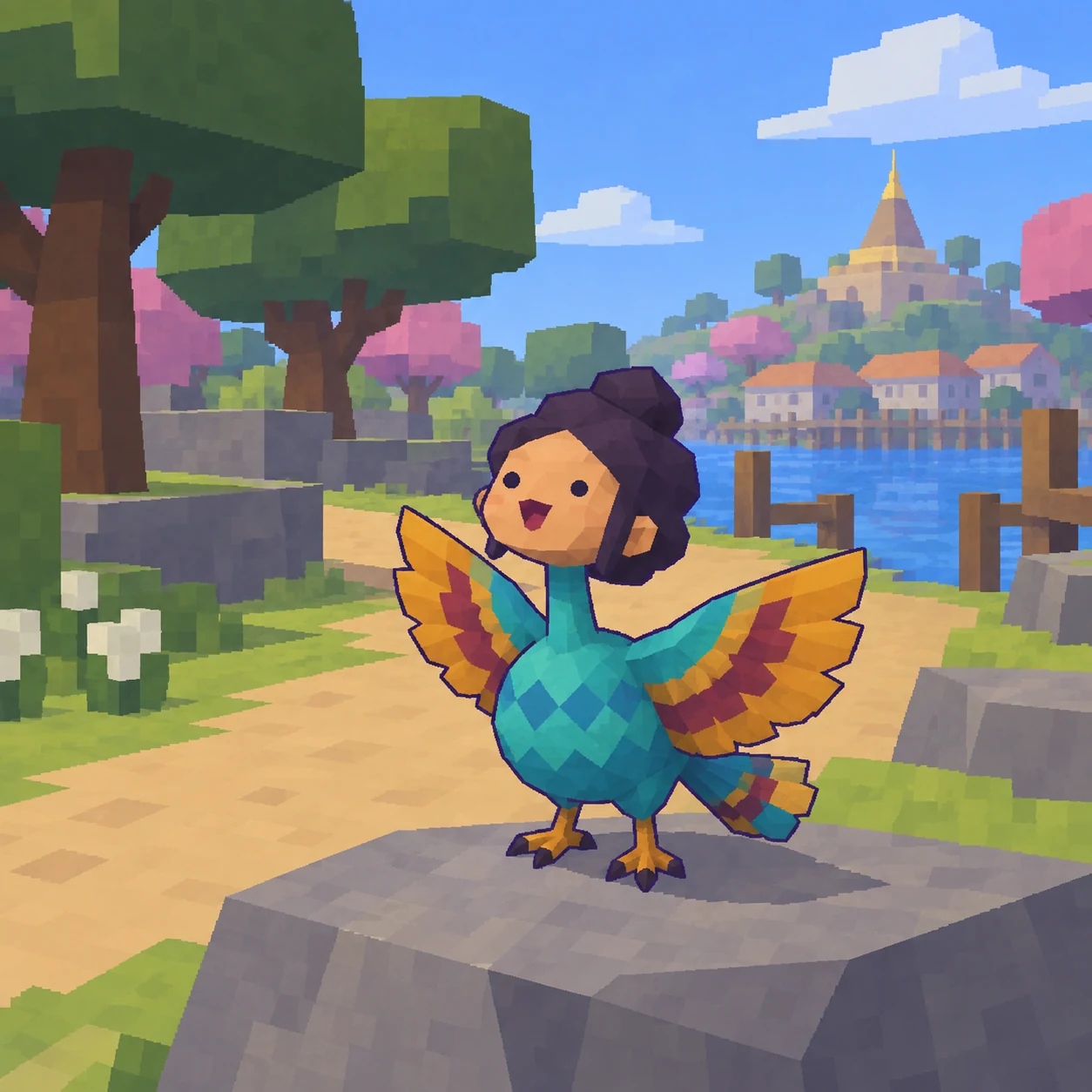
A coherent first group, if these are built: the objects under the stones and the names for Meru's terraces come almost free, since those places are already built. Then Tārā's grove, Tanaduk and the Copper Mountain each offer a different landscape, a small reusable interaction and a bound cast. Add the Four Friends' orchard, printing house and nettle hermitage as short discoveries. The other lands remain independent candidates, not commitments or dependencies. This page expansion itself changes no gameplay.
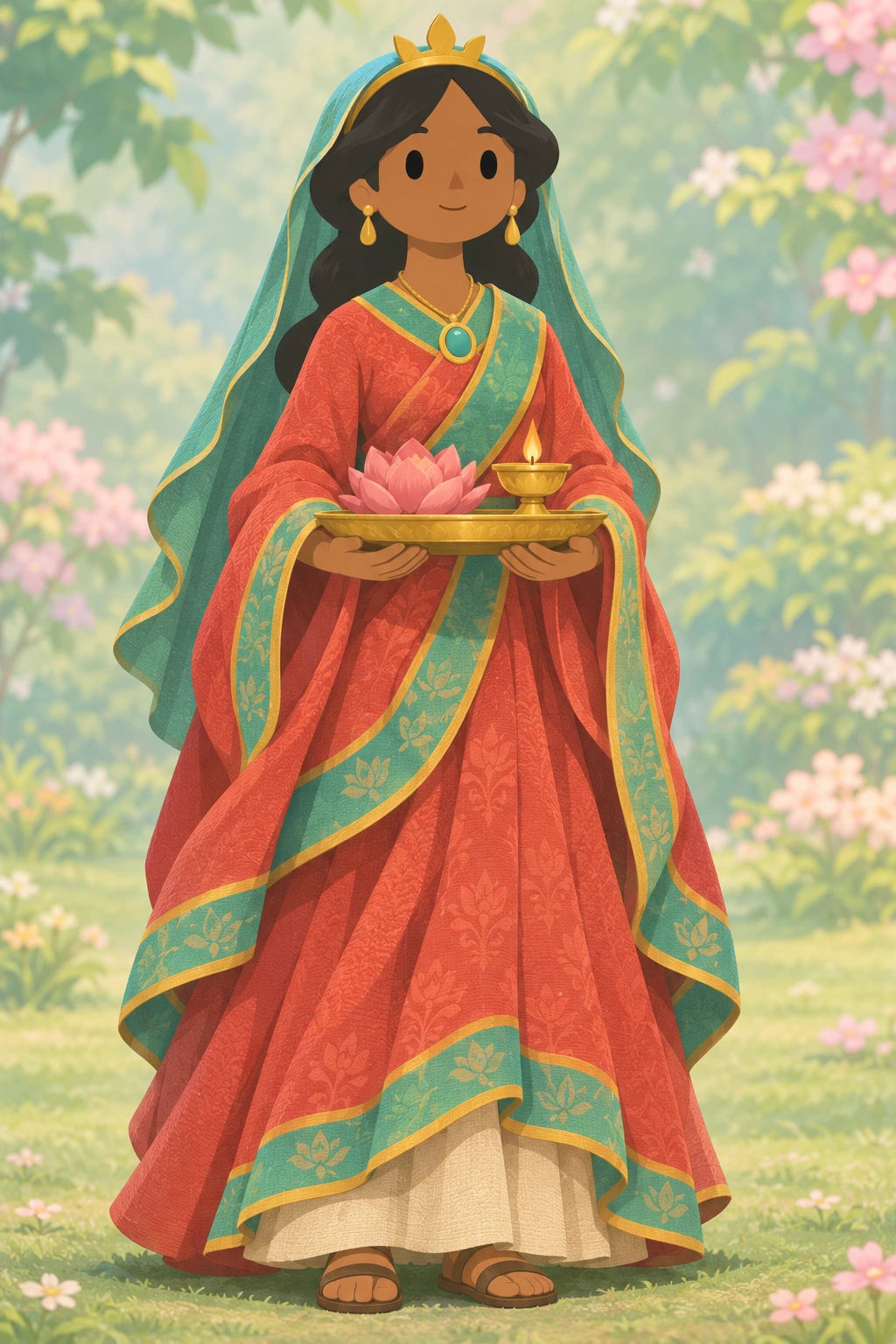
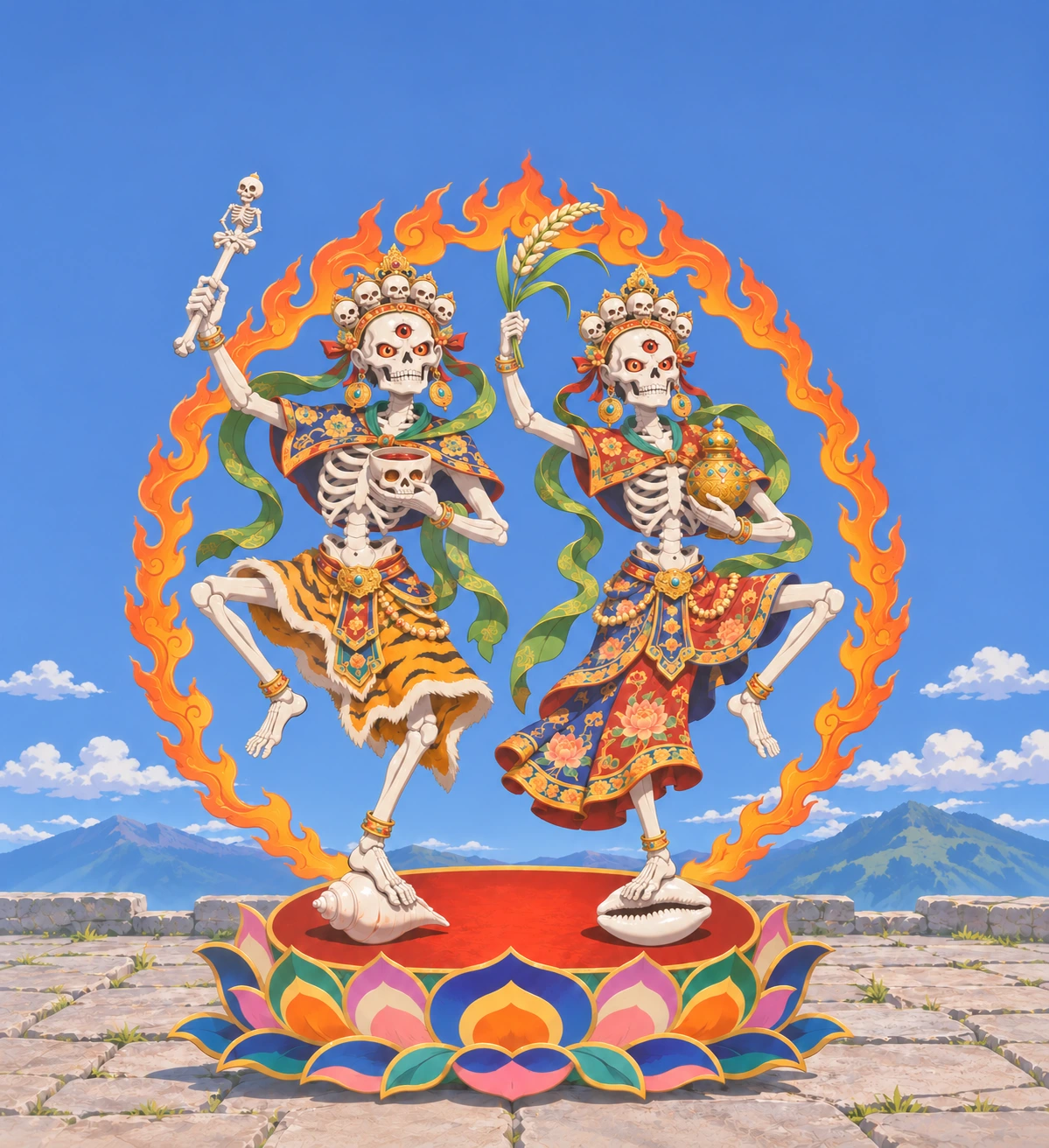
Back to the top of the field note ↑
21

A few words

Amitabha
The Buddha of Boundless Light, whose pure land lies in the west.
Sukhavati
The Land of Bliss, Amitabha's pure land.
Pure land
A world made by a Buddha, where waking up is easy.
Six realms
Gods, titans, humans, animals, hungry ghosts, hells. The places of rebirth.
Wheel of Life
The painting of the six realms, held by Yama.
Thangka
A Tibetan painted scroll, hung in a silk mount.
Stupa
A domed shrine that pilgrims walk around clockwise.
Mantra
A short sacred phrase, said or seen, that does good.
Merit
The good that practice makes, and can be given away.
Hungry ghost
A being with a huge belly and a tiny throat, always starving.
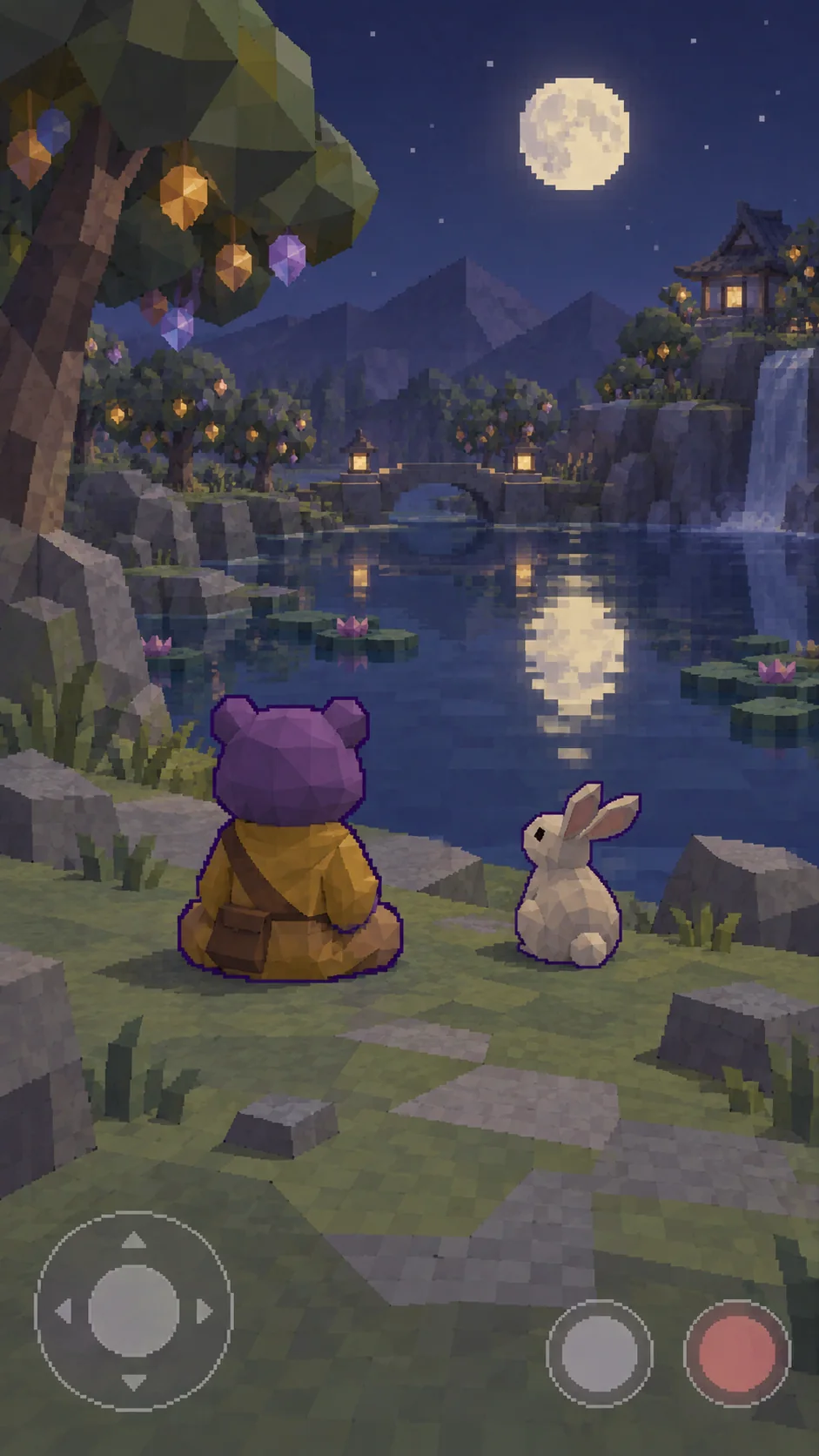
Mala
A string of 108 beads for counting mantras.
Eight lucky signs
Parasol, two fish, vase, lotus, conch, endless knot, banner, wheel.
Mount Meru
The mountain at the centre of the world, with the heavens on and above it.
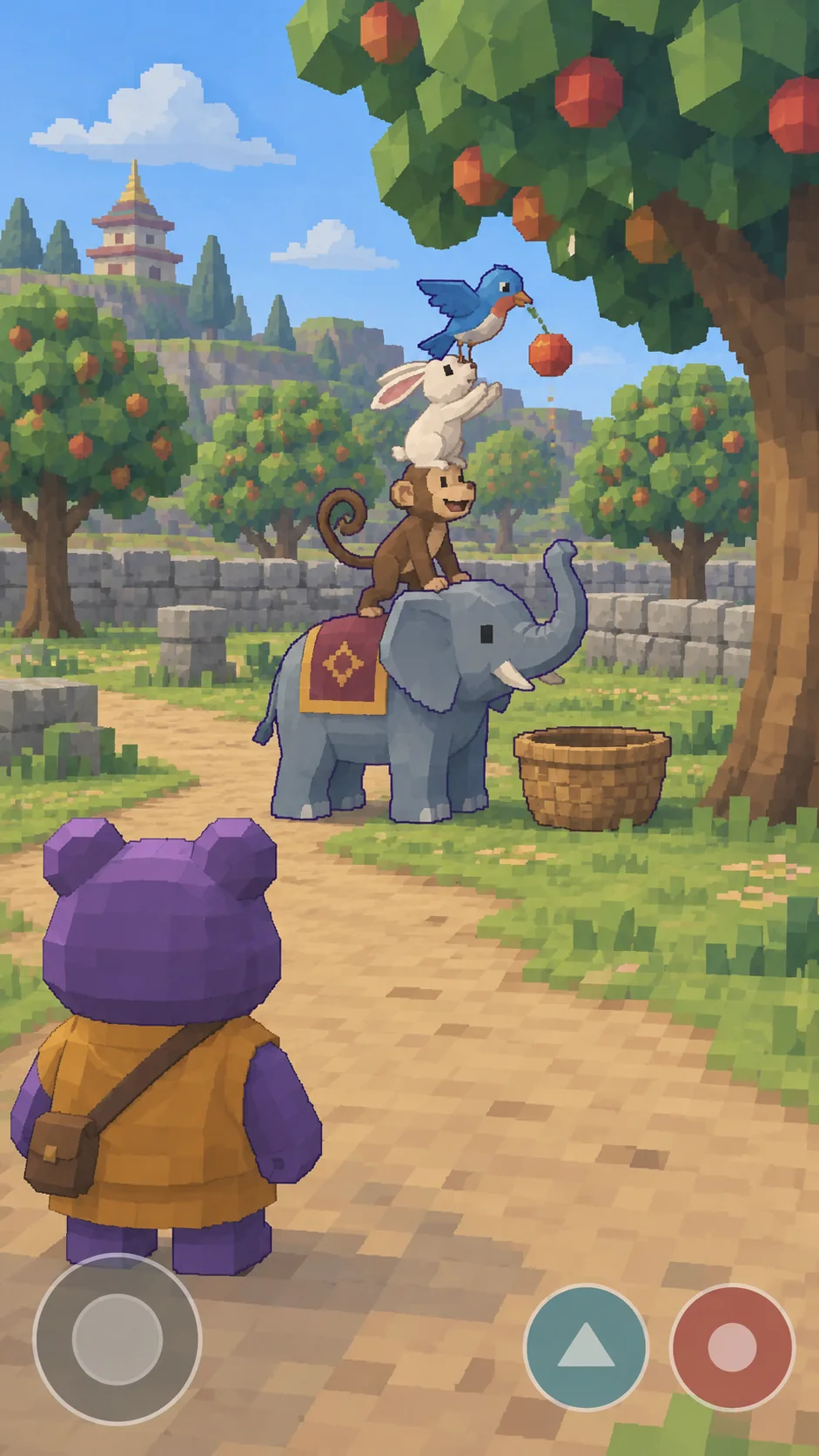
Naga
A water spirit, often a serpent, that guards treasure and teachings.
Four continents
The lands round Meru. Ours is the southern one.
Beyul
A hidden valley in Tibetan tradition, found only when the time is right.
Charnel ground
A place where the dead were left in the open. Meditators went there to face death.
Buddha-field
A field of a Buddha’s activity; “pure land” is a familiar English expression for purified Buddha-fields. A heavenly realm is not automatically one.
Tārā
An awakened female figure especially associated with swift compassionate help. Her forms and presentations vary.
Potalaka
The mountain abode associated with Avalokiteśvara, known in Tibetan as Chenrezig.
Zangdok Palri
The Copper-Coloured Mountain associated with Padmasambhava, also called Guru Rinpoche.
Abhirati
Akṣobhya’s eastern Buddha-field, often translated as the land of joy.
Tushita
A heavenly realm associated with Maitreya; its special inner court is distinguished in relevant traditions.
Shambhala
The hidden kingdom associated with Kālacakra. It is not simply another name for a pure land.
Khechara
A name associated with Vajrayoginī’s pure realm in relevant traditions; spellings and presentations vary.
Ogmin
Tibetan for “none higher,” associated with Akaniṣṭha. Cosmological and tantric uses need to be distinguished.
Kora
A circumambulation: walking around a sacred place, keeping it on the right in the practice reflected by this game.
Pecha
A Tibetan book format made of loose, long leaves, traditionally protected by covers and wrapping.
Tsa-tsa
A small moulded votive image or form, often made from clay.
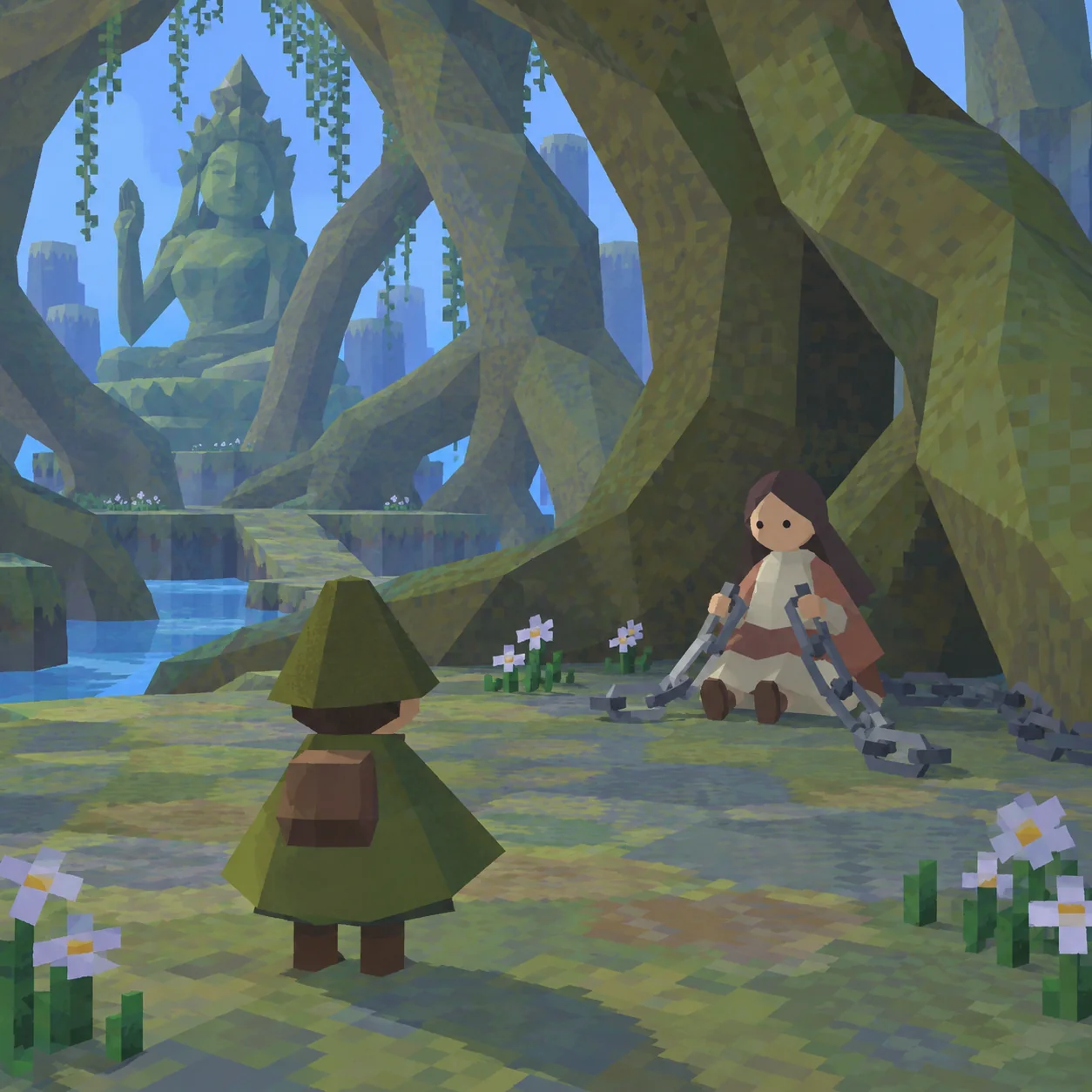
Terma
A treasure teaching or sacred object concealed and later revealed in relevant Tibetan traditions; not ordinary treasure loot.
Vidyadhara
A “knowledge holder,” an accomplished practitioner; the term has particular meanings in different traditions.
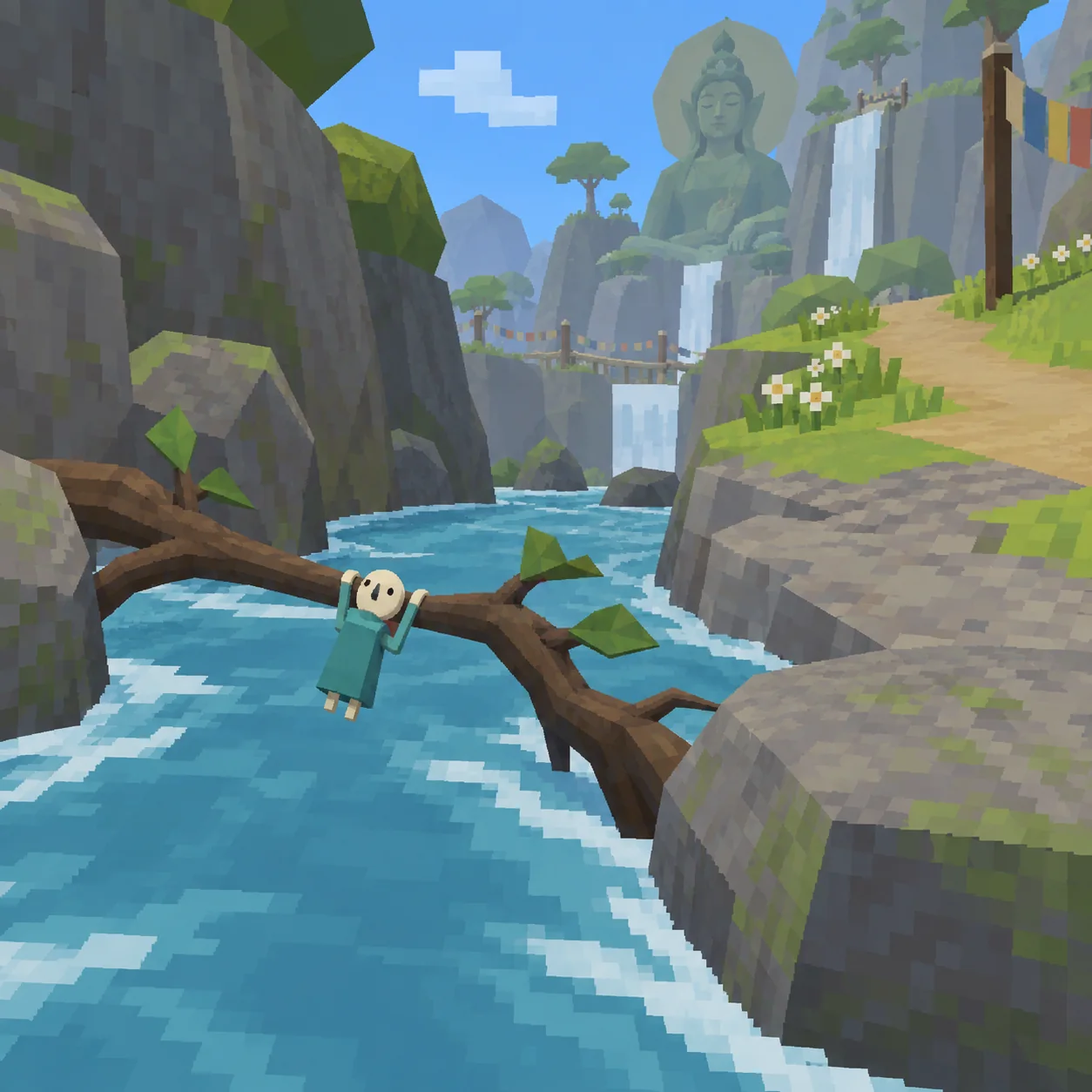
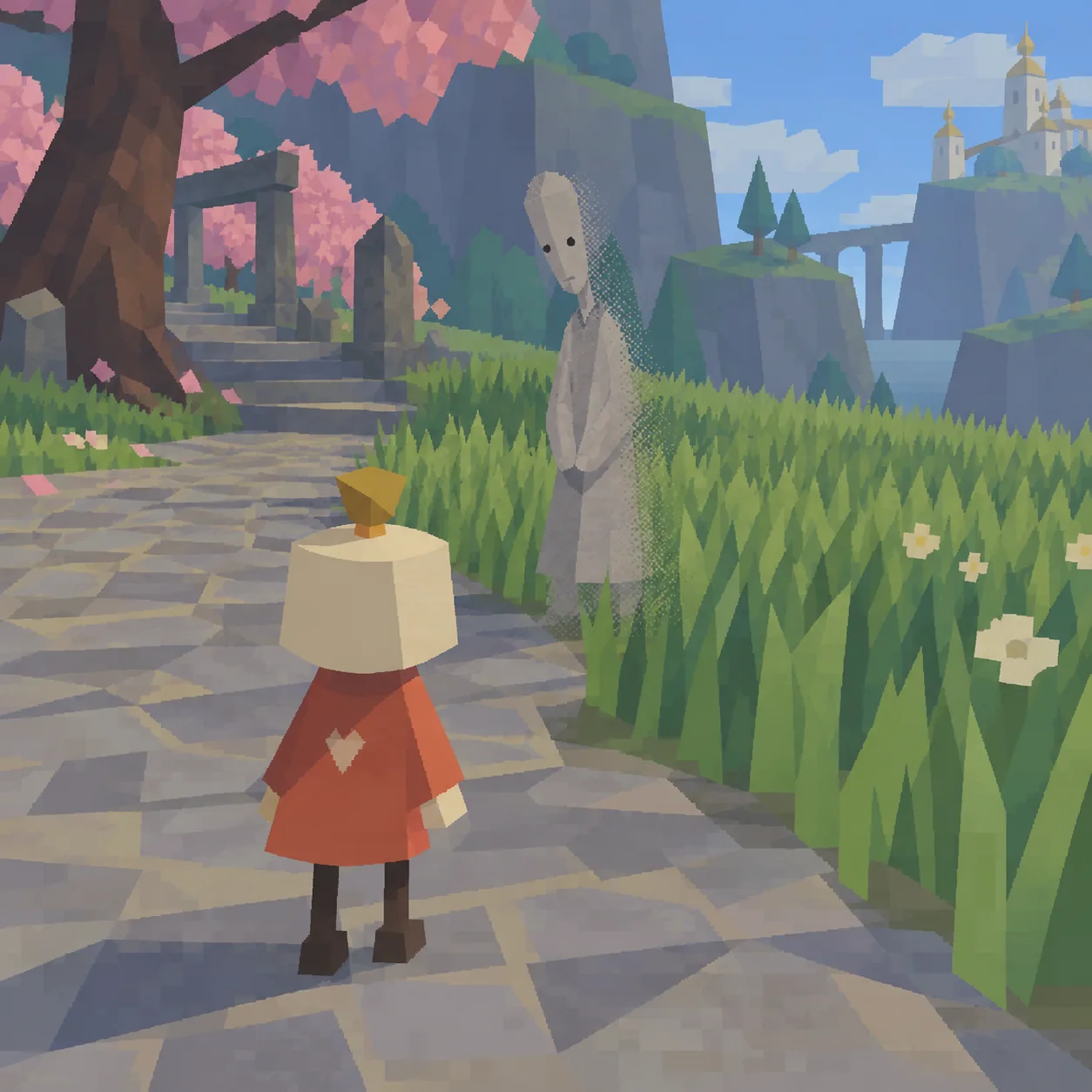
Dakini
A term with several levels of meaning in Vajrayāna, often associated with awakened wisdom and activity; not simply a fairy.
Pilgrimage
The game's free-roam half, named for the Tibetan nekor, circling the sacred places.
Being to free
A Pilgrimage side being, freed by one game of Bodhi Blocks.
Cāmara
The land southwest of ours, across the sea, where the Copper-Coloured Mountain stands; Ngayab in Tibetan.
Rākṣasa
A flesh-eating demon of Indian and Tibetan stories; sinpo in Tibetan.
Tanaduk
The city of medicine where the Medicine Buddha teaches in the Four Medical Tantras.
Three humours
Wind, bile and phlegm, the three principles of Tibetan medicine, rooted in desire, anger and ignorance.
Muni
A sage; the Buddha who appears in each of the six realms in Wheel of Life paintings.
Bardo
The in-between state after death and before rebirth.
Occasional hells
Brief hells where a being is trapped in an ordinary object: a door, a pillar, a broom.
Mahāsiddha
A great adept; Tibetan tradition counts eighty-four, many of them charnel-ground practitioners.
Rolang
A risen corpse in Tibetan stories: it stands up stiffly and cannot bend.
Lungta
The wind horse, printed on prayer flags with a tiger, snow lion, garuda and dragon.
Migö
The wild man of the snows; the yeti.
Tummo
Inner heat, a yogic practice; Milarepa's cotton-clad lineage is famous for it.
Dream yoga
Practice for knowing, while dreaming, that it is a dream.
Desire heavens
The six lowest heavens, from the Four Kings on Meru's slopes up to Māra's.
Māra
The deva who tried to stop the Buddha's awakening, lord of the highest desire heaven.
Eight unfree states
Births with no freedom to practise, among them the long-lived gods and Uttarakuru.
Gaṇḍavyūha
The sutra of the young pilgrim Sudhana's journey to more than fifty teachers.

Character concept

Open full-size image