Tara 19
Tara 19 is white in the Nepalese statue, with two eyes. Her title paraphrases a verse about removing suffering. An MFA Boston painting of this form is titled Tara Removing Suffering.
In traditional art
These images stay with the collections that hold them. Each link opens the collection's own page.
- Traditional Nepal statue, numbered Tara19 (selected series) ↗Nepal; Tibetan Buddhist devotional statue series offered to Lama Zopa · statues circa1980; compilation May2023 · lamayeshe.com©2025 FPMT site policy; photographer unnamed. Local personal/informational copies allowed; no blanket public mirroring/modification licence inferred. Hermes Brandt compilation, May2023.
- Tara in Khadiravana with Twenty-one Atisha Taras, Rubin / HAR65257 ↗Tibet · nineteenth century · himalayanart.orgPhotographed image ©2004 Rubin Museum of Art; HAR research-use policy does not transfer museum image rights.
- Tara removing suffering, Atisha form19 — MFA Boston ↗Tibet · sixteenth century · himalayanart.orgPhotographed image ©2004 Museum of Fine Arts, Boston, all rights reserved; HAR provided reference, not open licence.
Sources
Depiction requirements and work notes
Tara 19: Removing suffering; manifestation of Ārya Tārā
Numbered selected appearance 19: white, 2 facial eyes, left utpala/right vase. All directions are deity-relative.
The model capture recipe or rig source changed. The visible model geometry changed. Rig source changed or is missing: prototypes/prerendered-look/parts/purelands/tara-atisha-19.js Reinspect the model before relying on the recorded defects.
References, criteria, concept and model side by side
Traditional depictions
Exact numbered appearance 19; compare body color, facial eye count, hands and feet. Physical PDF page21. [selected-photo] [lywa-rights]
Object record ↗ · Source image ↗
Shared assembly context for appearance19: twenty-one small Taras occupy rainbow arch above central GreenTara. Individual number19 position is unverified; do not infer an ordinal or treat central GreenTara as numbered member. [atisha-assembly]
Object record ↗ · Source image ↗
Central Tara securely identified by catalogue number; compare historical silk, diadem, leg and hand silhouette. Source-specific coloration/attributes may differ from selected statue. [historical-87266]
Object record ↗ · Source image ↗Criteria
The model must show
- Lineage variant: numbered appearance 19 of the Nāgārjuna–Atiśa series, as the selected Nepal statue photographs (c.1980; Brandt v1.7); not Sūryagupta or Longchen Nyingtik
- Body: white, one face, two arms; no palm or sole eyes
- Posture: own right leg (viewer-left) extended down to a small lotus with the foot touching it; own left leg folded on the seat; thigh, knee, shin, ankle and foot continuous
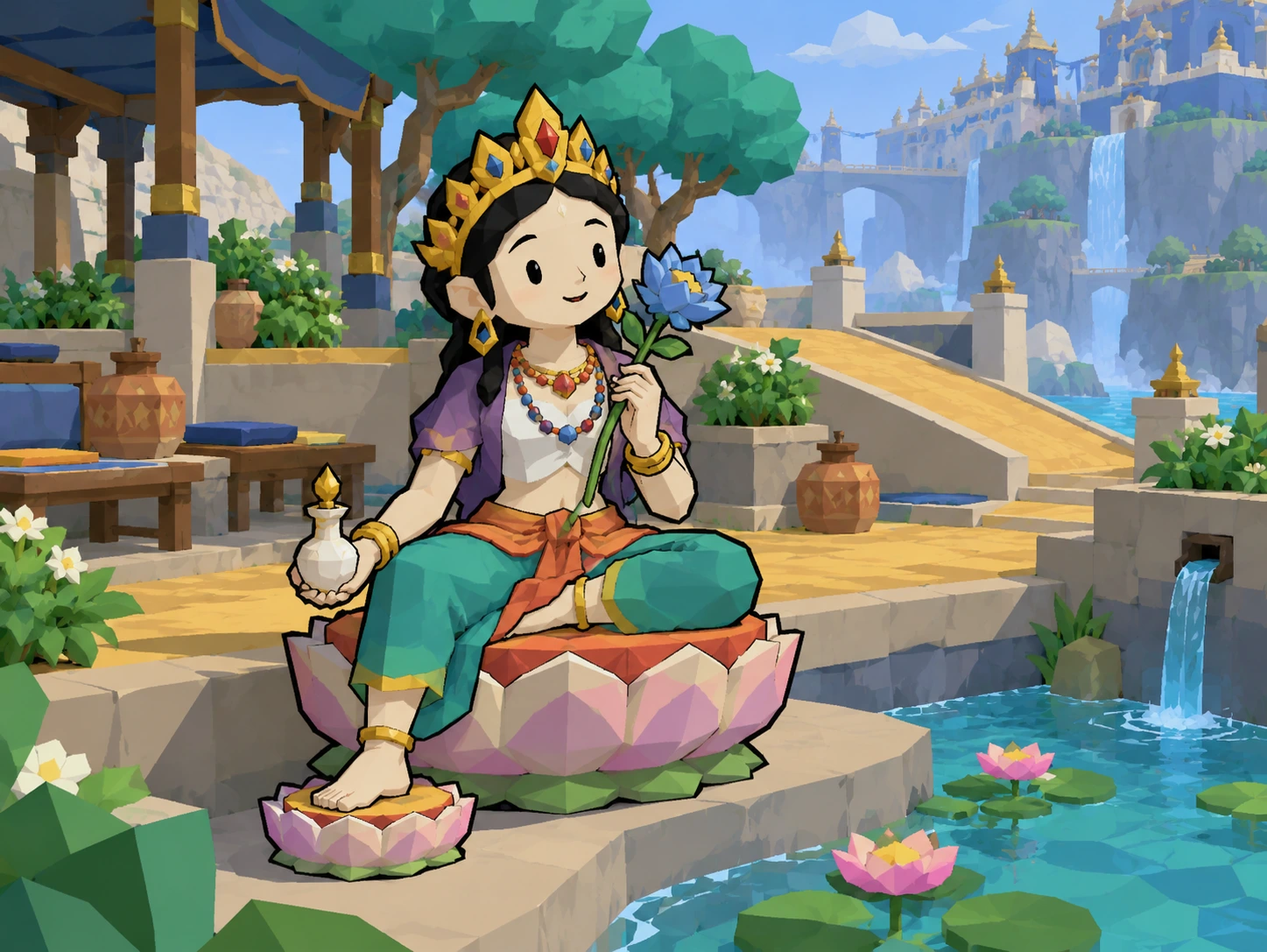
- Right hand: own right palm lowered and outstretched in generosity near or outside the right knee, supporting a small white-family vase with rounded body, neck and lip, touching the palm
- Left hand: own left hand (viewer-right) at the heart holds a green utpala stem, thumb and ring finger meeting and three fingers raised; a blue or blue-white blossom with distinct leaves sits by the left shoulder or ear, visibly joined to the hand
- Dress and ornaments: jewelled diadem over dark hair and topknot, earrings, necklaces, armlets, bracelets and anklets, layered silk lower garment and scarf reading as silk; a graceful youthful feminine body without sexual exaggeration
- Face: peaceful, youthful and feminine; a small closed mouth with at most a slight curve
- Eyes: two facial eyes and no forehead eye; Eyes: solid black silhouettes with no whites, irises, pupils, highlights or glint (project eye rule; a recorded game adaptation, not a claim about traditional painted eyes)
- Seat: lotus and moon seat, with a small lotus under the right foot
- Attendants: none; she is one of the twenty-one around the principal Tārā
The model must not show
- Cartoon smiley face: a wide U-shaped or crescent grin, open laughing mouth, rosy cheek dots or mascot cheeks
- Eye whites, irises, pupils, highlights or glint; glowing white-gold eyes (those belong only to freshly liberated beings)
- Any part of the figure (head, crown, hat, halo, raised hand or held object) touching or passing through its canopy, roof, lintel, pillars, throne back or seat in any capture angle
- A starburst, vajra, weapon or disconnected flower in place of the utpala
- The vase placed on top of the utpala
- Extra arms, weapons or flower-borne emblems from another twenty-one-Tārā lineage
- Seven eyes (longevity White Tārā)
- A red crown jewel standing in for, or mistaken for, a forehead eye
- Drapery reading as armour or a monk's robe
- Hands or attributes mirrored to the wrong side of the figure's own body (own right appears at viewer-left in a front view)
- An oversized vase raised beside the shoulder
Original game concept
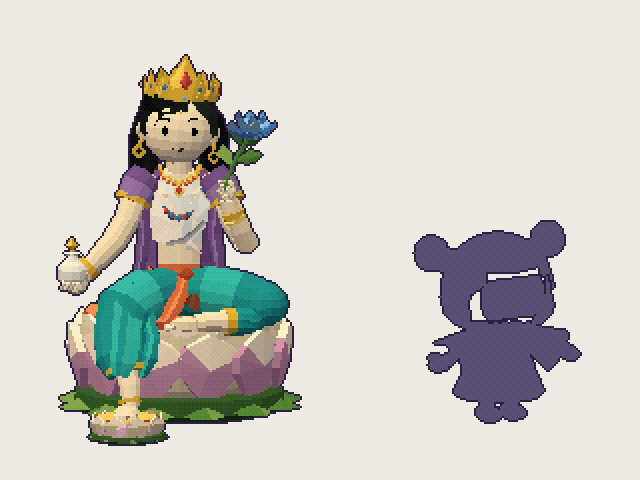
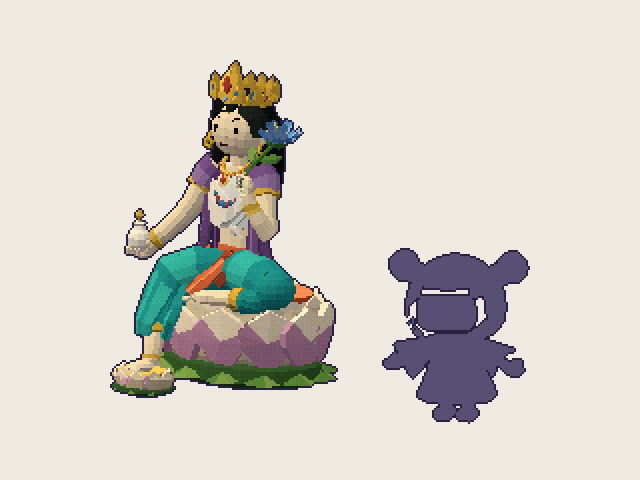
Current 3D model
presence
Depiction requirements
- Identity and series
- Preserve numbered appearance 19 of one Ārya Tārā in the selected circa-1980 Nepal statue series. The repo title is a tracking paraphrase of its praise verse, not a unique cross-lineage Sanskrit identity. [selected-photo] [tara-awakened]
- Body, eyes and expression
- Selected artifact body is white; one face and two arms; 2 visible facial eyes; no palm or sole eyes. Preserve this count. Forehead eye is anatomy, not a red crown jewel. [selected-photo]
- Anatomical legs
- For this selected statue presentation: own right leg (viewer-left, -X in +Z-facing rig) extended/pendant to small lotus; own left leg folded atop lotus/moon seat. Verify foot contact and continuity of knee/shin/ankle, not joint names. [selected-photo] [atisha-critical]
- Left utpala and hand
- Own left hand (viewer-right, +X) at the heart holds a green utpala stem; blue/blue-white blossom by left shoulder/ear, distinct leaves below flower. In chosen game mudra thumb and ring finger meet, other three fingers rise. A starburst, vajra, weapon or disconnected flower is insufficient. [tara-mudra] [selected-photo]
- Right generosity attribute
- Lowered/outstretched own right generosity palm supports a small white-family vase. Show rounded vessel body, neck/lip and small ornament; vase touches palm near/outside right knee. This is a hand-held vase, not an object placed atop the utpala. [selected-photo]
- Feminine presence, silks and jewels
- Preserve youthful feminine presence without sexual exaggeration: graceful neck/torso/limbs, jeweled diadem over dark hair/topknot, earrings, necklaces, armlets, bracelets/anklets, and layered lower silk garment. Broad drapes should read as silk, not armor or a generic monk robe. Fine jewelry may simplify to coherent bands in PS1 geometry. [selected-photo] [atisha-assembly]
- Traditional variation and art authority
- The selected numbered traditional photograph governs this appearance. Generated concept is a game study, not a traditional source; compare historical paintings as variants. Do not combine Suryagupta arms/weapons or Longchen Nyingtik flower-borne emblems with this set. [atisha-overview] [selected-photo]
- Game eyes and iconometry
- Every facial eye, including the third eye where present, stays a solid-black silhouette with no white, pupil, iris, glint or glow. This deliberately differs from painted/statue eyes. Toy proportions, dither and outline are declared game adaptations; no exact traditional iconometric compliance is established. [game-adaptation]
Presentation contract
Ready to build from No readiness block is recorded in the plan.
Setting and sizing rule
A lotus and moon seat with a small lotus under the right foot. Sizing (plan rule R4, not a sourced claim): the opening of any shrine, canopy or pavilion around the figure leaves at least one of the figure's own head-heights of clear air above its tallest point (the diadem, topknot and the utpala blossom) and a clear gap on each side of its widest span (the lowered right hand with its vase and the utpala at the left shoulder); a throne back or aureole sits behind the figure without passing through it; pillars and lintel do not cross the face, hands or held objects in the front or either three-quarter capture.
Recorded variants · 2
- Historical paintings and textual transmissions differ in colour, finger terminology and vessel; this entry follows the numbered Nepal statue
- MFA Boston / HAR 87266: white, low vase palm
Recorded adaptations · 1
- Toy proportions, dither, outline and black eye silhouettes
Where the plan places it · 1
- field turquoise leaves · The west pool (forms 15 to 21)
field-turquoise-leaves.west-pool· character Tara 19: Removing sufferingtara-atisha-19
Contract sources · 8
- Hermes Brandt, The Twenty-One Taras, v1.7 (May 2023): numbered Nepal statue photographs
- Lama Zopa Rinpoche, Tara the Liberator
- Atiśa, Twenty-One Tārās Sādhana, translated and critically edited by James B. Apple, 2023
- Venerable Thubten Chodron, Compassion from Tara (2011)
- Tara in Khadiravana with Twenty-one Atisha Taras, Rubin Museum / HAR 65257
- Himalayan Art Resources, Atisha Twenty-one Taras
- Bodhi Blocks Design Intent and Purelands rig contract
- Tara removing suffering, Atisha form19 — MFA Boston
Model audit and next pass
Evidence basis: visual + source
Recorded observations
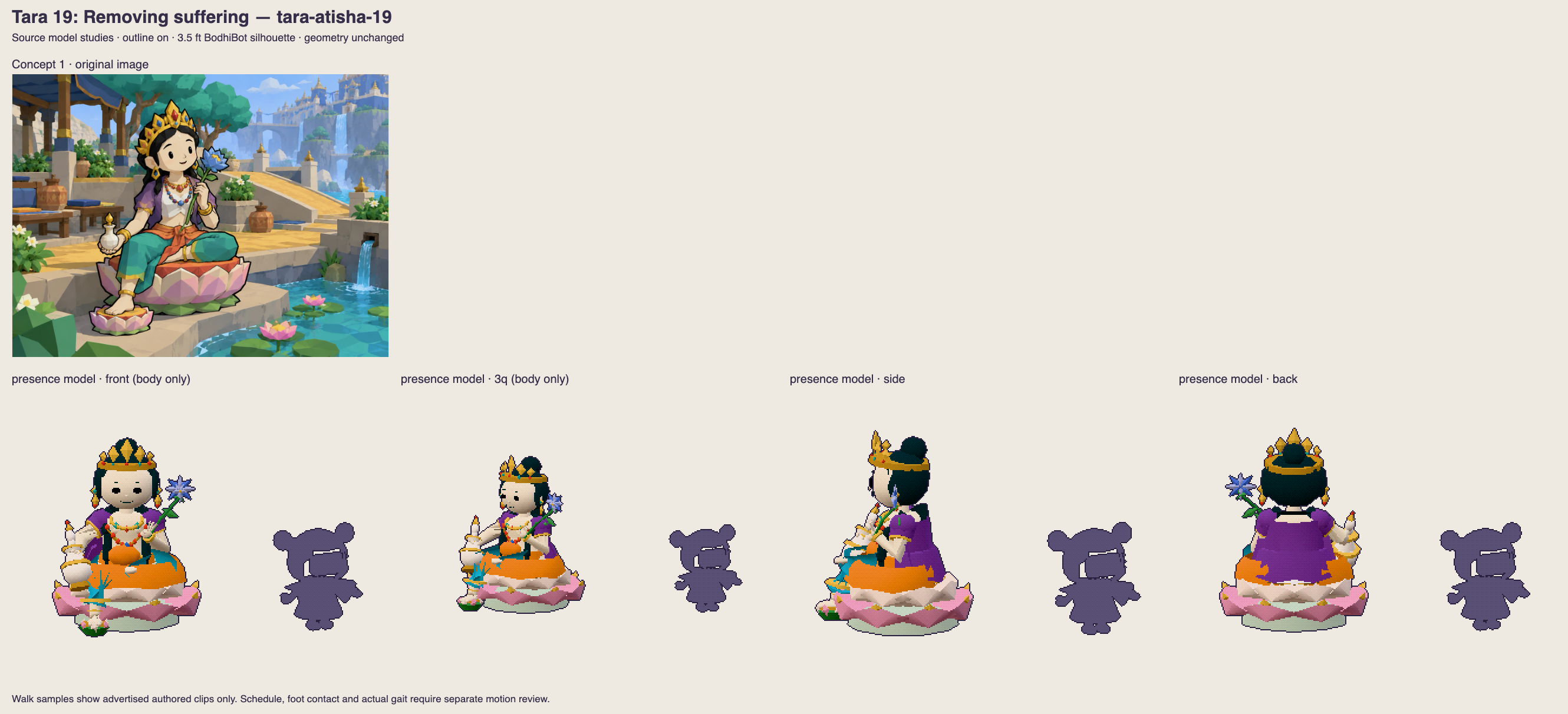
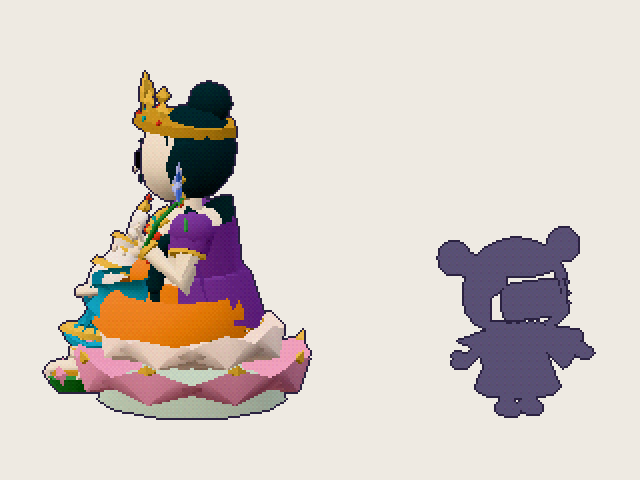
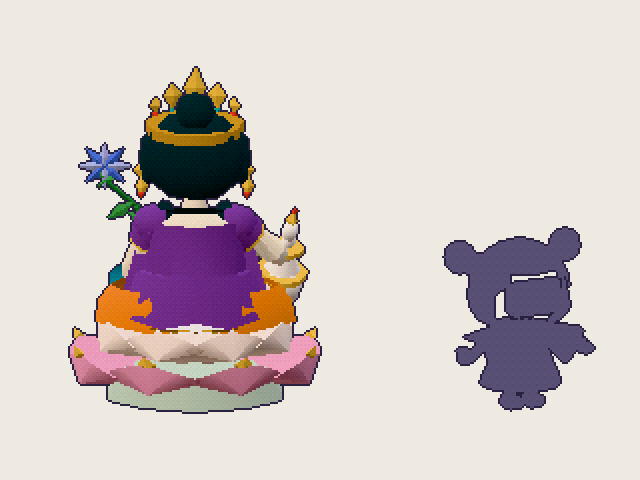
White two-eyed figure, white vase, purple mantle and right pendant foot survive; orange waist tie is authored clothing variation.
The enlarged white vase is high beside the shoulder and clenched hand instead of resting low across/outside the knee as selected source and sixteenth-century painting show.
Directions for a future model pass
Lower outward right generosity hand and white vase toward knee level; remove shoulder-height grip.
Retain two eyes, left flower and right pendant foot; compare the selected statue and MFA HAR87266.
Assessed baseline captures
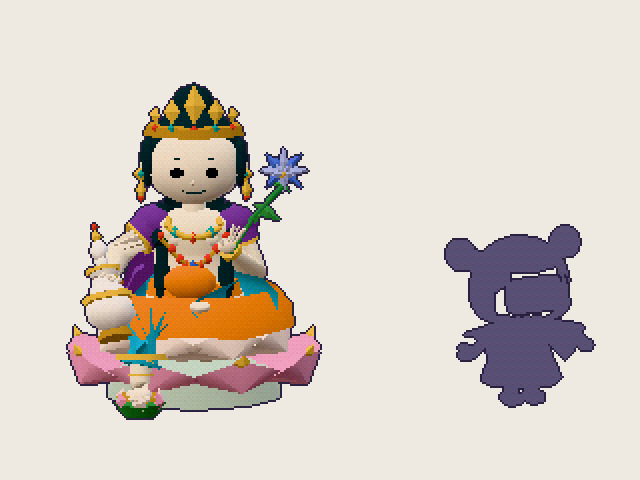
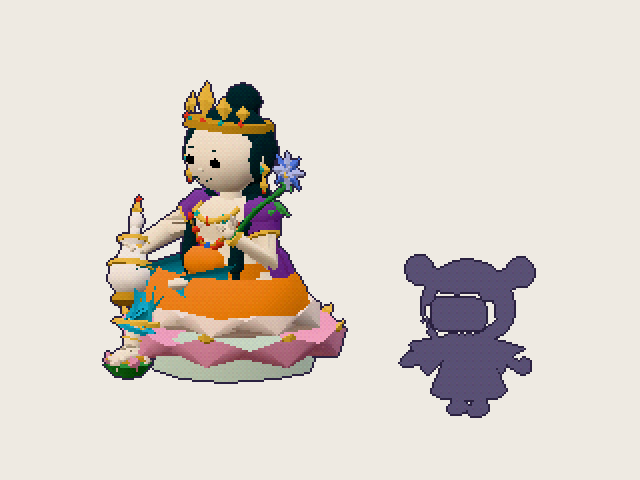
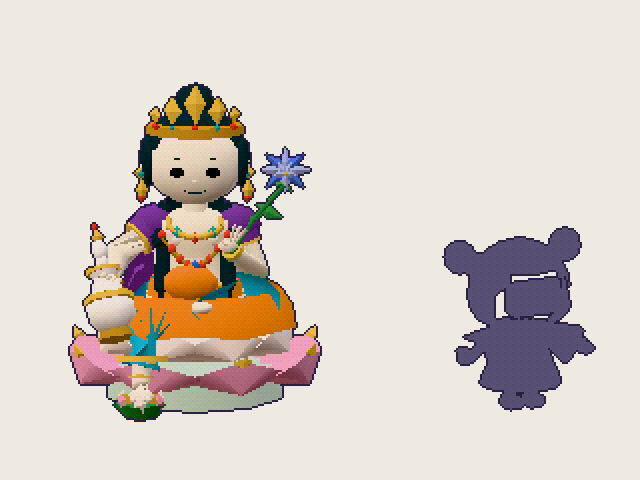
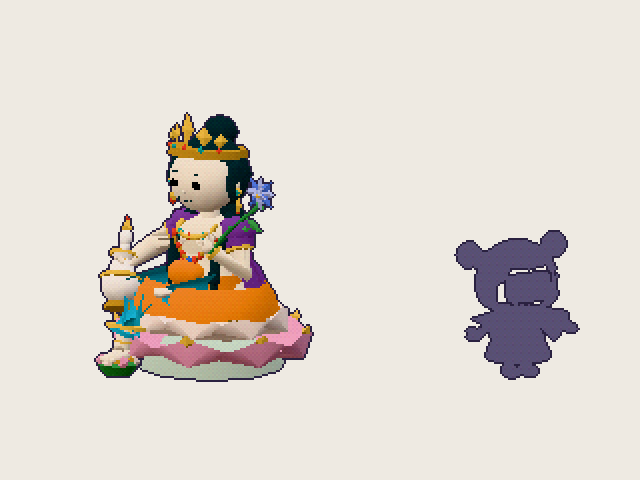
Documented forms and lineage variants · 1
Preserve one identified form consistently. A variant is usable only with its own source and context.
Historical paintings and textual transmissions differ in color, finger terminology and vessel depiction; this entry selects the numbered Nepal artifact rather than a universal Atisha standard.
What not to copy · 4
Mixing another 21-Tara lineage by verse number.
Seven-eyed longevity White Tara anatomy on a numbered white form.
Treating generated concept as the religious authority.
Silently changing numbered selected-artifact attributes from a generic internet color list.
Sources and precise locations · 9
- [selected-photo] Hermes Brandt, The Twenty-One Taras, v1.7 (May 2023): numbered Nepal statue photographs ↗
- [atisha-critical] Atiśa, Twenty-One Tārās Sādhana, translated and critically edited by James B. Apple, 2023 ↗
- [atisha-overview] Himalayan Art Resources, Atisha Twenty-one Taras ↗
- [atisha-assembly] Tara in Khadiravana with Twenty-one Atisha Taras, Rubin Museum / HAR 65257 ↗
- [tara-mudra] Venerable Thubten Chodron, Compassion from Tara (2011) ↗
- [tara-awakened] Lama Zopa Rinpoche, Tara the Liberator ↗
- [lywa-rights] LYWA Policies, Conditions of Use ↗
- [game-adaptation] Bodhi Blocks Design Intent and Purelands rig contract · repository source
docs/DESIGN-INTENT.md - [historical-87266] Tara removing suffering, Atisha form19 — MFA Boston ↗
Assessment freshness and evidence hashes
The frozen snapshot is authored evidence. Regeneration computes current hashes and leaves that snapshot as it is.
{
  "auditFreshness": {
    "status": "stale",
    "reasons": [
      "The model capture recipe or rig source changed.",
      "The visible model geometry changed.",
      "Rig source changed or is missing: prototypes/prerendered-look/parts/purelands/tara-atisha-19.js"
    ]
  },
  "sourceSnapshot": {
    "captureHash": "761050eca80d4d1739624056c80a2cfba0d02f702ddb4f2f949a75f6ae7c9be6",
    "bodyGeometryHash": "0b0eb7b0b71f8c6ea49cc7bd0abff4d6d1ae23a7405169ce5338f05248d607da",
    "sourceHashes": {
      "prototypes/prerendered-look/parts/purelands/tara-atisha-19.js": "db207828e52ef9dd5ccf476a0512ecdc4854aca6411cb9d2edb90e052cb7ced0"
    },
    "captureHashes": {
      "/atlas/audit/characters/tara-atisha-19-66c4229223c4-presence-3q-body.webp": "506aa4b0c0835fc55f0647e6f5b58b2d4c24a81ed3d6eee6fc2f9a793efb7fb0",
      "/atlas/audit/characters/tara-atisha-19-66c4229223c4-presence-back.webp": "3ca1dc4ad19f7b18afc6db99a9ed28a5e1975e7b35170d774ece0a74db8dfd66",
      "/atlas/audit/characters/tara-atisha-19-66c4229223c4-presence-front-body.webp": "142a7a3d6b86a42bdaa268b02cbbee3b6db3cad41a784252cc726939503fb074",
      "/atlas/audit/characters/tara-atisha-19-66c4229223c4-presence-side.webp": "2c275caabe3fdcc621e7dfc11596ffedac61c567adbb451d0e7817b524691570",
      "/atlas/audit/sheets/tara-atisha-19-66c4229223c4.webp": "eb4151e6a93d7808a603f90444b364199b236c982f05d1d16316d651b92d4927",
      "/atlas/characters/tara-atisha-19-761050eca80d-presence-3q.webp": "9b4957db87cfeb46844091c9ea0e25861031a2d73c09fa0f4f41f9627749865c",
      "/atlas/characters/tara-atisha-19-761050eca80d-presence-front.webp": "e88906fa586f75728b7996d884115216f1ce2147f1eeb5ae897f26e207292dab",
      "/atlas/characters/tara-atisha-19-872de7ac38c3-presence-3q.webp": "9b4957db87cfeb46844091c9ea0e25861031a2d73c09fa0f4f41f9627749865c",
      "/atlas/characters/tara-atisha-19-872de7ac38c3-presence-front.webp": "e88906fa586f75728b7996d884115216f1ce2147f1eeb5ae897f26e207292dab"
    },
    "conceptHashes": {
      "/atlas/concepts/tara-atisha-19.webp": "bf24fb93ce21e389ed530dd41de2bffd1f6f7321d38ec12e4dd27c8980ac3013"
    },
    "activeConceptPaths": [
      "/atlas/concepts/tara-atisha-19.webp"
    ]
  },
  "currentSnapshot": {
    "captureHash": "919a0069360990100477f5671f365aeece024837e2eab4e3ecb8a9d3eabb14a4",
    "bodyGeometryHash": "d854672a7a1b4e27d5fd6ab47b2a533627d5812da8c4e8b593f4f3d71413fc3a",
    "activeConceptPaths": [
      "/atlas/concepts/tara-atisha-19.webp"
    ],
    "sourceHashes": {
      "prototypes/prerendered-look/parts/purelands/tara-atisha-19.js": "812d3e9a9e8a021db92c8a540089a930e3b43766d3bb9d8496e5e5d961b44d34"
    },
    "captureHashes": {
      "/atlas/audit/characters/tara-atisha-19-66c4229223c4-presence-3q-body.webp": "506aa4b0c0835fc55f0647e6f5b58b2d4c24a81ed3d6eee6fc2f9a793efb7fb0",
      "/atlas/audit/characters/tara-atisha-19-66c4229223c4-presence-back.webp": "3ca1dc4ad19f7b18afc6db99a9ed28a5e1975e7b35170d774ece0a74db8dfd66",
      "/atlas/audit/characters/tara-atisha-19-66c4229223c4-presence-front-body.webp": "142a7a3d6b86a42bdaa268b02cbbee3b6db3cad41a784252cc726939503fb074",
      "/atlas/audit/characters/tara-atisha-19-66c4229223c4-presence-side.webp": "2c275caabe3fdcc621e7dfc11596ffedac61c567adbb451d0e7817b524691570",
      "/atlas/audit/sheets/tara-atisha-19-66c4229223c4.webp": "eb4151e6a93d7808a603f90444b364199b236c982f05d1d16316d651b92d4927",
      "/atlas/characters/tara-atisha-19-761050eca80d-presence-3q.webp": "9b4957db87cfeb46844091c9ea0e25861031a2d73c09fa0f4f41f9627749865c",
      "/atlas/characters/tara-atisha-19-761050eca80d-presence-front.webp": "e88906fa586f75728b7996d884115216f1ce2147f1eeb5ae897f26e207292dab",
      "/atlas/characters/tara-atisha-19-872de7ac38c3-presence-3q.webp": "9b4957db87cfeb46844091c9ea0e25861031a2d73c09fa0f4f41f9627749865c",
      "/atlas/characters/tara-atisha-19-872de7ac38c3-presence-front.webp": "e88906fa586f75728b7996d884115216f1ce2147f1eeb5ae897f26e207292dab",
      "/atlas/characters/tara-atisha-19-919a00693609-presence-3q.webp": "a7207f2779a5cc292a25b23d5bc9f78017288c4b5f3d173aa81d0fdf90adc6ef",
      "/atlas/characters/tara-atisha-19-919a00693609-presence-front.webp": "f5b63592f4126a4d29412c3f39c3db2505401389ab820b0945fc44024a73ff8a"
    },
    "conceptHashes": {
      "/atlas/concepts/tara-atisha-19.webp": "bf24fb93ce21e389ed530dd41de2bffd1f6f7321d38ec12e4dd27c8980ac3013"
    }
  }
}