Asset families › Walking-height ground
Walking-height ground
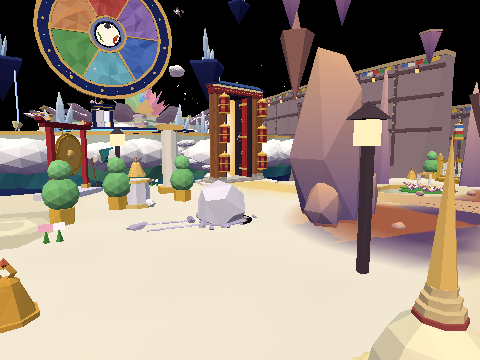
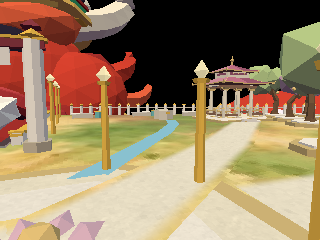
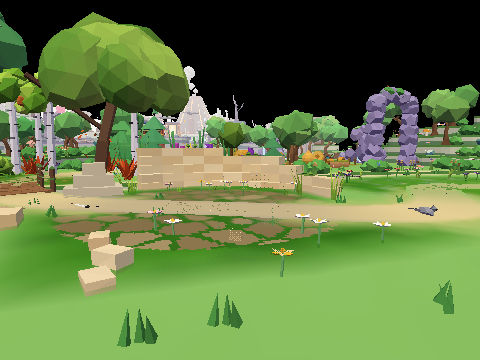
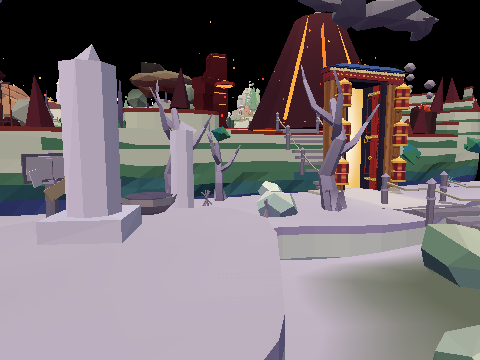
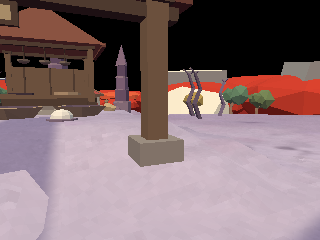
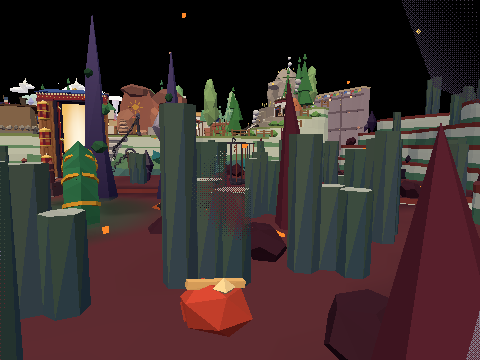
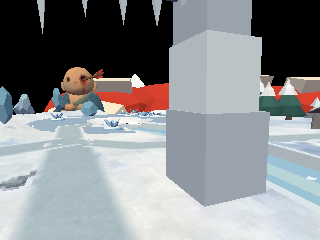
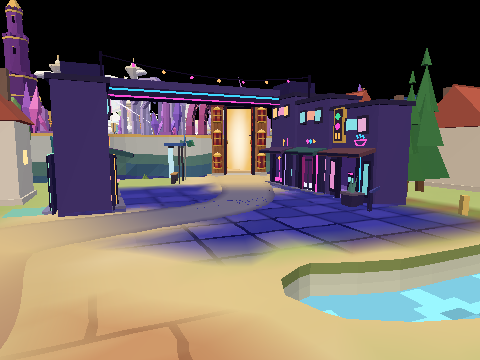
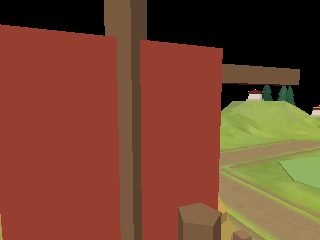
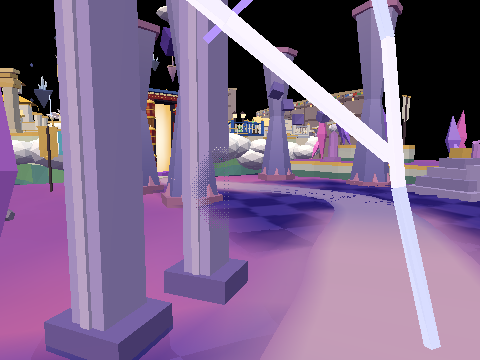
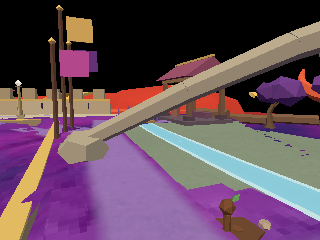
The ground of each realm, old library world beside the current Wheel, seen from walking height. Data: ground.json.
Each camera is 1.0 world unit above the walking floor, using the direct source-world renderer and authored materials. Character roots are hidden. Neither era includes the final screen post-processing pass: these compare ground geometry and materials, not the complete gameplay presentation.
What did the comparison find?
Pre-wheel world.js uses marching-squares terraced triangle geometry. topCol blends each realm’s g1/g2 with spatial fbm noise, higher ledges, sandy water banks, worn route halos, Human fields/plazas and clearing palettes. Per-vertex colour is interpolated across a continuous ground surface; a separate narrow path ribbon and thin clearing decals supply local wear. The world PS1 shader/post-process supplies snapping and dither. It is not a painted bitmap ground texture.
The wheel samples its existing relief lattice and water masks, projects each painted ground sheet across the new land and retained native chart, and closes the exposed floor boundaries with themed cliff or masonry volumes. Each piece owns its connected path network and settlement courts. Path shoulders blend into that same ground; exact vertices and attributes survive static residency and overhead views.
For terrain work, inspect every piece in the live overhead and walking-height views, then edit its canonical segment and ground sheet. Preserve ritual floors, water masks, collision and walkable rises. Connect paths to real entrances and landmarks; keep Human streets appropriate to their buildings, Hungry Ghost pale lavender, Asura deep purple, and Naraka evenly split between fire and snow. Clear the world renderer before manual camera captures to avoid stale depth artifacts.
animal
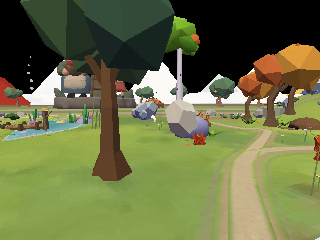
hungry-ghost
naraka
human
asura
deva