Bālāha
Balaha is a miraculous rescue horse. In the Basket's Display, or Karandavyuha, Avalokiteshvara takes this form to save shipwrecked merchants. In that episode the Buddha, in a former life, was the head merchant.
Rescue is the heart of the story, so he is a horse carrying people out of danger, sometimes lifted in flight. The Rubin's account of a Newar temple banner describes him as white. The Tibetan text gives him no wings, crown or jewels, and does not fix his coat or mane.
At Neak Pean, a Khmer sculpture shows people clinging beneath him and near his tail. A separate story, the Valahassa Jataka, makes the Buddha himself the magical horse, as on a LACMA manuscript cover.
In traditional art
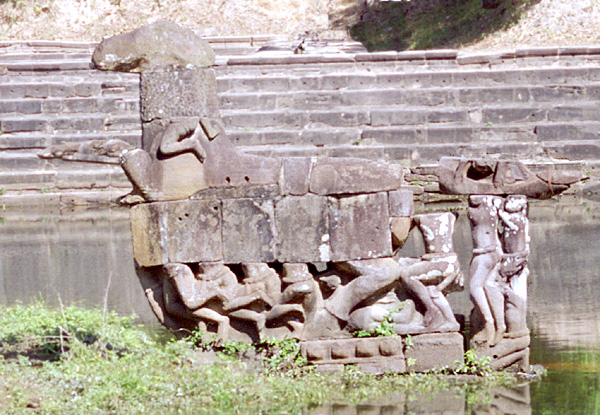
Bālāha rescue horse at Neak PeanCambodia/Khmer, Bayon Buddhist temple context · End12th century; photographed2001Photo by Lozère,2001, released worldwide into public domain; see Commons source record.Object record ↗
In other collections
These images stay with the collections that hold them. Each link opens the collection's own page.
- Valahassa Jātaka manuscript cover — LACMA M.84.171.4b ↗Nepal · Late16th century · collections.lacma.orgPhoto © Museum Associates/LACMA; no open reuse license established. Source link only.
Sources
Depiction requirements and work notes
Bālāha / Balāha, miraculous rescue horse
The identity comes from Avalokiteśvara’s rescue of shipwrecked merchants. White coat is supported by a Newar museum account; the Tibetan episode inspected does not fix coat, mane or tack. Preserve a compassionate wingless horse rather than deriving a new deity template from its name.
The model capture recipe or rig source changed. Reinspect the model before relying on the recorded defects.
References, criteria, concept and model side by side
Traditional depictions
Named rescue sculpture: horse faces image-left; rescued figures cling under the torso and toward tail at image-right. Damaged/reassembled sandstone; compare narrative rescue and mass, not missing anatomy or a Tibetan garment rule. [bal-apsara] [bal-goloubew] [bal-commons-photo]
Object record ↗ · Source image ↗Two-register named narrative cover. White mounted horse appears upper-right, with another equine scene lower-middle; the museum does not label individual panels. Preserve full narrative context. Museum interprets horse as Buddha past life, a distinct branch from Avalokiteśvara Bālāha. [bal-lacma-jataka]
Object record ↗ · Source image ↗Criteria
The model must show
- Lineage variant: the Tibetan Kāraṇḍavyūha account (Toh 116), where Bālāha is Avalokiteśvara's horse manifestation; the white coat is the selected Himalayan visual branch (Rubin C2007.35 written account)
- Body: a recognisable horse with hooves, tail and mane; white coat
- Posture: standing, or lifted in flight to show the crossing
- Face: a horse's face, gentle and compassionate; no human smile
- Eyes: solid black silhouettes with no whites, irises, pupils, highlights or glint (project eye rule; a recorded game adaptation, not a claim about traditional painted eyes)
- Attendants: where the rescue is shown, people cling to or ride the horse
The model must not show
- Cartoon smiley face: a wide U-shaped or crescent grin, open laughing mouth, rosy cheek dots or mascot cheeks
- Eye whites, irises, pupils, highlights or glint; glowing white-gold eyes (those belong only to freshly liberated beings)
- Any part of the figure (head, crown, hat, halo, raised hand or held object) touching or passing through its canopy, roof, lintel, pillars, throne back or seat in any capture angle
- Wings, a crown, jewels, metal tack or a human mudra with no selected depiction behind them
- Wind-horse (Lungta) or Hayagrīva attributes
- A generic decorative or transport horse with no rescue story
Original game concept
Current 3D model
presence
Depiction requirements
- narrative identity
- For this game’s chosen Tibetan account identify Bālāha as Avalokiteśvara’s horse manifestation; the Buddha’s former identity in this episode is the head merchant. [bal-toh116]
- anatomy and rescue
- Retain recognizably equine body, hooves, tail and mane; a lifted/flying horse can communicate crossing danger. Rescue of people is the defining story, rather than ordinary transport or a generic decorative horse. [bal-toh116] [bal-apsara] [bal-goloubew]
- white coat as selected visual branch
- White coat is defensible from the Rubin Newar narrative and the Nepalese manuscript’s horse imagery. Describe it as the selected Himalayan visual branch, not an explicit coat-color prescription of the inspected Tibetan episode. [bal-rubin-banner] [bal-lacma-jataka]
- unspecified attributes
- Do not require wings, crown, jewels, metal tack, mane color or human mudrā: the inspected episode supplies none of these. Any addition needs an exact selected depiction and clear adaptation record. [bal-toh116] [bal-commons-photo]
Presentation contract
Ready to build from No readiness block is recorded in the plan.
Open points recorded with the contract
- No securely identified Tibetan historical depiction; the Tibetan episode fixes no coat, mane or tack
Setting and sizing rule
No throne or shrine. Any shelter clears the whole horse. Sizing (plan rule R4, not a sourced claim): the opening of any shrine, canopy or pavilion around the figure leaves at least one of the figure's own head-heights of clear air above its tallest point (the ears and mane) and a clear gap on each side of its widest span (nose to tail); a throne back or aureole sits behind the figure without passing through it; pillars and lintel do not cross the face, hands or held objects in the front or either three-quarter capture.
Recorded variants · 2
- Valahassa Jātaka (LACMA M.84.171.4b): the horse is the Buddha's past life
- Khmer Neak Pean sculpture: Lokeśvara as Bālāha with people clinging beneath
Recorded adaptations · 0
Where the plan places it · 1
- human · Potalaka, the white crag
human.potalaka· character Balāha, the cloud horsebalaha
Contract sources · 6
- 84000: The Basket’s Display / Kāraṇḍavyūha (Toh 116)
- APSARA National Authority: Neak Pean
- Victor Goloubew: Le Cheval Balaha, BEFEO27 (1927), pp223–237
- Rubin: Newar temple banner C2007.35
- LACMA: Valahassa Jataka manuscript cover M.84.171.4b
- Lozère: Neak-Pean Balaha photo record
Model audit and next pass
Evidence basis: visual + source; original concept, canonical front/three-quarter and multi-angle audit sheet inspected 2 October 2026; traditional artifacts viewed in Chrome, no ritual or runtime acceptance
Recorded observations
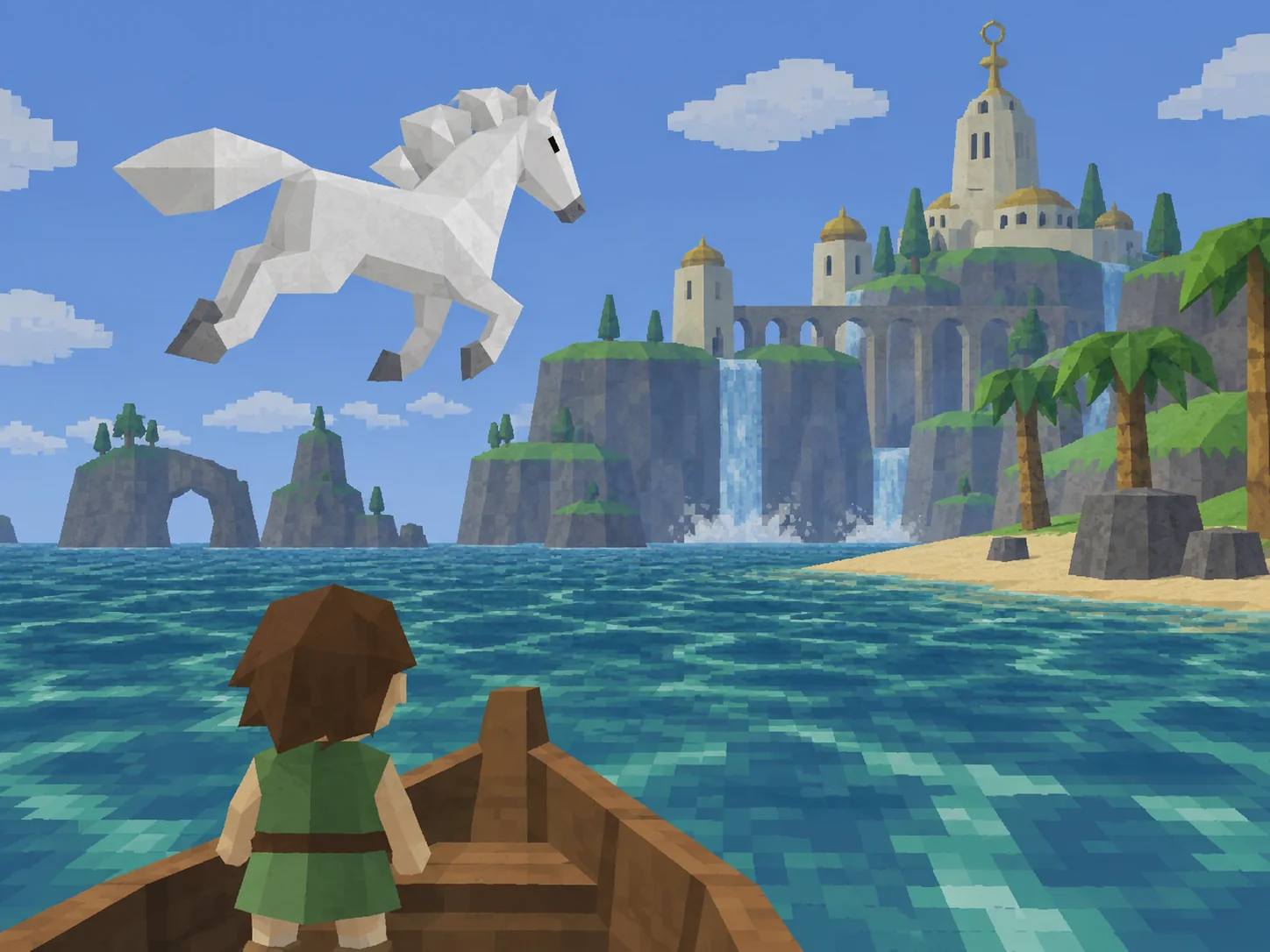
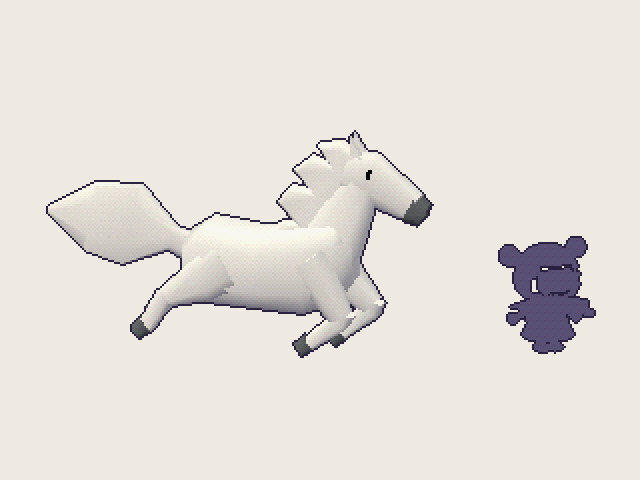
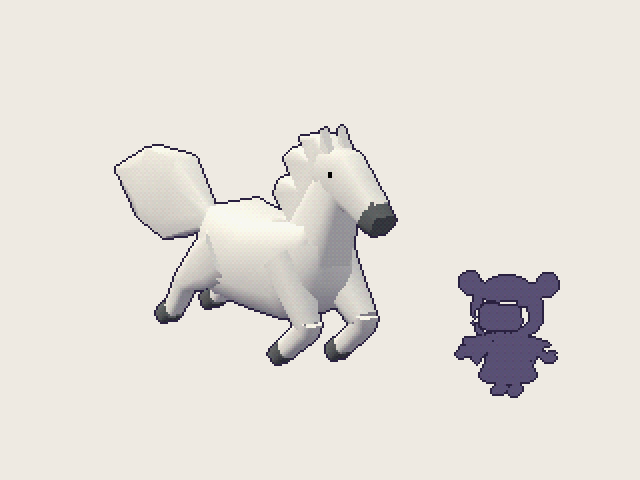
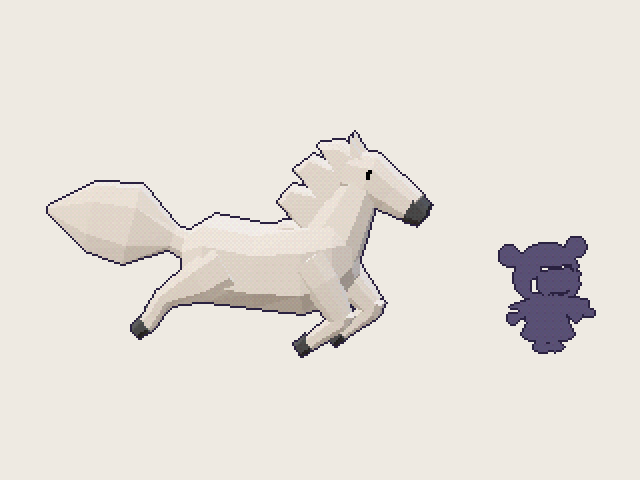
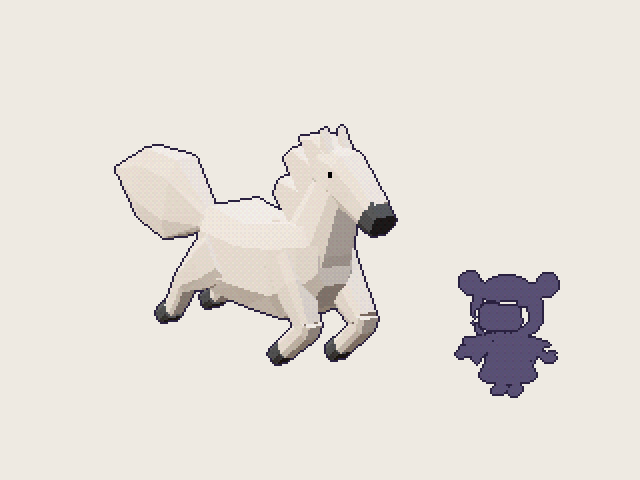
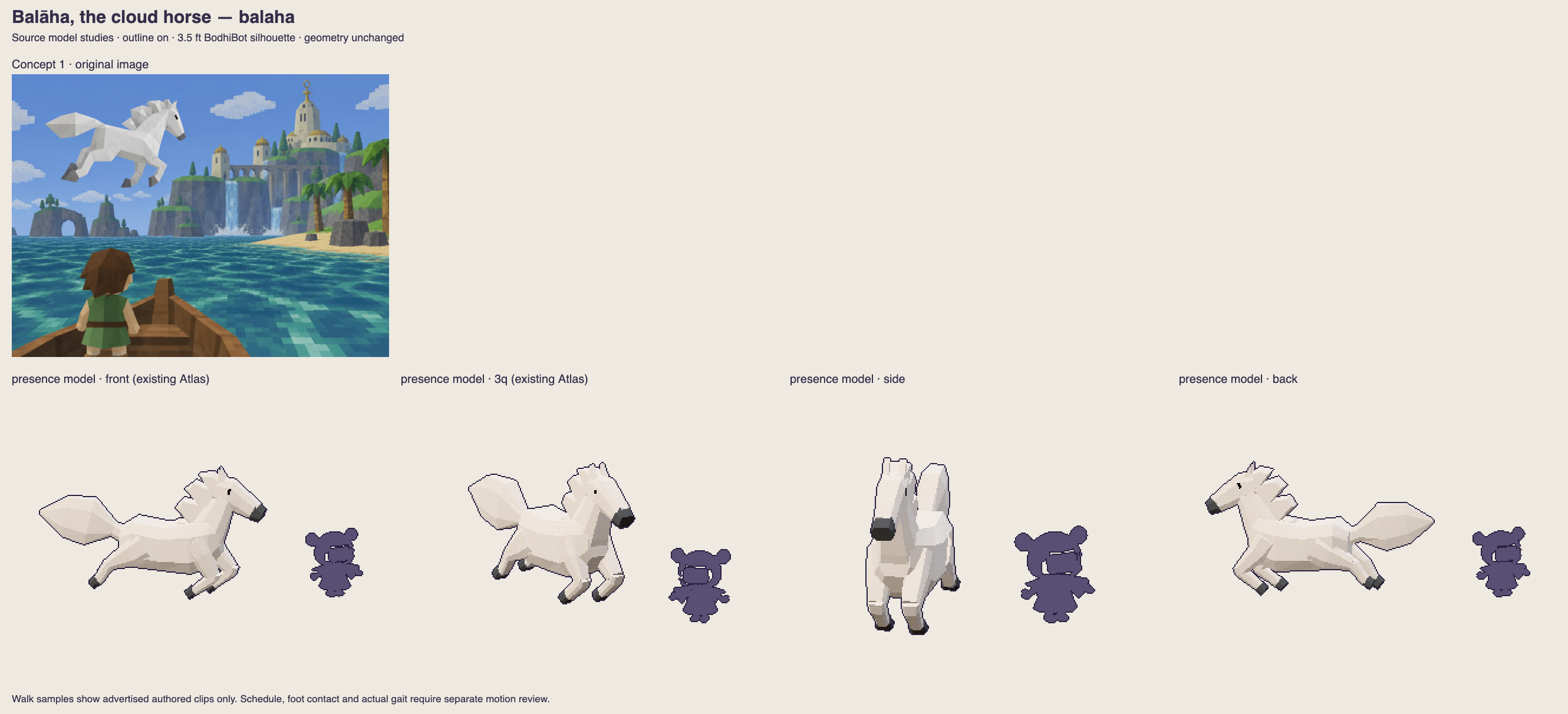
Concept shows an unadorned white horse flying over water; canonical front, three-quarter, side and back images retain white hide, faceted mane and tail, black hooves/muzzle/eyes and lifted knees, without wings or tack.
balaha.js names an unadorned cloud horse and builds continuous equine volumes with hoof/mane/tail geometry. The game’s floating pose and broad faceting support its authored toy register.
No rescued rider is shown in the current isolated captures; rescue identity currently depends on name/world context. This is a narrative omission or deliberate simplification, not grounds to add an arbitrary ritual crown.
The current white appearance agrees with the selected Newar written-color branch; no inspected Tibetan passage establishes white as mandatory. Narrative identity must remain distinct from the Buddha horse of the Jātaka variant.
Directions for a future model pass
P1 — State the selected Avalokiteśvara/Kāraṇḍavyūha identity in the asset guide, keeping Jātaka variant captions separate.
P2 — Preserve wingless white equine silhouette, simple mane/tail and lifted limbs; refine anatomy from actual equine mass in named artifacts without turning damaged Khmer remains into a complete anatomy blueprint.
P2 — If later showing a rescue episode, use source-supported rider/clinging figures or a clear contextual encounter. Do not invent crown/tack merely to make the horse look sacred.
Assessed baseline captures
Documented forms and lineage variants · 2
Preserve one identified form consistently. A variant is usable only with its own source and context.
Buddha-past-life horse
The LACMA cover is explicitly Valahassa Jātaka and its museum account identifies the Buddha as the magical horse. Preserve that alternate narrative identity; do not relabel the work as an illustration of Avalokiteśvara’s Tibetan episode. [bal-lacma-jataka]
Khmer rescue sculpture
Neak Pean is a named Lokeśvara/Bālāha narrative sculpture, with people clinging underneath/near tail. This provides rescue composition and equine mass, not Tibetan iconometric costume rules. [bal-apsara] [bal-goloubew] [bal-commons-photo]
What not to copy · 2
Do not conflate sacred horses
Do not identify Bālāha automatically with wind horse/Lungta, Hayagrīva or every white horse; preserve the named rescue story. [bal-toh116] [bal-apsara]
Do not count unrelated detail images
Rubin’s available banner details did not show the horse episode. Use that source for its written white-horse account, not a falsely captioned horse reference image. [bal-rubin-banner]
Sources and precise locations · 6
- [bal-toh116] 84000: The Basket’s Display / Kāraṇḍavyūha (Toh 116) ↗
- [bal-lacma-jataka] LACMA: Valahassa Jataka manuscript cover M.84.171.4b ↗
- [bal-apsara] APSARA National Authority: Neak Pean ↗
- [bal-goloubew] Victor Goloubew: Le Cheval Balaha, BEFEO27 (1927), pp223–237 ↗
- [bal-commons-photo] Lozère: Neak-Pean Balaha photo record ↗
Assessment freshness and evidence hashes
The frozen snapshot is authored evidence. Regeneration computes current hashes and leaves that snapshot as it is.
{
  "auditFreshness": {
    "status": "stale",
    "reasons": [
      "The model capture recipe or rig source changed."
    ]
  },
  "sourceSnapshot": {
    "captureHash": "1e82f5923dadcbc91afd2e441ac7d570ab65c7093dcfb41aba57fe6bdff4a51f",
    "bodyGeometryHash": "6a2234de69b34f252ccac44f13a09cf81d328f2971e7fa48b5029559c82376ae",
    "sourceHashes": {
      "prototypes/prerendered-look/parts/purelands/balaha.js": "bb9edaee5a29a8d1e9b729caa6f0583979a1a2c69e9debc03637c9d0d97efa9e"
    },
    "captureHashes": {
      "/atlas/audit/sheets/balaha-dfb028f707d3.webp": "ca7cbcd04566a9b1edf5bbff63e2268d86b4ae972319e4b4b764a56cb1f035eb",
      "/atlas/characters/balaha-1e82f5923dad-presence-3q.webp": "22d2040169f8e2efb979e2c20f67e5ac632abdd756f15e283869d71ca0dd276b",
      "/atlas/characters/balaha-1e82f5923dad-presence-front.webp": "76c67509e0fd616eece34273f794ea1d3b86a84d4bf4dcaa3e75919512c5cc6c",
      "/atlas/characters/balaha-b964167b7b7c-presence-3q.webp": "22d2040169f8e2efb979e2c20f67e5ac632abdd756f15e283869d71ca0dd276b",
      "/atlas/characters/balaha-b964167b7b7c-presence-front.webp": "76c67509e0fd616eece34273f794ea1d3b86a84d4bf4dcaa3e75919512c5cc6c"
    },
    "conceptHashes": {
      "/purelands/concepts/balaha.webp": "c24fa4ce57a54859cfec3b65707aa123228e94cc4ce3cb30b81ea59b02ecb9f1"
    },
    "activeConceptPaths": [
      "/purelands/concepts/balaha.webp"
    ]
  },
  "currentSnapshot": {
    "captureHash": "286f453090fd082294f1e082fbc4396333a108059da96999e37a53cf5e03db67",
    "bodyGeometryHash": "6a2234de69b34f252ccac44f13a09cf81d328f2971e7fa48b5029559c82376ae",
    "activeConceptPaths": [
      "/purelands/concepts/balaha.webp"
    ],
    "sourceHashes": {
      "prototypes/prerendered-look/parts/purelands/balaha.js": "bb9edaee5a29a8d1e9b729caa6f0583979a1a2c69e9debc03637c9d0d97efa9e"
    },
    "captureHashes": {
      "/atlas/audit/sheets/balaha-dfb028f707d3.webp": "ca7cbcd04566a9b1edf5bbff63e2268d86b4ae972319e4b4b764a56cb1f035eb",
      "/atlas/characters/balaha-1e82f5923dad-presence-3q.webp": "22d2040169f8e2efb979e2c20f67e5ac632abdd756f15e283869d71ca0dd276b",
      "/atlas/characters/balaha-1e82f5923dad-presence-front.webp": "76c67509e0fd616eece34273f794ea1d3b86a84d4bf4dcaa3e75919512c5cc6c",
      "/atlas/characters/balaha-286f453090fd-presence-3q.webp": "5b685938e6f3076c2037e968b84f23b0e7cec9aad2f912bbb7ca394012ecc1bd",
      "/atlas/characters/balaha-286f453090fd-presence-front.webp": "d02bce162aa8425a2ccdfb9efa5fa1b4c15081aa0de0c3c3e41ead5455dfe333",
      "/atlas/characters/balaha-b964167b7b7c-presence-3q.webp": "22d2040169f8e2efb979e2c20f67e5ac632abdd756f15e283869d71ca0dd276b",
      "/atlas/characters/balaha-b964167b7b7c-presence-front.webp": "76c67509e0fd616eece34273f794ea1d3b86a84d4bf4dcaa3e75919512c5cc6c"
    },
    "conceptHashes": {
      "/purelands/concepts/balaha.webp": "c24fa4ce57a54859cfec3b65707aa123228e94cc4ce3cb30b81ea59b02ecb9f1"
    }
  }
}