Sudhana
Sudhana, Nor bzang in Tibetan, is a head merchant's son who makes a long pilgrimage to receive teaching from spiritual friends. His story is told in the Stem Array, or Gandavyuha. He is a lay seeker on the bodhisattva path, not a Buddha.
When he visits Avalokiteshvara on Potalaka he pays homage with palms joined. The 84000 translators read him as a young adult. Borobudur shows him prince-like, while Chinese art makes him a chubby child attendant called Shancai.
A painted wooden figure at the Met has long loose sleeves, a tilted head and hands pressed together. A bronze of 1641 gives him a child's hair tufts, a looping scarf and a lotus base.
In traditional art
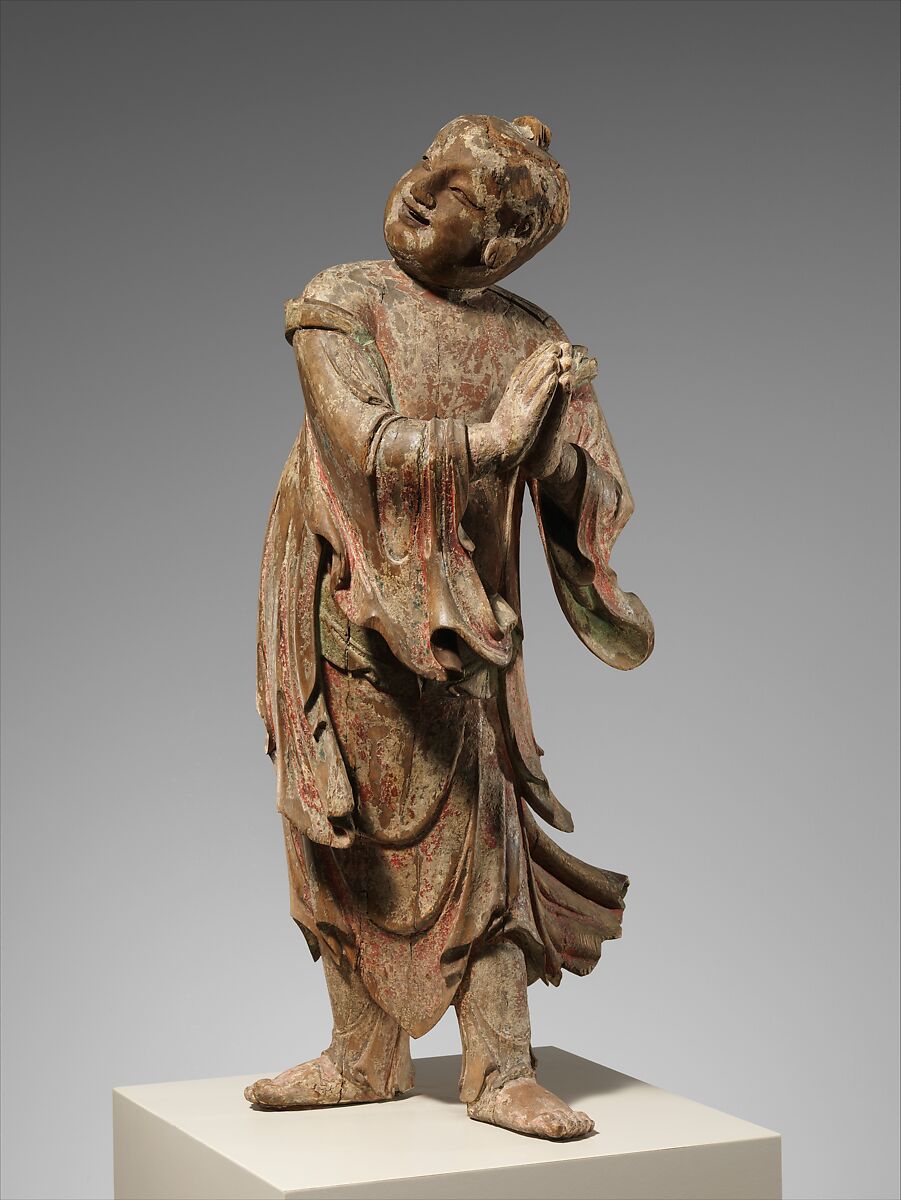
Pilgrim Sudhana — Met 42.25.6China, Ming dynasty · Late 15th–early 17th centuryPublic Domain, explicitly marked by The Met.Object record ↗
In other collections
These images stay with the collections that hold them. Each link opens the collection's own page.
- Sudhana — Met loan L.2025.31a,b ↗China, Ming imperial workshop · 1641 · metmuseum.orgImage © The Metropolitan Museum of Art, photo Oi-Cheong Lee; restricted loan image. Source link only; no reuse license established.
Sources
Depiction requirements and work notes
Sudhana (Nor bzang), head merchant’s son and young pilgrim
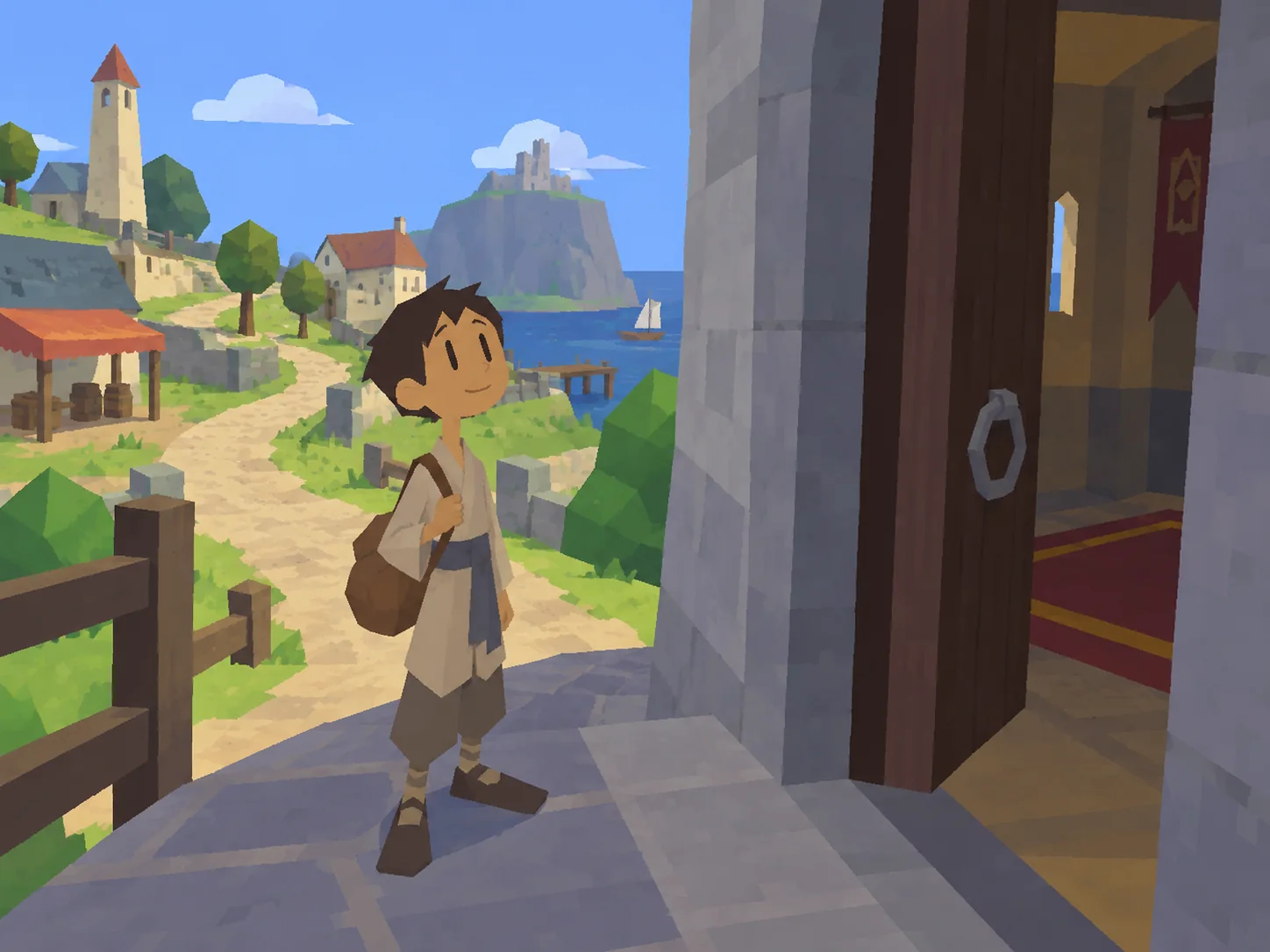
Sudhana is a seeker receiving instruction from spiritual friends. His pilgrimage and homage are source-supported; the game’s travel bag, ivory tunic and blue sash are authored wardrobe. The child form is a valid regional visual branch, while the 84000 introduction reads him as a young adult in the narrative.
The model capture recipe or rig source changed. Reinspect the model before relying on the recorded defects.
References, criteria, concept and model side by side
Traditional depictions
Named child pilgrim stands with palms joined, loose long sleeves and tilted attentive head. Actual wood sculpture; an East Asian Sudhana branch, not a Tibetan mandatory costume. [sud-met-wood]
Object record ↗ · Source image ↗Named imperial bronze child: palms together at chest, joyful upward face, child hair tufts, looping scarf, draped lower garment and lotus pedestal. Material gilding does not prescribe Sudhana’s skin color. [sud-met-bronze]
Object record ↗ · Source image ↗Criteria
The model must show
- Status: a lay pilgrim on the bodhisattva path, not a Buddha and not an awakened figure; the library covers him as a seeker
- Lineage variant: the Tibetan Gaṇḍavyūha narrative (Toh 44-45); child or young adult is an explicit recorded choice
- Body: a human youth, one face, two arms; no Buddha marks
- Hands: at the Potalaka visit, palms joined in homage; the travelling idle may differ
- Dress: a lay youth's clothing
- Face: attentive and joyful as a human youth; a small mouth, not a cartoon grin
- Eyes: solid black silhouettes with no whites, irises, pupils, highlights or glint (project eye rule; a recorded game adaptation, not a claim about traditional painted eyes)
- Attendants: none; he attends Avalokiteśvara at Potalaka
The model must not show
- Cartoon smiley face: a wide U-shaped or crescent grin, open laughing mouth, rosy cheek dots or mascot cheeks
- Eye whites, irises, pupils, highlights or glint; glowing white-gold eyes (those belong only to freshly liberated beings)
- Any part of the figure (head, crown, hat, halo, raised hand or held object) touching or passing through its canopy, roof, lintel, pillars, throne back or seat in any capture angle
- An ushnisha, halo of Buddhahood, crown or monastic dress
- Counting him as an additional Buddha
- The blue sash and backpack treated as required attributes
- An unidentified child, the dragon girl or a generic donor passed off as Sudhana
Original game concept
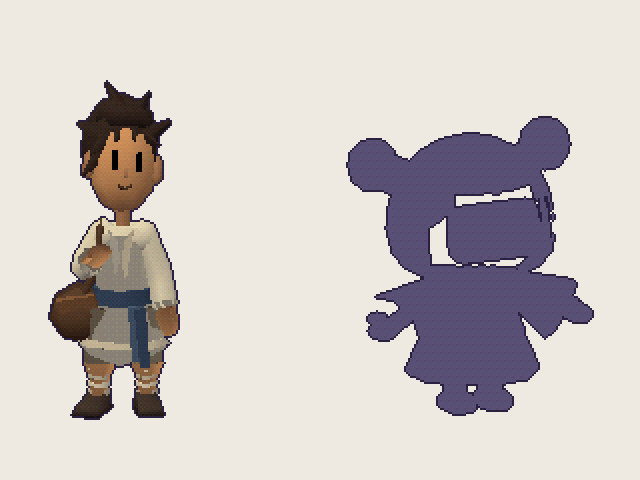
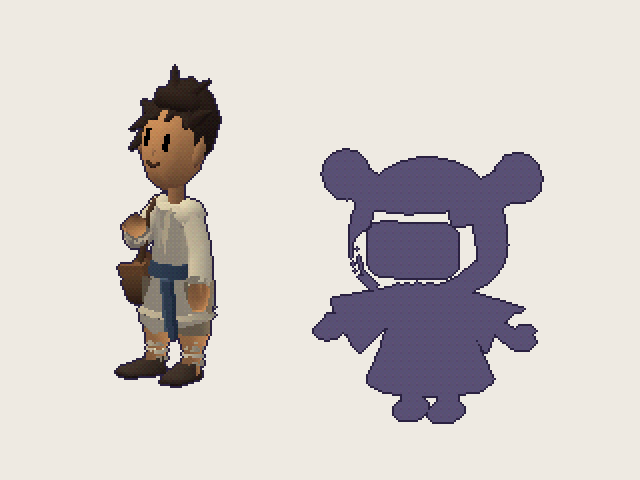
Current 3D model
presence
Depiction requirements
- classification
- Label him as a lay pilgrim pursuing the bodhisattva path. Do not assign Buddha marks or count him as an additional awakened Buddha solely because he visits sacred teachers. [sud-toh44-45]
- homage pose
- For the Potalaka/Avalokiteśvara visit, include a readable joined-palms homage pose and attentive joyful face. This gesture is supported by the episode; the traveling idle may remain distinct. [sud-toh44-45] [sud-met-wood] [sud-met-bronze]
- age and form selection
- Keep child versus young-adult appearance explicitly selected. Chinese sculpture supports a child; the Tibetan translation introduction distinguishes that tradition from the narrative’s merchant’s son and long journey. [sud-toh44-45] [sud-met-wood]
- wardrobe limits
- Use a lay youth’s clothing rather than inventing a compulsory crown, monastic dress, blue sash or backpack. A historical regional costume can guide a new concept if that branch is chosen. [sud-toh44-45] [sud-met-wood] [sud-met-bronze]
Presentation contract
Ready to build from No readiness block is recorded in the plan.
Open points recorded with the contract
- No securely identified Tibetan Sudhana artwork was found
Setting and sizing rule
No throne or shrine; he stands or walks as a visitor before the teacher he is visiting. Sizing (plan rule R4, not a sourced claim): the opening of any shrine, canopy or pavilion around the figure leaves at least one of the figure's own head-heights of clear air above its tallest point (the top of the head) and a clear gap on each side of its widest span (the joined hands and any travel bag); a throne back or aureole sits behind the figure without passing through it; pillars and lintel do not cross the face, hands or held objects in the front or either three-quarter capture.
Recorded variants · 2
- Chinese Shancai attendant: child with hair tufts, looping scarf, hands pressed together (Met 42.25.6; Met L.2025.31a,b)
- Young-adult narrative branch (84000 introduction i.49)
Recorded adaptations · 1
- Travel bag, ivory tunic and blue sash are authored wardrobe
Where the plan places it · 1
- tushita · The teaching court
tushita.court· character Sudhana, the young pilgrimsudhana
Contract sources · 3
- 84000: The Stem Array / Gaṇḍavyūha (Toh 44-45)
- The Met: Pilgrim Sudhana, 42.25.6
- The Met: Sudhana (Shancai Tongzi), L.2025.31a,b
Model audit and next pass
Evidence basis: visual + source; original concept, canonical front/three-quarter and multi-angle audit sheet inspected 2 October 2026; traditional artifacts viewed in Chrome, no ritual or runtime acceptance
Recorded observations
Concept and canonical/body-angle sheet show a smiling dark-haired child in an ivory loose tunic, blue sash, tan trousers, leg wraps and brown footwear, carrying a small brown shoulder bag.
Current idle holds the bag strap at the chest with the other arm lowered. The audit sheet does not show the joined-hands Potalaka homage supported by the canonical episode and both selected Chinese statues.
sudhana.js explicitly takes the travel bag, tunic, sash and lively hair from the generated concept. These props provide a pilgrim silhouette but are not documented Tibetan iconographic requirements.
No Buddha cranial mark, jeweled deity crown or extraordinary arms are added. This restraint suits the selected human seeker rather than a Buddha-class deity template.
Directions for a future model pass
P1 — Keep the asset-library classification as a human bodhisattva-path pilgrim with selected child variant; do not inflate Buddha/bodhisattva deity totals.
P2 — Add or prioritize a joined-palms greeting/homage clip for visits to teachers during a future authorized animation pass; compare fingertips/palm contact and bow with the selected artifact.
P2 — Preserve the small traveler silhouette and joyful face. Record modern game costume and bag as adaptations; revise concept from a named regional reference if closer historical costume is wanted.
Assessed baseline captures
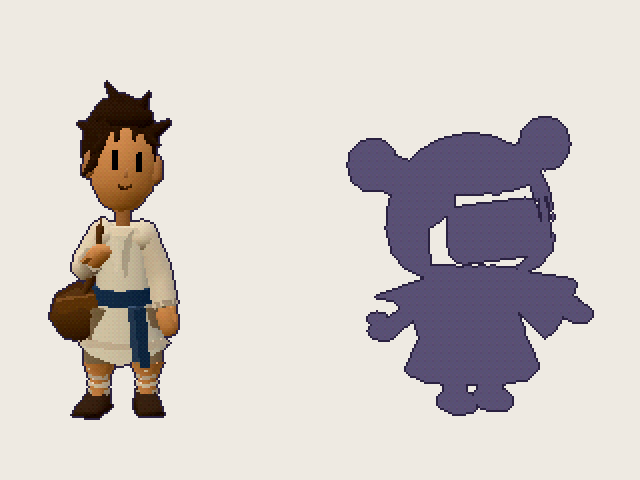
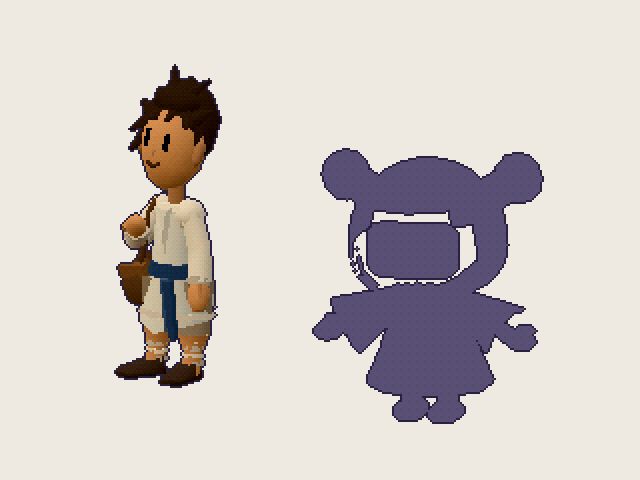
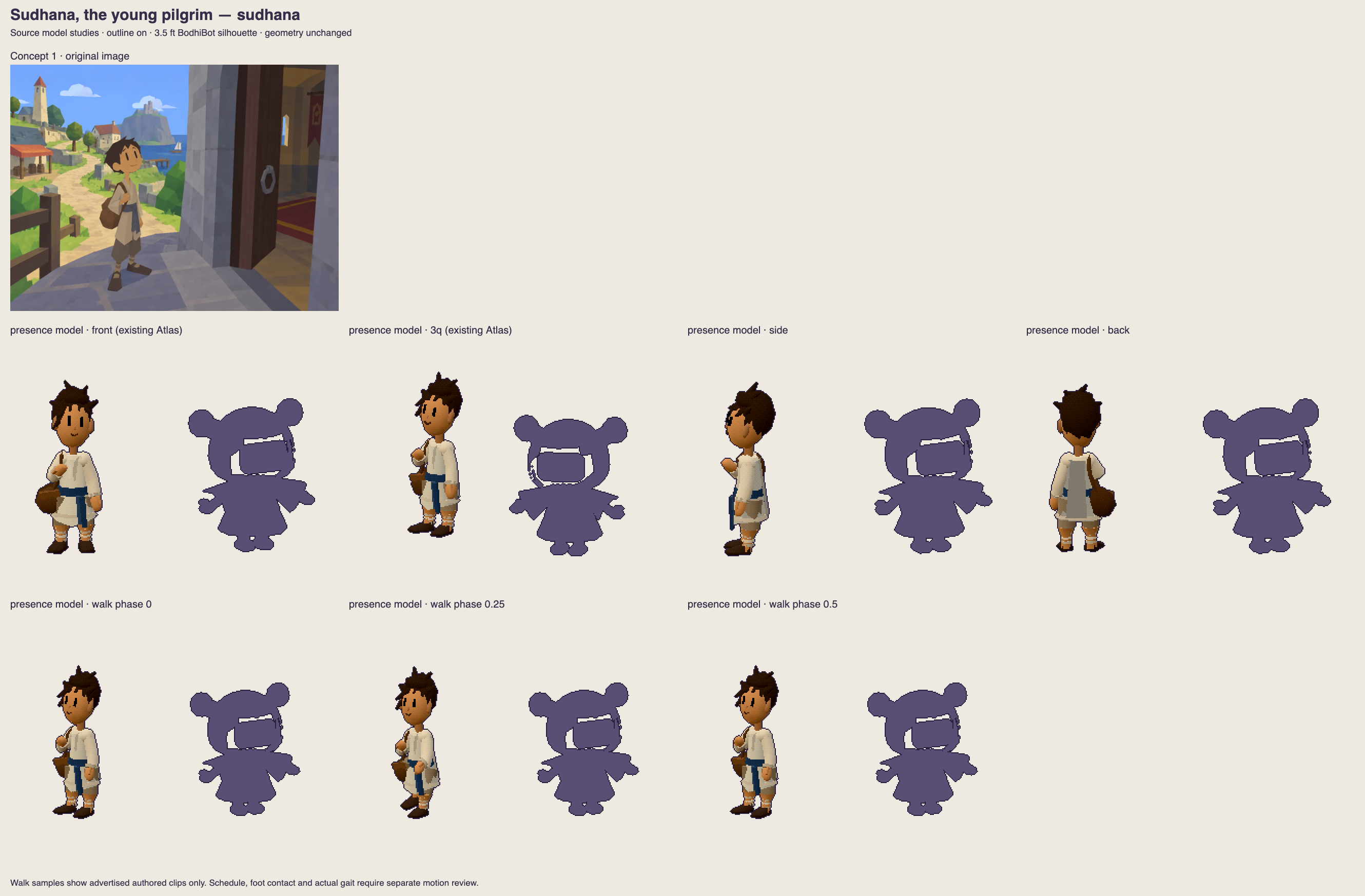
Documented forms and lineage variants · 2
Preserve one identified form consistently. A variant is usable only with its own source and context.
Chinese Shancai attendant
The polychrome wood child has long loose sleeves, tilted head and hands pressed together. The 1641 bronze uses child hair tufts, a looping scarf, ornamented lower cloth and lotus base. Gold is the bronze material, not a compulsory skin color. [sud-met-wood] [sud-met-bronze]
Young-adult narrative branch
84000 i.49 explains that youth terminology can include unmarried young adults and contrasts prince-like Borobudur depictions with East Asian chubby children. Do not force all versions to one exact age. [sud-toh44-45]
What not to copy · 2
Do not confuse attendants
Do not use an unidentified child, Śākyamuni’s childhood, dragon girl or generic donor as a named Sudhana exemplar. [sud-met-wood] [sud-met-bronze]
Do not upgrade awakening status
The game model is a young seeker; the cited passages establish aspiration and study, not an automatic Buddha classification. [sud-toh44-45]
Sources and precise locations · 3
- [sud-toh44-45] 84000: The Stem Array / Gaṇḍavyūha (Toh 44-45) ↗
- [sud-met-wood] The Met: Pilgrim Sudhana, 42.25.6 ↗
- [sud-met-bronze] The Met: Sudhana (Shancai Tongzi), L.2025.31a,b ↗
Assessment freshness and evidence hashes
The frozen snapshot is authored evidence. Regeneration computes current hashes and leaves that snapshot as it is.
{
  "auditFreshness": {
    "status": "stale",
    "reasons": [
      "The model capture recipe or rig source changed."
    ]
  },
  "sourceSnapshot": {
    "captureHash": "4da609d1efed3c94407a813c34d6c6298126e123ebfecc56e4ea06ff31a785fb",
    "bodyGeometryHash": "8a514fc586a4e5a131adf8570cdf00dd0bee32f9bc6952b819b28a0ed8b1d8db",
    "sourceHashes": {
      "prototypes/prerendered-look/parts/purelands/sudhana.js": "b348536a97993e9e429a8a12712f9e83d1e94a82231fc1bcad53ae2dfa3b9807"
    },
    "captureHashes": {
      "/atlas/audit/sheets/sudhana-dd34c92062b5.webp": "4492670f9c94e3dd8f99effc1fb43c2e6a6141f85079267eb659818d1ad045cb",
      "/atlas/characters/sudhana-4da609d1efed-presence-3q.webp": "eb15640a3381b206b9faf3d4732430ca425d7cae50fc8cc06ea7e82fba90c116",
      "/atlas/characters/sudhana-4da609d1efed-presence-front.webp": "77eeebeb64a9a4b60c6d68e372beec3d0ff8bfb80683f1cd4e0bf1334387d4df",
      "/atlas/characters/sudhana-7633e1f62189-presence-3q.webp": "eb15640a3381b206b9faf3d4732430ca425d7cae50fc8cc06ea7e82fba90c116",
      "/atlas/characters/sudhana-7633e1f62189-presence-front.webp": "77eeebeb64a9a4b60c6d68e372beec3d0ff8bfb80683f1cd4e0bf1334387d4df"
    },
    "conceptHashes": {
      "/purelands/concepts/sudhana.webp": "1da05fbe38b7fc0a3fe3f042805e1f0e854373b3e4370bc76143ed54ee5a8791"
    },
    "activeConceptPaths": [
      "/purelands/concepts/sudhana.webp"
    ]
  },
  "currentSnapshot": {
    "captureHash": "a0cb4cecbb473428fcf492287b4f165bcec8679ff11d6c6e5c12aaa5f6b07fc4",
    "bodyGeometryHash": "8a514fc586a4e5a131adf8570cdf00dd0bee32f9bc6952b819b28a0ed8b1d8db",
    "activeConceptPaths": [
      "/purelands/concepts/sudhana.webp"
    ],
    "sourceHashes": {
      "prototypes/prerendered-look/parts/purelands/sudhana.js": "b348536a97993e9e429a8a12712f9e83d1e94a82231fc1bcad53ae2dfa3b9807"
    },
    "captureHashes": {
      "/atlas/audit/sheets/sudhana-dd34c92062b5.webp": "4492670f9c94e3dd8f99effc1fb43c2e6a6141f85079267eb659818d1ad045cb",
      "/atlas/characters/sudhana-4da609d1efed-presence-3q.webp": "eb15640a3381b206b9faf3d4732430ca425d7cae50fc8cc06ea7e82fba90c116",
      "/atlas/characters/sudhana-4da609d1efed-presence-front.webp": "77eeebeb64a9a4b60c6d68e372beec3d0ff8bfb80683f1cd4e0bf1334387d4df",
      "/atlas/characters/sudhana-7633e1f62189-presence-3q.webp": "eb15640a3381b206b9faf3d4732430ca425d7cae50fc8cc06ea7e82fba90c116",
      "/atlas/characters/sudhana-7633e1f62189-presence-front.webp": "77eeebeb64a9a4b60c6d68e372beec3d0ff8bfb80683f1cd4e0bf1334387d4df",
      "/atlas/characters/sudhana-a0cb4cecbb47-presence-3q.webp": "b99c939d468567c42b4ff036099051aba2f5235ba692ba7dc35fbc2f9123f1e2",
      "/atlas/characters/sudhana-a0cb4cecbb47-presence-front.webp": "338747fc9a87935570ee2e90e9402b9a9952964df1e1e59305dda1fdd99f6a00"
    },
    "conceptHashes": {
      "/purelands/concepts/sudhana.webp": "1da05fbe38b7fc0a3fe3f042805e1f0e854373b3e4370bc76143ed54ee5a8791"
    }
  }
}