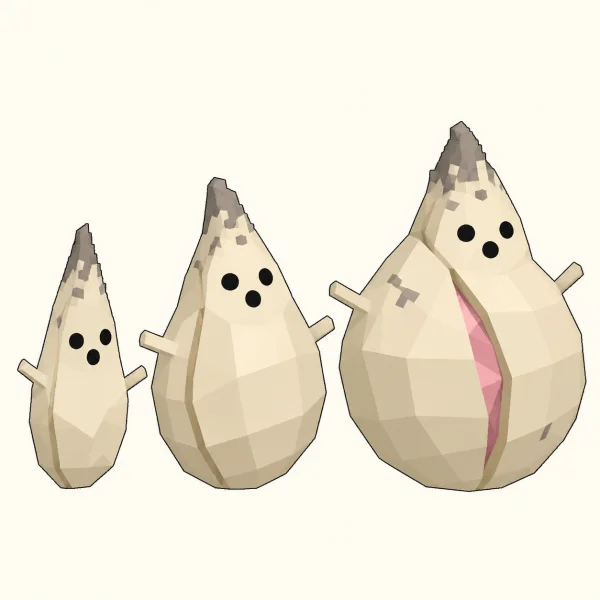
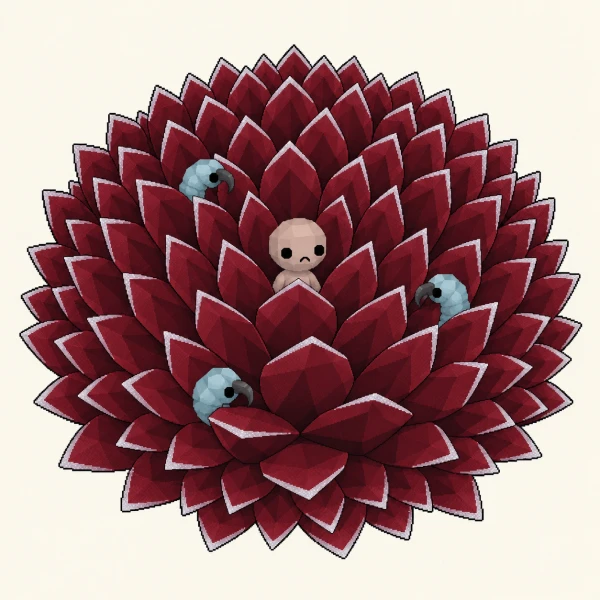
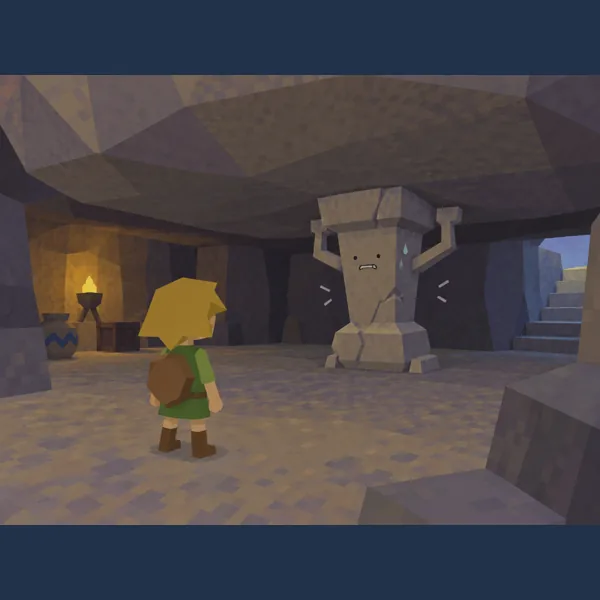
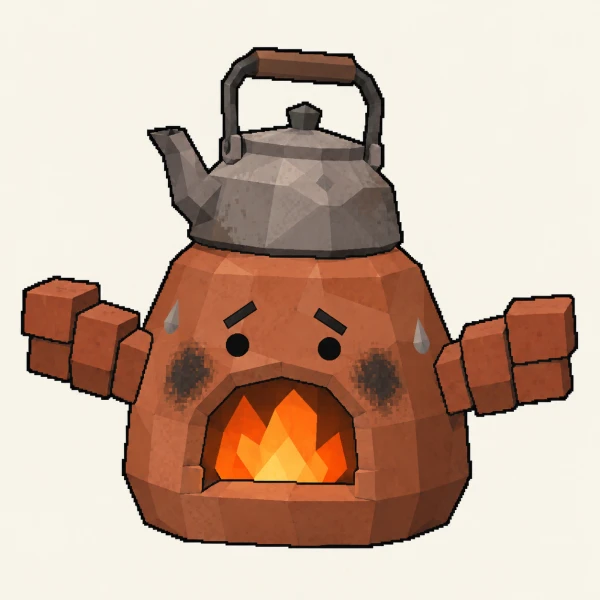
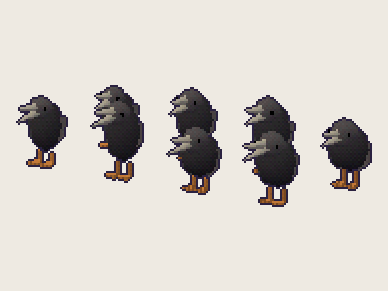
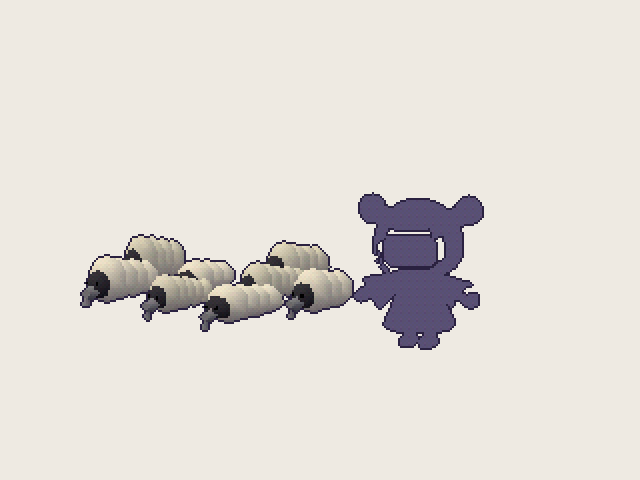
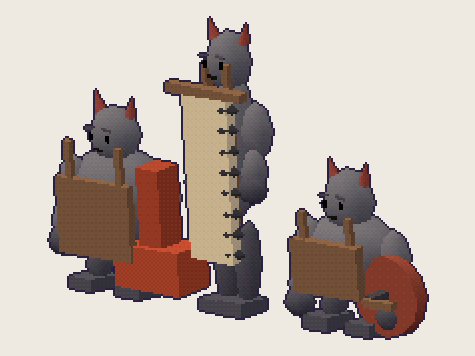
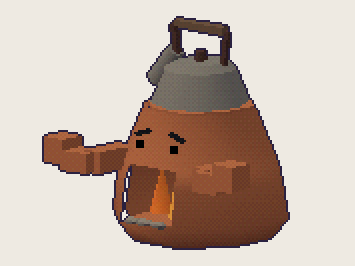
What canon says about each realm of the Wheel and the lands beside it: Jambudvīpa and the four continents, the animal realm, the hidden lands, the heavens on and above Meru, the asuras, the hungry ghosts, the hells, the hub and rim of the Wheel, the dark and the bardo, the charnel grounds, Tanaduk and the pure lands. Each topic carries every piece of art that shows it and a zoomed crop where the art shows it only in part. Gathered 2026-10-30 for the overworld layout studies: lore first, then layout. The checklist follows at What the game has.
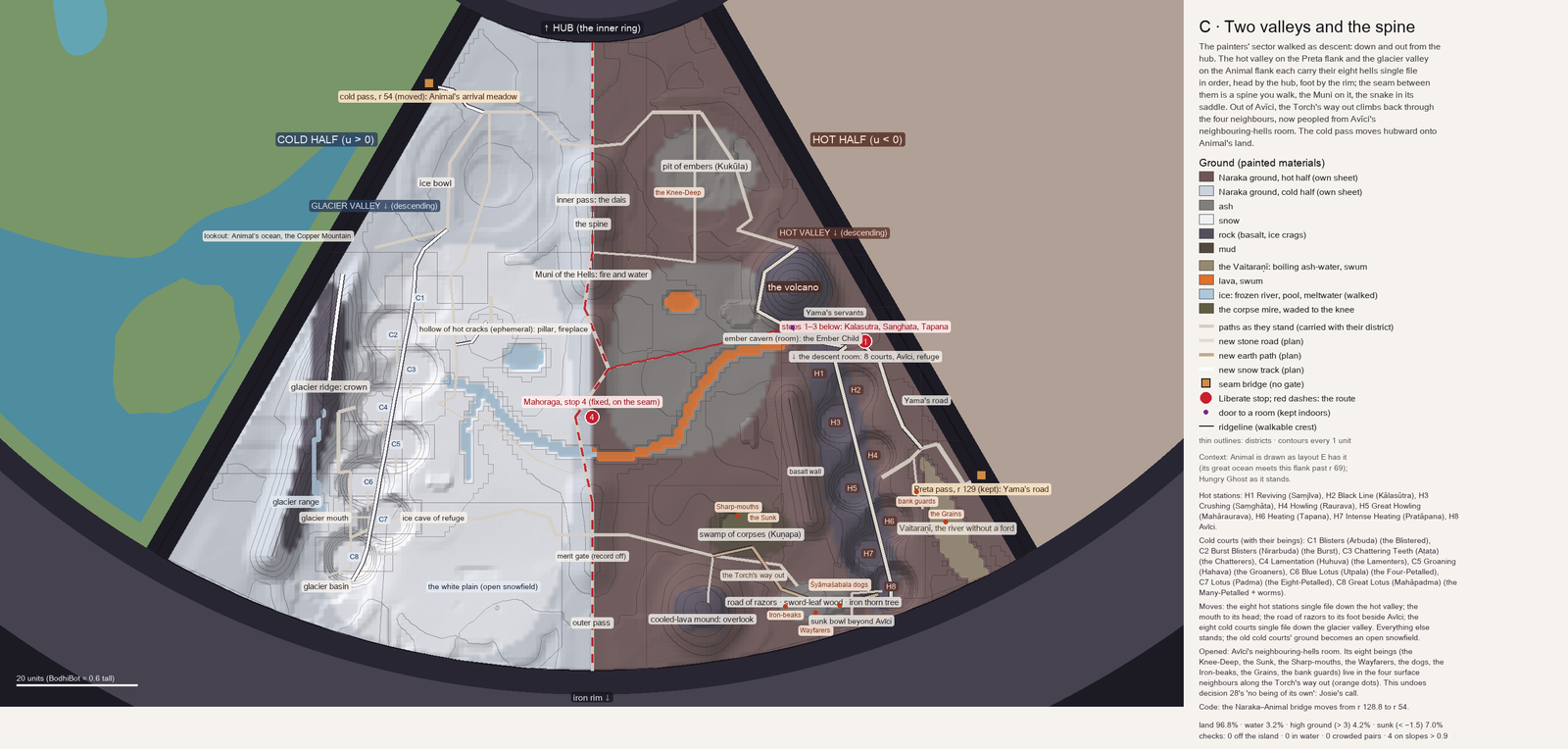
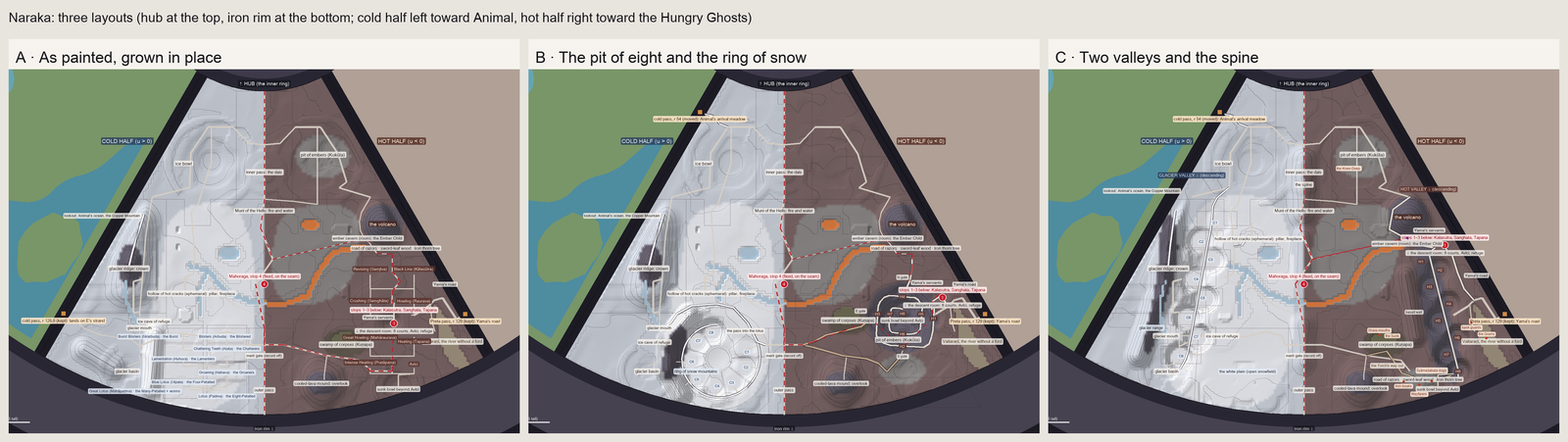
Chosen layout: C · Two valleys and the spine
A hot valley runs station by station down to Avīci at the rim and a glacier valley holds the eight cold courts single file, with a walkable spine between them. The Naraka–Animal bridge moves hubward to r 54 so it lands on Animal's meadow.
The hells (naraka): the hot stack, the cold hells, the neighbours and Yama's court
Canon puts the hells under Jambudvīpa: Avīci twenty thousand leagues down and twenty thousand across, seven hot hells stacked above it, sixteen neighbouring hells at each one's four gates, and eight cold hells on the same level or beyond, with Yama's court five hundred leagues down at the pretas' principal dwelling. This group gathers what the Abhidharmakośa, Kongtrul and the Tibetan practice texts fix about each hell, its torment, size and lifespan, what the game has already built for them (81 of 87 samsara items), and how Wheel of Life painters, Japanese hell scrolls and Thai manuscripts picture them, so the Hells can be laid out from canon and not from one lava field.
Where the hells lie and how big they are
Skt. naraka / niraya; Tib. dmyal ba (nyalwa); Avīci, Tib. mnar med (Narme), 'Ceaseless Torture'
A stack under Jambudvīpa: Avīci twenty thousand leagues down and as wide as it is deep, seven hot hells above it, the cold hells on the same level or beyond, and the hot stack wider than the continent above it.
Vasubandhu asks where the hells are and how big. His answer: beneath Jambudvīpa, twenty thousand leagues down, lies the great hell Avīci, twenty thousand leagues high and wide, so its floor is forty thousand leagues below the surface of Jambudvīpa. Above Avīci the seven other hot hells stand one over another: Pratāpana, Tapana, Mahāraurava, Raurava, Saṃghāta, Kālasūtra and Saṃjīva, with Saṃjīva highest. He records a second opinion that the seven lie on the same level as Avīci, side by side.
Each of the eight is a walled square. The Buddha's declaration, quoted in the Kośa: eight hells, hard to get out of, full of cruel beings, each with sixteen neighbouring hells, four walls and four gates, as high as they are wide, ringed with walls of fire, their ceiling fire, their sun burning fire, filled with flames hundreds of leagues high. The Pali Devadūta Sutta draws the same room: four corners, four doors, an iron wall, an iron roof, an iron floor that burns.
Kongtrul follows the Kośa: the hells and the pretas' world lie below the earth; the eight hot hells are lowest; Ceaseless Torture is twenty thousand leagues below the Land of Jambu, and above it the seven others. The eight cold hells lie beyond the neighbouring hells. He adds the Kośa's answer to how hells wider than Jambudvīpa can fit beneath it: the continents are like piles of grain, far wider at the bottom. And he adds the Mahāyāna caveat: the hells are projections of one's own mind, so their exact size need not be fixed.
The Kośa gives the cold hells their own place in one line: under Jambudvīpa, on a level with the great hells. Kongtrul instead sets them beyond the neighbouring hells. The two statements are not merged anywhere; the game follows Kongtrul for its layout and keeps the Kośa's wording as a variant.
What canon fixes for the map
Avīci: 20,000 leagues below Jambudvīpa, 20,000 leagues high and wide; its floor 40,000 leagues down [AK III.58 bhāṣya, p. 456].
Seven hot hells one above the other over Avīci, Saṃjīva highest; alternative opinion: all eight on one level [AK III.58 bhāṣya, p. 457].
Each hell is square, four walls, four gates, as high as wide, ringed by fire, with sixteen utsadas (neighbouring hells) [AK III.58 bhāṣya, p. 457; MN 130].
Cold hells: under Jambudvīpa on a level with the great hells [AK III.59c-d bhāṣya, p. 459]; or beyond the neighbouring hells [K p. 27]. Two placements, not merged.
The continents are wider at the base like piles of grain, so the hells fit under Jambudvīpa [AK p. 459; K pp. 27–28].
Mahāyāna view recorded by Kongtrul: the hells are projections of mind, their measurements need not be fixed [K p. 28].
Yama's court is NOT in the hells: 500 leagues under Jambudvīpa at the pretas' principal dwelling, 500 leagues deep and wide [AK III.59 bhāṣya, p. 460; K p. 28].
Game adaptation: the Wheel's Naraka wedge lays hot and cold side by side on one level, hot at u < 0 and cold at u > 0, split down the centre line; the hot stack is a cutaway room under the hot courts (docs/world-plan/sections/naraka.json account.adaptation; places/naraka-hot-hells.json layout).
In the game now
Built. place:naraka (built; the Wheel's south wedge, 180°, r 20–72), place:naraka-hot-hells (built; the underground descent room of eight courts) and the eight cold courts on the open wedge. Samsara realm `naraka`: 87 items, 81 built, 5 sketch, 1 missing. The stack under Jambudvīpa is compressed into the Wheel's sideways sector (docs/purelands-connection-guidance.json route naraka-depth); no hell lies under the poison hub.
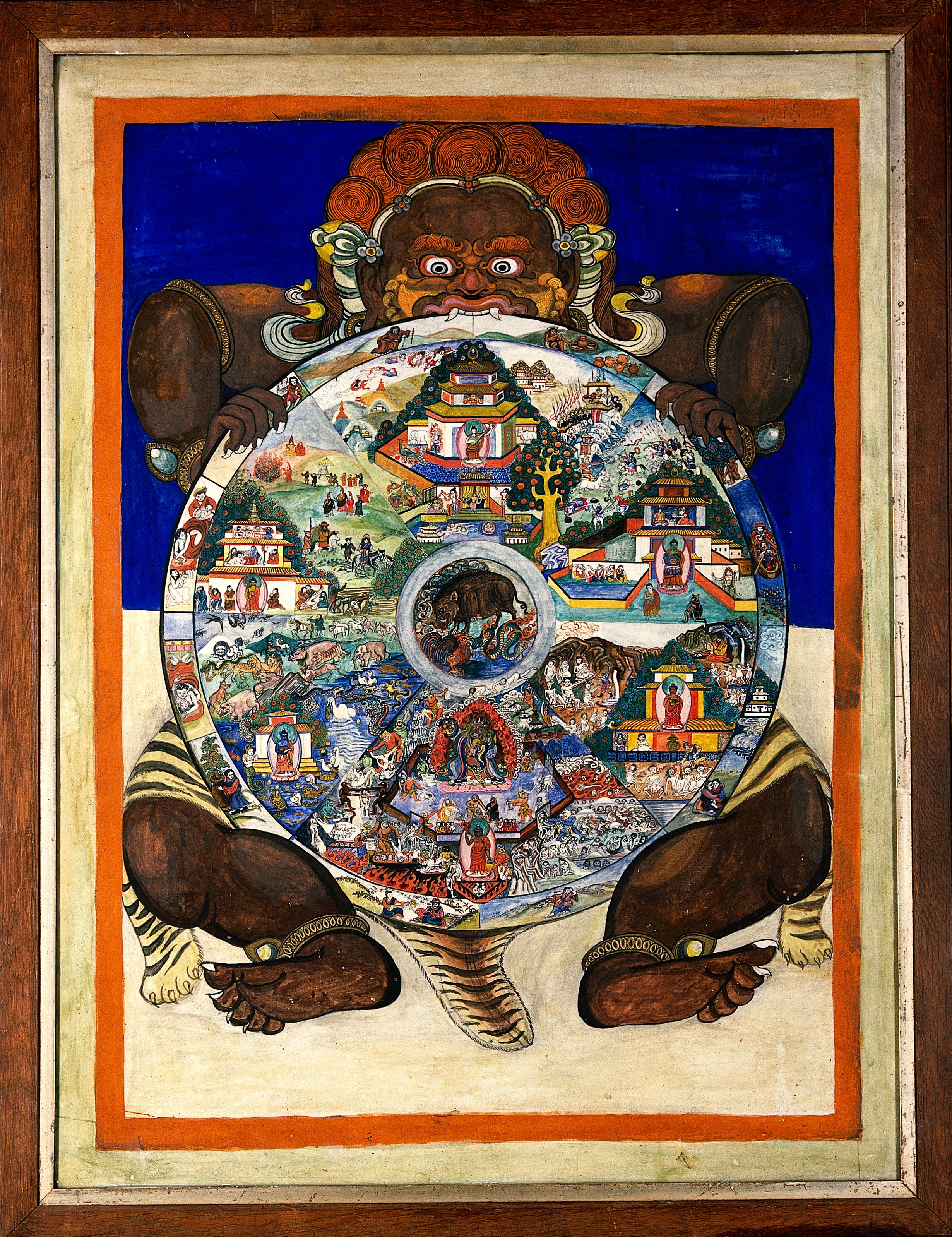
Wellcome Collection (repo copy, media.json painting-wellcome-L0069380) · traditional · Public Domain Mark
The whole hell sector at the bottom of the wheel: Yama enthroned at the top with mirror and stick, the hot hells and cauldrons on the left, the ice mountains of the cold hells on the right, the hells' Muni standing with fire and water at the bottom centre.
Library of Congress, via Wikimedia Commons · traditional · Public domain
A hell sector drawn as a walled court: Yama red on a throne in a palace at the top, a cauldron of beings in the middle, the sawing and hacking hells on the left, the ice slopes of the cold hells on the right.
Wellcome Collection, via Wikimedia Commons · traditional · CC BY 4.0
An older, softer hell sector: Yama at the top on a rocky seat over a fire, a sword-leaf tree, a cauldron, a sawing scene and an inscription naming the hell.
Wellcome Collection, via Wikimedia Commons · traditional · CC BY 4.0
The clearest layout drawing: Yama at the apex, hot hells in flames down the left, the cold hells as a field of ice peaks on the right, the Muni standing between them. Good for reading the sector as a plan.
Photo Redtigerxyz, Wikimedia Commons · traditional · CC BY-SA 3.0
A mural hell sector done almost entirely in red: the hot hells fill the wedge, with a white-and-blue checked ice field for the cold hells at its right edge.
Photo Wonderlane, Wikimedia Commons · traditional · CC BY 2.0
A modern mural hell sector: Yama blue on a cloud throne with his mirror at the top, the sawing and the sword tree on the left, the ice cliffs with naked cold-hell beings on the right, a green plain between.
Himalayan Art Resources (private collection) · traditional · No open licence (link only)
The one painting Jeff Watt singles out for the hells: Yama's court in the upper half, and below it, filling two thirds of the picture, the eight hot and eight cold hells and the occasional hells, each labelled by inscription.
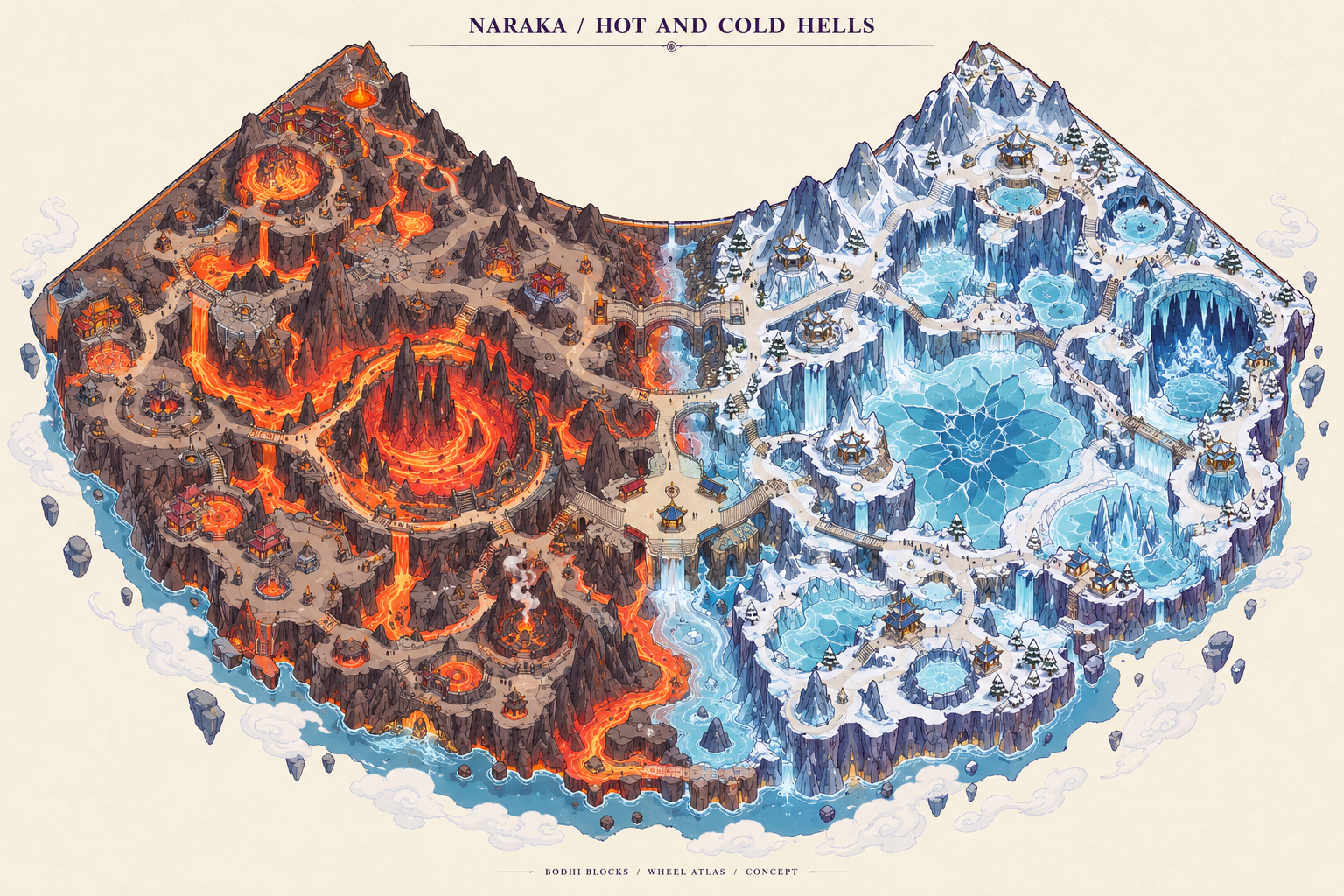
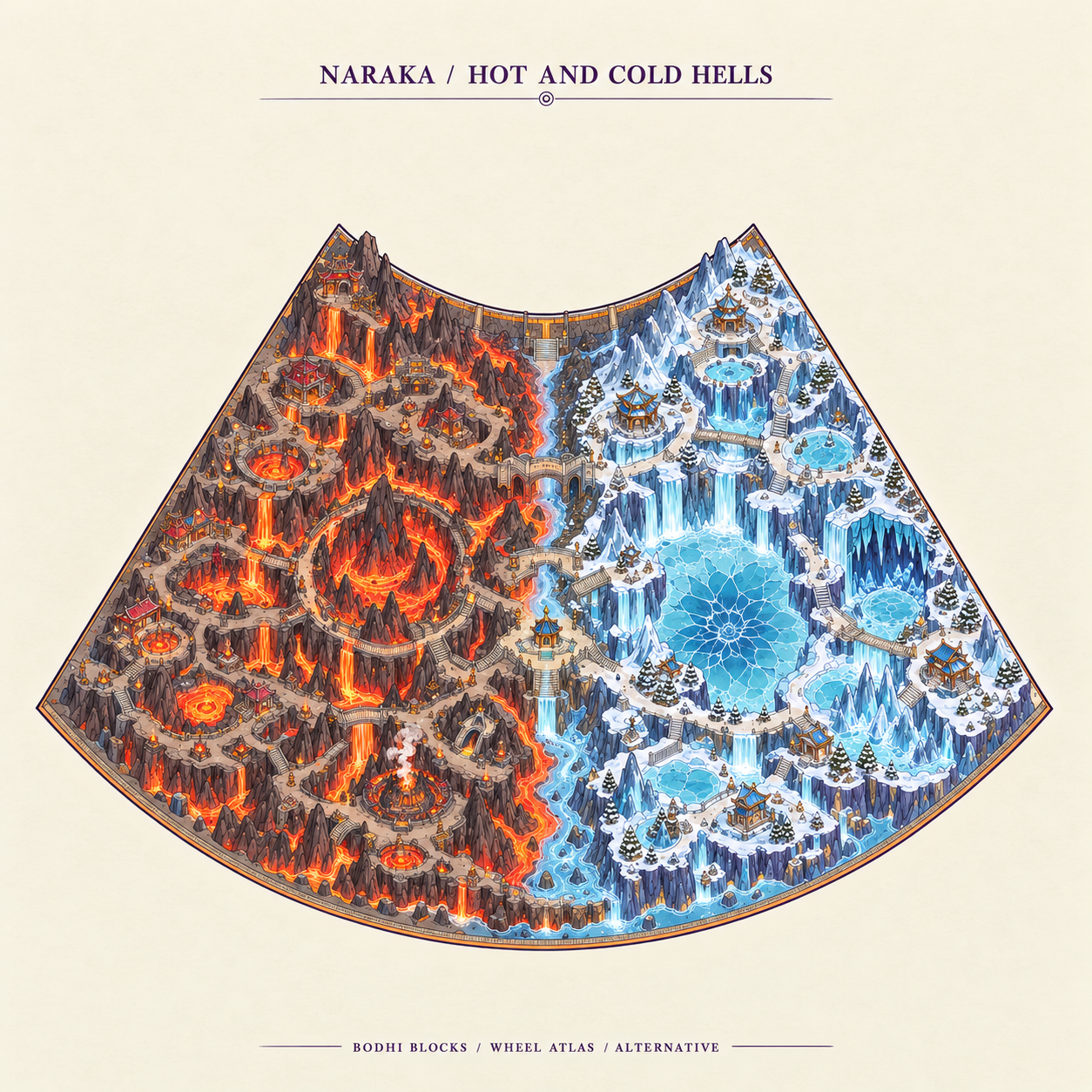
Naraka: hot and cold hells, Wheel Atlas concept
AI concept study (repo), media.json wheel-03-naraka · concept · Project art
The game's own picture of the wedge split down the centre, lava courts on the hot side and ice courts on the cold. This split is the game's adaptation, not a source's.
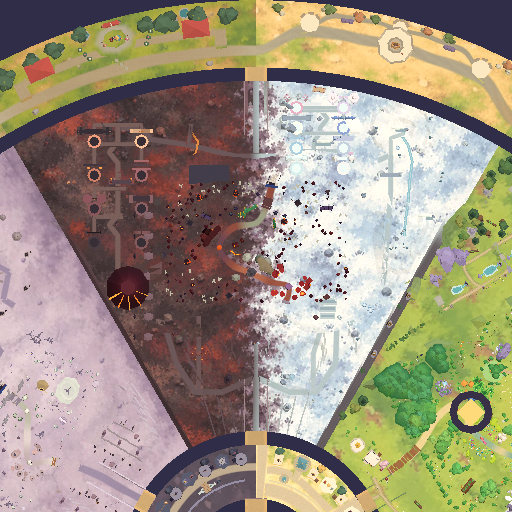
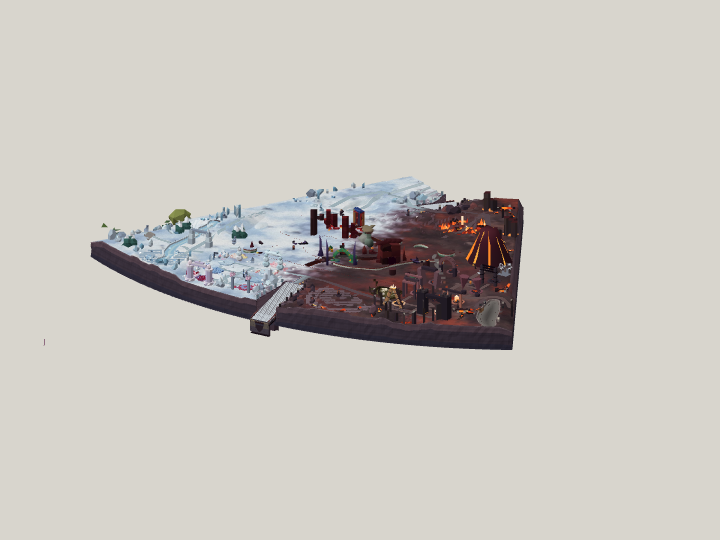
Hell realm: view from above (in-world capture)
Repo world capture, media.json terrain-naraka · world-view · Project art
The Naraka wedge as built: hot courts and ash river on the left, cold courts and glacier on the right, the hot hells' mouth as the dark pit on the hot side.
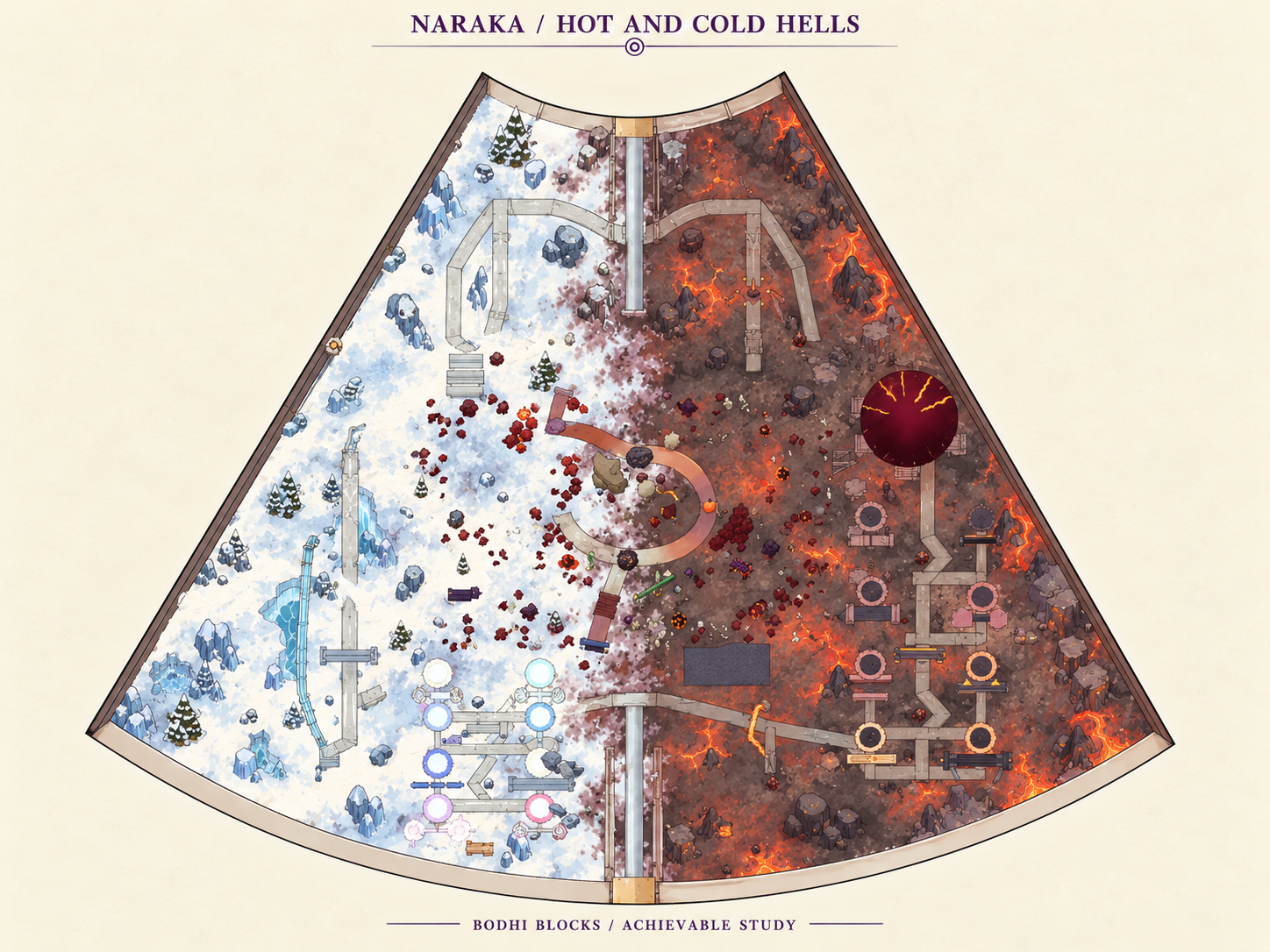
Hell realm: achievable map study
AI layout study (repo), media.json map-03-naraka-achievable-v2 · layout-study · Project art
An earlier plan drawing of the wedge; the source of the layout studies is not recorded.
Still missing: No traditional image shows the hells as a vertical stack under Jambudvīpa; every Wheel painting lays them sideways. A cosmology (Meru) painting that includes the hells under the southern continent has not been found.
Eight walled hells of burning iron stacked from Reviving down to Avīci, each with its own torment and a lifespan that doubles step by step, from 1.62 trillion human years in Reviving to a whole intermediate aeon in Avīci.
In every hot hell the floor is burning iron. In Reviving, whatever you see turns into an enemy with a weapon; head and body are hacked to pieces, you die, and a cold wind revives you to begin again. Vasubandhu gives the hell its name from this: bodies are crushed to dust, then a cold wind revives them and gives them feeling.
In Black Line, lines are snapped across the body and it is sawn apart along them. In Crushing, countless beings are wedged into iron mortars the size of valleys and pounded with red-hot hammers. In Howling, you are shut in a doorless cell of burning iron. In Great Howling, the cell has double walls, and you are beaten with hammers while you scream.
In Heating, you are impaled on red-hot spikes and tridents and wrapped in strips of heated iron. In Intense Heating, you are boiled in great vats of molten bronze; when your head is struck with a hammer you lose consciousness, and that instant is the only relief. In Avīci, the hottest fire of all, bodies are indistinguishable from the flames and known only by their screams; weapons fall from the sky and hell-workers torment you seven times worse than in the hells above.
The lifespans are counted in the gods' years. A day in Reviving is the whole life of the Four Great Kings' gods (five hundred of their years, each of whose days is fifty human years), and a being lives five hundred years of such days; the Torch gives the same figure as 162,000 times ten million human years. Each hell below doubles it, Reviving to Heating keyed to the six desire heavens in order. Intense Heating lasts half an intermediate aeon; Avīci a whole one.
Kongtrul, the Torch and Jamyang Khyentse all give the Tibetan order: Reviving, Black Line, Crushing, Howling, Great Howling, Heat, Intense Heat, Ultimate Torment, and all three say the cause of the hells is harm done through hatred and anger above all. The Mahāyāna Saddharmasmṛtyupasthāna (Toh 287) devotes its second chapter to these eight, naming the sixteen hells around each and the karma that leads to each, down to stealing from the Saṅgha, which leads to the hells round Ultimate Torment 'such as Great Darkness'.
What canon fixes for the map
Order from top down: Saṃjīva, Kālasūtra, Saṃghāta, Raurava, Mahāraurava, Tapana, Pratāpana, Avīci [AK III.58 bhāṣya, p. 457; K p. 27].
Every hot hell has a floor of burning iron [H, the eight hot hells; J].
Each hell is a walled square with four gates, as high as it is wide, with fire walls and fire ceiling [AK p. 457].
Lifespans: Saṃjīva 500 years whose days are the Caturmahārājika gods' lifespan; the next five keyed to the next five desire heavens; Pratāpana half an intermediate kalpa; Avīci one intermediate kalpa [AK III.82–83, pp. 472–473]. The Torch: Reviving 162,000 × 10 million human years, doubling in each hell below [H].
Reviving: enemies, hacking, death and revival by a cold wind [H 1; AK p. 456]. Black Line: lines and saws [H 2]. Crushing: valley-sized iron mortars and red-hot hammers [H 3]. Howling: doorless burning-iron cell [H 4]. Great Howling: double walls and hammers [H 5]. Heating: spikes, tridents, heated iron strips [H 6]. Intense Heating: vats of molten bronze, hammer blow as relief [H 7]. Avīci: body one with the flames, weapons raining, hell-workers, seven times worse [H 8].
Cause: harm through intense anger and hatred [H; J].
Game adaptation: the eight hot courts open off one lane in a cutaway room 24 by 52, each 0.8 lower than the last; the Wheel's surface also carries eight 'station courts' as its sideways picture (places/naraka-hot-hells.json layout; sections/naraka.json naraka.hot-courts).
Who lives here
The Revived (Reviving), the Lined (Black Line), the Pressed (Crushing), the Howlers (Howling), the Double-Walled (Great Howling), the Skewered (Heating), the Boiled (Intense Heating), the Flame-Bodied (Avīci): the populations the Torch and Jamyang Khyentse describe, named by the game.
The hell-workers (Avīci): the beings with weapons who torment in Avīci (the Torch); the Kośa's narakapālas, whose reality is disputed (see Yama's court).
Devadatta: born alive into Avīci for an aeon (see Avīci).
In the game now
Built. place:naraka-hot-hells and its eight courts (place:naraka-hot-hells:reviving, :black-line, :crushing, :howling, :great-howling, :heating, :intense-heating, :avici) all built as one descent room under the hot courts; eight populations built with concept, rig and placement (being:naraka-hot-hells:reviving/beings/revived through :avici/beings/flame-bodied), plus being:naraka-hot-hells:guardians/hell-workers (built). The three Liberate stops stand in Black-Line, Crushing and Heating (being:liberate-the-sliced-one Kalasutra, being:liberate-the-mountain-pressed-one Sanghata, being:liberate-the-ember-wreathed-one Tapana, all built). Kṣitigarbha keeps a refuge below Avīci (adaptation). Eight ember-stone collectibles.
Wellcome Collection (repo copy) · traditional · Public Domain Mark
The left half of the hell sector: sawing a body between two demons (Black Line), a body on a board being cut, an iron cauldron of beings over flames (Intense Heating), a tiger-headed worker with a hammer, flames along the whole floor.
Tokyo National Museum, via Wikimedia Commons · traditional · Public domain
A Heian hell scroll segment: naked beings crawl over a plain of black burning rocks beside a red river of boiling water. The Japanese picture of the ember ground and the hot river.
Nara National Museum (National Treasure), via Wikimedia Commons · traditional · Public domain
Hell-workers grind beings in an iron mortar with a pestle while others wait their turn. The closest Japanese image to Crushing's iron mortars and hammers.
Himalayan Art Resources (private collection) · traditional · No open licence (link only)
HAR's example image for the hot hells, filed under 'Subject: Hells, Hot'; the page carries no description, so read it against the Torch's list.
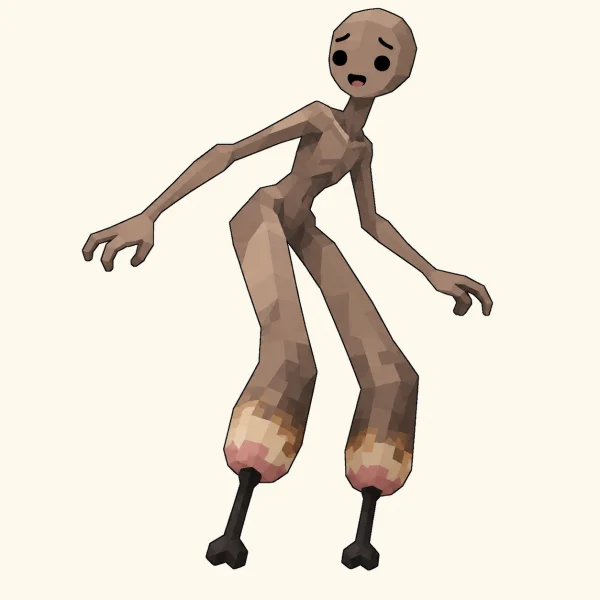
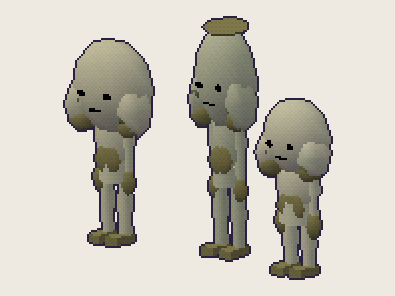
The Revived, concept
AI concept study (repo), media.json concept-hot-revived · concept · Project art
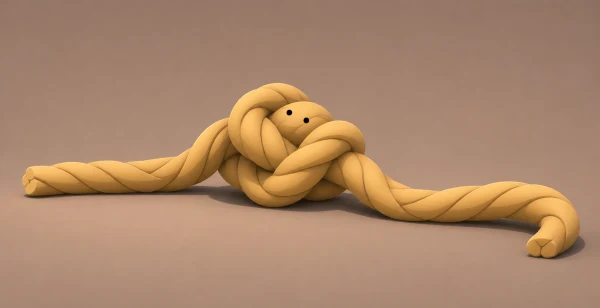
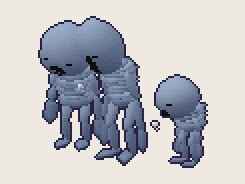
The game's population of Reviving, cute and gross, solid black eyes.
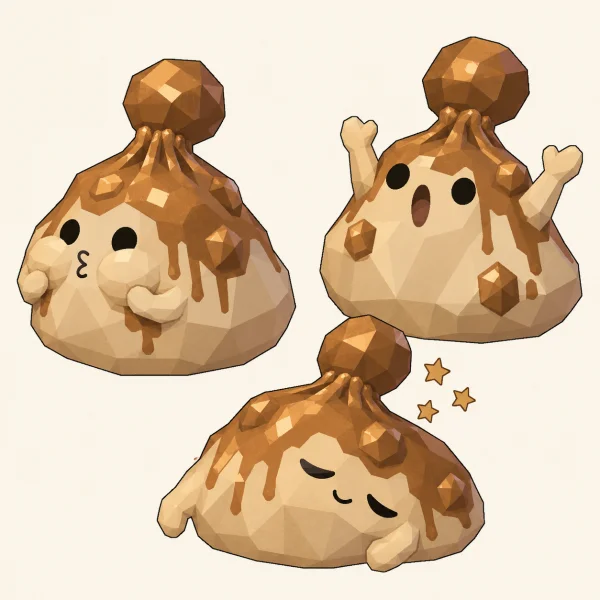
The Boiled, concept
AI concept study (repo), media.json concept-hot-boiled · concept · Project art
Intense Heating's population in its vat of molten bronze.
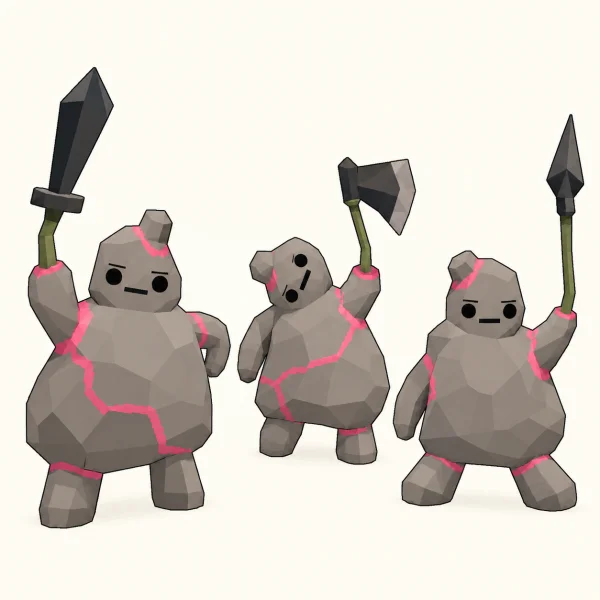
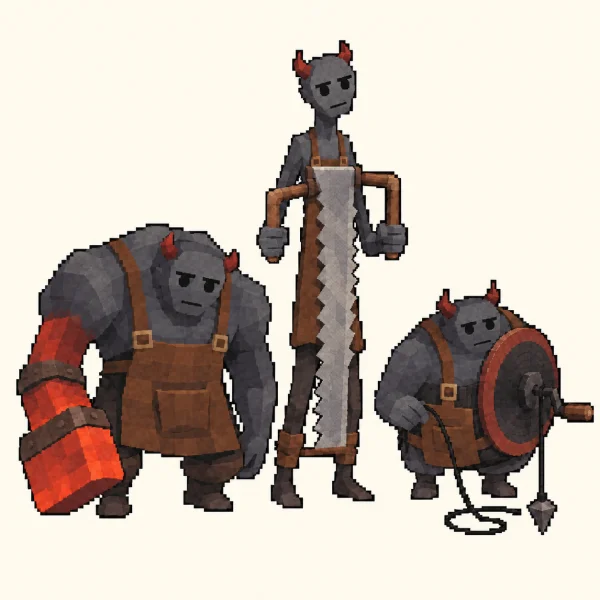
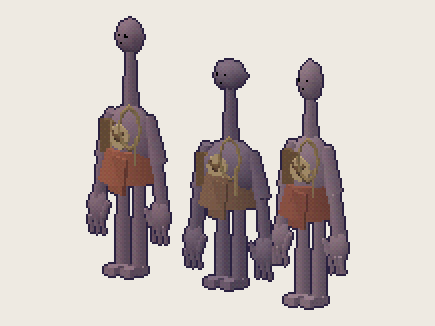
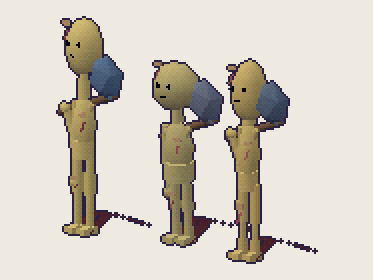
The hell-workers, concept
AI concept study (repo), media.json concept-hot-hell-workers · concept · Project art
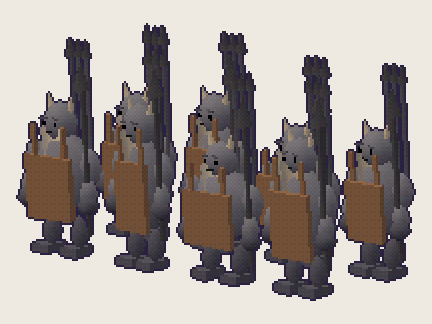
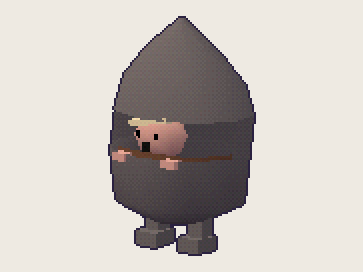
Avīci's tormentors as built; no ox or horse heads, which belong to East Asian hell imagery and not to the selected account.
Still missing: No image found that shows all eight hot hells as a stack in order; Wheel paintings pick two or three torments (saw, cauldron, sword tree). Howling's doorless iron cell and Great Howling's double wall have no traditional image found.
Repo ledger: docs/purelands-hell-beings.json, entries naraka-hot-hells:*/beings/*, with the source passages
Avīci, the hell without interruption
Skt. Avīci; Tib. mnar med (Narme), 'Ceaseless Torture', 'Ultimate Torment'
The deepest hell, twenty thousand leagues down and across, where suffering never pauses and bodies are one with the fire for an intermediate aeon; the hell of the five heinous acts and of Devadatta.
Vasubandhu gives two readings of the name. There is no interruption (vīci) of suffering here, where in every other hell it is interrupted, as when Saṃjīva's cold wind revives the crushed; and there is no agreeable state (vīci) here at all, where the other hells still have some agreeable sensation as an outflow. It is the bottom of the stack, as wide and high as it is deep.
The Torch: in Ultimate Torment the fire is hotter than in all the others; the bodies of the beings there cannot be told from the flames and are known only by their screams; weapons fall from the sky and hell-workers torture you seven times worse than above. The lifespan is one intermediate aeon.
Devadatta, who split the Saṅgha and drew the Buddha's blood, went to Avīci alive. In the Dhammapada Commentary the earth swallows him and he is reborn in Avīci, his body fixed by an iron skull and iron earth and pinned by three iron stakes; the Buddha foretells that after a hundred thousand aeons he will become a Private Buddha named Aṭṭhissara. The Aṅguttara Nikāya says he is headed for hell for an aeon, incurable; the Lotus Sūtra later foretells his buddhahood.
The sixteen neighbouring hells ring Avīci as they ring each hell; the Torch, a practice text, speaks only of the sixteen round Avīci and has the being walk out into them when the karma of Avīci is spent. Toh 287 names one of them Great Darkness, the birthplace of those who steal small things from the Saṅgha.
What canon fixes for the map
Deepest hell; 20,000 leagues below Jambudvīpa, 20,000 high and wide [AK III.58, p. 456].
Name: no interruption of suffering; no agreeable state [AK p. 456–457].
Lifespan one intermediate kalpa (antarakalpa) [AK III.83a-b, p. 472; H 8].
Fire hotter than all other hells; bodies indistinguishable from flame; weapons from the sky; hell-workers; seven times the pain [H 8].
The retribution of the five ānantarya acts happens in these hells [AK p. 459 citing IV.97].
Devadatta is in Avīci, pinned by three iron stakes, for an aeon [DHPA I.12; AN 8.7].
Game: Avīci is the lowest court of the descent room, with the eight neighbour beings in its own neighbouring-hells room (decision 28, R34); Kṣitigarbha's refuge below it is adaptation (places/naraka-hot-hells.json).
Who lives here
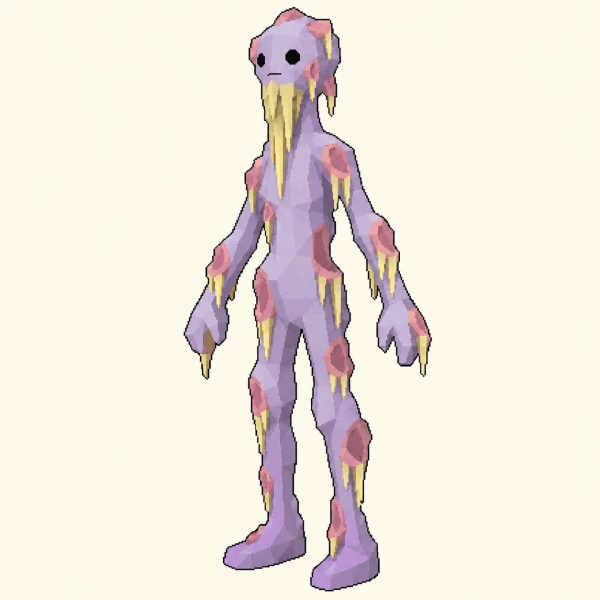
The Flame-Bodied: Avīci's population, told from the fire only by their screams (the Torch).
The hell-workers: Avīci's tormentors (the Torch).
Devadatta: the Buddha's cousin, schismatic, pinned alive in Avīci for an aeon (Dhammapada Commentary I.12; AN 8.7; Lotus Sūtra ch. 12 for his future buddhahood).
In the game now
place:naraka-hot-hells:avici built; being:naraka-hot-hells:avici/beings/flame-bodied built; being:naraka-hot-hells:guardians/hell-workers built; being:naraka-hot-hells:avici/beings/devadatta MISSING (the realm's one missing item: no concept, rig or placement). The eight neighbour beings stand in Avīci's neighbouring-hells room (naraka-hot-hells:avici space).
Art (5)
the flames and cauldron at the bottom of the sector
Nara National Museum (National Treasure), via Wikimedia Commons · traditional · Public domain
A giant cock of fire on a black ground, flames pouring from its wings: the finest painted image of a hell that is all fire, from one of the sixteen lesser hells of the Kisekyō.
Via Wikimedia Commons (CC0 upload) · traditional · CC0
A grey fire-breathing beast devours beings while a horned hell-worker flings another; flames lick the ground. Japanese, not Tibetan, but the same floor of fire.
Himalayan Art Resources (private collection) · traditional · No open licence (link only)
Look at the lowest register of the painting: the eight hot hells labelled by inscription, Avīci among them.
The Flame-Bodied, concept
AI concept study (repo), media.json concept-hot-flame-bodied · concept · Project art
Avīci's population as built.
Still missing: No traditional image of Devadatta in Avīci pinned by three iron stakes has been found in an open collection; Pali-world temple murals of it exist but were not located on Commons.
Skt. utsada ('supplementary' hells); Tib. nye 'khor ba'i dmyal ba. Kukūla (ember pit), Kuṇapa (mire of corpses), Kṣuramārga with Asipattravana and Ayaḥśālmalīvana (razor road, sword-leaf forest, iron śālmalī trees), the river Vaitaraṇī
At each of a hot hell's four gates stand the same four places of extra torment, sixteen in all: the knee-deep ember pit, the corpse mire with its Sharp-mouths, the razor road with the sword forest and the thorn trees with their dogs and iron-beaked birds, and the boiling ash river that rings the hell like a moat.
Vasubandhu lists them at each gate in order. First the Kukūla, a fire you are pushed into to the knees: when beings set a foot in it skin, flesh and blood are lost, and grow back when the foot is lifted. Second the Kuṇapa, a mire of excrement, where water beasts called Sharp-mouths, white bodies and black heads, bite the damned through to the bone.
Third the Kṣuramārga, the great road of razor blades, where feet lose skin, flesh and blood; with it the Asipattravana, the forest whose leaves are swords, which fall and cut off limbs that the Śyāmaśabala dogs devour; and the Ayaḥśālmalīvana, the forest of iron thorns sixteen finger-widths long, which turn down when you climb and up when you descend, where Iron-beak birds tear out and eat the eyes. These three count as one neighbouring hell because they all wound.
Fourth the river Vaitaraṇī, boiling water thick with burning ash. On both banks stand persons armed with swords, lances and javelins who push back whoever tries to climb out, and the damned are boiled like sesame or grain poured into a cauldron over a fire. The river encircles the great hell like a moat. Four kinds at four gates make sixteen; they are called utsada because the damned, tormented in the hells, are tormented again in them.
The Pali Devadūta Sutta walks the same ring in the same order: out of the Great Hell's doors into the vast Dung Hell with its needle-mouthed creatures, then the Hot Embers, then the Silk-cotton forest of thorns, then the Sword-leaf Forest, then the Acid River where beings are swept up and down stream, and finally hooks and a red-hot copper pot. Kongtrul's list is the Kośa's: Pit of Live Embers, Swamp of Filth, Road of Razor Blades with Leaves Like Swords and Forest of Iron Spikes, River Without Ford, four on each of the four sides of each of the eight hells.
The Torch tells it as a journey: leaving Avīci when its karma is spent, you see an inviting plain that becomes the Plain of Razor Blades, a pleasant wood that becomes the Forest of Sword Blades, a river you go to drink from that becomes the Swamp of Putrefying Corpses, where you sink to the head and worms with metal beaks eat you, and a shady trench that becomes the Pit of Hot Embers. The Torch puts its sixteen round Avīci only; the game keeps this as a practice-text variant beside the Kośa's count, not merged into it.
What canon fixes for the map
Four kinds at each of the four gates of each hot hell, sixteen per hell [AK III.59a-c, pp. 457–458; K p. 27].
Order at a gate: ember pit, corpse mire, razor road (with sword forest and iron śālmalī trees), river [AK p. 457–458].
The ember pit is knee-deep; flesh returns when the foot is lifted [AK p. 457].
Sharp-mouths: white bodies, black heads, bite to the bone, in the corpse mire [AK p. 457].
Iron thorns sixteen digits long turn with the climber; Śyāmaśabala dogs eat the cut limbs; Iron-beak birds eat the eyes [AK pp. 457–458].
Vaitaraṇī rings the great hell like a moat; armed persons on both banks push the damned back in [AK p. 458].
Pali order from the Great Hell outward: Dung Hell, Hot Embers, Silk-cotton forest, Sword-leaf Forest, Acid River, then the copper pot [MN 130].
Torch variant: sixteen round Avīci only, met on the way out [H, the neighbouring hells]; kept distinct from the Kośa's count (sections/naraka.json account.alternatives).
Game adaptation: each hot court's gate opens on a 58-by-58 room with a hub, four causeways and sixteen courts; only Avīci's room is populated. The Wheel's surface shows one of each kind as a place of its own (naraka.ember-pit, naraka.corpse-swamp, naraka.razor-road, naraka.ash-river), with no being of its own (decision 28).
Who lives here
The Knee-Deep: the beings pushed into the ember pit (AK; the Torch).
The Sunk: those submerged to the head in the corpse swamp (the Torch; AK).
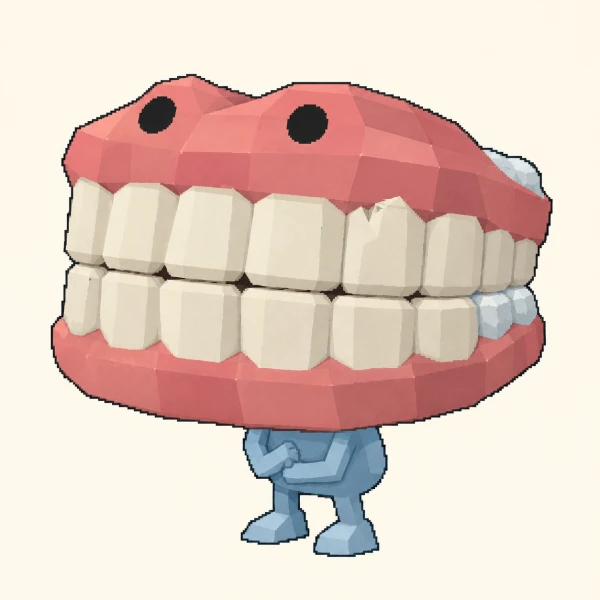
The Sharp-mouths: white-bodied, black-headed water beasts of the mire (AK); the Torch's metal-beaked worms.
The Wayfarers of the razor road: those whose feet are cut on the plain and bodies gashed in the sword forest (the Torch; AK).
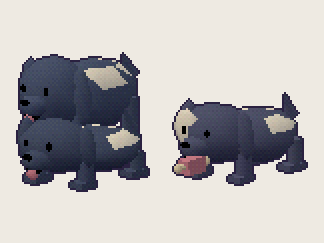
The Śyāmaśabala dogs: devour the limbs the sword leaves cut (AK).
The Iron-beaks: birds in the iron thorn trees that eat the climbers' eyes (AK).
The Grains of the river: the damned boiled in Vaitaraṇī like sesame in a cauldron (AK).
The bank guards: persons with swords, lances and javelins on both banks (AK).
In the game now
Built. place:naraka-hot-hells:neighbours:embers, :filth, :weapons, :unfordable-river all built; eight neighbour beings built with concept, rig and placement in Avīci's neighbouring-hells room (being:naraka-hot-hells:neighbours:embers/beings/knee-deep, :filth/beings/sunk, :filth/beings/sharp-mouths, :weapons/beings/wayfarers, :weapons/beings/spotted-dogs, :weapons/beings/iron-beaks, :unfordable-river/beings/grains, :unfordable-river/beings/bank-guards). On the wedge's surface: the pit of embers, the swamp of corpses, the road of razors and the ash river (naraka.ash-river rises by Howling and falls over the rim) as walkable places.
Art (10)
the sword tree and the river, left of the hell sector
Wellcome Collection, via Wikimedia Commons · traditional · CC BY 4.0
In the hell sector's left half a being is held up against a tree on a slope while beasts wait below, with the river and the sawing beside it; the tree reads as the sword-leaf or thorn tree of the neighbouring hells.
Photo Wonderlane, Wikimedia Commons · traditional · CC BY 2.0
The lower left of the hell sector: hell-workers drive beings across the green plain and over the ground with weapons, a bare tree beside them; the Wonderlane mural keeps the neighbouring hells as open country below Yama.
Nara National Museum (National Treasure), via Wikimedia Commons · traditional · Public domain
Heads of the damned above a yellow mire while pale worms crawl over them: the Kuṇapa with its biting creatures, from the sixteen lesser hells of the Kisekyō (Sūtra on the Arising of Worlds).
Nara National Museum, via Wikimedia Commons · traditional · Public domain
A blue hell-worker drives tiny monks toward a bank of boiling filth; a red one with a staff herds a crowd. The driving of the damned to the mire, with the guards who push them in.
Wellcome Collection (MS Thai 3), via Wikimedia Commons · traditional · CC BY 4.0
Top left: the thorn tree (Thai ton ngiu, the śālmalī) with a climber, a dog biting below and a hell-worker with a spear; top right: hungry hell beings with burning hands beg the monk Phra Malai. The Thai picture of the iron thorn trees.
The Knee-Deep, concept
AI concept study (repo), media.json concept-hot-knee-deep · concept · Project art
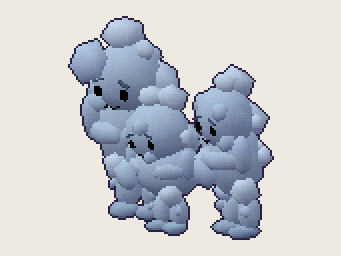
The ember pit's beings as built.
The Sunk, concept
AI concept study (repo), media.json concept-hot-sunk · concept · Project art
The corpse swamp's beings as built.
The Wayfarers of the razor road, concept
AI concept study (repo), media.json concept-hot-wayfarers · concept · Project art
The razor road's beings as built.
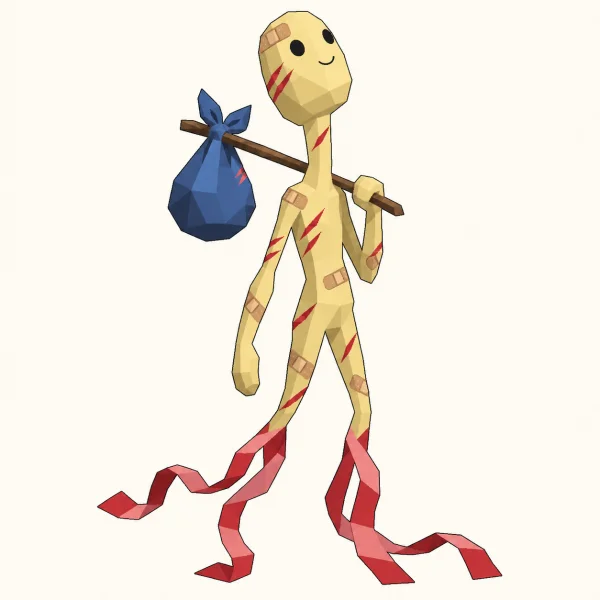
The Grains of the river, concept
AI concept study (repo), media.json concept-hot-grains · concept · Project art
The river without a ford's beings as built.
Still missing: No image found that shows all four neighbouring hells at the four gates of one square hell as a plan. The Vaitaraṇī with armed guards on both banks has no clear traditional image found; the Nara scroll's seven surviving segments show only seven of the Kisekyō's sixteen.
Arbuda (Blisters, chu bur can), Nirarbuda (Burst Blisters, chu bur rdol ba can), Aṭaṭa (Chattering Teeth, so tham tham pa), Huhuva (Lamentation, a chu zer ba), Hahava (Groaning, kyi hud zer ba), Utpala (Split like a Blue Lotus, ut pa la ltar gas pa), Padma (Split like a Lotus, padma ltar gas pa), Mahāpadma (Split like a Great Lotus, padma ltar cher gas pa)
Eight hells of ice and dark wind, ringed by snow mountains, where naked bodies blister, burst, chatter, wail, groan and split like lotuses; the Kośa puts them on the level of the hot hells, Kongtrul beyond the neighbouring hells.
Vasubandhu names them: Arbuda, Nirarbuda, Aṭaṭa, Hahava, Huhuva, Utpala, Padma, Mahāpadma. Five of the names, he says, describe the shape the body takes, a blister, a burst blister, a blue lotus, a lotus, a great lotus; the other three are the noises the damned make under the bite of the cold. He places them under Jambudvīpa on a level with the great hells.
The Torch sets the scene: the cold hells are surrounded by snow mountains, dark, with icy precipices and blizzards. Your tender naked body is lashed by freezing wind and breaks out in blisters, which burst into festering sores. You grind and clench your teeth; you let out a ceaseless wail; and in the Hell of Groans, like a dying person whose strength is gone, you can only gasp. Your flesh turns blue and the skin cracks into four pieces like a blue lotus, then the raw red flesh cracks into eight like a red lotus, then darker red into sixteen, thirty-two and innumerable pieces like a great red lotus, and worms with metal beaks get into the cracks and eat your insides.
The Buddha gave the lifespan only by comparison: if a Magadhan vāha of eighty khāris were full of sesame seeds and one seed were taken out every hundred years, the vāha would be empty before a life in Arbuda ended; and twenty Arbudas make one Nirarbuda, and so on, each hell twenty times the last. The Torch's version uses a container of two hundred kośalā measures.
The Tibetan texts put the three cries in the order Chattering Teeth, Lamentation, Groaning; the Kośa's Sanskrit order is Aṭaṭa, Hahava, Huhuva. The game pairs the names by the Mahāvyutpatti (no. 4931 aṭaṭa = so tham tham pa, 4932 hahava = kyi hud zer ba, 4933 huhuva = a chu zer ba), so along its walk the Sanskrit reads Arbuda, Nirarbuda, Aṭaṭa, Huhuva, Hahava, Utpala, Padma, Mahāpadma. Kongtrul's English names are Blistering, Blisters Bursting, Teeth Chattering, Moaning with Cold, Wailing with Cold, and the three lotuses.
No source in the selected account gives the cold hells guardians; their only other creatures are the Torch's metal-beaked worms. The Kośa's sixteen-utsada ring belongs to the hot hells alone.
What canon fixes for the map
Eight cold hells; five named for the body's shape, three for the cry [AK III.59c-d bhāṣya, p. 459].
Placement A: under Jambudvīpa, level with the great hells [AK p. 459]. Placement B: beyond the neighbouring hells of the hot hells [K p. 27]. Both recorded; the game follows K.
Ringed by snow mountains, dark, icy precipices, blizzards, freezing wind [H, the eight cold hells; J].
Progression: blisters, burst blisters, clenched teeth, wailing, groaning, split in four (blue lotus), eight (red lotus), sixteen/thirty-two/innumerable (great lotus), metal-beaked worms in the cracks [H].
Lifespan: Arbuda = emptying a vāha of eighty khāris of sesame one seed per century; each next hell twenty times longer [AK III.84, p. 473]; Torch: two hundred kośalā measures [H].
Name pairing by Mahāvyutpatti 4931–4933 (decision cold-hell-sanskrit, docs/purelands-hell-beings.json).
No guardians of the cold hells in the selected account [docs/purelands-hell-beings.json notInAccount].
Game adaptation: eight open-air cold courts along a zig-zag that steps down toward the rim on the wedge's cold half (naraka.cold-courts), the cold deepening court by court; a glacier ridge and basin; the indoor cold-hells room is retired (decision 28).
Who lives here
The Blistered, the Burst, the Chatterers, the Lamenters, the Groaners, the Four-Petalled, the Eight-Petalled, the Many-Petalled: the populations the Torch describes, named by the game.
The metal-beaked worms of the cold: eat the insides through the cracks in Split like a Great Lotus (the Torch).
In the game now
Built. place:naraka-cold-hells:blisters, :burst-blisters, :teeth-clenched, :achu, :gihu, :blue-lotus, :red-lotus, :great-lotus all built as open courts on the wedge (naraka-cold-hells.* districts of sections/naraka.json); nine beings built (being:naraka-cold-hells:blisters/beings/blistered through :great-lotus/beings/many-petalled and :great-lotus/beings/metal-beaked-worms), each placed at its court. The ice cave of refuge (naraka-cold-hells.refuge) is adaptation. The retired room docs/world-plan/places/naraka-cold-hells.json (2026-10-03) forwards to naraka.cold-courts.
Wellcome Collection (repo copy) · traditional · Public Domain Mark
Right of Yama's throne: a wall of blue-white ice peaks, naked beings huddled on grey ice at the bottom right, a hell-worker with a sack of ice, and a fox-headed worker holding a scale.
Wellcome Collection, via Wikimedia Commons · traditional · CC BY 4.0
The whole right half of the hell sector is a field of ice peaks with small huddled figures between them: the clearest drawing of the cold hells as a landscape.
Himalayan Art Resources (private collection) · traditional · No open licence (link only)
HAR's example image for the cold hells, filed under 'Subject: Hells, Cold'; the page carries no description.
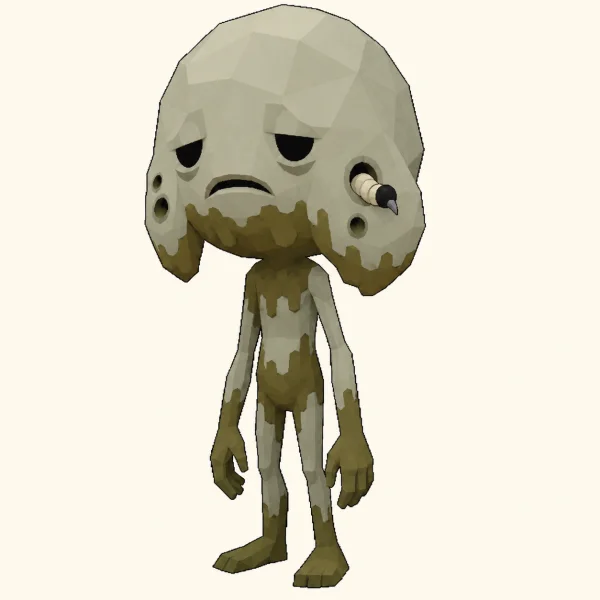
The Blistered, concept
AI concept study (repo), media.json concept-cold-blistered · concept · Project art
Arbuda's population as built.
The Many-Petalled, concept
AI concept study (repo), media.json concept-cold-many-petalled · concept · Project art
Mahāpadma's population, split like a great red lotus.
The metal-beaked worms of the cold, concept
AI concept study (repo), media.json concept-cold-metal-beaked-worms · concept · Project art
The Torch's worms as built.
Still missing: No traditional image found that distinguishes the eight cold hells one from another, or shows the lotus-split bodies; painters give one ice field. The snow-mountain ring the Torch describes is only hinted at by the peaks in V0018310.
Skt. prādeśika naraka; Tib. nyi tshe ba'i dmyal ba ('hells of a day', ephemeral hells)
Small hells made by one being's own karma, with no fixed place: in a river, a mountain, a desert, or inside a door, a pillar, a fireplace, a rope, a mortar, a broom or a pot, always in use.
After the sixteen hells made by the collective karma of beings, Vasubandhu names another kind: the prādeśika hells, made by the force of individual actions, of one being, two beings or many. Their variety is great and their place is not fixed: river, mountain, desert and elsewhere. Kongtrul says the same: hells of shorter duration may be isolated or clustered, have no fixed location, and vary with the specific acts of an individual.
The practice texts give them bodies. Jamyang Khyentse: born in a door, a pillar, a fireplace, a rope and the like, always made use of and exploited. The Torch adds a mortar, a broom and a pot, and the torments: trapped inside a stone, crushed between rocks, burned in a fire, boiled alive, or cut limb from limb as a piece of wood is cut. Their location and the degree of their pain are uncertain.
Because canon fixes no place for them, the game may put one anywhere. It puts one under an ordinary stone in each realm of the Wheel, each with an object being inside, and on Naraka's own cold half a hollow of hot cracks reached down the ice bowl's stair.
What canon fixes for the map
Made by the karma of one, two or many beings; place not fixed: river, mountain, desert, elsewhere [AK III.59 bhāṣya, pp. 459–460].
Isolated or clustered, no fixed location, varying with the individual's acts [K p. 28].
Born in a door, pillar, fireplace, rope, mortar, broom, pot; trapped in stone, crushed, burned, boiled, cut like wood; always used [J, The Ephemeral Hells; H, the ephemeral hells].
Game adaptation: which stone, in which realm, and the push that opens it are invented (places/hell-naraka.json gateway.adaptation, retired into naraka.hell-hollow 2026-10-10 under R27).
Who lives here
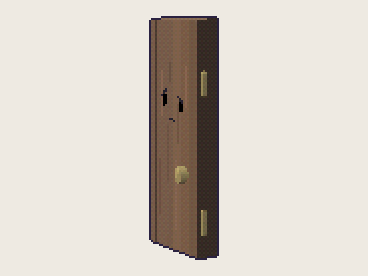
The one born in a door, the pillar, the rope, the broom, the pot: object beings (Jamyang Khyentse; the Torch), one placed in each realm's hollow.
The one born in a fireplace, the one born in a mortar, the one trapped inside a stone, the one in the log: the Torch's remaining objects, mapped and waiting.
In the game now
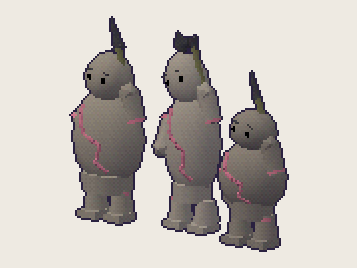
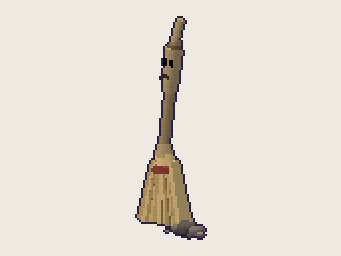
Built in part. being:ephemeral-hells:door (hell-animal), :pillar (naraka.hell-hollow), :rope (human.hell-hollow), :broom (hell-hungry-ghost), :pot (hell-asura) all built as object beings; being:ephemeral-hells:fireplace/hearth, :mortar, :log, :stone are sketch (concepts exist for hearth, log, stone; the millstone stands in for the mortar). naraka.hell-hollow is built as an open hollow in the wedge's ground (R27); the old room docs/world-plan/places/hell-naraka.json is retired.
Art (5)
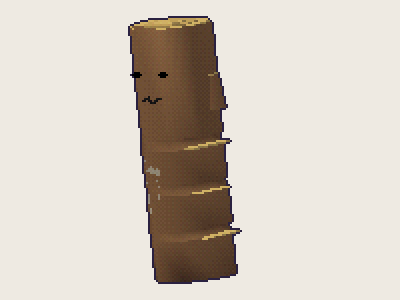
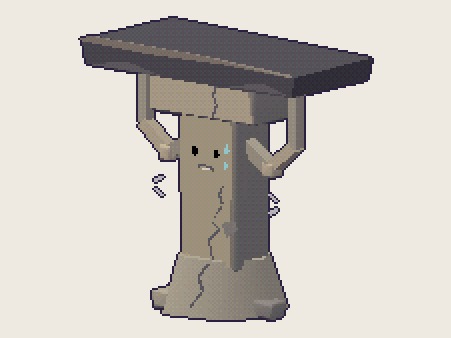
The pillar, concept
AI concept study (repo), media.json concept-obj-pillar · concept · Project art
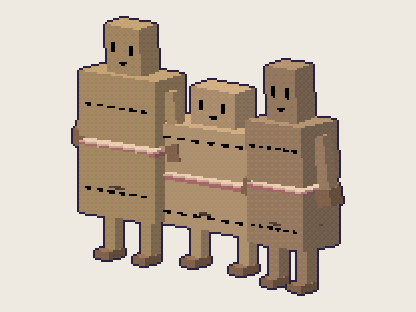
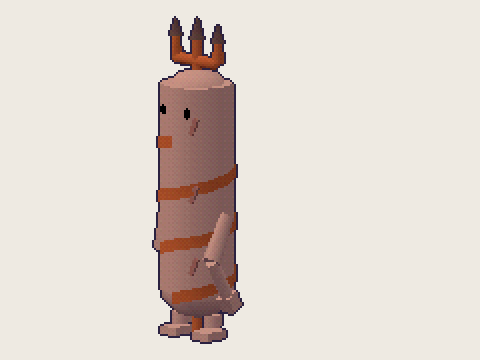
The object being under Naraka's stone.
The one born in a fireplace, concept
AI concept study (repo) · concept · Project art
Concept for a being not yet placed (sketch).
The one trapped inside a stone, concept
AI concept study (repo) · concept · Project art
Concept for a being not yet placed (sketch).
The one in the log, concept
AI concept study (repo) · concept · Project art
Concept for a being not yet placed (sketch).
The millstone (stand-in for the mortar), concept
AI concept study (repo) · concept · Project art
Stands in for the Torch's mortar until a mortar being is made.
Still missing: No traditional image of an ephemeral hell has been found; HAR 57894 is the one painting said to show 'the Occasional Hells' between the lower hells and the human and animal realms, and it is link-only.
Yama's court, his servants, and whether the hell guardians are real
Skt. Yama, Yamarāja, Dharmarāja; Tib. gshin rje (Shinje), gshin rje chos kyi rgyal po; his servants Yamarākṣasas, Tib. gshin rje'i las mkhan ('Yama's workers'); the hell guardians narakapāla
Yama is a living being, king of the pretas, seated five hundred leagues under Jambudvīpa, whose servants throw the judged into hell on his order; the Kośa records two views on the tormentors inside hell, that they are karmic appearances or real beings; the mirror of karma and the pebble count belong to the Bardo Thödol.
In the Abhidharma Yama is not a god and not a hell being. The Kośa: the king of the pretas is called Yama; his residence, the principal dwelling of the pretas, lies five hundred leagues under Jambudvīpa and is five hundred leagues deep and wide. Kongtrul repeats it, adding from the Mindfulness Scripture that he rules thirty-six kinds of starving spirit. The Pali Devadūta Sutta shows him at work: the wardens of hell bring a wrongdoer before King Yama, who presses him about the five messengers of the gods he saw among humans, a newborn baby, an old person, a sick person, a criminal punished by the king, and a corpse, and did not heed; then the wardens throw him into the Great Hell. At the end Yama himself wishes to be reborn human and meet a Buddha.
The Kośa then asks whether the guardians of hell (narakapāla) are beings. One answer: they are not; they move through the force of beings' actions, like the wind at the creation of the world. But what of the Venerable Dharmasubhūti's saying that the angry and cruel, who rejoice in others' suffering, are reborn as Yamarākṣasas? Vasubandhu answers that those are not the demons who torment inside hell but the servants of Yama who, on Yama's order, throw the damned into hell. The other opinion holds that the guardians are beings, suffering their own retribution in the same hells, kept from burning because the force of karma bounds the fire or gives their bodies elements of a special nature. Both views stand in the text.
The mirror, the scales and the pebbles come from the bardo literature, not the Abhidharma. In the Bardo Thödol's bardo of becoming, the good and evil 'genius' born with you count out your deeds as white and black pebbles; the Lord of Death says 'I will consult the Mirror of Karma', and every good and evil act is reflected in it, so lying is useless. Evans-Wentz's plate shows Dharmarāja with the mirror marked HRĪḤ, the monkey-headed one with the scales of black and white pebbles, and bull-headed and serpent-headed attendants. The ox-headed and horse-headed guards of East Asian hell painting are not in the Tibetan Abhidharma account, and the game maps Yama's servants without animal heads.
Himalayan Art Resources draws the same lines the game keeps: Yama the living judge of the ghost realm, distinct from the figure of Death who holds the Wheel (a personification of impermanence), and distinct from the tantric protector Yama Dharmarāja, a wrathful form of Mañjuśrī, and from Yamāntaka. HAR 57894 describes Yama's court as painters give it: blue, wrathful, one face and two hands, a butcher's stick in the right hand to mark the corpse before it is cut, the mirror of good and bad karma in the left, an attendant with scales, another hauling the dead by a lasso round the neck, and two kneeling attendants throwing black and white dice.
On an 'iron hound': the selected account has no hound at Yama's court. The dogs canon does place are the Śyāmaśabala dogs that eat the limbs cut by the sword-leaf forest, at the gates of the hot hells (Kośa III.59). The Thai manuscripts put a dog biting the climber of the thorn tree.
What canon fixes for the map
Yama is king of the pretas; his court is 500 leagues under Jambudvīpa, 500 leagues deep and wide, at the pretas' principal dwelling [AK III.59 bhāṣya, p. 460; K p. 28]. It is not inside the hells.
On Yama's order his servants (Yamarākṣasas) throw the damned into hell; the angry and cruel are reborn as these servants [AK pp. 458–459].
Two views on the guardians inside hell: not beings (moved by karma like the wind of creation) or beings whose retribution happens in the same hells and whom the fire cannot reach [AK pp. 458–459].
Yama questions the dead about the five messengers (baby, aged, sick, punished criminal, corpse), then the wardens throw them into the Great Hell [MN 130].
Mirror of karma, white and black pebbles, the scales and animal-headed attendants: the bardo of becoming in the Bardo Thödol (Evans-Wentz ed., Sidpa Bardo, p. 166 and frontispiece note) and bardo paintings, not the Kośa.
Yama the judge, Death holding the Wheel, Yama Dharmarāja the protector and Yamāntaka are four distinct identities [HAR set 1909; HAR 57894; repo ledger yama].
No ox- or horse-headed guards, no iron hound, in the selected account [docs/purelands-hell-beings.json notInAccount]. Dogs in canon: the Śyāmaśabala at the sword forest [AK p. 457].
Game: Yama's servants stand at the hot hells' mouth on the wedge; Yama himself is placed in the Hungry Ghost realm, not the Hells.
Who lives here
Yama (Dharmarāja, Shinje): the living judge, king of the pretas, at his court 500 leagues down (AK; K; MN 130).
Yama's servants, the Yamarākṣasas: throw the judged into hell on his order (AK).
The hell guardians (narakapāla) inside the hells: karmic appearances or real beings, two views (AK).
The five messengers of the gods: a baby, an aged person, a sick person, a punished criminal, a corpse (MN 130).
The Muni of the Hells (Dharmarāja Muni): the black-bodied Buddha who stands in the hell sector with fire and cooling water, in the Wheel tradition (six-munis ledger).
In the game now
being:naraka-hot-hells:guardians/yama-servants built (concept, rig, placed at the hot hells' mouth); being:naraka-hot-hells:guardians/hell-workers built in Avīci. Yama himself belongs to the Hungry Ghost realm: being:yama:king sketch, being:yama:the-judged missing, being:liberate-giant-yama built (the Liberate boss); the dark realm holds being:rebirth-guidance:yama (with the mirror of past actions) and :yama-acolytes as sketches; being:yama:death-holding-wheel is built on the Wheel; being:worldly-spirits:yama-dharmaraja and being:wrathful-forms:yamantaka are unhomed and missing. The five messengers (being:yama:messenger:*) are missing in the Human realm. The Muni of the Hells (overworld:munis:2) sits on the wedge's centre line.
Wellcome Collection (repo copy) · traditional · Public Domain Mark
Yama blue-green and wrathful in a flame mandorla at the top of the hell sector, the mirror raised in his left hand, a stick in his right; a horned scribe reads a scroll below him, a hell-worker holds a scale, and the dead are hauled before him.
Library of Congress, via Wikimedia Commons · traditional · Public domain
Yama red-faced in a palace of green pillars at the top of the hell sector, flanked by blue attendants, with a scribe at a table and an offering before him.
Himalayan Art Resources (private collection) · traditional · No open licence (link only)
The fullest court scene: Yama with stick and mirror, an attendant with scales, one hauling a corpse by a lasso, two throwing black and white dice before naked crouching figures. Look at the upper half.
The Metropolitan Museum of Art, Open Access · traditional · CC0 (Met Open Access)
A bronze Yama as guardian of the southern direction with his buffalo: the Indian Yama of the directions, not the hell judge, shown for the buffalo and the club.
Rubin Museum of Art, via Wikimedia Commons · traditional · Public domain (PD-Art)
The tantric protector Yama Dharmarāja, buffalo-headed, on a dark ground with Tsongkhapa above: a different being from the judge. Included so the two are not confused.
Wellcome Collection (MS Thai 2), via Wikimedia Commons · traditional · CC BY 4.0
Right panel: a being impaled on crossed spears above two cauldrons of heads over fire, a hell-worker behind. The Thai (Phra Malai / Traibhūmi) picture of the hell Yama sends people to.
Yama, concept
AI concept study (repo), media.json concept-yama · concept · Project art
The game's Yama, the judge at the mirror (Hungry Ghost realm).
Yama's servants, concept
AI concept study (repo), media.json concept-hot-yama-servants · concept · Project art
The Yamarākṣasas as built, without animal heads.
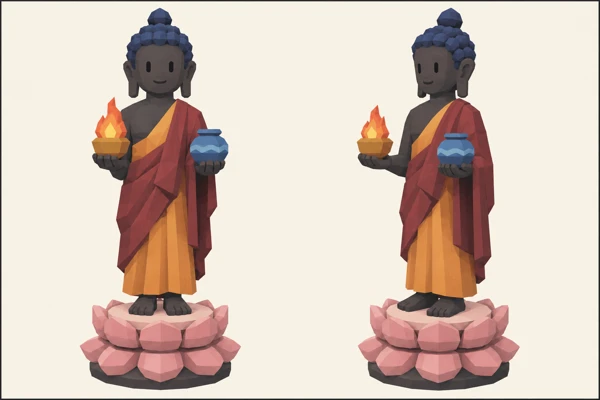
Dharmarāja, the Muni of the Hells: statue concept
AI concept study (repo), media.json statue-muni-naraka · concept · Project art
The hells' Muni with fire and water, as the game casts him.
Still missing: No open-licence image found of the Bardo Thödol judgment scene itself (mirror, scales of pebbles, monkey-headed Shinje); the HAR bardo paintings (65860, 93812) are link-only. The five messengers of the gods have no image found.
Skt. pañca ānantarya-karma ('acts of immediate retribution'); Tib. mtshams med pa lnga
Matricide, patricide, killing an arhat, splitting the Saṅgha, and wounding a Buddha with hatred: the five acts whose retribution comes in the very next life, in Avīci, with schism the gravest.
The Kośa names the obstacle of action: the five mortal transgressions, matricide, patricide, the killing of an arhat, schism, and wounding the Tathāgata with thoughts of hatred. Their retribution is in hell in the next existence; the Kośa's chapter on the world says this retribution takes place in the hells it has just described, Avīci above all. Lying to make a schism is the gravest. Five further acts are 'similar to mortal': defiling one's mother or an arhatī, killing a bodhisattva destined to awaken, killing a śaikṣa, stealing the Saṅgha's goods, and destroying a stūpa.
Devadatta committed two of the five, the schism and the drawing of the Buddha's blood, and went alive into Avīci. Toh 287 ties lesser thefts from the Saṅgha to the hells that surround Ultimate Torment, such as Great Darkness, so even the ring round Avīci has its own karma.
The practice texts give the general cause of all eighteen hells: harm done through intense hatred and aggression, above the other poisons.
What canon fixes for the map
The five: matricide, patricide, killing an arhat, schism, wounding a Tathāgata with hatred [AK IV.96 bhāṣya, p. 679].
Retribution in hell in the next existence; in these hells (Avīci) [AK IV.97; III.59 bhāṣya p. 459].
Schism (lying to split the Saṅgha) is the gravest [AK IV.99c].
Five acts similar to mortal transgression [AK IV.103].
Devadatta: schism and drawing blood; alive into Avīci [DHPA I.12; Cullavagga VII].
Cause of all the hells: intense anger and hatred [H; J].
Who lives here
Devadatta: the canonical example (Dhammapada Commentary I.12; Cullavagga VII).
In the game now
Nothing yet beyond Devadatta's missing entry (being:naraka-hot-hells:avici/beings/devadatta, missing). The hells' karma is not told anywhere in the game.
Art (0)
Still missing: No art: the five acts have no traditional iconography of their own beyond narrative scenes of Devadatta (the rock, the elephant Nāḷāgiri), none found open-licence.
Sources
Vasubandhu, Abhidharmakośabhāṣya, tr. Pruden, vol. II (scan), IV.96 and bhāṣya, printed p. 679 (PDF p. 335): 'the five mortal (ānantarya) transgressions: matricide, patricide, the killing of an Arhat, schism, and wounding the Tathāgata with thoughts of hatred'
In every Wheel of Life the hells fill the bottom wedge with Yama enthroned at its apex, the hot hells in flames on one side, the cold hells as an ice field on the other, and the hells' Muni standing between them with fire and water.
The repo's Wellcome gouache, the Library of Congress scroll, the Wellcome thangka and ink drawing, the Thikse mural and the modern Wonderlane mural all agree on the plan. Yama sits at the top of the wedge nearest the hub, with his mirror and attendants and the dead brought before him; from there the sector opens downward and outward.
To one side, usually the viewer's left, the hot hells: sawing, hacking, the cauldron, the sword-leaf tree, with flames along the rim. To the other, the cold hells as a field of ice peaks or a blue-white cliff with naked figures huddled on it; in the Thikse mural the cold hells shrink to a checked strip at the wedge's edge. Below Yama and between the two halves stands the black or dark-blue Muni of the Hells, Dharmarāja, holding fire in one hand and cooling water in the other, the one gift suited to beings of both halves.
HAR's 'Yama: Lord of Hell' (57894) breaks the circle and gives the hells two thirds of a whole painting, with the occasional hells between the lower hells and the human and animal realms above. The Japanese Jigoku-zōshi and the Thai Phra Malai books do without the Wheel entirely and paint one hell at a time.
What this fixes for the game: painters never show the stack or the sixteen gates; they show Yama's court, a hot half, a cold half and the Muni. The game's hot-and-cold split down the wedge is a reading of this painted convention, not of the texts.
What canon fixes for the map
Yama at the apex of the hell sector, hot hells one side, cold hells the other, the Muni with fire and water between [the Wheel paintings listed; the six-munis ledger].
The hot half is usually the viewer's left and the cold half the right in the Tibetan examples gathered here (L0069380, V0018310, Wonderlane, Thikse); the LOC scroll puts ice on the right too.
The Wheel sector is a painted compression; the texts stack the hells [docs/wheel-geography-canonical-research-2026-10-01.md, Naraka row].
Who lives here
The Muni of the Hells (Dharmarāja): the Buddha-form of the hell realm, black-bodied, with fire and water (six-munis ledger; the paintings).
In the game now
being:six-munis:hells built on the Wheel (shared munis rig); overworld:munis:2 'Muni of the Hells (Dharmarāja)' sits on the Naraka wedge's centre line with fire in the right hand and water in the left (sections/naraka.json naraka.lava-heart). The wedge's hot-left, cold-right reading matches the paintings when the wedge is seen from the hub.
Wellcome Collection (repo copy) · traditional · Public Domain Mark
The dark Muni stands in a mandorla at the foot of the sector, right hand raised with flame, a water vessel in the left, between the cauldron and the ice.
Himalayan Art Resources (private collection) · traditional · No open licence (link only)
The painting that gives the hells the most room: hot and cold hells and the occasional hells in the lower two thirds, labelled.
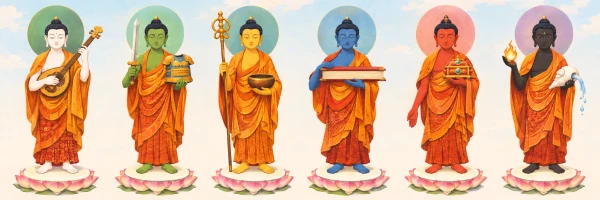
The six Munis, concept
AI concept study (repo), media.json concept-munis · concept · Project art
The shared Muni rig the game uses on the Wheel; the hells' Muni is the dark one with fire and water.
Still missing: The Rubin's Sikkim Wheel (C2004.21.1) and HAR 78 (Mongolia) hell sectors are link-only elsewhere in this ledger and were not re-cropped here.
docs/wheel-geography-canonical-research-2026-10-01.md, Naraka row: 'sideways Wheel sector is compression'
Those who go down into the hells to help
Kṣitigarbha (Tib. Sa yi snying po); the Muni of the Hells; Maudgalyāyana (Tib. Mo'u 'gal gyi bu); Phra Malai (Thai Theravāda)
Canon lets a few beings enter the hells unburned: the hell realm's Muni with fire and water, Kṣitigarbha by his vow, Maudgalyāyana on his visits, and in Theravāda Southeast Asia the monk Phra Malai, who carries the hell beings' messages back to the living.
The Wheel paintings put a Buddha-form in every realm. In the hells he is Dharmarāja, dark-bodied, with fire in one hand and cooling water in the other, one for the hot half and one for the cold. The game casts him as the Muni of the Hells and seats him on the centre line where the two halves meet.
Kṣitigarbha is one of the Eight Close Sons in the Tibetan tradition, a crowned bodhisattva with a jewel; the vow to empty the hells and the shaven monk with the ringed staff belong to the East Asian Dizang/Jizō tradition. The repo's iconography dossier asks that a Kṣitigarbha in a Tibetan assembly be given a complete named form and not silently blended with the Jizō silhouette. The game places him at a refuge below Avīci as an adaptation.
Maudgalyāyana, foremost in miraculous power, visits the hells in the avadāna literature and reports what he sees; HAR keeps a set of paintings of his descent (set 1448). In Thailand, Laos and Cambodia the monk Phra Malai does the same: he visits the hells, the beings there beg him to tell their relatives to make merit and keep the precepts, and the story fills the samut khoi folding books that also carry the Traibhūmi cosmology.
The Devadūta Sutta gives Yama his own wish: that he be reborn among humans and meet a Tathāgata who would teach him the Dharma. Even the judge wants out.
What canon fixes for the map
The hells' Muni holds fire and water, dark-bodied [the Wheel paintings; repo six-munis ledger].
Kṣitigarbha: Tibetan Eight Close Sons form with crown and jewel; monk-with-staff is East Asian [public/atlas/iconography/dossiers/ksitigarbha.json].
Maudgalyāyana's descent into hell: HAR set 1448 (narrative paintings) [HAR set 1899].
Phra Malai visits the hells and carries messages to the living: Thai samut khoi manuscripts (Wellcome MS Thai 2–3; British Library Or. 16101) [Wellcome; BL blog].
Yama wishes to be reborn human and meet a Buddha [MN 130].
Game adaptation: Kṣitigarbha's refuge of chörten, lamps and a light shaft below Avīci; the cold hells' ice cave of refuge (places/naraka-hot-hells.json refuge; sections/naraka.json naraka-cold-hells.refuge).
Who lives here
The Muni of the Hells (Dharmarāja): fire and water.
Kṣitigarbha: keeps the refuge below Avīci (adaptation of his East Asian vow).
Maudgalyāyana: visitor to the hells (avadānas; HAR set 1448).
Phra Malai: the Theravāda monk who visits hell (Thai manuscripts; not in the Tibetan canon the game follows, recorded here for its art).
In the game now
being:six-munis:hells built (Wheel); overworld:munis:2 placed on the wedge. Kṣitigarbha built (ksitigarbha, presence form) at naraka-hot-hells.refuge. Maudgalyāyana and Phra Malai: nothing.
Photo Dharma (Anandajoti Bhikkhu), Wikimedia Commons · photo · CC BY 2.0
A modern Thai-style panorama of hell: beings thrown from cliffs, hung from gibbets, boiled, cut, with Phra Malai glowing in the sky. Modern temple art, shown for the Theravāda picture of the whole hell at once.
Photo Dharma (Anandajoti Bhikkhu), Wikimedia Commons · photo · CC BY 2.0
The monk seated on a rock among hell beings with hands joined, some with animal heads: the Theravāda picture of a visitor the hell beings can speak to, which is what the game's Pilgrimage does.
Kshitigarbha, concept
AI concept study (repo), media.json concept-ksitigarbha · concept · Project art
The game's Kṣitigarbha at the refuge below Avīci; the dossier flags that his form needs a named tradition.
The six Munis, concept
AI concept study (repo), media.json concept-munis · concept · Project art
The shared Muni rig; the hells' Muni is the dark one.
Still missing: Maudgalyāyana's descent into hell (HAR set 1448) is link-only; no open-licence Tibetan image of it was found. No open image of a Tibetan Eight-Sons Kṣitigarbha was gathered here (see the dossier's Rubin and HAR references).
Section id naraka; the Wheel's south wedge, centre line 180°, r 20–72
The Hells wedge as planned and built: hot half and cold half split down the centre line, 24 districts (inner pass, ember pit, ice bowl, lava heart, razor road, eight hot courts, ash river, corpse swamp, lava mound, outer pass, eight cold courts, glacier ridge and basin, the hot hells' mouth, the hollow of hot cracks), with 14 characters placed on its ground and the hot populations below it.
Account: Kongtrul for the names, order and arrangement (Avīci deepest, seven hot hells above, four kinds of neighbouring hell on each side of each, cold hells beyond the neighbours); the Kośa III.58–59 for the neighbouring hells' inhabitants and the guardians; the Torch and Jamyang Khyentse's verses for each hell's condition; the cold hells in the Tibetan order with Sanskrit paired by the Mahāvyutpatti. Alternatives kept and not merged: the Torch's sixteen round Avīci only; the Kośa's cold hells on the level of the great hells. Not in the account: ox- and horse-headed guards, cold-hell guardians, Yama as a hell being.
Adaptation: the sources stack the hells under Jambudvīpa; the wedge lays them side by side on one level, hot at u < 0 and cold at u > 0, split evenly down the centre line (Josie's art direction). The even split and the seam are the game's. The heart is split the same way, scorched ash west of the seam and snow east of it; the lava river runs west and freezes in its bed east of u 0.
Relief: flat treads and risers of one step. Low: the ember pit and ice bowl either side of the inner pass, the sunk bowl beyond Avīci, the glacier basin, the last cold courts stepping down toward the rim. Level: both crossings, the eight hot courts, the heart. High: the cooled-lava mound on the hot rim and the glacier ridge on the cold flank, three steps each, facing across the heart; the crossing dais on the centre line. Water: the boiling ash river swum from a cleft by Howling to a fall over the rim; the corpse swamp waded to the knee; the glacier meltwater frozen; the lava river and pool swum, the frozen river and pool walked on.
Districts, one line each:
naraka.inner-pass: the way in from the hub ring, one lane with fire on one hand and snow on the other, ending at a dais where the realm is first seen [0 residents]
naraka.ember-pit: a sunk bowl that looks like a shady trench and is a bed of live coals; the Wheel's surface picture of the neighbouring kind, no being of its own [0]
naraka.ice-bowl: the cold half's first sight, a frozen pan whose stair climbs toward the hollow of the ephemeral hell [0]
naraka.lava-heart: where the halves meet; the Big Snake (Mahoraga, the realm's boss) on the seam, the Muni of the Hells on the centre line with fire and water, the volcano over the hot side, the ember cavern's door at its foot [Mahoraga, Muni of the Hells]
naraka.razor-road: the neighbouring hell of blades on the south-west flank, plain, sword-leaf wood and thorn tree; surface picture, no being [0]
naraka.hot-courts: the basalt approach to the underground hot hells, eight station courts with one descent and a clear return [0]
naraka.ash-river: the river without a ford, boiling ash-water from a cleft by Howling to a fall over the rim; surface picture [0]
naraka.corpse-swamp: the bog of corpses between the courts and the way over to the cold half; surface picture [0]
naraka.lava-mound: the hot rim's high ground, from which the eight courts read in order from Reviving to Avīci [0]
naraka.outer-pass: the way out to the rim on the centre line and the north crossing between the halves [0]
naraka.cold-courts: the eight cold hells in the Tibetan order along a zig-zag stepping down toward the rim [0]
naraka.glacier-ridge: the cold half's high ground along the Animal seam, source of the meltwater [0]
naraka.glacier-basin: where the meltwater ends, the glacier mouth as scenery, the cold pass out to Animal [0]
naraka-cold-hells.blisters … great-lotus (eight districts): the cold courts, each with its population [the Blistered, the Burst, the Chatterers, the Lamenters, the Groaners, the Four-Petalled, the Eight-Petalled, the Many-Petalled and the metal-beaked worms]
naraka-cold-hells.refuge: the ice cave of refuge, out of the wind, lamps lit (adaptation) [0]
naraka.hot-hells-mouth: the stepped basalt pit mouth in the hot courts down which Yama's servants send the judged, the gateway to the hot hells room [Yama's servants]
naraka.hell-hollow: the hollow of hot cracks, Naraka's ephemeral hell, an open round she walks down into off the ice bowl's stair [the pillar; the one born in a fireplace]
Seams: Preta at 150° across a two-unit chasm by one deck (seam.preta-naraka.pass, r 64.5), landing on the ash river's far bank; Animal at 210° by the cold pass off the glacier basin (seam.naraka-animal.pass, r 64.4); the inner apron to the Wheel ring at r 38 on the centre line; the outer apron to the rim promenade at r 144. Air and light: desaturated, foggy, dreamlike over the whole wedge, ash-grey haze over the hot half, white-grey fog over the cold, the fire's own glow the only warm light.
What canon fixes for the map
Hot and cold hells are separate traditional groups [AK III.59; K p. 27] — kept as two halves.
The hot hells are stacked beneath Jambudvīpa; the sideways wedge is a compression; no hell lies under the poison hub [docs/wheel-geography-canonical-research-2026-10-01.md].
Four kinds of neighbouring hell on each side of each hot hell [K p. 27] — one of each shown on the surface, all sixteen in the rooms below.
The cold hells lie beyond the neighbouring hells [K p. 27] — drawn as the far side of the heart.
Adaptation: the even hot/cold split and the seam, the volcano, the lava river, the glacier, the crossings and the Muni's seat are the game's (sections/naraka.json account.adaptation; landmarks).
Who lives here
Mahoraga, the Big Snake: the realm's Liberate boss on the seam (hatred and anger as the realm's character).
Muni of the Hells (Dharmarāja): on the centre line, fire and water.
Yama's servants (Yamarākṣasas): at the hot hells' mouth.
The nine cold populations in their courts.
The pillar and the one born in a fireplace in the hollow.
In the game now
Built: place:naraka built; all 24 districts laid; 14 characters on the wedge's residents list (Muni, obj-pillar, nine cold beings, Yama's servants, with Mahoraga and the hearth being hooked); the hot populations stand below in naraka-hot-hells (see built-naraka-hot-hells). Samsara realm `naraka`: 81 built, 5 sketch (the ephemeral hearth, mortar, log, stone), 1 missing (Devadatta). Orphans recorded for the rebuild: the three Liberate clearings, the iron cages (no source; a door contradicts Howling's doorless cell), per-cell basalt scatter, the eight ember-stones on the heart (to move to the courts).
Art (6)
Hell realm: view from above (in-world capture)
Repo world capture, media.json terrain-naraka · world-view · Project art
The built wedge from above: hot courts and the ash river left, the hot hells' mouth as the dark pit, cold courts and glacier right, the seam down the middle.
Naraka: hot and cold hells, Wheel Atlas concept
AI concept study (repo), media.json wheel-03-naraka · concept · Project art
The concept the wedge was built toward: lava courts west, ice courts east, a bridge across the seam.
Hell realm, whole segment (asset guide)
Repo render, media.json segment-naraka · world-view · Project art
The wedge segment as rendered for the asset guide.
Hell realm: ambitious map study
AI layout study (repo), media.json map-03-naraka-alternative · layout-study · Project art
An earlier, more ambitious plan drawing kept for comparison; its source is not recorded.
Mahoraga, the Big Snake: Liberate rig capture
Repo Atlas capture · world-view · Project art
The realm's boss as built, bound form.
Yama's servants: rig capture
Repo Atlas capture · world-view · Project art
The Yamarākṣasas as built at the hot hells' mouth.
Still missing: No in-world captures exist of the hot courts, the ash river, the cold courts or the glacier at ground level; only the one overhead capture.
Place id naraka-hot-hells; rooms naraka-hot-hells:<court> for the neighbouring hells
A cutaway descent 24 by 52 under the hot courts: one lane from the way in down to a refuge, eight courts opening off it alternately left and right, each 0.8 lower than the last, each with a gate to its own room of sixteen neighbouring hells; 22 characters, all but Devadatta built.
Gateway: from naraka.hot-hells-mouth, a stepped basalt pit mouth in the hot courts, because the hot hells lie stacked below the ground, Reviving highest and Avīci deepest, so the way to them is a way down, and Yama's servants send the judged down its steps. The return climbs from the lane head by Reviving up the open steps to the mouth. Reaching the stack from the Wheel's sector is compression of the sources' 'below Jambudvīpa'.
Layout: a true interior, since the sources put the hot hells underground. Courts at Reviving (-7.2, 14), Black-Line (7.2, 9.5), Crushing (-7.2, 5), Howling (7.2, 0.5), Great Howling (-7.2, -4), Heating (7.2, -8.5), Intense Heating (-7.2, -13), Avīci (7.2, -17.5), the refuge at z -23. The whole stack is walked without loading. On each court's outer side a gate leads to its neighbouring hells: a hub, four causeways (east, south, west, north) and sixteen courts, four kinds on four sides, in rooms 58 by 58 built only within 21 units; those eight rooms are loading zones today and only Avīci's is populated, where Kongtrul and the Torch agree.
Each court is told by its condition: Reviving's broken-and-mended floor; Black-Line's lines and saws; Crushing's iron mortars and hammers; Howling's doorless cell; Great Howling's double walls; Heating's spikes and tridents; Intense Heating's vats; Avīci's fire. Each being stands beside its court's main piece, off the aisle, so she can walk up and talk; a being inside the piece could be neither reached nor spoken to, so the rig plays the condition and the piece beside it is the scene (adaptation). Gore is allowed and not softened: flat glossy splats and round bones, cute and gross, never gritty.
Hooks: the three Liberate stops, fixed, in Black-Line (the Sliced One, Kalasutra), Crushing (the Mountain-Pressed One, Sanghata) and Heating (the Ember-Wreathed One, Tapana), identity, order and real vs-AI match unchanged; the eight ember-stone collectibles, one by each court gate; the hell-workers' round from Avīci up to Black-Line and back. Kṣitigarbha keeps the refuge at the bottom, a shelter of chörten, lamps and a light shaft (adaptation from his East Asian vow).
What canon fixes for the map
Order of the eight courts top to bottom follows K p. 27 and AK III.58.
Four kinds of neighbouring hell on each of four sides of each hell [K p. 27; AK III.59] — the sixteen-court rooms.
Only Avīci's neighbouring room is populated, where Kongtrul and the Torch agree; the Torch's sixteen-round-Avīci is the variant [places/naraka-hot-hells.json layout].
Devadatta went alive into Avīci [DHPA I.12; SBV] — mapped, not built.
Adaptation: the cutaway room, the one lane, the gate rooms as loading zones, the beings standing beside their pieces, the refuge, the ember-stones.
Who lives here
The Revived, the Lined, the Pressed, the Howlers, the Double-Walled, the Skewered, the Boiled, the Flame-Bodied: one population per court, three stand for each.
The hell-workers: Avīci, on a round up the lane.
Devadatta: Avīci (missing).
The Knee-Deep, the Sunk, the Sharp-mouths, the Wayfarers, the Śyāmaśabala dogs, the Iron-beaks, the Grains, the bank guards: Avīci's neighbouring-hells room.
Kshitigarbha: the refuge (awake, presence form).
Kalasutra, Sanghata, Tapana: the Liberate stops (bound).
In the game now
place:naraka-hot-hells built; eight court places built; four neighbour places built; 22 characters: 21 built (8 court populations, hell-workers, 8 neighbour beings, Kṣitigarbha, 3 Liberate beings), Devadatta missing. The three Liberate clearings on the heart stay until the stops move (orphans note). No in-world captures of the room.
Art (12)
The Revived, concept
AI concept study (repo) · concept · Project art
Reviving's court population.
The Lined, concept
AI concept study (repo) · concept · Project art
Black-Line's court population.
The Pressed, concept
AI concept study (repo) · concept · Project art
Crushing's court population.
The Howlers, concept
AI concept study (repo) · concept · Project art
Howling's court population.
The Double-Walled, concept
AI concept study (repo) · concept · Project art
Great Howling's court population.
The Skewered, concept
AI concept study (repo) · concept · Project art
Heating's court population.
The Sharp-mouths, concept
AI concept study (repo) · concept · Project art
The corpse mire's white-bodied, black-headed biters.
The Śyāmaśabala dogs, concept
AI concept study (repo) · concept · Project art
The sword forest's dogs.
The Iron-beaks, concept
AI concept study (repo) · concept · Project art
The thorn trees' birds.
The bank guards of the river, concept
AI concept study (repo) · concept · Project art
Vaitaraṇī's armed persons.
Kshitigarbha: presence capture
Repo Atlas capture · world-view · Project art
The keeper of the refuge as built.
The Revived: rig capture
Repo Atlas capture · world-view · Project art
One court population as a live rig, bound form.
Still missing: No in-world capture of the descent room or any court exists; no concept for Devadatta.
docs/purelands-hell-beings.json, entries with refs and passages for every court and neighbour being
docs/world-plan/briefs/hells.json, the beings' written lines
The ember cavern (ember-cavern) today
Place id ember-cavern; door at the volcano's foot in naraka.lava-heart
Naraka's one warm home: an oval cave behind a smouldering portal at the volcano's foot, with a lava seam, a hearth where clapperless bells and kettles are cast, a bench, a bedroll, and one soul by the fire, the Ember Child of the Cavern.
Gateway: from naraka.lava-heart through the smouldering portal at the volcano's foot (planned entrance [-16.6, -4.4] in the wedge frame). The reason is the game's: behind the portal someone has made a home in a hot cave and kept it, the way you keep a house in a bad country. The sources describe the heat (the Torch: in the eight hot hells the entire floor is burning iron), not a home made in it; the place is invented under Josie's rule that every building has a room.
Layout: a room, small and already well made. An oval cave, half-axes 3.7 by 2.65, under a vault with eight stalactites; a wall of basalt columns across the back; a seam of lava from the back wall that stops a stride short of the front, so she walks round its end. Left of the seam a hearth shelf with a crucible fed by a runnel, eight stones, tongs and an anvil-stone, and two racks on the wall: eight clapperless bells (three, three and two) and three kettles. Right of the seam the way out, a basalt bench, a bedroll with a folded blanket, and a kettle with three cups on a hot stone. A soul sits by the hearth.
Hook: the Ember Child of the Cavern can be freed at his own hearth (match hook). The plan keeps this home when its Liberate encounter moves to Heating.
What canon fixes for the map
Floor of burning iron in the hot hells [H] — the only canon the room leans on.
Adaptation: the whole cave, its maker and his castings are invented (places/ember-cavern.json gateway.adaptation).
Who lives here
Ember Child of the Cavern (ember-cavern:fear-fire:1): the soul by the hearth, bound, freeable at his hearth.
In the game now
place:ember-cavern built; being:ember-cavern:fear-fire:1 built (concept, rig, placed). Reached from the lava heart.
Art (1)
Ember Child of the Cavern, concept
AI concept study (repo) · concept · Project art
The cavern's one resident.
Still missing: No capture of the cave interior exists; the hearth, racks and seam are described in the plan only.
missing Nothing in the game is this yet.sketch Something stands in: a model not yet placed, a placement drawn with a shared rig, a written voice, a court inside a shared room, or a place registered with no builder.built A placed character with its own model is this, or the place is built as its own room, zone or segment.
Source: an adaptation grounded in docs/purelands-hell-beings.json, Dhammapada Commentary (tr. Burlingame, Buddhist Legends) I.12, The Story of Devadatta: Dhammapada Commentary I.12 (verse 17), The Story of Devadatta (docs/purelands-hell-beings.json#naraka-hot-hells:avici/beings/devadatta)
Source: an adaptation grounded in Hot hells, neighboring hells and isolated hells, H: The Defects of Saṃsāra · the eight hot hells (docs/purelands-hell-beings.json, attach ember-cavern:fear-fire:1)
Why built: drawn with the ember-fear-fire rig, whose concept is this record's concept image.
Source: an adaptation grounded in Hot hells, neighboring hells and isolated hells, AK (Abhidharmakośabhāṣya, tr. Pruden): III.59a-c, printed p. 458 (PDF p. 114) (docs/purelands-hell-beings.json)
Why built: drawn with the hot-bank-guards rig, whose concept is this record's concept image.
Why built: related: Kalasutra (character:liberate-the-sliced-one) at Liberate route; Kalasutra, the Liberate being named for this hell (story/beings.ts naming pass); it stands on the Liberate route, not in this hell; mapped being The Lined is built (the hot-lined rig).
Why built: related: Sanghata (character:liberate-the-mountain-pressed-one) at Liberate route; Sanghata, the Liberate being named for this hell (story/beings.ts naming pass); it stands on the Liberate route, not in this hell; mapped being The Pressed is built (the hot-pressed rig).
Why built: related: Tapana (character:liberate-the-ember-wreathed-one) at Liberate route; Tapana, the Liberate being named for this hell (story/beings.ts naming pass); it stands on the Liberate route, not in this hell; mapped being The Skewered is built (the hot-skewered rig).
Source: an adaptation grounded in docs/purelands-hell-beings.json, entry naraka-cold-hells:blisters/beings/blistered; Jamyang Khyentse Wangpo · Illuminating the Excellent Path; The eight Cold Hells
Why built: drawn with the cold-blistered rig, whose concept is this record's concept image.
Source: an adaptation grounded in Hot hells, neighboring hells and isolated hells, H (Chökyi Drakpa, A Torch for the Path to Omniscience): The Defects of Saṃsāra · the eight hot hells, 7 (docs/purelands-lore-populations.json)
Why built: drawn with the hot-boiled rig, whose concept is this record's concept image.
Source: an adaptation grounded in docs/purelands-hell-beings.json, entry naraka-cold-hells:burst-blisters/beings/burst; Jamyang Khyentse Wangpo · Illuminating the Excellent Path; The eight Cold Hells
Why built: drawn with the cold-burst rig, whose concept is this record's concept image.
Source: an adaptation grounded in docs/purelands-hell-beings.json, entry naraka-cold-hells:teeth-clenched/beings/chatterers; Chökyi Drakpa · A Torch for the Path to Omniscience; The Defects of Saṃsāra · the eight cold hells
Why built: drawn with the cold-chatterers rig, whose concept is this record's concept image.
Source: an adaptation grounded in Hot hells, neighboring hells and isolated hells, H (Chökyi Drakpa, A Torch for the Path to Omniscience): The Defects of Saṃsāra · the eight hot hells, 5 (docs/purelands-lore-populations.json)
Why built: drawn with the hot-double-walled rig, whose concept is this record's concept image.
Source: an adaptation grounded in docs/purelands-hell-beings.json, entry naraka-cold-hells:red-lotus/beings/eight-petalled; Chökyi Drakpa · A Torch for the Path to Omniscience; The Defects of Saṃsāra · the eight cold hells
Why built: drawn with the cold-eight-petalled rig, whose concept is this record's concept image.
Source: an adaptation grounded in Hot hells, neighboring hells and isolated hells, H (Chökyi Drakpa, A Torch for the Path to Omniscience): The Defects of Saṃsāra · the eight hot hells, 8 (docs/purelands-lore-populations.json)
Why built: drawn with the hot-flame-bodied rig, whose concept is this record's concept image.
Source: an adaptation grounded in docs/purelands-hell-beings.json, entry naraka-cold-hells:blue-lotus/beings/four-petalled; Chökyi Drakpa · A Torch for the Path to Omniscience; The Defects of Saṃsāra · the eight cold hells
Why built: drawn with the cold-four-petalled rig, whose concept is this record's concept image.
Source: an adaptation grounded in Hot hells, neighboring hells and isolated hells, AK (Abhidharmakośabhāṣya, tr. Pruden): III.59a-c, printed p. 458 (PDF p. 114) (docs/purelands-hell-beings.json)
Why built: drawn with the hot-grains rig, whose concept is this record's concept image.
Source: an adaptation grounded in docs/purelands-hell-beings.json, entry naraka-cold-hells:gihu/beings/groaners; Chökyi Drakpa · A Torch for the Path to Omniscience; The Defects of Saṃsāra · the eight cold hells
Why built: drawn with the cold-groaners rig, whose concept is this record's concept image.
Source: an adaptation grounded in Hot hells, neighboring hells and isolated hells, H (Chökyi Drakpa, A Torch for the Path to Omniscience): The Defects of Saṃsāra · the eight hot hells, 8 (docs/purelands-lore-populations.json)
Why built: drawn with the hot-hell-workers rig, whose concept is this record's concept image.
Source: an adaptation grounded in Hot hells, neighboring hells and isolated hells, H (Chökyi Drakpa, A Torch for the Path to Omniscience): The Defects of Saṃsāra · the eight hot hells, 4 (docs/purelands-lore-populations.json)
Why built: drawn with the hot-howlers rig, whose concept is this record's concept image.
Source: an adaptation grounded in Hot hells, neighboring hells and isolated hells, AK (Abhidharmakośabhāṣya, tr. Pruden): III.59a-c, printed p. 458 (PDF p. 114) (docs/purelands-hell-beings.json)
Why built: drawn with the hot-iron-beaks rig, whose concept is this record's concept image.
Source: an adaptation grounded in docs/purelands-hell-beings.json, entry naraka-cold-hells:achu/beings/lamenters; Chökyi Drakpa · A Torch for the Path to Omniscience; The Defects of Saṃsāra · the eight cold hells
Why built: drawn with the cold-lamenters rig, whose concept is this record's concept image.
Source: an adaptation grounded in Hot hells, neighboring hells and isolated hells, H (Chökyi Drakpa, A Torch for the Path to Omniscience): The Defects of Saṃsāra · the eight hot hells, 2 (docs/purelands-lore-populations.json)
Why built: drawn with the hot-lined rig, whose concept is this record's concept image.
Source: an adaptation grounded in docs/purelands-hell-beings.json, entry naraka-cold-hells:great-lotus/beings/many-petalled; Chökyi Drakpa · A Torch for the Path to Omniscience; The Defects of Saṃsāra · the eight cold hells
Why built: drawn with the cold-many-petalled rig, whose concept is this record's concept image.
Source: an adaptation grounded in docs/purelands-hell-beings.json, entry naraka-cold-hells:great-lotus/beings/metal-beaked-worms; Chökyi Drakpa · A Torch for the Path to Omniscience; The Defects of Saṃsāra · the eight cold hells
Why built: drawn with the cold-metal-beaked-worms rig, whose concept is this record's concept image.
Source: an adaptation grounded in Hot hells, neighboring hells and isolated hells, J (Jamyang Khyentse Wangpo, Illuminating the Excellent Path): The Ephemeral Hells (docs/purelands-lore-populations.json)
Why built: drawn with the ephemeral-hearth rig, whose concept is this record's concept image.
Source: an adaptation grounded in Hot hells, neighboring hells and isolated hells, H (Chökyi Drakpa, A Torch for the Path to Omniscience): The Defects of Saṃsāra · the eight hot hells, 3 (docs/purelands-lore-populations.json)
Why built: drawn with the hot-pressed rig, whose concept is this record's concept image.
Source: an adaptation grounded in Hot hells, neighboring hells and isolated hells, H (Chökyi Drakpa, A Torch for the Path to Omniscience): The Defects of Saṃsāra · the eight hot hells, 1 (docs/purelands-lore-populations.json)
Why built: drawn with the hot-revived rig, whose concept is this record's concept image.
Source: an adaptation grounded in Hot hells, neighboring hells and isolated hells, AK (Abhidharmakośabhāṣya, tr. Pruden): III.59a-c, printed p. 457 (PDF p. 113) (docs/purelands-hell-beings.json)
Why built: drawn with the hot-sharp-mouths rig, whose concept is this record's concept image.
Source: an adaptation grounded in Hot hells, neighboring hells and isolated hells, H (Chökyi Drakpa, A Torch for the Path to Omniscience): The Defects of Saṃsāra · the eight hot hells, 6 (docs/purelands-lore-populations.json)
Why built: drawn with the hot-skewered rig, whose concept is this record's concept image.
Source: an adaptation grounded in Hot hells, neighboring hells and isolated hells, AK (Abhidharmakośabhāṣya, tr. Pruden): III.59a-c, printed p. 457 (PDF p. 113) (docs/purelands-hell-beings.json)
Why built: drawn with the hot-spotted-dogs rig, whose concept is this record's concept image.
Source: an adaptation grounded in Hot hells, neighboring hells and isolated hells, AK (Abhidharmakośabhāṣya, tr. Pruden): III.59 bhāṣya, printed pp. 458–459 (PDF pp. 114–115) (docs/purelands-hell-beings.json)
Why built: drawn with the hot-yama-servants rig, whose concept is this record's concept image.
Why built: place naraka-cold-hells:blisters: built (pocket); a court inside naraka-cold-hells, told by fat flesh-pink blisters swelling out of frozen skin by the gate, small ones rising out of the road; a gusting, gritty wind.
Why built: place naraka-cold-hells:burst-blisters: built (pocket); a court inside naraka-cold-hells, told by the blisters split open, their halves apart; what wept out has frozen into a yellow puddle on the road; slow drips.
Why built: place naraka-cold-hells:teeth-clenched: built (pocket); a court inside naraka-cold-hells, told by an upper and a lower jaw of stubby teeth on pink gums either side of the way, three teeth knocked out on the ice.
Why built: place naraka-hot-hells:crushing: built (room); a court inside naraka-hot-hells, told by slabs leaning over the way.
Placed: naraka-hot-hells:crushing.
Ember cavern built place
Source: an adaptation grounded in Hot hells, neighboring hells and isolated hells, H: The Defects of Saṃsāra · the eight hot hells ("in the eight hot hells the entire floor beneath your feet will be of burning iron"), as attached to this resident in docs/purelands-hell-beings.json
Placed: ember-cavern.
Great Howling (Mahāraurava) built place
Trapped behind double walls, screaming under the hammers.
Why built: place naraka-cold-hells:gihu: built (pocket); a court inside naraka-cold-hells, told by a glacier bowed over the court and three trees of ice blades drooping like bent heads; the groan is the ice settling.
Why built: place naraka-hot-hells:heating: built (room); a court inside naraka-hot-hells, told by red-hot stakes and tridents on an iron floor.
Placed: naraka-hot-hells:heating.
Hell naraka built place
Source: an adaptation grounded in docs/purelands-lore-populations.json, Jamgön Kongtrul · Treasury of Knowledge, book one (Myriad Worlds), Tsadra edition; PDF p. 28; https://dharmacloud.tsadra.org/wp-content/uploads/2024/09/TOK-VOL-1.pdf
Why built: place naraka-cold-hells:achu: built (pocket); a court inside naraka-cold-hells, told by a frame of eight ice bells with no clappers, the cries carried by the wind through them; a pool of frozen tears.
Placed: naraka-cold-hells:achu.
Naraka built place
Source: Hot hells, neighboring hells and isolated hells, Jamyang Khyentse Wangpo, Illuminating the Excellent Path (the topic’s source), the verses on the eight Hot Hells and the Neighbouring Hells that ring the Hell of Ultimate Torment; docs/purelands-lore-populations.json, hot-hells: H (Chökyi Drakpa, A Torch for the Path to Omniscience), The Defects of Saṃsāra · the eight hot hells
Placed: naraka.
Naraka cold hells built place
Source: an adaptation grounded in The eight cold hells, K PDF p. 27: cold hells beyond the neighbouring hells (docs/wheel-geography-canonical-research-2026-10-01.md)
Placed: naraka-cold-hells (naraka.cold-courts).
Naraka hot hells built place
Source: an adaptation grounded in Hot hells, neighboring hells and isolated hells, K (Kongtrul, Treasury of Knowledge, book one, Tsadra edition) PDF p. 27: Avīci deepest below Jambu; seven hot hells above; four neighbor types on each side of each hot hell; cold hells beyond neighbors (docs/wheel-geography-canonical-research-2026-10-01.md, selected K account)
Why built: place naraka-cold-hells:blue-lotus: built (pocket); a court inside naraka-cold-hells, told by the ice turned blue and split in four by two crossing cracks, a blue lotus still nearly shut; a dry crackle in the wind.
Placed: naraka-cold-hells:blue-lotus.
Split like a Great Lotus (Mahāpadma) built place
Then into sixteen, thirty-two and innumerable pieces like a great red lotus.
Why built: place naraka-cold-hells:great-lotus: built (pocket); a court inside naraka-cold-hells, told by a great crimson lotus laid fully open over ice shattered into a hundred and eight shards; nothing left to cry with.
Why built: place naraka-cold-hells:red-lotus: built (pocket); a court inside naraka-cold-hells, told by the ice broken into eight plates lifted apart, raw red in every seam, a red lotus opened wide; a drone below hearing.
Placed: naraka-cold-hells:red-lotus.
no art
Swamp of Putrefying Corpses (the corpse swamp) built place