What canon says about each realm of the Wheel and the lands beside it: Jambudvīpa and the four continents, the animal realm, the hidden lands, the heavens on and above Meru, the asuras, the hungry ghosts, the hells, the hub and rim of the Wheel, the dark and the bardo, the charnel grounds, Tanaduk and the pure lands. Each topic carries every piece of art that shows it and a zoomed crop where the art shows it only in part. Gathered 2026-10-30 for the overworld layout studies: lore first, then layout. The checklist follows at What the game has.
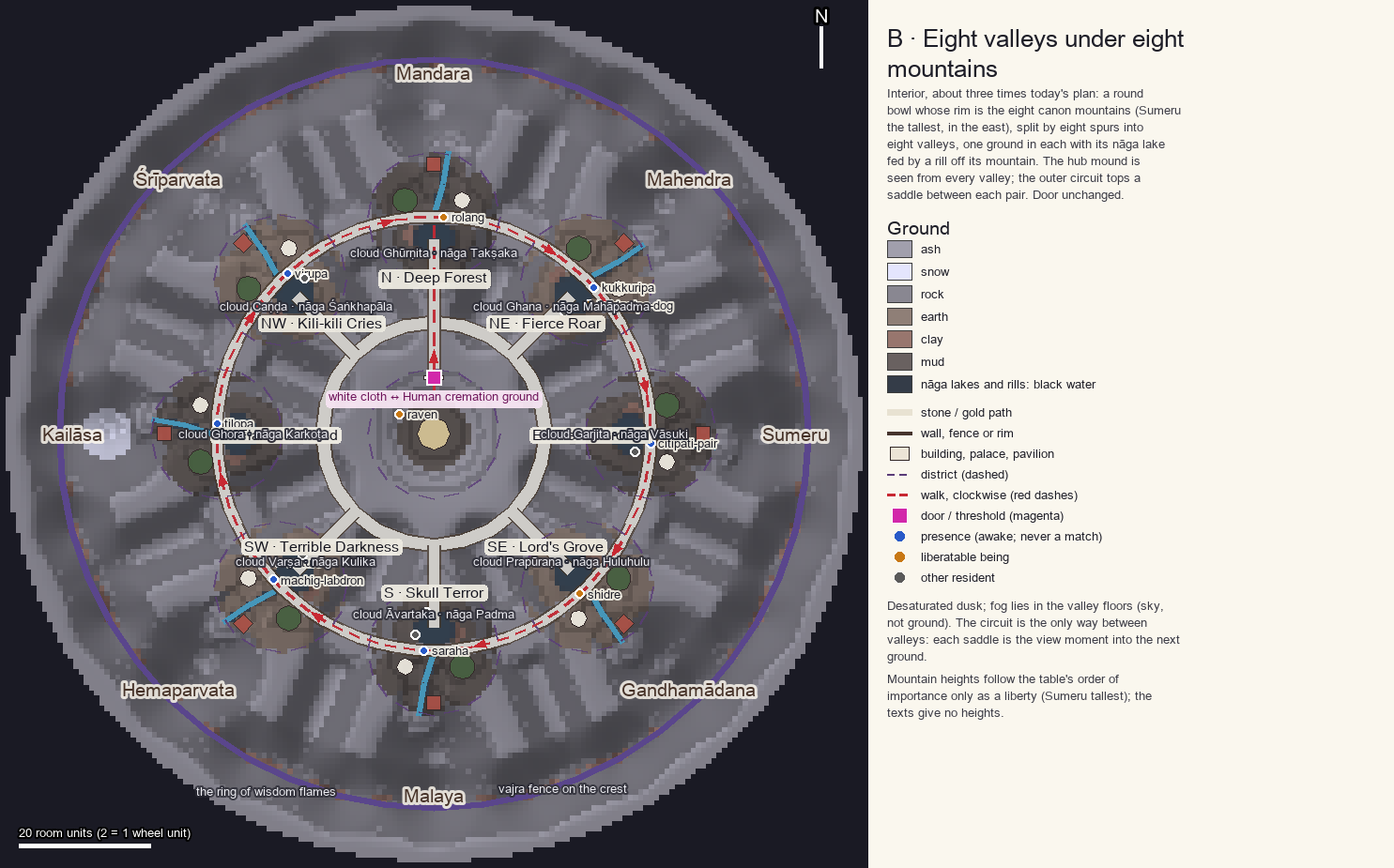
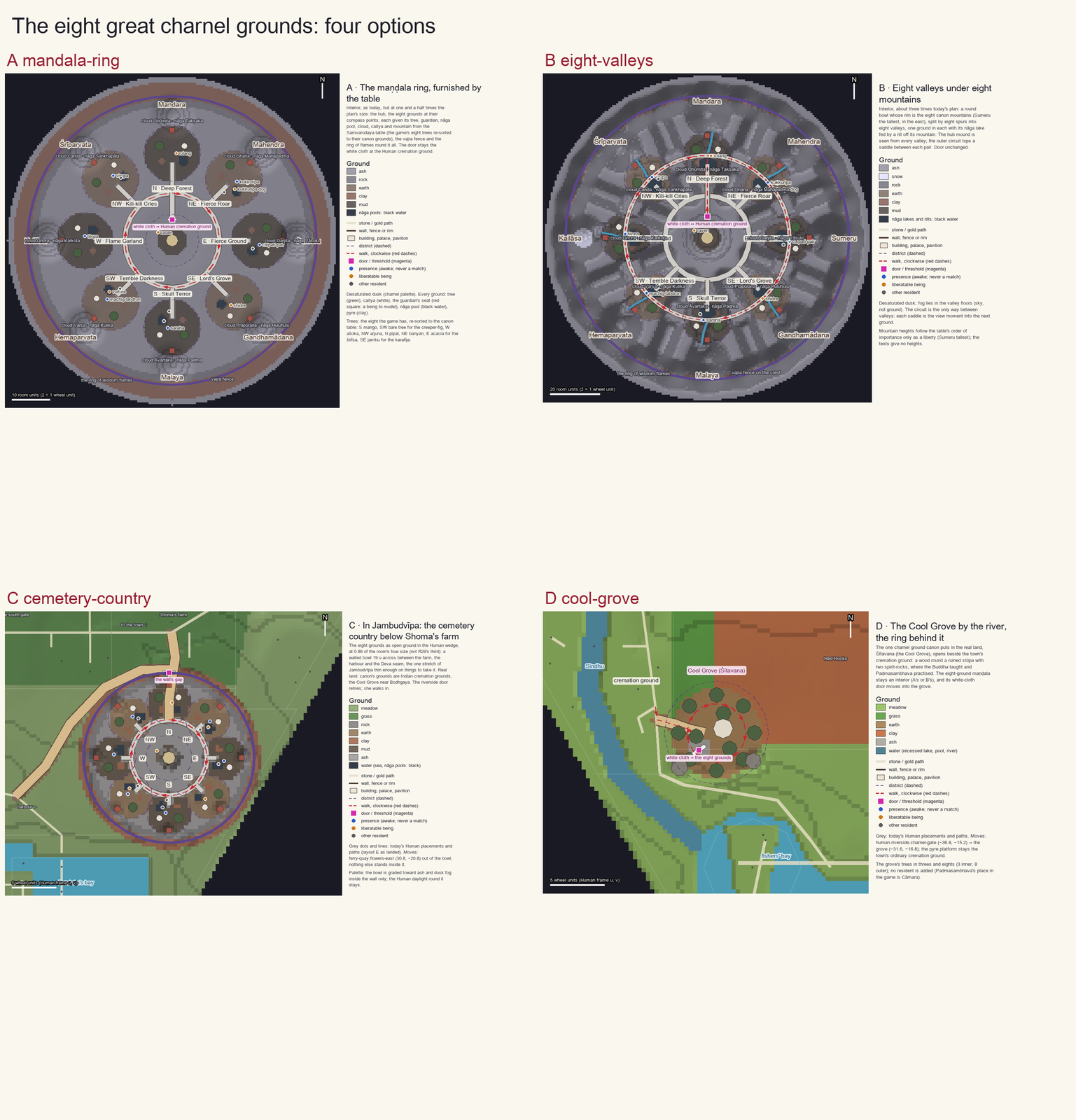
Chosen layout: B · Eight valleys, with D's Cool Grove as the door
Inside, a bowl ringed by the eight canon mountains, each ground its own valley with its nāga lake, crossed by saddles. In the land, the Cool Grove opens by the river and the white cloth into the eight grounds moves into it.
The charnel grounds are the ring of eight cremation grounds that surround every wrathful maṇḍala palace, one at each direction, each with its tree, guardian, nāga, cloud, stūpa and mountain, and filled with corpses, scavengers, risen dead and the yogins who practise among them. This group gathers what the Saṃvarodaya, Hevajra, Cakrasaṃvara and Nyingma texts fix about the eight and their furniture, the Citipati who dance there, the Cool Grove where Padmasambhava bound the ḍākinīs, the siddhas painters put in the cemeteries, and the skull-bearer's conduct, against what the game has built as its own ring of eight behind the Human cremation ground.
The eight great charnel grounds: which text gives which list
Skt. aṣṭamahāśmaśāna; Tib. dur khrod chen po brgyad
Eight cremation grounds ring the palace of every wrathful or semi-wrathful maṇḍala; the tantras agree on eight but give different names, and painters set each one at its compass point.
In the Yoginī tantras the deity's palace stands inside a protective circle made of eight cremation grounds, one at each cardinal and intermediate direction. Umāpatideva's Vajravārāhī sādhana has the practitioner build this circle in the mind, and the Saṃvarodaya-tantra (17.36–45) is the classic list: Caṇḍogra in the east, Gahvara in the north, Karaṅkala (also called Jvālākula, 'Blazing') in the west, Subhīṣaṇa in the south, Aṭṭaṭṭahāsa in the north-east, Lakṣmīvana in the south-east, Ghorāndhakāra in the south-west and Kilakilārava in the north-west. Each has its tree, direction-guardian, nāga, cloud, stūpa and mountain.
The Ḍākārṇava-tantra (ch. 15) keeps the same eight for the Merit Circle of its Heruka maṇḍala (Caṇḍogra, Gahvara, Jvālākula, Karaṅka, Aṭṭaṭṭahāsa, Lakṣmīvana, Ghorāndhakāra, Kilikilārava) with nearly the same trees, guardians, nāgas and clouds, and this is the list Tāranātha follows when he has Padmasambhava visit all eight and win one ordinary siddhi in each.
The Hevajra literature as the Sakya master Konchog Lhundrub set it down in 1551 names them differently: east Gruesome (Caṇḍogra-kaṭasī), south Frightful with Skulls (Bhairava-kapālika), west Adorned with a Blazing Garland (Jvālāmālālaṅkāra), north Dense Jungle (Giri-gahvara-unnati), north-east Fiercely Resounding (Ugra-upanyāsa), south-east Forest of the Lord (Īśvara-vana), south-west Dark and Terrible (Bhairava-andhakāra), north-west Resounding with the Cries Kili Kili. This is the list the repo took from HAR 792 and built. Chögyal Phagpa's Cakrasaṃvara ritual gives a third wording (Gruesome east, Dense Wild Thicket north, Blazing with the Sound Ur Ur west, Terrifying south, Marvelous Forest south-east, Interminably Gloomy south-west, Kili Kili north-west, Wildly Laughing north-east), and the Nyingma have their own eight (see the Śītavana topic). HAR's summary stands: there are several sets of eight depending on the text consulted.
The Glorious King of Tantras That Resolves All Secrets explains what the ring means: the eight grounds stand for no longer conceiving an ordinary world and its beings; the trees for the fully developed antidote; the directional protectors for overcoming the ten non-virtues; the eight nāgas destroy attachment, hatred and ignorance; the rain clouds are body and speech working for beings. A dedicated Tantra of the Ornament of the Charnel Ground (Toh 402) exists but is not yet translated.
What canon fixes for the map
Eight grounds at the eight directions round the palace, outside the lotus and inside (or outside) the vajra fence and flames [Umāpatideva; Toh 384 1.15; HAR 1364].
Saṃvarodaya order: E Caṇḍogra, N Gahvara, W Karaṅkala/Jvālākula, S Subhīṣaṇa, NE Aṭṭaṭṭahāsa, SE Lakṣmīvana, SW Ghorāndhakāra, NW Kilakilārava [Saṃvarodaya 17.36–45 via Wisdom Library].
Hevajra (Konchog Lhundrub) order: E Caṇḍogra-kaṭasī, S Bhairava-kapālika, W Jvālāmālālaṅkāra, N Giri-gahvara-unnati, NE Ugra-upanyāsa, SE Īśvara-vana, SW Bhairava-andhakāra, NW Kilikila-ghoṣa-nādita [HAR 792; HAR 1364].
Each ground has one tree, one direction-guardian on his mount, one nāga king, one cloud, one stūpa (caitya) and one mountain [Saṃvarodaya via Wisdom Library]; Umāpatideva adds rākṣasas, mahāsiddhas, fires, nāga-lakes and rivers in general, without naming them per ground.
The eight cemetery guardians are the ten direction guardians minus Brahmā and Bhūdevī: Śakra on an elephant E, Yama on a buffalo S, Varuṇa on a makara W, Yakṣa (Kubera) on a horse N, Īśāna on a bull NE, Agni on a goat SE, Rākṣasa (Nirṛti) on a zombie SW, Vāyu on a deer NW [HAR 1364].
Meaning of the ring: non-conceptuality about the ordinary world (grounds), the antidote (trees), the ten non-virtues overcome (guardians), the three poisons destroyed (nāgas), body and speech for beings (clouds) [Toh 384 1.15–1.19].
Game: the eight grounds stand at radius 14 round a hub, ground 1 (south) straight ahead, the rest clockwise, each with a tree, stūpa, cloud, tall silhouette and resident; the hub shrine (crossed vajra, empty cup) is the game's own [docs/world-plan/places/charnel.json layout; claim charnel.hub.shrine adapted].
In the game now
Samsara realm `charnel`: 25 items, 23 built, 2 sketch, 0 missing. The eight grounds are place:charnel:1 (Skull Terror, south) to place:charnel:8 (Lord's Grove, south-east), all `built` as the one zone `charnel`, named after HAR 792's Hevajra list. The plan's claim charnel.hub.correspondences records that no per-ground tree, guardian or correspondence table was asserted; the trees built (acacia, bare tree, mango, ashoka, banyan, jambu, arjuna, pipal) are the game's own and do not follow the Saṃvarodaya trees.
Art (9)
the ring of eight charnel grounds between the vajra fence and the palacetwo grounds at the top of the ring: trees, stūpas, a seated siddha, fires
The Metropolitan Museum of Art, Purchase, Lila Acheson Wallace Gift, 1992 (Open Access) · traditional · CC0 (Met Open Access)
A woven Vajrabhairava palace; the lively ring of cremation grounds sits between the lotus-petal ring and the vajra fence, outside the flames. Eight segments, each with its tree, stūpa, guardian and corpses.
the dark ring of charnel grounds round the palacethe top of the ring: a stūpa, trees and small figuresthe top register: the eighty-four mahāsiddhas, each under a tree or at a fire
The Metropolitan Museum of Art, Rogers Fund, 1995 (Open Access) · traditional · CC0 (Met Open Access)
The earliest painted Cakrasaṃvara maṇḍala known. The charnel grounds are a dark band of small figures round the palace; the top and bottom registers hold mahāsiddhas in siddha appearance.
the charnel-ground ring between the flames and the palacethe top of the ring: siddhas, trees and fires
The Metropolitan Museum of Art, Gift of Stephen and Sharon Davies Collection, 2015 (Open Access) · traditional · CC0 (Met Open Access)
A fifteenth-century Hevajra maṇḍala: eight charnel grounds in the band round the palace, eight Bhairava-like wrathful figures in the corners, the lineage above.
the painting inside its matthe charnel-ground ring, close
The Metropolitan Museum of Art (Open Access); photographed in its blue mat · traditional · CC0 (Met Open Access)
A Sakya Hevajra maṇḍala; the charnel grounds are the figured ring round the palace. Photographed in a blue mat, so crop to the painting first.
the ring of eight charnel grounds, each segment a landscape with stūpa, tree and siddhathe top segments: a white stūpa, a siddha couple, a lake with birds, a seated figure on a cloud
Rubin Museum of Art, via Google Art Project / Wikimedia Commons · traditional · Public domain (PD-Art, Public Domain Mark 1.0)
The clearest readable charnel ring in this set: each of the eight segments is a small landscape with a white stūpa, a tree, a lake, a cloud-borne figure and one or two siddhas, on a dark ground. Rubin F1996.1.8.
the charnel-ground ring with its eight landscapesthe top of the ring: siddhas, animals and a shrine
Himalayan Art Resources / Shelley & Donald Rubin collection · traditional · No open licence (link only)
The repo's source image: a 53 × 10 cm strip laying the eight grounds out in a row, each with tree, stūpa, siddha and scavengers. Read it left to right with Watt's list.
Himalayan Art Resources, Jeff Watt · traditional · No open licence (link only)
The subject page: three lists of eight, the eight cemetery gods with mounts, and the set of cemetery paintings and fragments (items 792, 1451, 6820, 6821, 6826, 11388, 16805, 20890, 24577, 68444).
Himalayan Art Resources, Jeff Watt · traditional · No open licence (link only)
Maṇḍalas whose eight cemeteries are painted outside the concentric rings rather than inside them; useful for a world where the grounds are real terrain round a centre.
Still missing: No open-licence image labels the eight segments by name; every ring crop above shows all eight at once. A labelled diagram (which segment is east, which guardian) would have to be drawn from the Saṃvarodaya table.
The Saṃvarodaya and Ḍākārṇava lists give every ground a named tree, direction-guardian, nāga king, cloud, stūpa and mountain; this is the table the game can build from.
The Saṃvarodaya-tantra, as Umāpatideva's Vajravārāhī sādhana uses it, fixes for each of the eight grounds a great tree, a protector of the direction, a serpent king, a cloud, a funeral monument (caitya) and a mountain. East, Caṇḍogra: the śirīṣa tree, Indra, the nāga Vāsuki, the cloud Garjita ('Thundering'), the caitya Sitavajra, Mount Sumeru. North, Gahvara: the bodhi tree, Kubera, Takṣaka, the cloud Ghūrṇita ('Whirling'), the caitya Saṃskāravajra, Mount Mandara. West, Jvālākula or Karaṅkala: the kaṅkeli (aśoka) tree, Varuṇa, Karkoṭa, the cloud Ghora ('Dreadful'), the caitya Saṃjñāvajra, Mount Kailāsa. South, Subhīṣaṇa: the cūta (mango) tree, Yama, Padma, the cloud Āvartaka ('Eddying'), the caitya Piśunavajra, Mount Malaya.
North-east, Aṭṭaṭṭahāsa: the trivaṭa (triple banyan) tree, Īśāna, Mahāpadma, the cloud Ghana ('Dense'), the caitya Cittavajra, Mount Mahendra. South-east, Lakṣmīvana: the karañja tree, Vaiśvānara (Agni), the nāga Huluhulu, the cloud Prapūraṇa ('Filling'), the caitya Kāyavajra, Mount Gandhamādana. South-west, Ghorāndhakāra: the latāparkaṭī (creeper-fig) tree, Jātudhāna (the rākṣasa lord, Nirṛti), Kulika, the cloud Varṣa ('Rain'), the caitya Ratnavajra, Hemaparvata, the golden mountain. North-west, Kilakilārava: the arjuna tree, Prabhañjana (Vāyu), Śaṅkha (Śaṅkhapāla), the cloud Caṇḍa ('Fierce'), the caitya Dharmavajra, Śrīparvata.
The Ḍākārṇava's Merit Circle keeps the same guardians, nāgas and clouds with small changes: Gahvara's tree is the aśvattha (pipal), Aṭṭahāsa's the vaṭa (banyan), Kilikilārava's the pārthiva, Lakṣmīvana's cloud is Pūraṇa and Ghorāndhakāra's Varṣaṇa. The Hevajra fragment HAR 68444 shows how a painter renders one entry: in the east ground 'Gruesome', Śakra sits on his white elephant beside the great śirīṣa tree, the yellow nāga king Vāsuki to his left, and the mahāsiddha Kṛṣṇācārya rides a zombie on the right.
The caityas carry the names of the five vajra-aspects (body, speech, mind, qualities-Ratna, activity-Saṃskāra, perception-Saṃjñā, dharma, and Sitavajra, the white vajra) and the mountains are the great mountains of Indian cosmology: Sumeru, Mandara, Kailāsa, Malaya, Mahendra, Gandhamādana, the golden mountain and Śrīparvata. Umāpatideva also populates each ground with rākṣasas, mahāsiddhas, fires, nāga-lakes and rivers, but the sources reached here do not name a fire, a lake or a field-protector (kṣetrapāla) for each ground. Elizabeth English's Vajrayoginī (Wisdom, 2002) prints the full table and is the place to check them.
What canon fixes for the map
E Caṇḍogra: śirīṣa, Indra on an elephant, Vāsuki, cloud Garjita, caitya Sitavajra, Mount Sumeru [Saṃvarodaya via Wisdom Library; mount HAR 1364; HAR 68444].
N Gahvara: bodhi tree (Ḍākārṇava: aśvattha), Kubera on a horse, Takṣaka, cloud Ghūrṇita, caitya Saṃskāravajra, Mount Mandara.
W Jvālākula/Karaṅkala: kaṅkeli (aśoka), Varuṇa on a makara, Karkoṭa, cloud Ghora, caitya Saṃjñāvajra, Mount Kailāsa.
S Subhīṣaṇa: cūta (mango), Yama on a buffalo, Padma, cloud Āvartaka, caitya Piśunavajra, Mount Malaya.
NE Aṭṭaṭṭahāsa: trivaṭa (Ḍākārṇava: vaṭa, banyan), Īśāna on a bull, Mahāpadma, cloud Ghana, caitya Cittavajra, Mount Mahendra.
SE Lakṣmīvana: karañja, Agni (Vaiśvānara) on a goat, Huluhulu, cloud Prapūraṇa (Pūraṇa), caitya Kāyavajra, Gandhamādana.
SW Ghorāndhakāra: latāparkaṭī, the rākṣasa lord (Jātudhāna, Nirṛti) on a zombie, Kulika, cloud Varṣa (Varṣaṇa), caitya Ratnavajra, Hemaparvata.
NW Kilakilārava: arjuna (Ḍākārṇava: pārthiva), Vāyu (Prabhañjana) on a deer, Śaṅkha/Śaṅkhapāla, cloud Caṇḍa, caitya Dharmavajra, Śrīparvata.
Per-ground fire, lake and field-protector names: not found in the sources reached; recorded as a gap, not invented.
Who lives here
Indra/Śakra, Yama, Varuṇa, Kubera, Īśāna, Agni, Nirṛti (the rākṣasa), Vāyu: the eight direction-guardians, each on his mount [HAR 1364; Saṃvarodaya].
Vāsuki, Takṣaka, Karkoṭa, Padma, Mahāpadma, Huluhulu, Kulika, Śaṅkhapāla: the eight nāga kings of the grounds [Saṃvarodaya].
Kṛṣṇācārya (Kanha) riding a zombie in the east ground of a Cakrasaṃvara maṇḍala [HAR 68444].
In the game now
Nothing yet beyond generic scenery: each built ground has one tree (acacia, bare tree, mango, ashoka, banyan, jambu, arjuna, pipal), one doorless stūpa and a cloud, none matched to this table; no direction-guardian, nāga, lake or mountain is placed (claim charnel.hub.correspondences, status elsewhere). Three of the game's trees happen to be in the canonical set (mango S, ashoka W, banyan NE, pipal N) but stand at other directions.
Himalayan Art Resources / Nyingjei Lam · traditional · No open licence (link only)
One ground as a painter builds it: Śakra on his white elephant centre-left, the śirīṣa tree beside him, yellow Vāsuki on the left, a goddess paying homage, Kṛṣṇācārya riding a zombie on the right. The east ground 'Gruesome'.
the top segments: stūpa, tree, siddha, lake with birds and a cloud-borne figure in one ground
The Metropolitan Museum of Art, Purchase, Lila Acheson Wallace Gift, 1992 (Open Access) · traditional · CC0 (Met Open Access)
The kesi ring gives each ground a guardian on his mount, a tree and a stūpa; read with the table.
Still missing: No image in reach labels the guardian, nāga or cloud of a particular segment; HAR 68444 (link-only) is the one verified per-ground reading. A drawn table-diagram would fill this.
Elizabeth English, Vajrayoginī: Her Visualizations, Rituals, and Forms (Wisdom, 2002), ch. on the cremation grounds (table of the eight with their features); not consulted here, named as the place to verify fires, lakes and kṣetrapālas
Caṇḍogra, the east ground: Gruesome
Skt. Caṇḍogra (Caṇḍogra-kaṭasī in the Hevajra list); Tib. gtum drag, 'Most Fierce'
The east charnel ground: its tree is the śirīṣa (the rain tree), its guardian Indra (Śakra) on a white elephant, its nāga Vāsuki, its cloud Garjita, 'Thundering'.
In the Saṃvarodaya list the east ground holds the śirīṣa (the rain tree) tree, the direction-guardian Indra (Śakra) on a white elephant, the nāga king Vāsuki, the cloud Garjita, 'Thundering', the caitya Sitavajra, the white vajra and Mount Sumeru. Like every ground it is filled with corpses hanging, impaled and half-burnt, with jackals, crows, owls and vultures, fires, a pond, and siddhas and yogins at practice.
Caṇḍogra is the one name every list shares and every list puts in the east. The Newar guru-maṇḍala rite still invokes it: oṃ caṇḍogra-śmaśānāya hūṃ phaṭ svāhā. HAR's metal fragment 68444 shows this very ground: Śakra on his elephant, the śirīṣa, yellow Vāsuki, and Kṛṣṇācārya riding a zombie.
The Hevajra list (Konchog Lhundrub, HAR 792) calls it Gruesome (Caṇḍogra-kaṭasī), east; Chögyal Phagpa's Cakrasaṃvara ritual calls it Gruesome, east. Tāranātha has Padmasambhava meet the master Bhṛgu, with whom the Guru won the alchemy of gold here.
What canon fixes for the map
Direction: east [Saṃvarodaya 17.36–45; HAR 792; Tāranātha n. 8 list].
Tree śirīṣa (the rain tree); guardian Indra (Śakra) on a white elephant; nāga Vāsuki; cloud Garjita, 'Thundering'; caitya Sitavajra, the white vajra; mountain Sumeru [Saṃvarodaya via Wisdom Library; Ḍākārṇava ch. 15 variants noted; mount from HAR 1364].
Resident master in Tāranātha's life of the Guru: Bhṛgu, with whom the Guru won the alchemy of gold [Three Reasons for Confidence].
Standard inventory: corpses (headless, hanging, lying, impaled), heads and skeletons, jackals, crows, owls, vultures, zombies crying 'phaim', siddhas, yakṣas, rākṣasas, pretas, ḍākas and ḍākinīs, ponds, fires, stūpas, practitioners [Konchog Lhundrub via HAR 792].
Conflict: The room's old nickname 'Laughter' belongs to the north-east ground (Aṭṭahāsa, 'loud laughter'), not to Caṇḍogra; the name and direction themselves are right.
Who lives here
Indra (Śakra), the direction-guardian
Vāsuki, the nāga king
Tāranātha's master Bhṛgu
In the game now
place:charnel:7 'Fierce Ground (chandograkatasi), the east ground' (built), the game's ground-7 at the east spoke, room nickname 'Laughter', with pale ash, a skull spiral of 108 and the Citipati pair dancing on it, an arjuna tree and a stūpa. The ground's name and direction follow HAR 792; its tree, stūpa, cloud and resident are the game's own (claim charnel.ground-N.content, adapted).
Himalayan Art Resources / Nyingjei Lam · traditional · No open licence (link only)
Śakra on his white elephant beside the śirīṣa tree, Vāsuki in yellow, a goddess, and Kṛṣṇācārya on a zombie: Caṇḍogra as a Newar-style metalworker built it.
the ring; find this ground by its direction (east is at the bottom of a maṇḍala painting, north at the top)
Skt. Gahvara (Giri-gahvara-unnati in the Hevajra list); Tib. tshang tshing 'khrigs pa, 'Dense Thicket' / 'Dense Jungle'
The north charnel ground: its tree is the the bodhi tree (Ḍākārṇava: aśvattha, the pipal), its guardian Kubera (Yakṣa) on a horse, its nāga Takṣaka, its cloud Ghūrṇita, 'Whirling'.
In the Saṃvarodaya list the north ground holds the the bodhi tree (Ḍākārṇava: aśvattha, the pipal) tree, the direction-guardian Kubera (Yakṣa) on a horse, the nāga king Takṣaka, the cloud Ghūrṇita, 'Whirling', the caitya Saṃskāravajra and Mount Mandara. Like every ground it is filled with corpses hanging, impaled and half-burnt, with jackals, crows, owls and vultures, fires, a pond, and siddhas and yogins at practice.
Its name is a cavern or tangled wood; the Hevajra form adds 'raised on the mountain'. Kubera, lord of the yakṣas and of the north, keeps it, under the tree of awakening.
The Hevajra list (Konchog Lhundrub, HAR 792) calls it Dense Jungle (Giri-gahvara-unnati), north; Chögyal Phagpa's Cakrasaṃvara ritual calls it Dense Wild Thicket, north. Tāranātha has Padmasambhava meet the master Bhūmiputra, who gave the siddhi of the pill here.
What canon fixes for the map
Direction: north [Saṃvarodaya 17.36–45; HAR 792; Tāranātha n. 8 list].
Tree the bodhi tree (Ḍākārṇava: aśvattha, the pipal); guardian Kubera (Yakṣa) on a horse; nāga Takṣaka; cloud Ghūrṇita, 'Whirling'; caitya Saṃskāravajra; mountain Mandara [Saṃvarodaya via Wisdom Library; Ḍākārṇava ch. 15 variants noted; mount from HAR 1364].
Resident master in Tāranātha's life of the Guru: Bhūmiputra, who gave the siddhi of the pill [Three Reasons for Confidence].
Standard inventory: corpses (headless, hanging, lying, impaled), heads and skeletons, jackals, crows, owls, vultures, zombies crying 'phaim', siddhas, yakṣas, rākṣasas, pretas, ḍākas and ḍākinīs, ponds, fires, stūpas, practitioners [Konchog Lhundrub via HAR 792].
Conflict: The game's banyan is the north-east ground's tree in canon; the north ground's is the bodhi/pipal. Nickname 'Dense dark' is fine.
Who lives here
Kubera (Yakṣa), the direction-guardian
Takṣaka, the nāga king
Tāranātha's master Bhūmiputra
In the game now
place:charnel:5 'Deep Forest (girigahvaronnati), the north ground' (built), the game's ground-5 at the north spoke, room nickname 'Dense dark': a black pool under a banyan, the rolang's bier, cords loosed, a stūpa. The rolang (being:rolang, built, liberatable) lives here. The ground's name and direction follow HAR 792; its tree, stūpa, cloud and resident are the game's own (claim charnel.ground-N.content, adapted).
Art (1)
the ring; find this ground by its direction (east is at the bottom of a maṇḍala painting, north at the top)
Rubin Museum of Art, via Google Art Project / Wikimedia Commons · traditional · Public domain (PD-Art, Public Domain Mark 1.0)
Rubin F1996.1.8's charnel ring, where each ground is a legible landscape; locate this ground by direction.
Still missing: No image reached identifies this ground alone except HAR 68444 for the east; per-ground art would have to be cropped from a labelled maṇḍala or drawn.
Jvālākula / Karaṅkala, the west ground: Blazing, Skeletons
Skt. Jvālākula ('Thronged with Flames'), also Karaṅkala or Karaṅka ('Skeleton'), Jvālākula-karaṅka in the Ḍākārṇava, Jvālāmālālaṅkāra in the Hevajra list; Tib. 'bar 'khrigs pa, 'Dense Blaze'
The west charnel ground: its tree is the kaṅkeli, the aśoka, its guardian Varuṇa on a makara, its nāga Karkoṭa, its cloud Ghora, 'Dreadful'.
In the Saṃvarodaya list the west ground holds the kaṅkeli, the aśoka tree, the direction-guardian Varuṇa on a makara, the nāga king Karkoṭa, the cloud Ghora, 'Dreadful', the caitya Saṃjñāvajra and Mount Kailāsa. Like every ground it is filled with corpses hanging, impaled and half-burnt, with jackals, crows, owls and vultures, fires, a pond, and siddhas and yogins at practice.
The west ground has two names that the lists fuse: a place thronged with flames and a place of skeletons (karaṅka is a skull or heap of bones). Every list puts fire in the west, where Varuṇa, lord of waters, rides his makara under an aśoka.
The Hevajra list (Konchog Lhundrub, HAR 792) calls it Adorned with a Blazing Garland (Jvālāmālālaṅkāra), west; Chögyal Phagpa's Cakrasaṃvara ritual calls it Blazing with the Sound Ur Ur, west. Tāranātha has Padmasambhava meet the master Sūryaputra, who gave the balm of magic sight here.
What canon fixes for the map
Direction: west [Saṃvarodaya 17.36–45; HAR 792; Tāranātha n. 8 list].
Tree kaṅkeli, the aśoka; guardian Varuṇa on a makara; nāga Karkoṭa; cloud Ghora, 'Dreadful'; caitya Saṃjñāvajra; mountain Kailāsa [Saṃvarodaya via Wisdom Library; Ḍākārṇava ch. 15 variants noted; mount from HAR 1364].
Resident master in Tāranātha's life of the Guru: Sūryaputra, who gave the balm of magic sight [Three Reasons for Confidence].
Standard inventory: corpses (headless, hanging, lying, impaled), heads and skeletons, jackals, crows, owls, vultures, zombies crying 'phaim', siddhas, yakṣas, rākṣasas, pretas, ḍākas and ḍākinīs, ponds, fires, stūpas, practitioners [Konchog Lhundrub via HAR 792].
Conflict: The mango is canon's south tree; the west tree is the aśoka. Tilopa's placement here is the game's; in the Sakya convention it is Virūpa who always takes the west cemetery (HAR 2106).
Who lives here
Varuṇa, the direction-guardian
Karkoṭa, the nāga king
Tāranātha's master Sūryaputra
In the game now
place:charnel:3 'Flame Garland (jvalamalalankara), the west ground' (built), the game's ground-3 at the west spoke, room nickname 'Vajra fire': three pyres, Tilopa's mortar and sesame, three oil lamps, a mango tree, a stūpa. Tilopa (being:tilopa, built, presence) pounds sesame here. The ground's name and direction follow HAR 792; its tree, stūpa, cloud and resident are the game's own (claim charnel.ground-N.content, adapted).
Art (1)
the ring; find this ground by its direction (east is at the bottom of a maṇḍala painting, north at the top)
Rubin Museum of Art, via Google Art Project / Wikimedia Commons · traditional · Public domain (PD-Art, Public Domain Mark 1.0)
Rubin F1996.1.8's charnel ring, where each ground is a legible landscape; locate this ground by direction.
Still missing: No image reached identifies this ground alone except HAR 68444 for the east; per-ground art would have to be cropped from a labelled maṇḍala or drawn.
Subhīṣaṇa / Bhairava-kapālika, the south ground: Terrifying, Skulls
Skt. Subhīṣaṇa ('Very Terrifying'; Vibhīṣaṇa in Tāranātha), Bhairava-kapālika ('Frightful with Skulls') in the Hevajra list; Tib. 'jigs byed thod pa / keng rus can
The south charnel ground: its tree is the cūta, the mango, its guardian Yama on a buffalo, its nāga Padma, its cloud Āvartaka, 'Eddying'.
In the Saṃvarodaya list the south ground holds the cūta, the mango tree, the direction-guardian Yama on a buffalo, the nāga king Padma, the cloud Āvartaka, 'Eddying', the caitya Piśunavajra and Mount Malaya. Like every ground it is filled with corpses hanging, impaled and half-burnt, with jackals, crows, owls and vultures, fires, a pond, and siddhas and yogins at practice.
The south is Yama's quarter, and its ground is the terrifying one, named for skulls in the Hevajra tradition and for skeletons (keng rus can) in the Nyingma wording. Its tree is the mango and its mountain the sandalwood Malaya.
The Hevajra list (Konchog Lhundrub, HAR 792) calls it Frightful with Skulls (Bhairava-kapālika), south; Chögyal Phagpa's Cakrasaṃvara ritual calls it Terrifying, south. Tāranātha has Padmasambhava meet the master Amṛtaprabha, who gave fleet-footedness here.
What canon fixes for the map
Direction: south [Saṃvarodaya 17.36–45; HAR 792; Tāranātha n. 8 list].
Tree cūta, the mango; guardian Yama on a buffalo; nāga Padma; cloud Āvartaka, 'Eddying'; caitya Piśunavajra; mountain Malaya [Saṃvarodaya via Wisdom Library; Ḍākārṇava ch. 15 variants noted; mount from HAR 1364].
Resident master in Tāranātha's life of the Guru: Amṛtaprabha, who gave fleet-footedness [Three Reasons for Confidence].
Standard inventory: corpses (headless, hanging, lying, impaled), heads and skeletons, jackals, crows, owls, vultures, zombies crying 'phaim', siddhas, yakṣas, rākṣasas, pretas, ḍākas and ḍākinīs, ponds, fires, stūpas, practitioners [Konchog Lhundrub via HAR 792].
Conflict: The game's acacia should be a mango to follow canon; the name, direction and skull content agree with the Hevajra list.
Who lives here
Yama, the direction-guardian
Padma, the nāga king
Tāranātha's master Amṛtaprabha
In the game now
place:charnel:1 'Skull Terror (bhairavakapalika), the south ground' (built), the game's ground-1 straight ahead at the south spoke, room nickname 'Skeleton grove': a bone field, a skull cairn, Saraha's arrow rack, an acacia, a stūpa. Saraha (being:saraha, built, presence) straightens arrows here. The ground's name and direction follow HAR 792; its tree, stūpa, cloud and resident are the game's own (claim charnel.ground-N.content, adapted).
Art (1)
the ring; find this ground by its direction (east is at the bottom of a maṇḍala painting, north at the top)
Rubin Museum of Art, via Google Art Project / Wikimedia Commons · traditional · Public domain (PD-Art, Public Domain Mark 1.0)
Rubin F1996.1.8's charnel ring, where each ground is a legible landscape; locate this ground by direction.
Still missing: No image reached identifies this ground alone except HAR 68444 for the east; per-ground art would have to be cropped from a labelled maṇḍala or drawn.
Skt. Aṭṭahāsa / Aṭṭaṭṭahāsa ('Wild Laughter'), Ugra-upanyāsa ('Fiercely Resounding') in the Hevajra list; Tib. ha ha rgod pa / aṭṭaṭṭahāsa
The north-east charnel ground: its tree is the trivaṭa, the triple banyan (Ḍākārṇava: vaṭa, banyan), its guardian Īśāna on a bull, its nāga Mahāpadma, its cloud Ghana, 'Dense'.
In the Saṃvarodaya list the north-east ground holds the trivaṭa, the triple banyan (Ḍākārṇava: vaṭa, banyan) tree, the direction-guardian Īśāna on a bull, the nāga king Mahāpadma, the cloud Ghana, 'Dense', the caitya Cittavajra and Mount Mahendra. Like every ground it is filled with corpses hanging, impaled and half-burnt, with jackals, crows, owls and vultures, fires, a pond, and siddhas and yogins at practice.
The ground of laughter: yakṣas, vetālas and rākṣasas laugh their kilikilā laugh here, and HAR records a real 'Laughing' charnel ground at Bodhgaya (Haha Göpa in Nekhor's guide). Īśāna, the north-east form of Śiva, keeps it on his bull.
The Hevajra list (Konchog Lhundrub, HAR 792) calls it Fiercely Resounding (Ugra-upanyāsa), north-east; Chögyal Phagpa's Cakrasaṃvara ritual calls it Wildly Laughing, north-east. Tāranātha has Padmasambhava meet the master Śivaṃkara, who gave the medicine healing every ailment here.
What canon fixes for the map
Direction: north-east [Saṃvarodaya 17.36–45; HAR 792; Tāranātha n. 8 list].
Tree trivaṭa, the triple banyan (Ḍākārṇava: vaṭa, banyan); guardian Īśāna on a bull; nāga Mahāpadma; cloud Ghana, 'Dense'; caitya Cittavajra; mountain Mahendra [Saṃvarodaya via Wisdom Library; Ḍākārṇava ch. 15 variants noted; mount from HAR 1364].
Resident master in Tāranātha's life of the Guru: Śivaṃkara, who gave the medicine healing every ailment [Three Reasons for Confidence].
Standard inventory: corpses (headless, hanging, lying, impaled), heads and skeletons, jackals, crows, owls, vultures, zombies crying 'phaim', siddhas, yakṣas, rākṣasas, pretas, ḍākas and ḍākinīs, ponds, fires, stūpas, practitioners [Konchog Lhundrub via HAR 792].
Conflict: The nickname 'Lakshmivana' is the south-east ground's name; this north-east ground is Aṭṭahāsa / Fiercely Resounding. The canonical tree is a banyan, which the game put in the north instead.
Who lives here
Īśāna, the direction-guardian
Mahāpadma, the nāga king
Tāranātha's master Śivaṃkara
In the game now
place:charnel:6 'Fierce Roar (ugropanyasa), the northeast ground' (built), the game's ground-6 at the north-east spoke, room nickname 'Lakshmivana': tall grass with a flattened round, a water bowl, a jambu tree, a stūpa. Kukkuripa (being:kukkuripa, built) and his dog (being:kukkuripa-dog, sketch, shares his rig) live here. The ground's name and direction follow HAR 792; its tree, stūpa, cloud and resident are the game's own (claim charnel.ground-N.content, adapted).
Art (1)
the ring; find this ground by its direction (east is at the bottom of a maṇḍala painting, north at the top)
Rubin Museum of Art, via Google Art Project / Wikimedia Commons · traditional · Public domain (PD-Art, Public Domain Mark 1.0)
Rubin F1996.1.8's charnel ring, where each ground is a legible landscape; locate this ground by direction.
Still missing: No image reached identifies this ground alone except HAR 68444 for the east; per-ground art would have to be cropped from a labelled maṇḍala or drawn.
Lakṣmīvana, the south-east ground: the Auspicious Grove
Skt. Lakṣmīvana ('Grove of Fortune'), Īśvara-vana ('Forest of the Lord') in the Hevajra list; Tib. dpal gyi nags
The south-east charnel ground: its tree is the karañja (the Indian beech), its guardian Agni (Vaiśvānara) on a goat, its nāga Huluhulu, its cloud Prapūraṇa, 'Filling' (Ḍākārṇava: Pūraṇa).
In the Saṃvarodaya list the south-east ground holds the karañja (the Indian beech) tree, the direction-guardian Agni (Vaiśvānara) on a goat, the nāga king Huluhulu, the cloud Prapūraṇa, 'Filling' (Ḍākārṇava: Pūraṇa), the caitya Kāyavajra and Mount Gandhamādana. Like every ground it is filled with corpses hanging, impaled and half-burnt, with jackals, crows, owls and vultures, fires, a pond, and siddhas and yogins at practice.
Agni's quarter is the south-east, so the fire god on his goat keeps the auspicious grove; its mountain is fragrant Gandhamādana, the mountain beyond Anavatapta that the Human section already knows.
The Hevajra list (Konchog Lhundrub, HAR 792) calls it Forest of the Lord (Īśvara-vana), south-east; Chögyal Phagpa's Cakrasaṃvara ritual calls it Marvelous Forest, south-east. Tāranātha has Padmasambhava meet the master Vararuci, 'Seeker of the Sublime', who gave the elixir of immortality here.
What canon fixes for the map
Direction: south-east [Saṃvarodaya 17.36–45; HAR 792; Tāranātha n. 8 list].
Tree karañja (the Indian beech); guardian Agni (Vaiśvānara) on a goat; nāga Huluhulu; cloud Prapūraṇa, 'Filling' (Ḍākārṇava: Pūraṇa); caitya Kāyavajra; mountain Gandhamādana [Saṃvarodaya via Wisdom Library; Ḍākārṇava ch. 15 variants noted; mount from HAR 1364].
Resident master in Tāranātha's life of the Guru: Vararuci, 'Seeker of the Sublime', who gave the elixir of immortality [Three Reasons for Confidence].
Standard inventory: corpses (headless, hanging, lying, impaled), heads and skeletons, jackals, crows, owls, vultures, zombies crying 'phaim', siddhas, yakṣas, rākṣasas, pretas, ḍākas and ḍākinīs, ponds, fires, stūpas, practitioners [Konchog Lhundrub via HAR 792].
Conflict: The nickname 'Chandogra' is the east ground's name. The pipal is the north ground's tree; this one's is the karañja.
Who lives here
Agni (Vaiśvānara), the direction-guardian
Huluhulu, the nāga king
Tāranātha's master Vararuci
In the game now
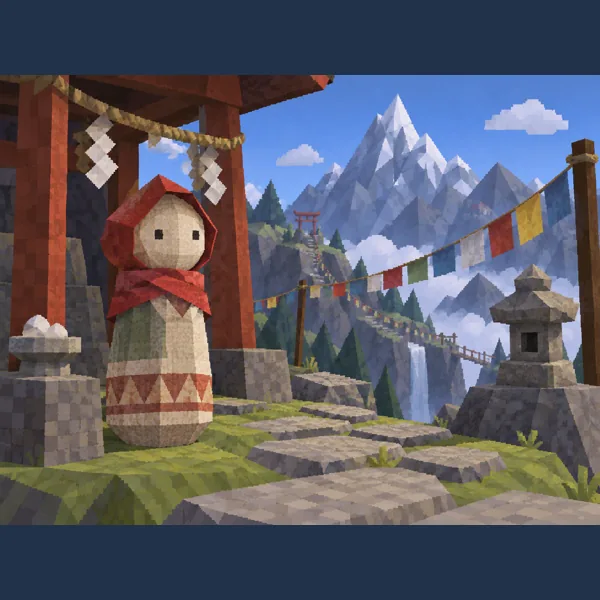
place:charnel:8 'Lord's Grove (ishvaravana), the southeast ground' (built), the game's ground-8 at the south-east spoke, room nickname 'Chandogra': a great ribcage, a family table laid with flies over it, a pipal tree, a stūpa. The woman setting the table, a shidre (being 'shidre' in the plan; not a separate samsara item), lives here. The ground's name and direction follow HAR 792; its tree, stūpa, cloud and resident are the game's own (claim charnel.ground-N.content, adapted).
Art (1)
the ring; find this ground by its direction (east is at the bottom of a maṇḍala painting, north at the top)
Rubin Museum of Art, via Google Art Project / Wikimedia Commons · traditional · Public domain (PD-Art, Public Domain Mark 1.0)
Rubin F1996.1.8's charnel ring, where each ground is a legible landscape; locate this ground by direction.
Still missing: No image reached identifies this ground alone except HAR 68444 for the east; per-ground art would have to be cropped from a labelled maṇḍala or drawn.
Ghorāndhakāra, the south-west ground: Terrible Darkness
Skt. Ghorāndhakāra ('Dreadful Darkness'), Bhairava-andhakāra in the Hevajra list; Tib. mun pa nag po, 'Black Darkness'
The south-west charnel ground: its tree is the latāparkaṭī, the creeper-fig, its guardian the rākṣasa lord (Jātudhāna, Nirṛti) on a zombie, its nāga Kulika, its cloud Varṣa, 'Rain' (Ḍākārṇava: Varṣaṇa).
In the Saṃvarodaya list the south-west ground holds the latāparkaṭī, the creeper-fig tree, the direction-guardian the rākṣasa lord (Jātudhāna, Nirṛti) on a zombie, the nāga king Kulika, the cloud Varṣa, 'Rain' (Ḍākārṇava: Varṣaṇa), the caitya Ratnavajra and Mount Hemaparvata, the golden mountain. Like every ground it is filled with corpses hanging, impaled and half-burnt, with jackals, crows, owls and vultures, fires, a pond, and siddhas and yogins at practice.
The south-west is the rākṣasas' quarter, and its guardian rides a risen corpse (vetāla); the ground is black with darkness and the cloud over it rains.
The Hevajra list (Konchog Lhundrub, HAR 792) calls it Dark and Terrible (Bhairava-andhakāra), south-west; Chögyal Phagpa's Cakrasaṃvara ritual calls it Interminably Gloomy, south-west. Tāranātha has Padmasambhava meet the master Dhanuṣkṛta, who gave the siddhi of the sword here.
What canon fixes for the map
Direction: south-west [Saṃvarodaya 17.36–45; HAR 792; Tāranātha n. 8 list].
Tree latāparkaṭī, the creeper-fig; guardian the rākṣasa lord (Jātudhāna, Nirṛti) on a zombie; nāga Kulika; cloud Varṣa, 'Rain' (Ḍākārṇava: Varṣaṇa); caitya Ratnavajra; mountain Hemaparvata, the golden mountain [Saṃvarodaya via Wisdom Library; Ḍākārṇava ch. 15 variants noted; mount from HAR 1364].
Resident master in Tāranātha's life of the Guru: Dhanuṣkṛta, who gave the siddhi of the sword [Three Reasons for Confidence].
Standard inventory: corpses (headless, hanging, lying, impaled), heads and skeletons, jackals, crows, owls, vultures, zombies crying 'phaim', siddhas, yakṣas, rākṣasas, pretas, ḍākas and ḍākinīs, ponds, fires, stūpas, practitioners [Konchog Lhundrub via HAR 792].
Conflict: The nickname 'Cool grove' is Śītavana, the Nyingma east ground near Bodhgaya, not this one. Wisdom Library's Umāpatideva entry mislabels Ghorāndhakāra 'south-eastern'; the Saṃvarodaya and every other list give south-west.
Who lives here
the rākṣasa lord (Jātudhāna, Nirṛti), the direction-guardian
Kulika, the nāga king
Tāranātha's master Dhanuṣkṛta
In the game now
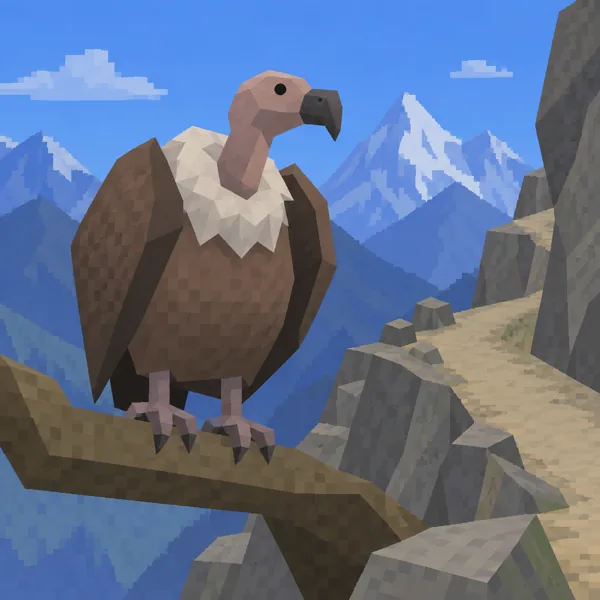
place:charnel:2 'Terrible Darkness (bhairavandhakara), the southwest ground' (built), the game's ground-2 at the south-west spoke, room nickname 'Cool grove': the sky-burial stone the vultures watch, Machig Labdrön's drum and shelter, a bare tree, a stūpa. Machig Labdrön (being:machig-labdron, built) and the Himalayan vulture (being:vulture, built, liberatable) live here. The ground's name and direction follow HAR 792; its tree, stūpa, cloud and resident are the game's own (claim charnel.ground-N.content, adapted).
Art (1)
the ring; find this ground by its direction (east is at the bottom of a maṇḍala painting, north at the top)
Rubin Museum of Art, via Google Art Project / Wikimedia Commons · traditional · Public domain (PD-Art, Public Domain Mark 1.0)
Rubin F1996.1.8's charnel ring, where each ground is a legible landscape; locate this ground by direction.
Still missing: No image reached identifies this ground alone except HAR 68444 for the east; per-ground art would have to be cropped from a labelled maṇḍala or drawn.
Kilikilārava, the north-west ground: Cries of Kili-kili
Skt. Kilikilārava / Kilakilārava ('Resounding with Kili-kili'), Kilikila-ghoṣa-nādita in the Hevajra list; Tib. ki li ki lir sgra sgrog pa / ca co can
The north-west charnel ground: its tree is the arjuna (Ḍākārṇava: pārthiva), its guardian Vāyu (Prabhañjana) on a deer, its nāga Śaṅkha / Śaṅkhapāla, its cloud Caṇḍa, 'Fierce'.
In the Saṃvarodaya list the north-west ground holds the arjuna (Ḍākārṇava: pārthiva) tree, the direction-guardian Vāyu (Prabhañjana) on a deer, the nāga king Śaṅkha / Śaṅkhapāla, the cloud Caṇḍa, 'Fierce', the caitya Dharmavajra and Mount Śrīparvata. Like every ground it is filled with corpses hanging, impaled and half-burnt, with jackals, crows, owls and vultures, fires, a pond, and siddhas and yogins at practice.
Kilikilā is the shrill laughing cry of the spirits and ḍākinīs; the wind god keeps this ground on his deer, and its mountain is Śrīparvata, the siddhas' mountain of the south where Nāgārjuna lived.
The Hevajra list (Konchog Lhundrub, HAR 792) calls it Resounding with the Cries Kili Kili, north-west; Chögyal Phagpa's Cakrasaṃvara ritual calls it Resounding with the Sound Kili Kili, north-west. Tāranātha has Padmasambhava meet the master Nagna, who gave the treasure vase here.
What canon fixes for the map
Direction: north-west [Saṃvarodaya 17.36–45; HAR 792; Tāranātha n. 8 list].
Tree arjuna (Ḍākārṇava: pārthiva); guardian Vāyu (Prabhañjana) on a deer; nāga Śaṅkha / Śaṅkhapāla; cloud Caṇḍa, 'Fierce'; caitya Dharmavajra; mountain Śrīparvata [Saṃvarodaya via Wisdom Library; Ḍākārṇava ch. 15 variants noted; mount from HAR 1364].
Resident master in Tāranātha's life of the Guru: Nagna, who gave the treasure vase [Three Reasons for Confidence].
Standard inventory: corpses (headless, hanging, lying, impaled), heads and skeletons, jackals, crows, owls, vultures, zombies crying 'phaim', siddhas, yakṣas, rākṣasas, pretas, ḍākas and ḍākinīs, ponds, fires, stūpas, practitioners [Konchog Lhundrub via HAR 792].
Conflict: The ashoka is the west ground's tree; this one's is the arjuna (which the game put in the east). Virūpa in the north-west departs from the Sakya painters' rule that he is always in the west cemetery (HAR 2106).
Who lives here
Vāyu (Prabhañjana), the direction-guardian
Śaṅkha / Śaṅkhapāla, the nāga king
Tāranātha's master Nagna
In the game now
place:charnel:4 'Kili-kili Cries (Kilikilaghoshanadita), the northwest ground' (built), the game's ground-4 at the north-west spoke, room nickname 'Clamour of stakes': a ring of eight stakes, the great blade, Virūpa's table with the unpaid bill, the stopped sun, an ashoka tree, a stūpa. Virūpa (being:virupa, built) sits here. The ground's name and direction follow HAR 792; its tree, stūpa, cloud and resident are the game's own (claim charnel.ground-N.content, adapted).
Art (1)
the ring; find this ground by its direction (east is at the bottom of a maṇḍala painting, north at the top)
Rubin Museum of Art, via Google Art Project / Wikimedia Commons · traditional · Public domain (PD-Art, Public Domain Mark 1.0)
Rubin F1996.1.8's charnel ring, where each ground is a legible landscape; locate this ground by direction.
Still missing: No image reached identifies this ground alone except HAR 68444 for the east; per-ground art would have to be cropped from a labelled maṇḍala or drawn.
What fills a charnel ground: corpses, scavengers, zombies, spirits, yogins
Skt. śmaśāna; Tib. dur khrod
The tantras list the same furniture for every ground: corpses in every state, jackals and vultures, crows and owls, risen corpses, fires, a pond, a stūpa, and the siddhas who practise among them.
Konchog Lhundrub's Hevajra text, as HAR quotes it, fills the grounds with 'headless corpses, hanging corpses, lying corpses, stake-impaled corpses', heads and skeletons, jackals, crows, owls and vultures, zombies uttering the sound 'phaim', accomplished siddhas, yakṣas, rākṣasas, pretas, flesh-eaters, lunatics, bhairavas, ḍākas and ḍākinīs, ponds, fires, stūpas and sādhakas. The Saṃvarodaya, the Abhidhānottara (ch. 9) and the Vārāhyabhyudaya give the same list in their own words: crows, owls, vultures, jackals, hawks, lion-faced and tiger-faced beings, lizards and camels; corpses impaled, hanging, half-burned or beheaded; skulls, knees and bellies scattered; yakṣas, vetālas and rākṣasas laughing kilikilā; siddhas, vidyādharas, yogins and yoginīs living there.
The Hevajra Tantra defines the place itself: 'A śmaśāna is a place where pretas congregate. A śmaśāna is at the water's edge. Secondary śmaśānas are said to be in gardens or on the banks of ponds' (1.7.18). Charnel grounds and their secondaries are the last of the six kinds of meeting place (pīṭha, kṣetra, chandoha, melāpaka, pīlava, śmaśāna), together making the twelve bodhisattva levels (1.7.10–11). The Lord 'sports in the charnel ground surrounded by the eight yoginīs' (1.3.16), and the tantra's rites use charnel coal, pulverised human bone, charnel bricks, a charnel cord and a rag from the charnel ground to sit on (1.2.20–21).
The zombie is the vetāla, in Tibetan ro langs, 'risen corpse': 84000's glossary explains that some piśācas can enter dead human bodies and become vetālas, whom it is fatal to touch. In Orgyen Lingpa's life of the Guru one of the eight Nyingma charnel grounds is simply Zombie Grove (ro langs tshal), where Padmasambhava had his vision of Vajrakīla, and he says 'I accomplished the corpse practice'. Mahākāla paintings keep the same scene underfoot: in the Met's Panjaranatha stele a corpse lies under the god's feet with crows and jackals in the arch, and in the black-ground painting a row of animal-headed and bird-headed attendants runs along the bottom.
The Sūtra of Great Cool Grove shows the Buddha himself teaching in such a place: 'dwelling in Rājagṛha at the horrific and hair-raising great charnel ground Cool Grove' with 1,250 monks, when the Four Great Kings arrive at midnight with their hosts of yakṣas, rākṣasas, gandharvas, nāgas, pretas, pūtanas, piśācas and the rest. Charnel grounds are where the human dead and the non-human hosts share one ground.
What canon fixes for the map
Inventory: corpses (headless, hanging, lying, impaled, half-burnt, beheaded), heads, skeletons, jackals, crows, owls, vultures, hawks, lizards, camels, zombies (vetālas) crying 'phaim', siddhas, yogins and yoginīs, yakṣas, rākṣasas, pretas, flesh-eaters, lunatics, bhairavas, ḍākas and ḍākinīs, ponds, fires, stūpas [Konchog Lhundrub via HAR 792; Saṃvarodaya/Abhidhānottara 9/Vārāhyabhyudaya 103–109 via Wisdom Library].
A śmaśāna is where pretas gather, at the water's edge; secondary ones in gardens or on pond banks [Toh 417 1.7.18].
Charnel grounds are the sixth kind of meeting place (with pīṭhas, kṣetras, chandohas, melāpakas, pīlavas), twelve classes in all [Toh 417 1.7.10–11].
Vetāla = ro langs, a corpse animated by a piśāca; fatal to touch [84000 Toh 562 glossary]; Zombie Grove (ro langs tshal) is one of the Nyingma eight [Orgyen Lingpa ch. 8, n. 22].
The Buddha taught the Great Cool Grove sūtra at the Cool Grove charnel ground of Rājagṛha; the Four Great Kings and their hosts came at midnight [Toh 562 1.43].
Game: counts of bones and skulls are 108; birds in threes; the flies are scenery [docs/world-plan/places/charnel.json orphans].
Jackals, crows, owls, vultures, hawks: the scavengers of every list.
Yakṣas, rākṣasas, pretas, ḍākas and ḍākinīs: the non-human company.
Siddhas, vidyādharas, yogins and yoginīs at practice.
In the game now
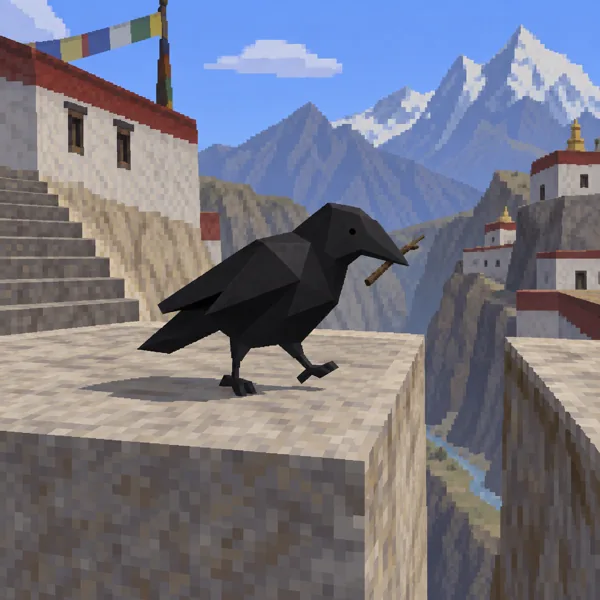
Built: being:rolang (the risen corpse, ground-5, liberatable, bound/liberated forms), being:vulture (ground-2, liberatable), being:raven (hub, liberatable), six ambient flocks (being:ambient-charnel-birds, -2-birds, -4-birds, -6-birds, -7-birds, -flies; built, planned to become scenery in threes), the bone fields, skull cairn, skull spiral (108), ribcage, pyres and sky-burial stone. The shidre (the woman setting the table) is the plan's invented restless dead, not a canon class. No jackal, owl, yakṣa or rākṣasa is built.
Art (7)
the corpse under Mahākāla's feet, crows and jackals in the archthe whole stele: Mahākāla over a corpse, animals and attendants in the arch
The Metropolitan Museum of Art (Open Access) · traditional · CC0 (Met Open Access)
Painted stone stele: Panjaranatha Mahākāla stands on a corpse; crows fly in the arch and small wrathful attendants and jackal-like beasts fill the frame. Charnel scenery in one small object.
the bottom register: a row of animal- and bird-headed attendants, the charnel company
The Metropolitan Museum of Art (Open Access) · traditional · CC0 (Met Open Access)
Black-ground Mahākāla, Protector of the Tent, in a sky of flames; across the bottom his charnel-ground retinue, animal-headed, with skull cups and ravens.
the top of the charnel ring: corpses, a siddha pair, birds on a lake, stūpa
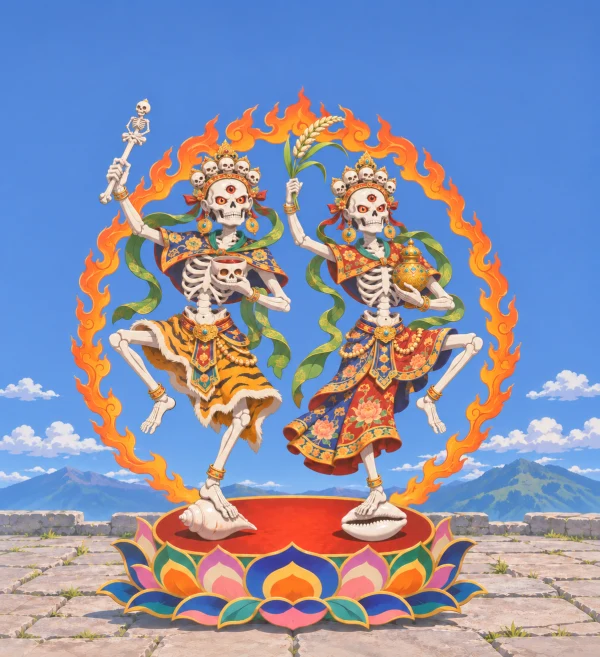
The Citipati: the Glorious Lords of the Charnel Ground
Skt. Śrī Śmaśāna Adhipati (Citipati, 'lord of the pyre'); Tib. dpal dur khrod kyi bdag po yab yum, dur khrod bdag po lcam dral
A skeleton couple, father and mother, who emanate from Cakrasaṃvara and dance in the charnel ground; wisdom protectors of the Cakrasaṃvara and Vajrayoginī cycles, not worldly ghosts.
Śrī Śmaśāna Adhipati are a male and female pair of enlightened deities classed as wisdom protectors. They emanate from Cakrasaṃvara and belong to his cycle and Vajrayoginī's; their practice, ritual and painting instructions come from an eight-chapter tantra, the Glorious Lords of the Cemetery Secret Mind Wheel Tantra (dpal dur khrod kyi bdag po'i rgyud gsang ba snying gi 'khor lo), whose chapters are History, Root Sādhana, Activities, Reversal, Receiving Attainments, Extreme Activities, Inducing with Praise and Conclusion. The lineage runs Vajradhara, Vajrayoginī, the mahāsiddha Padmavajra, Līlāvajra, Jñānasiddhi, Śrī Samayavajra, down to Sachen Kunga Nyingpo (1092–1158), and the pair are now found in all the Sarma schools, chiefly as a wealth practice with emphasis on protection from thieves, and as the special protector of the Naro Khechari Vajrayoginī practice.
In the Rubin's fifteenth-century Sakya painting (HAR 462) they are two identical skeletons, each with one face and two hands, three round eyes and a broad grin. The right hand holds a staff topped with a white skull and a vajra, the left a skull cup of blood at the heart. They wear gold-tipped skull crowns, jewels, silk fans in the ear openings, scarves and red skirts; their legs interlock in the dance, the father standing on a conch shell and the mother on a cowrie, on a sun disc over a lotus, in flames of pristine awareness. Over them a white canopy is built of human ribs, leg bones and arm bones, and loops of intestine strung through white skulls edge the picture; two small panels at the bottom show charnel-ground scenes.
HAR is firm that the deity pair must not be mixed up with the skeleton dancers of Cham, who are worldly spirits, often jesters or attendants of Yama's court, and rarely appear in paintings except in narrative vignettes. The popular story that the pair were two ascetics meditating by a cemetery, beheaded by a thief who thought them dead, who then vowed to guard against thieves and dance in the grounds while they wait, circulates widely (Wikipedia and retail sites repeat it) but no canonical text or HAR page reached here gives it, and none locates it at Śītavana. Record it as later lore, not canon.
Their image also travels on ritual objects: bone apron plaques from Tibet carved with a dancing Citipati (Met 1991.409.6–7), and painted cabinet doors where the grinning pair dance under a skull-fringed canopy (LACMA M.91.203).
What canon fixes for the map
A couple: father and mother, two identical skeletons, one face, two hands each; right hand a skull-and-vajra-topped staff, left a blood-filled skull cup at the heart [HAR 462].
Dancing with legs interlocked; he on a conch, she on a cowrie; sun disc, lotus, wisdom flames; canopy of human bones; intestine loops through skulls [HAR 462].
Wisdom protectors emanated from Cakrasaṃvara; source the Secret Mind Wheel Tantra in eight chapters; protector of Naro Khechari Vajrayoginī; wealth and anti-thief practice [HAR 160 paras. 1–2; set 5854].
Not the Cham skeleton dancers, who are worldly spirits in Yama's retinue [HAR 160 para. 4].
The beheaded-ascetics origin tale: popular lore, uncited in canon; no source places it at Śītavana.
Already liberated: presence form only, never a match (R26) [AGENTS.md; charnel.json hooks].
Who lives here
Śrī Śmaśāna Adhipati father (yab) and mother (yum), the skeleton pair.
In the game now
being:worldly-spirits:shmashana-adhipati 'Śrī Śmaśāna Adhipati (Citipati), the Lords of the Cemetery' is `built`, fulfilled by the character citipati-pair (presence form, two residents citipati-male and citipati-female) dancing on two rounds pressed in the pale ash of ground-7 (east), beside a skull spiral of 108. Concept /purelands/concepts/citipati-pair-600.webp; capture /atlas/beings/renders/citipati-pair-b90d084853b6-presence-3q.webp. Their ground assignment is the game's; HAR gives them no compass seat.
Art (7)
the dancing pair, grinning, limbs intertwined round the door pulls
Los Angeles County Museum of Art, purchased with funds provided by Harry and Yvonne Lenart (public domain high-resolution image) · traditional · Public domain (PD-LACMA)
The skeleton pair dancing under a skull-fringed canopy on a gold-and-black ground, cloth tassels still hanging from the door pulls; a small dark wrathful face between them; a skull cup of blood and a torma at the foot. The best single image of how the pair is staged.
the left Chitipati plaque, a skeleton dancingthe right Chitipati plaque
The Metropolitan Museum of Art, Anonymous Gift, 1991 (Open Access) · traditional · CC0 (Met Open Access)
Bone apron pieces laid out: the two trapezoid side plaques each carry a dancing skeleton (Chitipati); the sash above carries carved skulls and vajra-crosses.
The Metropolitan Museum of Art, Anonymous Gift, 1991 (Open Access) · traditional · CC0 (Met Open Access)
Black-and-white record of the whole bone apron: the pair of dancing-skeleton plaques at top centre, five wrathful-head plaques, and the sash of skulls below.
Himalayan Art Resources / Rubin Museum of Art · traditional · No open licence (link only)
The canonical image: the pair with staff and skull cup, conch and cowrie underfoot, a canopy of human bones above, intestines looped through skulls at the edges, charnel scenes in two small panels at the bottom.
Still missing: No open-licence Citipati thangka was found (the Rubin and private paintings are link-only); the LACMA doors and the Met bone plaques are the showable pieces. A Cham skeleton mask with an open licence was not verified (Commons 'Tibetan Mask.jpg' is CC BY-SA but was not inspected).
The Cool Grove is a real cremation ground of Magadha where the Buddha taught, Padmasambhava bound the ḍākinīs, and the Nyingma set the first of their own eight charnel grounds, in the east.
Śītavana is a historical charnel ground. The Sūtra of Great Cool Grove opens with the Buddha 'dwelling in Rājagṛha at the horrific and hair-raising great charnel ground Cool Grove' with 1,250 monks, when the Four Great Kings arrive at midnight with their hosts and teach incantations against the grahas and bhūtas that feed on practitioners in remote places. Tibetan tradition and the pilgrimage guides place Śītavana near Bodhgaya, about ten kilometres north-east of the Mahābodhi temple in a wood below the Dungeshwari (Prāgbodhi) caves, round the ruin of an old stūpa the Pema Kathang calls Shankarakuta, 'Bestower of Bliss'. HAR lists it with the Laughing ground at Bodhgaya and the Frightening ground in Bihar's Black Hills as the eight's physical seats; the two locations (Rājagṛha, Bodhgaya) are a real disagreement between the sūtra and the guides.
In Jamgön Kongtrul's life of the Guru, Padmasambhava, banished from Uḍḍiyāna for the killing of a minister's son, goes to 'Śītavana, Cool Grove, Nandanavana, Joyful Grove, and Sosadvīpa, Sosa Land' and practises yogic disciplines there; the ḍākinīs Mārajitā, 'Tamer of Māra', and Śāntarakṣitā, 'Sustainer of Bliss', give him empowerments and blessings, and when he brings the ḍākinīs of the charnel grounds under his command he is called Śāntarakṣita, 'Preserver of Peace'. The Nekhor guide adds the austerities: shrouds for clothing, rice left for the dead for food, and in famine human skin and corpse flesh, in the samādhi called 'unshakeable', until the mamos and ḍākinīs of the ground were bound by oath as protectors. Tāranātha's Indian-tradition account instead has him visit all eight 'primordial' grounds of the Saṃvarodaya list and win one ordinary siddhi in each.
The Nyingma have their own eight charnel grounds, used for peaceful maṇḍalas and the Guru's life: Cool Grove (bsil ba tshal, Śītavana) in the east; Perfected in Body (sku la rdzogs, Kuladzokpa) in the south; Lotus Mound (padma brtsegs) in the west; Laṅkā Mound (lan ka brtsegs) in the north; Spontaneously Accomplished Mound (lhun grub brtsegs) in the south-east; Display of Great Secret (gsang chen rol pa) in the south-west; Pervasive Great Joy (he chen brdal ba) in the north-west; World Mound ('jig rten brtsegs) in the north-east. Orgyen Lingpa's biography gives a variant eight tied to the Kagyé: Chilly Grove (Amṛta), the Great Hūṃ Cave (Śrī Heruka), Terrifying Grove (Yamāntaka), Lotus Mound (Hayagrīva), Zombie Grove (Vajrakīla), Spontaneous Mound (Mamo), All-Pervading Utter Joy (worldly deities) and Loka Mound (fierce mantras). Dudjom Rinpoche's list in The Nyingma School (Most Fierce, Dense Thicket, Dense Blaze, Endowed with Skeletons, Cool Grove, Black Darkness, Kili-kili, Ha-ha laughter) mixes the Saṃvarodaya names with Śītavana.
Other masters belong to Śītavana in the guides: Garab Dorje stayed there for the rest of his life, Mañjuśrīmitra was sent there by Mañjuśrī's prophecy, and Hūṃkara and Śavaripa practised there (HAR's Humkara item 19843 sits in the Charnel Grounds set). A mahāsiddha later tamed a demon in the cave above and named it Mahākāla, whence the Mahākāla (Dungeshwari) cave.
What canon fixes for the map
Śītavana is a great charnel ground at Rājagṛha in the sūtra [Toh 562 1.43] and near Bodhgaya in Tibetan tradition and the guides [Toh 562 glossary g.17; Nekhor; HAR 1364]; both are recorded.
Nekhor's location: about 10 km NE of the Mahābodhi, in a wood south of the Dungeshwari cave road, round the ruined Shankarakuta stūpa; the Pretaśilā and Rāmaśilā spirit-rocks and the Nairañjanā river are nearby [Nekhor].
Padmasambhava's charnel grounds: Śītavana, Nandanavana, Sosadvīpa; ḍākinīs Mārajitā and Śāntarakṣitā; he binds the charnel ḍākinīs and is named Śāntarakṣita [Kongtrul, KPL]; Kuladzokpa later [KPL].
Nyingma eight with directions: E Cool Grove, S Perfected in Body, W Lotus Mound, N Laṅkā Mound, SE Spontaneously Accomplished Mound, SW Display of Great Secret, NW Pervasive Great Joy, NE World Mound [Rangjung Yeshe glossary; HAR 1364 'common Nyingma list'].
Orgyen Lingpa's eight and their Kagyé deities, including Zombie Grove (ro langs tshal) [Orgyen Lingpa ch. 8, nn. 17–27].
The Nyingma list and the Saṃvarodaya/Hevajra lists are different sets; the game built the Hevajra set, so Śītavana is not one of its eight [HAR 1364; charnel.json].
Who lives here
Padmasambhava (Guru Śāntarakṣita in this episode) [KPL].
Mārajitā and Śāntarakṣitā, ḍākinīs of the charnel grounds [KPL].
Garab Dorje, Mañjuśrīmitra, Hūṃkara, Śavaripa: masters of Śītavana in the guides [Nekhor; HAR item 19843].
The Four Great Kings and their hosts, who come to the Cool Grove at midnight [Toh 562 1.43].
In the game now
Nothing. The game's ground-2 (south-west, Terrible Darkness) carries the old room nickname 'Cool grove', which is a misnomer: Śītavana belongs to the Nyingma set in the east, and the game's eight follow the Hevajra set. Padmasambhava's charnel years are not represented; his place in the game is the Copper-Coloured Mountain (samsara realm pure-lands).
Himalayan Art Resources, Jeff Watt (9-2020) · traditional · No open licence (link only)
Lists the known physical cemeteries: Sitavana near Bodhgaya, Jigrung between Bodhgaya and Rajgir, 'Wild Laughing' at Bodhgaya, Rajpur in Dehradun, the south base of Swayambhunath.
Still missing: No open-licence photograph or painting of Śītavana itself was found; Padmasambhava-in-the-charnel-ground scenes from Zangdok Palri or life-story thangkas were not located with a usable licence.
Mahāsiddhas of the charnel grounds: Saraha, Tilopa, Virūpa, Kukkuripa
Skt. mahāsiddha; Tib. grub thob chen po
Painters put siddhas in the eight cemeteries, but no text fixes which siddha sits where; the four the game placed have their own legends, and only two of them touch a cremation ground.
HAR's study of seventeen maṇḍalas finds no universal set of eight siddhas for the eight charnel grounds: Nyingma and Gelug painters use generic siddhas (Gelug often two per cemetery), while Kagyu and Sakya painters use their own eights inconsistently. The Kagyu eight are Indrabhūti, Nāgārjuna, Padmavajra, Kukkuripa, Saraha, Ḍombi Heruka, Ghaṇṭapa and Lūipa; the Sakya eight replace Padmavajra with Virūpa, and in Sakya painting Virūpa is always in the western cemetery. Dolpopa's and Situ Panchen's eights differ again. The early tantric texts name six features of a cemetery, grounds, trees, direction guardians, clouds, nāgas and guardian deities, and no siddhas. Tāranātha alone gives each ground a master, but they are obscure ṛṣi-like names (Bhṛgu, Bhūmiputra, Sūryaputra, Amṛtaprabha, Śivaṃkara, Vararuci, Nagna, Dhanuṣkṛta).
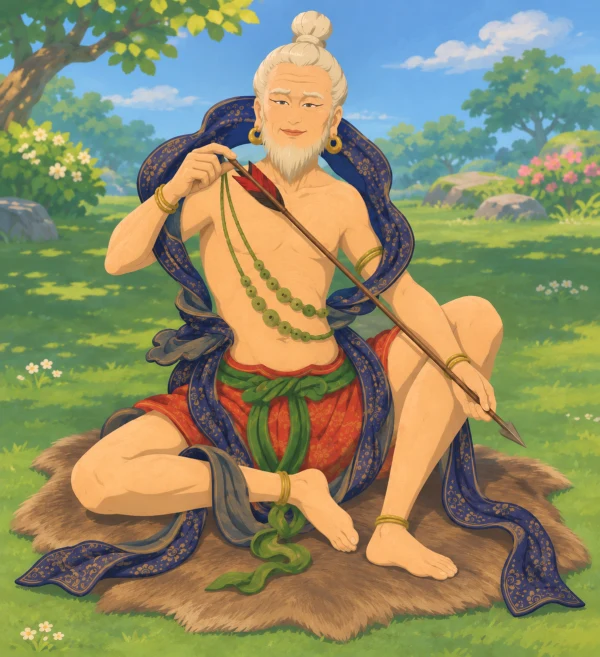
Saraha, 'the Archer' (mda' bsnun), a brahmin scholar of Nālandā, met his teacher in a low-caste arrow-making woman at a crossroads or market; she taught that the Buddha's meaning is known through symbols and acts, not books, and on realising mahāmudrā he uttered the one syllable 'da', arrow and symbol at once. He left the monastery and 'moved to a cremation ground with her to practice'. He is painted with long white hair and beard holding an arrow in both hands, the one attribute no other siddha shares; he heads the Cakrasaṃvara lineage (Vajradhara, Vajrapāṇi, Saraha, Nāgārjuna) and composed the King, Queen and People dohās.
Tilopa (c. 988–1069), a brahmin of Bengal, was sent by a ḍākinī to serve the prostitute Dharima (Bharima) as her procurer by night while pounding sesame (til) by day, and attained mahāmudrā while threshing sesame; before that, women sent him to a cemetery (Salavihāra), where he met his teachers Cāryapa and Lawapa. He held the four transmissions and received mahāmudrā from Vajradhara directly; Nāropa is his chief student. Virūpa, a monk of Somapurī who had practised Vajravārāhī for twelve years and thrown his rosary in the latrine, won mahāmudrā from the ḍākinī; expelled for eating pigeons, he walked on lotus leaves, parted the Ganges, and in a tavern at Kanasaṭa paid for his drink with the sun, pinning it with his phurba 'exactly halfway between the light and the darkness' for two and a half days until the king paid his bill. His legend's ghouls carry him to a ruined temple at Devīkoṭa, not a cemetery. Kukkuripa, a brahmin of Kapilavastu, shared his bowl with a starving dog on the road to Lumbinī and lived twelve years with her in a cave; invited to the Heaven of the Thirty-three, he kept returning to the pining dog, who was a ḍākinī and gave him realisation. His legend is a cave, not a charnel ground.
Abhayadatta's Legends of the Eighty-four Siddhas (Dowman's translation) is the source for these four; its introduction notes how often the guru meets the disciple in a cremation ground, 'the death-bed of the ego'. The repo lists the eighty-four one by one from Robinson's translation of Abhayadatta (the mahasiddhas lore group), with the assembly still to make (being:mahasiddhas:eighty-four), as the mahāsiddha registers across the top and bottom of the Met's 1100 Cakrasaṃvara maṇḍala show them.
What canon fixes for the map
No text assigns siddhas to the eight cemeteries; Kagyu and Sakya painters use their own eights; Sakya: Virūpa always west [HAR 2106].
Kagyu eight: Indrabhūti, Nāgārjuna, Padmavajra, Kukkuripa, Saraha, Ḍombi Heruka, Ghaṇṭapa, Lūipa; Sakya eight: Virūpa for Padmavajra, clockwise from top Virūpa, Lūipa, Kukkuripa, Saraha, Indrabhūti, Ḍombi Heruka, Nāgārjuna, Ghaṇṭapa [HAR 2106].
Saraha: arrow held in both hands, long white hair and beard, lay dress or siddha dress with skull crown; moved to a cremation ground with the arrow-maker [HAR 340; Wikipedia 'Saraha' citing Dowman, Schaeffer].
Tilopa: sesame-pounder and procurer for Dharima at Pañcapana; sent to the cemetery of Salavihāra to meet Cāryapa and Lawapa [Wikipedia 'Tilopa' citing Torricelli, Thrangu].
Virūpa: stops the sun with his phurba at the tavern; parts the Ganges; the dakini-guru; pointing gesture in sculpture [Dowman, Virupa; HAR 65219].
Kukkuripa: the dog in the cave near Lumbinī; the Heaven of the Thirty-three; the dog a ḍākinī [Dowman, Kukkuripa].
Already liberated: presence forms only; never matches (R26); Kukkuripa's dog is bound and liberatable in the plan, drawn with his rig [charnel.json; samsara being:kukkuripa-dog sketch].
Kukkuripa (being:kukkuripa, ground-6 north-east, tall grass) and his dog (being:kukkuripa-dog).
The eighty-four as one assembly (being:mahasiddhas:eighty-four) and one by one (being:mahasiddhas:luyipa to being:mahasiddhas:vyali); Nāgārjuna is at the nāga palace.
In the game now
Four siddhas built with concepts and presence rigs: Saraha /purelands/concepts/saraha-600.webp, Tilopa tilopa-600.webp, Virūpa virupa-600.webp, Kukkuripa kukkuripa-600.webp; captures in /atlas/beings/renders/. Their ground assignments are the game's (claim charnel.hub.eighty-four, elsewhere). Props agree with the legends (arrow, sesame mortar, unpaid bill and stopped sun, dog and bowl). Conflicts: Virūpa sits north-west where Sakya painters always put him west; Kukkuripa's legend is a cave, Virūpa's a tavern; only Saraha and Tilopa have cremation-ground episodes.
Art (8)
the top register: mahāsiddhas under trees and at fires, in siddha appearance
The Metropolitan Museum of Art, Rogers Fund, 1995 (Open Access) · traditional · CC0 (Met Open Access)
The Met's 1100 Cakrasaṃvara maṇḍala frames the palace with the mahāsiddhas above and below, each with his attribute and a companion; the oldest painted siddha register.
siddha couples in the charnel ring, one per ground
With his dog; the shared rig also draws being:kukkuripa-dog.
Still missing: Open-licence single-figure paintings of Saraha, Tilopa, Virūpa or Kukkuripa were not found (HAR/Rubin are link-only); the Met's siddha register is the showable traditional source.
Machig Labdrön and Chöd: cutting through in the charnel ground
Tib. Ma gcig Lab sgron (1055–1149/1153); gcod, 'Severance'
The Tibetan yoginī who codified Chöd, the practice of offering one's own body as a feast, done in dreaded places like cemeteries with drum, bell and thigh-bone trumpet.
Machig Labdrön, born 1055 at Tsomer in the Labchi region of E, was a prodigious reader of the Prajñāpāramitā who became a student of Drapa Ngönshe and then Kyotön Sönam Lama, who gave her the empowerments of the Five Deities of Vārāhī and the name Dorje Wangchukma, Queen of Vajra Space; she received direct mind instruction from Dampa Sangye, though the Treasury of Lives notes how thin the evidence for that transmission is. Mañjuśrī's prophecy in her biography has her 'wander through towns, villages, and valleys, charnel grounds and hermitages'. At thirty-seven she settled in the cave at Zangri Khangmar, the Red House on the Copper Mountain, where a community of thousands gathered and Indian ācāryas came to test her.
Chöd, 'cutting', is grounded in the Prajñāpāramitā and cuts ego-clinging by offering the maṇḍala of one's own body as a feast (gaṇacakra) to the four guests; it is done in lonely and dreaded places, cemeteries first among them, to meet and overcome fear. Its instruments are the large chöd drum, the bell and the thigh-bone trumpet (kangling), 'often obtained from the charnel ground of sky burials'. Khenchen Palden Sherab calls it 'a radical synthesis of the Prajñāpāramitā tradition and tantra guru yoga'. Chöd practitioners (chöpas) lived as wanderers in ruins, caves and charnel grounds and by rivers and springs; Machig founded no institution.
She is painted white, with three eyes, dancing with the right leg raised, holding the drum in her right hand and the bell in her left, wearing the six bone ornaments of the charnel grounds. The repo's Gentle Rain (Gyalse Shenpen Taye) on the four kinds of guests is the Chöd frame the ledger already cites for the charnel grounds.
What canon fixes for the map
Born 1055 Tsomer, Labchi; teachers Drapa Ngönshe, Kyotön Sönam Lama, Dampa Sangye; seat Zangri Khangmar from age 37 [Treasury of Lives; Wikipedia citing Edou, Harding].
Chöd: body offered as gaṇacakra; practised in cemeteries and dreaded places; drum, bell, kangling [Wikipedia 'Machig Labdrön'; Edou 1996; Harding 2013].
Iconography: white, three eyes, dancing on the left leg, drum right, bell left, six bone ornaments [Wikipedia (uncited section); check against HAR].
Her presence in a charnel ground of the Hevajra ring is the game's placement; no text seats her in one of the eight [charnel.json character machig-labdron adaptation].
Already liberated in game terms: presence form, never a match (R26).
Who lives here
Machig Labdrön (being:machig-labdron).
Dampa Sangye and Kyotön Sönam Lama, her teachers (not in game).
In the game now
being:machig-labdron is `built` (presence) in ground-2 (south-west), practising at the sky-burial stone with her great drum on its cloth beside her shelter; concept /purelands/concepts/machig-labdron-600.webp, capture /atlas/characters/machig-labdron-4dd18d6e20f8-presence-3q.webp. Her iconography status in the plan is 'pending'.
Still missing: No open-licence Machig Labdrön painting was located in this pass (HAR holds many, link-only); a Met or LACMA Machig should be searched before her iconography review.
The skull-bearer's conduct: how the Hevajra Tantra has a yogin live in the charnel ground
Skt. kāpālika ('skull-bearer'), caryā / vrata ('conduct', 'observance'); the five or six mudrās (bone ornaments)
The tantras take over the Śaiva skull-bearer's penance: bone ornaments, a skull in the hair, ashes, skull cup, khaṭvāṅga and ḍamaru, song and dance, and a lonely tree or charnel ground as the best place to meditate.
The Hevajra Tantra's chapter on Conduct (1.6) dresses the practitioner as the deity: 'divine earrings in his ears, a circlet on his head, a pair of bracelets on his wrists, a sash around his waist, anklets likewise on his ankles, armlets on his upper arms, a garland of bones around his neck, a cloak of tiger skin', and he 'should ingest the half-ten ambrosias' and 'live among the five castes' made one. 'A lonely tree or a charnel ground is said to be best for meditation, as is a shrine to the mātṛs at night, or desolate and remote places' (1.6.6). He wears 'a crown of a thief's hair', five skulls for the five buddhas, 'a piece of skull five fingers in size' in his topknot, locks plaited in two strands for wisdom and means, 'ashes and a sacred thread made of hair' (1.6.15–16). The ḍamaru's sound is his mantra recitation and the khaṭvāṅga, the wisdom consort, his meditation (1.6.17); 'if a song is sung out of joy... if, when joy arises, the yogin dances for liberation, he should dance with vajra steps' (1.6.10, 1.6.13). He eats whatever comes without judging edible from inedible (1.6.20–21), is 'beyond homa, oblations, and austerities' (1.6.24) and moves 'in the manner of a lion' (1.6.25).
The ornaments are the deity's own: Hevajra 'is adorned with the five mudrās', circlet, earrings, necklace, bracelets and girdle, whose pure aspects are the five buddhas (1.3.13–14), bears a vajra skull cup in his left hand with a khaṭvāṅga in the curve of his arm (1.3.15), and 'sports in the charnel ground surrounded by the eight yoginīs' (1.3.16), the word śmaśāna glossed from the breathing out of the dead. In the Conduct chapter Akṣobhya is the circlet, Amitābha the earrings, Ratneśa the necklace, Vairocana the bracelets, Amogha the sash (1.6.11–12). Later tradition speaks of six bone ornaments; the tantra gives five, with the tiger skin.
David Gray traces the setting: Bhairava, the skull-bearing form Śiva took after beheading Brahmā, became the 'great observance' (mahāvrata) of the Śaiva Kāpālikas, 'an infamous Śaiva sectarian group notorious for their extreme modes of practice'; the Buddhist Yoginī tantras grew from the same 'cult of the charnel ground', their deities 'garbed with ornaments derived from the charnel ground', skulls and skull bowls first, and their rites, like the vetāla-sādhana that animates a corpse, set there. HAR's glossary keeps the word kāpālika for the Śaiva ascetic and extends it to Hevajra practitioners only because skull imagery is common to both. The Buddhist re-reading is the vajrakāpālika-caryā-vrata: holding the skull and khaṭvāṅga and wearing the charnel ornaments as a Buddhist vow.
What canon fixes for the map
Dress of the conduct: earrings, circlet, bracelets, sash, anklets, armlets, bone garland, tiger-skin cloak [Toh 417 1.6.2–4]; five skulls on the crown, a skull piece in the topknot, two plaits, ashes, a hair thread [1.6.15–16].
Best places: a lonely tree, a charnel ground, a mātṛ shrine at night, desolate places [1.6.6].
Instruments: ḍamaru (recitation), khaṭvāṅga (the consort, meditation), skull cup [1.6.12, 1.6.17; 1.3.15].
Song and dance with vajra steps are part of the conduct, 'at all times' [1.6.10, 1.6.13]; cf. Hevajra's tāṇḍava dance [glossary g.17, 2.5.34].
Five mudrās = five buddhas: Akṣobhya circlet, Amitābha earrings, Ratnasambhava necklace, Vairocana bracelets, Amoghasiddhi sash [1.6.11–12; 1.3.13–14].
Kāpālika origin: Śiva-Bhairava's skull penance as the Kāpālikas' mahāvrata; Buddhist Yoginī tantras share the charnel-ground milieu [Gray; HAR glossary 'Kapalika', 'Bone Ornaments'].
Charnel-ground materials in rites: coal, pulverised bone, bricks, a cord, a rag to sit on [1.2.20–21].
In the game now
Nothing explicit. The game's siddhas wear ordinary dress in their concepts; no character carries the five mudrās, a skull cup or a khaṭvāṅga, and Machig's bone ornaments are 'pending'. The hub shrine's crossed vajra and empty cup are the plan's own abstraction of a centre.
Art (3)
Hevajra in the centre with skull cups, bone ornaments and tiger skin
The Metropolitan Museum of Art, Anonymous Gift, 1991 (Open Access) · traditional · CC0 (Met Open Access)
Bone apron pieces laid out: the two trapezoid side plaques each carry a dancing skeleton (Chitipati); the sash above carries carved skulls and vajra-crosses.
Concept study (repo; origin not recorded) · concept · Project art
The repo's Vajrayoginī study: skull cup, khaṭvāṅga and bone ornaments, the charnel dress of the Yoginī tantras; realm pure-lands in media.json.
Still missing: No open-licence image of a human yogin in full kāpālika dress (bone apron, skull crown, khaṭvāṅga) was found; the Met bone apron (1991.409) and the Hevajra centre stand in.
The charnel grounds as built today (places/charnel.json)
Runtime zone `charnel`; rooms charnel:1–8 and the hub
A hub of 108 bones with a crossed-vajra shrine and eight grounds round it at the eight directions, entered through white cloth from the Human cremation ground; eleven residents, three of them liberatable, and the Hevajra names on the gates.
The place is reached from the ordinary cremation ground below the washing ghat at human.riverside: two posts and white cloth at its far side are the gateway (human.riverside.gateway-charnel, host threshold at [-21.6, -7.6] in the Human frame), and the inside threshold returns the pilgrim one step outside that cloth. The plan keeps the set apart from the town because the sources make it a maṇḍala's surround, not town ground; the gate is the game's own link (gateway adaptation). Retired on 2026-10-10 (R27) into the Human section and restored as an interior on 2026-10-22 (R29) when the eight grounds collapsed into one overlapping place in the overworld.
Inside, the plan makes one open ground under one dusk sky. The crossroads hub (charnel.hub, radius 6) holds the shrine platform ringed with eight pale petals, a crossed vajra on a pedestal and an empty ivory cup (inline:zi-charnel-arrangement.js#shrine, an abstraction, Hevajra not modelled), a seat stone, the keepsake bell, a scatter of 108 small bones (today 33) and a gateway of white cloth on the north side as the way out. Eight spokes run out at radius 5.6; the eight grounds (radius 5.9) stand at radius 14 in their directions, ground 1 straight ahead at -z (south), the rest clockwise, so walking clockwise round the hub walks clockwise round the compass; an outer clockwise circuit at radius 21 joins them. Today the grounds are still eight rooms behind loading doors (charnel-way-1…8); the plan turns the doors into walk-through thresholds and keeps the room ids as pocket ids.
The grounds, each with its white-cloth gateway, a doorless small stūpa, its own tree and one or two residents: 1 south, Skull Terror (room 'Skeleton grove'): bone field, skull cairn, Saraha's arrow rack, an acacia; Saraha. 2 south-west, Terrible Darkness ('Cool grove'): the sky-burial stone, Machig's drum and shelter, a bare tree; Machig Labdrön and the vulture. 3 west, Flame Garland ('Vajra fire'): three pyres, Tilopa's mortar and sesame, three oil lamps, a mango; Tilopa. 4 north-west, Kili-kili Cries ('Clamour of stakes'): eight stakes, the great blade, Virūpa's table and jug, the stopped sun, an ashoka; Virūpa. 5 north, Deep Forest ('Dense dark'): a black pool under a banyan, the rolang's bier; the rolang. 6 north-east, Fierce Roar ('Lakshmivana'): tall grass with a flattened round, a water bowl, a jambu; Kukkuripa and his dog. 7 east, Fierce Ground ('Laughter'): pale ash with two rounds pressed in it, a spiral of 108 skulls, an arjuna; the Citipati pair. 8 south-east, Lord's Grove ('Chandogra'): a great ribcage, a family table with a cloud of flies, a pipal; the woman setting the table (shidre). The raven keeps the hub.
Hooks: the keepsake bell in the hub; matches for the rolang (ground-5), the shidre (ground-8), the raven (hub), the vulture (ground-2) and Kukkuripa's dog; the adepts and the Citipati are already free and never a match. Freed state: unchanged (R8), no source supports a change when beings are freed. Orphans the plan removes: the six ambient creature records (they become scenery in threes), the sixteen loading doors, and the counts of 33 (become 108). Budget per district about 8000 triangles.
What canon fixes for the map
Canon (mapped): eight grounds round a centre at the eight directions, named and placed by the Hevajra list of HAR 792 [claims charnel.hub.arrangement, charnel.hub.names].
Adaptation: the gate from the town's cremation ground; the hub shrine (crossed vajra, empty cup); every tree, stūpa, cloud, tall silhouette and resident assignment; the shidre and the rolang as individuals; the room nicknames [gateway.adaptation; claims *.content; characters[].adaptation].
Deliberately not asserted: per-ground tree, guardian, nāga or correspondence table; the full eighty-four siddhas [claims charnel.hub.correspondences, charnel.hub.eighty-four].
Conflicts with canon found in this pass: four room nicknames sit at the wrong direction (ground-2 'Cool grove' is the Nyingma east ground; ground-6 'Lakshmivana' is the south-east ground; ground-7 'Laughter' is the north-east; ground-8 'Chandogra' is the east); the trees do not follow the Saṃvarodaya table; Virūpa is north-west where Sakya painters keep him west.
Frame and radii: hub radius 6, spokes from 5.6, grounds radius 5.9 at radius 14, circuit at 21; +x is west in the resident coordinates (Tilopa at [14.7, 0.8] is the west ground) [layout; residents].
Who lives here
Saraha, Machig Labdrön, Tilopa, Virūpa, Kukkuripa and his dog, the Citipati pair (male and female), the rolang, the woman setting the table (shidre), the Himalayan vulture, the raven; six ambient flocks and flies [characters; residents].
In the game now
Samsara realm `charnel`: 25 items, 23 built, 2 sketch (being:kukkuripa-dog, drawn with the shared rig; being:mahasiddhas:eighty-four). 17 beings, 8 places. Life checks: concept 10/17, model 16/17, forms 10/16, placed 16/17, dialogue 16/17, routine 10/17, liberation 3/10; 9 'alive'. Cited 10, adapted 15, unsourced 0. Polish: Kukkuripa 13 minor, Saraha 13 minor, raven 18 minor. No in-world terrain-review capture exists for this place (public/atlas/terrain-review/in-world has none); captures are per-being renders only.
Still missing: No overhead or walk capture of the hub and ring exists; the plan's captureRoute (overhead; walk from [0,3] looking at [0,-5]; walk from [0,0.5] looking at [5.6,0]) has not been shot.
missing Nothing in the game is this yet.sketch Something stands in: a model not yet placed, a placement drawn with a shared rig, a written voice, a court inside a shared room, or a place registered with no builder.built A placed character with its own model is this, or the place is built as its own room, zone or segment.
Beings
no art
Acinta, ‘He Who Is Beyond Thought’ missing being
A very poor man of the wood-seller caste in Dhanarūpa who longed day and night for wealth, until the yogin Kambala came along.
A householder’s son of Saliputra whose most common mode was lying down; chased out by his family, he lay down in a cemetery, and after nine years obtained the siddhi of Mahāmudrā.
Born of low caste in Gahura, very handsome because he had meditated on patience in a previous life, and proud because everyone gazed at him; he served a disciplined monk.
Babhahi, ‘the Man Who Gets Milk from Water’ missing being
A man of the kṣatriya caste, attracted to the advantages of kingship, who fed a yogin and was given instructions on the nāḍīs, prāṇa and bindu; in twelve years he obtained siddhi.
A Brahman of Maṇidhara who told a yogin begging at his house to get out, for he was impure; as the yogin Bhadrapa he went with five hundred followers to the realm of the Ḍākas in this very life.
Of Mangalapura, his guru Maitripa; lethargic by nature, a great sleeper, he was initiated into Cakrasaṃvara and told to contemplate his knowledge as a goose flying over the ocean of the avadhūtī.
Of the shoemakers’ caste in Viṣṇunagara, whose time was taken up working on old and new shoes until a yogin came by; he became known as the yogin Camaripa.
A prince of the land of Campaka, captivated by his pleasures, who had a flower-house built in his pleasure garden of campakas; he became known as Campaka.
The guru who came asking a herdsman’s wife for food and, when she fled to him with her child, sprinkled them with mantra water so that mother and child turned into stone.
Catrapa, ‘the Beggar Who Carries a Book’ missing being
A beggar of Sandhonāgara who carried a small dictionary in his hand, initiated into Hevajra by a yogin; he went to the realm of the Ḍākas with a circle of five hundred.
King Indrapāla of Saliputra, who came upon the yogin Lūyipa eating fish-guts at a market; because he was the servant of a prostitute, he was known as Dārika.
A scholar of Bodhinagara who mainly preached without practising; as he grew old and was losing his sight, a ḍākinī spoke to him in a dream and initiated him.
BL tells two lives under the name Dharmapa (nos. 36 and 48).
A man of royal birth in Magadha who had attained siddhi from Hevajra and, as a kindly king, had a bell hung on a tree for anyone who saw a crime or poverty to strike.
Took the vows of a monk at Nālandā and did not transgress them, and when he mastered the sciences his fame spread in every direction; he and his partner went in that very body to the realm of the Ḍākas.
See also khechara:ghantapa (Vajra Ghaṇṭapa, from TKP).
Jālandhari, ‘the Man Who Holds a Net’ missing being
A Brahman of the city of Thod-tha who went to a cemetery in disgust with the world; at the base of a tree he experienced the bliss of knowledge, and a ḍākinī appeared in the sky.
A Brahman minister to the king of Bengal who secretly practised the Dharma of the secret mantras and made torma offerings; the other ministers reported him to the king.
Very talkative and ostracised by the townspeople; initiated into the Guhyasamāja, he lost the sound of other people’s anger in the sound of his own voice, and his own voice in a rain of flowers.
The younger of the two sisters who, following the guru Kāṇhapa, cut off their own heads, as is told in the previous story; she became known as the yoginī Kanakhalā.
Of the scribe’s caste, living in Somapurī; initiated into Hevajra by the guru Jālandhari, he practised for twelve years and saw the divine hosts of Hevajra.
A king of Viṣṇunagara with a fully developed kingdom, told by a yogin that the kingdom is without substance; after five hundred years he went to the realm of the Ḍākas in this very body.
A low-caste householder of Maghahura who sat weeping by his wife’s corpse in the cemetery until a yogin taught him; he became famous as the yogin Kaṅkaripa.
Born of a miraculous birth, master of the monks at Śrī Nālandā, who set out to find Nāgārjuna in the South; the story of the master Āryadeva, whose second name is Karṇaripa.
Khandipa (Dhukandi), ‘He Who Makes Two into One’ missing being
Of the sweepers’ caste, a beggar in Ghandapura who made his clothes from scraps out of the garbage piles; initiated into Cakrasaṃvara, he obtained the siddhi of Mahāmudrā in twelve years.
A king of Grahara who pillaged other kings’ realms until, hearing the women of a land his army entered wailing, compassion arose in him; with a circle of six hundred he went to the realm of the Ḍākas.
A king in the city of Campara who, enjoying his kingdom, stayed in the shade of a grove with young maidens to fan him, sing and dance for him; he became famous as the guru Kokalipa.
Of Rāmeśvara, he hoed the mountain fields for a living in a land four days’ journey distant, where the master Śāntipa, invited to Siṃhala by the king, came by on his way to Madhyadeśa.
A low-caste man who worked in the fields, tormented by a tumor that grew on his neck; Nāgārjuna initiated him into the Guhyasamāja, and with seven hundred followers he went to the realm of the Ḍākas.
The sister of King Indrabhūti of Sambola in Uḍḍiyāna, who learned doctrines from the great siddha Kambala and was given in marriage to the son of Jalendra, king of Laṅkā.
A king of south India on a lion throne who, given instructions by a yogin, meditated on the ring on his right hand surrounded by his wife, his ministers and musical entertainments, was known as Līlapa, ‘the Sporting Man’, and obtained the siddhi of Mahāmudrā.
A king who fled his throne by night in patched clothes; a tavern owner who was a worldly ḍākinī saw he still had a pea-sized impurity, his opinion of his social status, and he then ate for twelve years the fish intestines the fishermen threw away, so the fish-market women called him Lūyipa, ‘Old Fish Guts’.
A low-caste man of Magadha of great bodily strength, always under the power of his pride, who thought he could subdue any man or indeed any living being.
A wealthy householder’s thirteen-year-old daughter in Agartse, given in marriage to a man of her own caste, who asked the begging guru Kukkuripa why he lived like this; she rose up in the air and for twenty-one days gave instructions to those in Agartse.
One of two daughters of a householder in Devikoṭa, gossiped about without cause, who with her sister asked the guru Kāṇhapa for instructions; he gave them instructions of Vajravārāhī, and they attained the siddhi of Mahāmudrā.
Of the fishermen’s caste in eastern India, his guru Mahādeva; swallowed by a huge fish in the ocean called Ita in Kāmarūpa, he obtained worldly siddhi.
A Brahman thief from the west of India who, looking through Nāgārjuna’s door, thought to steal his golden plate; Nāgārjuna told him to remain on the Śrīparvata, teaching.
A very poor man of Saliputra, initiated by a yogin into the Guhyasamāja; for four hundred years he worked for the benefit of living beings in Saliputra.
From a family of wine-sellers, he earned his living gathering wood in Saliputra, then took up a yogin’s habit to seek Tilopa, and served him for twelve years though beaten in anger.
See also khechara:lineal-host and dream-travel:naropa-in-marpas-dream.
The son of a Brahman, born from a lotus in a garden of lotuses, who for twelve years made offerings to an image of Avalokiteśvara believing it to be Mahādeva; his siddhi came from Avalokiteśvara.
A low-caste man of Bengal, initiated into Hevajra by a yogin who gave him a thangka of Hevajra to use as he begged alms from city to city; in twelve years he attained siddhi.
Born of low caste in Kāmarūpa; old and abused by his relatives, he went to a cemetery, won the siddhi of Mahāmudrā, and trained living beings in Kāmarūpa.
Son of King Indrabhūti of Kāñcī, who ruled 400,000 cities and, having no son, prayed to the worldly and transmundane deities for one; the child was given the name ‘Lake-born Youth’.
A man of Sarvatira who gained his sustenance by collecting things from the sea; one day he found nothing and sat down in a cemetery, where a yogin came along.
A great monk and teacher of Brahman caste at Vikramaśīla, sent for by King Kabina of Ceylon; he attained the highest siddhi of Mahāmudrā in twelve years.
Sarvabhakṣa, ‘the Man Who Eats Everything’ missing being
A man with an enormously large stomach that burned with a great fire; Saraha showed him a preta, a hungry ghost, saying he would be reborn just like that.
A hunter on the mountain Vikrama, in the mountains of Manda, who made his living by killing animals; Avalokiteśvara transformed himself into a hunter to convert him. He will remain on Jambudvīpa in this body until the coming of Maitreya.
A weaver of Sandhonāgara who grew rich by weaving; at eighty-nine, aged and infirm, he was laughed at by everyone, and by the guru’s instructions he gained the success of Mahāmudrā in this very life.
Made his living in Saliputra as an oil merchant and became very rich, as wealthy as Kubera, until the yogin Bahana, seeing him preparing the oil, told him his wealth would not produce liberation.
A Brahman minister of King Indrapāla of Saliputra who went with the king to the cemetery where Lūyipa lived; a wine-selling woman cut down his pride in caste.
The eighty-four mahāsiddhas as one assembly missing being
The true account of the eighty-four siddhas, Lūyipa and the others: eighty men who gained clear understanding and obtained siddhi, and four women who achieved clear understanding and won liberation.
A very rich nobleman of Devikoṭa who, gazing at clouds of five colours, saw one like a goose flying and wished he could fly like that; the guru Karṇaripa came to him.
Vīṇāpa, ‘the Man Who Plays the Vīna’ missing being
The only son of the king of Ghahuri, who obtained his siddhis from Hevajra; when he played the vīṇā he became totally involved with the sound of the music.
Of the caṇḍāla caste in Odantapurī, whose guru Śavaripa initiated him into Hevajra and told him to go to the twenty-four great places; in twelve years he obtained the siddhi of Mahāmudrā.
Source: an adaptation grounded in Great adepts, ordinary work and extraordinary gestures, ledger topic `mahasiddhas`: Saraha, Tilopa, Virupa and Kukkuripa in distinct charnel grounds (Indian Adept / Mahasiddha overview, HAR set 134; Saraha iconography, HAR set 340). No passage locator recorded
Source: an adaptation grounded in Charnel practice grounds, Four kinds of guests, https://www.lotsawahouse.org/tibetan-masters/gyalse-shenpen-taye/gentle-rain
Source: an adaptation grounded in Charnel practice grounds, Four kinds of guests, https://www.lotsawahouse.org/tibetan-masters/gyalse-shenpen-taye/gentle-rain
Source: an adaptation grounded in Charnel practice grounds, Four kinds of guests, https://www.lotsawahouse.org/tibetan-masters/gyalse-shenpen-taye/gentle-rain
Source: an adaptation grounded in Charnel practice grounds, Four kinds of guests, https://www.lotsawahouse.org/tibetan-masters/gyalse-shenpen-taye/gentle-rain
Source: an adaptation grounded in Charnel practice grounds, Four kinds of guests, https://www.lotsawahouse.org/tibetan-masters/gyalse-shenpen-taye/gentle-rain
Source: an adaptation grounded in Charnel practice grounds, Four kinds of guests, https://www.lotsawahouse.org/tibetan-masters/gyalse-shenpen-taye/gentle-rain
Source: an adaptation grounded in Charnel practice grounds, ledger topic `charnel`: a practice landscape can intentionally gather adepts, wisdom protectors, restless dead and scavengers (Four kinds of guests, Gyalse Shenpen Taye; Crystal Stairway aspiration). No passage locator recorded
A Brahman of Kapilasakru who took up a yogin’s practices, found a starving female puppy on the road to Lumbinī and kept her in a cave where he practised; after twelve years he obtained the worldly siddhis.
Why built: Kukkuripa (character:kukkuripa) placed at charnel; related: Kukkuripa's dog (character:kukkuripa-dog) at charnel; the starving female puppy he kept in the cave.
Source: an adaptation grounded in Charnel practice grounds, ledger topic `charnel`: a practice landscape can intentionally gather adepts, wisdom protectors, restless dead and scavengers (Four kinds of guests, Gyalse Shenpen Taye; Crystal Stairway aspiration). No passage locator recorded
Of Brahman caste, living at Kahora in eastern India, who obtained siddhi from Tārā; it is said that his body will rise and aid living beings when the Buddha Maitreya appears.
Source: an adaptation grounded in Charnel practice grounds, ledger topic `charnel`: a practice landscape can intentionally gather adepts, wisdom protectors, restless dead and scavengers (Four kinds of guests, Gyalse Shenpen Taye; Crystal Stairway aspiration). No passage locator recorded
The son of a ḍākinī, born a Brahman in Roli in the east of India, who practised the Hindu system by day and the Buddhist by night; he entered the realm of the Ḍākas together with his woman.
Śrī Śmaśāna Adhipati (Citipati), the Lords of the Cemetery built being
As a couple, enlightened deities categorized as wisdom protectors: emanations of Cakrasaṃvara, tied to the Cakrasaṃvara and Vajrayoginī cycles. Their teachings, rituals and painting instructions are in the Glorious Lords of the Cemetery Secret Mind Wheel Tantra, in eight chapters.
HAR captions the pair Chitipati/Shri Shmashana Adhipati. HSA para. 2: not to be confused with the skeleton dancers of Tibetan cham, unrelated to the deity, who represent worldly spirits and are often jesters or servants for minor worldly gods such as Yama; skeletons are found in the charnel grounds, as the texts say. HEP lists the pair among the principal wisdom protectors.
Source: an adaptation grounded in Charnel practice grounds, ledger topic `charnel`: a practice landscape can intentionally gather adepts, wisdom protectors, restless dead and scavengers (Four kinds of guests, Gyalse Shenpen Taye; Crystal Stairway aspiration). No passage locator recorded
A very learned master of Bhigunagara, given gold by the king, who put aside his monastic garb for patched clothing, stayed in a cemetery, and after ten years obtained the success of Mahāmudrā.
For twelve years recited the mantra of Vajravārāhī twice-over a million times without one sign of siddhi even in a dream, threw his rosary into the latrine, and was given a rosary again by a ḍākinī.