What canon says about each realm of the Wheel and the lands beside it: Jambudvīpa and the four continents, the animal realm, the hidden lands, the heavens on and above Meru, the asuras, the hungry ghosts, the hells, the hub and rim of the Wheel, the dark and the bardo, the charnel grounds, Tanaduk and the pure lands. Each topic carries every piece of art that shows it and a zoomed crop where the art shows it only in part. Gathered 2026-10-30 for the overworld layout studies: lore first, then layout. The checklist follows at What the game has.
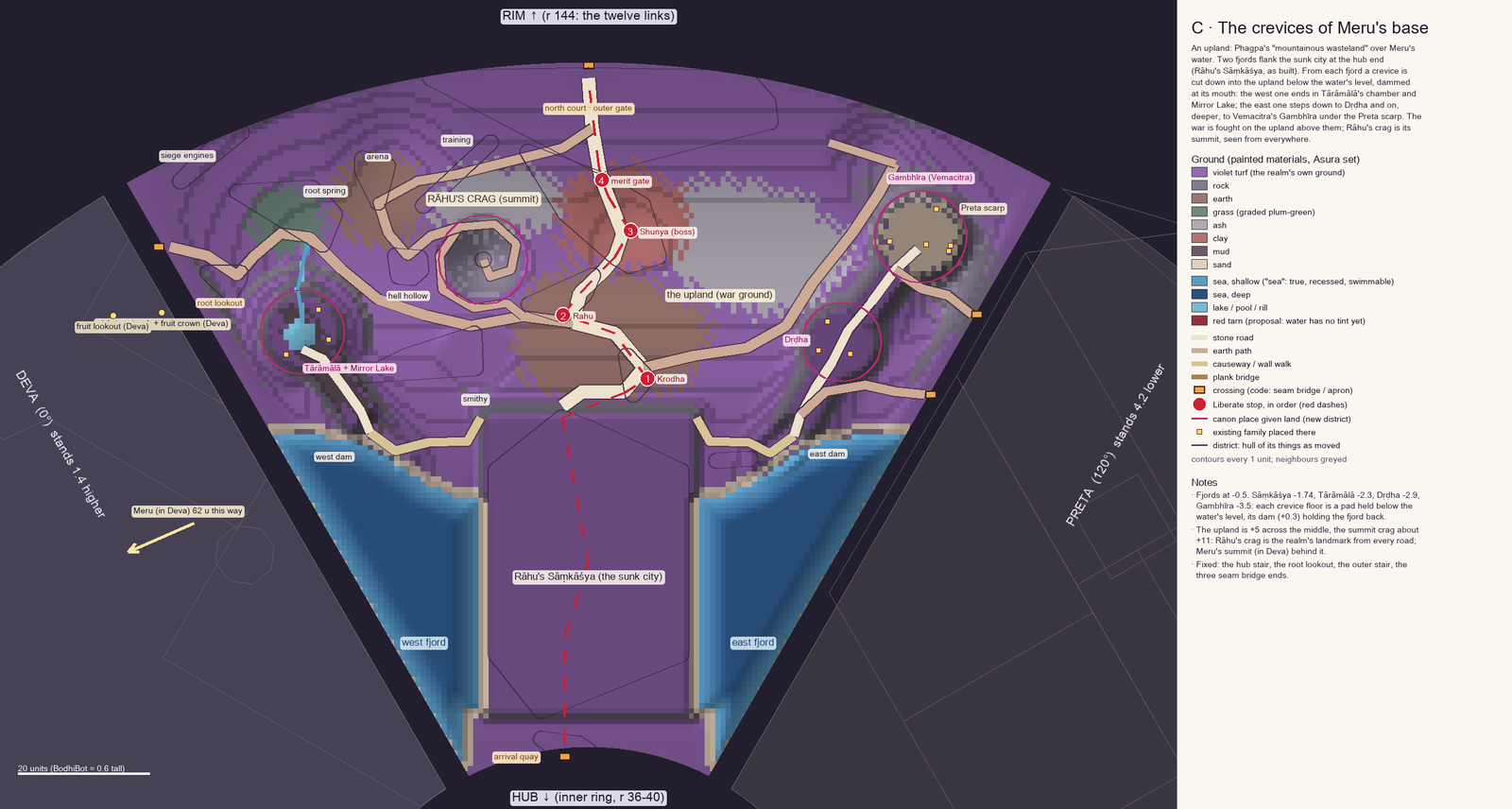
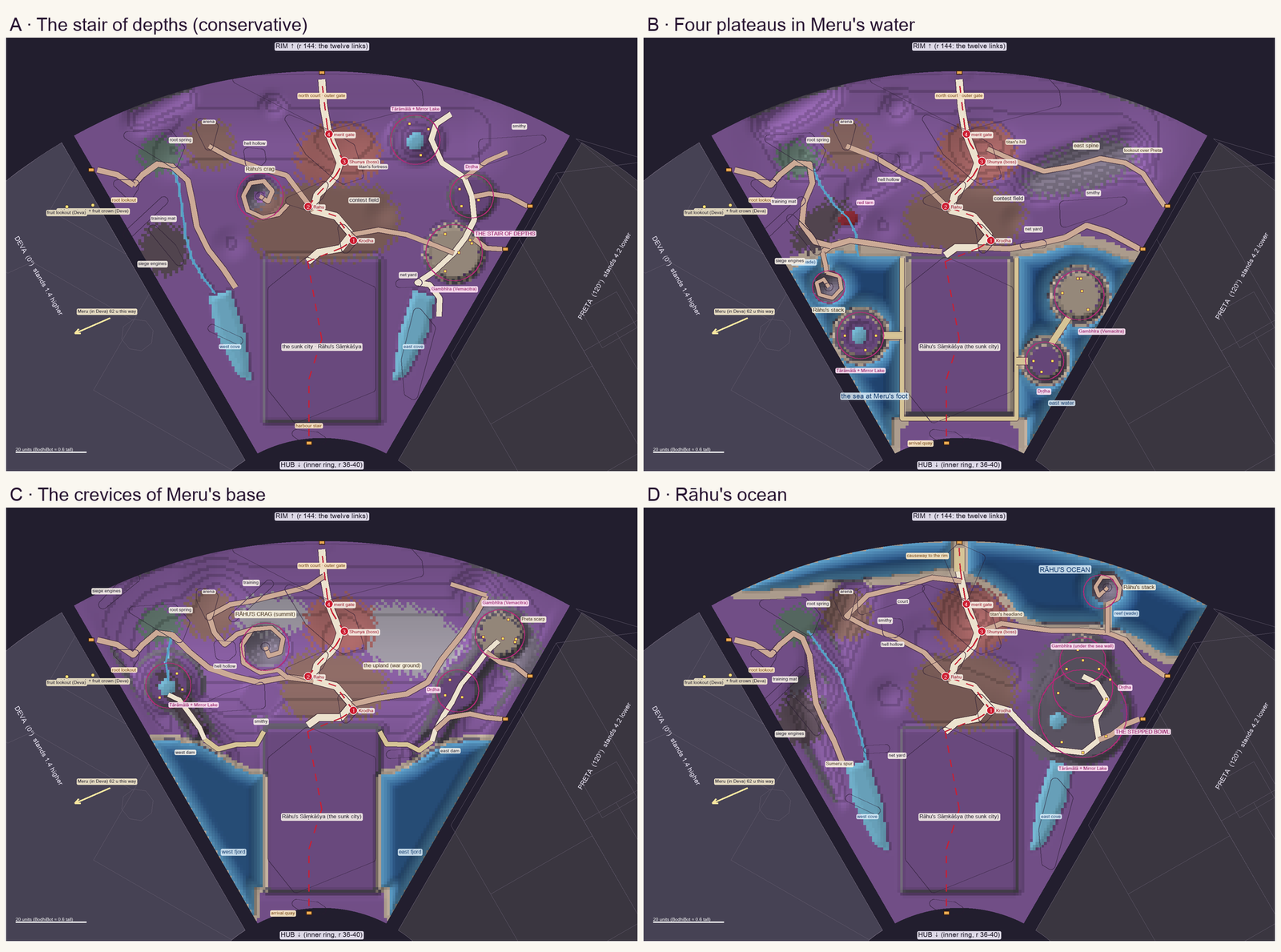
Chosen layout: C · The crevices of Meru's base
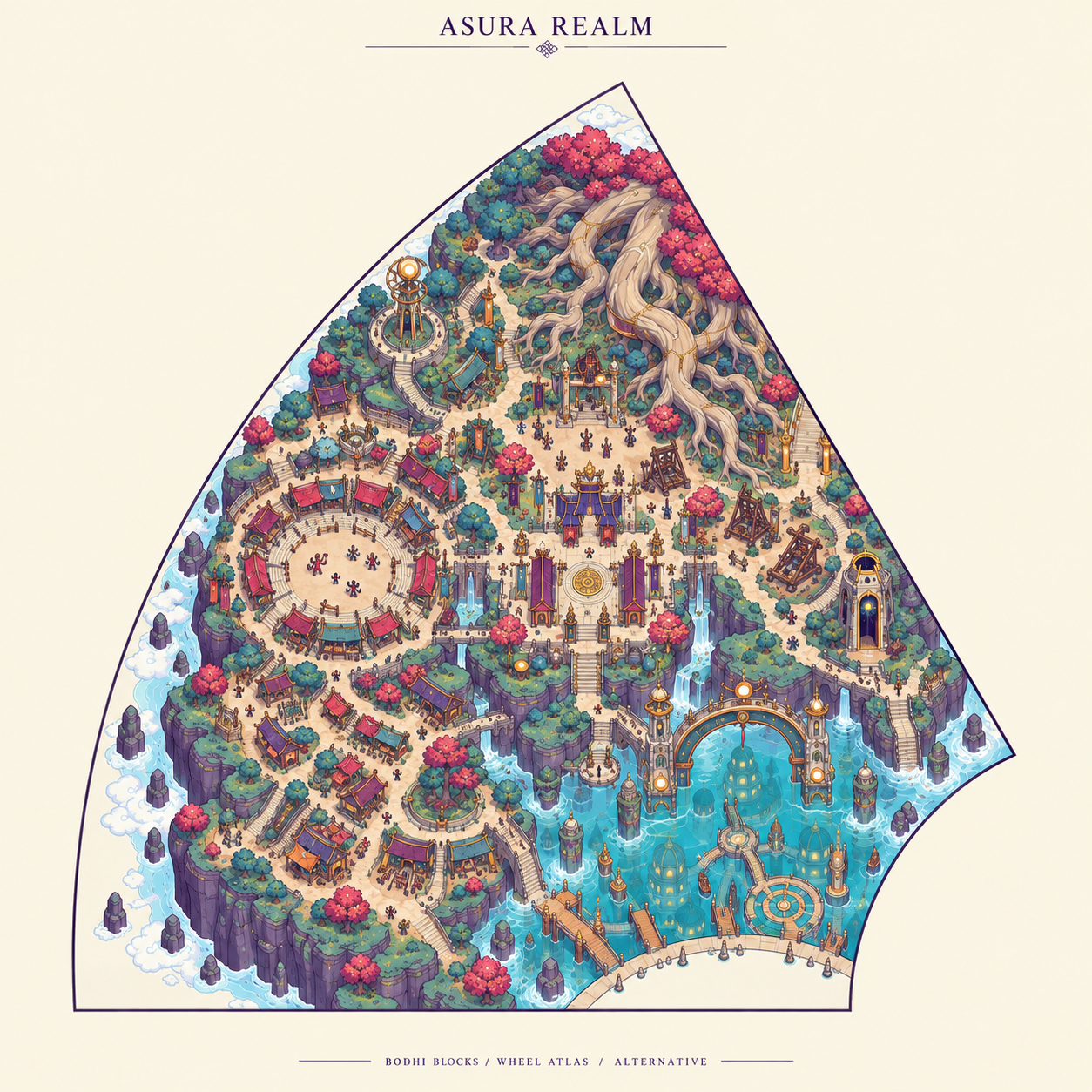
An upland over two fjords, cut by dammed crevices that drop below the water, where Tārāmālā, Dṛḍha and Gambhīra are found by cresting a rim. Rāhu's crag is the summit and the eclipse place, the landmark from every road.
The asuras: cities under Meru's waters, the wish tree and the war with the gods
Canon puts the asuras below the waterline at the foot of Mount Meru: in crevices of the mountain's base, on four plateaus of its submerged root, each with a king and a jewelled city, with the Pali tradition adding the Cittapāṭalī tree that tells them they have fallen from heaven. From there they march up Meru against the Thirty-Three over the wishing tree, the nectar and their women, and are beaten back through five lines of guards; their king Rāhu reaches up and covers the sun and moon. This group gathers what the texts fix about those places, kings, armies and losses, how the Wheel painters picture the asura sector, and what the game has built of it.
Where the asuras live
Skt. asura; Pali asura, Asurabhavana; Tib. lha ma yin / lha min ("not gods")
Below the waterline at Mount Meru's foot: in crevices of its base, on the plateaus of its submerged root, and in the great ocean around it.
Vasubandhu's Treasury never says where the asuras live. Kongtrul fills the gap from the Great Mindfulness Scripture: the demi-gods dwell in crevices in the base of Mount Meru, from the water's edge down. One kind of demi-god, classed as an animal, lives on the very floor of the ocean; the chief demi-gods, Rāhu, Garland Necklace and the others, live at different levels above that floor.
The Mindfulness Scripture itself gives the full picture. Under the ocean rests the submerged base of Mount Sumeru, eighty-four thousand leagues in all, cut into four plateaus of twenty-one thousand leagues each. Rāhu holds the first, the 'necklace' asuras under Kaṇṭhamāla the second (Moon Garland), Puṣpamāla's 'players' the third (Excellent Abode), and Overjoyed's 'cheerful ones' the fourth (Immovable), which rests on a jewel ground below which nothing goes deeper. Phagpa compresses the same scheme into four cities stacked eleven thousand yojanas apart under Meru's waters.
The Pali tradition tells it as a fall. When Magha became Sakka he had the old gods of the Thirty-Three made drunk and thrown down Sineru by the feet; they landed in the Asura Realm, a region on the lowest level of Sineru, equal in extent to the Realm of the Thirty-Three. After that they live in the ocean, and Pahārāda, lord of the asuras, tells the Buddha the eight wonders of the sea the asuras love: it slopes gently with no sudden drop, it keeps its bounds, it casts out a corpse, the great rivers lose their names in it, it never fills or empties, it has one taste of salt, it is full of pearls, beryl, coral and gold, and it holds beings hundreds of leagues long, asuras among them.
The Wheel of Time (Kālacakra) system places the asuras differently again: in the upper part of the upper half of the earth sphere, with the nāgas below them. Kongtrul records both without reconciling them.
What canon fixes for the map
Asuras dwell in crevices in the base of Mount Meru, from the water's edge down [K p. 27 verse, p. 29 commentary, citing the Great Mindfulness Scripture].
Below the ocean, Sumeru's base is 84,000 leagues; four plateaus of 21,000 leagues each hold the four asura kingdoms, Rāhu's uppermost [AM 3.62–3.63, 3.93, 3.163, 3.183].
Phagpa: four cities each 11,000 yojanas under the last, the first 11,000 yojanas under the level of Meru's waters, in a mountainous wasteland [P printed pp. 26–27 / PDF pp. 39–40].
Pali: the Asurabhavana lies at the lowest level of Sineru and is the size of Tāvatiṃsa (10,000 leagues) [J.i.202; SnA.484–485 via DPPN]; after their fall the asuras live in the ocean [DPPN Asurā].
The ocean the asuras love slopes gradually, with no abrupt precipice; it is full of pearls, gems, beryl, conch, quartz, coral, silver, gold, rubies and emeralds; its great beings are hundreds of leagues long [AN 8.19].
Kālacakra: asuras in the upper part of the earth sphere's upper half, nāgas in the lower part [K p. 80].
A demi-god classed as an animal lives on the ocean floor; the chief demi-gods live at levels above it [K p. 29].
Who lives here
Rāhu, king of the first plateau and the greatest body in the desire realm (see rahu).
Kaṇṭhamāla, lord of the 'necklace' asuras of the second plateau [AM 3.93]; Kongtrul's 'Garland Necklace' [K p. 29]; Phagpa's Śambara, 'Neck Garland' [P p. 26].
Puṣpamāla, 'Flower Garland', king of the players on the third plateau, in the city Profound [AM 3.163].
Overjoyed (Prahlāda), king of the cheerful ones on the fourth plateau, in the city Beauty [AM 3.183].
Pahārāda, lord of the asuras who praises the ocean to the Buddha [AN 8.19].
Asuras classed as animals on the ocean floor (being:asura:animal-class) and asuras classed as pretas living like gods (being:asura:preta-class) [K pp. 28–29].
In the game now
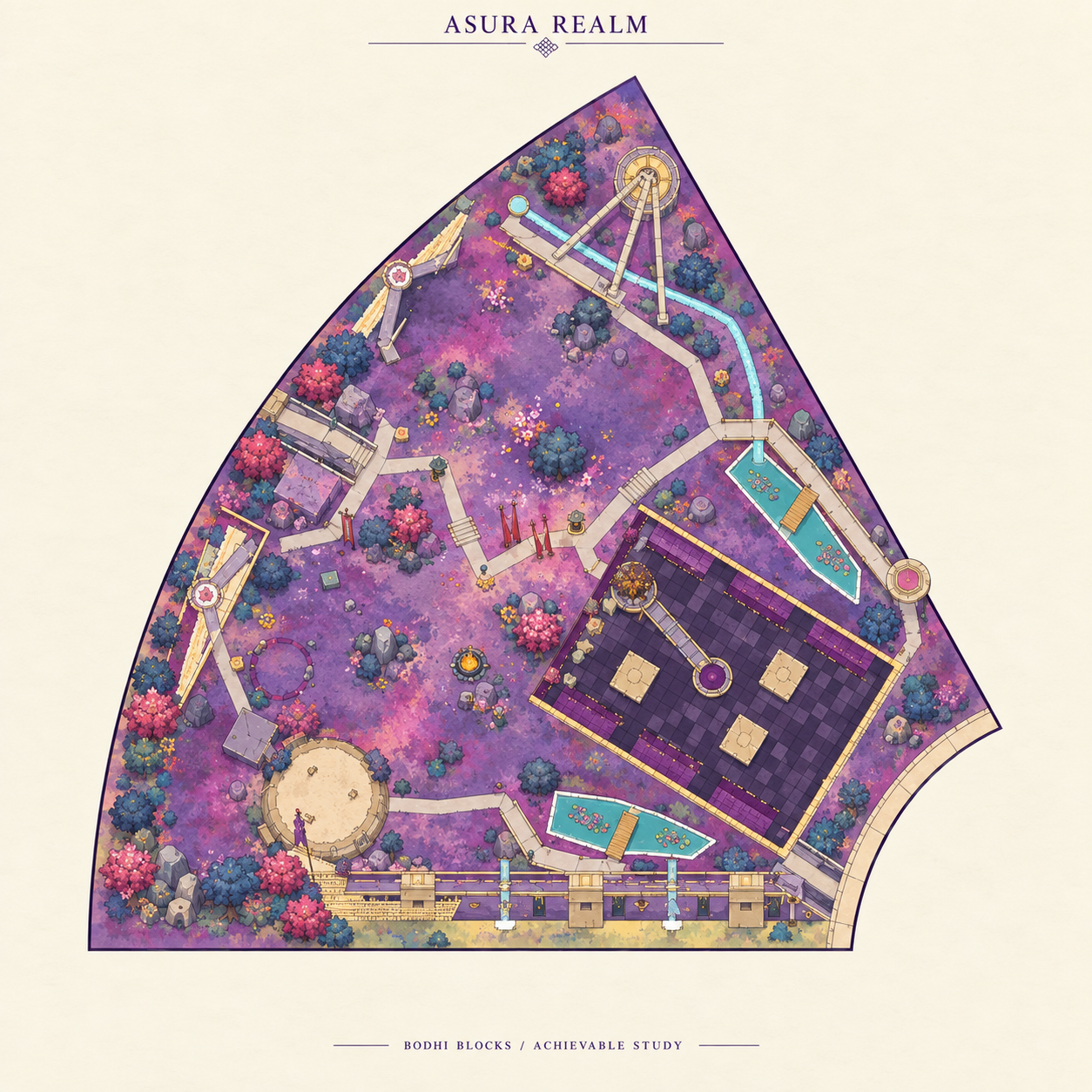
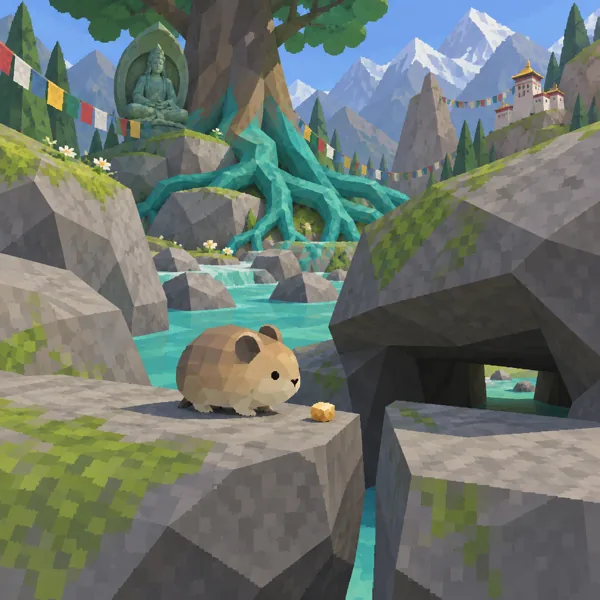
place:asura:meru-crevices is built as the whole Asura wedge (space `asura`), with a harbour, two coves and the sunk city below the waterline standing in for the many depths (docs/world-plan/sections/asura.json, adaptation R37). being:asura:animal-class and being:asura:preta-class are missing. The harbour's ocean (AN 8.19) is corroboration only, since the Wheel world has no outer ocean (R29).
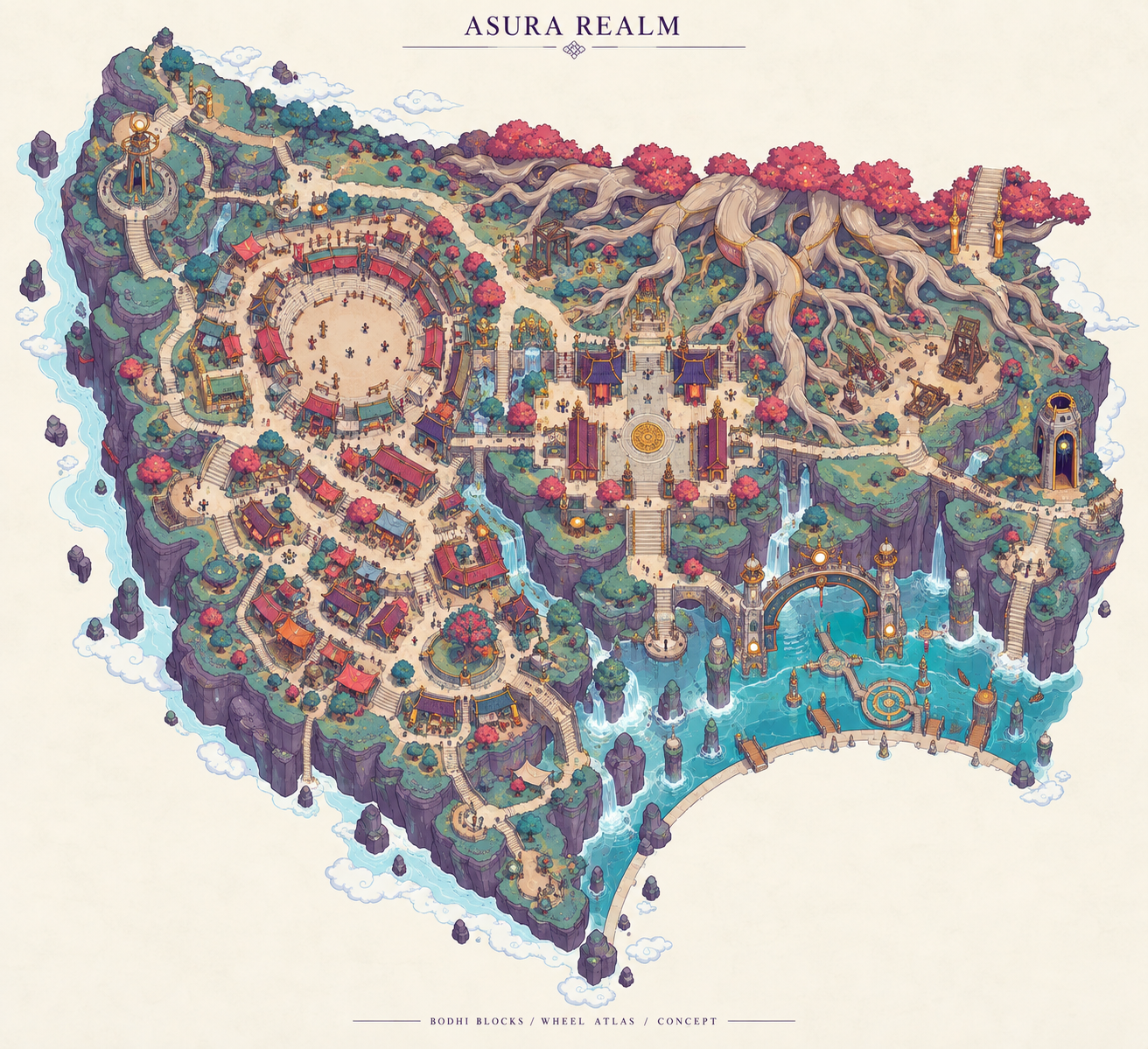
AI concept study (repo), media.json wheel-05-asura · layout-study · Project art
The game's own reading: a harbour and coves at the hub end, a sunk walled city, an arena, and the great tree's roots on the Deva seam. Not canon; a layout study.
Himalayan Art Resources · traditional · No open licence (link only)
The ocean round Meru's foot in which the asuras' crevices and plateaus lie; look at the water band between the mountain and the continents.
Still missing: No traditional painting shows the asuras' submerged plateaus or crevices themselves; cosmology paintings show only the ocean round Meru. The Mindfulness Scripture's jewelled cities under the sea have no known picture.
Repo ledger: docs/world-plan/sections/asura.json, account.chosen, account.adaptation (R37), district asura.sea-city
The four asura kings and their cities
Rāhu (Tib. sgra gcan), Śambara / Kaṇṭhamāla (Garland Necklace), Prahārāda or Bali / Puṣpamāla, Vemacitra (Pali Vepacitti) / Overjoyed (Prahlāda)
Four kings on four levels under Meru's waters, each with a city eight thousand leagues across, Rāhu highest and the fiercest deepest.
Phagpa's list, the one the repo ledger follows: eleven thousand yojanas under the waters of Mount Sumeru, in the city of Sāṃkāśya in a mountainous wasteland, lives the asura king Rāhu with his retinue. Eleven thousand yojanas further down lives Śambara, 'Neck Garland', in the city of Tārāmālā, 'Star Garland'. Eleven thousand further lives Prahārāda, 'Fine Guardian', also called Bali, 'Strong', in the city of Dṛḍha, 'Stronghold'. Eleven thousand further lives Vemacitra in the city of Gambhīra, 'Deep', in constant battle with Lord Śakra.
The Mindfulness Scripture, Kongtrul's source, names the levels and cities a little differently. First plateau: Rāhu, city Radiant, eight thousand leagues, on golden ground with four forests of golden trees eight leagues each, and beyond it thirty million leagues of golden ground holding thirteen asura clans (eaters, roamers, red-eyed ones, water dwellers, fish faces, highway possessors and more). Second plateau, Moon Garland: the 'necklace' asuras under Kaṇṭhamāla, with the cities Double Pleasure and Star Garland, four golden mountains five thousand leagues high round the city, and Mirror Lake in Star Garland's centre. Third plateau, Excellent Abode: Puṣpamāla and the 'players' in the city Profound, with four forests (Garland of Bell Bangles, Golden Garland, Fire Garland, Mixture). Fourth plateau, Immovable: the king Overjoyed and the 'cheerful ones' in the city Beauty, 'like a second sky', the deepest place there is, resting on a jewel ground.
Kongtrul keeps only the top of the ladder: 'the chief demi-gods, Rāhu, Garland Necklace, and others, live at different levels above the ocean floor.' Later in the war the scripture names the five rulers together: Rāhu, Firm, Puṣpamāla, Overjoyed and Vemacitrin. The Pali commentaries count three chiefs, Vepacitti, Rāhu and Pahārāda, and add Bali, Sucitti and Namucī; Bali is Rāhu's brother and his hundred sons are called Veroca after their uncle.
Rāhu's city is the picture of asura wealth: streets paved with refined gold, houses of gold under coral trees hung with bells and bangles, pools of golden lotuses with golden swans, buffalo and ducks, peacocks with jewel beaks, two-headed agnicūḍa birds drunk on flower nectar, and a mansion of a thousand pillars with silver rooms.
What canon fixes for the map
Phagpa: Rāhu in Sāṃkāśya 11,000 yojanas under Meru's water level; Śambara in Tārāmālā 11,000 below him; Prahārāda/Bali in Dṛḍha 11,000 below; Vemacitra in Gambhīra 11,000 below that [P pp. 26–27].
AM: four plateaus of 21,000 leagues; each capital city 8,000 leagues; Rāhu's Radiant on the first, Double Pleasure and Star Garland on the second, Profound on the third, Beauty on the fourth [AM 3.62, 3.79, 3.93, 3.163, 3.183].
Radiant is surrounded by four forests of golden trees, 8 leagues each: Pinnacle, Park of Passion, Home of Geese, Park of the Cuckoo Birds [AM 3.81].
Double Pleasure lies between four golden mountains 5,000 leagues high: Delightful Summit, Abhrakrama Summit, Invisible Summit, Gorgeous Gold Summit [AM 3.96].
The necklace asuras own seven forests across thirty million leagues: Cloud below Gold, Always Delightful, Lovely Pleasure Garden, Fruits of Constant Beauty, Pleasant Breeze, Always Joyous, Adorned [AM 3.127].
The fourth level rests on a jewel ground; nothing lies deeper [AM 3.184].
The lists disagree on names: Phagpa's second king is Śambara and third Prahārāda/Bali; AM's second lord is Kaṇṭhamāla, its third Puṣpamāla, its fourth Overjoyed, with Firm and Vemacitrin named beside them. Say which list a thing follows.
Who lives here
Rāhu, first king (being:asura:rahu, sketch).
Śambara, Neck Garland, second king (being:asura:shambara, missing); AM's counterpart Kaṇṭhamāla of the necklace asuras.
Prahārāda / Bali, third king (being:asura:prahrada, missing); AM's third king Puṣpamāla.
Vemacitra, fourth king (being:asura:vemacitra, missing); AM's fourth king Overjoyed, with Vemacitrin beside him.
Jambha, the messenger asura Firm sends up to Puṣpamāla [AM 3.164].
The thirteen clans of Rāhu's golden ground: eaters, roamers, those fond of causing disease, crystal holders, those who swarm like bees, red-eyed ones, runners, water dwellers, space dwellers, mountain mansion dwellers, ponds of beauty, fish faces, highway possessors [AM 3.91].
In the game now
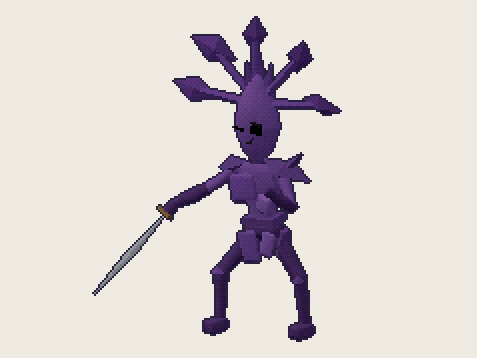
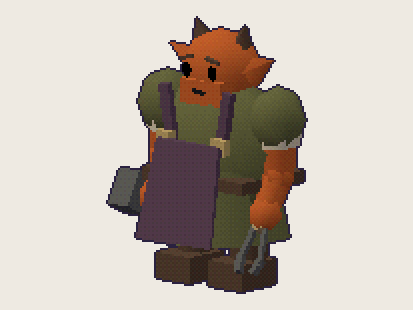
All four cities are missing: place:asura:city-samkashya, place:asura:city-taramala, place:asura:city-dridha, place:asura:city-gambhira. The plan compresses them into one sunk city (asura.sea-city) whose three invented households (being:asura-city.west-halls.soup-maker, being:asura-city.east-halls.record-keeper, being:asura-city.north-yard.mat-mender) are missing their models; the Liberate being 'Rahu' (being:liberate-the-storm-crowned-duelist, built) is Josie's own design named after the first king.
Art (1)
Rāhu at the foot of Meru, hands raised toward the summit
Photo Dharma (Anandajoti Bhikkhu), Wikimedia Commons · traditional · CC BY 2.0
Thai cosmology picture of the stack: Sakka's palace on the flat summit of Meru, the mountain's pillar, and Rāhu, gold-bodied and crowned, rising at its foot among the waves with the deva mansions beside him. The asura king at the base of the world mountain.
Still missing: No painting of Sāṃkāśya, Tārāmālā, Dṛḍha, Gambhīra, Radiant, Double Pleasure, Star Garland, Profound or Beauty is known; the asura cities under the sea are described only in text. A Traiphum manuscript spread of the asura city would fill this if one can be found open-licence.
The Application of Mindfulness of the Sacred Dharma, Toh 287, 84000, 3.62–3.65 (Rāhu, Radiant), 3.79–3.82 (the city), 3.91 (thirteen clans), 3.93–3.96 (Moon Garland, Double Pleasure, Star Garland), 3.127 (seven forests), 3.163 (Profound), 3.183–3.192 (Immovable, Beauty), 3.231 (the five rulers together); PDF pp. 488–519, 541
Skt. Rāhu, 'son of the lioness'; Pali Rāhu, Rāhubhadda, Veroca(na); Tib. sgra gcan, 'Eclipser'
The first and greatest asura king, a body as big as Sumeru, whose jewelled city Radiant lies on the first plateau under the sea.
Rāhu rules the first plateau under the ocean. His power to create forms exceeds anyone's in the desire realm, and his body is as large as Mount Sumeru: whatever gem he puts on, sapphire, ruby, gold or coral, his whole body glows that colour. When he stands up in the sea the water reaches only to his waist. He dresses to be seen by the goddesses, and the gods of the Four Great Kings cry out 'the son of the lioness has come to subdue and kill us'.
The Pali commentaries measure him: four thousand eight hundred leagues tall, chest twelve hundred leagues broad, head nine hundred leagues high, face a hundred, nose three hundred; the deepest ocean comes to his knees. For a long time he never visited the Buddha, thinking he would be too tall to see him; when he came, the Buddha lay down and made himself so tall that Rāhu had to crane his neck. He attends the Great Assembly and blesses it as Rāhubhadda.
His city Radiant spans a hundred thousand leagues of groves, mansions, ponds and fountains all of jewels; the royal city within it is eight thousand leagues, paved with refined gold, its golden houses shaded by coral trees that ring with bells. He has four queens, Delightful Beauty, Lovely Scent, Grove of Beauty and Maṅgalā, served by one billion two hundred million asura ladies-in-waiting, and a mansion of a thousand pillars with silver rooms.
He earned the realm in a past life as a generous brahmin: he put out a fire on a golden stūpa at the temple of Mithila Grove, without faith, and laughed, 'may I become the being with the largest body in the desire realm'. Those born under him are beings who protected animals or freed fish from nets, but did much other harm; they live five thousand asura years, each day five hundred human years.
Kongtrul reads the name a-sura as 'deprived of the essence', since the asuras lack the gods' ambrosia. Note: the Liberate route's second Asura being is called Rahu and says 'I let the moon go'; that is Josie's design named after this king, not a portrait of him.
What canon fixes for the map
Rāhu lives on the first plateau, 21,000 leagues, directly under the sea on Sumeru's base [AM 3.62–3.63].
Body as large as Mount Sumeru; the ocean reaches his waist when he stands [AM 3.64, 3.70]; Pali: 4,800 leagues tall, chest 1,200, head 900; the sea reaches his knees [DA.ii.487–488 via DPPN].
City Radiant: outer city 100,000 leagues; royal city 8,000 leagues on golden paving; four forests of golden trees, 8 leagues each [AM 3.66, 3.79, 3.81].
Four queens; 1,200,000,000 ladies-in-waiting; a thousand-pillared mansion with silver rooms [AM 3.82].
Lifespan of his subjects: 5,000 asura years, one day = 500 human years [AM 3.93].
Phagpa: Rāhu's city is Sāṃkāśya, 11,000 yojanas under Meru's water level, in a mountainous wasteland [P p. 26].
Who lives here
Rāhu himself (being:asura:rahu, sketch).
His four queens Delightful Beauty, Lovely Scent, Grove of Beauty, Maṅgalā [AM 3.82].
His servants who glide over the sea's surface and report the rising moon [AM 3.72].
Vepacitti, the elder lord he runs to in fear [SN 2.9–2.10].
In the game now
being:asura:rahu is sketch (no model). The Liberate being 'Rahu' (being:liberate-the-storm-crowned-duelist, built, asura.lower-field) is Josie's design; its bound line 'The gods got the sun and the moon. I'll swallow both' borrows the eclipse story. place:asura:city-samkashya is missing.
Photo Dharma (Anandajoti Bhikkhu), Wikimedia Commons · traditional · CC BY 2.0
Rāhu as Thai temple painters know him: a crowned, green-faced, gold-bodied giant with no lower body, both hands lifting the disc to his mouth. The whole photograph is the subject; no crop needed.
Repo render, being liberate-the-storm-crowned-duelist · world-view · Project art
Josie's Liberate 'Rahu', the storm-crowned duelist: the game's own being, not a canon portrait of the asura king.
Still missing: No Tibetan painting of Rāhu as asura king (as against Rāhula the protector, a different figure) is known open-licence; the Thai murals carry the image. A Tibetan Wheel detail of the asura king at the war's head would be welcome.
Repo: src/pages/mantra-attack/story/lore.ts, BOUND_LINES and BEING_BIOS for 'the-storm-crowned-duelist'
Rāhu and the sun and moon (eclipses)
Pali Candima Sutta, Suriya Sutta (SN 2.9–2.10); Tib. nyi 'dzin (solar eclipse), zla 'dzin (lunar eclipse); Rāhu as the planet sgra gcan, 'Eclipser'
Rāhu seizes or covers the sun and moon with his hand; in the suttas the Buddha's verse makes him let go, in the Abhidharma scripture it is lust and spite that make him reach up.
In the Pali Candima Sutta the Moon God is seized by Rāhu, lord of asuras, and recollects the Buddha: 'Homage to you, Buddha, hero! You're free in every way. I've wandered into confinement: be my refuge!' The Buddha answers, 'The Moon God has gone for refuge to the Realized One, the perfected one. The Buddhas have compassion for the world, so Rāhu, release the Moon!' Rāhu lets go and runs trembling to Vepacitti, who asks why he looks so scared. 'My head would have exploded in seven pieces, I would have found no happiness in life, if, when enchanted by the Buddha's verse, I had not released the Moon.' The Suriya Sutta repeats it for the Sun, 'a beacon in the darkness, the dazzling sun, circle of awesome might. Rāhu, do not swallow him as he traverses the sky.' Both are chanted as protection.
The Mindfulness Scripture gives two causes. First, lust: Rāhu climbs into the groves on Sumeru's slopes to look at the goddesses; millions of sun rays hurt his eyes, so, standing waist-deep in the ocean, he shades them with his hand and covers the sun. His jewels tint the hand blue, red, yellow or black, and the brahmin astrologers cry 'the sun has been taken by a black planet' and sell prognostications. At night his servants on the sea report the full moon 'like the face of a divine maiden'; wanting to touch that face he holds up his hand from afar and covers the moon. Second, spite: told that the gods' city shines by the sun and moon, he decides to cover both so the gods sit in darkness, blocking the sun with one hand while holding Sumeru's summit with the other. Each time, when Śakra's gods ride out, Rāhu, 'since he is a kind of animal, has little courage', and sinks back to Radiant.
Kongtrul's Kālacakra chapter lists Rāhu among the ten planets as Eclipser, moving clockwise round Meru against the eight that move counter-clockwise, with Long Tail (Ketu) and Fire of Time. The Tsadra editors' note retells the Hindu churning-of-the-ocean legend of the severed head; that is Indian mythology, not the Buddhist asura account above. Vasubandhu's Treasury does not mention Rāhu at all; its moon wanes by the sun's shadow.
What canon fixes for the map
Rāhu seizes the Moon and the Sun; the Buddha's verse makes him release them; he runs to Vepacitti [SN 2.9, SN 2.10].
He covers the sun with his hand while standing in the ocean to his waist on Sumeru's slopes; he covers the moon by raising a hand from afar [AM 3.69–3.73].
Second cause: to darken the gods' city he blocks the sun with one hand and grips Sumeru's summit with the other [AM 3.77–3.78].
Eclipses also occur over Godānīya, Videha and Kuru, but only Jambudvīpa has astrologers to misread them [AM 3.74].
Kālacakra: Eclipser (Rāhu) is the ninth of ten planets and moves clockwise round Meru [K pp. 84–85].
Direction: Rāhu's servants see the moon rise over the eastern mountains [AM 3.72].
Who lives here
Candimā, the Moon God, and Suriya, the Sun God [SN 2.9–2.10].
Vepacitti, to whom Rāhu runs [SN 2.9].
In the game now
place:eclipse-ledge is built (see built-eclipse-ledge): a crag on asura.lower-field from which a storm-cloud head waits with its mouth open where the sun passes at dusk. Its own record calls the head invented and says no source for Rāhu was recorded in the lore files; the sources above now supply one, though they give a hand, not a mouth.
Photo Dharma (Anandajoti Bhikkhu), Wikimedia Commons · traditional · CC BY 2.0
The eclipse as Thai painters show it: the disc in Rāhu's mouth, his hands on its rim. The texts above say hand, not mouth; the mouth is the popular image.
Still missing: No Tibetan or Mongolian painting of Rāhu covering the sun with his hand is known; the Thai swallowing image is the only open one. A photograph of a Tibetan astrological chart with the Eclipser (sgra gcan) planet would complete it.
Vemacitra (Vepacitti), his fortress, tree, mounts and feud with Śakra
Skt. Vemacitra, Vemacitrin ('Variety of Strings'); Pali Vepacitti, also Sambara; Tib. thag bzang ris
The deepest king and Śakra's lifelong enemy and father-in-law, with a named fortress, palace, wishing tree, meeting hall, stone slab, parks, two elephants and a horse.
Phagpa gives Vemacitra's court item by item. His fortress is Haimavatī, 'Golden'; his palace Ninādita, 'Music'; his king of wishing trees Citrapāṭalī; his meeting place Sudhana; his stone slab Bhadra. His four parks are Joy, Fine Joy, Utmost Joy and Entire Joy, and his four fine grounds carry the same four names. The elephant he rides into battle is Duṣprasāha, the elephant he rides for pleasure is Snowdrift, and his horse is Balāhaka. He lives 'in constant battle with his opponent Lord Śakra'. The list mirrors Śakra's own court on the summit, 'the palace, the fortress, the tree, the meeting places, the stone slab, and so on are as discussed earlier'.
The Pali suttas make Vepacitti the asuras' spokesman. Before one battle he orders, 'if the asuras win, bind Sakka by his limbs and neck and bring him to me in the citadel of the asuras'; the gods win instead and drag Vepacitti bound into the Sudhammā hall, where he abuses Sakka as he comes and goes and Sakka answers with patience. In another sutta the two agree to 'victory by fine words', a panel of gods and asuras judges, and Vepacitti's verses are found to breed punishment and violence. He is Rāhu's friend, to whom Rāhu runs after releasing the moon.
Buddhaghosa explains the shifting war and peace between them: they are father-in-law and son-in-law. Vepacitti's daughter Sujā chose Sakka at an asura assembly when he came disguised as an old asura. His original name was Sambara; cursed by seers he refused to protect, his mind trembled (cittaṃ vepati) and he became Vepacitti. The Mindfulness Scripture agrees he is the one the gods fear most: 'whenever the asura king Vemacitrin sets out against us, these groves and forests, mountain caves, rivers, and even Sumeru begin to rumble', and Śakra's seat shakes in the Sudharma hall.
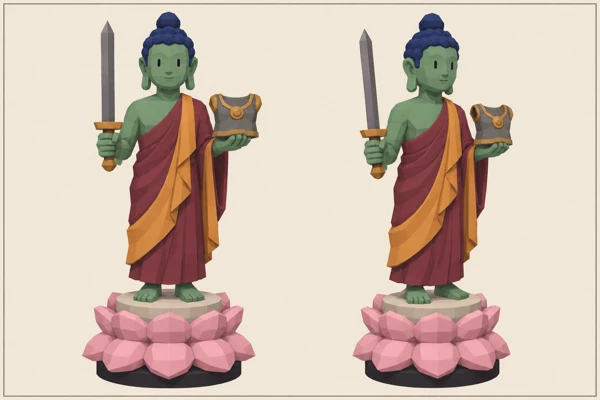
The green Muni of the asura realm on Wheel paintings is Vemacitra: a Buddha in that king's form, armoured, holding a sword, who teaches the asuras. That is a Buddha wearing the king's shape, not the king.
What canon fixes for the map
Vemacitra's city Gambhīra lies 11,000 yojanas below Prahārāda's, the lowest of the four [P p. 27].
Fortress Haimavatī, palace Ninādita, wishing-tree king Citrapāṭalī, meeting place Sudhana, stone slab Bhadra; four parks and four grounds both named Joy, Fine Joy, Utmost Joy, Entire Joy [P p. 27].
Mounts: war elephant Duṣprasāha, pleasure elephant Snowdrift, horse Balāhaka [P p. 27].
When Vemacitrin marches, Sumeru and Śakra's seat in Sudharma tremble [AM 3.288].
Vepacitti bound in Sudhammā; the contest of verses [SN 11.4, SN 11.5].
Sakka's wife Sujā is Vepacitti's daughter [J.i.205–206; DhA.i.278–279 via DPPN].
Who lives here
Vemacitra (being:asura:vemacitra, missing).
Duṣprasāha, the war elephant (being:asura:dusprasaha, missing); Snowdrift, the pleasure elephant (being:asura:snowdrift, missing); Balāhaka, the horse (being:asura:balahaka, missing; not the cloud-horse Balāha of the Siṃhala story).
Sujā / Sujātā, his daughter and Sakka's chief consort [J.i.205–206].
Mātali, Sakka's charioteer, who questions Sakka's patience [SN 11.4].
Muni of the Jealous Gods, Vemacitra (overworld:munis:4, built, awake).
In the game now
Vemacitra's court stands in the open east half of asura.titan-ground, on the plan Phagpa gives Śakra's: his fortress Haimavatī at the middle with his palace Ninādita at its back, his wishing tree Citrapāṭalī to the northeast with his slab Bhadra under it, his meeting place Sudhana to the southwest, and his four parks Joy, Fine Joy, Utmost Joy and Entire Joy on the four sides (palHaimavati, palNinadita, flora_citrapatali, asuraBhadraSlab, palSudhana, asuraPark). His four grounds, named as the parks, are not built. The Muni Vemacitra stands at asura.titan-ground (overworld:munis:4, built) with sword and armour; the munis rig still wears the generated triangular cap and a red robe where the Karma Lingpa contract wants a green body (docs/buddhist-iconography/shakyamuni-munis.md).
Himalayan Art Resources · traditional · No open licence (link only)
HAR's note that the asura sage is blue in some treasure traditions and green in others.
Still missing: No picture of Vemacitra as king, of Haimavatī, Ninādita or his elephants exists; only the Muni in his form is painted. The war elephant Duṣprasāha and the horse Balāhaka have no art at all.
Pali Cittapāṭalī, 'pied trumpet-flower', a kappaṭṭhiya (aeon-long) tree; Pāricchattaka (Skt. Pārijāta), the coral tree of the Thirty-Three; Pubbadevā, 'the former gods'
The asuras were the old gods of the Thirty-Three until Sakka made them drunk and threw them down Sineru; a tree at the foot of the mountain, blooming differently from heaven's, tells them where they are.
In the Kulāvaka Jātaka Magha, reborn as Sakka with his thirty-two companions, finds the asuras already living in Tāvatiṃsa and reasons, 'what good to us is a kingdom which others share?' He serves them the gods' liquor and, when they are drunk, has them 'hurled by the feet on to the steeps of Mount Sineru'. They tumble down into the Asura Realm, 'a region on the lowest level of Mount Sineru, equal in extent to the Realm of the Thirty-three'.
There grows a tree that lasts an aeon and resembles the devas' Coral Tree: the Cittapāṭalī, the Pied Trumpet-flower. Its blossoms show them at once that this is not the realm of devas, 'for there the Coral Tree blooms'. The Pali is blunt: 'nāyaṃ amhākaṃ devaloko', this is not our deva-world. The Dhammapada commentary adds that whenever the Cittapāṭalī blossoms the asuras remember the Pāricchattaka they left behind and start preparing for war on Sakka. The Saṃyutta's tree similes set the three royal trees side by side: the Pāricchattaka of the Thirty-Three, the Cittapāṭalī of the asuras, the Kūṭasimbalī of the garuḷas.
Halfway down, Buddhaghosa says, they vowed never again to drink surā, and so are called a-sura. Phagpa gives the same etymology, 'because of the absence of wine (surā)', beside the inferiority reading. The asuras keep the drum Ālambara, made from a crab's claw, which they dropped in flight and Sakka has used since. The old name Pubbadevā, 'former gods', remembers what they were.
The Tibetan sources do not tell the fall; their asuras were never in heaven. Phagpa instead gives Vemacitra his own 'king of wishing trees', Citrapāṭalī, the same name as the Pali tree: so in both traditions the asuras have a great tree of their own at the foot of the mountain, distinct from the one whose fruit the gods eat.
What canon fixes for the map
The Asurabhavana is at the lowest level of Sineru and equal in extent to Tāvatiṃsa [J.i.202].
The Cittapāṭalī stands there, lasts an aeon, and resembles the Coral Tree but blooms differently; its blossoms tell the asuras they are no longer in heaven [J.i.202; DhA.i.272; SnA.ii.485; MA.i.476].
Its blossoming is the trigger for war on Sakka [DhA.i.280].
The asuras climb Sineru 'like ants up a pillar' to retake heaven [J.i.202–203].
Vemacitra's own wishing tree is Citrapāṭalī [P p. 27].
The asuras' drum Ālambara is made from a crab's claw [J.ii.344 via DPPN].
Who lives here
Magha / Sakka and his thirty-two companions, the usurpers [J.i.199–202].
The Pubbadevā, the asuras as former gods [SnA.484 via DPPN].
In the game now
Nothing of the fall is in the game. Vemacitra's Citrapāṭalī (place:asura:citrapatali) is a map-table asset, flora_citrapatali, not yet placed. The plan's one wish tree rooted among the asuras is the Tibetan Pārijāta story (see the-wish-tree), not this tree.
Art (0)
Still missing: No painting of the asuras' fall or of the Cittapāṭalī is known. Thai Traiphum manuscripts sometimes paint the asura city under Meru with its tree; none was found open-licence with the subject identifiable.
One tree, rooted in the asuras' country, whose crown and fruit belong to the Thirty-Three above; the asuras water it and the gods eat from it.
Dudjom Rinpoche's glossary states the rule the game follows: the wish-fulfilling tree is 'a magical tree which has its root in the realm of the demigods but bears its fruit in the realm of the gods of the Thirty-Three'. His note calls it yongs 'dus sa brtol, 'all-gathering earth-piercing', 'another name for the wish-fulfilling tree, whose roots are in the realm of the demigods'.
Patrul makes it the war's cause: looking up, the asuras 'see that all the gods' wants and needs are provided by a wish-fulfilling tree, whose roots, however, are in their own realm. At that they are seized with unbearable resentment. Donning their armour and grabbing their weapons, they set off to make war on the gods.'
On the summit the tree is the Pārijāta of the Thirty-Three. Kongtrul and Phagpa put it in the north-east of Sudarśana with the white stone slab Armoniga beneath it (fifty leagues a side). The Mindfulness Scripture describes the gods who 'dwell by the Pārijāta tree': a single tree of exceptional beauty whose scent, colour, leaves and fruit answer the balance of good and bad deeds in Jambudvīpa; when humans are righteous it blooms with flowers that can be smelt a hundred leagues off, and the gods spend the four summer months beneath it.
Two trees are easy to confuse. The Pali Cittapāṭalī and Phagpa's Citrapāṭalī are the asuras' own tree at the mountain's foot. The Pārijāta is the gods' tree whose roots, in the Tibetan teaching, reach down into the asura country. Phagpa and Dudjom's main text do not themselves say the asuras fight for the Pārijāta's fruit; that comes from Patrul and from the Wheel paintings, which draw the trunk on the line between the two sectors with its fruit on the gods' side.
What canon fixes for the map
Root in the demigods' realm, fruit in the realm of the Thirty-Three [DT glossary p. 288; n. 154 p. 261; WMPT p. 92].
The gods' Pārijāta stands in the north-east of the summit city, with the slab Armoniga/Armolika under it, 50 leagues a side [K p. 32; P printed p. 19 / PDF p. 32].
Its bloom follows human virtue in Jambudvīpa; scent carries 100 leagues; gods summer four months beneath it [AM 4.B.321–4.B.322].
Wheel painters draw one trunk on the asura/god divider with the fruiting crown in the god sector [Wellcome L0069380; LoC Bhavachakra; HAR 78].
Distinct from the asuras' own Cittapāṭalī / Citrapāṭalī at the mountain's foot [J.i.202; P p. 27].
Who lives here
The gods who dwell by the Pārijāta tree [AM 4.B.321].
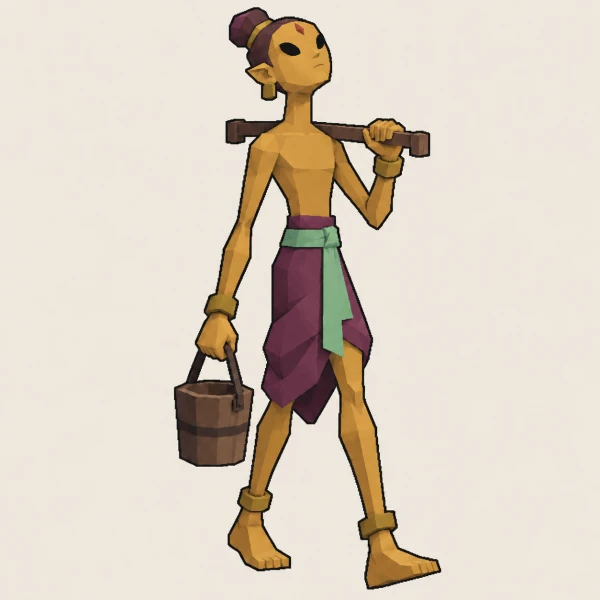
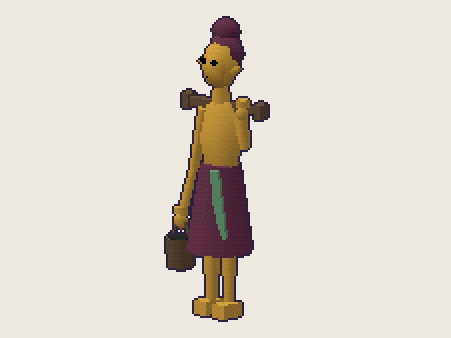
The water carrier (being:asura.root-shoulder.water-carrier, sketch): an invented asura who waters roots whose fruit ripens in another country.
In the game now
place:asura:wish-tree is built in two halves: the root shoulder and root crown on the Asura wedge (asura.root-shoulder, with the root spring and siege line) and the trunk, crown and fruit on Deva's side (deva.wish-tree.crown), with reciprocal root and fruit lookouts across the seam. The plan explicitly rejected a second tree (R37). The water carrier has a concept and capture but no placement.
Art (7)
the wish tree on the asura/god line, fruit toward the palace
Wellcome Collection (repo copy, media.json painting-wellcome-L0069380) · traditional · Public Domain Mark
The fruit tree stands on the asura side of the divider with its laden crown leaning toward the gods' palace; the devas' elephant army rides down past it.
the asura sector, upper left: the king's palace, the army and the tree on the divider
Library of Congress, via Wikimedia Commons · traditional · Public domain
Here the tree's trunk runs up the divider between the upper-left asura sector and the gods' sector, its red-fruited crown spilling into heaven over the sea.
the asura sector, upper right, with the fruit tree at its head
Photo François Zeller, Wikimedia Commons · traditional · CC BY-SA 2.0
The clearest modern rendering: a great fruit tree leans from the battlefield toward the gods' palace, its crown full of orange fruit on the god side while the asuras fight beneath.
the asura sector, upper left, with the tree and the Muni
AI concept study (repo), media.json concept-asura-water-carrier · concept · Project art
The invented asura who carries water up to the roots on the root shoulder.
Still missing: No picture of the Pārijāta with Armoniga on the summit from the asuras' side, and no picture of the roots themselves; painters give the trunk on the divider and leave the roots implied.
Out of jealousy, for the nectar, the tree and a woman, the asuras march up Meru in armour of gold and beryl, break through five lines of guards, and are beaten by the Thirty-Three on the summit; a god heals unless beheaded, an asura dies like a man.
Why they fight: Dudjom says the jealousy the demigods feel at the gods' splendour gives them constant, unbearable anguish, so 'from time to time they go to war with the gods'. Phagpa says they fight the Thirty-Three 'over the flavour of sudhā (divine nectar) and the asura lady Śacī'. Patrul says it is the wish-fulfilling tree rooted in their land and fruiting in heaven. The Mindfulness Scripture says the war turns on Dharma: when humans in Jambudvīpa honour parents, mendicants and brahmins, the gods' strength grows and the asuras lose; when they do not, the asuras win.
How they march, in Phagpa: 'wearing solid armour made of gold, silver, beryl, or crystal, and wielding swords, spears, javelins, or bows and arrows, they lead their four divisions', either the first three kings or all four with Vemacitra. Śakra's five protectors meet them in turn: the nāga kings of the Lalitasāgara who 'rejoice in white factors', then the Vessel-Bearer (Karoṭapāṇi) gods of Meru's first terrace, the Garland-Bearer (Mālādhāra) gods of the second, the Ever-Infatuated (Sadāmatta) gods of the third, and the Four Great Kings of the fourth. Only when all five fail are the Thirty-Three told: 'the asura armies have now reached the top of Mount Sumeru!' Śakra mounts his elephant Supratiṣṭhita, the gods arm in Caitraratha park, steel themselves in Pāruṣyaka park, and ride out of the city Sudarśana. The Pali Jātaka has the same five guards: 'Nāgas, Garuḷas, Kumbhaṇḍas, Goblins, and the Four Great Kings', with images of Indra holding the thunderbolt all round.
The scripture's war is a chain of embassies and sea-battles. The unrighteous nāga kings Pramatha, Kāla, Aṭopa and Huluhulu fight the righteous Vāsuki and Takṣaka; the asuras of each plateau call the next deeper one; Puṣpamāla and Rāhu say 'the time has not yet come', Overjoyed shames them into marching; the Four Great Kings' three god-classes join in turn, and the battles are fought 'in the middle of the ocean' with rains of fire, weapons and mountains. When Vemacitrin and Overjoyed finally set out with drums and chariots of a hundred thousand spokes, Sumeru itself rumbles and Śakra's seat trembles; Śakra mounts Airāvaṇa and rides out.
How they die: Dudjom, 'as long as the gods do not have their heads or waists severed, their injuries heal again even if a vital organ is struck, whereas the demigods, like humans, die if a vital organ is hit.' Phagpa: either side dies if cut at the waist; severed hands and feet grow back. Patrul: gods are seven times taller than men, asuras much smaller; the gods loose vajras, wheels, spears and giant arrows, haul mountains into their laps to hurl, and send the elephant All-Protector 'crazed with liquor, a wheel of swords fastened to its trunk', so 'the demigods die in their hundreds of thousands. Their corpses tumble down the slopes of Mount Meru to fall into the Great Exuberant Lakes below, whose waters are suffused with the colour of blood.' If the gods win they chase the asura chariots to the first sea; if the asuras win they enter the city. Phagpa adds that while a Buddha, a pratyekabuddha or a wheel-turning king is in the world the asuras have no belligerent thoughts.
The Pali gives the asuras one near-victory: Sakka, beaten in the deep, fled along the southern ocean in his Chariot of Victory, a hundred and fifty leagues long, shearing through the silk-cotton forest; the garuḷa nestlings shrieked, and he turned the chariot back rather than destroy life. The asuras took the turn for reinforcements and fled to their realm, and the Vejayanta palace rose a thousand leagues high at the hour of victory.
What canon fixes for the map
Causes: jealousy [DT p. 98]; sudhā and Śacī [P p. 27]; the wish tree [WMPT p. 92]; human Dharma or non-Dharma [AM 3.91, 3.235].
Asura armour of gold, silver, beryl or crystal; swords, spears, javelins, bows; four divisions [P p. 27].
Five lines of protectors in order: nāgas of the Lalitasāgara, Karoṭapāṇi, Mālādhāra, Sadāmatta, the Four Great Kings; then the Thirty-Three [P pp. 27–28]; Pali: nāgas, garuḷas, kumbhaṇḍas, yakkhas, Four Great Kings [J.i.204].
The gods arm in Caitraratha park, steel themselves in Pāruṣyaka park, leave by the city Sudarśana [P p. 28].
Gods heal unless head or waist is severed; asuras die like humans when a vital organ is hit [DT p. 99]; either dies cut at the waist, limbs regrow [P p. 28].
Gods are seven times taller than men; asuras much smaller than gods [WMPT p. 92].
The battles are fought at sea, 'in the middle of the ocean', and on Sumeru's slopes; defeated asuras retreat to Rāhu's realm [AM 3.212–3.224].
Victory: asuras invade the city; gods chase the chariots to the first sea [P p. 28].
Corpses fall down Meru into the Great Exuberant Lakes, red with blood [WMPT p. 92].
No war while a Buddha, pratyekabuddha or cakravartin is in the world [P p. 28].
Who lives here
Śakra / Sakka (Kauśika, Maghavā, Vāsava), lord of the Thirty-Three, on the elephant Supratiṣṭhita / Supremely Steady / Airāvaṇa [P p. 28; WMPT p. 92; AM 3.289].
The nāga kings of the Lalitasāgara, first of the five protectors (being:asura:lalitasagara-nagas, missing) [P p. 27].
Vāsuki and Takṣaka, righteous seven-headed nāga kings at Endowed with Enjoyments, with Bhadraka, Rohina, Meghamālin, Expanse, Ahi, Joyous and Rainfall [AM 3.196].
Pramatha, Kāla, Aṭopa, Huluhulu, unrighteous nāga kings allied to the asuras [AM 3.102, 3.196].
Suvīra, the godling Sakka sends against the asuras who keeps dawdling [SN 11.1].
Mātali, Sakka's charioteer [J.i.203; SN 11.4].
In the game now
Adaptation: the plan stages the war as three unmanned siege engines on the root shoulder aimed up at Deva, a sentry on Deva's side, a contest field (asura.lower-field) and an arena, with 'not every asura at war' (asura.json root-shoulder and sea-city claims). The Liberate route's three asura beings Krodha, Rahu and Shunya (built) are Josie's own design. The protectors are items of the four-kings and desire:thirty-three topics; being:asura:lalitasagara-nagas is missing.
Art (10)
the asura sector, upper right: the devas' elephants ride down on the asura cavalry under the wish tree
Wellcome Collection (repo copy, media.json painting-wellcome-L0069380; same painting as V0017705) · traditional · Public Domain Mark
The whole asura sector: Indra's white elephant army with spears and banners charges down from the gods' side; blue-armoured asura horsemen are shot down under a rain of arrows and thrown wheels; the fruit tree stands at left, the green Muni's palace at right, and asura women watch from a pool below.
the asura sector, upper left: king, palace, army and tree
Unknown artist, via Wikimedia Commons · traditional · Public domain
A crisp modern print of the same composition as the LoC scroll: the asura king in his red-walled palace at lower left, his banner-carrying army marching up the divider under the fruit tree toward the gods' palace over the sea.
Photo François Zeller, Wikimedia Commons · traditional · CC BY-SA 2.0
A dense mêlée of armoured asuras on horseback and on foot beneath the fruit tree, with the Muni on a cloud above them; the best open close-up of the battle.
the asura sector, upper left: cavalry battle under the tree
Wellcome Collection, via Wikimedia Commons · traditional · CC BY 4.0
A painter's line drawing: mounted archers and swordsmen fill the upper-right wedge with the standing Muni among them, useful for reading how the figures are posed.
Photo (CC0), Wikimedia Commons · traditional · CC0
A carved stone Wheel: the upper-right wedge shows helmeted asuras with swords and shields cutting one another down beside a standing Buddha. The forms are big and simple, close to the game's low-poly register.
Himalayan Art Resources · traditional · No open licence (link only)
HAR's annotated Wheel: 'To the right is the Asura Realm, a lower form of the gods that are always engaged in conflict.' Look right of the gods' palace for the armies and the tree.
Rubin Museum of Himalayan Art · traditional · No open licence (link only)
Gods and demi-gods share the upper-left wedge; the asuras are its lower portion with the green standing Buddha. The repo's chosen reference for the Muni's colour.
Still missing: No painting shows the five lines of guards on Meru's terraces, the sea battles of the Mindfulness Scripture, Sakka's chariot turning for the nestlings, or the Great Exuberant Lakes red with blood. Wheel sectors give only the clash under the tree.
Four divisions in jewel armour against the gods' elephants, chariots and rains of weapons; the named beasts of both sides.
The asuras' side: Vemacitra rides the elephant Duṣprasāha into battle and the elephant Snowdrift for pleasure, and keeps the horse Balāhaka. The asura armies are 'four divisions' (the Indian fourfold army of elephants, chariots, horse and foot) in solid armour of gold, silver, beryl or crystal, with swords, spears, javelins, bows and arrows. In the Mindfulness Scripture Vemacitrin and Overjoyed ride out 'in chariots with a hundred thousand spokes', with drums, 'accompanied by many millions of asuras who shine like a hundred thousand suns'; the necklace asuras line up at Mirror Lake 'holding their weapons and helmets', 'adorned with flowers and coloured powders, their bodies slathered in ointments'. The asuras' own drum, Ālambara, was made from a crab's claw.
The gods' side: Śakra's war elephant is Supratiṣṭhita, 'Supremely Steady', which Patrul gives thirty-three heads, Indra on the central head and his thirty-two ministers on the rest; the scripture calls it Airāvaṇa. The gods loose vajras, wheels, spears and giant arrows, hurl mountains, and dispatch an elephant called All-Protector, drunk, with a wheel of swords on its trunk. Sakka's Chariot of Victory (Vejayanta) is a hundred and fifty leagues long and driven by Mātali; its turn-around is the asuras' one 'victory'. In Phagpa Śakra also keeps a second elephant for amusement in his park.
A curiosity from the Saṃyutta: a man once saw a fourfold army march into a lotus stalk and thought he had gone mad; it was a beaten asura army fleeing.
What canon fixes for the map
Asura war elephant Duṣprasāha, pleasure elephant Snowdrift, horse Balāhaka [P p. 27].
Four divisions; armour of gold, silver, beryl, crystal; swords, spears, javelins, bows [P p. 27].
Chariots with a hundred thousand spokes; war drums [AM 3.286–3.287].
Śakra's elephant Supratiṣṭhita [P p. 28] = Supremely Steady with thirty-three heads [WMPT p. 92] = Airāvaṇa [AM 3.289].
Gods' weapons: vajras, wheels, spears, giant arrows, hurled mountains; the elephant All-Protector with a wheel of swords on its trunk [WMPT p. 92].
Supratiṣṭhita / Airāvaṇa, Śakra's elephant; All-Protector, the sword-wheel elephant [P p. 28; WMPT p. 92].
Mātali, the charioteer [J.i.203].
In the game now
Nothing yet. The three asura mounts are missing beings; no elephant or chariot exists in the Asura wedge. The plan's siege engines (asura.root-shoulder.siege-line) are an adaptation with no source.
Art (2)
Indra's white elephants and spearmen riding down from the gods' sideasura cavalry in blue armour struck down
Wellcome Collection (repo copy, media.json painting-wellcome-L0069380) · traditional · Public Domain Mark
Indra in a canopied howdah on a white elephant leads a column of white elephants and spearmen under red banners; below, a second white elephant with a rider, and asura horsemen in blue armour falling.
Śacī / Pali Sujā, Sujātā; asurī (asura women); Rāhu's queens Delightful Beauty, Lovely Scent, Grove of Beauty, Maṅgalā
The asuras' beauty is a cause of the war: the gods took Vepacitti's daughter as Śakra's queen and, the asura king says, 'just want to ogle and grope our asura maidens'.
Phagpa names the woman the war is fought over: 'the asuras fight with the thirty-three gods over the flavour of sudhā and the asura lady [Śacī]', and places her on the summit, 'Lord Śakra in the place Vaijayanta, together with his asura lady called Śacī, and also with many goddesses'. The bracketed name is the translator's.
The Pali tells how she got there. Sujā, daughter of the asura king Vepacitti, was given the right to choose her own husband at an assembly of the asuras; Sakka came disguised as an aged asura and she chose him, and he carried her off to be his chief consort. Buddhaghosa uses the marriage to explain why father-in-law and son-in-law are now at war and now at peace. In her earlier lives she was Magha's wife Highborn, who did none of his good works and so was born a crane, then a potter's daughter, then the asura princess.
The Mindfulness Scripture shows the asura kings' view. Rāhu goes up Sumeru to look at 'those groves, forests and divine maidens that the gods are so fond of', dressed to 'attract the attention of maidens among both the asuras and the gods'. Overjoyed, mustering for the last war, cries, 'Don't you think I am aware that those eager armies of gods just want to ogle and grope our asura maidens?' Rāhu's court is a circle of asurīs 'who dance, giggle, and try to look their best', four queens and 1,200,000,000 ladies-in-waiting; the fourth level is 'always adorned with females' in exquisite garments.
And the women's grief: when the beaten asuras creep home, their wives ask where the rest are, are told they are coming victorious, go to Mirror Lake and see them dead, and stand round the lake 'beating their chests, tearing out their hair, and scratching their bodies, with their faces covered in tears'.
What canon fixes for the map
The war is fought over sudhā and the asura lady Śacī, who lives with Śakra in Vaijayanta on the summit [P pp. 27, 29].
Sujā is Vepacitti's daughter; she chose Sakka at an asura assembly; he is therefore Vepacitti's son-in-law [J.i.205–206; DhA.i.278–279 via DPPN].
Rāhu has four queens and 1,200,000,000 ladies-in-waiting [AM 3.82].
The gods are accused of coming to 'ogle and grope our asura maidens' [AM 3.286].
The asura women see their husbands' deaths in Mirror Lake and mourn on its banks [AM 3.343–3.344].
Who lives here
Śacī / Sujā (being:asura:shaci, missing).
Rāhu's four queens: Delightful Beauty, Lovely Scent, Grove of Beauty, Maṅgalā [AM 3.82].
The asurīs of each level [AM 3.82, 3.91, 3.192].
In the game now
being:asura:shaci is missing. No asura woman exists in the game; the six invented asura residents are not named as women or men beyond their briefs. The Wellcome painting's pool of women below the battle is the one traditional image at hand.
Wellcome Collection (repo copy, media.json painting-wellcome-L0069380) · traditional · Public Domain Mark
Below the battle, a walled blue pool with four bare-shouldered women in it and attendants on the terrace: the asura women watching, as the texts have them watch Mirror Lake.
Still missing: No painting of Śacī/Sujā's choosing, or of the asura women mourning at Mirror Lake.
Mirror Lake, All-Appearing: the lake that shows the fallen
Tib. kun tu snang ba ('All-Appearing'); AM 'Mirror Lake' in the city Star Garland; Patrul's 'Great Exuberant Lakes'
A clear lake five leagues across in the heart of Star Garland in which the asuras see, before they march, whether they will flee or die, and in which their families see them dead before the army comes home.
Dudjom: 'It is said that the reflections of the dead demigods appear in the lake called All-Appearing on top of the ground of gold, and so their families are stricken with grief even before the soldiers return.'
The Mindfulness Scripture locates it. In the centre of the great asura city Star Garland, on the second plateau, lies a water basin five leagues across, 'clear, delicious, free of mud and other impurities, constantly present, and radiant like a second moon'. Before the asuras march, the necklace asuras line its shores in helmets with their weapons and stare into it 'as if into a spotless mirror'; if they are to lose, their reflections appear to flee, and if they are to die, they see themselves dead. The lords return to their cities and brood on it, and come back after ten, a hundred or five hundred years to look again; there they also see righteous humans of Jambudvīpa being born as gods, and so decide to ruin human food through the unrighteous nāgas.
After the battle the asura women go to the same lake and see their husbands killed, and the lake 'becomes encircled by suffering asura women beating their chests'. Patrul's version is bloodier: the corpses tumble down Meru 'to fall into the Great Exuberant Lakes below, whose waters are suffused with the colour of blood'.
What canon fixes for the map
All-Appearing lies on top of the ground of gold; it shows the dead demigods to their families before the army returns [DT p. 99].
Mirror Lake is in the centre of Star Garland (second plateau), five leagues across, clear and 'radiant like a second moon' [AM 3.97].
The asuras look into it in full armour before marching; fleeing or dead reflections foretell defeat [AM 3.97–3.99].
The women mourn on its banks after the battle [AM 3.344].
Patrul: the corpses fall into the Great Exuberant Lakes at Meru's foot, red with blood [WMPT p. 92].
Who lives here
Kaṇṭhamāla and the necklace asuras, who consult the lake [AM 3.97–3.98].
Firm, the asura king who looks with them [AM 3.99].
In the game now
place:asura:all-appearing is missing. The plan's coves and harbour hold water but nothing reflects the fallen in them.
Art (0)
Still missing: No painting of All-Appearing or Mirror Lake is known. The pool of women in the Wellcome Wheel (see asura-women-and-the-gods) is the nearest image.
Skt. pañca gatayaḥ / ṣaḍ gatayaḥ; Pali pañca gatiyo; Tib. 'gro ba lnga / rigs drug
Vasubandhu and the Pali suttas count five destinies with the asuras folded into gods, pretas or animals; the Mahāyāna sūtras and the Tibetan teaching count six and give the asuras their own wedge.
Vasubandhu's Treasury: 'In these Dhātus there are five realms of rebirth: hellish beings, animals, pretas, humans and gods.' His bhāṣya never places the asuras; La Vallée Poussin's note records why: 'some five centuries after the Buddha's demise there were many schools; some held to five gatis, others to six.' The Vibhāṣā puts the asuras among the pretas; the Mahāsāṃghikas made them a sixth gati; the Saddharmasmṛtyupasthāna puts them among the pretas and the animals; another sūtra among pretas, animals and gods. The Pali Majjhima likewise lists five destinies, and the Kathāvatthu debates the Andhakas, who wanted a separate asura destiny, answering that the Kālakañjakas belong with the pretas and Vepacitti's people with the devas.
The six-realm count is the one the Tibetan Wheel and this game use. The Transformation of Karma (Toh 339) distinguishes hell beings, animals, ghosts, asuras, humans and devas. Phagpa: 'the animate world is altogether sixfold: hell-beings, hungry ghosts, animals, humans, asuras and gods.' Kongtrul counts 'the six kinds of beings' and quotes the Lion of Humanity on the six classes, but also quotes the Marvellous Life of the Buddha on 'the five existences', and resolves it: 'although the demi-gods may be included in the category of animals, their habitat, physical form, possessions and so on are so similar to those of the gods that they are classified as gods'. The Mindfulness Scripture, his source for their abode, says they are of two kinds, starving-spirit asuras (māra-class or with great magical powers) and animal asuras, and treats Rāhu's whole realm inside its animal chapter.
Painters keep both options. HAR catalogues Wheels with four, five and six sections; in five-section Wheels the gods and asuras share one wedge, which is why the Rubin Sikkim Wheel labels its upper-left wedge 'gods and demi-gods'.
What canon fixes for the map
Five gatis: hell beings, animals, pretas, humans, gods [AK III.4a-b, Pruden p. 371].
Schools: asuras among pretas (Vibhāṣā); a sixth gati (Mahāsāṃghikas); among pretas and animals (Saddharmasmṛtyupasthāna); among pretas, animals and gods [Pruden ch. III n. 26].
Six kinds of rebirth including asuras [Transformation of Karma, Toh 339, §1.6; P printed p. 18 / PDF p. 31; K p. 27].
Kongtrul: asuras classified as gods though includable among animals; a-sura means inferior, not non-god [K p. 44].
AM: two kinds of asura, starving-spirit class and animal class; Rāhu 'is a kind of animal' [AM 3.61, 3.78].
Wheels exist with four, five or six sections [HAR sets 1652, 1651, 1649].
In the game now
The game's six-realm Liberate route and six Wheel wedges follow the six-count (ledger topic six-realms). being:asura:animal-class and being:asura:preta-class record the two-kind division and are both missing.
They live and stand like the gods of the Thirty-Three, five to seven thousand of their own years, and lack only the gods' ambrosia, which is part of what they fight for.
Kongtrul, citing Asaṅga's Facts of the Stages: 'the physical size and lifespan of a demi-god are equivalent to those of a god of the Thirty-Three Groups of Gods.' Phagpa gives that god's measure: a hundred human years are one of their days, their life is a thousand such years, and their bodies are half a yojana. Patrul says gods are seven times taller than men and demigods much smaller than gods; the Mindfulness Scripture makes Rāhu alone Sumeru-sized and says the rest vary 'according to their actions'.
The Mindfulness Scripture gives each plateau its own count: Rāhu's subjects live five thousand asura years with a day of five hundred human years; the necklace asuras six thousand years with a day of six hundred; Puṣpamāla's players seven thousand with a day of seven hundred. All 'may also die prematurely', which the war ensures.
Food: the name says it. Kongtrul derives a-sura as 'deprived of the essence', because 'the demi-gods are said to lack the ambrosia of the gods', and Phagpa's asuras go to war 'over the flavour of sudhā'. Puṣpamāla is born to 'consume contaminated elixir' in Profound for having fed monks of broken discipline. Otherwise their land is abundance: Rāhu's golden forests 'drip with honey' and 'drip with nectar', some trees bear only flowers, others fruit or nectar, and the birds are 'intoxicated by flower nectar'. In the Pali the asuras' downfall was the gods' liquor, and they swore off surā on the way down.
Who is born there: in the scripture, people who protected animals or freed fish but did much other harm go to Rāhu's realm; people who gave improper festival gifts to the saṅgha go to the third level; Dudjom says the demigods 'are mostly evildoers and therefore have no interest in the Dharma'.
What canon fixes for the map
Size and lifespan equal to a god of the Thirty-Three [K p. 48, citing Asaṅga]; Thirty-Three gods: 100 human years = 1 day, life 1,000 years, body half a yojana [P printed p. 29 / PDF p. 43].
Rāhu's realm: 5,000 asura years, day = 500 human years [AM 3.93]; necklaces: 6,000 years, day = 600 [AM 3.130]; third level: 7,000 years, day = 700 [AM 3.182].
Asuras lack the gods' ambrosia; fight for sudhā [K p. 29; P p. 27].
Rāhu's forests drip honey and nectar; trees of flowers, fruit or nectar [AM 3.81].
Gods seven times taller than men; asuras much smaller than gods [WMPT p. 92].
In the game now
Nothing yet. No asura in the game eats or ages; the plan gives the sunk city a soup maker (being:asura-city.west-halls.soup-maker, missing) as invented public life.
Art (0)
Still missing: No art shows asura feasting, nectar or the golden forests of Radiant.
Tib. srid pa'i 'khor lo, the asura wedge; HAR 'Asura, Demi-god Realm'
An armoured host climbing toward the gods' palace under a laden tree whose fruit hangs on the gods' side, a king in a walled palace, a green Muni in armour, and sometimes the women at a pool.
In almost every Wheel the asura wedge lies against the gods' wedge, to its right or left depending on the painter, with the two divided by a line that the wish tree straddles. The Mongolian Wheel at the Rubin (HAR 78) has it on the right, 'a lower form of the gods that are always engaged in conflict'; the Sikkim Wheel (Rubin C2004.21.1) puts gods and demi-gods together at upper left with the asuras in the wedge's lower portion; the Wellcome gouache in the repo and its sisters put the asuras upper right; the Library of Congress scroll and most modern murals upper left.
The elements repeat: the devas' white elephants and spearmen descending from the palace; asura cavalry in armour falling under arrows and thrown wheels; the fruit tree on the divider, fruit toward heaven; the asura king enthroned in a walled compound; the Muni of the asuras, green or blue, in armour with a sword, standing on a cloud or in a shrine; and in the Wellcome painting a pool of asura women. Nothing underwater is ever shown: the painters give the war on the mountainside, not the cities in the depths.
The Muni's colour varies. The Karma Lingpa text makes the asura sage green; the Rubin Sikkim Wheel and the Mak Dhog mural show him green; HAR records blue variants and warns that treasure traditions differ. Josie's rule for the realm's Muni follows the green reading.
What canon fixes for the map
The asura wedge adjoins the gods' wedge; the wish tree stands on the shared divider with its fruit on the gods' side [L0069380; LoC Bhavachakra; Samsara.jpg].
The asuras attack upward toward the palace; the gods descend on elephants [L0069380].
The realm's Muni is Vemacitra, green (or blue), armoured, with a sword [shakyamuni-munis.md; Rubin C2004.21.1].
Wheel painters show no underwater city; the depths are text only.
Who lives here
Muni of the Jealous Gods, Vemacitra (overworld:munis:4, built).
In the game now
The plan reads the Wheel sector as 'the asuras' city and their war at the tree' and compresses it: city at the hub end, war ground at the rim, tree roots on the Deva seam (asura.json account). The Wellcome L0069380 painting is in the repo at public/atlas/media/wheel-of-life/.
Rubin Museum, Project Himalayan Art, photo Eric Huntington · traditional · No open licence (link only)
Figure 6: the green asura sage upper left. A witness for the Muni's colour.
Still missing: A Bhutanese or Ladakhi Wheel with a clearly readable asura wedge was not found open-licence (the Punakha and Thikse photographs are too small or too oblique to place the sector with confidence).
Tib. lha ma yin gyi gnas; game section `asura`, 60° on the Wheel, Deva at -u, the Preta bank at +u
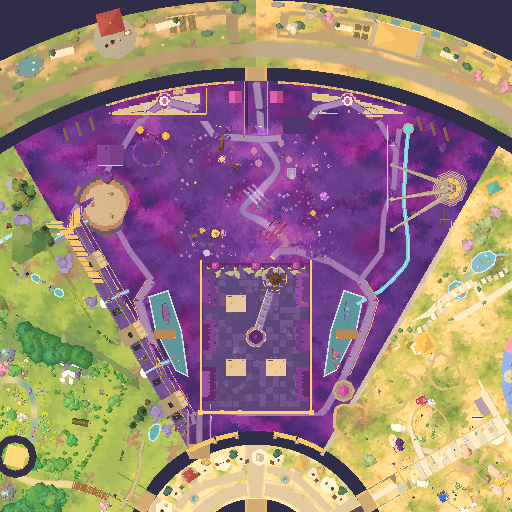
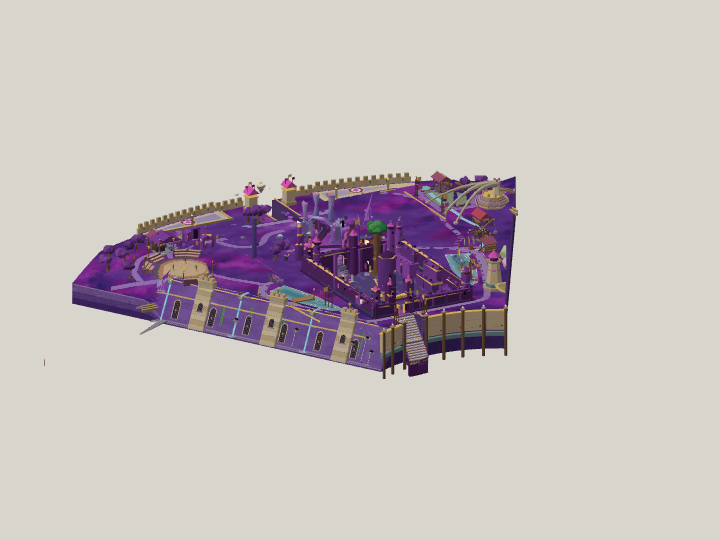
The Asura wedge as planned and built: a harbour and two coves at the hub end, the sunk city below the waterline, the contest field and arena, the titan's fortress with the Muni, the root shoulder on the Deva seam and the north courts at the rim.
The chosen account is Kongtrul's (asuras in Meru's crevices below the water, at differentiated depths), read with the Wheel's asura sector and its sources: one wish tree rooted among the asuras and fruiting among the gods, the war and 'wars and strife', and the realm's green Muni Vemacitra with sword and armour. So the wedge runs from the harbour at its hub end to the war ground at its rim: the harbour and its two coves (the water the asuras live below), the sunk city below the waterline (the depth), the contest field the Liberate route crosses, the titan's fortress and the Muni, and along the Deva seam the root shoulder where the tree is rooted and the siege engines face the gods' country [account.chosen].
Relief: base height 5.4; the city sunk six treads below the harbour; both coves at one water level; the east flank shoulder and north court one tread up; every riser a metre or more faced in dry stone with a gilt lip. The wedge is a floating island with a two-unit chasm along both seams. Water: the east cove and west cove, both .85 deep, fed by one rill from the root spring and joined by a culvert under the harbour front; three spillways fall from the Animal wall into the chasm [terrain].
Districts, one line each:
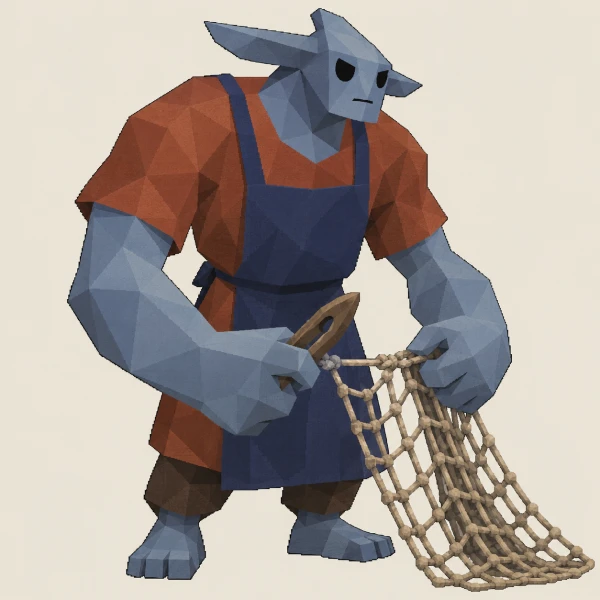
asura.harbour: the way in from the hub: a sea wall, a stair up to the city gate, and a working quay round each cove [1 resident: the net mender, sketch].
asura.sea-city: the asuras' sunk city below the waterline, a walled basin six treads under the harbour with a tide line on its inner walls, three yards of sand with racked staves, a shared bench, purple stone halls with shut doors, and one root of the wish tree breaking up through its flags [4 residents: the asura resident; soup maker, record keeper, mat mender (missing)].
asura.lower-field: arrival ground and the first two Liberate clearings, Krodha then Rahu beside the eclipse crag [2 beings: Krodha, Rahu].
asura.titan-ground: the boss clearing behind its fortress gate, the Muni Vemacitra with sword and armour, the retired merit gate toward Deva, and the hell hollow under its stone [Shunya; Muni of the Jealous Gods; the pot and the one in the stone].
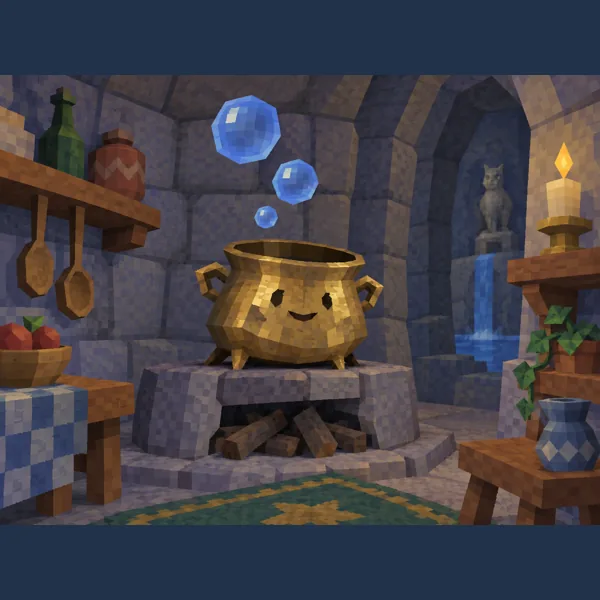
asura.arena: the ruined contest ring and the way down to its undercroft [arena-undercroft: eight tally cells, the Trophy Polisher and the Undercroft Tea Seller, unplaced until modelled].
asura.root-shoulder: where the one wish tree is rooted; its roots come over the Deva edge into the root crown, a spring rises among them, and three unmanned siege engines stand pointed up at the Deva rise [1 resident: the water carrier, sketch].
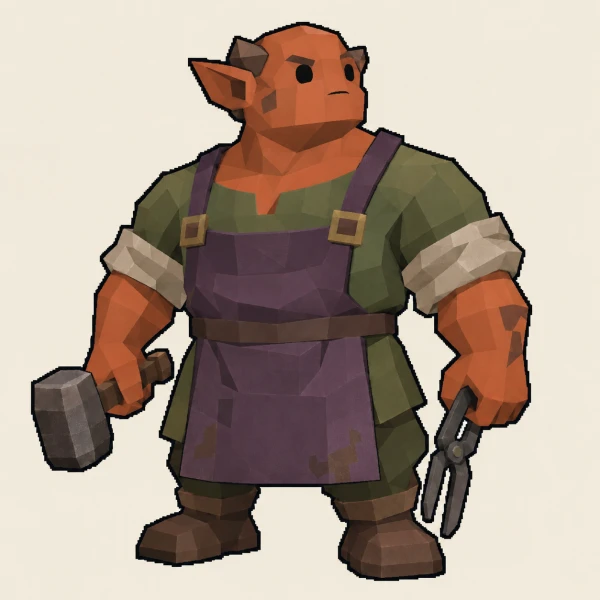
asura.west-terrace: the working side: a training court, the smithy and the smith's house, the lip walk and the bridge to Deva past the root crown [1 resident: the smith, sketch].
asura.north-courts: the realm's outer edge: the east court's bench over the rim, two gate towers, the rim parapet and the stair down to the rim.
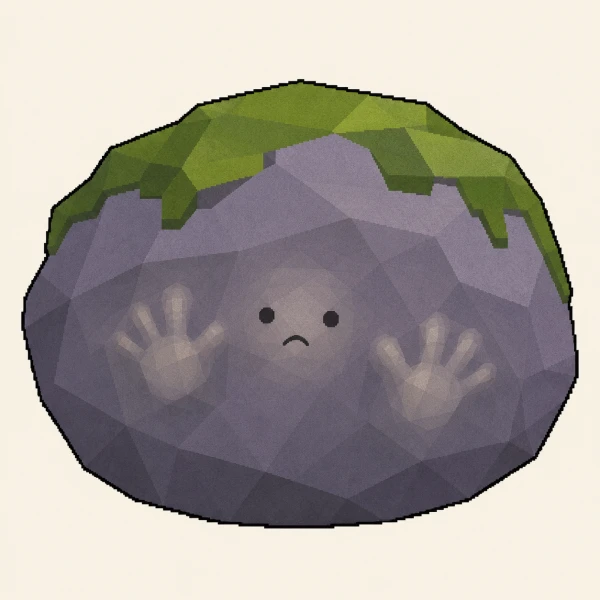
asura.hell-hollow: one of the ephemeral hells: three broken spears, a split shield and eight violet crystals in a shallow bowl under a pushable stone [the smiling brass pot; the one trapped inside a stone].
What is adaptation: R37 says the sources give the dwelling, the one tree and the war and nothing of streets, quays or a field; the Wheel sector is a teaching picture, so the city stands sunk behind a sea wall at the hub end rather than in Meru's flank, the roots-below/fruit-above relation is compressed into one seam, and the many depths are compressed into one sunk city. Every resident except the Muni and the Liberate beings is invented.
What canon fixes for the map
Asuras below the water in Meru's crevices at differentiated depths [K pp. 28–29, via docs/wheel-geography-canonical-research-2026-10-01.md].
One wish tree, rooted among the asuras, fruiting among the gods [DT n. 154].
'The asuras or demi-gods suffer from wars and strife' [H, The Defects of Saṃsāra].
Muni Vemacitra: green, armour and sword [shakyamuni-munis.md; Rubin C2004.21.1].
AN 8.19's ocean is corroboration only; the world has no outer ocean [account.alternatives; R29].
Wheel order (Josie 2026-10-28): Deva north, Asura north-east, down right of Deva, the Preta bank at +u.
Muni of the Jealous Gods, Vemacitra (overworld:munis:4, built, awake).
Asura resident at the bench (being:asura:beings, built, asura.sea-city).
The net mender, the smith, the water carrier (sketch: concept and capture, not placed).
Trophy Polisher and Undercroft Tea Seller (built items; unplaced until they have their own models, R23).
Soup maker, keeper of borrowed things, mender at the quiet yard (missing).
The smiling brass pot (obj-pot, built) and the one trapped inside a stone (being:ephemeral-hells:stone/stone, sketch) in the hell hollow.
In the game now
Samsara realm `asura`: 42 items, 11 built, 6 sketch, 25 missing. Built places: place:asura:meru-crevices (the wedge), place:asura:wish-tree (shared with Meru/Deva), place:asura-gatehouse, place:eclipse-ledge, place:titan-hall. Missing: all nine named canon places (the four cities, Vemacitra's five) and the lake All-Appearing.
game place `asura-gatehouse`, the guardroom of the fortress gate on asura.titan-ground
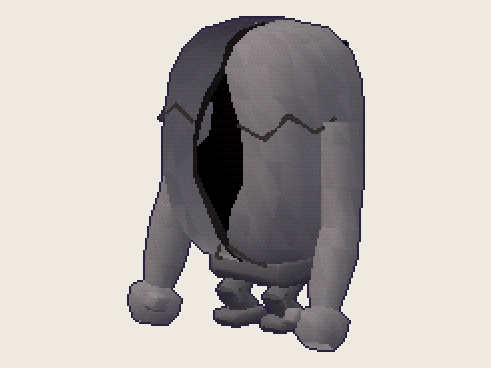
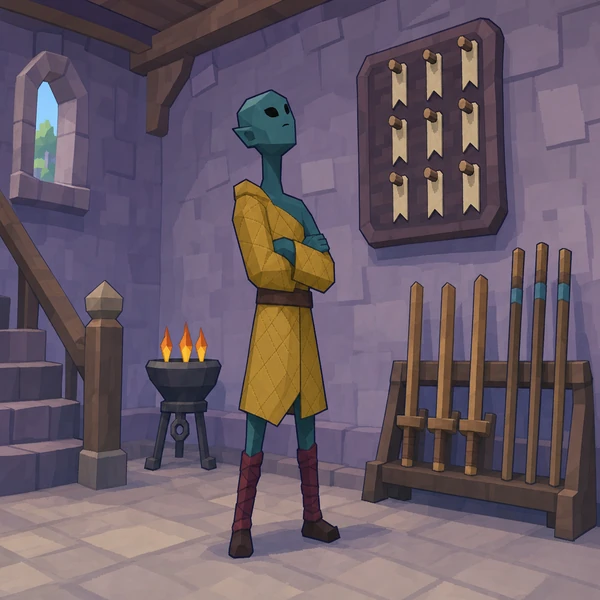
A squat lilac-stone guardroom inside the east gate tower beside the Hollow Titan, with a ranking board of nine pennants, a weapon rack, a brazier and a clockwise stair to the wall walk.
What the plan builds: the inside of a tower, 4.8 by 4.4 in lilac stone. On the back wall the door and beside it the ranking board, nine pegs in three rows of three with plain pennants. A free-standing rack of three wooden swords and three staves; a bench under a slit window; an iron brazier with three flames. A newel stair winds up the left, clockwise from above, to the wall walk: eight merlons along the back, three a side, a view slit over the moat with a cushion, and the keepsake in a nook. One sentry [layout].
Gateway: entered from asura.titan-ground at the east gate tower's east flank, reached round its back corner from inside the gate; the return is the door in the back wall [gateway]. Purpose: 'the asuras rank themselves against each other even on watch'; the bound state has the sentry eyeing the top pennant, and nothing changes when he is freed (R8).
Resident: the Sentry of the Titans' Gate, routine 06:00 standing guard by the board, 12:00 pacing to the rack and back, flexing, 18:00 warming his hands at the brazier still facing the board; rival and neighbour of the city's bench-mender. He borrowed the asura resident's body and so was taken out until he has a concept and model of his own (R23, R36); his clue when he returns is a wooden sword worn smooth at the hilt, hung a little lower than the rest.
Canon versus adaptation: invented outright (Josie, 2026-09-29: every building has a room). No source names a gatehouse; the rivalry it shows is the sources' asura theme (ledger topic asura-tree), the board and pennants are not.
The rivalry theme follows Dudjom's jealousy and Chökyi Drakpa's 'wars and strife' [ledger asura-tree].
Stair clockwise from above; props in threes and eights (three swords, three staves, three flames, eight merlons) [layout; AGENTS.md threes/eights].
Who lives here
Sentry of the Titans' Gate (being:asura-gatehouse:asura:1, missing: no model of his own).
In the game now
place:asura-gatehouse is built (space asura-gatehouse); the sentry is missing and his spot stands empty. Hooks: a keepsake on the wall walk and a match at the board.
game place `eclipse-ledge`, a crag pocket on asura.lower-field
A crag beside Rahu's clearing, reached by a held jump from the trophy rack, from which alone the sky shows Meru's lapis face, the sun circling it, and a storm-cloud head waiting open-mouthed where the sun is at dusk.
What the plan builds: open ground, not a room. A crag pillar, top radius 0.5 and 1.75 high, beside Rahu's clearing, 1.3 out from the trophy rack on its far side; too high to reach from the ground, a held jump from the rack's top shelf reaches it. Standing on it, and only there, the sky shows the world mountain far off with its lapis face toward her, the sun on a clockwise track at half its height, advancing only when BodhiBot passes, and a storm-cloud head on the sun's way at the dusk position. No seat, no keepsake, no being [layout].
Canon in it: the sun and moon belong to the lower world-system and circle Meru at the Yoke height (ledger sun-moon); Meru's south face is blue beryl (K p. 22). Adaptation: 'the storm-cloud head that waits with its mouth open where the sun passes at dusk (Rāhu) has no source in the repository's lore files; it and the ledge are invented. Seeing Meru from the Asura wedge is Wheel compression.'
This file now supplies the source the record lacked: SN 2.9–2.10 (Rāhu seizes the Moon and Sun and releases them at the Buddha's verse) and the Mindfulness Scripture 3.69–3.78 (Rāhu covers the sun and moon with his hand from Sumeru's slopes). Both give a hand or a grip, not a mouth; the swallowing image is Thai and popular. The ledge's cloud head is therefore an adaptation of a real story, and could be a hand.
What canon fixes for the map
Sun and moon circle Meru in the lower world-system [ledger sun-moon; K].
Meru's south face is blue beryl [K p. 22].
Rāhu covers the sun with his hand standing in the sea on Sumeru's slopes; he reaches for the moon from afar [AM 3.69–3.73]; he seizes and releases Moon and Sun [SN 2.9–2.10].
The ledge, the crag and the cloud head are invented [gateway.adaptation].
In the game now
place:eclipse-ledge is built (space eclipse-ledge), with no resident and no keepsake; its only route is the held jump from asura.lower-field.trophy-racks.
game place `titan-hall`, the empty throne hall behind the Hollow Titan's shrine on asura.titan-ground
A long lilac-stone nave of eight pillars, eight banners and eight rows of empty paired cushions rising to a throne too big for anyone, with one column of light from the roof and a pika asleep on the sixth row.
What the plan builds: a nave 7 wide, 20 long and 9 high in dusty lilac stone. Eight hourglass pillars, four down each long wall; eight plain banners; eight tie beams. A coral runner up the middle with eight rows of paired cushions, richer toward the throne, all empty. Three broad steps rise to a dais and a throne too big for anyone. One round opening in the roof drops a column of light on the bare floor before the dais, with a cushion of her own in it. A pika sleeps on a cushion of the sixth row [layout].
Gateway: behind the Hollow Titan's little stepped shrine, entered from asura.titan-ground; the return is the door in the east wall a third of the way down the nave. Purpose: 'a seat of honour no one can fill, with the whole court still ranked before it': the asuras' jealousy held still. Bound state: every cushion empty, dust drifting down the light; unchanged when freed (R8). Hooks: the pika can be freed in the hall, and she can sit on her own cushion in the light before the empty throne.
Resident: Pika of the Sixth Row, which carries dry grass up the runner at 06:00, sleeps on the sixth row's cushion at noon, and sits in the edge of the light watching the dust at 18:00. 'The hall stays empty because no asura will take a lower cushion than another; only a pika, which has no rank, sleeps in the sixth row.' It shares the pika's body and concept and is its own person by home and lines.
Canon versus adaptation: invented (Josie, 2026-09-29: every building has a room). No source names the hall, the throne or the ranked cushions; the theme follows the sources' account of asura envy and conflict (ledger asura-tree; the Torch, 'The Defects of Saṃsāra'). The texts do give the asuras real halls to set against it: Vemacitra's palace Ninādita and meeting place Sudhana, and the Pali 'citadel of the asuras' where Vepacitti meant to bind Sakka.
Pillars, banners, beams and cushion rows in eights [layout; AGENTS.md threes/eights].
Asura envy and conflict as theme [DT p. 98; H, The Defects of Saṃsāra].
Named asura halls in canon: Ninādita (palace), Sudhana (meeting place) [P p. 27]; the asuras' citadel [SN 11.4].
Who lives here
Pika of the Sixth Row (being:titan-hall:pika:4, sketch).
In the game now
place:titan-hall is built (space titan-hall) with the pika placed and routed (residents entry); hooks: match-pika and a contemplate seat in the light column.
missing Nothing in the game is this yet.sketch Something stands in: a model not yet placed, a placement drawn with a shared rig, a written voice, a court inside a shared room, or a place registered with no builder.built A placed character with its own model is this, or the place is built as its own room, zone or segment.
Beings
no art
Asuras classed as animals, at the bottom of the ocean missing being
A particular kind of demi-god, classified as an animal, lives at the bottom of the ocean.
Source: an adaptation grounded in docs/wheel-geography-canonical-research-2026-10-01.md, Sector table, Asura row: battlefield, public sea-city, quays/coves, root-and-fruit relationship; sea-city and lower Meru relation must remain legible; provide inhabitants beyond combat stereotypes; shore-to-depth travel, homes, public life and conflict boundary
Concept no
Model no
Forms no
Placed no
Home no
Dialogue no
Routine no
Liberation no
no art
The mender at the quiet yard missing being
Source: an adaptation grounded in docs/wheel-geography-canonical-research-2026-10-01.md, Sector table, Asura row: battlefield, public sea-city, quays/coves, root-and-fruit relationship; sea-city and lower Meru relation must remain legible; provide inhabitants beyond combat stereotypes; shore-to-depth travel, homes, public life and conflict boundary
Concept no
Model no
Forms no
Placed no
Home no
Dialogue no
Routine no
Liberation no
no art
The nāga kings of the Lalitasāgara, first of Śakra’s five protectors missing being
Rejoicing in wholesome factors, they meet the asura armies first; if they fail, the Karoṭapāṇi, Mālādhāra and Sadāmata gods and then the Four Great Kings join them in turn, and only then is Śakra told.
The other four protectors are meru:terrace-1 to meru:terrace-3 and the Four Kings, in four-kings.
Source: an adaptation grounded in docs/wheel-geography-canonical-research-2026-10-01.md, Sector table, Asura row: battlefield, public sea-city, quays/coves, root-and-fruit relationship; sea-city and lower Meru relation must remain legible; provide inhabitants beyond combat stereotypes; shore-to-depth travel, homes, public life and conflict boundary
Concept no
Model no
Forms no
Placed no
Home no
Dialogue no
Routine no
Liberation no
no art
Vemacitra, the fourth asura king missing being
Lives with his retinue eleven thousand yojanas below Prahārāda, in the city of Gambhīra, in constant battle with his opponent Lord Śakra.
P glosses the name “Variety of Strings” or “Multitude of Decorative Lines”. Śakra is the character shakra on Meru.
Why sketch: related: Rahu (character:liberate-the-storm-crowned-duelist) at Liberate route; Liberate being Josie named after this Rāhu (story/beings.ts); her own design, not a canon portrait.
Concept no
Model no
Placed no
Home no
Dialogue no
Routine no
Asura beings built being
Jealousy at the gods’ splendour gives them constant, intense anguish. From time to time they go to war with the gods and, their merit being weaker, are killed, struck and torn apart; a god heals unless head or waist is severed, an asura dies like a human when a vital organ is hit. Mostly evildoers, they have no interest in the Dharma.
H (The Defects of Saṃsāra) agrees in brief: they suffer from wars and strife. P differs on wounds (printed p. 28 / PDF p. 41): for gods and asuras alike a cut at the waist kills and cut-off hands and feet regrow. P (same page) adds that while a Buddha, pratyekabuddha or cakravartin dwells in the world they have no thought of war. K (PDF p. 48, after Asaṅga) gives their size and lifespan as the Thirty-Three’s.
Why built: Asura resident (character:asura) placed at asura-city; The smith (character:asura-smith) placed at overworld; The net mender (character:asura-net-mender) placed at overworld; The water carrier (character:asura-water-carrier) placed at overworld; Sentry of the Titans’ Gate (character:asura-sentry) placed at asura-gatehouse; Trophy Polisher (character:asura-arena-polisher) placed at arena-undercroft; Undercroft Tea Seller (character:asura-arena-tea-seller) placed at arena-undercroft; asura bench (character:asura-bench): not placed (A written voice with no placement.); related: Krodha (character:liberate-the-many-armed-berserker) at Liberate route; Krodha, a Liberate being of the asura realm (Josie’s design), not a canon individual; related: Shunya (character:liberate-the-hollow-titan) at Liberate route; Shunya, the asura realm’s Liberate boss (Josie’s design), not a canon individual.
Source: an adaptation grounded in The six rebirth realms, docs/purelands-cosmology.json#six-realms: Transformation of Karma, https://84000.co/translation/toh339; Wheel of Life, https://www.himalayanart.org/items/78 (no page locator given)
Source: an adaptation grounded in The six rebirth realms, docs/purelands-cosmology.json#six-realms: Transformation of Karma, https://84000.co/translation/toh339; Wheel of Life, https://www.himalayanart.org/items/78 (no page locator given)
Source: an adaptation grounded in The six rebirth realms, docs/purelands-cosmology.json#six-realms: Transformation of Karma, https://84000.co/translation/toh339; Wheel of Life, https://www.himalayanart.org/items/78 (no page locator given)
Source: an adaptation grounded in docs/wheel-geography-canonical-research-2026-10-01.md, Sector table, Asura row: battlefield, public sea-city, quays/coves, root-and-fruit relationship; sea-city and lower Meru relation must remain legible; provide inhabitants beyond combat stereotypes; shore-to-depth travel, homes, public life and conflict boundary
Why built: drawn with the asura-net-mender rig, whose concept is this record's concept image.
Source: an adaptation grounded in Hot hells, neighboring hells and isolated hells, H (Chökyi Drakpa, A Torch for the Path to Omniscience): The Defects of Saṃsāra · the ephemeral hells (docs/purelands-lore-populations.json)
Why built: drawn with the ephemeral-stone rig, whose concept is this record's concept image.
Source: an adaptation grounded in docs/wheel-geography-canonical-research-2026-10-01.md, Sector table, Asura row: battlefield, public sea-city, quays/coves, root-and-fruit relationship; sea-city and lower Meru relation must remain legible; provide inhabitants beyond combat stereotypes; shore-to-depth travel, homes, public life and conflict boundary
Why built: drawn with the asura-smith rig, whose concept is this record's concept image.
Source: an adaptation grounded in docs/wheel-geography-canonical-research-2026-10-01.md, Sector table, Asura row: battlefield, public sea-city, quays/coves, root-and-fruit relationship; sea-city and lower Meru relation must remain legible; provide inhabitants beyond combat stereotypes; shore-to-depth travel, homes, public life and conflict boundary
Why built: drawn with the asura-water-carrier rig, whose concept is this record's concept image.
All-Appearing, the lake that shows the fallen missing place
It is said that the reflections of demigods killed in battle appear in the lake called All-Appearing on top of the ground of gold, so their families grieve before the soldiers return.
Source: an adaptation grounded in Asuras, gods and the wish tree, K PDF pp. 28–29: Asuras in Meru crevices below water, differentiated depth levels (docs/wheel-geography-canonical-research-2026-10-01.md)
Placed: asura-city (asura.sea-city).
Asura gatehouse built place
Source: An adaptation: the plan's own, with no canon source on its record.
Placed: asura-gatehouse.
no art
Asura haimavati built place
Source: an adaptation grounded in docs/purelands-lore-populations.json, asura:vemacitra-fortress; Phagpa, Elucidation of the Knowable, printed p.27: His fortress is called Haimavatī (Golden).
Placed: asura-haimavati.
no art
Asura ninadita built place
Source: an adaptation grounded in docs/purelands-lore-populations.json, asura:vemacitra-palace; Phagpa printed p.27 names Vemacitra's palace Ninādita (Music).
Why built: map-table asset flora_citrapatali placed in asura.titan-ground.
Eclipse ledge built place
Source: an adaptation grounded in Sun, moon and world systems, ledger topic `sun-moon`: sun and moon belong to the lower world-system, circling at the Yoke height, not a heaven terrace (destination meru:system/sun-moon)
Placed: eclipse-ledge (asura.eclipse-crag).
Haimavatī · Golden, Vemacitra’s fortress built place
Why built: map-table asset palHaimavati placed in asura.titan-ground.
Hell asura built place
Source: an adaptation grounded in docs/purelands-lore-populations.json, Jamgön Kongtrul · Treasury of Knowledge, book one (Myriad Worlds), Tsadra edition; PDF p. 28; https://dharmacloud.tsadra.org/wp-content/uploads/2024/09/TOK-VOL-1.pdf
Why built: map-table asset palSudhana placed in asura.titan-ground.
The asura abodes in the crevices of Meru’s base, below the waterline built place
Vasubandhu’s Treasury does not name their abode; the Great Mindfulness Scripture puts the demi-gods in crevices in the base of Mount Meru below the water level.
Its root is in the realm of the demigods and it bears its fruit in the realm of the gods of the Thirty-Three.
The accounts differ on its root. DT puts the root in the demigods’ realm (note 154 also gives its name all-gathering earth-piercing). K (PDF p. 32, the All-gathering Tree) and P (printed p. 19 / PDF p. 32, Pārijātaka) place it northeast of the city Lovely (Sudarśana) on the Thirty-Three’s summit, a hundred leagues high, branches fifty leagues, roots fifty leagues down, granting every wish, and do not root it among the asuras, whom they put below Meru’s waterline. The game draws DT’s tree across the Asura–Deva seam (dressing/zc-root-fruit.js) and K’s at the northeast of Meru’s summit court with its slab (interiors/zc-desire-summit.js).
Why built: place meru: built (zone); Wheel segment asura: built; Wheel segment deva: built; related: The sentry of the fruit (character:wish-tree-sentry), not placed; a Pilgrimage young god who watches the fruit side; related: The water carrier (character:asura-water-carrier) at overworld; a Pilgrimage asura who carries water up to the roots.
Placed: meru.
Titan hall built place
Source: An adaptation: the plan's own, with no canon source on its record.
Placed: titan-hall.
Vemacitra’s four parks and four grounds: Joy, Fine Joy, Utmost Joy, Entire Joy built place
The parks and the grounds carry the same four names.
The four parks are built; the four grounds, which P gives only by name, are not. Śakra’s grounds lie twenty yojanas beyond his parks (P printed p. 19).